
Global temperature, Kenyan rain, Antarctic meteorites, Coral, Atmospheric rivers, Indian floods and more.
via CFACT
May 10, 2024 at 03:57AM
Global temperature, Kenyan rain, Antarctic meteorites, Coral, Atmospheric rivers, Indian floods and more.
via CFACT
May 10, 2024 at 03:57AM
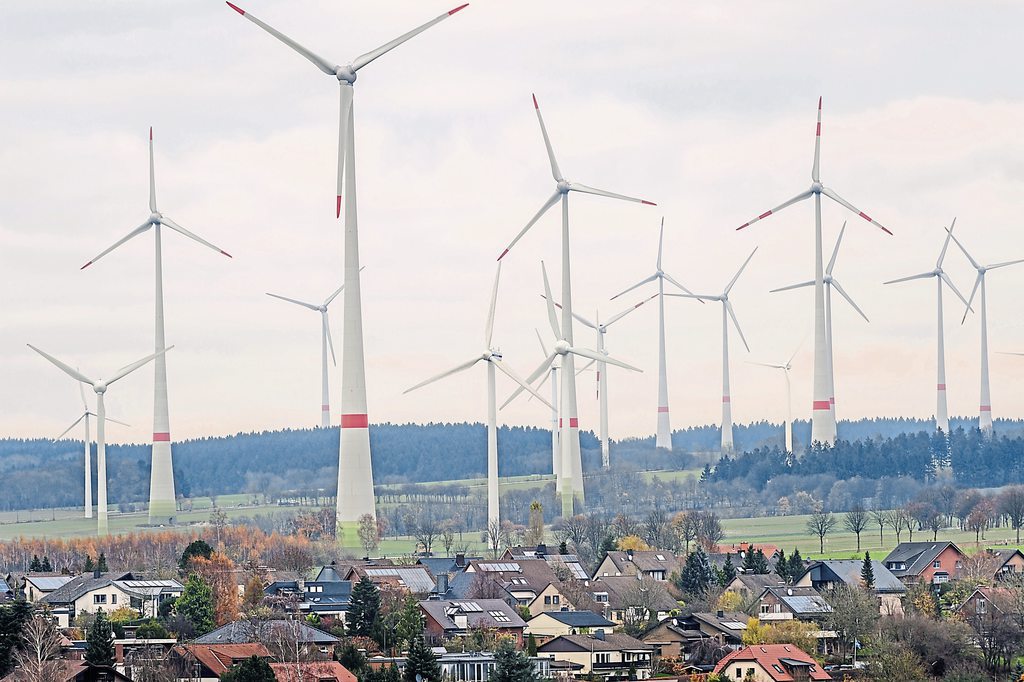
The rocketing power prices caused by Germany’s headlong wind and solar rush are crushing its once thriving industries, including outfits like Mercedes-Benz.
German households and businesses are already suffering Europe’s highest power prices; following Putin’s assault on Ukraine, German power prices rocketed, further still, hitting a record 40 US cents per kWh. Power rationing is already routine, with worse to come.
No country went harder and faster with its renewable obsession than Germany. And no global manufacturing giant has fallen so far, so fast.
Numerous, and often large, industrial users – like BASF, Wacker and Siltronic – have already vacated the country, headed for low energy cost countries like Singapore and the USA, a process that began over a decade ago.
The idea that a critical input cost to manufacturing can be tripled without affecting profitability and employment is, as any student of economics will tell you, a nonsense.
In the piece below, Pierre Gosselin reports on the inevitable industrial decline that comes with the attempt to run on sunshine and breezes.
Rise And Fall Of The German Economy… Energy Debacle Leading To Economic Meltdown
No Tricks Zone
Pierre Gosselin
16 April 2024
Blackout News here calls the trend “alarming” and that it is “a clear sign of the worsening economic crisis. The news are based on data released by the Halle Institute for Economic Research (IWH).
“There has been nothing comparable since 2016, the year the data was first collected,” reports Blackout News. “This development not only points to internal company problems, it also highlights the extensive economic challenges the country is facing.”
“There has been nothing comparable since 2016, the year the data was first collected,” reports Blackout News. “This development not only points to internal company problems, it also highlights the extensive economic challenges the country is facing.”
Insolvencies are even worse than during the Covid pandemic lockdown years.
“Exorbitantly high energy costs”
Analysts say the main driver behind the dire trend are Germany’s exorbitantly high energy costs, mostly due to the country’s mismanaged foray into green energies – like wind and solar – and the transition away from affordable and stable conventional energy sources like natural gas, coal and nuclear power.
“The wave of corporate insolvencies cannot be explained by poor business decisions alone. Rather, it is the high cost of energy, which is driving up operating costs in times of global uncertainty, and a tax policy that leaves little room for investment,” Blackout News adds.
Both, left and center-right, are to blame
The push to green energies, and away from conventional sources, began in earnest under the government led by Angela Merkel and her CDU center right party. The latest Socialist-Green coalition government, led by Olaf Scholz and Robert Habeck, have since pushed draconian policies that have only exacerbated Germany’s economic and energy woes.
Most experts argue that the government hasn’t been fixing problems, rather it has been making them far worse. It simply refuses to acknowledge the reality.
Industrial exodus…country needs more than just hope
“The current crisis demands far more from political decision-makers than just hoping for a calming of the market,” adds Blackout News. “Comprehensive measures are needed…the measures include a reduction in energy costs.”
Blackout News recently reported on the “industrial exodus” as “Germany’s economic crisis forces traditional companies to flee.”
No Tricks Zone

via STOP THESE THINGS
May 10, 2024 at 02:30AM
“Lobbyists and other politically correct parties paint industrial wind energy as “free, clean, and green.” With no consequences for lying, is it any wonder that we are drowning in dishonesty?”
This is the last in a series I’ve posted about radiation and some of our energy sources. It started with a commentary arguing that there are good reasons to categorize Nuclear power as a “renewable” source of electrical energy. Next was Nuclear Power Radiation — Part 1 (which outlined radiation from normal nuclear power operations, waste, and misc). Then there was Nuclear Power Radiation — Part 2, which briefly covered the rest of the well-known nuclear radiation possibilities.
Here I will give a quickie overview of a radiation source that most people have never heard about. Lobbyists and other politically correct parties paint industrial wind energy as “free, clean, and green.” Although none of that is true, this deceptiveness is dismissed as marketing puffery. With no consequences for lying, is it any wonder that we are drowning in dishonesty?
A major eye-opener is that wind turbine manufacture results in horrific environmental degradation (also see here and here). A lot of this happens in China so it is conveniently out of sight. But wait, the same organizations who are promoting wind energy also strongly push the one-world (“we’re all in this together”) ideology — so they should be very concerned about what happens in China too, right?
Let’s look at one particular matter: Rare Earth Elements (REEs). In addition to significant air and water pollution, the processing of REEs (30+ steps) results in a large amount of radioactive waste. Yes, you read that correctly.
How much radioactive waste per turbine? My understanding is the following:
Fact 1: Each wind turbine is reported to have several thousands of pounds of REEs (i.e., typically 2000± pounds per MW — and today’s turbines are 4+MW).
Fact 2: A US Army analyst reports (reference page 16) that for every ton of REE, there can be about a ton of radioactive waste!
Once we have absorbed the significance of these numbers, an interesting question arises: how does the quantity of radioactive waste produced by a 1 GW nuclear facility compare to the quantity of radioactive waste produced by the manufacture of wind turbines that would result in an equivalent amount of annual electricity? Let’s look at it by weight.
The key wind energy assumptions are:
a) An optimistic capacity factor of 33% is assumed.
b) There are 2000± pounds of REEs per face value wind turbine MW.
c) Every ton of REE results in about a ton of radioactive waste.
d) Since some of the reported waste includes water, we’ll generously assume that about 50%± of the weight is due to H2O.
So, the radioactive waste for a 3 GW wind facility:
3000 MW x 2000 REE/MW x 1 Waste/REE x .5 =
3,000,000± pounds of radioactive waste
How does this compare to a nuclear facility? There are two methods for processing nuclear fuel (typically uranium). In the US, the fuel is used once (i.e., is a single pass). In the rest of the world, the fuel is used a second time, which substantially reduces the amount of resulting waste.
The key nuclear assumptions are:
a) A 1 GW Nuclear facility has 27± tonnes/year (about 60,000 pounds/year) of used uranium.
b) If reprocessed, only 3% of this is radioactive waste (60,000 x 3% = 1,800). [See this for a good explanation of radioactive waste, and for items a & b.]
c) Twenty years of nuclear power generation is used as that is a very generous expected life of a wind turbine.
d) The reactor is a Light Water Reactor (LWR) [i.e., a Pressurized Water Reactor (PWR), or a Boiling Water Reactor (BWR)].
The single-pass radioactive waste figures for a 1 GW nuclear facility:
—> 60,000± pounds per year. Therefore the twenty-year total of nuclear radioactive waste would be 60,000± x 20 = 1,200,000± pounds of radioactive waste
The double-pass radioactive waste figures for a 1 GW nuclear facility:
—> 1,800± pounds per year. Therefore the twenty-year total of nuclear radioactive waste would be 1,800± x 20 = 36,000± pounds of radioactive waste
Compare these to the figure above: 3,000,000± pounds of radioactive waste for an equivalent amount of electricity produced by wind energy, over twenty years.
The amazing conclusion is that over the lifetime of a wind project (20 years), wind energy produces more radioactive waste per MWH than a nuclear facility!
So we’ve lifted another wind energy rock, and have found a very disturbing industry secret. The few others who have looked into this have labeled it as the 800-pound Gorilla In The Room. Another good piece is from IER: Big Wind’s Dirty Little Secret: Toxic Lakes and Radioactive Waste.
One more peek under another rock… It’s bad enough to largely rely on Communist China for unneeded materials, but it’s even worse when this investigation concluded that the Chinese rare earth industry is “dominated by criminal gangs.” In other words, much of every dollar spent on rare earths for wind turbines goes into things like fentanyl production — which is then sent to the US to kill its citizens…
So… the next time that a wind marketer feeds you the “wind is green” sales pitch, say Not so fast!
——————–
John Droz, Jr. is a Principal at MasterResource. This is a repost from Critically Thinking About Select Social Issues.
The post Wind Turbine-related Radiation appeared first on Master Resource.
via Master Resource
May 10, 2024 at 01:06AM
Safety concerns around electric vehicles continue to mount with Australian fire and rescue services in New South Wales stating they might have to make a “tactical disengagement” of a trapped car accident victim if the battery is likely to explode. Australian journalist Jo Nova covered the story, which was first mentioned in the EV blog The Driven, and commented: “They say the first responders need more training as if this can be solved with a certificate, but the dark truth is they’re talking about training the firemen and the truck drivers to recognise when they have to abandon the rescue.”
The Driven, a widely-read blog that seems highly sympathetic to a rollout of EVs, was reporting on recent testimony given to the NSW Government’s Electric and Hybrid Vehicle Batteries Inquiry. The writer suggested that first responders did not have adequate training to deal with electric vehicle collisions, and in the most serious cases, crews could be forced to abandon rescues. One particular area of concern seemed to revolve around the need to extract a trapped casualty quickly after a crash by dragging the person out in a “very undesirable manner”. Fires are a grave risk in any vehicle accident, but they can be quickly brought under control in an internal combustion engine (ICE) vehicle.
Worries about the potential dangers inherent in EVs is likely to grow as numbers on the roads continue to rise. EV battery explosions can occur very quickly, triggering the release of highly toxic gases. When they roar into thermal overdrive, they create very high temperatures and are very difficult to extinguish. The explosion can occur after almost any collision, or be due to a fault in the initial manufacture. The fire often takes hours to control and it can reignited days after it was thought to be out. With Net Zero fanatics desperate to drive ICE cars off the road in short order, EVs are the only mass private transport solution offered. Many of the issues, including safety, that make them an inferior product compared to petrol-powered combustion cars are often ignored.
Just what can be involved in putting out a fire in an EV was dramatically detailed in a recent press release from the Wakefield Fire Dept in Massachusetts. It was called out to deal with a burning Tesla on a snowy Interstate 95, and reported:
Wakefield Engine 1 and Ladder 1 initiated suppression operations, applying copious amounts of water onto the vehicle. Multiple surrounding mutual aid communities responded as well to support firefighting operations and to create a water shuttle to bring water continually to the scene. Engines from Melrose, Stoneham, Reading, Lynnfield as well as a Middleton water tanker assisted. Firefighters had three 1¾-inch hand lines as well as a ‘blitz gun’ in operation to cool the battery compartment… Lynnfield crews established a continuous 4-inch supply line from Vernon Street up to the highway. The fire was declared under control and fully extinguished after about two and a half hours… The vehicle was removed from the scene after consulting with the Hazmat Unit… The crews did a great job, especially in the middle of storm conditions – on a busy highway.
There is little doubt that EV fires are on the rise. In the U.K., CE Safety runs Freedom of Information checks on local fire brigades and its latest survey shows an alarming rise in conflagrations. In Greater London in the 2017-2022 period, there were a reported 507 battery fires from a number of EV types, but CE Safety found a “gigantic” 219 conflagrations in 2022-23 alone. Lancashire was said to rank second with 15 EV battery fires, but this was 10 more in a single year than recorded in the five years between 2017-2022. Overall “it was concerning” to discover that the number of electric battery fires during 2022-2023 was higher in most areas than the data showed over five years from 2017 to 2022. During that year, 14 buses suffered battery fires.
There was a substantial increase in the number of e-bikes catching fire, with CE Safety noting that lithium is highly flammable and reactive. “Over-charging presents a massive risk to households with lithium-powered vehicles,” the safety organisation observed.
Concern is also rising over the transportation of EVs on car ferries. Recently, Havila Kystruten, which operates a fleet of car ferries around the coast of Norway, has banned the transportation of electric, hybrid and hydrogen vehicles. According to a report in the Maritime Executive, it is the latest step by the shipping industry, “which has become acutely aware of the increasing danger of transporting EV and other alternate fuel vessels”.
Havila’s Managing Director Bent Martini said a risk analysis had shown a fire at sea in a fossil fuel vehicle could be handled by on-board systems. “A possible fire in electric, hybrid or hydrogen cars will require external rescue efforts and could put people on board and the ships at risk,” he said. That of course is the nightmare scenario. If fire breaks out on a ferry making a 20-mile crossing in good weather, the chances of all passengers and crew surviving are good. Less good, perhaps, if fire was to break out and fill the ship with toxic smoke in the middle of a stormy November night while crossing the Bay of Biscay. Chances of survival would be diminished if the high temperatures caused nearby EVs to explode.
Mercifully, we are less and less likely to see such accidents. The list of disadvantages of EVs is lengthening by the day. Environmental concerns about the manufacture and mining of raw materials have been raised, while ‘range anxiety’ is common among drivers. EVs are more expensive than ICE cars, while knackered batteries mean that second-hand values are very poor. For those who would see the back of them, the graph below might provide some comfort.

This shows the recent decline in the share price of the American car hire giant Hertz. Back in 2021, the company pushed ahead with huge purchases of Teslas. In January it dumped 20,000 of them, and last month pushed another 10,000 onto a sagging second-hand market. Out in the real world – the world where people create wealth by providing what other people actually want – fewer drivers seemed willing to hire them. The share price tells its own sorry story. Meanwhile, EV sales across Europe tend to be driven by unsustainable tax breaks, while the cars are mainly popular with wealthy people as a second or third city runabout. An enforced political adoption of EVs is likely to destroy vast swathes of the European car industry, unable to compete with cheap Chinese imports.
If the aim is to take away personal transport for the masses, EVs are an excellent idea. Whether that will ultimately play well at the ballot box is another matter.
Chris Morrison is the Daily Sceptic’s Environment Editor.
via Watts Up With That?
May 10, 2024 at 12:01AM
 Iowa Climate Science Education