Month: May 2024

EVs: The Reckoning Begins

Roger Caiazza

Irina Slav on energy Substack is described as “All things energy. Challenging the dominant narrative because facts matter”.   Her latest article “Post Ridiculous” describes the possible last straw for EV adoption. 

Slav introduces her post with an extraordinary quote admitting that all is not right for EVs:

“We can’t push EVs into the market against demand.” Thus spoke the head of Ford’s European operations this week, commenting on the company’s plans to start diverting ICE car deliveries from the UK to the continent. Why? Because the UK has EV sales goals and if carmakers don’t align their business with these goals, they face substantial penalties.

“We are not going to sell EVs at huge losses just to buy compliance. The only alternative is to take our shipments of [engine] vehicles to the UK down and sell these vehicles somewhere else,” the brave man, by the name of Martin Sander, said, speaking at the FT’s Future of the Car conference in London.

https://www.ft.com/content/ff0f3966-0565-434b-81a7-9b2bb3c20e21

The Climate Industry narrative is different of course.  Despite that bit of reality in Great Britain it was reported that “Sales of electric vehicles have got off to a record start this year, the latest sign that British consumers are shifting their preferences towards greener modes of transport.”    

Back in the real world, Slav writes that “Back in January, Bloomberg’s Javier Blas published a column, in which he sounded an alarm for governments willing to listen.”    Slav posted an earlier article addressing the same problem: “what governments are going to do about fuel duty income replacement if their EV plans panned out.”

She describes the Blas column:

Blas detailed why governments needed to start thinking about a tax to replace their lost income from fuel duty collection because there was no time to waste — the EVs were coming and they were not paying any taxes while displacing a growing number of tax-generating internal combustion engine vehicles.

Blas was his usual helpful, too, unlike me. He offered realistic options such as road use charges based on number of miles travelled every year or GPS tracking, which was the worse option for obvious reasons. While both these options have certain shortcomings, notably a regressive streak, they are both better than other alternatives such as car ownership charges or additions to income taxes.

https://www.bloomberg.com/opinion/articles/2024-01-29/europe-s-grand-ev-ambitions-have-a-160-billion-tax-problem

While those are realistic options, in my opinion it is yet another reason to avoid an EV.  Slav goes on to explain that governments have caught on to the problem and have started to tax EV drivers.  She writes:

“It is more like a penalty,” a gentleman by the name of Jeff Shoffner, a Tennessee EV owner, told the FT for a story that came out this week. “I’m not averse to paying the extra fee, but I think it’s too high.”

The comments were prompted by Tennessee’s decision to double the state registration fee for EV owners from $100 to $200. Quite a hike, you might say. Whatever may have made such a radical increase necessary, you might wonder. Well, it’s the same realisation that EVs have turned into cash-guzzlers and are giving nothing back — except the absence of tailpipe smoke. And that’s not good enough for a frugal government.

https://irinaslav.substack.com/

It turns out that  most states are increasing registration fees to start to address this problem.  Slav documents similar actions in the United Kingdom, New Zealand, and Germany.  She points out that when the inevitable switch from incentives to taxes occurs then EV sales tank:

In case this sounds familiar, it’s because Germany also scrapped an EV incentive scheme because it ran out of money. Following this decision, EV sales in the country plummeted and that’s not an overstatement. Sales of electric cars in January 2024 dropped by 55% and kept falling.

https://irinaslav.substack.com/

There is one positive.  The virtue-signaling early EV adopters will be asked to pick up the slack.  Slav writes:

I leave you with the heartfelt words of one victim of governments’ offensive against EV adopters. I would have paraphrased but tears choked me and made my hands shake, so a quote it is, from the FT.

““It’s discouraging. We were glad to be at the forefront with incentives and adoption rates . . . This particular thing with the registration fees seems to go against that,” said Patrick McDevitt, a Tesla driver in New Jersey.”

I would admit that the above burst of sarcasm is too crude, even for me. But you see, we told them this would happen. We told them repeatedly. They didn’t listen. So now they’ll be joining the tax-paying drivers’ club. Life’s cruel.

https://irinaslav.substack.com/

Conclusion

This is a fundamental issue for EVs.  The only way to get people to buy electric vehicles is to subsidize them but subsidizing them leads to tax losses elsewhere.  Slav concludes:

For the umpteenth time, then, we have our dear Western governments try to have their transition cake and eat it, too, and not gain a single ounce of extra weight. They wanted combustion engine cars out but forgot that these cars bring in billions in tax income. They wanted a fully electrified transport but forgot it wouldn’t bring in money unless they make it more expensive. They wanted a revolution but forgot rule #1 for revolutions: the successful ones never start from the top. They start from the bottom.

https://irinaslav.substack.com/

In my opinion that characterizes just about all the net-zero energy transition initiatives. 


Roger Caiazza blogs on New York energy and environmental issues at Pragmatic Environmentalist of New York.  This represents his opinion and not the opinion of any of his previous employers or any other company with which he has been associated.

via Watts Up With That?

https://ift.tt/ufsb5nk

May 8, 2024 at 08:02PM

Britain’s Royal Society Defies the Green Blob

News comes from Financial Times that the prestigious scientific Royal Society is honoring it’s motto:  “Take Nobody’s Word For It” (translation of Latin phrase above.) Of course, a great many UK academics were outraged at the refusal to take for granted their claim that “Climate Science is Settled.” The article by Kenza Bryan is Royal Society and academics clash over influence of oil and gas industry.  Excerpts in italics with my bolds and added images.

Three-centuries-old institution rebuffs call to
declare fossil fuel companies culpable for global warming

A clash between Britain’s 363-year-old Royal Society and more than 2,000 UK academics has escalated over the national academy of scientists’ refusal to attribute the role of oil and gas companies in climate change.

The academics had expressed their concerns about the influence of fossil fuel companies on scientific research in a letter last year to the Royal Society, founded in 1660 as a fellowship that included the likes of Isaac Newton.

But the Royal Society has now rebuffed their request to issue an “unambiguous statement about the culpability of the fossil fuel industry in driving the climate crisis”.

Treasurer Jonathan Keating wrote in reply last week that it would “not be appropriate” to do so, as there was a need for “multiple actors” to engage with the complexity of the climate crisis.

The academics’ concerns about the influence of oil and gas companies extend to separate allegations that ties to BP were not disclosed by a Cambridge professor in a Royal Society policy briefing document produced by a working group that he chaired in 2022.

Professor Andy Woods held the title of head of the BP Institute, a research arm that it funds, which was renamed the Institute for Energy and Environmental Flows by Cambridge last year. He also has the formal title of BP professor, a position endowed by the oil and gas company. These affiliations were not included in the reference in the document.

The Royal Society briefing document called for an “enormous and continued investment” into geological carbon capture and storage, a technology promoted by the fossil fuel industry as a way to keep expanding while storing the emissions.

A CO₂ storage adviser to BP and a director for CO₂ storage at the Norwegian Petroleum Directorate also contributed to the report. Woods’s expertise in geophysical fluid flows and the BP affiliation are listed elsewhere by the Royal Society in its fellowship directory. BP and Woods did not respond to a request for comment. The Royal Society said the document gave “clear affiliations” for contributors and that it publishes a wide range of research.

The tensions reflect the discord in academia about funding or
participation in research by oil and gas companies, as well as
rising activism on campuses among the student body and staff.

The Royal Society’s decision not to call out the industry was described as “moral cowardice” by James Dyke, earth system science professor at Exeter university.

Another signatory to the original letter, Bill McGuire, professor of geophysical and climate hazards at University College London, said it was “mind-boggling” that a respected scientific organisation would not attribute the role of fossil fuel groups in climate change.

Student campaigners at Oxford university have also targeted the author of a set of green principles used by the university to help guide decisions on whether to invest in or receive grants from oil and gas companies.

Under freedom of information provisions, the student campaigners identified Myles Allen, the university’s head of atmospheric, oceanic and planetary physics, as having had 18 meetings where a representative was present from one of the major oil and gas groups, including either BP, Shell, Exxon or Equinor.

Those meetings in 2021 and 2022 included five occasions organised by Shell, three of which focused on the oil and gas group’s strategy and climate scenarios, according to the freedom of information response.

Allen, who was head of the Oxford Net Zero research initiative until earlier this year, told the Financial Times he had used the meetings to highlight the need for fossil fuel companies to pay for carbon capture and storage technologies.

It is a solution to the reduction of future carbon dioxide emissions that he has long advocated. “We all have a duty to help the fossil fuel industry not make the problem worse but to fix it,” he said.

Oxford said its “partnerships and collaborations with industry” allow for research on pressing global issues, including climate-related ones.

The campaigners called on Oxford to conduct an independent assessment about its approach to fossil fuel sector donations and investment. Cambridge university in March temporarily stopped accepting grants and donations from the sector in response to similar concerns.


via Science Matters

https://ift.tt/YfdeBvU

May 8, 2024 at 06:01PM

Claim: San Diego Should be a “Sponge City” to Soak up Climate Crisis Floodwater

Essay by Eric Worrall

Professor Franco Montalto of Drexel University wants to slow runoff and allow parts of the city to flood, to mitigate damage from extreme rainfall and reduce runoff pollution.

As climate change amplifies urban flooding, here’s how communities can become ‘sponge cities’

Published: May 8, 2024 4.03am AEST

Franco Montalto
Professor of Civil, Architectural and Environmental Engineering and Director, Sustainable Water Resource Engineering Laboratory, Drexel University

“When it rains, it pours” once was a metaphor for bad things happening in clusters. Now it’s becoming a statement of fact about rainfall in a changing climate. 

Across the continental U.S., intense single-day precipitation events are growing more frequent, fueled by warming air that can hold increasing levels of moisture. Most recently, areas north of Houston received 12 to 20 inches (30 to 50 centimeters) of rain in several days in early May 2024, leading to swamped roads and evacuations.

Earlier in the year, San Diego received 2.72 inches (7 centimeters) of rain on Jan. 22 that damaged nearly 600 homes and displaced about 1,200 people. Two weeks later, an atmospheric river dumped 5 to 10 inches (12 to 25 centimeters) of rain on Los Angeles, causing widespread mudslides and leaving more than a million people without power.

Events like these have sparked interest in so-called sponge cities – a comprehensive approach to urban flood mitigation that uses innovative landscape and drainage designs to reduce and slow down runoff, while allowing certain parts of the city to flood safely during extreme weather. Sponge city techniques differ from other stormwater management approaches because they are scaled to much larger storms and need to be applied across nearly all urban surfaces.

Read more: https://theconversation.com/as-climate-change-amplifies-urban-flooding-heres-how-communities-can-become-sponge-cities-217075

Model based claims that flooding is getting worse on a global scale are not backed by observational evidence.

As for the “sponge city” plan, this all sounds fancy and modern, but what about putting peoples homes first, and just building bigger drains?

In my subtropical town on the East Coast of Australia, we have street drains you can comfortably walk along. The kinds of rain which causes major flooding in San Diego, we call that “Wet Season”.

It takes weeks of heavy tropical deluge to even begin to flood those suspiciously flat areas in my town which nobody should ever have built on. Where I live on a slightly elevated location, it would take a direct hit from a tropical cyclone to do real damage. My home is very rarely threatened by floods, even when my street turns into a river – all the runoff water gushes harmlessly into our oversize drainage system, and within 20 minutes of the rain stopping all the surface water is gone.

I’m not denying runoff management plays a role, slowing water entry into river systems can reduce peak flood. But sometimes you just have to move the water very quickly to somewhere else.

In the article above Professor Franco Montalo emphasised the benefits of greener water management systems, such as reduced pollution wherever you are dumping the runoff. But if homes are threatened, who cares about a little pollution? Keeping people’s homes safe from floods should be the highest priority.

via Watts Up With That?

https://ift.tt/3PEG9Aj

May 8, 2024 at 04:05PM

Wind turbines could steal as much as 38% of the power off turbines downwind and even from ones 50 kilometers away

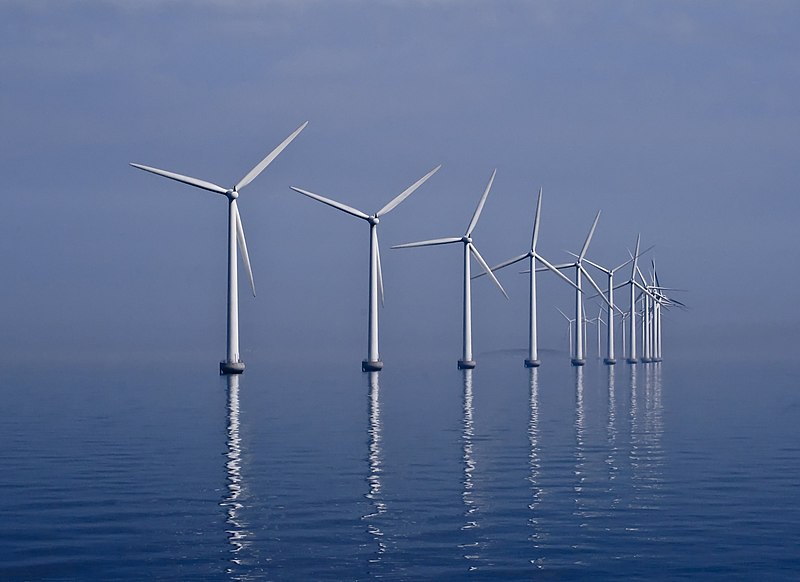
Middelgrunden wind farm 2009-07-01 edit filtered.jpg

By Jo Nova

The more wind turbines we have the more useless they are

There goes those plans to cover the continental shelf with talismen to the Wind Gods.

New research shows wind turbines off the East Coast of the US could end up stealing as much as a third of the energy from other wind turbines downstream. And in some conditions, the turbulent wake they leave might stretch out 55 kilometers behind them. This effect is worst on turbines in the same “farm” but could even affect other wind farms a long way off.

The wake effect will be strongest in summer. We’ll just have to ask everyone to turn off their air conditioners then?

Scientific civilizations do this sort of research before they commit $10 trillion dollars, set up a trading scheme, and blow up the coal plants. Imagine if building a coal plant near another plant made it 30% less efficient on hot days…

Hat tip to the NetZeroWatch email list:

Wind turbine ‘wake effect’ could reduce arrays’ power output by 30%

By Kirk Moore, WorkBoat

The researchers’ paper published March 14 in the journal Wind Energy Science suggests that offshore wind turbines off the U.S. East Coast could rob neighboring turbine arrays of wind speed and thus power generation depending on daily conditions, by more than 30%.

“Using computer simulations and observational data of the atmosphere, the team calculated that the wake effect reduces total power generation by 34% to 38% at a proposed wind farm off the East Coast,” according to the University of Colorado. ”Most of the reduction comes from wakes formed between turbines within a single farm.”

“But under certain weather conditions, wakes could reach turbines as far as 55 kilometers (34 miles) downwind and affect other wind farms. For example, during hot summer days, the airflow over the cool sea surface tends to be relatively stable, causing wakes to persist for longer periods and propagate over longer distances.”

Wakes from Wind farms

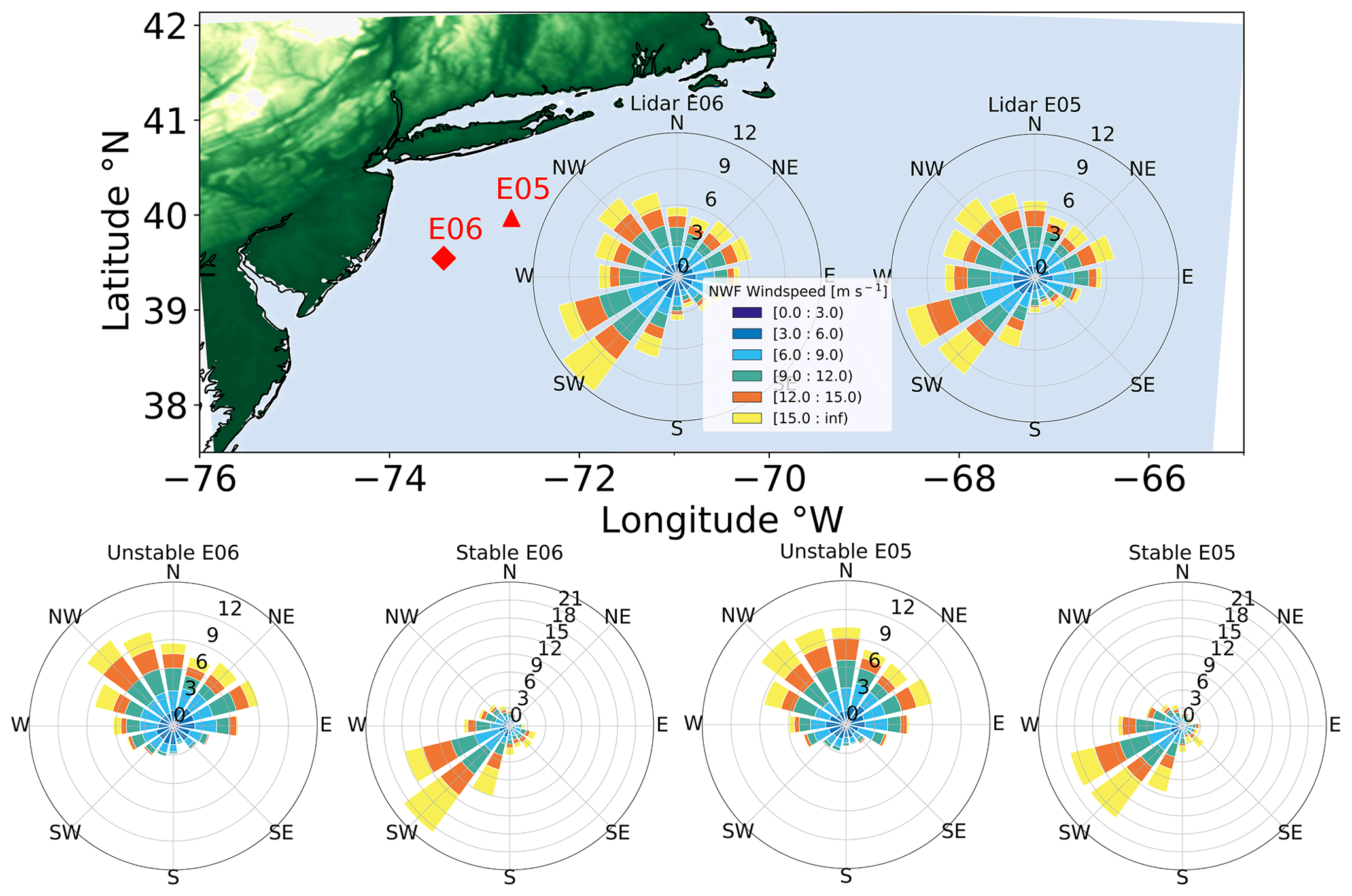
Figure 3Hub-height wind roses for the NYSERDA Hudson North (E05) and Hudson South (E06) floating lidars during the 1 September 2019 to 1 September 2020 period. The location of E06 is shown as the red diamond and E05 as the red triangle. The bottom row shows wind roses segregated by atmospheric stratification.

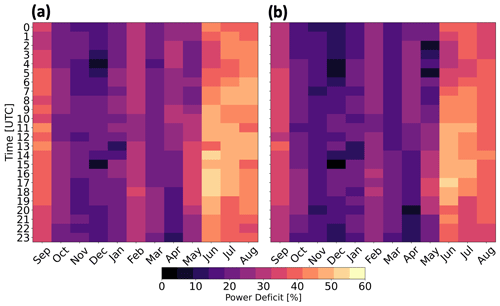
Ominously, the worst power deficits in these graphs are not the black spots but the red and white ones…

Wakes from Wind farms

Figure 14The percentage of power loss at ONE from internal wakes at (a) TKE_0 and (b) TKE_100.


This is why the nightmare of thousands of high voltage interconnector lines will never go away.


REFERENCE

Rosencrans et al (2024) Seasonal variability of wake impacts on US mid-Atlantic offshore wind plant power production Articles, Volume 9, issue 3 WES, 9, 555–583, 2024 https://ift.tt/Hd3Bltr

Photo by Kim Hansen.


10 out of 10 based on 1 rating

via JoNova

https://ift.tt/z2rJhoi

May 8, 2024 at 03:45PM