
The Biden Administration has recently produced a wave of plans and regulatory actions aimed at building a monstrous amount of destructive offshore wind.
via CFACT
May 1, 2024 at 08:42AM
The Biden Administration has recently produced a wave of plans and regulatory actions aimed at building a monstrous amount of destructive offshore wind.
via CFACT
May 1, 2024 at 08:42AM
Mark Mills explains the many ways the deck is stacked against those gambling on Wind and Solar energy to replace hydrocarbon fuels. The transcript is below in italics with my bolds and added images.
Have you ever heard of “unobtanium”?
It’s the magical energy mineral found on the planet Pandora in the movie, Avatar. It’s a fantasy in a science fiction script. But environmentalists think they’ve found it here on earth in the form of wind and solar power.
They think all the energy we need can be supplied by building enough wind and solar farms; and enough batteries.
The simple truth is that we can’t. Nor should we want to—not if our goal is to be good stewards of the planet.
To understand why, consider some simple physics
realities that aren’t being talked about.
All sources of energy have limits that can’t be exceeded. The maximum rate at which the sun’s photons can be converted to electrons is about 33%. Our best solar technology is at 26% efficiency. For wind, the maximum capture is 60%. Our best machines are at 45%.
So, we’re pretty close to wind and solar limits. Despite PR claims about big gains coming, there just aren’t any possible. And wind and solar only work when the wind blows and the sun shines. But we need energy all the time. The solution we’re told is to use batteries.
Again, physics and chemistry make this very hard to do.
Consider the world’s biggest battery factory, the one Tesla built in Nevada. It would take 500 years for that factory to make enough batteries to store just one day’s worth of America’s electricity needs. This helps explain why wind and solar currently still supply less than 3% of the world’s energy, after 20 years and billions of dollars in subsidies.

Putting aside the economics, if your motive is to protect the environment, you might want to rethink wind, solar, and batteries because, like all machines, they’re built from nonrenewable materials.
Consider some sobering numbers:
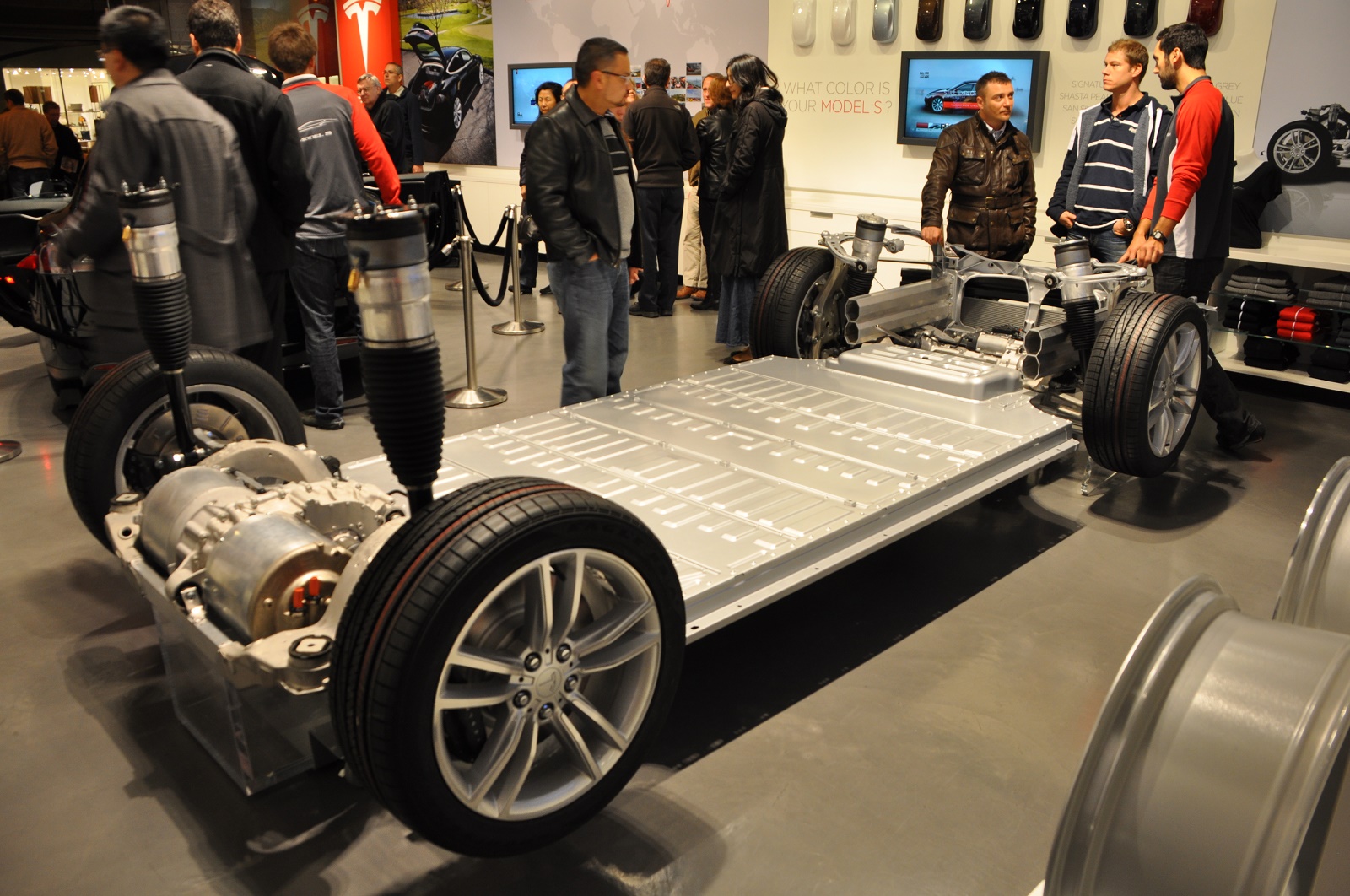
A single electric-car battery weighs about half a ton. Fabricating one requires digging up, moving, and processing more than 250 tons of earth somewhere on the planet.
Building a single 100 Megawatt wind farm, which can power 75,000 homes requires some 30,000 tons of iron ore and 50,000 tons of concrete, as well as 900 tons of non-recyclable plastics for the huge blades. To get the same power from solar, the amount of cement, steel, and glass needed is 150% greater.
Then there are the other minerals needed, including elements known as rare earth metals. With current plans, the world will need an incredible 200 to 2,000 percent increase in mining for elements such as cobalt, lithium, and dysprosium, to name just a few.

Where’s all this stuff going to come from? Massive new mining operations. Almost none of it in America, some imported from places hostile to America, and some in places we all want to protect.
Australia’s Institute for a Sustainable Future cautions that a global “gold” rush for energy materials will take miners into “…remote wilderness areas [that] have maintained high biodiversity because they haven’t yet been disturbed.”
And who is doing the mining? Let’s just say that they’re not all going to be union workers with union protections.

Amnesty International paints a disturbing picture: “The… marketing of state-of-the-art technologies are a stark contrast to the children carrying bags of rocks.”
And then the mining itself requires massive amounts of conventional energy, as do the energy-intensive industrial processes needed to refine the materials and then build the wind, solar, and battery hardware.
Then there’s the waste. Wind turbines, solar panels, and batteries have a relatively short life; about twenty years. Conventional energy machines, like gas turbines, last twice as long.

With current plans, the International Renewable Energy Agency calculates that by 2050, the disposal of worn-out solar panels will constitute over double the tonnage of all of today’s global plastic waste. Worn-out wind turbines and batteries will add millions of tons more waste. It will be a whole new environmental challenge.
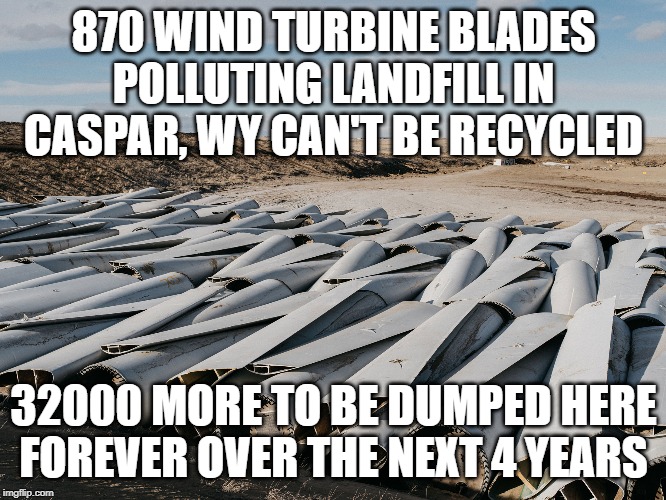
Before we launch history’s biggest increase in mining, dig up millions of acres in pristine areas, encourage childhood labor, and create epic waste problems, we might want to reconsider our almost inexhaustible supply of hydrocarbons—the fuels that make our marvelous modern world possible.
And technology is making it easier to acquire and cleaner to use them every day.

It would take a wind farm the size of Albany county NY to replace the now closed Indian Point nuclear power plant.
The following comparisons are typical—and instructive:
It costs about the same to drill one oil well as it does to build one giant wind turbine. And while that turbine generates the energy equivalent of about one barrel of oil per hour, the oil rig produces 10 barrels per hour. It costs less than 50 cents to store a barrel of oil or its equivalent in natural gas. But you need $200 worth of batteries to hold the energy contained in one oil barrel.
Next time someone tells you that wind, solar and batteries are
the magical solution for all our energy needs ask them
if they have an idea of the cost… to the environment.
“Unobtanium” works fine in the movies. But we don’t live in movies. We live in the real world.
I’m Mark Mills, Senior Fellow at the Manhattan Institute, for Prager University.

There is no charge for content on this site, nor for subscribers to receive email notifications of postings.
via Science Matters
May 1, 2024 at 08:39AM
By Paul Homewood
h/t Paul Kolk

https://www.telegraph.co.uk/business/2024/05/01/net-zero-leviathan-crushing-uk-economy/
Could this be the same useless Jeremy Warner who has spent years promoting Net Zero?


https://www.telegraph.co.uk/business/2023/03/11/truth-britains-net-zero-target-wholly-unrealistic/
SURELY NOT!!
via NOT A LOT OF PEOPLE KNOW THAT
May 1, 2024 at 08:21AM
By Paul Homewood
At the end of February, I penned this open letter to Claire Coutinho, following a dearth of wind.
One of my contacts is actually in her constituency, so was able to write to her as a constituent. He passed this letter on to her with a few personnel comments of his own.
This presented a great opportunity to get the answers straight from the horse’s mouth, as it were. Similar letters to MPs are normally answered by a bog standard response from some lowly civil servant.
He has now received a reply, which I will publish tomorrow. It confirms all of the fears we have had that ministers in charge of energy policy have no idea about how our energy system works, and continue to believe the fairy tales they are fed by the green blob, who are the ones really in charge:
OPEN LETTER TO CLAIRE COUTINHO – SECRETARY OF STATE FOR ENERGY SECURITY & NET ZERO
May I start by asking if you are aware of the electricity mix during the windless spell last weekend. According to official data from the grid, in the 24 hours to 10.00 am on 25th February, wind power supplied only 2.5% of total generation. This works out at an average of 0.7 GW, just 2% of Britain’s wind capacity.
Meanwhile solar power only contributed about 1.4 GW, 8% of its capacity. However this is not dependable, as it often drops to about a quarter of this figure on cloudy days in winter, as it did earlier that week.
It is also worth noting that we are still using coal, despite your promise at COP28 that it would have been phased out by now!
This sort of weather can last for several weeks at a time in winter.
As it is the government’s plan to totally decarbonise the grid by 2035, (and by 2030 for Labour!), could you please explain how we will be able to run the grid without gas and coal then? Building yet more wind/solar farms won’t solve the problem – twice nothing is still nothing!
Battery storage, as I am sure you know, is of little help, because it can only supply enough for an hour or so. As for green hydrogen, not only would we need to spend tens of billions building electrolysers, seasonal storage, distribution and a fleet of CCGT power stations to burn it, there would simply not be enough wind and solar farms to provide the electricity needed in the first place. It is not conceivable that any of this could be in place by 2035, nor any new nuclear after Hinkley.
Switching demand from peak to off peak will also be of no help, because we will be desperately short of power at all times of day, and for weeks on end.
Carbon capture is often quoted as a solution, even though there is no evidence it actually works at scale. But, more pertinently, CCS cannot be fitted to nearly all of our CCGT fleet, as it is far too old. That would mean we would need to build a whole new fleet of CCS ready gas power stations, all at colossal expense. It would, of course, increase our dependence on fossil fuels, not reduce it, as CCS is a very fuel inefficient process. And we would need to begin that construction now, something which there are no plans for currently.
The problem is actually worse than I have laid out, because electricity demand is projected to be much higher in 2035, with EVs and heat pumps.
We are already far too dangerously reliant on imported electricity, which provided a quarter of our power in the above 24-hour period. When there are low winds here, the same usually occurs in the rest of NW Europe as well. On the same day that our wind output dropped away last week, Germany’s fell to less than half its usual level.
When the EU has also closed its coal and gas plants, it will also be desperately short of electricity during windless days. What guarantees do we have that we will still be able to import it then?
The first half of your job is “Energy Security”. I suggest you focus more on that, and less on the other half!
via NOT A LOT OF PEOPLE KNOW THAT
May 1, 2024 at 08:14AM
 Iowa Climate Science Education