Month: May 2024

Grand Energy ‘Transition’ Unravels: Power-Starved Dutch Ditch Renewables & Go For Gas

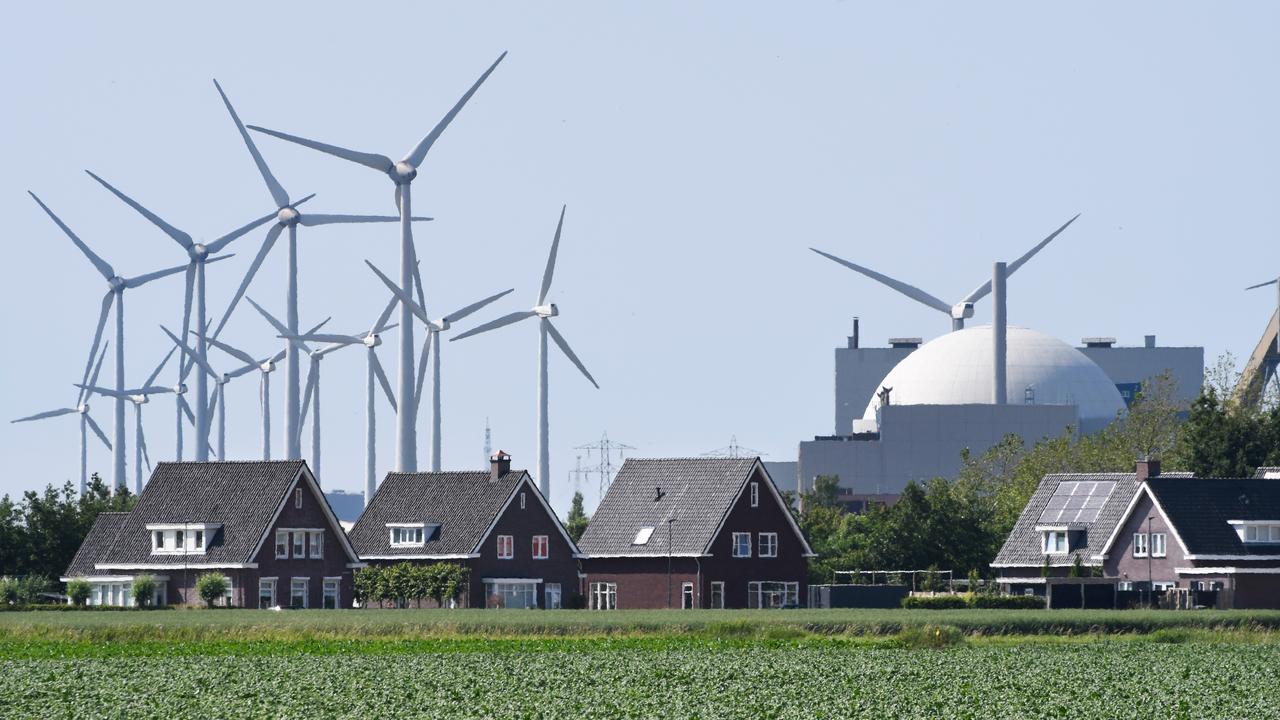
Europe’s wind and solar ‘transition’ continues to unravel, with the Dutch the latest to ditch the pitch to so-called ‘renewables’. Small (geographically) and industrious, the Dutch have always managed to punch well above their weight, dominating seafaring trade through history and, these days, producing a staggeringly large proportion of the foodstuffs that are consumed around the globe.

But, like most of their European neighbours, the Netherlands has squandered billions of subsidies on chaotically intermittent wind and solar, with little to show for it – other than ruined landscapes and unliveable homes.

Now the hard cold reality of sunshine and/or weather-dependent power generation is starting to bite. Various provinces simply can’t keep the lights on, and have called timeout on the grand ‘transition’ to sunshine and breezes.

When the sun sets and/or calm weather sets in, it’ll be good old gas (an apparently not-so-evil fossil fuel) powering Dutch homes, businesses and industries around-the-clock, as Carl Deconinck explains below.

Dutch province of Utrecht returns to fossil fuel as power-grid faces meltdown
Brussels Signal
Carl Deconinck
25 April 2024

The Dutch province of Utrecht announced it will switch back to fossil fuel to relieve the overworked electricity grid, as the road to net-zero in the Netherlands hits some major obstacles.

The outgoing Dutch Climate Minister Rob Jetten, leader of the Democrats 66 (D66) party, along with local grid operators, announced a set of measures to fight the power-grid overload in Utrecht province. It is expected to be the first of many regions in the country that will have to take action to avoid future problems.

To maintain electricity provision to the public and businesses in Utrecht, there will be a switch back to gas. At moments of peak demand, the local Government will deploy gas generators.

Smart charging stations will be switched off during peak times but the regional authorities and grid operators are working on an exemption option for owners of electric vehicles to top-up their batteries if they need to.

Instead of fully-electric heat-pumps, hybrid heat-pumps are being promoted. These hybrid models can be connected to boiler-heating systems and are less demanding on the electricity grid.

The Dutch public service broadcaster nos reported that the projected shortage equals the needs of 125,000 homes in Utrecht.

Huib van Essen of the Utrecht Provincial Executive said the measures would “have a significant impact on reducing the overload on the power grid”, adding that the use of gas-plants was “unfortunately necessary” for this.

Without implementing appropriate measures, the province is forecast to experience frequent electricity blackouts, which would jeopardise the construction of new housing and industrial complexes, nos said.

Utrecht is the first province to opt to return to fossil fuels but other areas and provinces, in particular Flevopolder and Gelderland, are also said to be working on similar measures.

Without nationwide measures being implemented, nos reported that approximately 1.5 million people in the Netherlands could be subject to power outages until 2030.

Other issues would include the malfunction of electrical devices and lighting.

The problems for households and small consumers come on top of long-standing issues for the Dutch industrial sector, which is consuming electricity at much higher rates than previously.

Waiting times for new or upgraded connections, necessary for businesses to enhance their sustainability efforts, are also on the rise.

The shift back to fossil fuels in the Netherlands follows a decision by the Scottish Government to abandon its flagship target of reducing greenhouse gas emissions by 75 per cent by 2030.

It said it had an “unwavering commitment” to achieve net zero by 2045 but on April 18 called the targets for 2030 “out of reach”.

Scotland’s leadership was one of the first in the world to declare a “climate emergency”, in 2019.
Brussels Signal

via STOP THESE THINGS

https://ift.tt/rGpWYUP

May 31, 2024 at 02:30AM

MET OFFICE TEMPERATURES SHOULD HAVE +/- 2.5 ERROR BARS ADDED

No proper scientific paper would be published without clearly showing the error bars for its measurements, and yet the Met Office claims to have measured record temperatures only 0.1 degrees above the previous record using data which has inaccuracies of +/- 2.5 degrees. This report has the details:

 Met Office Should Put 2.5°C ‘Uncertainties’ Warning on All Future Temperature Claims – The Daily Sceptic

via climate science

https://ift.tt/KQoWyq0

May 31, 2024 at 01:33AM

“How Many Birds Do Wind Farms Kill?” (pro-wind concern)

“[Hannah] Ritchie ends with suggestions for better results for wind’s avian mortality problem, including ‘Turn off wind turbines at very low speeds when bats are around … Don’t put wind farms in high-risk areas for birds and bats … Paint the turbines Black … Play alert noises to bats and birds to deter them.’ But … these things limit wind siting, increase costs, and/or annoy local neighbors.”

A social media post by Hannah Ritchie (sustainability researcher, University of Oxford) on industrial wind power is worth revisiting. She works within the climate alarm/forced energy transformation narrative (“Bird species are under threat from climate change”) but considers the question:

It would be worrying, then, if a move to low-carbon energy increased pressures on bird populations. That’s a common concern as countries move to wind power.

After noting that “cats, buildings, and cars kill far more birds than wind power,” and windows kill more birds than wind turbines, she gets to the real question:

Wind power is a threat to particular types of birds, particularly birds of prey

It’s not just the total amount of birds that are killed that matters, but what types. If a particular species of bird is disproportionately affected it could have real impacts on population dynamics and risk of extinction.

A study by Chris Thaxter and colleagues (2017) looked at the collision rates of different bird species from a large literature review. The documented rates of collisions for different groups are shown in the chart below.

If you’re like me, you will have no idea what most of these groups actually mean. So I’ve translated a few of the most impacted orders:

In short, birds of prey such as eagles, raptors, and hawks; shorebirds; and storklike orders are at much higher risk of collisions than other families, such as songbirds. This disproportionate risk has been found across many other studies.

These species can be at a higher risk for several reasons. First, they will often use ridgetops to get lift from the wind. Incidentally, this is also a good spot for wind turbines. Second, they are often migratory birds; if wind farms are in their migratory route this puts them at higher risk. More indirect impacts of wind farms – which might not be reflected in death statistics – is their effect on the disruption of migratory patterns.

While the total number of birds killed by turbines is low compared to other hazards, the threat to particular species is more concerning. We need better mapping of key hotspots for these species so that wind farms can be deployed in suitable locations. More on how we can reduce these deaths later.

Ritchie ends with suggestions for better results for wind’s avian mortality problem, including:

  • Turn off wind turbines at very low speeds when bats are around
  • Don’t put wind farms in high-risk areas for birds and bats
  • Paint the turbines Black
  • Play alert noises to bats and birds to deter them

But … these things limit wind siting, increase costs, and/or annoy local neighbors. And she failed to note something else: the avian mortality problem of industrial wind turbines is entirely incremental. The very structures are government-enabled and not necessary for a healthy grid—quite the opposite, in fact.

Still, it is good to see the climate crowd dealing with this issue.

The post “How Many Birds Do Wind Farms Kill?” (pro-wind concern) appeared first on Master Resource.

via Master Resource

https://ift.tt/DKILV9j

May 31, 2024 at 01:11AM

Noah’s Ark Weather, Or A Normal British Summer? Will The Met Office Make Its Mind Up Please?

From NOT A LOT OF PEOPLE KNOW THAT

By Paul Homewood

Further to the latest Met Office scare story:

.

Forecasters are predicting a summer of persistent rain and wet weather for Brits, as global warming continues to result in more erratic conditions.

The Met Office has briefed the Government and transport chiefs to prepare for at least 50 days of rain in the next three months, leading to fears over further flooding in the UK and dashing any hopes of a warm British summer.

Last summer saw 40 days of rain, but the Met Office expects this summer to be even worse, jeopardising popular summer events such as Wimbledon, Trooping of the Colour, Royal Ascot and many festivals including Glastonbury.

https://www.lbc.co.uk/news/uk-set-for-50-days-of-rain-in-one-of-the-wettest-summers-in-over-a-hundred-years

It is worth consulting the latest Met Office long range forecast:

https://www.metoffice.gov.uk/weather/forecast/gcx4zrw25#?date=2024-05-30

In short, it will probably be a bit drier than normal down south, and a bit wetter up north.

.

It must now be abundantly clear that the climate change wing of the Met Office is totally out of control, feeling able to put out whatever climate propaganda they can get away with.

Meanwhile their weather forecasting colleagues must be ashamed of their politicised antics.

The British public deserve better.

via Watts Up With That?

https://ift.tt/fa7A4rF

May 31, 2024 at 12:04AM