Month: May 2024

Professor says we can stop emissions with a pandemic that kills billions

By Jo Nova

Death cult at nine

Let’s just say, hypothetically, that someone wanted an excuse to reduce global population, or limit competing tribes and religions, there’s a scientific hat for that. Climate Change is the ultimate excuse for mass death — done in the nicest possible way and for the most honorable of reasons. But isn’t that what they all say: Jim Jones, the Branch Davidians, Heavens Gate —  death makes the world a better place?

The cult that pretends it isn’t a cult sells itself as “science”. I mean, what the worst thing you can think of? Would that be one degree of warming, or the Black Death?

In Bill McQuire’s mind the catastrophe is not when billions of innocent people die.

One hundred years from now, what would our great grandchildren prefer: that the world was slightly cooler or they were never born at all? If you hate humans it’s a terrible dilemma…

Bill McGuire, vulcanologist, accidentally put his primal instincts in a tweet last weekend:

Culling for the climate. Thirty years of telling us that humans are bad has consequences. As Elon Musk said” They want a holocaust for humanity.” It turns out a televised diet of one-sided climate projection by mendicant B-Grade witchdoctors might be a dangerous thing for mental health. If only Bill McQuire had seen a skeptic on TV?

Predictably the McGuire tweet spread far, and got crushing replies so the Emeritus Professor deleted it, as all cowards do, yelling at us:

McGuire, deleted. tweet.

To which the winning reply was:

McGuire kept digging, declaring that “ I DID NOT SAY ‘WE NEED A PANDEMIC..’” only of course, he did say we need emissions reduction and that a pandemic was the only realistic way to do that. He told us he was being brutally honest after all. “I COULD HAVE SAID SOCIETY-BUSTING ASTEROID IMPACT INSTEAD OF PANDEMIC” he lamented, like that was so much better.

So spread the word, academia has become a cult. Don’t let children go there unprotected.

Remember once a mind is infected with Climate Change, bioweapons are just another kind of carbon credit.

The problem is not the Climate Cult itself, it’s the censorship that feeds the sickness…

h/t Old Ozzie, Another Ian, El Gordo


0 out of 10 based on 0 rating

via JoNova

https://ift.tt/SIYkmF6

May 16, 2024 at 03:34PM

Wrong, Mainstream Media, Tree Rings Aren’t Reliable Indicators of Past Temperatures

Originally posted at ClimateREALISM

Dozens of media outlets such as ABC NewsThe BBCThe New York Times, and many more, hyped a study that claims summer temperatures in 2023 were unprecedented over the past 2000 years. This claim, in fact, can’t be verified by tree ring data, which isn’t that precise. Researchers are falsely assuming tree rings are reliable temperature indicators when in fact tree rings can indicate a multitude of different conditions, not just temperature.

Further, the study, Esper, J. et al., Nature, 2024, is using an old trick, pioneered by Michael Mann, Ph.D. in his controversial hockey stick graph, where estimated temperatures from select tree rings and other proxies far into the past are grafted onto more reliable temperatures, measured in the present, and presented as one unified dataset, when in fact they are radically different.

For example, the BBC’s article about the study presented this graph, which is highly reminiscent of Mann’s original “hockey stick” graph.

That graph is highly misleading, if not a flat-out fabrication. It suffers from the same sort of issues in Mann’s original “hockey stick” graph, such as the fact that tree ring data from other trees show no such trend. We know from other studies that the Roman Warm Period (from 1–250 AD) and the Medieval Warm Period (950 to c. 1250 AD) existed, but they have been erased from this graph presented to the public as accurately representing past temperatures, when it is actually dishonest fiction based on a biased analysis of selected proxy data.

The fact that these well-known, documented, and scientifically certified climate events have been removed from the graph touted by the media indicate that this is more likely propaganda in pursuit of a political goal, rather than a scientific search for understanding based on honest use of the scientific method.

Another issue with the study is the well-known fact that annual tree ring growth is not tied solely to temperatures, much less the made up metric of “global average temperature,” as Liebig’s law of the minimum explains. Often simply called Liebig’s law, or the law of the minimum, is a principle developed in agricultural science by Carl Sprengel (1840) and later popularized by Justus von Liebig. It states that growth is dictated not by total resources available, but by the scarcest resource (limiting factor).

In other words, plant growth factors from year to year such as sunlight, available water as rainfall, available nutrients in the soil, and temperatures, among other factors, combine to determine growth of a tree, not just temperature alone. It is impossible to distinguish and disentangle the various factors that contribute to tree growth in any given year, much less thousands of years in the past. As a result, one can’t honestly claim that tree growth rings necessarily reflect temperatures alone at a particular time or location, much less that tree rings from one or a few sampled areas show anything about global temperatures or conditions. Making such claims is simply dishonest.

Also, that present temperatures may or may not be warmer than any in the last 2000 years says nothing about whether that is necessarily a bad thing. Historical evidence, in fact, strongly indicates that warmer periods are better for life and human civilization than cooler periods. The authors of this study, assume, without evidence, that just the opposite is the case.

The lead author, Jan Esper, confirms in the interview he gave the BBC that he is, in fact, using this study as a vehicle to elicit policy action:

The authors say the key conclusion from their work is the need for rapid reductions in emissions of planet-warming gases.

“The longer we wait, the more expensive it will be and the more difficult it will be to mitigate or even stop that process and reverse it,” said lead author, Prof Jan Esper from Johannes Gutenberg University, in Germany.

“That is just so obvious,” he said. “We should do as much as possible, as soon as possible.

This admission strongly suggests that the study is more about climate advocacy than science, and the media fell for it. This sort of journalistic malfeasance has become increasingly more common. The study’s authors are acting as advocates not scientists, a path the editors and fact checkers that media outlets employ followed as well in publicizing the report’s unverifiable claims and its authors’ calls for action. If they were actually doing their jobs as journalists to report the truth, the findings of this study never would have been promoted so widely, or if it had been, the writers would have balanced the story with the views of analysts critical of the study, citing scientific evidence.


via Watts Up With That?

https://ift.tt/3HVenTZ

May 16, 2024 at 12:08PM

New Study Finds An Extremely Low CO2 Climate Sensitivity For The Arctic And Antarctic

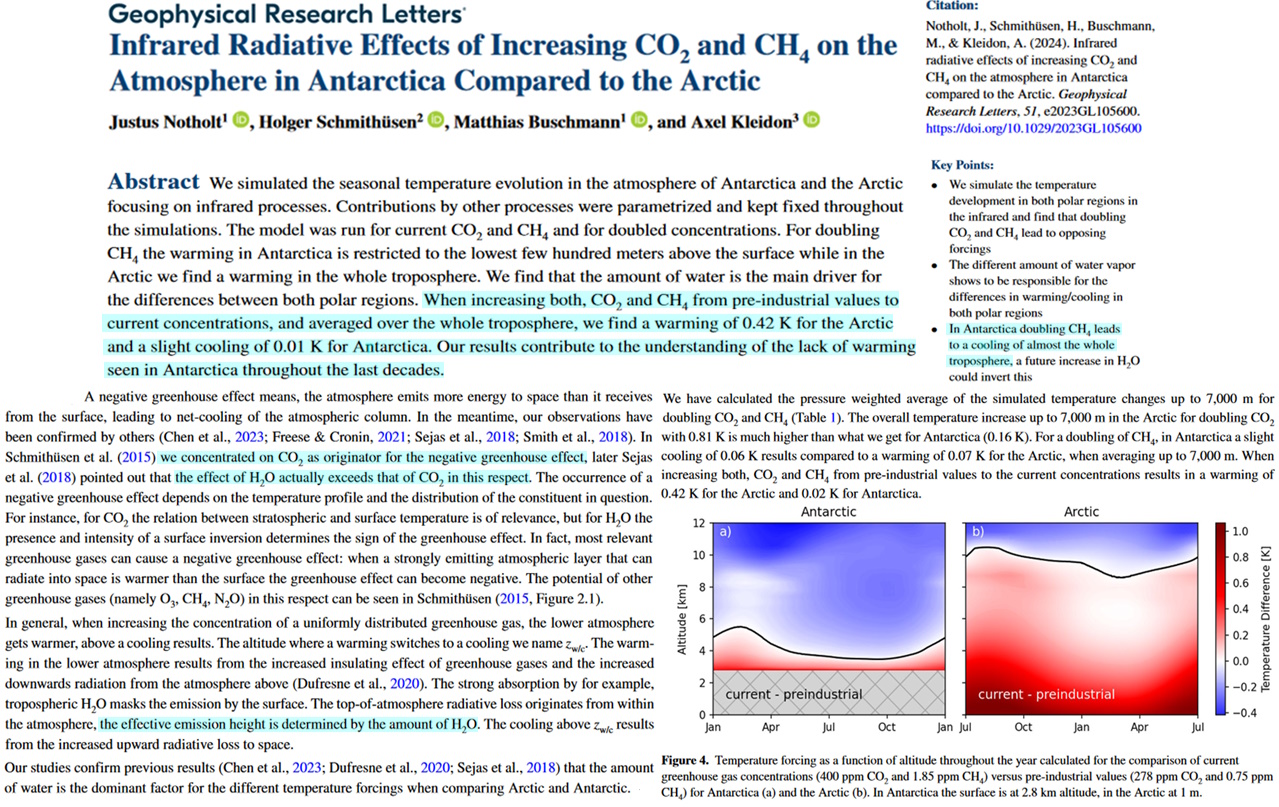
The phenomenon of increasing the concentration of greenhouse gases (water vapor, carbon dioxide, methane) is assumed to lead to sharply rising temperatures in polar regions, or “polar amplification.” As it turns out, it doesn’t.

Per a new radiative forcing model (Notholt et al., 2024), increasing CO2 from pre-industrial to present levels (278 to 400 ppm) results in a slight cooling effect for all of Antarctica (-0.01°C), reinforcing the “negative greenhouse effect” conclusion of previous studies.

The increased CO2 concentration does result in a warming for the Arctic in their model, but only 0.42°C for the 122 ppm increase. This implies CO2 cannot be responsible for the bulk of modern Arctic warming.

It was also determined that for Antarctica, “doubling CH4 leads to a cooling of almost the whole troposphere.”

The negative greenhouse effect of water vapor – Earth’s main greenhouse gas – dominates over CO2 with regard to climate impacts in polar regions.

The authors suggest their results provide an explanation for the “lack of warming seen in Antarctica throughout the last decades.”

Image Source: Notholt et al., 2024

via NoTricksZone

https://ift.tt/lPoTBu9

May 16, 2024 at 12:05PM

Arctic Ice Plentiful Mid May 2024

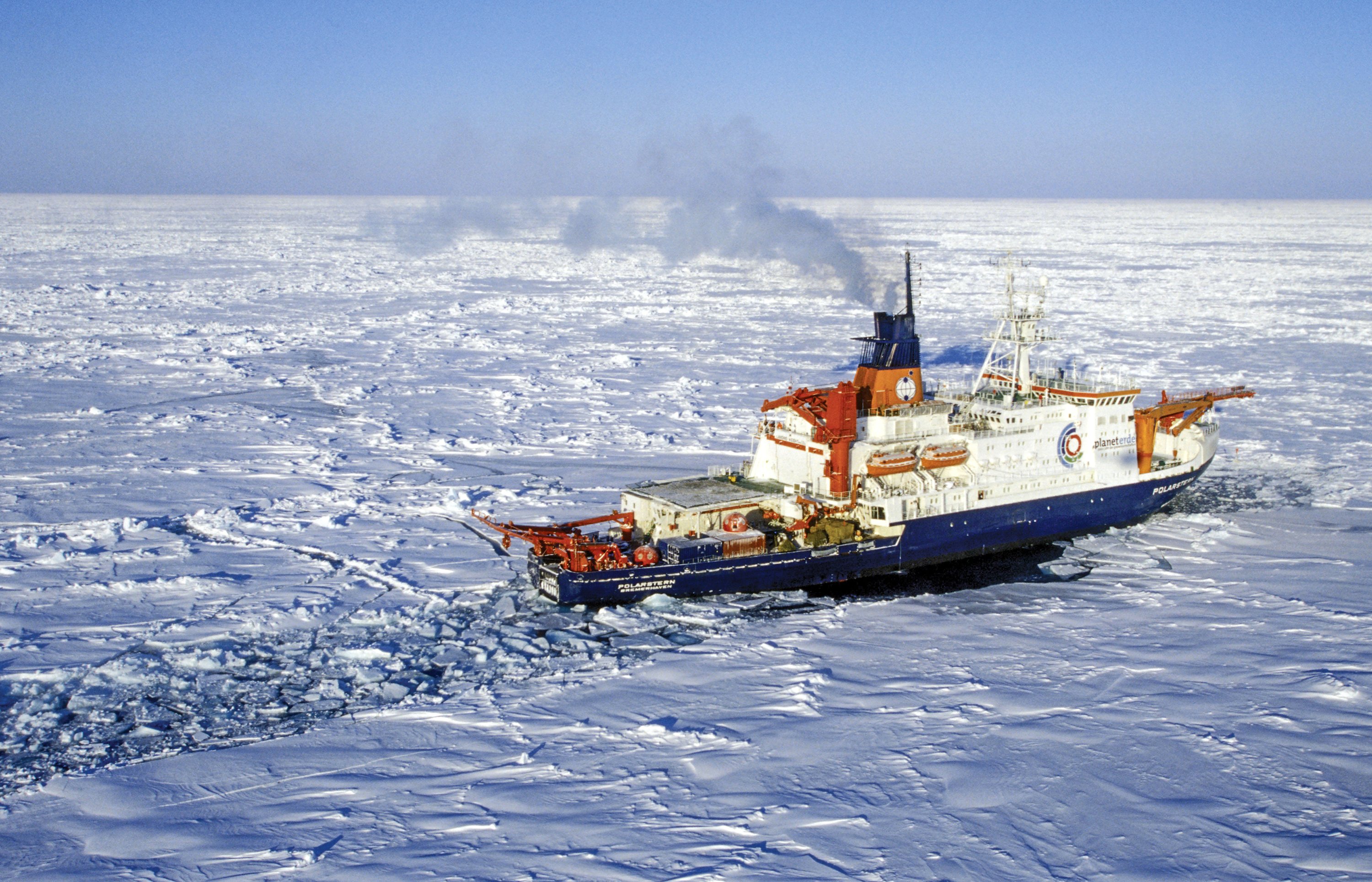
Research ship drifting along with Arctic ice, May 2019 US Naval Institute

In May, most of the Arctic ocean basins are still frozen over, while the melting of ice extent is underway in the marginal regions.   During the last 30 days, on average according to MASIE, Arctic ice extents lose 1.4M km2. The few basins where open water appears this time of year tend to fluctuate and alternate waxing and waning.

The graph below shows the mid April to mid May patterns for ice extents on average, this year and some other years of note.


The graph shows the 18-year average loss for April is 1.4M km2.  2024 started this period with a slight deficit and ended 136k km2 above average.  SII showed higher throughout, and much greater extents in May (still awaiting the number for Day 136). Other recent years have been nearly average, while 2006 ended with a large defict of ~400k km2.

Region 2024136 Day 136 Ave 2024-Ave. 2006136 2024-2006
 (0) Northern_Hemisphere 12740271 12604358 135913 12157814 582457
 (1) Beaufort_Sea 1059379 1045092 14287 1066139 -6760
 (2) Chukchi_Sea 962124 924541 37582 956734 5389
 (3) East_Siberian_Sea 1081877 1081548 330 1074876 7001
 (4) Laptev_Sea 892100 879228 12872 889990 2109
 (5) Kara_Sea 875173 876506 -1333 839569 35603
 (6) Barents_Sea 562240 406857 155382 182554 379686
 (7) Greenland_Sea 666605 613812 52793 519337 147268
 (8) Baffin_Bay_Gulf_of_St._Lawrence 984569 1059633 -75065 892335 92234
 (9) Canadian_Archipelago 838357 841188 -2831 828806 9550
 (10) Hudson_Bay 1117021 1177260 -60239 1071342 45679
 (11) Central_Arctic 3216321 3225072 -8750 3169225 47096
 (12) Bering_Sea 370480 285787 84693 478464 -107984
 (13) Baltic_Sea 14356 5552 8804 15239 -883
 (14) Sea_of_Okhotsk 98529 179953 -81424 168615 -70086

The table shows regional ice extents in km2.  Note that Hudson and Baffin Bays have started melting, and Hudson will likely go to open water in a few weeks. Sea of Okhotsk on the Pacific side is down 81k, offset by a similar surplus  in Bering sea. Note the huge surplus in Barents sea on the European side. Everywhere else is mostly in surplus, especially the seas of Barents, Greenland and Bering.  2006 had 582k km2 less ice extent than 2024 (more than half a Wadham).

The polar bears had a Valentine Day’s wish for Arctic Ice.

welovearcticicefinal

And Arctic Ice loves them back, returning every year so the bears can roam and hunt for seals.

Footnote:

Seesaw accurately describes Arctic ice in another sense:  The ice we see now is not the same ice we saw previously.  It is better to think of the Arctic as an ice blender than as an ice cap, explained in the post The Great Arctic Ice Exchange.

via Science Matters

https://ift.tt/eD1Kg8h

May 16, 2024 at 11:05AM