
Claims that wind and solar are the cheapest form of energy there is, never survive first contact with reality. The first exhibit is the massive and endless subsidies, without which there would be no wind or solar industries, at all.
If left to the market, there would be no generation of wind and solar, at any scale, anywhere, ever, without punitive mandates and targets, and without renewable energy certificates, production tax credits or government-backed contracts with guaranteed prices magnitudes higher than the true market value of power that can’t be delivered on demand. Which, of course, is nothing.
With retail power prices surging out of control (coincident with the massive increase in wind and solar generation capacity and the withdrawal of cheap, reliable coal-fired power from the grid) it’s become harder for the Ministry of Truth to explain away the relationship between wind and solar and peoples’ rocketing power bills.
But not for lack of trying, as Nick Cater outlines below.
Generating nonsense: If wind and solar are so cheap why does it have to be subsidised?
Substack
Nick Cater
18 May 2024
The government’s official line is that renewable energy is cheap. It is so cheap that the Treasurer is giving households a $300 subsidy so that they can afford it.
Chris Bowen boasts that the amount of cheap wind and solar energy has increased by 25 per cent during his term as energy minister. Yet electricity bills have risen by 18 per cent on average, according to the Australian Bureau of Statistics.
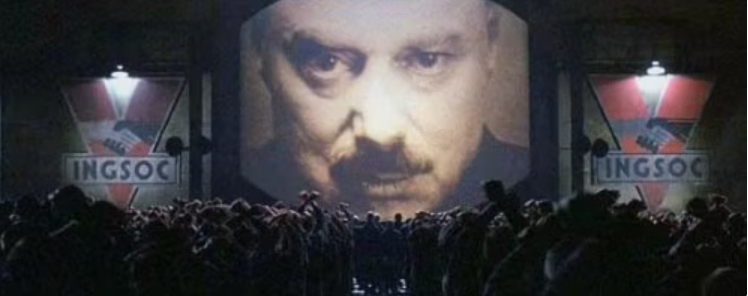
One of George Orwell’s enduring contributions to the English language was the word doublethink. It describes the art of holding two contradictory facts in one’s head while maintaining that both are true.
In Orwell’s dystopian novel 1984, doublethink is essential for survival in a world where the government aspires to control everything. It requires us to forget any fact that has become inconvenient, to deny the existence of objective reality while taking account of the truth that one denies.
The government’s promise to reduce household electricity bills by $275 a year proved as reliable as the Ministry of Plenty’s solemn pledge not to reduce the chocolate ration in 1984. Doublethink excuses the powers that be from having to admit they were wrong. They simply exchange one piece of nonsense for another.
The Ministry of Plenty’s role in Orwell’s dystopia was not to manage abundance, as its name suggests. It was to control scarcity, a similar task that faces our current Energy Minister as he devises convoluted schemes to compensate for the shortage of baseload power.
The Capacity Investment Scheme is one such scheme. It is a sweetheart deal designed to break the drought in renewable energy investment by using taxpayers’ funds to underwrite loans.
If renewable energy is as cheap as the government claims, Bowen would surely risk being trampled underfoot by the influx of investors. Yet investment in renewable energy is at its lowest level for eight years, and investors struggle to see how they can make money on wind and solar without government support.
The investment drought is jeopardising federal and state emission reduction plans. Bowen’s target of installing a 7 MW wind turbine every 18 hours looks as fanciful as the Ministry of Plenty’s Tenth Three-Year production quota for razor blades. The engineering, financial and logistical challenges of building infrastructure on this scale have proved impossible to overcome.
Yet the technocrat mindset of politicians and bureaucrats refuses to surrender to mundane practicalities like financing, skilled labour shortages, supply bottlenecks or planning laws. They are unwilling to pay the political cost of taking the lack of progress as a reality check and admit that their policy was flawed. They prefer to invest their hopes in yet another government programme, the Capacity Investment Scheme. In a joint press conference with Bowen last week, Victorian Energy Minister Lily D’Ambrosio expressed her delight.
“It’s great to have the Commonwealth Government on board to help us build even more renewable energy projects and deliver cheap and reliable power,” she said.
D’Ambrosio’s claim that more renewable energy will make electricity cheaper blatantly contradicts the available facts. Her doublespeak skills were apprenticed at the feet of a master, and while Dan Andrews is now retired from politics, his legacy of dissembling lives on.
Andrews changed the constitution to ban exploration for gas and then complained loudly and long that Queensland was selling gas for export instead of pumping it his way like other leaders who make claims excessive claims for the effectiveness of government, Andrews said that he could never admit to changing policy. The failure of government plans must be blamed on an enemy, just as Anthony Albanese blames Vladimir Putin for the failure of his energy policy.
Yet the consequences of government incompetence eventually grow to big to be contained in doublethink massaged by the Ministry of Truth. The Albanese administration crossed that point in Tuesday’s Budget.
Having failed to deliver cheap energy, the government has been forced to resort to cheap politics. Money that could have been given in tax cuts or paying down public debt will instead be spent to disguise the truth that energy has become more expensive under a government that came to power promising the opposite.
Rather than expressing their disappointment and embarking on plan B, the government is doubling down, promising to spend more of our money on an expanded list of subsidies.
Bowen now insists he has the answer with Reliable Renewables Plan, which, as its name suggests, is inherently fraudulent. The only reliable feature of wind and solar is their unreliability.
The Ministry of Plenty’s rousing claim about an astronomical rise in the production of boots was undone by its failure to meet its target for shoelaces. The failure of the government’s energy policy boils down to a similar problem of matching supply and demand; balancing a grid saturated with intermittent energy is an impossible task for any government, let alone a government as ham-fisted as this one.
Substack
via STOP THESE THINGS
June 12, 2024 at 02:30AM
 Iowa Climate Science Education