
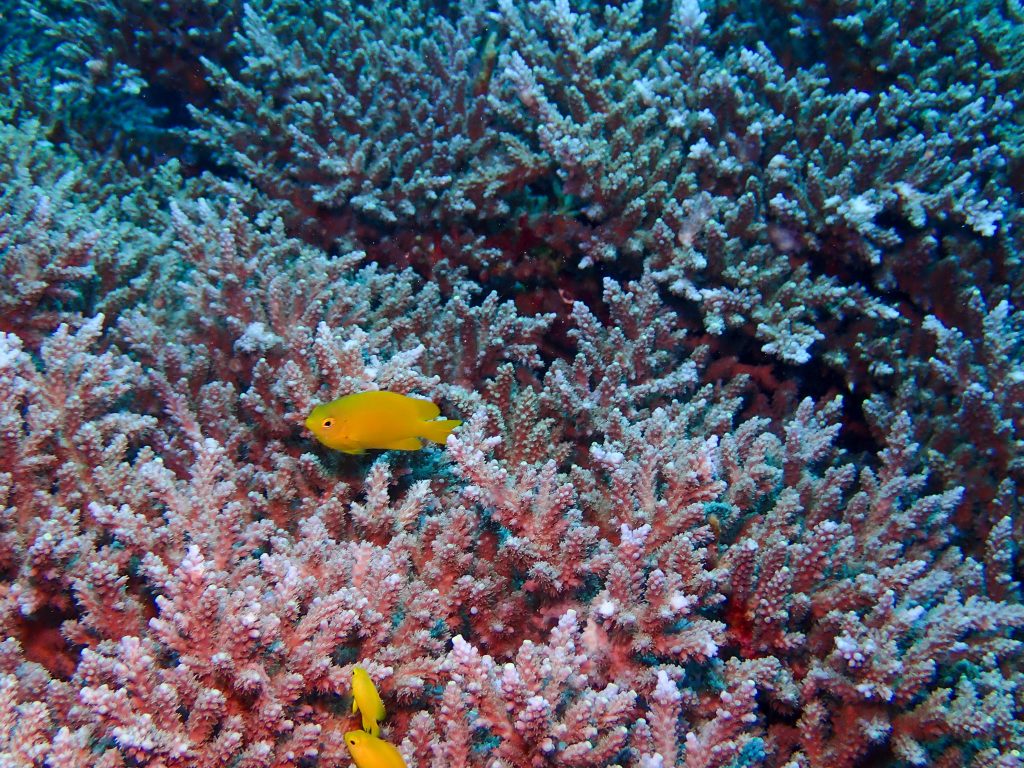
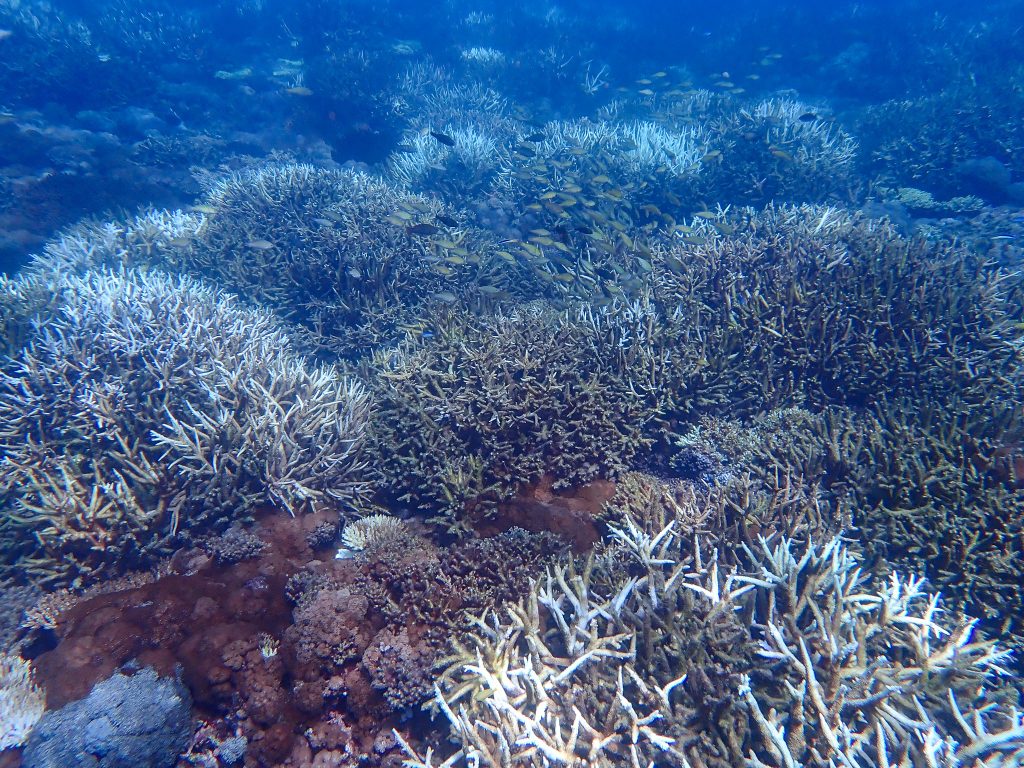
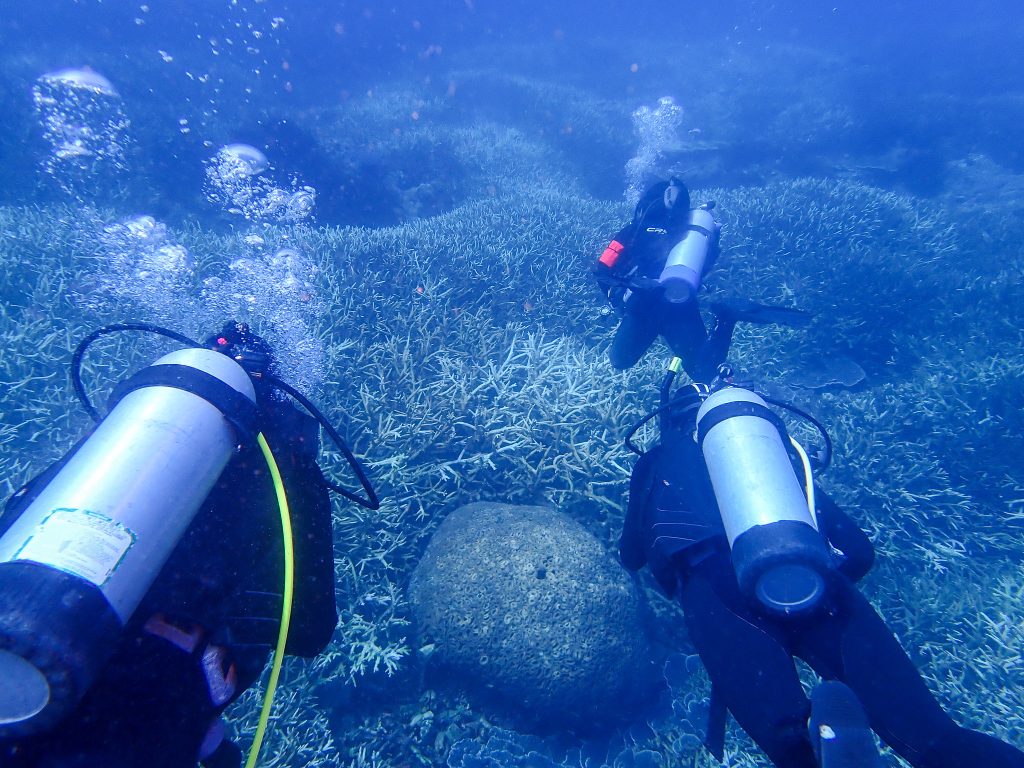
Many of the hard corals fringing the Keppel Islands bleached stark white last summer. Specifically, the fields of branching Acropora spp. went stark white. This was likely caused by a combination of high-water temperatures, low tides and calm conditions. I had never seen anything quite like it before.
The water has cooled down now, by about 10 degrees Celsius (50F) since January, and by about 5 degrees C since April (two months ago) when I last dived these coral reefs. The colour is coming back into the branching Acropora spp., but it is not obvious what percentage of this hard coral is going to survive.
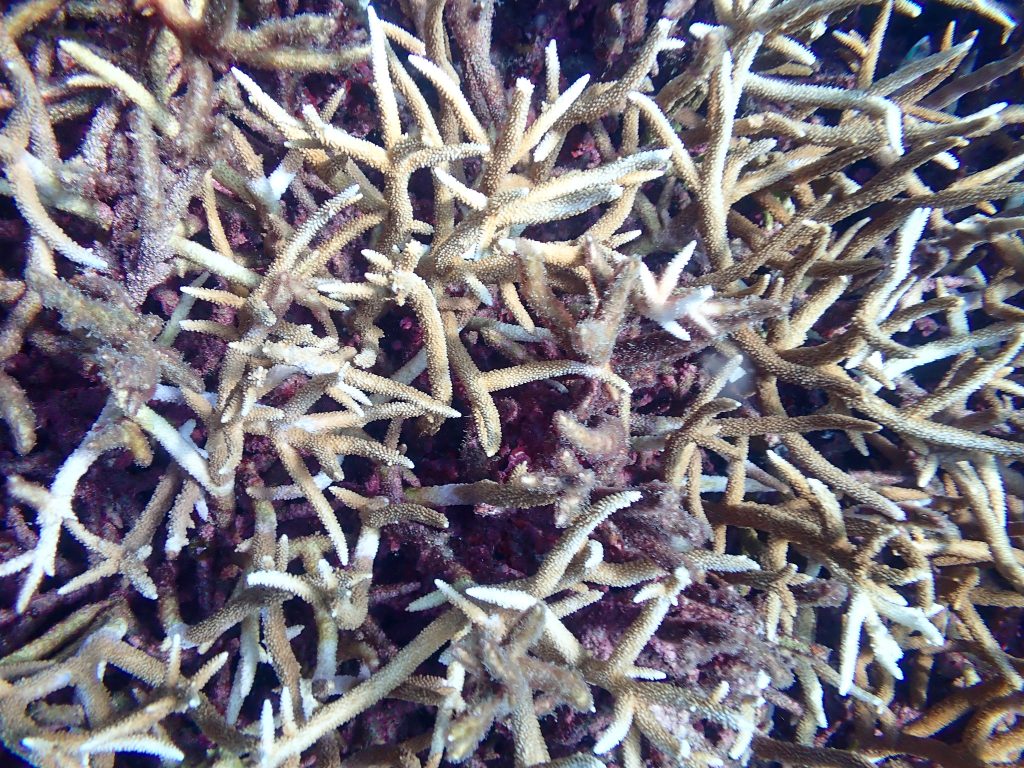
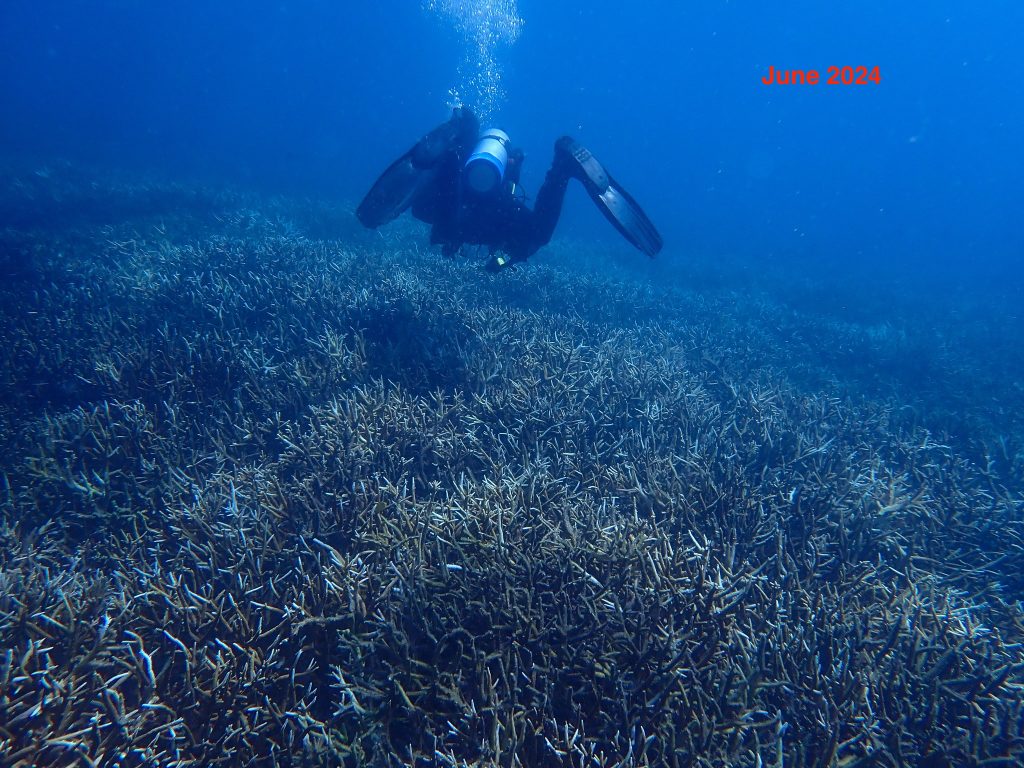
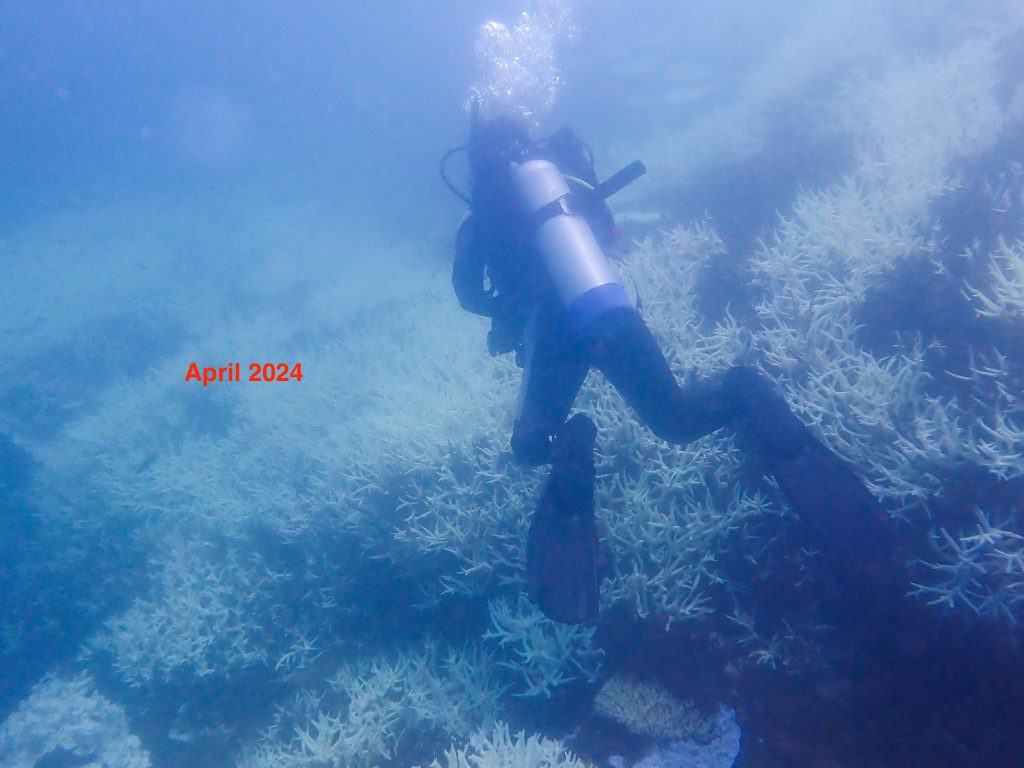
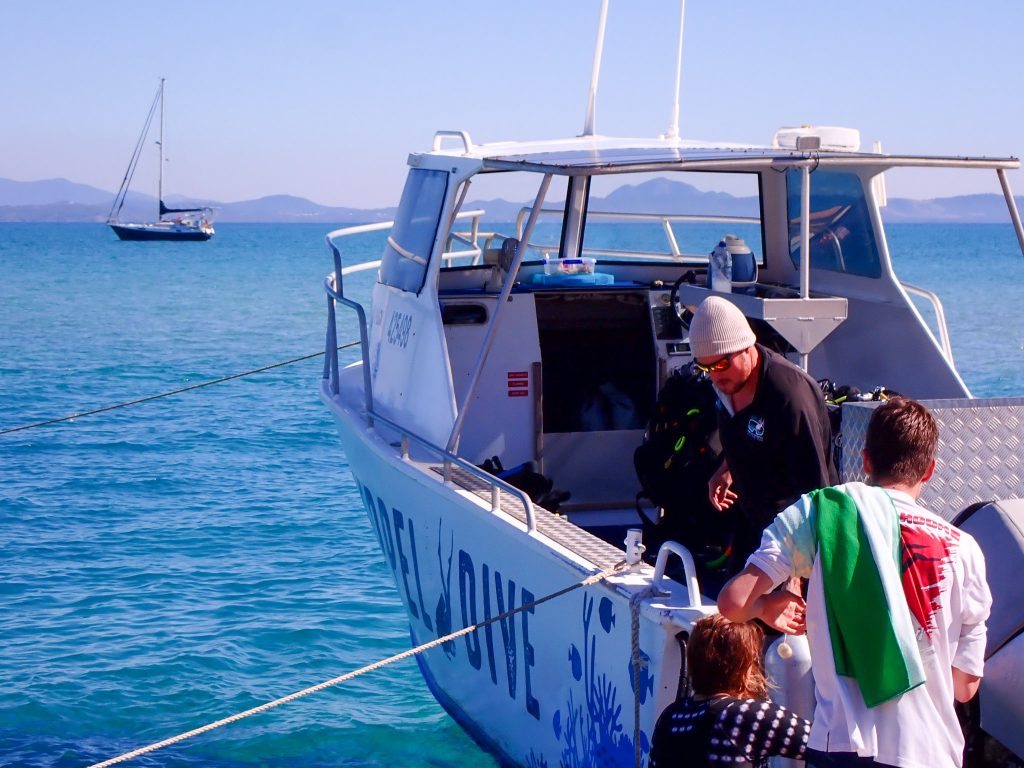
I only got to swim over one reef last Thursday. Our skipper from Keppel Dive/Brandon ended-up providing mechanical support to a boat that was drifting and while he did manage to get their outboard working again, it meant we lost time and only got to dive the site Outer Rock – and the same leeward side twice.
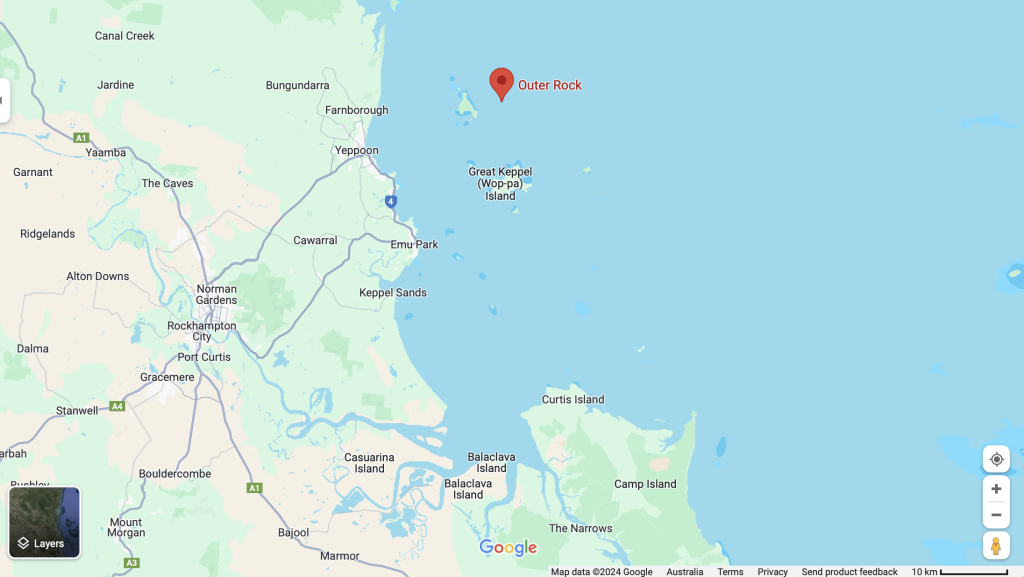
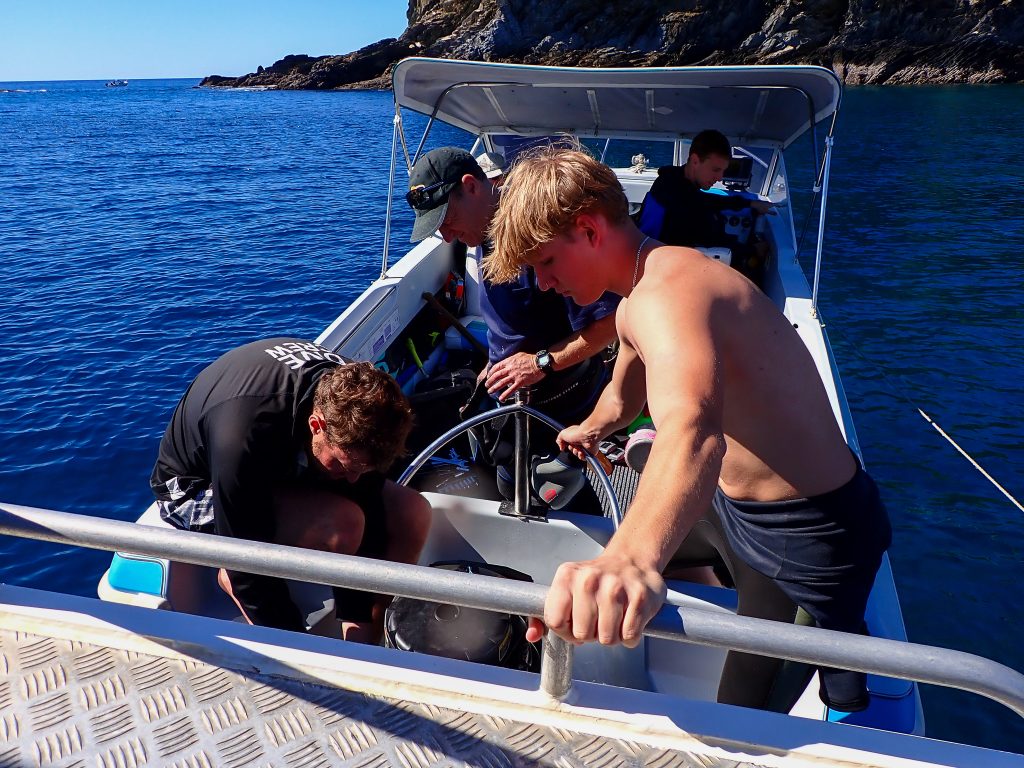
I had not dived this site before, but according to our dive leader/Ines from Keppel Dive, it bleached as white as many of the other Keppel Island dive sites – it was stark white.
It is only 4 metres down to the mooring, and on descent I could see some colour – there were still some white corals but a minority. I felt tremendous relief.
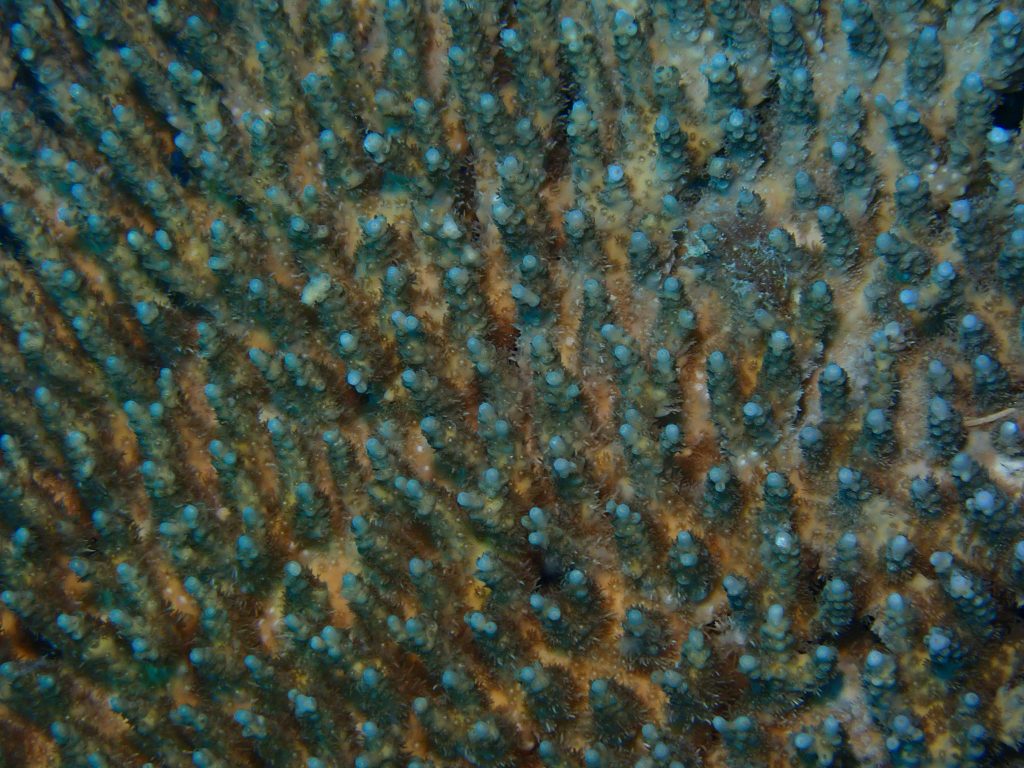
Not far from the mooring I could see an area of coral that appeared to be collapsing inwards, on closer inspection I could see that this area of branching Acropora had lost against the macro-algae. But what, I wondered, was the white stuff poking through?
It took me some moments to realise that under the dying coral heavily infested with algae was a mass of sea anemones – beginning to poke through and dotted with clown fish. Most unexpected this apparently expanding mass of anemone was stark white, but obviously very alive and keeping its tentacles clean of algae.
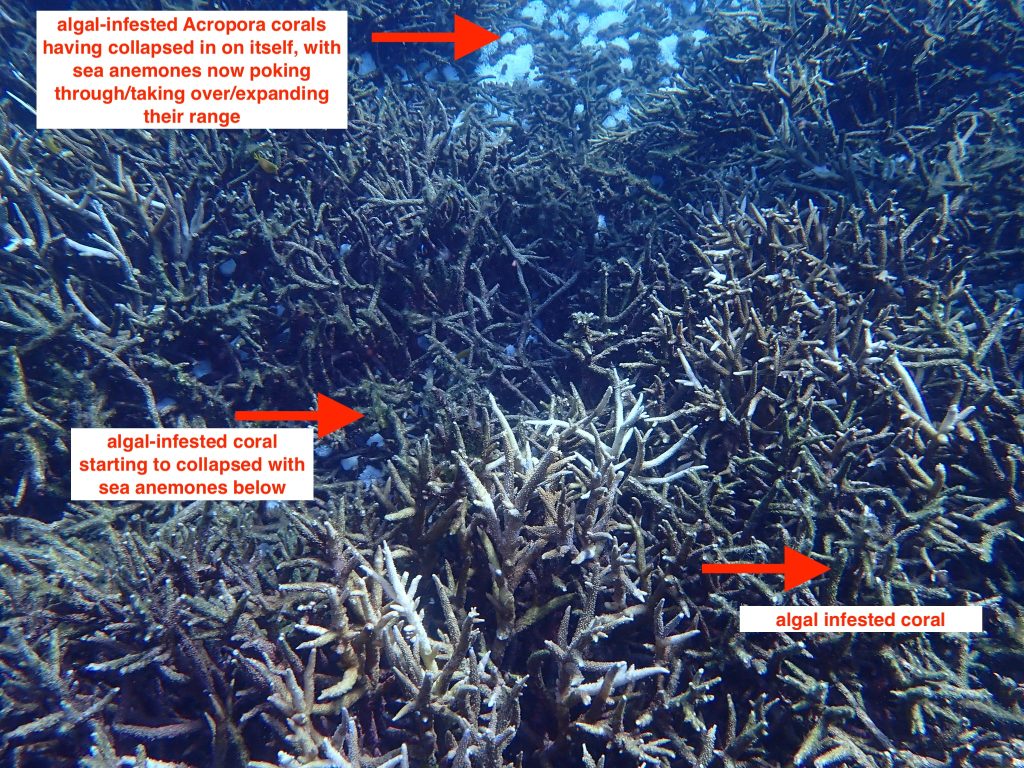
All about were symbiotic anemone fish, but mostly hiding from me – so my photographs are not a good indication of the abundance of these Amphiprion sp/clown fish.
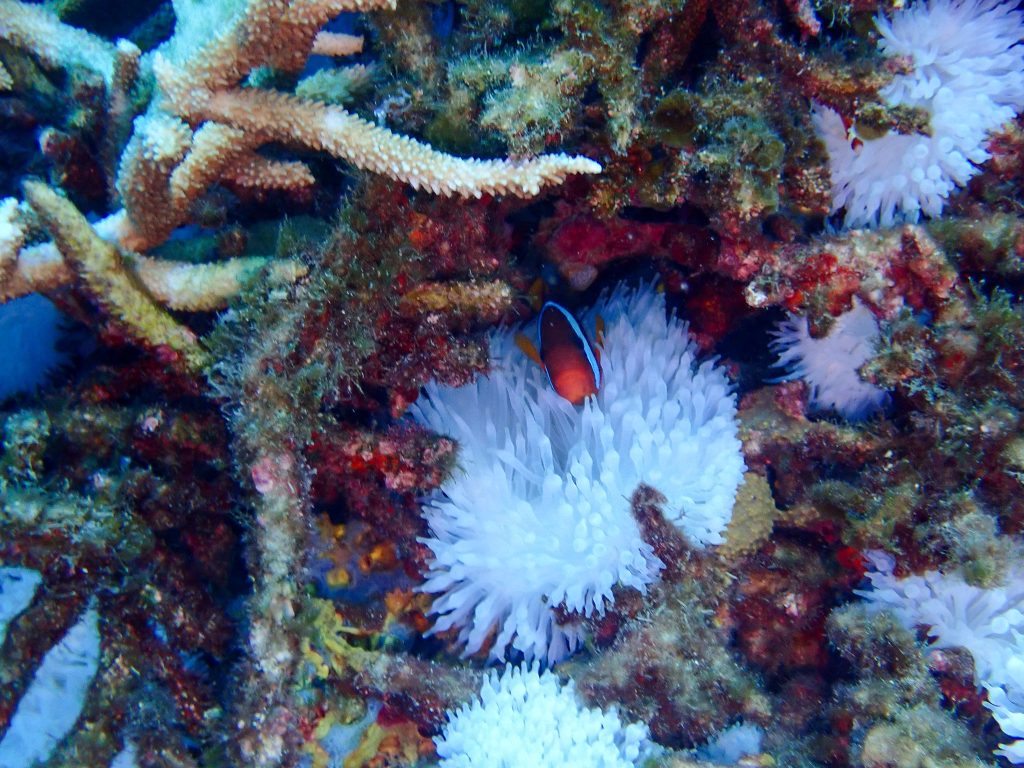
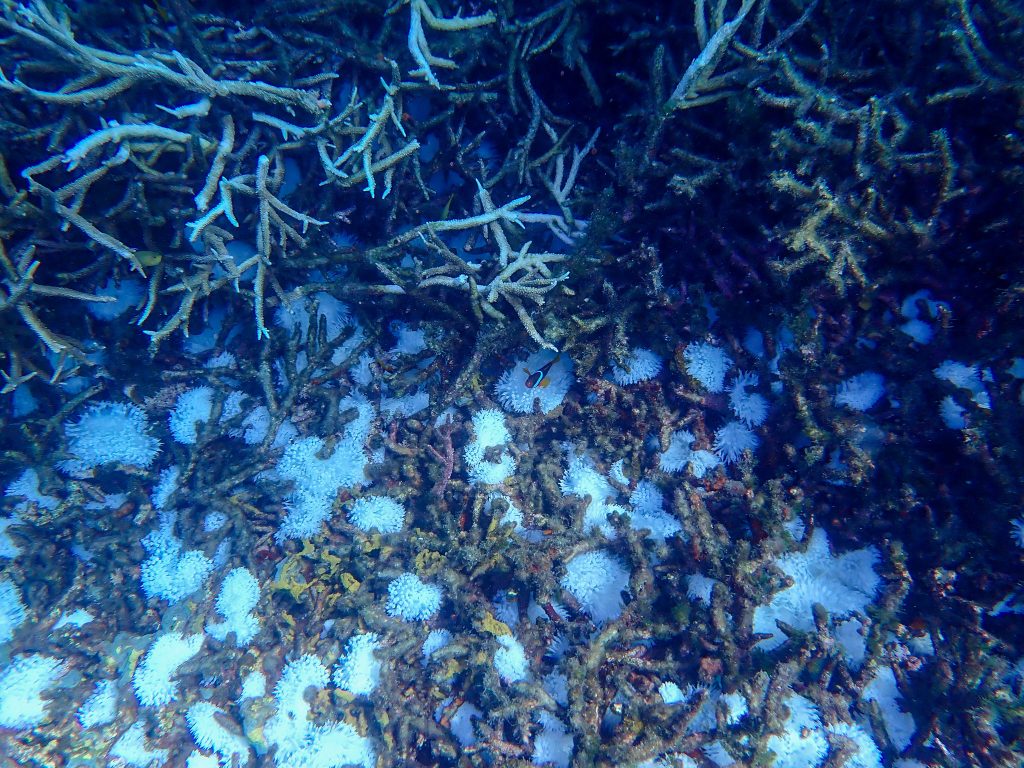
Clown fish are known to live in small groups amongst the anemones. Experiments have found that when these clowns are removed the sea anemones are quickly consumed by butterfly fishes (Chaetodontidae).
It got me thinking about how much competition for space there is at most coral reefs. When one organism, in this case the branching corals finds the conditions too much, something else is likely to take its place.
I remember back on January 21, 2020, diving a site known as Twin Towers, at the Ribbon Reefs due east of Cooktown – much further north than the Keppel Islands. At the crest of this dive site were so many clown fish and sea anemones – for as far as the eye could see and visibility was at least 30 metres that morning.
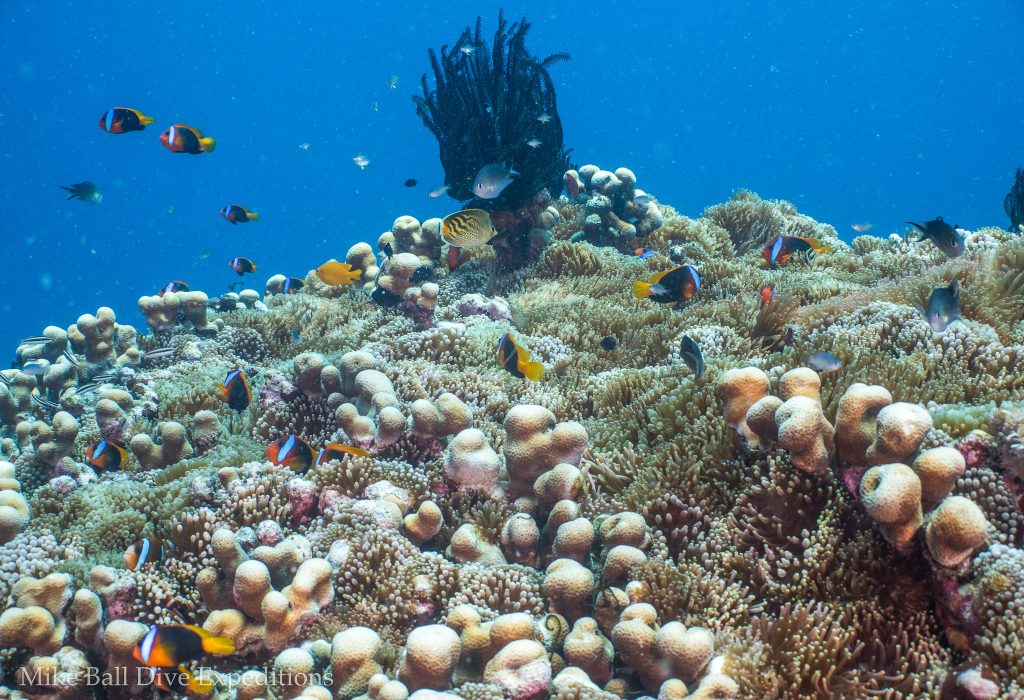
I wondered at the time how the clowns and anemones had come to dominate – and what they might have displaced.
I wondered had the coralliferous (coral eating) parrot fish eaten out all the hard corals, and so the anemones had a chance to multiply.
Since diving off Outer Rock on Thursday, I have come to wonder whether repeated bleaching of branching Acropora corals might create a dominance of anemones in some situations and for some time.
This experience reinforces my scepticism of percentage hard coral cover as a best indicator of reef health – and reef resilience.
Despite water temperatures being a relatively cool 21C, it is interesting that the sea anemones were very white, devoid of zooxanthellae – and yet seemingly expanding their range.
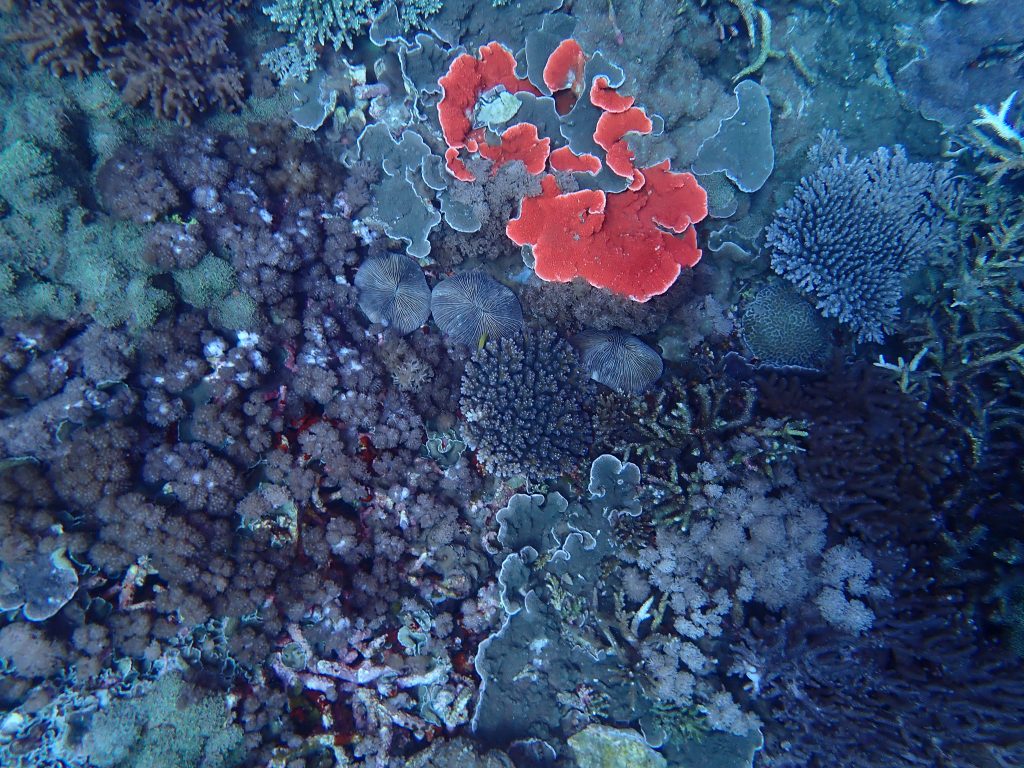
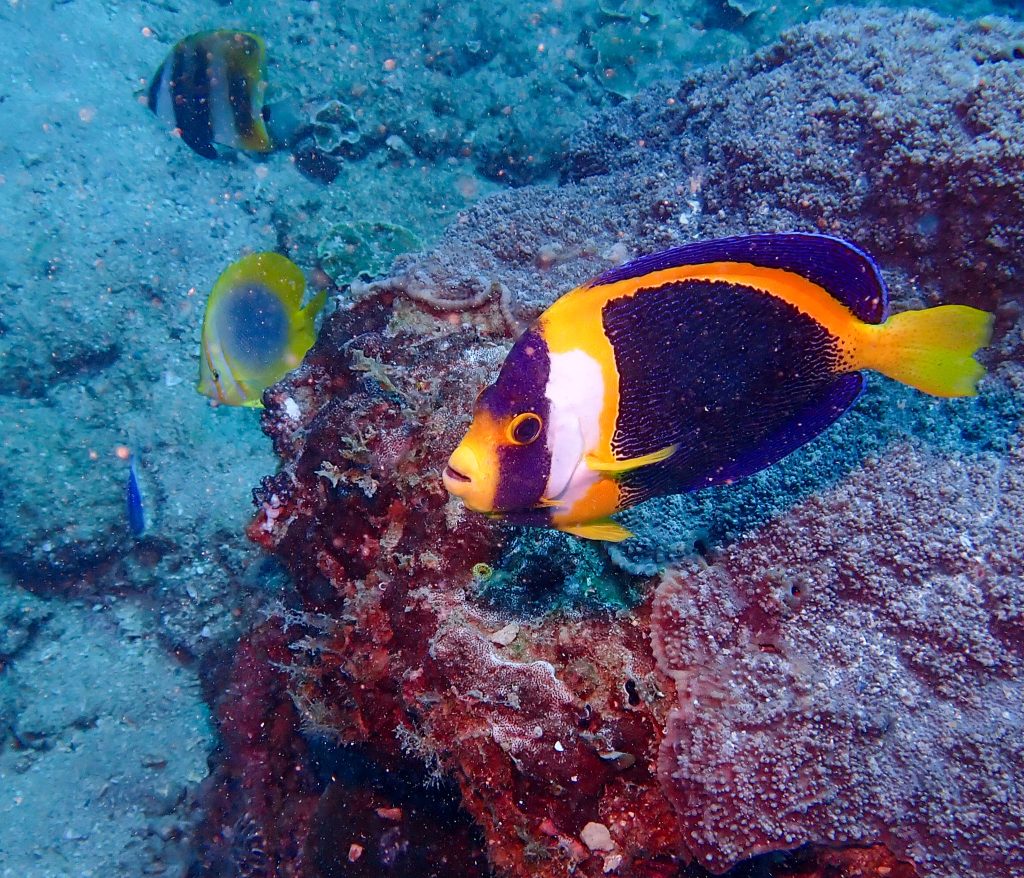
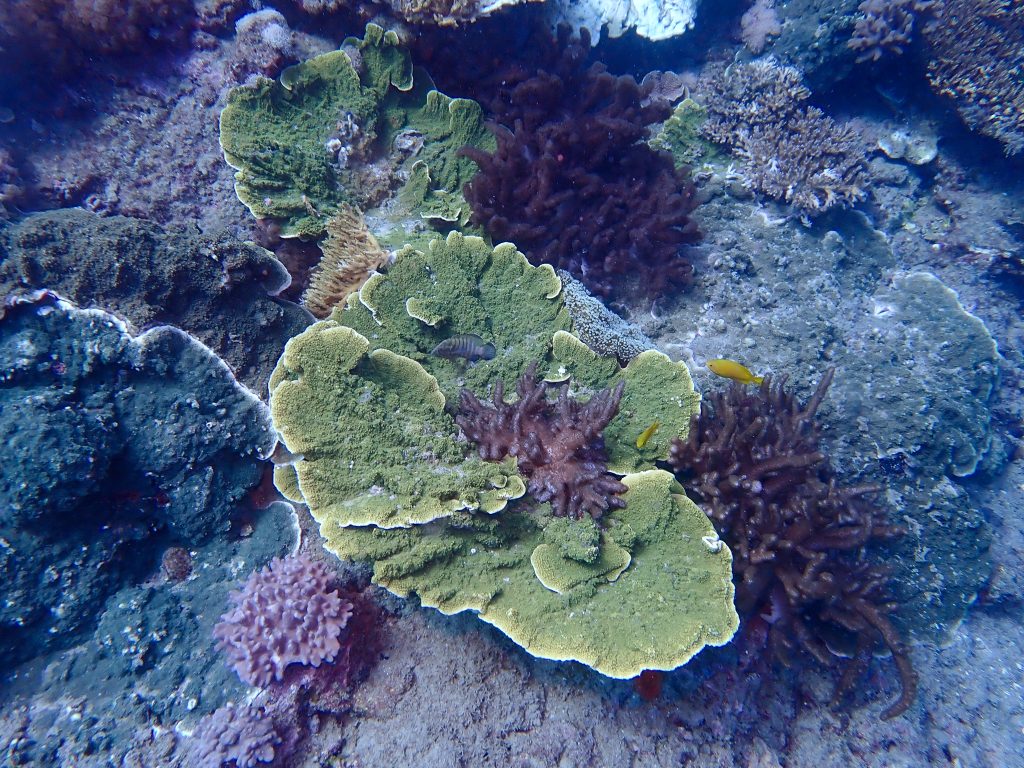
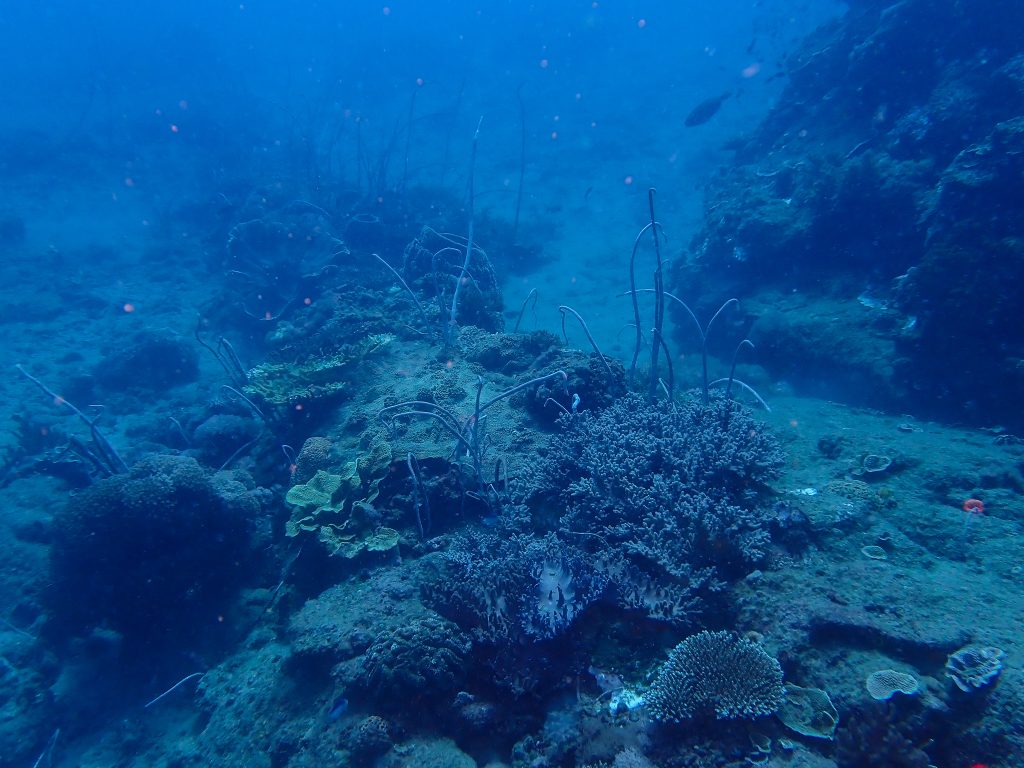
Not all the corals fringing Outer Rock are branching Acropora, and the sections of this dive site with a greater diversity of coral species appear much less affected by the bleaching, and of course, had a greater diversity of colourful fishes.
I’m hoping to be back visiting the Keppel Islands over the next few weekends, to stay in the loop consider subscribing at this blog for my irregular weekly emails.
*********
Notes
* Sea anemones are a group of predatory marine invertebrates constituting the order Actiniaria. Sea anemones are classified in the phylum Cnidaria, class Anthozoa, subclass Hexacorallia. Like corals, sea anemones typically have symbiotic zooxanthella that provide colour.
Thanks so much to Jenn and the team at Keppel Dive, for all the opportunities.
via Jennifer Marohasy
June 21, 2024 at 10:09PM
 Iowa Climate Science Education