Month: June 2024

Labour’s energy plan doesn’t add up

By Paul Homewood


 image

So, we have a little more flesh on the bones of Labour’s energy policy, with the party giving more details of Great British Energy, the state-owned company it wants to set up to invest in wind and solar energy. But there are still gaping holes in Labour’s promise to decarbonise the electricity grid by 2030 – and save consumers money in the process.

First to note is that Labour seems drastically to have toned down the claims as to how much its energy policies will supposedly save consumers. Until today it was claiming that it would save us ‘up to £1,400’ a year. Given that under Ofgem’s price cap the average household is currently paying £1,690 a year on a dual gas and electricity bill, and that this is due to fall to £1,568 in July, this did seem a little unlikely – it was based on the very high energy prices of the winter 2022/23. Labour’s new claim is that it will save us £300 a year. But it also claims: ‘Labour pledges that Great British Energy will cut energy bills for good, as families face threat of £900 annual energy price spikes under the Tories.’

Annual energy price spikes of £900 under the Tories? Where did that come from? It seems to be based on a claim that ‘a dual-fuel household with typical levels of consumption on the direct debit price cap/Energy Price Guarantee would have paid £1,880 more between April 2022 and March 2024 than if prices and standing charges had remained at their April 2021 to March 2022 levels’. In other words, Labour is asserting that had it been in power, energy prices would not have risen one bean in 2022 and 2023. This seems somewhat improbable – unless David Lammy – Labour’s putative foreign secretary could have managed to charm Vladimir Putin into not invading Ukraine.

The Ukrainian invasion led to a spike in gas and oil prices all across Europe but the crisis – combined with the inflationary effects of the pandemic – also led to a sharp increase in the cost of new wind and solar. As an example, in July 2022 the Swedish company Vattenfall won one of the government’s auctions to build an offshore wind farm, Norfolk Boreas, in return for a strike price (a price guaranteed for 15 years, rising with inflation) equivalent to £45 per megawatt-hour at the time. A year later it withdrew from the project, complaining that the cost of building a wind farm had greatly increased in the interim and it would no longer be profitable. Not only had steel and cement prices increased greatly, so too had interest rates. When most of the costs in constructing power plant come upfront – as they do with wind and solar – the level of interest rates makes a huge difference to profitability. A further government auction for offshore wind last September attracted no bids.

How will Great British Energy get around the rising costs of building wind and solar? Labour provides no answer to this, but it does say that Great British Energy will have an initial capitalisation of £8.3 billion, funded by a ‘proper’ windfall tax on gas and oil companies. Given that Vattenfall had been proposing to spend £10 billion building just three offshore windfarms (before costs surged) it is hard to see how this is going to fund a complete transformation of the energy sector, as Labour is promising. Besides the cost of building wind and solar farms themselves, there is also the considerable cost of reconfiguring the grid to allow the power generated by new wind and solar farms to actually to be used – at present developers are complaining they have been told it could take up to 15 years to connect their projects to the grid.

On top of that is the even bigger cost of providing some sort of back-up to provide energy when wind and solar energy are very low. How is Labour planning to do this? It still can’t seem to tell us, although it is interesting to note that today’s press release on Great British Energy doesn’t mention energy storage but it does mention CCS – i.e. Carbon Capture and Storage, a technology that can be used to remove carbon dioxide from the exhaust streams of coal and gas-fired power stations, albeit at a price. If Labour is planning to use gas plants fitted with CCS as back-up, it certainly isn’t going to be saving consumers much money. Moreover, the continued use of gas would make a nonsense of Labour’s pledge to save us from ‘fossil fuel markets controlled by dictators and rogue states’.

Indeed, Labour’s energy policy would make us more dependent on fossil fuels from rogue states because it involves granting no new licences for oil and gas extraction in the North Sea. If we are going to continue to use gas, but we are not going to get it from our own territory, then clearly we are going to have to import it. Labour’s energy policy never did add up. The latest release of detail on Great British Energy does nothing to change that.

https://www.spectator.co.uk/article/labours-energy-plan-doesnt-add-up/

Carbon capture is even worse than Ross Clark thinks. The process is hopelessly energy inefficient, so it not only costs much more, but also needs even more of those fossil fuels Labour so despises.

via NOT A LOT OF PEOPLE KNOW THAT

https://ift.tt/Oj8lZGP

June 1, 2024 at 03:34PM

IEA: Higher Energy Prices are Russia’s Fault, Not Renewable Energy

Essay by Eric Worrall

According to the IEA, consumers are unfairly blaming green policies for driving up prices, when the truth is it’s all Russia’s fault.

Strategies for Affordable and Fair Clean Energy Transitions

INTERNATIONAL ENERGY AGENCY

The last few years have been tough for many energy consumers around the world, with high energy prices putting a lot of pressure on the cost of living. The effects have been most severe for low-income countries and households. This has rightly put issues of affordability and fairness at the centre of the energy debate.

For an honest assessment of the situation, we need to be clear about where these pressures on the cost of living have come from. The global energy crisis that escalated in early 2022 was not caused by clean energy. Since the early days of the crisis, I have been speaking regularly with energy policy makers from around the world. None of them have complained of relying too much on clean energy. On the contrary, they wish they had more, because the result of investing in these technologies today is a more affordable energy system for consumers tomorrow – as well as less severe impacts from climate change, major improvements in air quality and greater energy security.

When people misleadingly blame clean energy and climate policies for the recent spikes in energy prices, they are, intentionally or not, moving the spotlight away from the main cause – the major cuts that Russia made to natural gas supply.

That said, there is still an important debate to be had about affordability and fairness in clean energy transitions – notably in terms of how the costs and benefits will be shared. And that is why we have produced this important new analysis. We wanted to provide an evidence base and actionable advice for policy makers as they consider their strategies for the future. A key risk is that poorer households, communities and countries are excluded from the new clean energy economy that is emerging around the world because they cannot pay the upfront costs of the switch to a safer and more sustainable energy system. As a result, they remain vulnerable to swings in fuel prices, which already disproportionately affect their budgets and well-being compared with their wealthier counterparts.

Well-designed policies are essential to addressing this. This special report provides examples – from across advanced, emerging and developing economies – on ways to make clean energy technologies more accessible to all. This is an important and growing area of work for the International Energy Agency (IEA), as demonstrated by our longstanding work on energy access globally and, more recently, by our Global Summit on People-Centred Clean Energy Transitions in April 2024 and our Summit on Clean Cooking in Africa in May 2024, which mobilised USD 2.2 billion in new announcements from governments and private sources to increase clean cooking access in Africa. Both summits were firsts of their kind – but they won’t be the last as we continue to address these critical issues with stakeholders from around the world and work with them to drive progress.

As we consider the energy technology pathways available for communities and countries worldwide, it is essential to keep in mind that many of the clean and efficient choices are also the most cost-effective ones – typically because they require much lower day-to-day spending on fuels to operate. Putting the world on track to reach net zero emissions by 2050 requires additional investment but also reduces the operating costs of the global energy system by more than half over the next decade compared with a trajectory based on today’s policy settings, this special report shows.

Pursuing such a path has considerable implications for economies across the globe, notably for fuel importers and exporters. This is why we have produced this special report to help all countries understand the costs, benefits, opportunities and challenges of moving rapidly towards a cleaner and more affordable energy system – and to offer strategies for doing so. I would like to thank the team of IEA colleagues who worked on this first-of-its-kind analysis, including lead authors Peter Zeniewski and Siddharth Singh, under the expert guidance of Chief Energy Economist Tim Gould. I’m also grateful to Brian Motherway and Jane Cohen, who lead the IEA’s work on inclusive energy transitions, for their valuable contributions. I’m confident that this report will provide an important foundation for productive and evidence- based discussions on ensuring that clean energy transitions benefit as many people as possible, and especially the poorest and most vulnerable.

Source: https://www.iea.org/reports/strategies-for-affordable-and-fair-clean-energy-transitions

Claiming clean energy policy is not responsible for the current European energy price crisis is absurd.

Putin might have made the decision to cut energy supplies to Europe. But the risk of Putin acting in a hostile manner was only a surprise to European greens.

The following is President Trump in 2018 warning Germany it was delivering its energy security into the hands of a hostile foreign power. The German diplomats watching Trump’s speech laughed in Trump’s face, showed utter contempt for the President of the United States.

If Trump’s warning wasn’t enough, the following (with subtitles) is part of a widely circulated video which was broadcast on Russian TV in 2010, of President Putin laughing at how Europe’s energy policy stupidity and rejection of nuclear was delivering total European reliance on Russian energy supplies.

Putin starting a war should also not have been a surprise. Back in 2005 and probably earlier, President Putin was describing the collapse of the Soviet Union as a “geopolitical tragedy”, something he would like to rectify.

The inescapable truth is the 2022 European energy price crisis was entirely the fault of European politicians and their ruinous obsession with renewable energy, which left Europe vulnerable to a foreign power which made no secret of its hostility and geopolitical ambitions.

Europe could easily have buffered itself against external supply shocks by encouraging domestic fossil fuel resource development, or going nuclear. They did neither, instead frittering capital on useless renewables, which when tested by the Russian gas embargo proved hopelessly inadequate for the task of maintaining European energy security.

All attempts to deny this unequivocal European failure to apply basic common sense to a crisis which was no surprise to anyone with a brain deserve our derision and contempt.

via Watts Up With That?

https://ift.tt/w7zoMjL

June 1, 2024 at 12:04PM

Arctic Ice Persists May 2024

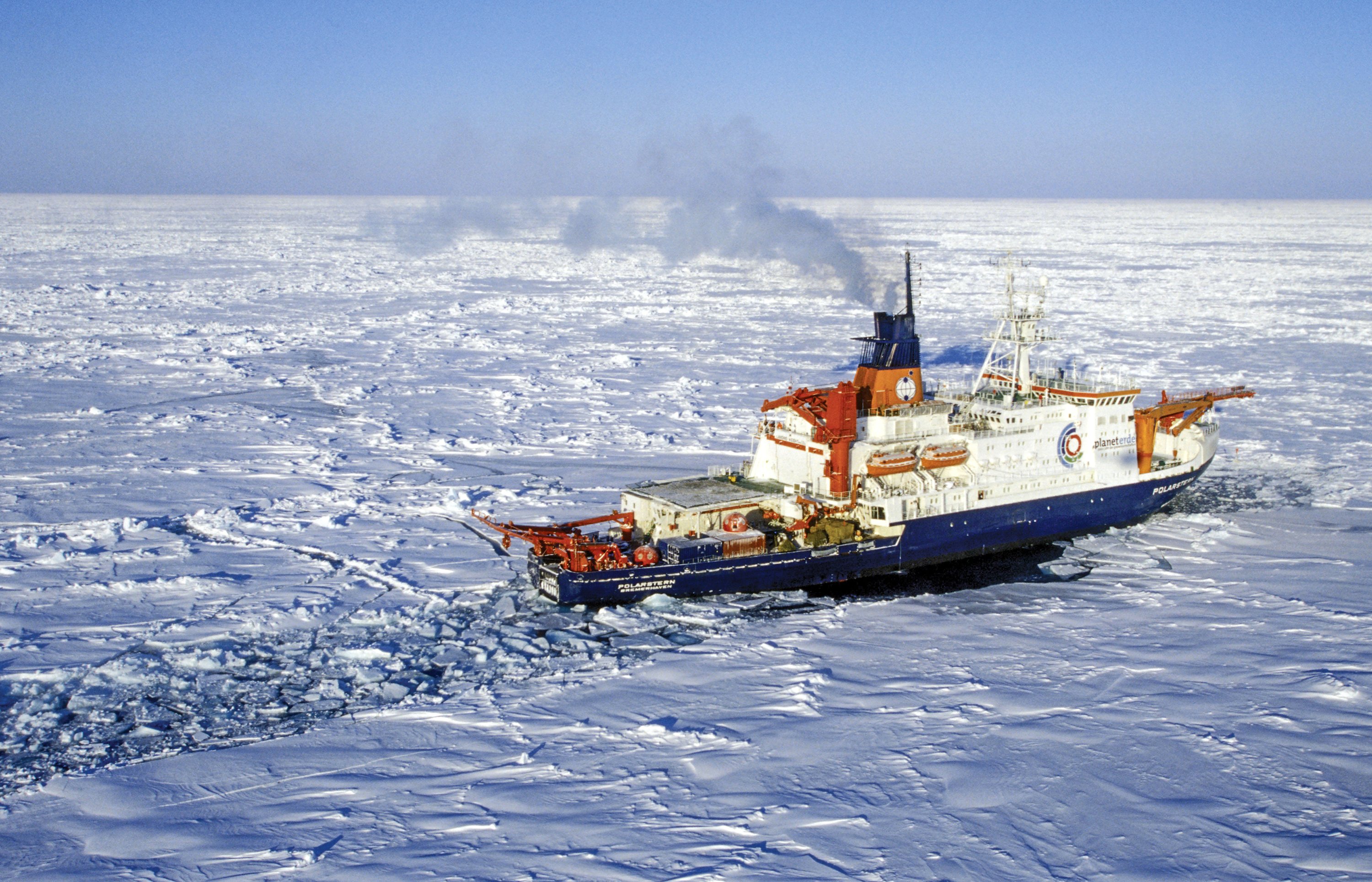
Research ship drifting along with Arctic ice, May 2019 US Naval Institute

In May, most of the Arctic ocean basins are still frozen over, while the melting of ice extent is underway in the marginal regions.   During May, on average according to MASIE, Arctic ice extents lose 1.7 M km2, and 2024 matched that.  The few basins where open water appears this time of year tend to fluctuate and alternate waxing and waning.  Unusual were the much greater extents estimated by SII (Sea Ice Index, the satellite dataset)

The graph below shows for the month of May patterns for ice extents on average, this year and some other years of note.

The graph shows the 18-year average loss for April is 1.7M km2.  2024 tracked nearly average this month throughout. Remarkably, SII showed higher all month, ~200k km2 on average and 315k km2 higher than MASIE yesterday. Other recent years have been nearly average, while 2006 ended with a large defict of ~300k km2 below average.

Region 2024152 Day 152 Ave 2024-Ave. 2006152 2024-2006
 (0) Northern_Hemisphere 11720589 11685746 34843 11391134 329455
 (1) Beaufort_Sea 1015932 1008887 7045 1063879 -47947
 (2) Chukchi_Sea 913510 866924 46586 907609 5900
 (3) East_Siberian_Sea 1072016 1065772 6244 1073889 -1873
 (4) Laptev_Sea 828093 828959 -866 856108 -28016
 (5) Kara_Sea 885435 822185 63250 848172 37263
 (6) Barents_Sea 444502 301553 142948 180906 263596
 (7) Greenland_Sea 641881 584813 57067 522040 119841
 (8) Baffin_Bay_Gulf_of_St._Lawrence 880982 888621 -7639 721606 159376
 (9) Canadian_Archipelago 777801 813422 -35621 800561 -22760
 (10) Hudson_Bay 902359 1082841 -180482 968121 -65762
 (11) Central_Arctic 3232002 3219651 12351 3188696 43306
 (12) Bering_Sea 102241 112773 -10532 166326 -64085
 (13) Baltic_Sea 285 177 108 720 -435
 (14) Sea_of_Okhotsk 22088 87670 -65582 89739 -67651

The table shows regional ice extents in km2.  Note that Hudson and Baffin Bays have started melting, and Hudson is ahead of normal and will likely go to open water in a few weeks. Sea of Okhotsk on the Pacific side is 66k in deficit, with little ice left to lose.  Note the huge surplus in Barents sea on the European side. Everywhere else is mostly in surplus, especially the seas of Barents, Greenland and Kara.  2006 had 329k km2 less ice extent than 2024 (one third of a Wadham).

The polar bears had a Valentine Day’s wish for Arctic Ice.

welovearcticicefinal

And Arctic Ice loves them back, returning every year so the bears can roam and hunt for seals.

Footnote:

Seesaw accurately describes Arctic ice in another sense:  The ice we see now is not the same ice we saw previously.  It is better to think of the Arctic as an ice blender than as an ice cap, explained in the post The Great Arctic Ice Exchange.

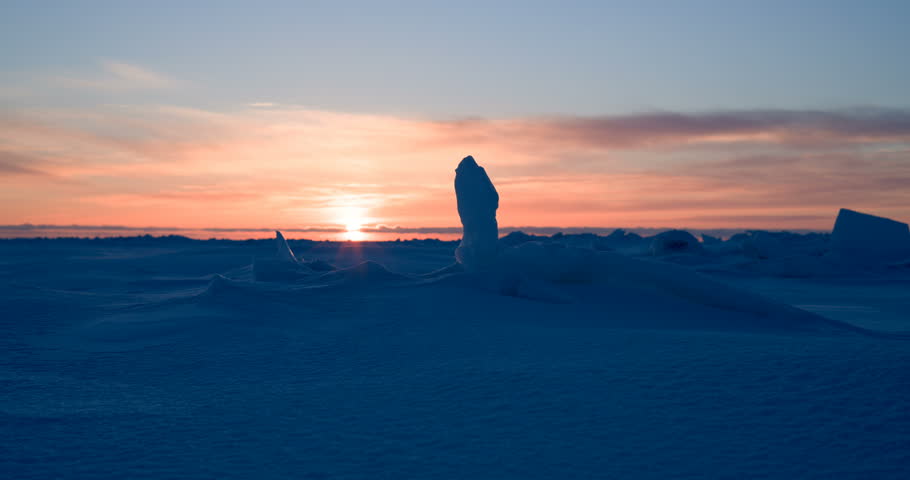
Sunrise over frozen Bering Sea

via Science Matters

https://ift.tt/gwvOhe2

June 1, 2024 at 10:54AM

Sunday

0 out of 10 based on 0 rating

via JoNova

https://ift.tt/nhBJoeQ

June 1, 2024 at 09:33AM