
Great Keppel Island is just across the bay from Lammermoor Beach. Tuesday afternoon I could see the island so clearly, and I took a short clip of some seagulls at the beach with my iPhone. Wednesday morning visibility was terrible. It was a fog – the island had disappeared, from sight. To understand fog, and what causes it, however temporary the phenomenon may be, we first need to acknowledge it. Which is more than many are doing when it comes to the changes in coral cover at the Great Barrier Reef.
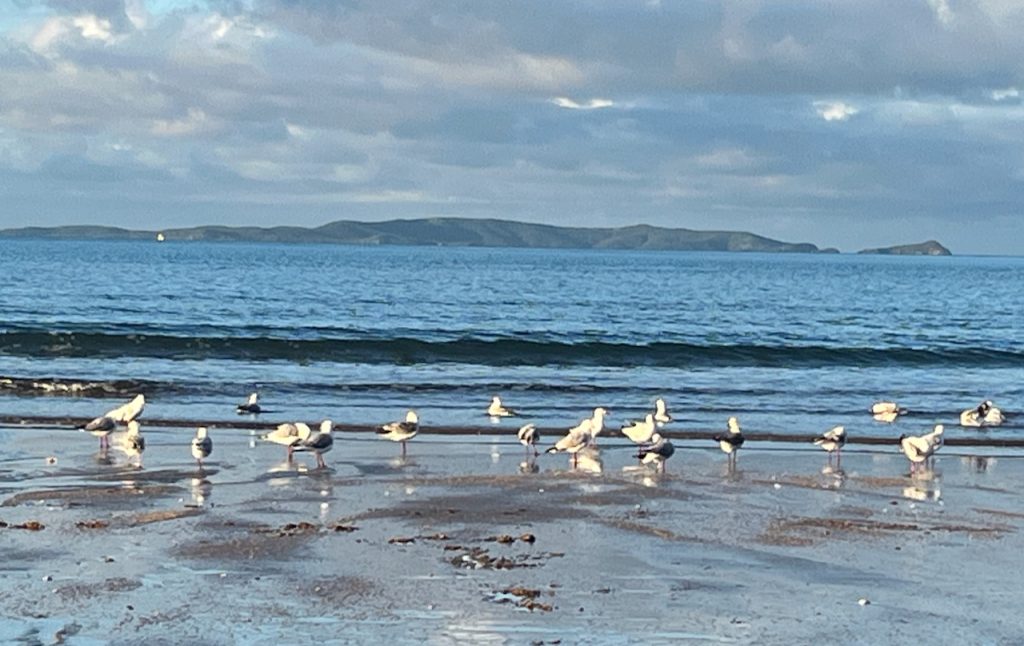
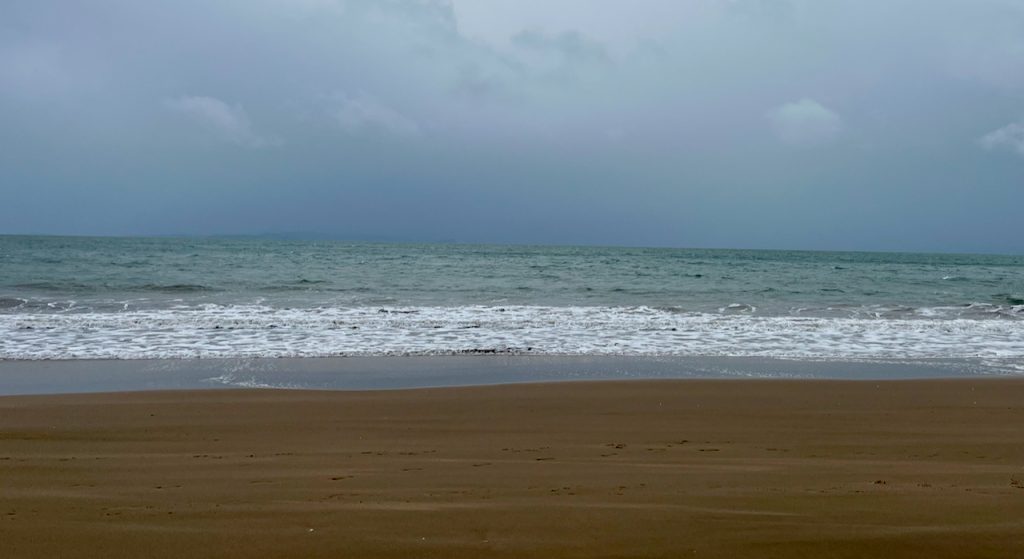
I couldn’t see across to Great Keppel Island on Wednesday morning. Not a reason to panic, but worth noting. If we are to understand how the seasons, tropical cyclones, and even the 18.6 year lunar declination cycle – how all of these natural phenomena can impact coral cover at the Great Barrier Reef, we first need to note the dramatic changes at individual coral reefs this year.
For sure there has been a very dramatic reduction in coral cover this last year at many reefs including my local reefs that are part of the southern Great Barrier Reef, and also at my favourite reef that is part of the central Great Barrier Reef, and many northern reefs were impacted by Tropical Cyclone Jasper – as was one of my favourite cities, Cairns where my dear mother lives.
Many Great Barrier Reef corals have been significantly impacted this last eight months, from cyclones and bleaching. It is disingenuous to suggest otherwise yet that is what so many of colleagues are doing.
We have a situation were many opinion leaders on the right, who are usually sceptical of official statistics are promoting them, including the ‘record high’ coral cover as reported by Graham Lloyd in a nonsense article in The Australian newspaper last weekend, spruiked by Peter Ridd and reposted by Joanne Nova and Anthony Watts. Such a shame. So many lies.
As I have been explaining to Peter Ridd the ‘record high coral cover’ this year might be a consequence of so much coral ‘dumped’ at the ‘perimeter’ of these reefs.
That might sound ridiculous, but then again so are the two candidates currently vying for leadership of the free world. This might seem unrelated, but only if you are unaware that little has changed in one thousand years, we are still ruled over by a greedy elite whichever side of politics.* And the Great Barrier Reef is not something those in power care about for its intrinsic beauty. Rather it is one of the most heavily politicised Climate Change™ subjects in Australia. Now I am quoting from the introduction to an interview I did recently with ‘Lies are Unbekoming’, at Substack also published last weekend, CLICK HERE.
It is perhaps the case that the Australian Institute of Marine Science (AIMS) in-water surveys show an increase in total coral cover because these are perimeter surveys and because at places like John Brewer Reef so much coral has fallen to the perimeter.
At John Brewer Reef much of the top of the reef, the reef crest, was swept clean of coral by Tropical Cyclone Kirrily when it struck on 25th January. It all happened that Thursday afternoon, over a period of some two hours.
I visited John Brewer Reef soon after and observed that some of the corals at the inside edge of this reef crest had been picked-up, flipped-over and dropped down over the edge – to the reef perimeter.
I wrote a blog post about this, entitled ‘Cyclone Kirrily Smashed my Favourite Coral Reef’, and in it I show parts of the reef crest scoured clean and so many large corals strewn over the edge, about the sandy sea floor – around the perimeter.
Indeed, that entire wall of coral that featured in the short film I made last year with Stuart Ireland starring Rowan Dean about the ‘Café Latte Coral’– that entire wall of coral with that famous coral from The Guardian newspaper: it collapsed, it broke off from the reef crest proper and is now strewn about the reef perimeter as a consequence of TC Kirrily.
As mad as this may sound, there is now opportunity for this famous coral to be part of the AIMS survey and it presumably was included in June, because the coral has been lost from the reef proper and is now at the perimeter of this coral reef, and AIMS are reporting an increase in coral cover at John Brewer Reef while denying the cyclone. I’ve written in detail about this just recently, CLICK HERE.
And as I explain in a rather long (5,000 words) interview, published at Substack last weekend:
Peter Ridd has gone to some effort over the last two years to promote these AIMS in-water coral cover surveys, to claim they show record high coral cover at the Great Barrier Reef. This may be what they show. But science is a method, it is not the truth. The truth exists independently of what might be reported.
In all the promotions, it is never acknowledged that these AIMS coral cover surveys are only of the reef perimeter, these surveys do not include the habitat with arguably the most coral cover that is the reef crest. The reef crest is not surveyed because this habitat can be difficult to survey at low tide in water.
Of course, just because something is difficult, that is not a reason for not doing it. Rather it would suggest AIMS, and its scientists, are more concerned with convenience than the truth.
I’ve explained to Rowan Dean, Peter Ridd and others, who have not got into the water at the Great Barrier Reef since last year, since 2023, that that whole wall of coral, including the famous coral that first featured on the front page of The Guardian – it has collapsed. I have explained to both, and to Graham Llloyd, that the Great Barrier Reef is not doing so well this year.
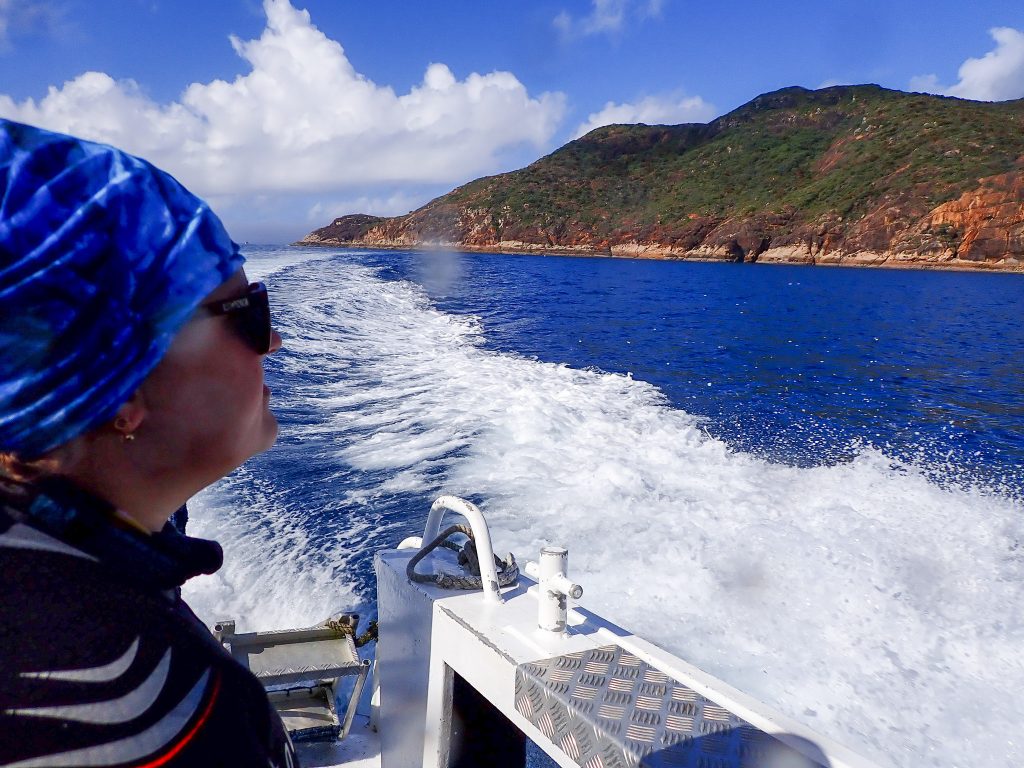
Of course, there are patches that are still magnificent – and terrific tourism operators who know their local reefs, including Keppel Dive and Adrenalin Dive know where to find them. Despite the tremendous loss of coral, I have so enjoyed scuba diving this year. As I explain in my answer to the very last question published at Substack just last weekend:
I was recently over at Great Keppel Island, the reef flat that we were diving was to my eye ‘ordinary’ and clearly suffering from the recent bleaching, but the American I was diving with, my buddy for that dive was an airline pilot from Colorado and he was in awe of this reef: the colourful fish and colourful corals. It was the first time he had dived at the Great Barrier Reef.
When I explained, after the dive, that this reef was suffering from the recent bleaching, he explained to me that it was the best dive he had ever done. He explained that ‘the best’ he ever gets to see on scuba back home in a nearby freshwater lake is a bit of moss growing on a wreck, a plane sunk into that same lake.
It is the case that not all environments are equally inspiring and rejuvenating.
For sure the Great Barrier Reef will recover. But it is also important to acknowledge that the famous coral, that featured in our short film ‘Cafe Latte Coral’, it is important to acknowledge that earlier this year it was ripped from the reef crest, lifted-up, turned-over and drop-over the edge. That coral is now seven metres below at the sandy perimeter of John Brewer reef.
That famous coral, it has been reduced in size by perhaps one third, which is by about how much I estimate the loss of coral cover will be by the end of this year across the bay at the reefs fringing Great Keppel Island.
____
* American journalist Tucker Carlson explained some of the politics in Canberra a week or so ago, the day after Julian Assange was released, CLICK HERE.
The feature photograph is from a coral reef fringing Bald Rock, another dive site across the bay that I visited in April when so many of the corals were so white because they were so badly bleached.
You can read about what I found back then from my blog post in April, CLICK HERE. I was back at that dive site last weekend, and there are a lot of corals smothered in algae. There will be a significant reduction in coral cover, but there will still be a lot of coral. To understand the changed composition including changes in species diversity, it will be important to consider what happened this last summer, to acknowledge the extent of the bleaching in March and April 2024.
via Jennifer Marohasy
July 4, 2024 at 07:25PM
 Iowa Climate Science Education