Month: August 2024

New England Fishermen Stage Floating Protest at Vineyard Wind Site

Reposted with permission from Legal Insurrection

by Leslie Eastman

I am continuing to keep an eye on the Vineyard Farms offshore blade failure near Nantucket.  A few weeks ago the facility was closed because of the failure of Vineyard Wind’s newly installed wind turbines, and the city was poised to sue.

After one blade failed and ended up in the water, the beaches were cluttered with sharp fiberglass shards, which is a sub-optimum condition at the height of the summer tourist season.  Continuing investigation into the cause of this environmental contamination incident  determined that a manufacturing flaw in the blade was responsible for the failure.

Now this weekend, a “flotilla” of about two dozen commercial and recreational fishing vessels steamed to the wind farm on Sunday to protest offshore wind development.

The vessels, hoisting anti-offshore wind flags and blasting air horns, departed early Sunday morning from ports in New Bedford, Nantucket, Martha’s Vineyard, Rhode Island and along the Cape, converging at about noon on the site of the crippled Vineyard Wind turbine.

“The blade collapse was an eye-opener to a lot of people who before didn’t know that offshore wind is a disaster for the ocean,” said Shawn Machie, 54, who is captain of the New Bedford scalloper F/V Capt. John.

…The “flotilla” protest was organized by the New England Fisherman’s Stewardship Association (NEFSA). Plans kicked into gear when Dan Pronk, captain of lobster boat F/V Black Earl, was collecting turbine debris that had washed up on the shores of Nantucket. He called Machie and other New England fishermen who said they felt they had to “do something before it’s too late,” Machie said.

“We feel like our jobs are just accepted as collateral damage,” Machie said. “We are regulated for sustainability. And that makes sense. We need regulation. But offshore wind is allowed to kill fish and wreck nurseries without any manageable stopping point.”

The protesters indicate the impact on their industry will be more significant than many appreciate…because they can’t trawl on former fishing grounds.

Otto Osmers, a commercial fisherman from Martha’s Vineyard, made the journey from Menemsha at 7 am on Sunday, arriving at the Vineyard Wind site around 10:30 am. Osmers conceded that offshore wind projects like Vineyard Wind can block trawling and crab trap routes, but had other concerns about the project. “The ocean is one of the last undeveloped places on earth,” he remarked about the sight of so many large turbines peppering the horizon. “We put cables down there but it’s largely undeveloped. It’s sad to see that go away.”

Others were more passionate in their displeasure. Sue Zarba, who along with her husband John who fish recreationally, said seeing the scale of the turbines was emotional. “That was the first time I was up close to the turbines, and I was sobbing,” she said in an interview after the protest. “After you’ve seen this offshore wind farm, you cannot unsee it. Soon over one thousand acres just off the coast will be filled with turbines. We will never be able to undo this man-made environmental disaster.”

“This cannot continue because that’s where we fish,” said Zarba. “They’re developing on a tuna fishing ground. You can’t fish around turbines, you can’t trawl.” She added that her son, who attended the protest, was initially skeptical of her protesting but changed his mind once he saw the turbines.

However, their protests are being met with a deaf ear. The National Marine Fisheries Service issued a new biological opinion for flagship offshore wind project Vineyard that finds no adverse effects to endangered whales and other marine wildlife stemming from driving the array’s last 15 monopiles.

“It will have no effect on any designated critical habitat,” National Oceanic and Atmospheric Administration Fisheries said in a statement. “NOAA Fisheries does not anticipate serious injuries to or mortalities of any ESA-listed whale including the North Atlantic right whale.” The agency said that with mitigation measures, “all effects to North Atlantic right whales will be limited to temporary behavioral disturbance.”

In conclusion, the fishermen are doing the work that environmentalists used to do.

via Watts Up With That?

https://ift.tt/DG57quj

August 31, 2024 at 08:07PM

What do we know about sharks?

Available statistics on sharks: the Great Barrier Reef Marine Park Authority can’t tell me whether numbers are increasing or decreasing.  

We used to hunt whales, but now we revere them, and numbers are on the increase.  

We don’t eat turtle anymore, though we used to, and numbers are on the increase.   But what about sharks?

Sharks.  Well, we still hunt them and eat them.  It is just not discussed that much.  We are conflicted.  Perhaps. 

At my local beach, the same beach from which I can watch whales breach, Lammermoor Beach, has 7 drumlines; these are unmanned aquatic traps used to lure and capture large sharks using baited hooks.  

My mother at Heron Island in 1951, with a dead tiger shark. Now the government catches and kills sharks out of sight on drumlines.

Drumlines are supposedly deployed near popular swimming beaches with the intention of reducing the number of sharks in the vicinity and therefore the probability of shark attack.   But Lammermoor beach is not a popular swimming beach and this has more to do with the crocodiles than sharks.   We go across the bay to swim, at Great Keppel Island where the water is clearer and the chance of a crocodile encounter much less. 

Yet in the time I have owned a house just up the hill from Lammermoor beach, which is more than a dozen years now, the number of drumlines has increased from five to seven.  There is ever more government money for drumlines, to catch and kill sharks.  And this stretch of beach is within the Great Barrier Reef Marine Park. 

I understand about 600 sharks are caught and killed each year, including in Great Barrier Reef Marine Park Authority waters, as part of the Queensland Department of Primary Industries’ shark control program.  Meanwhile the authority responsible for the Great Barrier Reef, GBRMPA, has no idea whether shark numbers are increasing or decreasing – even if the average size of sharks is increasing or decreasing at the Great Barrier Reef.

Some fisherman will tell you sharks numbers are on the increase, and that they are getting bigger.  Some scuba divers will tell you that shark numbers are in decline, and they are getting smaller. 

How is that we don’t have any of these most basic of statistics on one of the most important megafaunas at the Great Barrier Reef?  

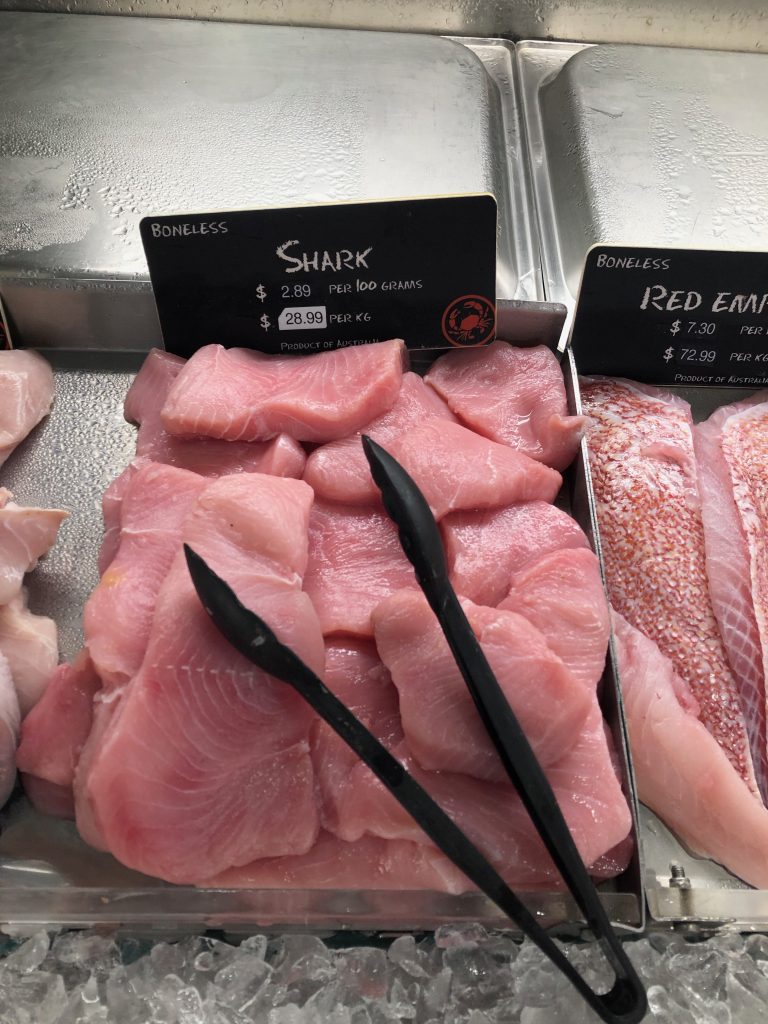
And of course, we still eat shark.  

Who will shoot, with their camera, the largest shark on the inaugural Great Barrier Reef Megafauna Expedition?

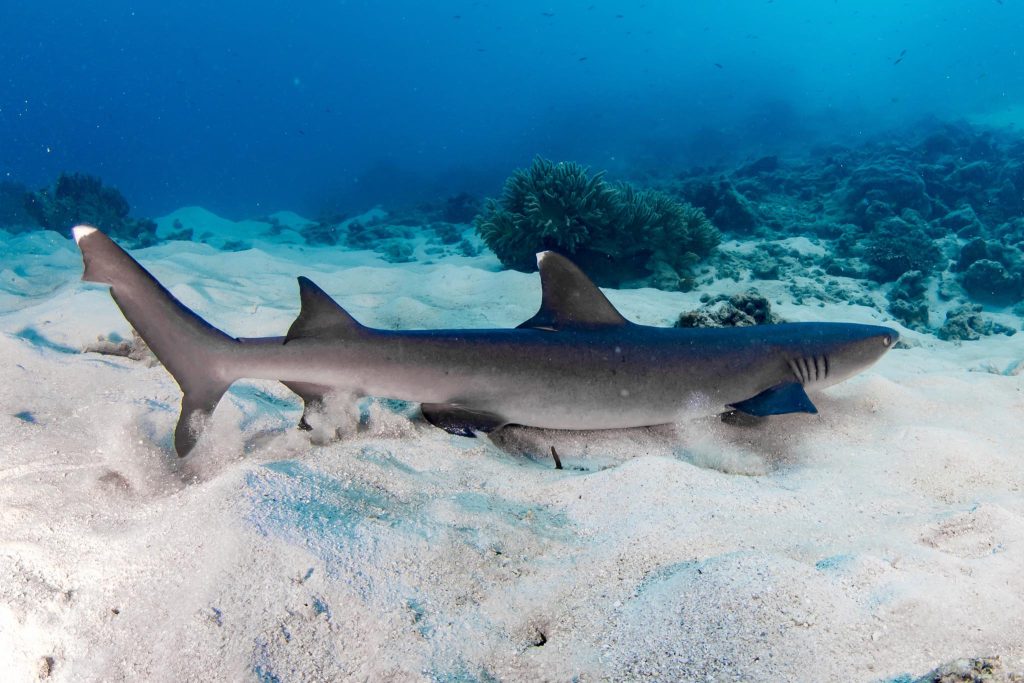
The following pictures are top to bottom: the GBRMPA promoting shark week at Facebook, my mother with a tiger shark at Heron Island in 1951 when it was fashionable to kill sharks, a white tipped reef shark that I recently photographed at Saxon Reef resting at 18 metres, and shark meat for sale at the fish mongers at Noosa Heads just recently.

via Jennifer Marohasy

https://ift.tt/wlyCLmi

August 31, 2024 at 06:45PM

Useful Graphs From ChatGPT

I asked ChatGPT to generate some graphs of climate data.

About Tony Heller

Just having fun

This entry was posted in Uncategorized. Bookmark the permalink.

via Real Climate Science

https://ift.tt/xj53Ac0

August 31, 2024 at 05:24PM

Stick to Finance, Financial Times; Weather is Not Getting Worse

By Linnea Lueken

A recent article in the Financial Times (paywalled) features a discussion between writer Attracta Mooney and Celeste Saulo, the current secretary-general of the United Nations World Meteorological Organization. Claims made in the post include that 2023 and 2024 were the hottest years on record, that recent global wildfires and drought in parts of the Mediterranean are caused by climate change, and that extreme weather in general is getting worse. These claims are false. Data undermine and often directly contradict such assertions.

The article, titled “Meteorologist Celeste Saulo: ‘Climate change is not a movie. This is real life’,” is mostly a flowery biographical piece about Saulo, whom the author sat down with to enjoy an insultingly decadent French lunch in Geneva, Switzerland, while they discussed how the rest of us need to cut way back on our standard of living. Writer Mooney begins the piece by discussing how it was hot in Geneva, implying that “almost 30°C” (86°F) is very hot for August. A quick search online shows that while on the high end of the spectrum, it is still within Geneva’s normal range for August; highs in the 80s are not unusual for Geneva as summer nears its end.

Mooney writes “[w]ith wildfires burning in Greece and Turkey, large chunks of the Mediterranean parched as drought spreads across the region, and all just weeks after the world experienced its hottest days on record,” continuing that 2023 “was the hottest on record and 2024 is on course to be even warmer.”

Saulo concurred with Mooney’s framing. Mooney goes further to report that the U.N. secretary-general, Saulo’s boss, agrees that “we need to start adapting to a warming world where wildfires, heatwaves, floods, droughts and other extreme weather events are more intense.”

The problem is, all of this is false, and as a meteorologist Saulo should know this.

Wildfires are certainly not becoming more intense or widespread, for one. Global wildfire tracking done by NASA satellites as well as the European Space Agency show that there has been a gradual decline in global burned area, not an increase. (See figure below)

Total acreage burned by fires each year between 2003 and 2015. Trend line in red indicates a steady decline. Source: “NASA detects drop in global fires,” NASA website, June 29, 2017.

Drought is likewise not becoming more of a problem, and the region that Mooney chose to highlight, the Mediterranean, is explicitly one which is known for having hot, dry summers. The Mediterranean even has a climate type named after it, the “Mediterranean climate,” which describes a climate with “irregular rainfall with most of the rainfall in winter.”

Also, the United Nations, which employs Saulo, reports with “high confidence” that precipitation has actually increased over the mid-latitudes of the northern hemisphere at least, and has “low confidence” about negative trends globally, as discussed in Climate at a Glance: Drought.

When it comes to the “hottest year on record,” much of that media frenzy was just that – media hype lacking factual basis to make the claim.

There is plenty of evidence, such as results from the carbon-dating of trees from the middle ages recently exposed by retreating glaciers, which points to other periods in relatively recent history being hotter than at present.

Also, a lot of the “record breaking heat” measurements were merely tenths of a degree hotter than previous measurements, which is hardly alarming, and are likely either statistical anomalies resulting from the reanalysis of data put out by flawed climate models or the result of the biased urban heat island effect, as discussed Climate Realism, here, here, and here, for example.

Data was also misused; for example, many stories in July 2023 breathlessly claimed that the 3rd and 4th of July were the hottest days of all time based on a “dataset” that was not actually displaying measured temperatures, or data at all but but rather modelled simulations of temperatures. The University of Maine’s Climate Reanalyzer was where the claim originated. The National Oceanic and Atmospheric Organization publicly distanced itself from the claim, explaining that the model output is “not suitable” as real temperature measurements for the purpose of keeping a climate record.

There is in fact any trend of increasingly extreme weather, as Saulo must know, otherwise why would the only evidence she cites for the claim be the alleged “28 disaster events” in the United States which cost “at least $1bn each in 2023.” As a writer for the Financial Times, surely Mooney knows that the costs of disasters are not necessarily evidence of worsening disasters, at all; other factors go into it, like the increasing value of property and the expanding bullseye effect. Climate Realism has pointed this out several times, including here, here, and here.

The juxtaposition throughout the article of the two discussing climate change and policy, including how people need to change the way they eat and take vacations, with frequent breaks to discuss how nice their lunch in prosperous Geneva was, was a bizarre writing choice for a journalist trying to emphasize urgency when it comes to climate action. The Financial Times should stick to what it is known for – financial news and analysis—and leave the climate puff pieces to other outlets, especially if the depths of their climate reporting efforts are to uncritically publish falsehoods.

Originally posted on ClimateREALISM

via Watts Up With That?

https://ift.tt/oBUe2F7

August 31, 2024 at 04:02PM