
Read my New York Post column.
via JunkScience.com
August 27, 2024 at 03:38AM
Related links: Media idiocy #1 | Media Idiocy #2 | Viterito video | New geothermal data
via JunkScience.com
August 27, 2024 at 03:38AM
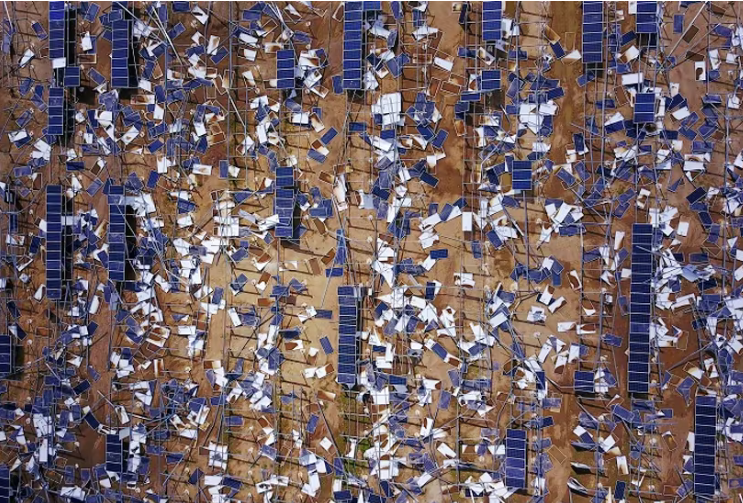
Solar panels love sunshine, dislike clouds and positively detest dust storms, hailstorms and Hurricanes. Now, if they weren’t meant to be producing power as and when we need it, none of that would matter very much, at all.
Except that rent-seekers reckon that an endless sea of solar panels, hooked up to a few billion dollars’ worth of mega lithium-ion batteries, will deliver cheap-as-chips power whenever we need it. Well, so the story goes.
The trouble with the narrative is that the reverse is true.
In Australia’s Northern Territory, its Labor government spent tens of millions of dollars on solar panels that it later disconnected to protect the grid from the instability caused by a change in the weather.
The trouble started in the central NT town of Alice Springs – the heart of the Outback.
Efforts to power the Alice using solar have left sunshine acolytes red-faced, more than once.
Even though solar makes up about 13% of the power used in Alice Springs, a little cloud cover has been enough to knockout its entire power supply solar numerous times over the last 5 years.
As the team from Jo Nova explain below, the chaos caused by solar in Alice Springs forced the NT government to start treating solar power generators just like everybody else, much to their horror.
Transition hell: Solar plants sit idle for 4 years in NT because of fears they’d make the grid too unstable
Jo Nova Blog
Jo Nova
23 August 2024
The Northern Territory is a test case for renewable energy and it’s a bonfire
In 2016, the new Labor Government waved a magic wand and commanded they would be 50% renewable by 2030.
The experts said it was doable and would save $30 million a year. They gave out the permits for large solar installations, which began construction in 2019, but then suddenly changed the rules in 2020, and wouldn’t let the solar plants connect to the main Darwin-Katherine grid. Unbelievably, 64 megawatts of solar panels that cost $40 million dollars have sat, doing nothing, for four long years.
“It’s just reflecting back into space, not being used to power the grid and to substitute for diesel and gas turbine production,” said local vet Peter Trembath, who leased his land to energy company Eni Australia for the solar project.
“It’ll be some technical issue, but you’d reckon they would have sorted that out before Eni spent $40 million to erect it.” — Max Rowley, ABC News June 2022
It’s always the Grid’s fault…
The reason they couldn’t be connected was that the Territory government suddenly rewrote the rules in February 2020 and insisted the solar generators had to operate like fully scheduled generators, not semi-scheduled ones. Cruelly, they would have to make accurate predictions of what they could supply 30 minutes ahead on a rolling 5 minute basis. This meant they would need their own battery backup with the equivalent of 80% of their capacity and storage that lasted 30 minutes. They’d also need “weather forecasting” ability to predict cloud cover.
The solar owners, Eni, protested that this would cost them $20 million (at least!) making the project unviable. And to make things even worse, the government was saying they had to build the battery at the solar plant, and reserve it to back up their own panels, so they wouldn’t be able to build the battery in Darwin, and use it to help the grid at other times, which would defray the costs. It all seems quite bizarre. (Who would want to run a business in the Northern Territory?)
Why didn’t the renewables industry protest these belated draconian conditions louder? Probably because they didn’t want to highlight the reason for the Territory government’s sudden flip. It suddenly makes sense when we look at the timing.
The panic-attack about connecting solar power came just after the Alice Springs black start
The NT government didn’t appear to realize that there were risks in adding 64MW of solar power to a grid that was roughly 250MW in size until 13th October 2019 when the whole Alice Springs network serving 29,000 people collapsed due to a cloud.
It was the third blackout in four years, and it must have terrified the management in Darwin, because Alice Springs didn’t have much solar, yet the system was so unstable.
Only 13% of the town’s total electricity comes from solar panels, but one cloud was enough to knock that little grid over and it took over nine hours to get it restored. By December 2019, an inquiry was set up and both CEO’s of the Power and Water Corp and the Territory Generation lost their jobs.
Presumably the new CEO’s were not going to risk the collapse of the larger Darwin-Katherine Grid, hence the sudden rule change in February 2020 which left the solar operators high and dry.
The ABC and others insist the blackout had nothing to do with solar power, and was just due to incompetence, but all the new grid managers grabbed their electrical garlic and acted exactly like solar power was the vampire. How else do we explain that these perfect solar plants have been sitting there doing nothing for four years?
So 64MW is too much for Darwin, but lets build 4,000?
Clearly grids need their armour before anything so risky as a large solar plant can be connected, which is all the more poignant considering the Australian government just approved (again) the humongous SunCable plant, what will be the “largest plant in the world”, at 4GW, and it’s going to be in the Northern Territory.
It’s 60 times bigger than the 4 Eni plants, but is supposedly going to send most of the green electrons to Singapore, a mere 5,000 kilometers away, which is lucky, because the whole Darwin-Katherine grid only uses 250MW at peak, so SunCable would eat it alive.
The people will pay for the solar debacle
The new NT Generator Performance Standards were trying to make sure that the Territory’s consumers wouldn’t end up footing the bill for the backup and wouldn’t suffer a blackout. But the Territory Government has paid $45 million to build a battery in Darwin anyway, and looks like it will try to buy out the four idle solar plants from Eni. So the citizens will be whacked for the cost one way or the other for the magical wish-fairy thinking that renewables would be easy and cheap.
As it happens the people of the NT get to vote tomorrow in the Territory elections. Lets hope there is some salvation.
[There was – the renewables obsessed Labor government was given the flick and the Country Liberal Party now has control of energy policy, and more besides. Much to the horror of the hard-left.]
Though on the media apparently the major issue is not about keeping the lights on, or whether the NT is a basketcase for investors, but whether people can keep crocodiles as pets. No, seriously. (And they’re talking about the Saltwater kind which eat people, and grow to 6m and 1,000kg.)
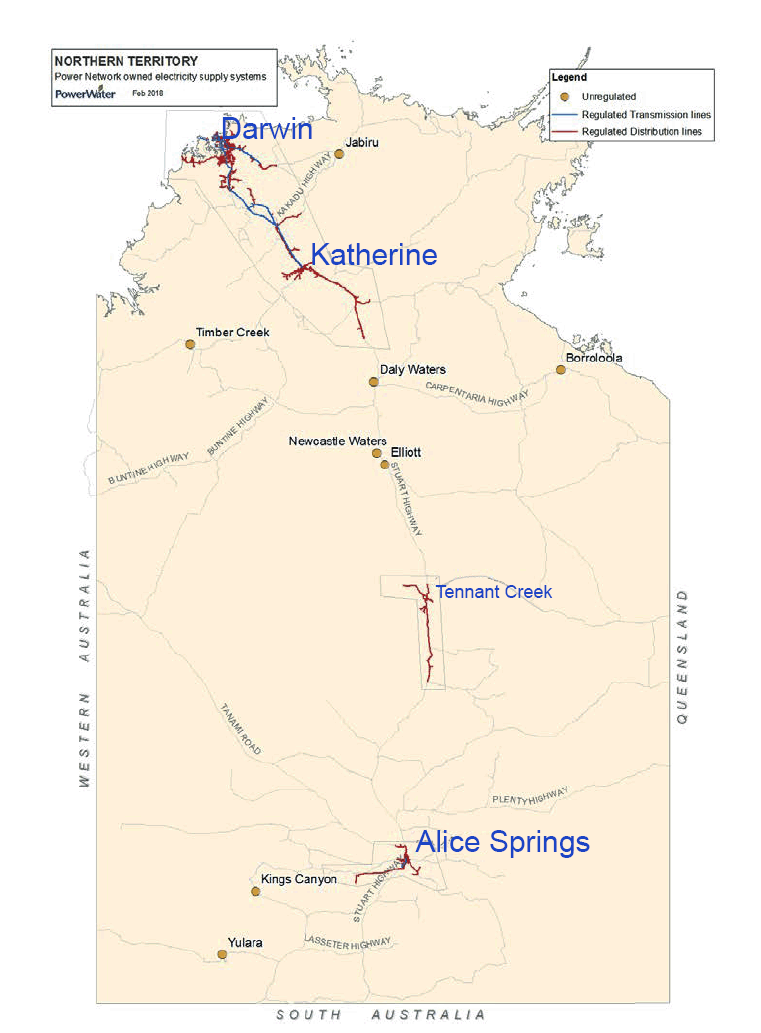
There are only about 250,000 people living in the Northern Territory. There are two separate grids and several microgrids. All of these are perfect test cases to showcase renewable energy, as I keep saying, and none of them are managing to do it.
When will we get the message? If a town of 30,000 can’t live off the sun and wind, why would anyone bet the whole nation on it?
Jo Nova Blog

via STOP THESE THINGS
August 27, 2024 at 02:30AM
“It takes bits and pieces from leading establishment environmentalists to make the ecological case against climate alarmism and forced energy transformation. But taken together, the problems of wind, solar, and batteries are substantial and call for a mid-course correction from look-the-other-way, mention-and-run, wish-and-hope Big Green.”
Yes, she is a climate alarmist and supports forced (governmental) energy transformation to inferior, anti-ecological energies. But she has presented some common-sense observations about the climate crusade and agenda that offer hope about a mid-course correction toward human and ecological betterment.
Consider this recent article at the Canadian Broadcasting Corporation which was brought to my attention on LinkedIn (via Ian McCoy), “Climate warrior Jane Goodall isn’t sold on carbon taxes and electric vehicles. (April 13, 2024). Quotations from the CBC article follow in two areas: a carbon dioxide (CO2) tax and electric vehicles (EVs).
Carbon Dioxide Tax
World-renowned primatologist and climate activist Jane Goodall says carbon pricing schemes like the one Canada has deployed aren’t a silver bullet to solve the pressing threat of climate change…. Goodall said the jury’s out on whether levying a consumer price on emissions will meaningfully improve the climate picture over the long term.
Goodall, who just turned 90, said a carbon tax can seem punitive to consumers — making a measure to fight climate change seem like a costly chore. She said she also worries that the fight against climate change has been “politicized … causing people just not to listen” ….
“The problem with a climate tax is that … it doesn’t get to the root cause, which is fossil fuel emissions, emissions of methane from industrial farming,” she said. “So, in that sense, it’s not something I endorse.”….
Electric Vehicles
But she added she’s worried about the current crop of electric vehicles, which largely rely on lithium batteries. She welcomes EVs as a concept but said she fears that the global scramble to mine lithium is ruining parts of the natural environment.
“Huge areas are now being destroyed by mining for lithium,” she said. “It scars the natural world.”
Pointing to Serbia, where the prospect of lithium mining prompted anger from local activists, Goodall said there’s a risk that the rush to exploit the world’s lithium supply will damage the “pristine environment” and spark a backlash.
She also said the lithium mining and refining process requires “lots of water,” which is “tough in places where there’s not that much fresh water.”
“To me, that’s one of the big problems of electric vehicles,” Goodall said. “Apparently there are other ways of sourcing batteries other than lithium and that needs to be developed.”….
Final Comment
It takes bits and pieces from leading establishment environmentalists to make the ecological case against climate alarmism and forced energy transformation. But taken together, the problems of wind, solar, and batteries are substantial and call for a mid-course correction from look-the-other-way, mention-and-run, wish-and-hope Big Green. Jane Goodall, just as James Hansen, the father of the climate alarm, recently provided just this.
The post Jane Goodall on the Futile Climate Crusade appeared first on Master Resource.
via Master Resource
August 27, 2024 at 01:06AM
 Iowa Climate Science Education