
Related links: AP article | Louisiana Tumor Registry report | 2003 Industrial Corridor study
via JunkScience.com
August 25, 2024 at 07:18AM
Related links: AP article | Louisiana Tumor Registry report | 2003 Industrial Corridor study
via JunkScience.com
August 25, 2024 at 07:18AM
By Paul Homewood
h/t Ian Magness
How Joe Pinkstone gets to be the Telegraph’s Science Correspondent beats me if this naive little article is any indication!

Disease-carrying bugs from Europe are increasingly crossing the Channel and arriving in Britain as a result of climate change, government scientists have warned.
Insects that once only survived in the warmer climes of the Mediterranean or further south are now migrating to northern Europe. They are then blown over the Channel on the wind or hitch a lift on ferries or trains.
Studies show that the pests are now also able to flourish in the UK as temperatures rise and winters become less intense.
https://www.telegraph.co.uk/news/2024/08/24/bugs-from-europe-pose-deadly-danger-scientists/
He goes on to list main threat as the dengue transmitting Tiger Mosquito. Proper scientists would have told him that the spread of this charmer has nothing to do with “climate change”, as it has always been able to thrive in temperate climates, such as ours. Its spread has been solely the result of the expansion of global trade in recent decades.
Pinkstone goes on to warn us about bluetongue disease:
Meanwhile, this summer veterinarians at Defra were preparing for a deluge of tests for bluetongue, an infection that affects farm animals such as cattle and sheep, and is characterised by a blue tongue in infected animals.
Midges, belonging to the culicoides species, spread the virus to anything they bite, which includes sheep, deer, llamas and goats. It does not affect people or food security, experts say.
Farmers, vets and Government scientists up and down the country have been put on high alert for bluetongue, with the latest Government guidance saying “infected culicoides may be spread to Great Britain via the wind” from the coastal clusters in Germany, the Netherlands and Belgium.
There is a “medium” risk of incursion of a midge that carries a disease for which there is no vaccine, experts say.
Ele Brown, the UK deputy chief veterinary officer, said: “Vector-borne diseases account for more than 17 per cent of all infectious diseases in humans around the world, with mosquitoes and ticks representing a growing threat to the UK due to the fact that they are both established and invasive.
“Climate change, in the form of warmer summer temperatures and milder wetter winters, could increase the abundance of the native mosquito populations, prolong the active vector season and enable invasive mosquito species to establish in the UK and increase their ability to transmit diseases.
Notice the weasel word “COULD”! But as she admits, these midges and mosquitoes are already well established in the UK.
The situation regarding bluetongue is much more complex than Pinkstone suggests, something which a competent science correspondent should surely have explained.
The principal reason for the rapid spread of bluetongue through Europe in recent years has been its transfer to the obsoletus and pulicaris families of Culicoides midges, both of which are endemic throughout most of Europe:


https://en.wikipedia.org/wiki/Bluetongue_disease
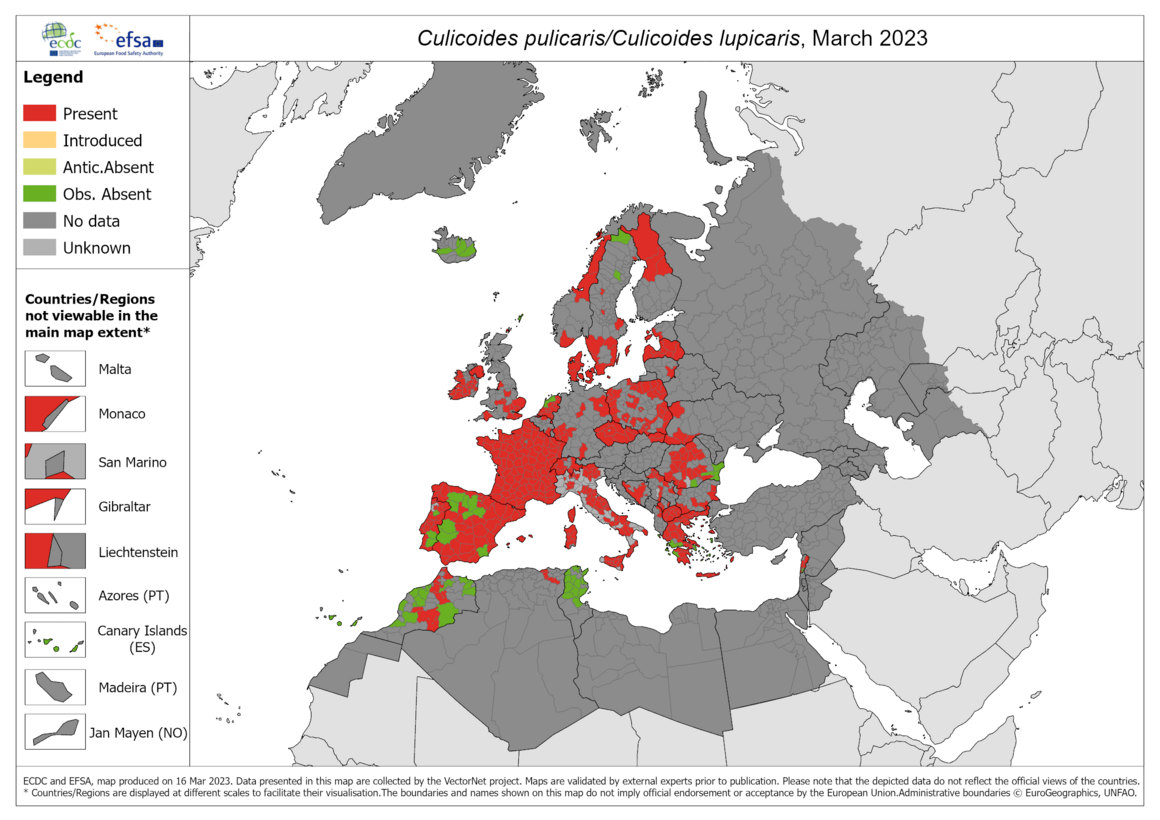
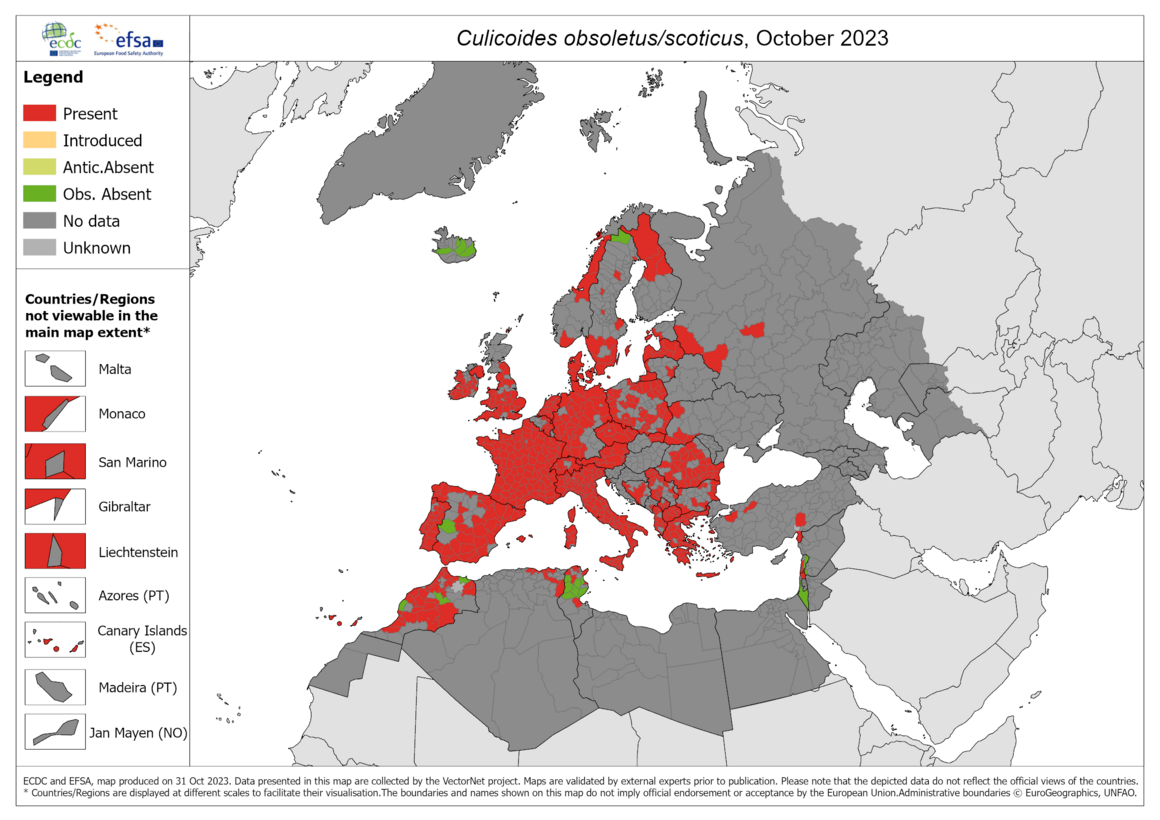
Note the presence of the midges in much colder climates in Scandinavia.
Another factor in the spread has been the ability of the virus to survive in harsh winters. This survival has nothing to do with climate change:

Shame on the Telegraph for allowing this reporter to write such garbage.
via NOT A LOT OF PEOPLE KNOW THAT
August 25, 2024 at 06:56AM

‘Western countries’ (including Australia) get criticised for producing gas here but there are other major suppliers (Russia, Qatar etc.), and customers for gas are almost everywhere. The article admits demand is rising. Green transition mythology continues, but what works best won’t go away easily despite ongoing climate alarmism.
– – –
There is a massive natural gas project pipeline for the next decade, as several world powers have increased their gas production in line with the rise in demand, says OilPrice.com.
Much of this production increase will come from wealthy Western countries, with several states using gas as a transition fuel in the shift away from more polluting coal and oil.
However, this is leading climate activists to point out the hypocrisy of these states calling for a green transition while also contributing heavily to the rise in global gas production.
The demand for natural gas has been rising, as several countries decrease their dependence on coal and opt for gas as a transition fuel in pursuit of a shift to green.
The Russian invasion of Ukraine in 2022, and subsequent sanctions on Russian energy, also led several gas powers to increase their output to fill the gap and ensure that countries that were heavily dependent on Russian gas could maintain their supply. This has created a mid-term rise in demand that is expected to level out as countries increase their renewable energy capacity.
. . .
Yet, most of the countries contributing to the massive LNG expansion pipeline are those also calling for a global green transition. Certain oil-rich states, such as Russia, Saudi Arabia, and Qatar, have been repeatedly criticised for doing little to reduce their fossil fuel production and reduce greenhouse gas emissions in recent years, in response to pressure from organisations such as the International Energy Agency (IEA) to transition to green.
However, green transition champions, including the UK, the US, Canada, Norway and Australia, are increasingly being seen as “the other petrostates”, due to their continued pursuit of fossil fuels.
These five countries contributed over two-thirds (67 percent) of all new oil and gas licences issued worldwide since 2020. One of the main criticisms of this heavy contribution to global oil and gas output is the fact that these countries have the economic capacity to fund a green transition, with little need for long-term fossil fuel production to meet their domestic demand.
Olivier Bois von Kursk, the co-author of the report, stated, “It is deeply concerning that exploration activity has not just continued since the COP28 agreement but increased. Rich countries with relatively low dependence on fossil fuel revenues should be the first to stop issuing licences. We’re not seeing that in the data.”
Full article here.
– – –
Image: Sabine Pass LNG Terminal, Louisiana [credit: naturalgasnow.org]
Related: China just built the biggest ever offshore oil platform. There is no green energy ‘transition’
CNOOC says that, once installed, the Marjan facility will be capable of gathering and transporting 24 million tonnes (over 171 million barrels) of oil and 7.4 billion cubic meters (2.61 trillion cubic feet) of natural gas annually.
via Tallbloke’s Talkshop
August 25, 2024 at 05:35AM
By Paul Homewood
h/t Philip Bratby

Others believe green energy represents the free spirit and harmony with nature. ‘What would you rather have in your neighbourhood?’, I remember being asked in 2005. ‘A little wind turbine swirling gently in the breeze, or a nuclear power station and pylons?’
The low energy density of wind and sun means that extremely large collection devices are needed
As it is turning out, and particularly so now that Ed Miliband is back in charge of energy policy after 14 years in the wilderness, the green transition means armies of gargantuan wind turbines on land and sea; great blue-black mirror of solar panels glazing over thousands of acres of farmland; a neurotic spider’s web of grid cables criss-crossing the country; and dozens and dozens of whining substations and vast Area 51-like compounds of shipping-container sized lithium-ion batteries.
As if that were not bad enough, it transpires that in spite of all this green industrialisation we will still require nuclear and conventional gas turbine power stations. We may not use them as much, but reliability is an issue with wind and solar, and therefore generators are needed to guarantee security of supply at times when the British weather fails to deliver. ‘Who knew, except everyone?’ as the Americans say.
Still, the sheer immensity of low carbon industrialisation is coming as an unwelcome shock to those who only a few years ago would have at least passively supported wind and solar development.
There was clearly a profound misunderstanding about the physical character of renewable energy power systems. But no one should in fact be surprised. The physics of renewable energy are inescapable.
While there is a substantial quantity of energy in the wind, the thermodynamic quality of that energy is very low. It is for this reason that there are no organisms that derive their metabolic energy from wind, an extraordinary fact given its widespread availability at unthreatening temperatures. Wind energy is simply too chaotic to support life.
Solar radiation is somewhat better. Indeed, outside the earth’s atmosphere it is of fairly high quality. But on the surface of the planet and seen from the perspective of a leaf or a photovoltaic cell it is hindered by atmospheric interference, clouds and airborne dust, and critically by the rotation of the earth. Plants do derive energy from sunshine, but they are relatively simple organisms, and they do not move rapidly or have complex nervous systems.
Some aspects of these simple facts about wind and solar energy flows are intuitively obvious but the critical implications tend to escape even those well versed in physics.
The low energy density of wind and sun means that extremely large collection devices are needed – enormous wind turbines with large blades, vast areas of solar panels. It is necessarily a capital-intensive and very expensive system.
A concrete example will make this clear. The 1,400 Megawatts (MW) Sophia Offshore Wind Farm on the Dogger Bank is currently under construction and will cover an area of nearly 600 square kilometres (it would just about fit into Middlesex). It is one of many major wind installations that the government is intending to drive through in its ambition to quadruple offshore capacity. We currently produce about 15 Gigawatts (GW) of operational offshore wind power. To meet this quadrupling of capacity, we would need around 30 more Sophia Offshore wind farms.
The Sophia will use the Siemens Gamesa SG 14-222 DD, one of the largest wind turbines on the market, with a generating capacity of 14 MW. It has three blades 108m in length, each weighing 65 tonnes. The nacelle, the box containing the generator at the top of the tower, weighs 500 tonnes, which Siemens proudly describes as a lightweight machine. Compared to other brands, this may even be true.
The overall height of the turbine is 252m, only 60m short of Britain’s tallest building, the Shard. It foundations will, according to Sophia’s own publicity, be 80 to 90m in length and weigh 1,200 to 1,400 tonnes each. The total weight of each turbine – blades, nacelle, tower and foundations – is likely to be nudging towards 3,000 tonnes.
Sofia will use 100 of these structures, so we can estimate that the wind farm alone accounts for about 300,000 tonnes of industrial equipment, mostly steel, some concrete, and fibre-glass reinforced epoxy in the blades. (For reference, a Queen Elizabeth class aircraft carrier weighs a mere 65,000 tonnes.) And this is before we have taken into account the offshore substations and the cables connecting each turbine and the shoreline.
Multiply all this by 30 to meet the government’s offshore wind targets, and you arrive at nine million tons of industrial equipment for the additional offshore installations alone. For scale, recall that the UK’s total annual production of steel is only six million tons, and you can begin to appreciate the magnitude of Ed Miliband’s plans for the country. This Wind and Sun King makes Louis XIV lookhumble.
The total manufacturing mass involved in Sophia is difficult for anyone outside the project to calculate, but the order of magnitude is clear: it’s huge, and regardless of your views on its beauty, it’s certainly not going to be cheap. Sophia states that its total capital cost is in the region of £3 billion, a great deal for an asset exposed to the North Sea and likely to have a short economic lifetime.
Onshore wind farms weigh less than Sophia’s marine leviathans but are of broadly similar dimensions. The Vestas V136 4.2 MW, for example, has blades of 76m and hub heights up to 166m, giving a total overall height of over 240m. The Eiffel Tower is only 60 meters taller. These are the sorts of devices that Ed Miliband now thinks acceptable next to rural dwellings.
But relative to their size, these wind farms do not produce much energy. Sophia, for example, will produce around six Terawatt hours (TWh) per year, according to the company’s website. Although this is unlikely to be maintained over the entire lifetime of the windfarm, this is still only equivalent to about 2 per cent of total annual UK demand for electricity. Given the sheer size of Sophia that really isn’t very much – only around 0.01 TWh per square kilometre.
Solar, as predicted from theory, is slightly better, but still abysmal. Mr Miliband recently overruled the recommendations of his own planning inspectors to consent to a 500 MW photovoltaic installation on 2,500 acres (10 square kilometres) of Suffolk farmland near Newmarket. It is about 15 miles long, and comprises around one million solar panels. In spite of the site’s gross magnitude, it will generate only about 0.5 TWh of electrical energy per year. This is a very poor exchange for the energy or food that could be otherwise grown on the land.
For comparison, consider the Sizewell B nuclear power station, also in Suffolk, and running since 1995. The site occupies a land area of about 0.5 square kilometres, less than a thousandth of Sophia’s area. Still, Sizewell B generates more energy, as much as 10 TWh a year. It is, very roughly, 1,500 times more productive than the Sophia wind farm, and 300 times more productive than the Sunnica solar farm when it comes to space. On this land use basis, Sizewell C, now under construction, can plausibly claim to be 1,000 times more productive than solar and 3,000 times more so than onshore wind.
That is typical for conventional power stations: they are small and highly productive compared to renewables. Correcting the severe physical defects of wind and solar generation requires capital equipment on the grandest of scales, and as a result the adoption of renewables results in a low productivity system which is intrinsically expensive and resource hungry compared to the fossil and nuclear alternatives.
Moreover, most of the extraction, conversion and delivery of renewables is at present manufactured by a fossil-fuelled global economy – primarily in Asia and in particular China.
But if, as the government seems to want, green equipment is produced domestically, then the costs will rise dramatically. In this case, is not even clear that there would enough of an energy return to justify the costs of a wind or solar project. The profit margin would be very thin, or even non-existent. At best, the renewable energy sector would not only be the largest consumer of its own energy output, but encompass the bulk of the British economy. Those owning green energy businesses would possess levels of relative wealth and power not seen since the gentry and aristocracy of the pre-coal economies of Europe. One imagines that this would be politically extremely controversial.
So, there is more to the industrial dystopia of wind turbines and solar farms than mere aesthetics and a counterproductive climate policy.
via NOT A LOT OF PEOPLE KNOW THAT
August 25, 2024 at 04:14AM
 Iowa Climate Science Education