
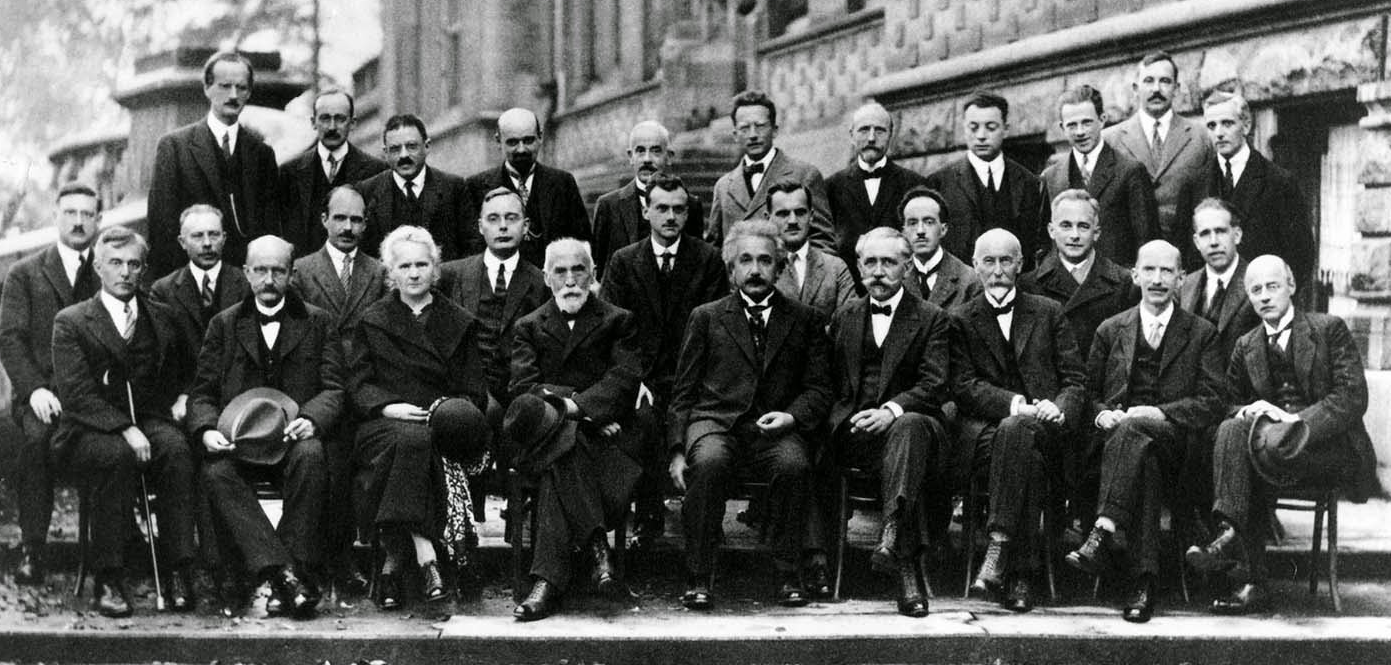
Solvay conference 1927, probably the most intelligence ever photographed. 17 of the 29 attendees were or became Nobel Prize winners.
Miriam Solomon writes at iai news Scientific consensus needs dissent. Excerpts in italics with my bolds and added images
We place high epistemic value on expert opinion and when it reaches a consensus, we may view this as settled science. But, writes Miriam Solomon, we should not equate expert opinion with certainty. While expertise is a valuable guide to decision-making, experts can be prone to human error too. Laypeople can, and should, critically evaluate how expert consensus is reached.

We live in an immense, complex world, and frequently benefit from guidance from those with more information and experience—people we regard as experts—to make sense of it. Along these lines, we often use expert consensus as an indicator of what is known, and expert disagreement as an indicator of what is uncertain. So, for example, earth scientist and historian Naomi Oreskes appeals to the record of peer-reviewed scientific publications on climate change to argue that the public should listen to the expert consensus that there is anthropogenic climate change. Oreskes identified that those who publicly disagree with this consensus have not contributed to the peer-reviewed scientific literature on climate science, and in this way they are not experts with regard to the relevant subject matter, although they may have PhDs and even university positions in unrelated sciences.[Note that position ignores many expert climatologists who disagree, but who are dismissed as “deniers” because they dissent.]
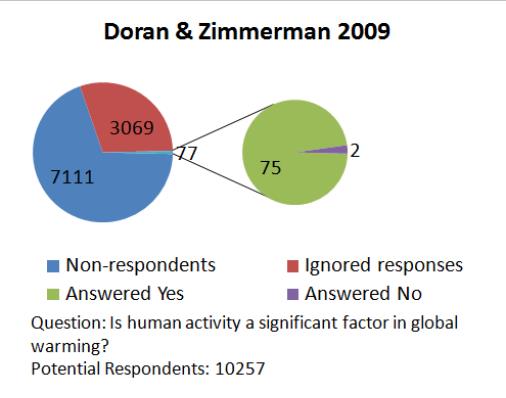
Survey starting the narrative “97% consensus of experts agree humans are causing global warming.”
Oreskes dissuades us from taking such non-expert disagreement seriously, especially since she also finds that it is politically motivated. The appeal to expertise encourages us to trust those who know more than we do about a particular matter and invites us to pay attention to reliable markers of expertise, such as publication in relevant peer-refereed journals. In traditional epistemological terms, it recommends deference to epistemic authority (or authorities).
However, even experts are fallible. Expert consensus
should not be equated with certainty or truth.
But experts are more likely to be correct than non-experts, and the agreement of experts with one another can provide additional evidence for the robustness of their conclusions. Oreskes’ approach implicitly relies on the trustability of the relevant experts, not only on their expertise. We need to know not only that experts are knowledgeable but that they are acting in the best interests of furthering knowledge. The integrity of science—its commitment to norms such as openness of inquiry, responsiveness to criticism, disinterestedness, etc. (see Merton (1942) and Longino (1990))—is vital for its trustability.
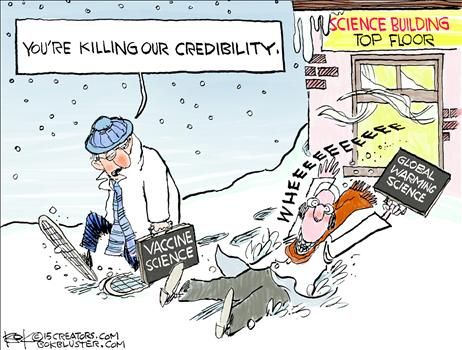
Sometimes, this trust can be eroded. Philosopher of medicine Maya Goldenberg has explored what is needed for laypersons to build justified trust in vaccine research, mentioning concerns about Big Pharma producing biased research and concerns about the historical record of medical, scientific, and governmental communities’ willingness to use untested medical technologies on marginalized groups.
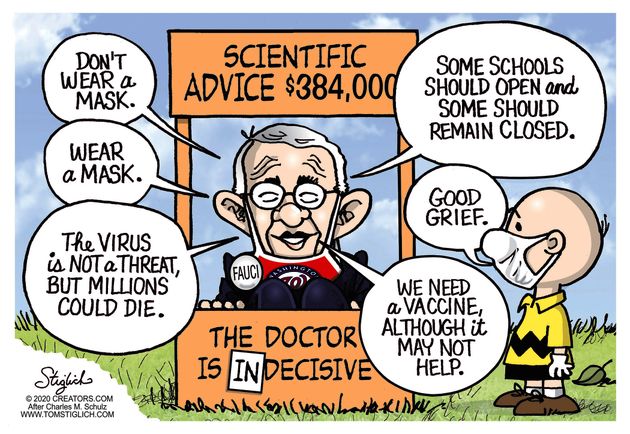
When experts disagree—a common occurrence in science—deference to expertise yields conflicting results. Laypersons are apt to respond to such disagreements, such as which sorts of diets are best for long-term health, or which vaccines should be mandated and for whom, with statements such as “even the experts don’t know.”
Knowing this, experts are aware of the need for a public
face of consensus on matters they wish to influence.
They have become savvy about disseminating any publicly relevant consensus that is achieved. This thinking is behind established institutions such as the United States’ NIH Consensus Development Conference Program (1977-2013), which issued regular reports on new clinical interventions, and the Intergovernmental Panel on Climate Change (1988-present), which issues regular updates on climate science.

Forcing a consensus when the science is not there rarely works.
Deferring to the consensus of trustable experts is one of the best kinds of argument based on epistemic authority. It is certainly better than the Scholastic practice of referring to the writings of just one “great man,” such as Aristotle or Aquinas. Several experts coming to the same conclusion about a matter is usually more convincing than one expert coming to that conclusion. However, as many have pointed out, the strength of the argument depends on:
(1) the degree of independence of these experts from each other, and
(2) the individual and collective interests of these experts.

Scientists, like the rest of us, come to their knowledge in social context and, generally speaking, scientists are neither independent of each other nor completely interest-free. They are often trained similarly—by the same schools, people, and educational materials—and feel pressured towards group conformity as well as towards deference to uber-experts. Scientists have individual biases, such as confirmation bias, that can be magnified when one scientist influences another. There are many well-known cases in the history of science and medicine in which expert consensus has turned out to be incorrect and harmful. Some examples in medicine are the traditional practice of blood-letting as a general cure-all, the use of surgery and antacids for stomach ulcers, and the practice of radical mastectomy for early stage breast cancer.
Thus, while deferring to the consensus of experts is often a good practice, it is defeasible: there are circumstances in which that deference is not ultimately justified. It is worth spelling out what those circumstances are. Here are some questions to ask of any purported expert consensus.
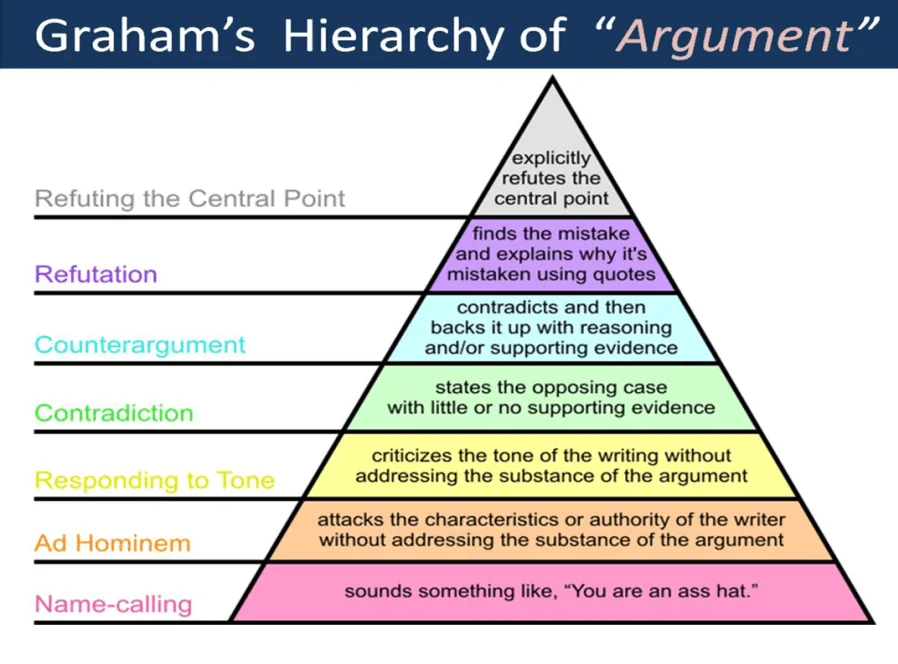
 Who agrees? Is there any dissent—if so, is it between particular groups of experts (say, family medicine practitioners disagreeing with radiologists about the effectiveness of screening mammography) or between experts and non-experts?
What do the dissenters say? It is necessary to get at least a little “into the weeds” of dissent to decide whether or not dissenters are worth taking seriously.
How long has there been agreement? If agreement is new, what brought it about? In particular, how much of a role did new evidence play?
If agreement is longstanding, would counterevidence be sought, noticed and responded to?
These kinds of questions are a check on the processes that led to consensus. There will always be some social processes such as peer pressure and graduate school training that are unrelated to relevant evidence yet play a role in expert belief formation. This does not mean that we should distrust all consensus that has any sources in “bias.” That is too idealistic. Instead, we should look at the complete picture of what played a role in consensus formation and try to assess whether new evidence had a deciding role.

It is also worth reflecting that consensus is not the general end goal of science. Scientific communities tolerate—even benefit from—lack of consensus. Already in the nineteenth century, the philosopher John Stuart Mill put things especially well in On Liberty (1859) when he argued that consensus is an obstacle to progress, rationality and truth because it eliminates points of view that may turn out to be partially or wholly correct, or at least useful for criticism and consequent refinement of the correct view.

Dissent is strategically valuable when it leads to the distribution of cognitive labour over a variety of perspectives, hypotheses, and methods. While individual experts are often over-confident about their own views, this does little harm when it does not get in the way of other experts exploring alternatives. It is best to have the scientific community pursue all promising lines of inquiry.

Achieving consensus on a scientific matter becomes important only when there is a need for cooperative communal action and there needs to be agreement on steps to take to achieve a policy goal, such as health or sustainability. Even in such cases, there need not be agreement on all issues. The publications of the Intergovernmental Panel on Climate Change are quite clear that there is plenty of disagreement between scientists on some of the details of climate science. What is emphasized is that there is sufficient consensus on basic matters to guide important policy decisions.

Expert consensus is an important, but not infallible, guide for laypeople and decision-makers. The strength of a consensus depends on the independence of the experts involved and the processes that shaped their agreement. While deference to experts is often justified, it should be accompanied by critical scrutiny, particularly when consensus is used to guide public policy. Dissent within the scientific community remains essential, not only for advancing knowledge but also for ensuring that consensus, when achieved, is robust and reliable.

via Science Matters
August 24, 2024 at 12:45PM
 Iowa Climate Science Education