Month: August 2024

Florida’s Fossil Fuel Renaissance: Why the Sunshine State is Laughing Off Climate Hysteria

Ah, Florida—the land of sunshine, palm trees, and, apparently, the most evil of all things: fossil fuels. If you listen to Gavin Maguire at Reuters, you’d think the state was single-handedly bringing about the end of days by stubbornly refusing to give up on natural gas and other fossil fuels.

https://www.reuters.com/business/energy/florida-reverses-energy-transition-by-cranking-fossil-fuel-use-maguire-2024-08-21/

Maguire’s article, which is as much a lament as it is a piece of journalism, paints Florida as the villain in a story where the rest of the country is the hero, gallantly marching toward a green utopia. But here’s the kicker: Florida’s doing just fine, and the people who live there know it. Let’s break down the absurdity of the climate scolds and see why Florida’s energy strategy is not only sensible but downright smart.

Fossil Fuels: The Workhorse of Florida’s Energy Grid

According to Maguire, Florida’s reliance on fossil fuels—gasp—has actually increased in 2024, a move that he seems to think is tantamount to environmental heresy. “Florida reverses energy transition by cranking fossil fuel use,” his headline wails, as if the state had suddenly decided to reverse gravity. But let’s get real: fossil fuels, particularly natural gas, are the backbone of Florida’s energy grid for a very simple reason—they work. When the summer sun is beating down, and everyone’s cranking up the AC, no one wants to hear that their power has been cut because the wind isn’t blowing or a cloud passed over a solar farm.

Maguire points out that over 80% of Florida’s electricity has come from fossil fuels since the beginning of June, the highest share in over three years. He compares this to the national average of 62.4% and Texas’s 62%, as if this somehow proves Florida is an outlier in the worst way. But let’s be honest: these are numbers that should make Floridians proud. While the rest of the country toys with unreliable renewables, Florida is ensuring that its citizens have a reliable, affordable energy supply.

The Reality of Renewable Energy

Renewables sound great on paper, don’t they? Free energy from the sun and wind—what’s not to love? But here’s where the rubber meets the road: renewables aren’t ready for prime time, especially not in a state like Florida, where reliability isn’t just a luxury, it’s a necessity. Imagine the chaos if millions of Floridians were left in the sweltering heat because the sun decided to take a day off. Florida’s summer is no joke, and neither is the demand for electricity. The state’s grid needs to be as robust as a linebacker, not as fragile as a flower.

And it’s not like Florida has completely ignored renewable energy. Florida Power & Light (FPL), the largest utility in the state, is leading a solar charge, aiming to install 30 million solar panels by 2030. But here’s the kicker—Florida’s leaders know that solar is a supplement, not a substitute. That’s why they haven’t thrown the baby out with the bathwater and abandoned fossil fuels.

The Big Bad Fossil Fuel Bogeyman

Maguire and his fellow climate alarmists would have you believe that fossil fuels are the devil incarnate, responsible for every ill the planet faces. But this simplistic narrative ignores the fact that fossil fuels have powered human progress for centuries. Without them, we wouldn’t have modern transportation, healthcare, or even the ability to manufacture the very solar panels and wind turbines the green crowd loves so much.

In his article, Maguire bemoans that Florida’s fossil fuel dependency has risen from 71.3% in 2023 to 77.2% in 2024, while other regions are supposedly making progress in reducing theirs. But here’s the dirty little secret: those regions still rely heavily on fossil fuels too, they just like to dress it up in green rhetoric to make themselves feel better. The truth is, until we develop a reliable and affordable way to store renewable energy, fossil fuels will continue to be the bedrock of our energy systems. And Florida, ever the practical state, isn’t ashamed to admit that.

Nuclear Power: The Unsung Hero

What’s even more laughable is that while the climate scolds are busy clutching their pearls over Florida’s fossil fuel use, they completely ignore the state’s significant investment in nuclear power. Nuclear energy is the cleanest, most reliable form of energy we have, and Florida has been smart enough to embrace it. Plants like Turkey Point and St. Lucie are quietly doing the heavy lifting, providing carbon-free electricity around the clock, rain or shine.

Yet, nuclear is the elephant in the room that no one wants to talk about. Why? Because it doesn’t fit the narrative. Nuclear power doesn’t require massive lifestyle changes or endless government subsidies—it just works. And that’s precisely why the green elite tend to ignore it. It’s hard to sell doom and gloom when there’s a clean, reliable energy source available that doesn’t require us to upend our entire way of life.

The Absurdity of Climate Alarmism

Let’s take a step back and look at the bigger picture. The climate hysteria that Maguire and others peddle is less about science and more about control. By framing fossil fuels as an existential threat, they create a moral panic that justifies extreme measures—measures that often enrich a select few while impoverishing the many.

Maguire seems particularly miffed that Florida isn’t following the rest of the country in what he calls an “energy transition.” But let’s call it what it is: an energy downgrade. Moving from reliable fossil fuels and nuclear to less reliable renewables is like trading in your SUV for a skateboard. Sure, it’s trendy, but it’s not going to get you where you need to go.

And then there’s the issue of energy poverty. Europe has already shown us what happens when you go all-in on green energy without a backup plan—skyrocketing energy prices, blackouts, and people literally freezing in their homes. Florida’s leaders, to their credit, are avoiding this fate by ensuring that their energy policy is grounded in reality, not ideology.

The Future: Innovation, Not Fear

So, what’s the way forward? If you listen to the climate hysterics, the only answer is to stop using fossil fuels entirely, throw trillions of dollars into renewables, and pray that it all works out. But if you’re Florida—and, frankly, if you’re sensible—you take a different approach. You focus on innovation, on developing new technologies that can actually deliver the goods without bankrupting the country or throwing people into energy poverty.

Florida is already a leader in energy innovation. The state is home to research in advanced nuclear reactors, efficient and cost effective solar initiatives, and more. But instead of being applauded for this, Florida is criticized for not moving fast enough to adopt unproven technologies. It’s the equivalent of berating someone for not jumping out of a perfectly good airplane just because someone else says the parachute is “probably” going to work.

Even so, Florida has been the country’s third-fastest growth market for solar installations, with capacity climbing from 1,432 megawatts (MW) in 2018 to over 10,000 MW in 2023, according to the Solar Energy Industries Association (SEIA).

Net metering deals that to pay households for excess electricity steered onto local grids look set to sustain demand for small-scale solar systems in Florida going forward, while utilities have deployed more large-scale solar systems than any other state so far in 2024, according to EIA data.
https://www.reuters.com/business/energy/florida-reverses-energy-transition-by-cranking-fossil-fuel-use-maguire-2024-08-21/

The Bottom Line

At the end of the day, Florida is doing what every state should be doing: putting its citizens first. The state’s energy policy isn’t about virtue signaling or pandering to the latest green fad—it’s about ensuring that people can live their lives with affordable, reliable energy. That’s something the climate hysterics will never understand because their agenda isn’t about helping people—it’s about controlling them.

So, the next time you hear someone bemoaning Florida’s fossil fuel use, remember this: Florida isn’t falling behind, it’s leading the way. While the rest of the country plays around with windmills and solar farms that can’t even keep the lights on, Florida is making sure that its people have the energy they need when they need it. That’s not backward—that’s smart.

And as for Gavin Maguire and his ilk, they can keep on crying about Florida’s energy choices. Meanwhile, the Sunshine State will keep on shining, powered by a mix of energy sources that are reliable, affordable, and, most importantly, effective. Because in the real world, where people’s lives and livelihoods are on the line, that’s what truly matters.

via Watts Up With That?

https://ift.tt/xrqiE1o

August 23, 2024 at 01:07PM

Climate Policies Fail in Fact and in Theory

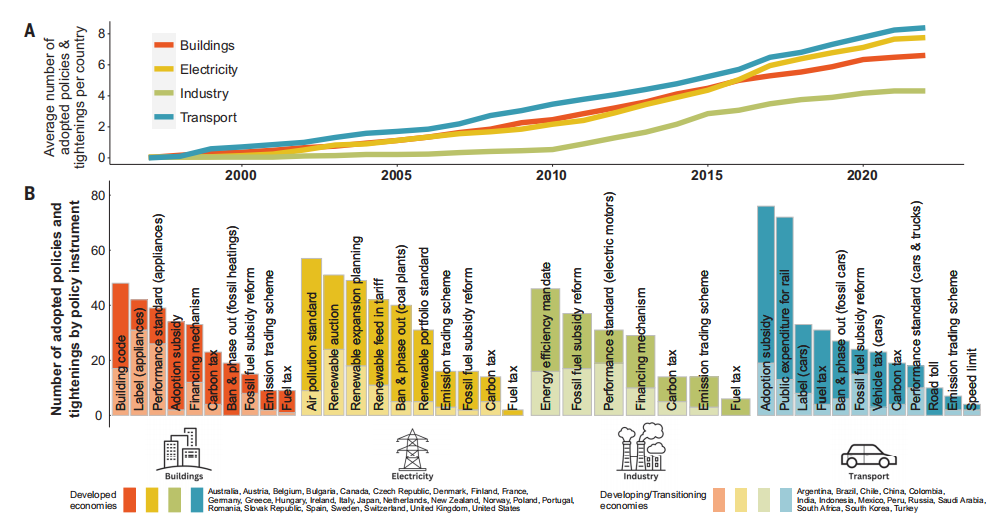
A recent international analysis of 1500 climate policies around the world concluded that 63 or 4% of them were successful in reducing emissions.  The paper is Climate policies that achieved major emission reductions: Global evidence from two decades publishes at Science.org.  Excerpts in italics with my bolds.

Abstract

Meeting the Paris Agreement’s climate targets necessitates better knowledge about which climate policies work in reducing emissions at the necessary scale. We provide a global, systematic ex post evaluation to identify policy combinations that have led to large emission reductions out of 1500 climate policies implemented between 1998 and 2022 across 41 countries from six continents. Our approachintegrates a comprehensive climate policy database with a machine learning–based extension ofthe common difference-in-differences approach. We identified 63 successful policy interventions with total emission reductions between 0.6 billion and 1.8 billion metric tonnes CO2 . Our insights on effective but rarely studied policy combinations highlight the important role of price-based instruments in well-designed policy mixes and the policy efforts necessary for closing the emissions gap.

Context

(1). Although the [Paris] agreement seeks to limit global average temperature increase to “well below 2°C above pre-industrial levels and pursuing efforts to limit the temperature increase to 1.5°C,” its success critically hinges on the implementation of effective climate policies at the national level.  However, scenarios from global integrated assessment models suggest that the aggregated mitigation efforts communicated through nationally determined contributions (NDCs) fall short of the required emission reductions.

(2)The United Nations (UN) estimates quantify a median emission gap of 23 billion metric tonnes(Gt) carbon dioxide equivalent (CO2-eq) by 2030

(3). The persistence of this emissions gap is not only caused by an ambition gap but also a gap in the outcomes that adopted policies achieve in terms of emission reductions.

(4). This raises the fundamental question as to which types of policy measures are successfully causing meaningful emission reductions. Despite more than two decades of experience with thousands of diverse climate policy measures gained around the world, there is consensus in neither science nor policy on this question.

The exhibit above shows the scope and complexity of the analysis.  But the bottom line is that 96% of the effort and trillions of $$$ were spent to no avail. It is estimated that on the order of 1.2 Billion tonnes of CO2 were prevented over the last 20 years, with an additional 23 Billion tonnes to be erased by 2030. 

Any enterprise with that performance would be liquidated. 
That is an epic failure in fact. 

And recommending mixing of policies including subsidies and regulations along with pricing goes against economic theory and fails in practice. Ross McKitrick explains the dangers of making climate policies willy-nilly in his Financial Post article Economists’ letter misses the point about the carbon tax revolt.  Excerpts in italics with my bolds and added images.

Yes, the carbon tax works great in a ‘first-best’ world where it’s the
only carbon policy. In the real world, carbon policies are piled high.

An open letter is circulating online among my economist colleagues aiming to promote sound thinking on carbon taxes. It makes some valid points and will probably get waved around in the House of Commons before long. But it’s conspicuously selective in its focus, to the point of ignoring the main problems with Canadian climate policy as a whole.

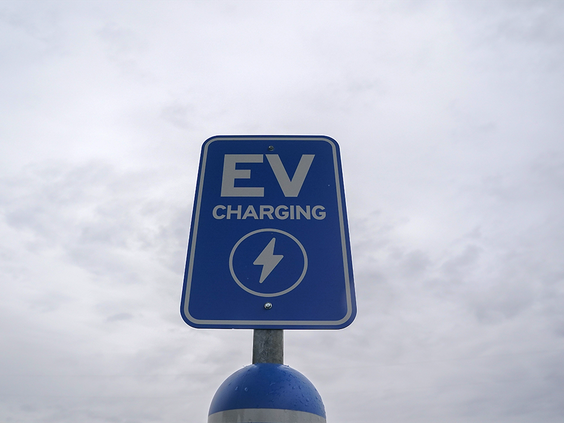
EV charging sign Electric-vehicle mandates and subsidies are among the mountain of climate policies that have been piled on top of Canada’s carbon tax. PHOTO BY JOSHUA A. BICKEL/THE ASSOCIATED PRESS

There’s a massive pile of boulders blocking the road to efficient policy, including:

    • clean fuel regulations,
    • the oil-and-gas-sector emissions cap,
    • the electricity sector coal phase-out,
    • strict energy efficiency rules for new and existing buildings,
    • new performance mandates for natural gas-fired generation plants,
    • the regulatory blockade against liquified natural gas export facilities,
    • new motor vehicle fuel economy standards,
    • caps on fertilizer use on farms,
    • provincial ethanol production subsidies,
    • electric vehicle mandates and subsidies,
    • provincial renewable electricity mandates,
    • grid-scale battery storage experiments,
    • the Green Infrastructure Fund,
    • carbon capture and underground storage mandates, 
    • subsidies for electric buses and emergency vehicles in Canadian cities,
    • new aviation and rail sector emission limits,
      and many more.

Not one of these occasioned a letter of protest from Canadian economists.

Beside that mountain of boulders there’s a twig labelled “overstated objections to carbon pricing.” At the sight of it, hundreds of economists have rushed forward to sweep it off the road. What a help!

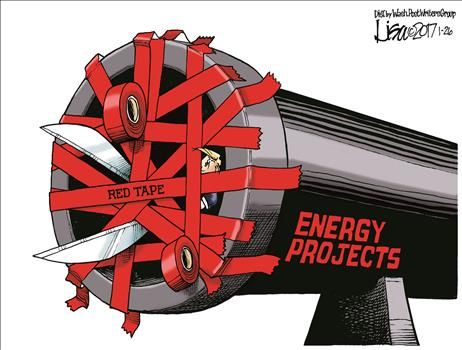
To my well-meaning colleagues I say: the pile of regulatory boulders
long ago made the economic case for carbon pricing irrelevant.

Layering a carbon tax on top of current and planned command-and-control regulations does not yield an efficient outcome, it just raises the overall cost to consumers. Which is why I can’t get excited about and certainly won’t sign the carbon-pricing letter. That’s not where the heavy lifting is needed.

My colleagues object to exaggerated claims about the cost of carbon taxes. Fair enough. But far worse are exaggerated claims about both the benefits of reducing carbon dioxide emissions and the economic opportunities associated with the so-called “energy transition.” Exaggeration about the benefits of emission reduction is traceable to poor-quality academic research, such as continued use of climate models known to have large, persistent warming biases and of the RCP8.5 emissions scenario, long since shown in the academic literature to be grossly exaggerated.

But a lot of it is simply groundless rhetoric. Climate activists, politicians and journalists have spent years blaming Canadians’ fossil fuel use for every bad weather event that comes along and shutting down rational debate with polemical cudgels such as “climate emergency” declarations. Again, none of this occasioned a cautionary letter from economists.

There’s another big issue on which the letter was silent. Suppose we did clear all the regulatory boulders along with the carbon-pricing-costs-too-much twig. How high should the carbon tax be? A few of the letter’s signatories are former students of mine so I expect they remember the formula for an optimal emissions tax in the presence of an existing tax system. If not, they can take their copy of Economic Analysis of Environmental Policy by Prof. McKitrick off the shelf, blow off the thick layer of dust and look it up. Or they can consult any of the half-dozen or so journal articles published since the 1970s that derive it. But I suspect most of the other signatories have never seen the formula and don’t even know it exists.

To be technical for a moment, the optimal carbon tax rate varies inversely with the marginal cost of the overall tax system. The higher the tax burden — and with our heavy reliance on income taxes our burden is high — the costlier it is at the margin to provide any public good, including emissions reductions. Economists call this a “second-best problem”: inefficiencies in one place, like the tax system, cause inefficiencies in other policy areas, yielding in this case a higher optimal level of emissions and a lower optimal carbon tax rate.

Based on reasonable estimates of the social cost of carbon and the marginal costs of our tax system, our carbon price is already high enough. In fact, it may well be too high. I say this as one of the only Canadian economists who has published on all aspects of the question. Believing in mainstream climate science and economics, as I do, does not oblige you to dismiss public complaints that the carbon tax is too costly.

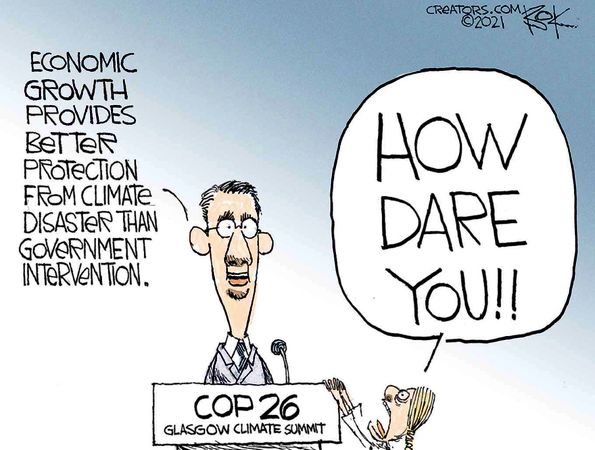
Which raises my final point: the age of mass academic letter-writing has long since passed. Academia has become too politically one-sided. Universities don’t get to spend years filling their ranks with staff drawn from one side of the political spectrum and then expect to be viewed as neutral arbiters of public policy issues. The more signatories there are on a letter like this, the less impact it will have. People nowadays will make up their own minds, thank you very much, and a well-argued essay by an individual willing to stand alone may even carry more weight.

Online conversations today are about rising living costs, stagnant real wages and deindustrialization. Even if carbon pricing isn’t the main cause of all this, climate policy is playing a growing role and people can be excused for lumping it all together. The public would welcome insight from economists about how to deal with these challenges. A mass letter enthusing about carbon taxes doesn’t provide it.

Postscript:  All the Pain for No Gain is Unnecessary


There is no charge for content on this site, nor for subscribers to receive email notifications of postings.

via Science Matters

https://ift.tt/Vj4XaMW

August 23, 2024 at 12:44PM

New Offshore Wind Prices 17% Higher Than Market Price

By Paul Homewood


OFGEM’s new Energy Price Cap is based on a wholesale price for electricity of £86.75/MWh.

This is still well below the new Administrative Strike Price for offshore wind, and also below onshore. Only solar power is slightly cheaper, but of course strike prices do not factor in all of the indirect costs associated with intermittent renewables.

Miliband’s plan to litter the country and seas with wind turbines can only increase the cost of electricity bills.

image

https://www.gov.uk/government/publications/contracts-for-difference-cfd-allocation-round-6-core-parameters

via NOT A LOT OF PEOPLE KNOW THAT

https://ift.tt/z0UAhC5

August 23, 2024 at 12:09PM

LIVE at 1 pm ET, Hurricane Season 2024: Were the predictions wrong again? – The Climate Realism Show #124

The Climate Realism Show – LIVE every Friday at 1 p.m. ET

NOAA and other forecasters predicted the 2024 hurricane season would be among the most active in decades. Professional climate alarmist Michael Mann said human-caused global warming would prime the Atlantic Ocean to produce 33 named storms and several major hurricanes to lash the United States. The media, of course, jumped on that to sell gloom and doom to America. You might have noticed none of that has come to pass.

The Climate Realism Show #124 will bring in Stanley Goldenberg, one of the country’s top hurricane forecasters to explain what’s going on. We will also cover the Crazy Climate News of the Week, including a luxury yacht sinking in the Mediterranean blamed on climate change, record cold temperatures in August, and Utah fighting land grabs by the federal government.

Join us LIVE at 1 p.m. ET with The Heartland Institute’s Jim Lakely, H. Sterling Burnett, Anthony Watts, and Linnea Lueken and special guest Stanley Goldenberg. Join our always lively chat and we’ll answer your questions on the air.

via Watts Up With That?

https://ift.tt/4yrdFbY

August 23, 2024 at 11:37AM