
What does weather data tell us?
via CFACT
August 20, 2024 at 11:07PM
By Robert Bradley Jr. — August 20, 2024
“It is now time for DOI and BLM to prove their worth, and whether they are truly working in the public interest, or merely pandering to the Lower-48 radical environmental elite … trying to shut down the Trans-Alaska Pipeline System (TAPS) … [and] Alaska.” ( – U.S. Senator Dan Sullivan, below)
Termite aspirations. That term from Ayn Rand toward the enemies of modern living and human betterment is applicable to many energy issues today. One of the most recent examples regards the Trans-Alaska Pipeline System, which since 1977 has been transporting crude oil from Prudhoe Bay to Valdez (800 miles) for tanker shipment to markets. Today, TAPS averages about 450,000 barrels of crude oil per day, accounting for 3.5 percent of U.S. production.
Petition to Close
This June, these environmental groups filed a legal petition to the U.S. Department of Interior to phase-out and decommission TAPS: the Center for Biological Diversity; Pacific Environment; Sovereign Iñupiat for a Living Arctic; Alaska Community Action on Toxics; Fairbanks Climate Action Coalition; and Public Employees for Environmental Responsibility (also see here).
“[TAPS] is approaching the end of its useful life due to mounting climate change-driven damages to both the aging pipeline infrastructure and the entire Arctic ecosystem,” the six petitioners state, also citing “the imperative for the United States to rapidly transition away from fossil fuel-based energy.”
Operating under a 30-year pipeline right-of-way granted by the Bureau of Land Management (Department of Interior) with ten years to run, petitioners seek
a managed phasedown of the pipeline, drafting an updated Dismantlement, Removal, and Restoration (DR&R) plan should also promptly commence. Avoiding the most severe harms from climate change requires immediate action to halt any new fossil fuel development and begin a rapid transition towards more sustainable energy sources, especially in the Arctic. We simply cannot afford a decade more of TAPS operations without any comprehensive analysis of its ongoing, harmful impacts and the need to implement fundamental changes towards a phasedown.
Such would be a “taking” and suggests the need to privatize the public domain in Alaska to avoid political issues, to depoliticize, energy policy in Arctic. Such privatization, in fact, would generate revenue to retire federal debt at a time of fiscal constraint.
Biden vs. Alaska
More is going on to de-develop Alaska’s oil industry from Washington, DC. The Biden-Harris Administration is trying to close more areas on Alaska’s North Slope to oil and gas development. The state of Alaska and native governments within the state are suing Biden-Harris in this regard.
Interior’s Bureau of Land Management has issued a final Environmental Impact Statement recommending the revocation of Public Land Orders executed in 2021 that would encumber 28 million acres in the state. “Leaving PLOs in place across Alaska serves as a de facto land withdrawal that restricts public access, multiple use, and the transfer of certain selected lands to Alaska Native Vietnam-era veterans,” a press release by Alaskan U.S. senators Lisa Murkowski and Dan Sullivan stated. “With this action,” Murkowski added:
the Biden administration has wasted an opportunity to do right by Alaska by refusing to lift a single acre of a single PLO anywhere in our state, instead keeping all of these lands in a restricted status. This is effectively a new form of administrative land withdrawal, even though most PLOs in Alaska have served their purpose and are no longer needed. This wouldn’t be acceptable in any other state, but this administration is once again treating Alaska differently—and far worse—than states in the Lower 48.”
Sullivan noted that the Biden Administration “has issued more than 64 executive orders and actions directly targeting Alaska … harming our jobs and economy, but also our Alaska Native communities, who will be denied access to gravel resources to build out local village infrastructure.”
TAPS is part of this federal attack. Dan Sullivan recently wrote this letter to Interior Secretary Debra Haaland and director, Bureau of Land Management, Tracey Stone-Manning. His inquiry and request foreshadow an all-out attempt to root out the termites at work 4,300 miles away.
I am writing to express my serious concerns with the Bureau of Land Management’s decision to walk away from its commitment to the State of Alaska to revoke Public Land Order (PLO) 5150. Your decision to abruptly abandon the public process associated with lifting PLO 5150, without notice, at the same time that far-left environmental groups are trying to shut down the Trans-Alaska Pipeline System (TAPS) raises questions regarding potential collusion between the Biden Administration and the Lower-48 radical environmentalists that want to shut down Alaska.
The revocation of PLO 5150 would enable the conveyance of the land under TAPS to the State of Alaska. As detailed in a letter that the Alaska congressional delegation sent to the Alaska State Director for the Bureau of Land Management (BLM) on July 8, 2024, BLM recommended that numerous PLOs be partially or fully revoked, including PLO 5150 … But unsurprisingly, BLM also failed to publish an EA for PLO 5150 when it released final SEIS for the Central Yukon RMP, despite BLM’s commitment to Alaska’s DNR to do so.
At a recent Senate Energy and Natural Resources Committee hearing, you provided a series of excuses to explain away your failure, claiming BLM’s “plates are full” and that your decision to abandon the EA process for PLO 5150 was a “collective decision about workload with the Department.” Such a statement is a complete and utter affront. Indeed, the voices of Alaskans are yet again being ignored by your Administration. This became abundantly clear during your recent visit to Alaska, when you ignored requests to meet with State and tribal leaders, yet continue to meet with representatives of the very groups trying to eliminate resource production in Alaska.
Unsurprisingly, as you know, and perhaps in coordination with your team at BLM, on June 12, 2024, a coalition of far-left environmental groups petitioned DOI and BLM to take the following actions:
Their request is a significant undertaking, as in 2020, the Council on Environmental Quality (CEQ) concluded that, on average, it takes 4.5 years for an agency to complete an environmental impact statement, compared to an EA, which takes a much shorter period of time.
It is now time for DOI and BLM to prove their worth, and whether they are truly working in the public interest, or merely pandering to the Lower-48 radical environmental elite. DOI is required to respond to the petition, “within a reasonable time…[and] proceed to conclude a matter presented to it.” So, if DOI and BLM choose to move forward with the environmentalists’ petition, it will confirm my suspicions that DOI and BLM’s plates are, in fact, not “full” and that leadership decisions regarding “workload with the Department” are intended to cater to their far-left allies, given an SEIS for TAPs will take a significantly longer period of time than an EA for PLO 5150.
With that in mind, I request that BLM provide to my office not later than September 13, 2024 the following records:
I request that the calendars be produced in a format that includes all invitees, any notes, and all attachments. Please do not limit your search to Outlook calendars alone. Please produce any responsive document be it paper or electronic, available on a government-issued or personal device used to track or coordinate the time the individual allocates to agency business.
via Watts Up With That?
August 20, 2024 at 08:01PM

Nick Pope
Contributor
The Democratic National Convention (DNC) published guidance that urges food vendors to serve plant-based options or “lower-emission” meat.
The DNC’s sustainability guidance for food vendors serving customers at the convention in Chicago suggests that they should “offer low-emission menu choices,” including plant-based options, and “prioritize” chicken where possible because of its lower carbon intensity. Environmental activists and institutions like the United Nations have consistently asserted that reforming agricultural practices and decreasing red meat consumption are key to bringing down emissions and fighting climate change. (RELATED: Wagyu Burgers, Asian-French Fusion And More: Here’s What’s On The Menu At The UN Climate Confab)
Beef is considered to be by far the most carbon-intensive type of meat to produce, followed by lamb and farmed crustaceans, according to The New York Times.
The guidance is not binding, though the DNC has also created a survey for vendors, hosts of ancillary events and other stakeholders to fill out with information about the steps they took to make their contributions to the convention more environmentally friendly.
“Offer low-emission menu choices, including plant-based and locally sourced options. If meat is offered, prioritize lower-emission meats such as chicken,” the guidance states. Additionally, the DNC’s suggestions for vendors also include that they “request ethically sourced/fair-trade certified seafood, coffee, tea, and chocolate” and “source high-emission items like coffee through local, small business partnerships.”
Some of the food vendors listed on the DNC’s registry include restaurants that ostensibly serve meat, including “Bazaar Meat” and the “Chicago Chop House.” The DNC’s guidance also urges vendors to use reusable or compostable utensils and encourages them to source goods from local suppliers, in part to keep emissions down.
Additionally, the DNC is recommending the purchase of “renewable energy certificates,” or credits, to “measure and mitigate the impact of the energy used to heat, cool, and power venues and hotels.”
The DNC did not respond immediately to a request for comment.
All content created by the Daily Caller News Foundation, an independent and nonpartisan newswire service, is available without charge to any legitimate news publisher that can provide a large audience. All republished articles must include our logo, our reporter’s byline and their DCNF affiliation. For any questions about our guidelines or partnering with us, please contact licensing@dailycallernewsfoundation.org.
via Watts Up With That?
August 20, 2024 at 04:01PM
By Jo Nova
For some reason our long climate proxies work for hundreds of years but always seem to stop working just before the man-made catastrophe appears. It seems to me that if a coral-tree-clam-sediment thermometer worked in 1393, it was odd that it doesn’t seem to work in 2020. It’s not like Earth has run out of trees, mud, pollen or corals.
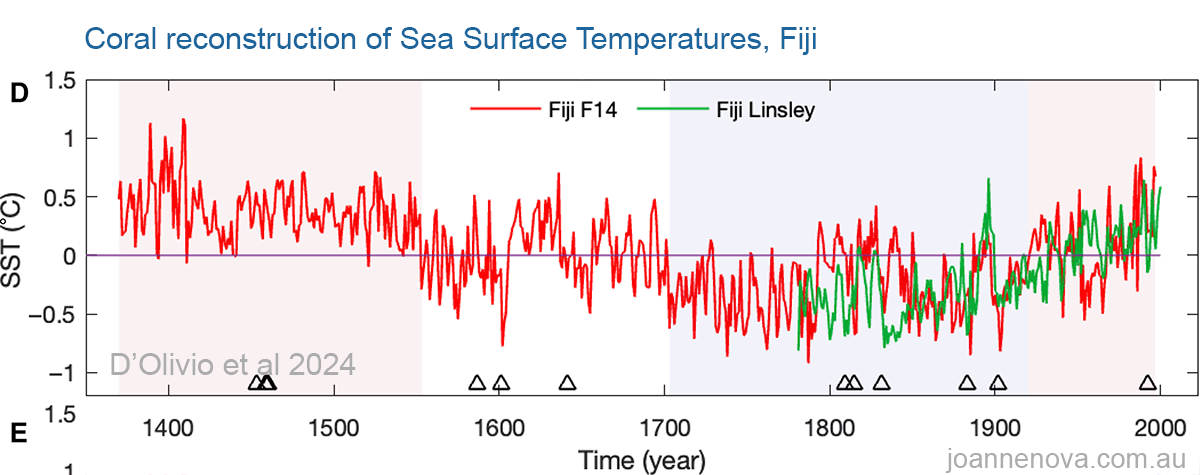
So here we are again, this time with a new Fijian coral that runs 627 years continuously from 1380 to 1997. And the experts have to slap “an instrumental record” on for the last twenty years to muddy things up. The actual single coral core shows the water of Fiji was the same or even slightly warmer in the Medieval warm period as it was in the 1990s. There’s no sign at all in 600 years of this coral, that man-made carbon dioxide has had any effect at all on the water around Fiji.
The new data comes from a coral core drilled in 1999. For some reason, the world is about to end, but worried scientists who say they are frustrated at the pace of climate policy still wait 25 years to assess the coral core.
The apocalypse is upon us, but no one can find a new big coral to study it in real time?
Click to enlarge
Since the Pacific is a long way from Europe and Antarctica, we confirm, yet again, that the Medieval Warm Period and the Little Ice Age were global events. Something was warming the Earth 600+ years ago and the experts don’t know what that was. Then the Earth cooled, and they don’t know what caused that either, though the sun was suspiciously quiet, but we’re not supposed to mention that.
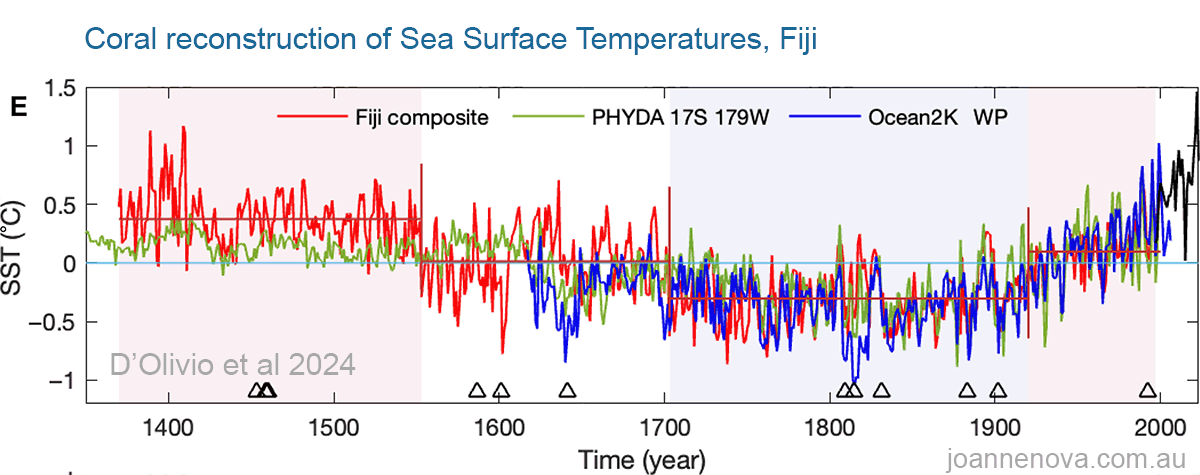
But the experts tell us this is a “significant departure” from natural variability, and the hottest in 600 years. But it’s only when they superimpose ocean buoys and other instruments that the “record” hottest ever temperature appears (below).
Click to enlarge
Despite the graph E (above) not labeling the instrument data in the key, the caption contains the fine print “Also shown is the most recent SST data for Fiji from ERSSTv5 (1998 to 2021) shown in (E) (black).” So the only data for the “record” spike in the last 20 years of corals, comes from thermometers and statistics instead. Wouldn’t you know?
So yet again, even though I hear there is still coral living around Fiji, the key hottest ever record part of the graph is not from that coral.
I’ve been asking for a long proxy to show we have a crisis. One solitary proxy that assesses temperatures in 2020 as well as it did in 1703 or 1492. Does anyone know one?
If corals and clams work so well as thermometers surely Australia, with the worlds largest living reef, ought to have hundreds of old corals we can study? You’d think if our climate scientists cared about the climate and were given $440 million dollars to spend, they could have found some? Perhaps they have to leave them in drawers for 20 years so they have room to tack on the instrumental spikes at the end?
To finish up, here are lots more graphs from the paper looking like CO2 has made no difference to the climate.
A is the Southwest Pacific. B is the Macassar Strait, D is from Palmyra, E is the central pacific, F is the Galapagos, and none of them show anything we should spend a trillion dollars on.
Paleo Hydrodynamics Data Assimilation product (PHYDA)
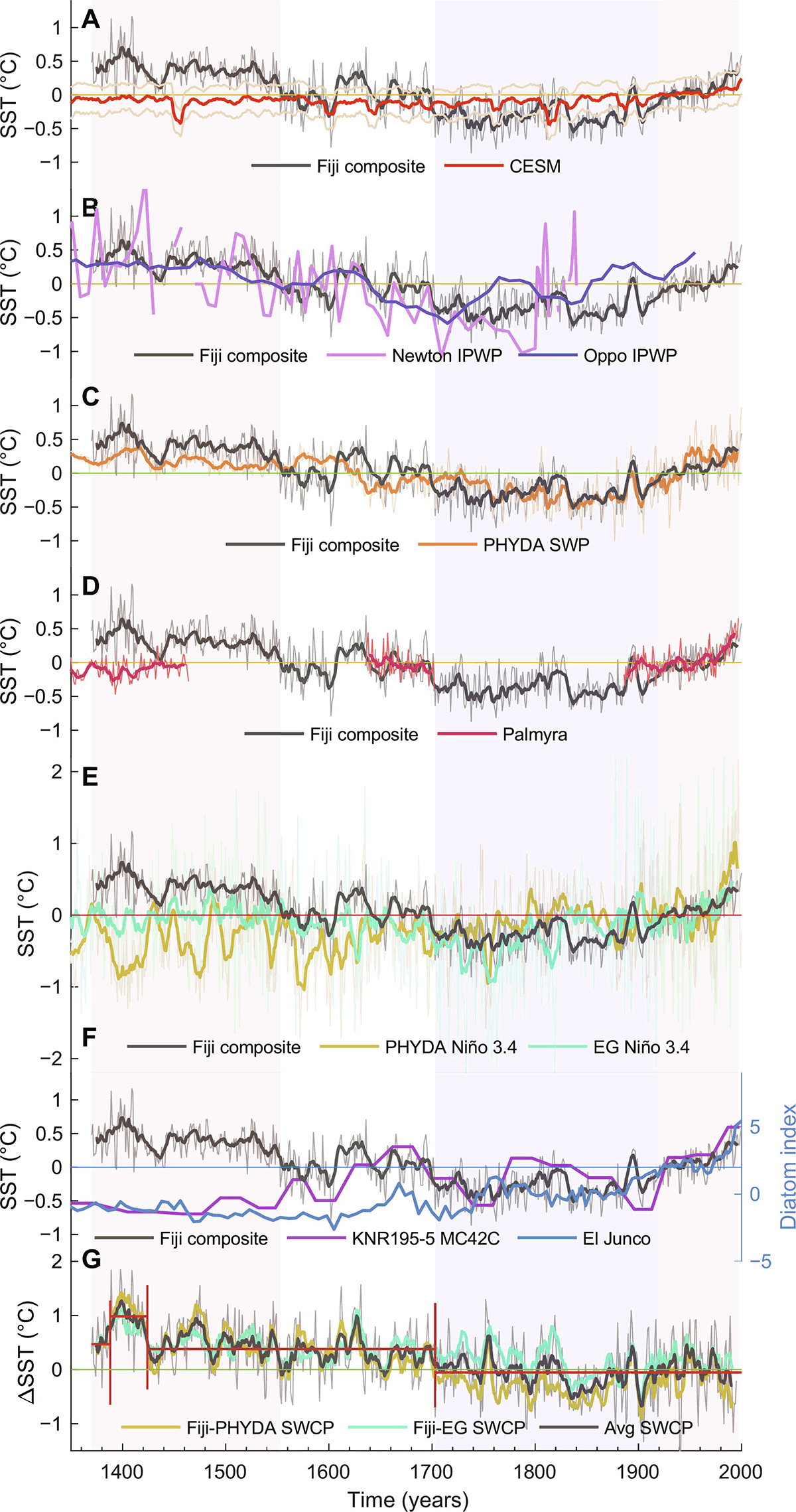
Fig. 2. Fiji coral composite annual Sr/Ca-SST record, WPWP model simulations and proxy reconstructions, and the SWCP SST gradient.
Annual (light gray) and 15-year moving average (dark gray) Fiji coral composite record compared to (A) simulated southwest tropical Pacific (10° to 22°S, 150° to 180°E) SST based on the average of 13 runs from the CESM LME (red) and their SD (light red); (B) Makassar Strait composite Indo-Pacific Warm Pool SST Mg/Ca reconstructions from (25) (Newton, pink) and (26) (Oppo, purple); (C) annual and 15-year moving average SSTs reconstructed for the southwest tropical Pacific from the PHYDA (orange); (D) annual and 15-year moving average SST derived from δ18O composite coral data from Palmyra (60); (E) annual and 15-year moving average SST reconstruction for the Niño 3.4 region in the central Pacific from (21) (PHYDA, yellow) and (56) (EG, green) based on the ERSSTv3; and (F) Mg/Ca foraminifera SST reconstruction from the Galapagos in the eastern Pacific (61) and inferred eastern Pacific SSTs from lake epiphytic diatom from El Junco Lake, Galápagos (62). (G) Annual and 15-year moving average SWCP gradient calculated as the difference between Fiji coral composite record and the Niño 3.4 SST reconstructions from the PHYDA (yellow) and EG (green) and their average (black). SST presented as anomalies relative to 1883 to 1996 except in (B) where values are relative to the common period between all three records (1370 to 1840). Extended warm (cold) periods in the Fiji composite highlighted in red (blue) based on the change point analysis from Fig. 1. Also shown in (G) is the change point analysis for the average SWCP gradient (dark red lines).
An international team of climate scientists have used a 627-year coral record from Fiji to reveal unprecedented insights into ocean temperatures and climate variability across the Pacific Ocean since 1370.
There is not even a link or association, it’s an “interaction”:
The study published in Science Advances, co-authored by Dr. Ariaan Purich from Monash University and Professor Matthew England and Dr. Rishav Goyal from UNSW, shows how human-caused climate change is interacting with long-term patterns of climate variability in the Pacific.
Follow the long tenuous wandering path to “human derived” blah:
The new coral record shows that the local ocean temperature was warm between 1380 and 1553, comparable to the late 20th and early 21st centuries. However, when combined with other coral records, the Pacific-wide warming observed since 1920, largely attributed to human-derived emissions, marks a significant departure from the natural variability recorded in earlier centuries.
No. The coral record does NOT show this:
The record also shows that present ocean temperature is the highest for the past 653 years.
And there are no implications for millions of people either, other than we should stop wasting money immediately:
The work provides new insights to understand how climate trends are leading to shifts in weather patterns and more extreme weather events that will have significant implications for millions of people living in the Indo-Pacific region.osystems across the vulnerable Pacific Island nations.”
And the money line comes next– the whole point of gouging a hole in a 600 year old coral is to advertise the renewable industry and justify trillion dollar government policy mistakes:
The study provides further motivation for the global community to keep working towards limiting warming to 1.5ºC by developing renewable energy resources at scale, to electrify the economy and phase out coal and gas.
Government funded scientists are just prostitutes for Big Government.
Juan P. D’Olivo et al, Coral Sr/Ca-SST reconstruction from Fiji extending to ~1370 CE reveals insights into the Interdecadal Pacific Oscillation, Science Advances (2024). DOI: 10.1126/sciadv.ado5107
J. E. Tierney, N. J. Abram, K. J. Anchukaitis, M. N. Evans, C. Giry, K. H. Kilbourne, C. P. Saenger, H. C. Wu, J. Zinke, Tropical sea surface temperatures for the past four centuries reconstructed from coral archives. Paleoceanography 30, 226–252 (2015).
Oceans2K records. (PS: When Steve McIntyre dissected the Oceans2K dataset he found many of the alkenone records in it were mysteriously cooling in the last fifty years.)
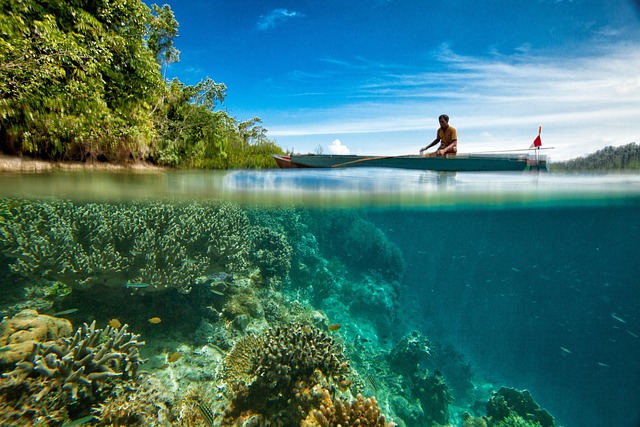
Image by Kanenori from Pixabay
0 out of 10 based on 0 rating
via JoNova
August 20, 2024 at 03:12PM
 Iowa Climate Science Education