Month: August 2024

“Green” Hydrogen Subsidies Are 1,900x Larger Than What’s Given To Nuclear

From the Robert Bryce Substack

Robert Bryce

Hydrogen producers can get up to $25B per EJ in federal tax credits! That’s 9x solar, 47x wind, & 1,800x hydrocarbons; I’ll be talking H2 & alt-energy in Eldorado, TX on Thursday

The hydrogen sector caught fire in 1937. Photo: Wikimedia

The late Charlie Munger was among the most successful investors of the modern era. Munger, who died late last year, was the vice chairman at Berkshire Hathaway, the conglomerate headed by his friend and colleague, Warren Buffett. Munger, a native of Omaha, had many pithy sayings, but among his most memorable was: “Show me the incentives, and I’ll show you the outcome.”

Whenever you wonder why the U.S. isn’t building more nuclear power plants and is instead lavishing hundreds of billions of dollars on politically popular forms of alt-energy, remember Munger’s line.

As I noted in May in “The H Stands For Hype,” few segments of the energy sector have gotten more media hype in recent years than hydrogen. That hype has gone into overdrive because of fat government subsidies. The German government has earmarked some $14.2 billion for investment in about two dozen hydrogen projects. I continued:

Here in the U.S., the 45V tax credit in the Inflation Reduction Act provides lucrative subsidies for hydrogen production. Big business is lining up to get those subsidies. In February, energy giant Exxon Mobil warned that it might cancel a proposed hydrogen project at its Baytown, Texas refinery depending on how the Treasury Department interpreted the “clean” hydrogen rules in the IRA. Regardless of tax credits and subsidies, making and using hydrogen is a high-entropy, high-cost process. As a friend in the oil refining business told me last year, “If you like $6-per-gallon gasoline, you’re gonna love $14-to-$20-per-gallon hydrogen.”…Hydrogen is insanely expensive, in energy terms, to manufacture. It takes about three units of energy, in the form of electricity, to produce two units of hydrogen energy. In other words, the hydrogen economy requires scads of electricity (a high quality form of energy) to make a tiny molecule that’s hard to handle, difficult to store, and expensive to use.

On Thursday, I’ll be speaking about hydrogen and alt-energy in Eldorado, Texas. I was invited to speak in Eldorado by a group of local ranchers who are concerned about a proposed hydrogen project in Schleicher and Tom Green Counties that is being pushed by ET Fuels, a Dublin-based firm. The event is free and open to the public. The caption for my talk: “Money, Physics, & The Backlash Against Alt-Energy.”

The ranchers are also concerned about other massive alt-energy projects being proposed for the Edwards Plateau. Two publicly traded companies — Apex Clean Energy, a subsidiary of Ares Management Corporation (market cap: $44 billion), and NextEra Energy (market cap: $159 billion) — are also developing hydrogen projects in the region. As I have previously reported, NextEra has become an expert at subsidy mining. The company’s latest 10-K filing shows it has nearly $3.7 billion in tax credit carryforwards that it will use to defray its future tax bills. Apex and NextEra are reportedly planning to lease and pave hundreds of thousands of acres on the Edwards Plateau with solar panels and wind turbines.

Now, back to hydrogen. It’s the most common element in the universe. It’s also one of the most difficult to produce and manage. About 98% of global hydrogen production now comes from hydrocarbons, with some 75% from natural gas via the steam methane reforming process. Oil refiners use a lot of hydrogen to remove sulfur from motor fuel. Water electrolysis, producing hydrogen by splitting water molecules, accounts for less than 2% of world hydrogen output. Why does electrolysis account for such a small percentage? The answer is simple: it requires vast amounts of electricity.

Under rules published earlier this year by the Treasury Department and Internal Revenue Service, hydrogen producers can collect $3 per kilogram of hydrogen under the production tax credit if they use electricity from low- or no-carbon sources. (The exact amount is less than 0.45 kilograms of greenhouse gas per kg of hydrogen.) According to the latest figures from the Treasury Department, the PTC is the single most expensive energy-related tax expenditure in the federal code.  Between 2024 and 2033, the PTC is expected to cost some $276.6 billion.  

In Schleicher County, ET Fuels plans to capitalize on the PTC. It aims to build 600 megawatts of alt-energy capacity, split evenly between wind and solar, to fuel electrolyzers that will produce hydrogen from local groundwater. (The company plans to convert the hydrogen into methanol for motor fuel for ocean-going ships.) That means ET Fuels will be eligible for the $3/kg subsidy. How does that stack up to other subsidies and the market price of natural gas? The numbers are simply astonishing.

Before we jump into the subsidies, a quick refresher on SI units and exajoules (EJ) should be helpful. As seen above, 1 EJ is roughly equal to 1 quadrillion Btu. It’s also approximately equal to the energy contained in 1 trillion cubic feet of natural gas.

As you may recall, I’ve been tracking federal alt-energy subsidies for a while. I wrote two pieces on the subject last year, including this piece (denominated in EJ) and this one (denominated in quads). One kilo of hydrogen contains about 120 megajoules (MJ) of energy. That means hydrogen producers can collect tax credits of $0.025 per MJ of energy produced. As seen above, that works out to $25 billion per EJ, which is more than 9 times what’s given to solar and a whopping 1,900 times the amount given to nuclear.

The numbers are similarly gobsmacking when comparing hydrogen subsidies with the market price of natural gas. Natural gas prices have increased over the past week or two and now stand at about $2.17 per million Btu. Thus, the tax credit for “green” hydrogen is worth 11 times the current market price of natural gas.

I will close with another Munger quote: “If you have a dumb incentive system, you get dumb outcomes.” It’s hard to conjure a dumber incentive system than one that gives hydrogen producers tax credits 1,900 times larger than those given to nuclear energy producers.

I will be writing more about the hydrogen push in Texas and the rural backlash against alt-energy over the coming weeks. If you happen to be in Eldorado on Thursday afternoon, stop by the Schleicher County Civic Center. It will be fun.

via Watts Up With That?

https://ift.tt/Wo4NS1J

August 13, 2024 at 08:08PM

Western Hudson Bay sea ice breakup for polar bears like the 1980s for 3 of the last 5 yrs

The 1980s and early 1990s are said to have been the “good old days” for sea ice conditions and polar bears in Western Hudson Bay, with all tagged bears usually ashore by mid-to-late August. Then an abrupt step-change in sea ice breakup dates brought polar bears to shore an average of two weeks earlier in the late 1990s. From then until 2019, the only significant outlier to all tagged bears being ashore by about late July was 2009, which was such an unusually cold year that the last bears came ashore about August 20.

That pattern changed in 2020, when the last bears came off the ice as late as they had in 2009, on August 21. Something similar happened in 2022, when the last bears came off a small remnant of ice even later, about August 26. And this year, the bears may be moving ashore even later: there is even more ice remaining off WH and much of it is thick compacted ice that hasn’t melted much over the last few weeks, which means bears have been as late onshore as the 1980s for three out of the last five years.

About 40% of all tagged bears were still offshore at August 8. Below, chart showing position of tagged polar bears at August 8 (11/27 or 41% are still on the ice):

Two years ago, at August 7, 2022 (below), there appeared to be barely any ice off WH but we know that satellites notoriously under-report ice by up to 20% during the melt season because they misclassify melt-ponds over ice as open water. Still, the last tagged bears stayed offshore another two weeks in 2022 on whatever bits of ice remained, like they did in the 1980s when there was more ice available:

This year the situation is even more unusual. Against all predictions of deteriorating summer sea ice conditions, there is a large patch of thick to very thick sea ice off W. Hudson Bay. Below, see the daily sea ice stage of development chart (i.e. thickness) for August 10: W. Hudson Bay has much more ice this year than 2022, and there could be even more misclassified as open water:

Polar bear specialist Andrew Derocher dutifully reported the unexpected tagged polar bear/sea ice situation in WH last week but failed to mention that this is the third time in five years that bears have been offshore the first week in August as they were in the 1980s even as he acknowledges that this phenomenon should be good news for bear survival.

In my opinion, 40% of all tagged bears being offshore is what I would call more than “some.” So many bears offshore and the current ice conditions suggest it’s possible that more than one or two bears might remain on that large block of thick ice until very late August or even early September, which might be the first time that’s happened since the 1980s (if it even happened then).

For comparison, in 2022, at August 5, 33% of tagged bears (8/24) were still out on small patches of ice that satellites were obviously under-reported because (given that some bears appear to be on no ice whatsoever):

Even with some bears onshore, there has not yet been a problem bear report issued by the town of Churchill for 2024. In 2020, the first problem bear report (for the last week of August) was not released until September 1, so we may have to wait a few weeks more to find out the situation there.

via polarbearscience

https://ift.tt/nXMoDt9

August 13, 2024 at 04:47PM

Drax is UK’s largest single source of CO2 emissions 


Hardly surprising with all the shutdowns of coal and gas fired power stations. Trees grow slowly but burn quickly, as everyone knows, which means sustainability is a non-starter in this industry. Shovelling massive subsidies in the direction of Drax power station has no real-world advantages. Adding expensive and energy-intensive carbon capture to the already huge costs of the project merely increases the craziness of the whole exercise.
– – –
New analysis from energy think tank Ember shows that the wood-burning Drax power station is the UK’s largest source of CO2 emissions at 12.1 million tonnes in 2022, says Envirotec.

This is significantly greater than any other single UK power station, including coal and gas.

The plant is by far the largest single CO2 emitter in the UK power sector, accounting for over double the amount of CO2 emissions of the second largest emitter, RWE’s Pembroke Gas Power Station, with 5.3 million tonnes CO2 emissions.

Drax’s emissions are also more than double Port Talbot Steelworks, the largest industry emitter, which had 5.7 million tonnes CO2 of emissions in 2022.

Despite its limited role in the UK’s power system, burning wood is now the UK electricity sector’s second largest CO2 emitter after fossil gas. Woody biomass generated less than 5% of power in 2022, but accounted for a fifth of UK power sector emissions. This is because wood has to be burned in higher volumes than fossil fuels to produce the same amount of energy. [Talkshop comment – which is one reason why we stopped using it when coal came along].

The Drax biomass plant accounts for most of the UK’s power generated from wood-burning.

Tomos Harrison, Electricity Transition Analyst, Ember, said: “It’s a startling fact that the UK’s largest single source of greenhouse gases is a government-backed project that receives hundreds of millions in energy bill payer funding every year.” [Talkshop comment – any surprise wore off years ago].

Biomass power is still subsidised despite risks to the climate
In 2022 Drax received an estimated £617 million in public subsidy from UK energy bill payers. Biomass qualifies for these subsidies, along with exemption from carbon taxes, because wood is categorised as an emissions-free source of energy.

However, the assumption that all emissions released are offset by the growth of new trees to replace those harvested for burning has been widely challenged. A large and growing majority of scientific evidence shows that burning wood for power is often not carbon neutral, and in some circumstances can be a worse polluter than coal.

Full article here.
– – –
Image : Biomass on the move [credit: Drax]

via Tallbloke’s Talkshop

https://ift.tt/sHGReTD

August 13, 2024 at 04:41PM

Smart but deceptive: NSW govt keeps big coal plant on until just after the next election to avoid $3b electricity bill shock

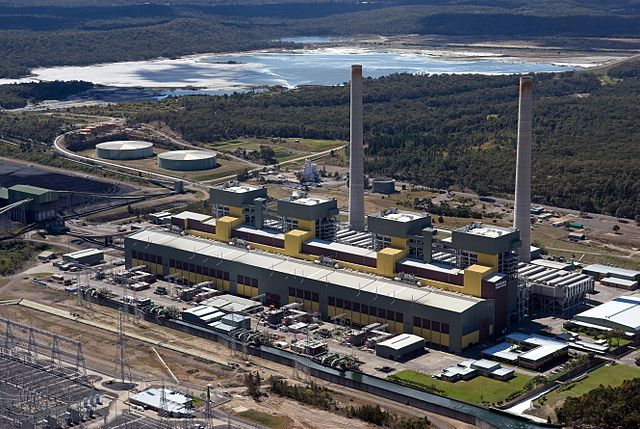
Eraring coal power plant, NSW

By Jo Nova

Hiding the costs of renewables until after the next election

The largest coal plant in Australia was supposed to close in August next year, but the NSW government decided to buy a two year extension until a few months after the next state election.  Now the modeling comes out showing that they decided to keep the Eraring coal plant running to prevent the shocking price spikes from disturbing the voters. Keeping the coal plant will reduce wholesale electricity bills by a few billion dollars. (Why don’t we keep it open for ten years?)

Presumably his reelection chances would be worse if “saved the planet”, and shut the coal plant a few months before the election instead.

They know the voters don’t want the transition. They know it will cost more. And yet they do it anyway…

Bizarrely, this news comes from the renewable industry site Reneweconomy, where Giles Parkinson doesn’t seem to notice this shows coal power is cheap and renewables are hideous. Apparently  he doesn’t mind inflicting costs on hapless homeowners, he is just bummed that they couldn’t force more unreliable energy and battery packs on the grid even sooner:

The NSW state Labor government has confirmed that its controversial decision to delay the closure of the country’s biggest coal fired power generator at Eraring was primarily driven by concerns over a possible jump in wholesale electricity prices.

The 2.88 gigawatt (GW) Eraring facility on the central coast was due to close on August, 2025, but under an underwriting deal with the state government which could be worth up to $450 million, Origin Energy will now keep at least two units open until August, 2027, a few months after the next state election.

Delaying the closure of Eraring even longer until 2028 could save $4.4 billion:

Modelling that the Minns government relied upon – produced by Endgame Economics and ICA Partners – has now been released (or at least bits of it) – and confirms that the greatest benefit of the delayed closure would come from lower prices.

A summary of the Endgame analysis tabled in parliament on Tuesday suggests that the savings on wholesale market prices would total $4.4 billion, with a relatively small benefit of $300 million allocated to increased energy security and $200 million for avoided system strength measures.

The report says this would outweigh the $1.1 billion negative benefits from higher emissions resulting from the burning of more coal, and other costs of $600 million, including $400 million in payments to Origin. Overall, it puts the net benefits at $3.2 billion to $3.5 billion.

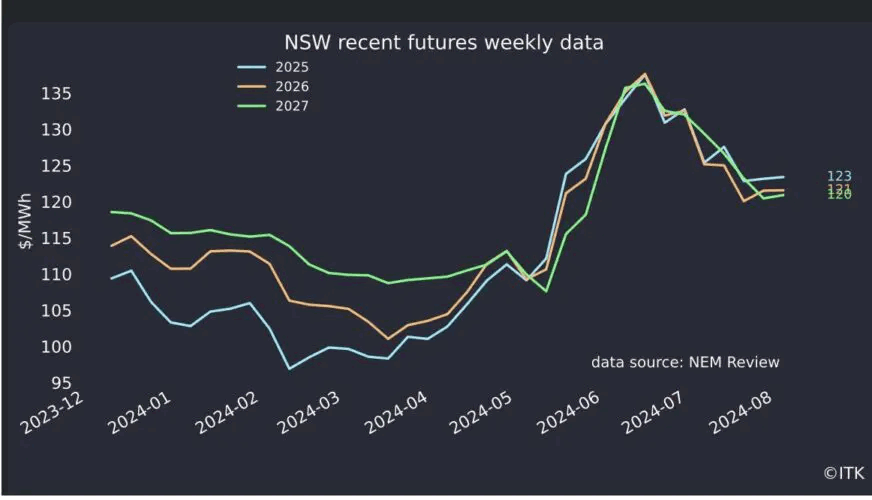
More bizarrely, Giles Parkinson argues that the futures market is predicting even higher prices than the modelers are:

NSW Futures prices Electricity: NEM Review

NSW Futures prices Electricity: NEM Review

He views this train-wreck as a bad situation caused by Big Market Players exploiting the market, and they absolutely are. But he doesn’t admit that if we weren’t trying to ram a fake transition down everyone’s circuits with unreliable generators, the Predators wouldn’t have nice juicy price spikes to prey on (and subsidized cushions to land on).

With the true genius of all communists-at-heart Giles Parkinson tells us this has nothing to do with prices:

Again, this had nothing to do with the actual cost of generation or the prospect of a supply shortfall, it was simply lack of competition.

But Giles has no idea what competition even is. If more coal power was competing we’d still have cheap electricity. The market he wants is not a free market, it’s just a different kind of Soviet.

So warn the voters of New South Wales. The Chris Minns Labor government is trying to hide the cost of the unreliables until after the election.

Nick Pitsas, CSIRO


0 out of 10 based on 0 rating

via JoNova

https://ift.tt/WI46czH

August 13, 2024 at 04:36PM