

The story of fake research findings was published at the journal Science entitled Star marine ecologist committed misconduct, university says. Excerpts below in italics with my bolds.
Finding against Danielle Dixson vindicates whistleblowers
who questioned high-profile work on ocean acidification
A major controversy in marine biology took a new twist last week when the University of Delaware (UD) found one of its star scientists guilty of research misconduct. The university has confirmed to Science that it has accepted an investigative panel’s conclusion that marine ecologist Danielle Dixson committed fabrication and falsification in work on fish behavior and coral reefs. The university is seeking the retraction of three of Dixson’s papers and “has notified the appropriate federal agencies,” a spokesperson says.
Dixson is known as a highly successful scientist and fundraiser. She obtained her Ph.D. at James Cook University (JCU), Townsville in Australia, in 2012; worked as a postdoc and assistant professor at the Georgia Institute of Technology for 4 years; and in 2015 started her own group at UD’s marine biology lab in Lewes, a small town on the Atlantic Coast. She received a $1.05 million grant from the Gordon and Betty Moore Foundation in 2016 and currently has a $750,000 career grant from the National Science Foundation (NSF). She presented her research at a 2015 White House meeting and has often been featured in the media, including in a 2019 story in Science.
Together with one of her Ph.D. supervisors, JCU marine biologist Philip Munday, Dixson pioneered research into the effects on fish of rising CO2 levels in the atmosphere, which cause the oceans to acidify. In a series of studies published since 2009 they showed that acidification can disorient fish, lead them to swim toward chemical cues emitted by their predators, and affect their hearing and vision. Dixson’s later work focused on coral reef ecology, the subject of her Science paper.
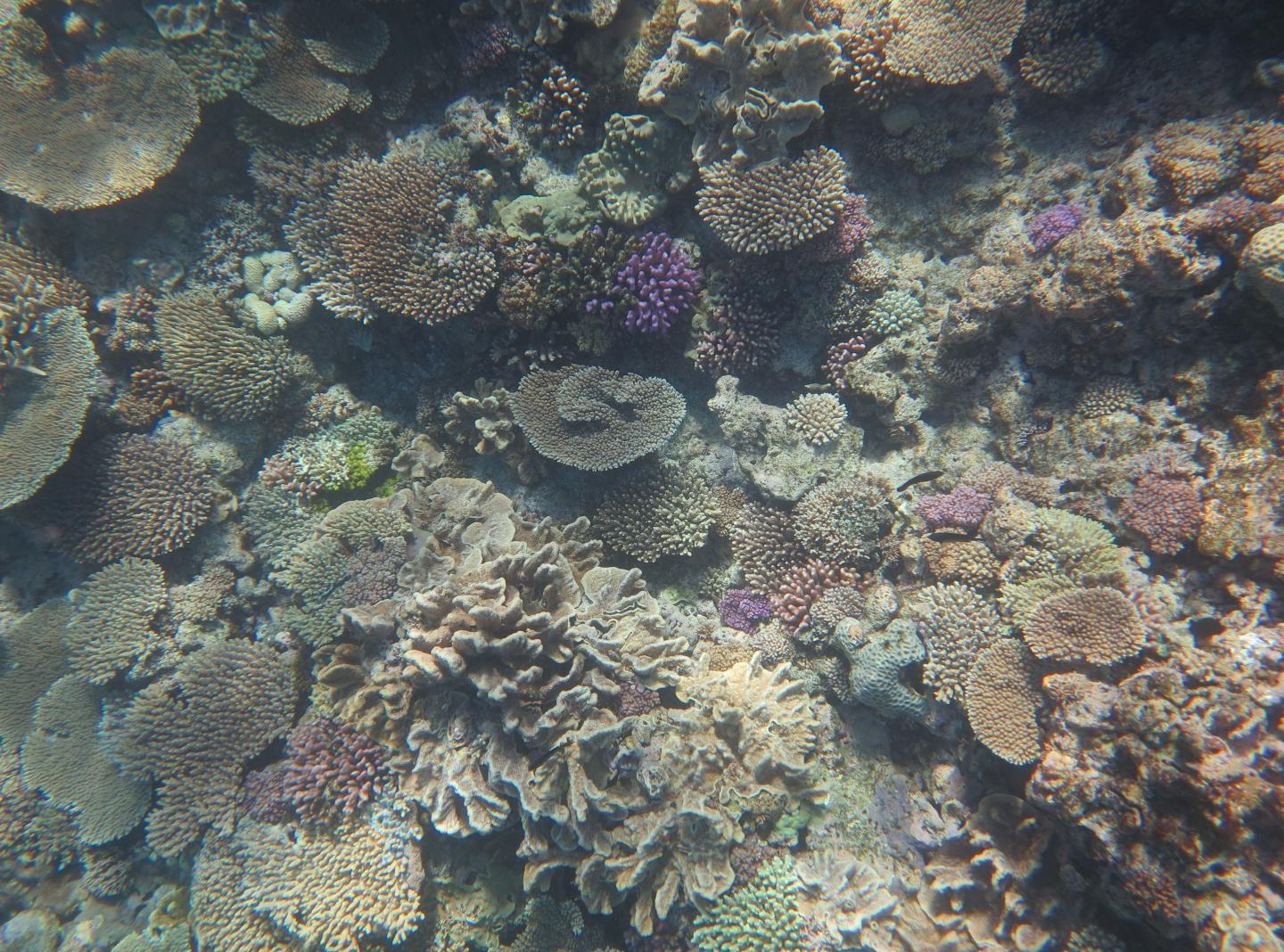
The colorful diversity of coral found at One Tree Island. The structure and diversity of coral we see today is already at risk of dissolution from ocean acidification. Kennedy Wolfe University of Sydney
Among the papers is a study about coral reef recovery that Dixson published in Science in 2014, and for which the journal issued an Editorial Expression of Concern in February. Science—whose News and Editorial teams operate independently of each other—retracted that paper today.
The investigative panel’s draft report, which Science’s News team has seen in heavily redacted form, paints a damning picture of Dixson’s scientific work, which included many studies that appeared to show Earth’s rising carbon dioxide (CO2) levels can have dramatic effects on fish behavior and ecology. “The Committee was repeatedly struck by a serial pattern of sloppiness, poor recordkeeping, copying and pasting within spreadsheets, errors within many papers under investigation, and deviation from established animal ethics protocols,” wrote the panel, made up of three UD researchers.
Several former members of Dixson’s lab supported the whistleblowers’ request for an investigation. One of them, former postdoc Zara Cowan, was the first to identify the many duplications in the data file for the now-retracted Science paper. Another, former Ph.D. student Paul Leingang, first brought accusations against Dixson to university officials in January 2020. He left the lab soon after and joined the broader group of whistleblowers.
Leingang, who had been at Dixson’s lab since 2016, says he had become increasingly suspicious of her findings, in part because she usually collected her fluming data alone. In November 2019 he decided to secretly track some of Dixson’s activities. He supplied the investigation with detailed notes, chat conversations, and tweets by Dixson to show that she did not spend enough time on her fluming studies to collect the data she was jotting down in her lab notebooks.
The investigative panel found Leingang’s account convincing and singled him out for praise. “It is very difficult for a young scholar seeking a Ph.D. to challenge their advisor on ethical grounds,” the draft report says. “The Committee believes it took great bravery for him to come forward so explicitly. The same is true of the other members of the laboratory who backed the Complainant’s action.”
UD “did a decent investigation. I think it’s one of the first universities that we’ve seen actually do that,” says ecophysiologist Fredrik Jutfelt of the Norwegian University of Science and Technology, one of the whistleblowers. “So that’s really encouraging.” But he and others in the group are disappointed that the committee appears to have looked at only seven of the 20 Dixson papers they had flagged as suspicious. They also had hoped UD would release the committee’s final report and detail any sanctions against Dixson. “That is a shame,” Jutfelt says.
Inventing Facts to Promote an Imaginary Crisis
Legacy and social media are awash with warnings about hydrocarbon emissions making the oceans acidic and threatening all ocean life from plankton up to whales. For example:
Ocean acidification: A wake-up call in our waters – NOAA
Canada’s oceans are becoming more acidic – Pêches et Océans Canada
The Ocean Is Getting More Acidic—What That Actually Means– National Geographic
What Is Ocean Acidification? – NASA Climate Kids
Ocean acidification: why the Earth’s oceans are turning to acid – OA-ICC
Etc, etc., etc.

With the climatism hype far ahead of any observations, marine biologists have stepped up to make an industry out of false evidence. They are forced to do so because reality does not conform to their beliefs. A good summary of acidification hoaxes comes from Jim Steele Un-refutable Evidence of Alarmists’ Ocean Acidification Misinformation in 3 Easy Lessons posted at WUWT. Points covered include:
 The Undisputed Science
The Dissolving Snail Shell Hoax
The Reduced Calcification Hoax
More detail on the bogus fish behavior studies is also found at WUW: James Cook University Researchers Refuted: “Ocean Acidification Does not Impair” Fish behaviour
A brief explanation debunking the notion of CO2 causing ocean “acidification” is here:
Background Post Shows Alarmist Claims Not Supported in IPCC WG1 References
via Science Matters
September 8, 2024 at 12:17PM
 Iowa Climate Science Education