
In May 1992, and again in March and April 1993, the Royal Australian Navy, specifically HMAS Tarakan, was involved in the translocation of tens of thousands of clams as part of Operation CLAMSAVER. The clams were moved from a successful breeding program at Orpheus Island to various locations on the Great Barrier Reef, including to Grub Reef.
I am grateful to Jon Daly for providing me with some photographs from that time.
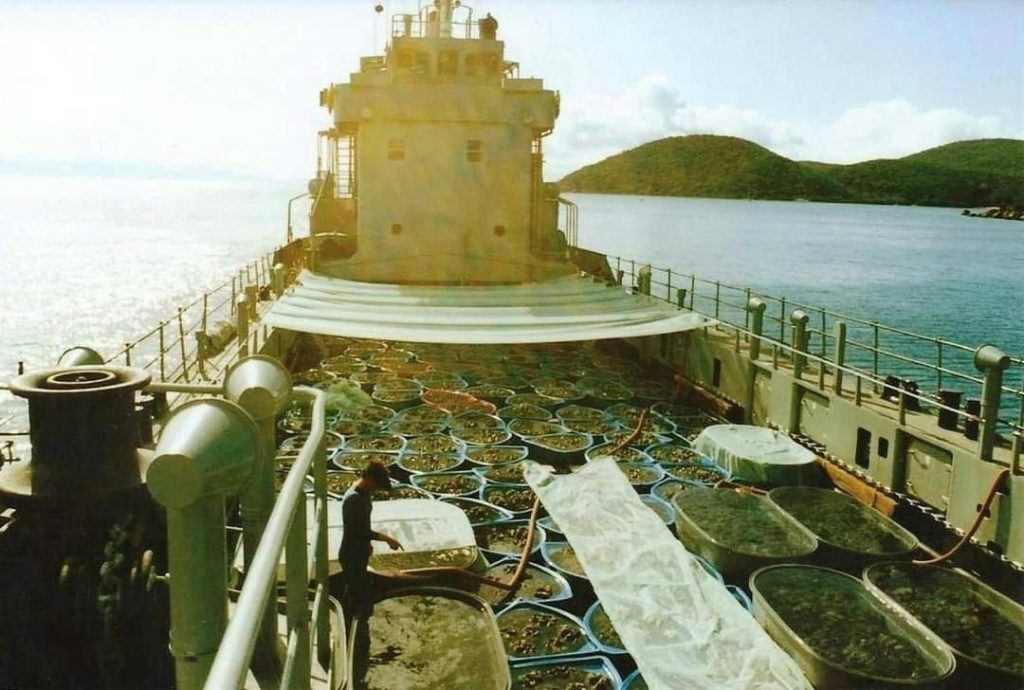
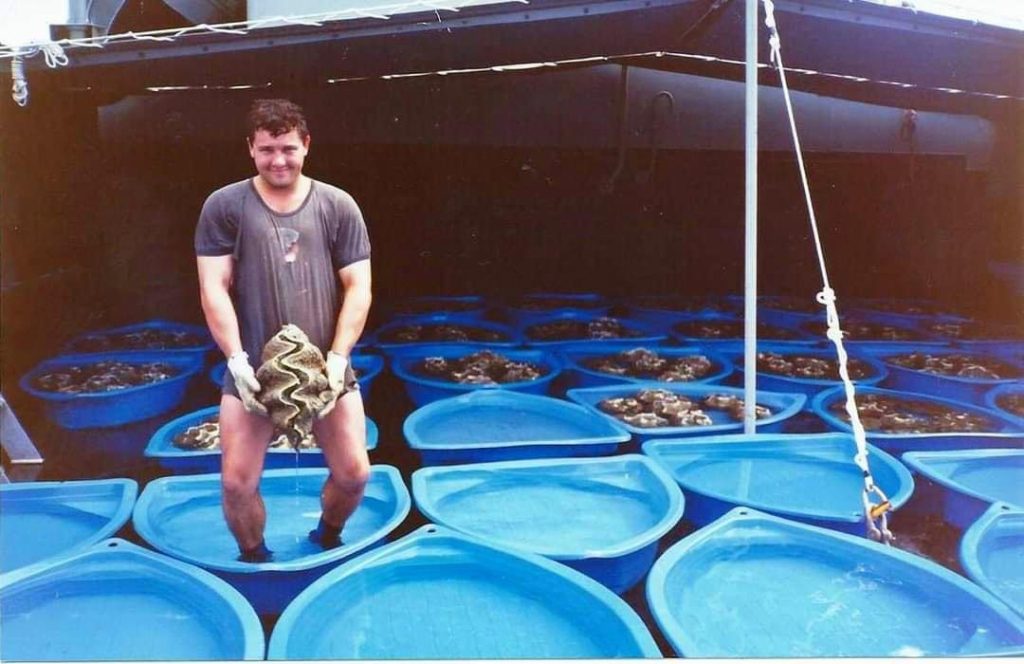
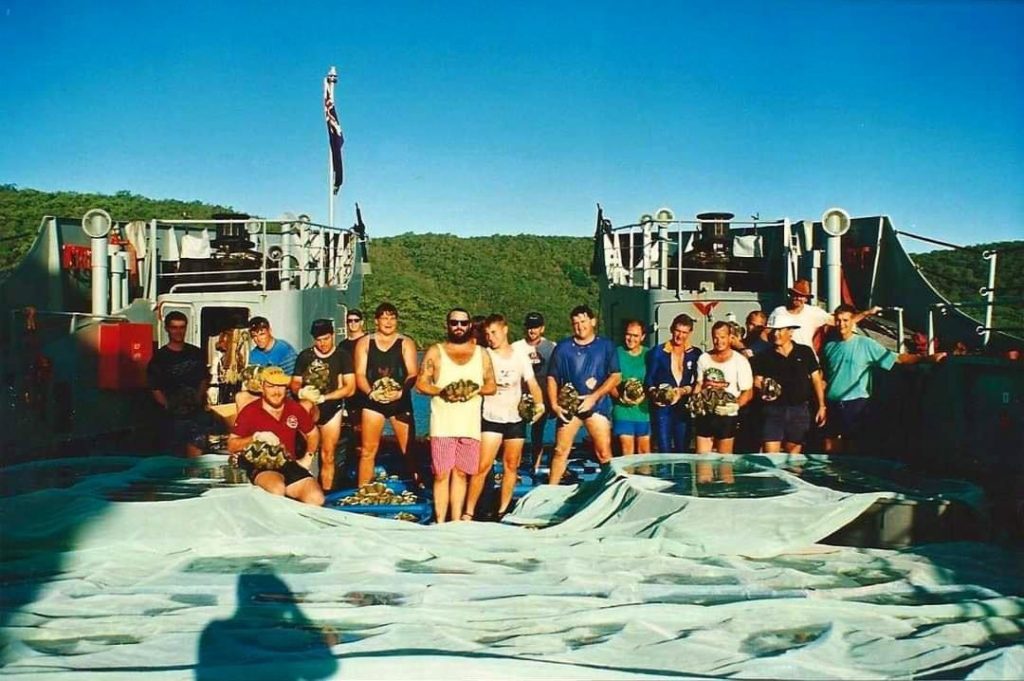
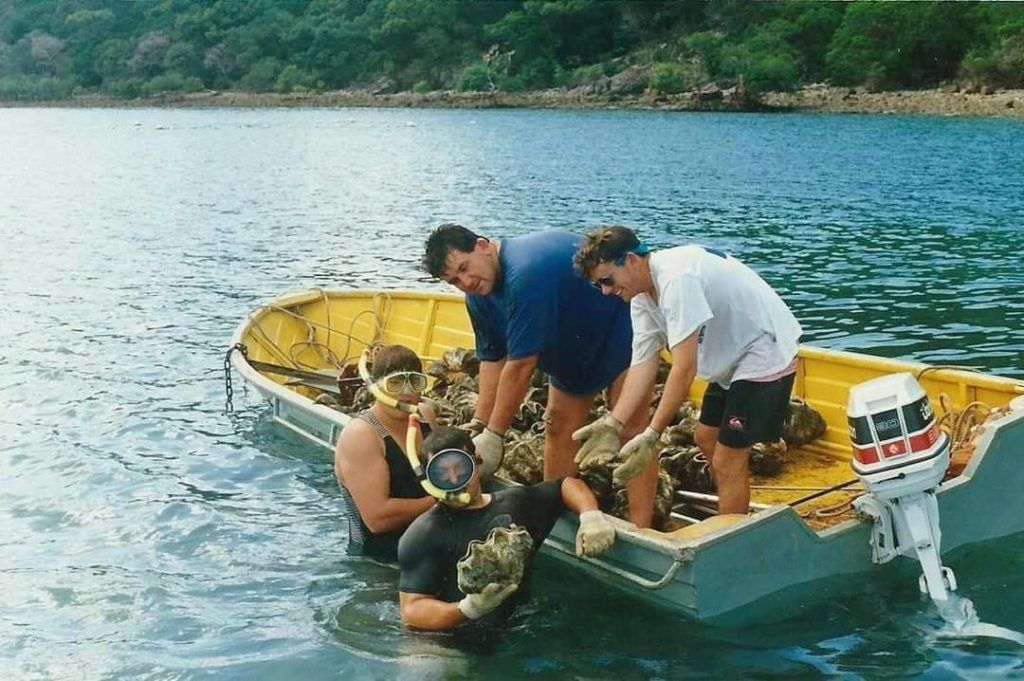
Daly wrote: “The guy in second from top photograph is Paul Livermore … photograph of Tarakans tank deck covered in cheap plastic scallop shaped children’s paddling pools a continuous spray from the ship’s fire main … I’m in the blue t-shirt, in two of the photographs … . [end quotes]. And I have more notes from other conversations with Jon Daly, for another time.
There appears to have been little if any follow-up, to know the fate of the clams.
Considering the photographic evidence from Jon Daly, the clams were not much more than 30cm in length when they were moved. How big are they now?
As part of the inaugural Megafauna Expedition – with the charter of the MV Sea Esta funded by Sydney-based philanthropist Simon Fenwick – we set off for Grub Reef on Wednesday, 4th September.
The skipper, Paul Crocombe, did some careful research and reconnaissance in advance of the expedition and was able to find one of the translocation sites for us.
Somehow, despite the blustery conditions, strong surface current and the ever-present risk of colliding with a one of the many bombies within such coral reef systems, Paul got the MV Sea Esta into Grub Reef and close to one of the translocation sites.
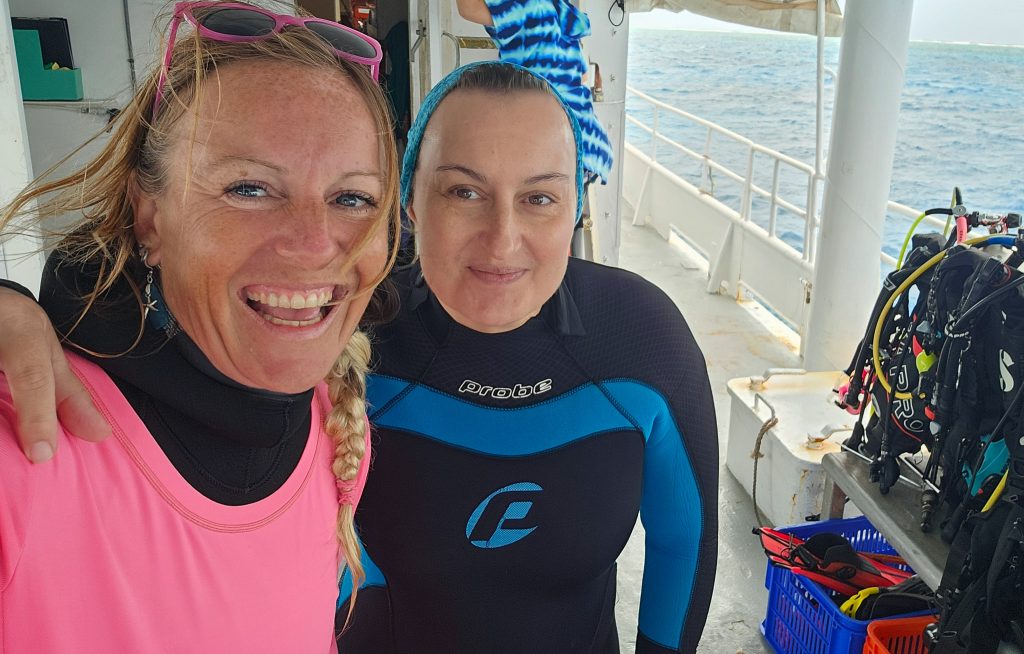
Underwater photographer Jenn Mayes with her scuba buddy Nadine Huth found and filmed the largest clam at 1.47 metres. Congratulations!
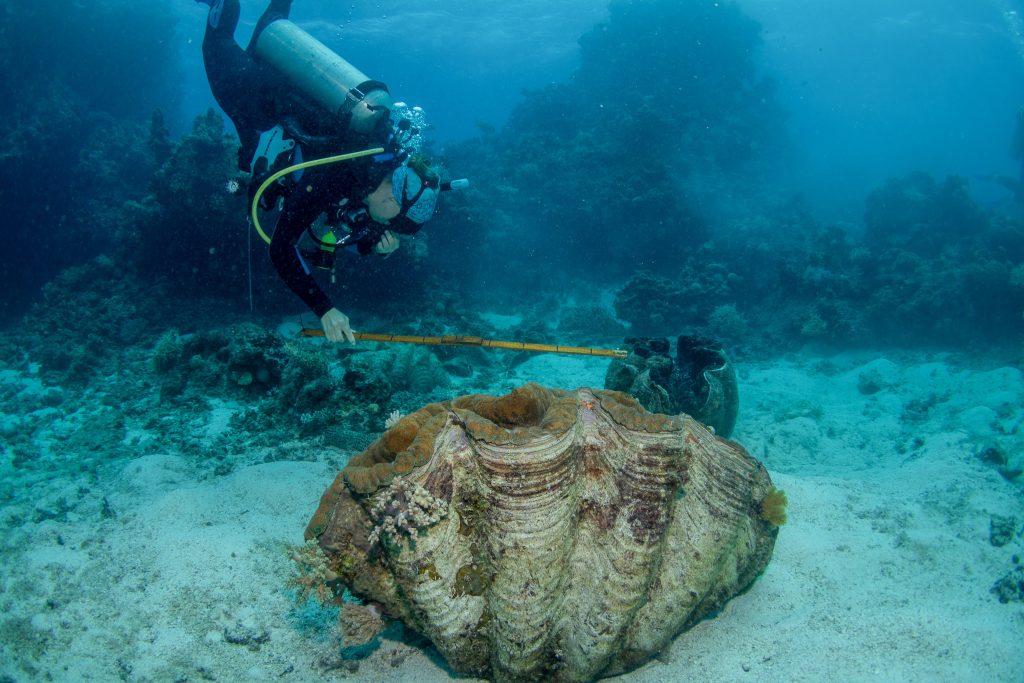
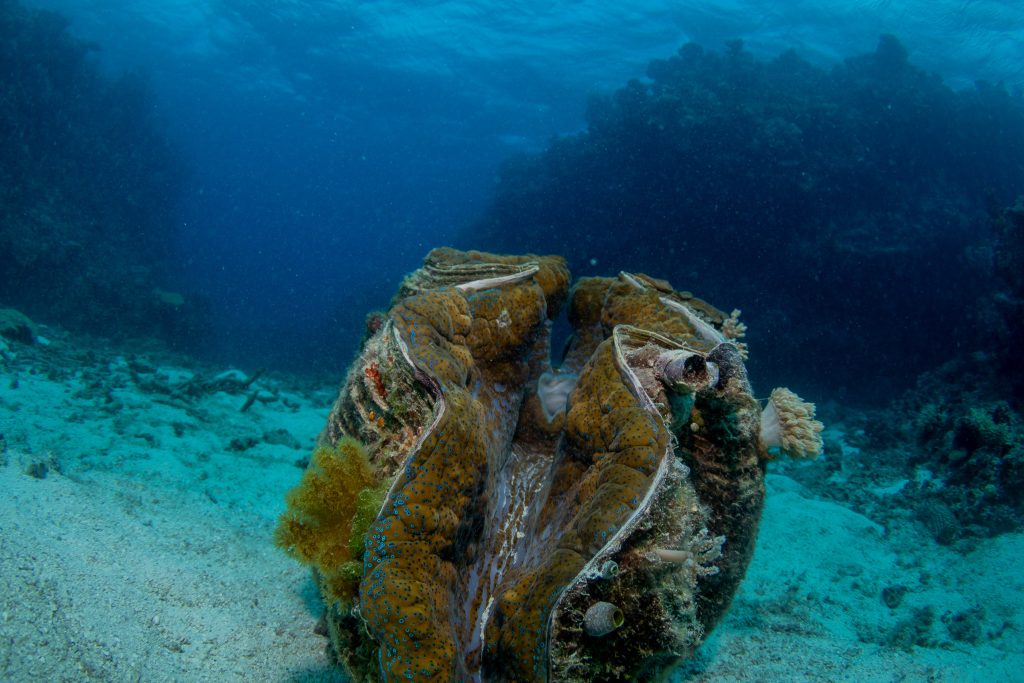
There is so much more to tell, about that day and how it unfolded, giant clams, even a whale shark encounter for Dave Armstrong but without a photographer to capture the memory, and provide the evidence.
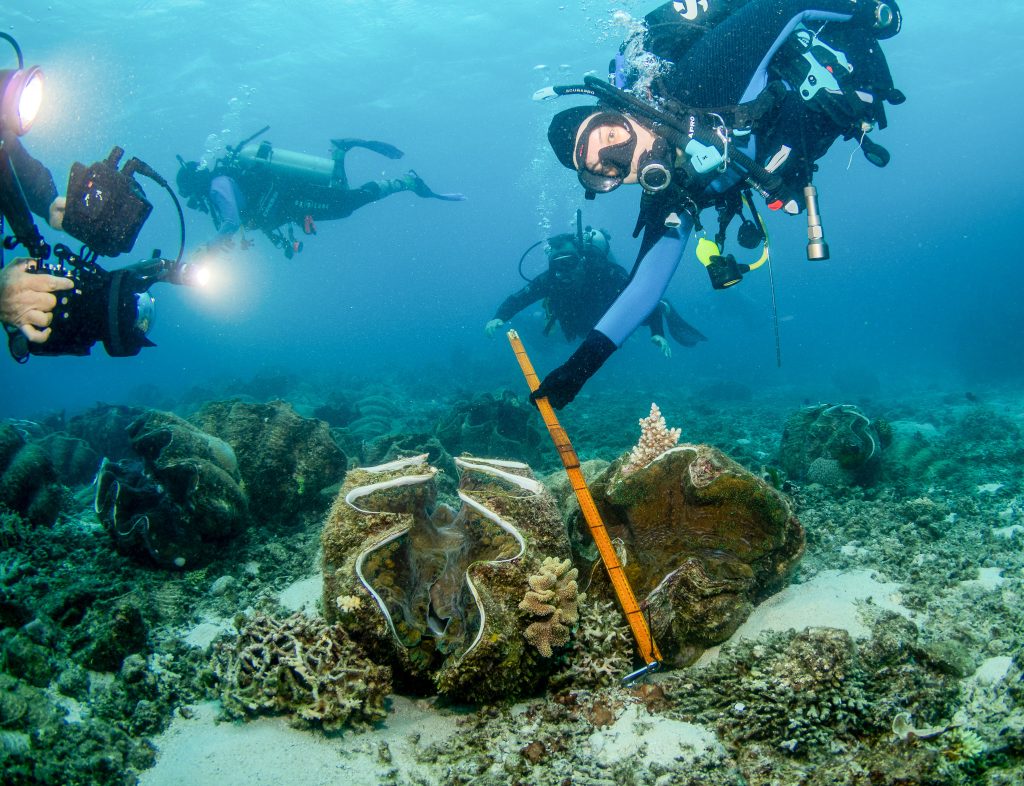
This story will be continued, including as part of a documentary film in production and about the inaugural Great Barrier Reef Megafauna Expedition.
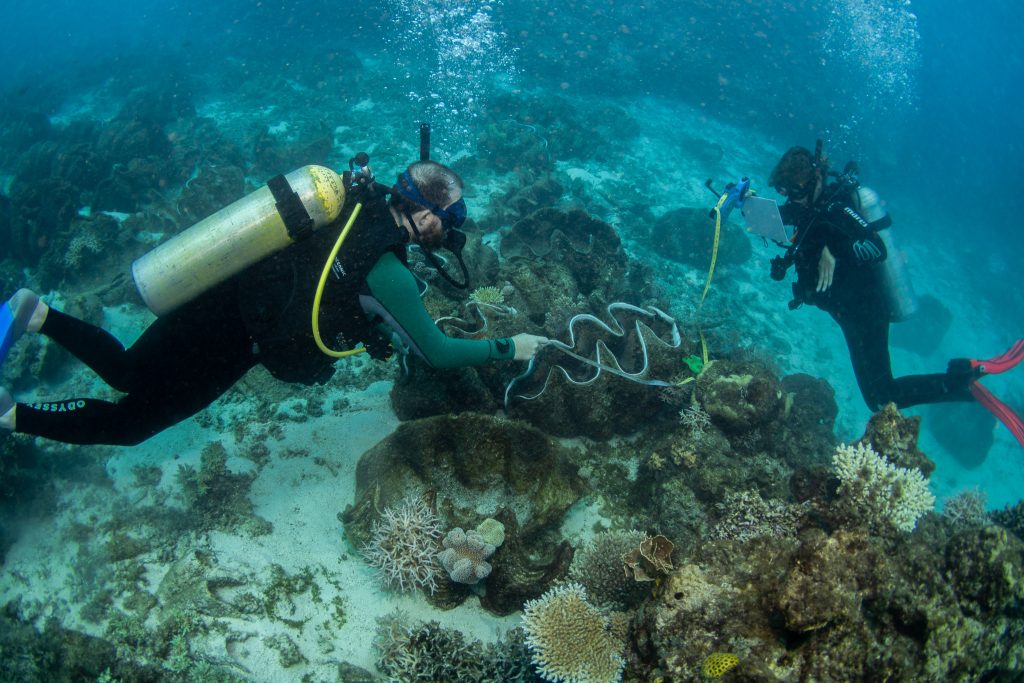
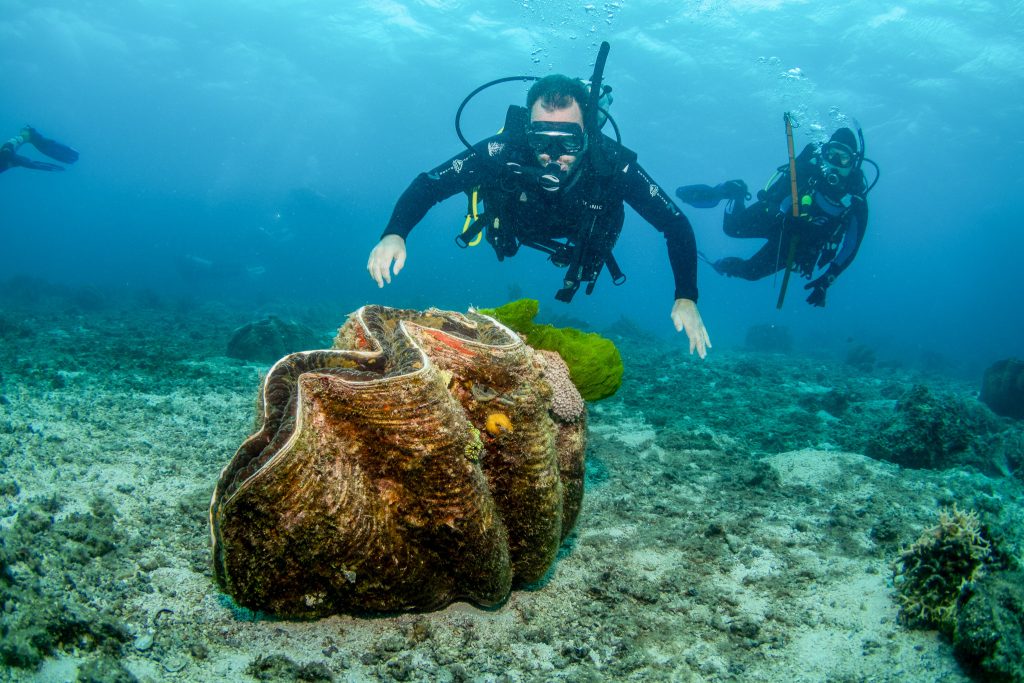
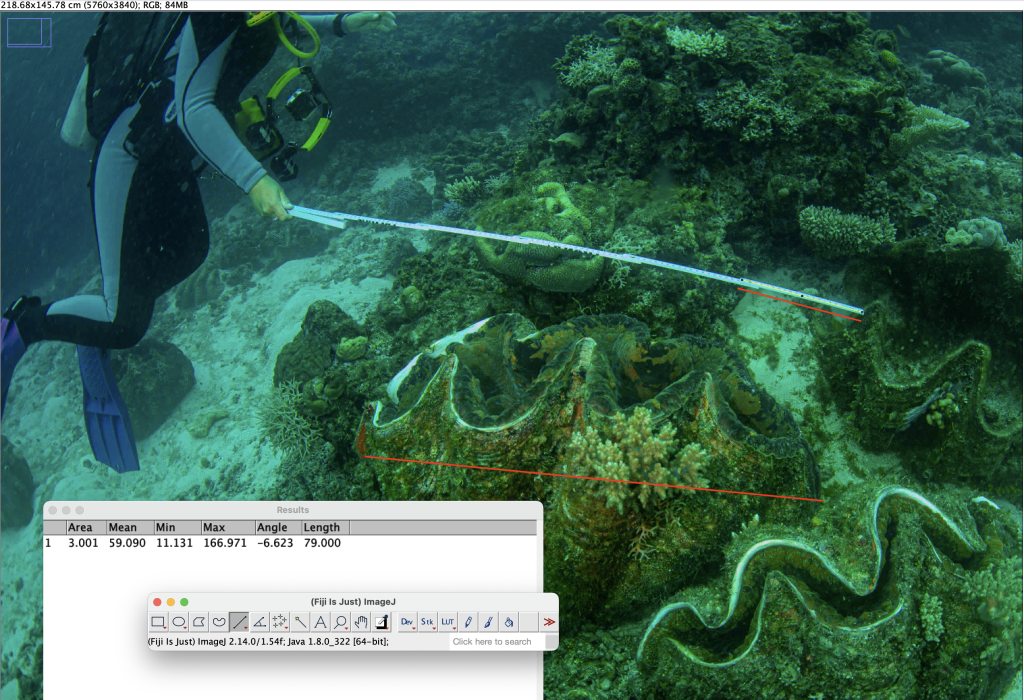
Rick Braley asked that we measure some clams, and we did. There was a tape measure, and various other yardsticks being used by the expedition team. The mean length of the clams measured on the first dive with the tape measure was 1.11 metres (n=6), and on the second dive was 0.91 (n=8). These clams are all likely to be from the one cohort translocated from Orpheus Island.
Good job Dr Braley and the Royal Australian Navy!
via Jennifer Marohasy
September 14, 2024 at 06:19AM
 Iowa Climate Science Education