Month: September 2024

Study finds higher heart attack risk days after cold exposure

By Paul Homewood


It’s amazing how they still manage to find a link to climate change!


 image

Hospital admissions for heart attacks increase after exposure to lower air temperature and cold spells, according to a study published today in JACC, the flagship journal of the American College of Cardiology, and presented at the European Society of Cardiology (ESC) Congress 2024. The findings underscore the need to understand further the physiological effects of global warming’s contribution to colder weather in specific regions and cold-related cardiac risks.

This nationwide study reveals that short-term exposures to lower air temperature and cold spells are associated with an increased risk of myocardial infarction (MI) hospitalization after two -six days, suggesting that individuals may be particularly vulnerable to acute cardiac events during periods of cold stress."

Wenli Ni, PhD, lead author of the study and postdoctoral research fellow at Harvard University

JACC Editor-in-Chief Harlan M. Krumholz, MD, SM, FACC, said the study reveals a crucial link between cold weather exposure and heart attack risk, highlighting a delayed effect that peaks days after the cold spell.
"These findings also underscore the urgent need for targeted interventions to protect vulnerable populations during and, particularly, after cold stress," Krumholz said.
Heart attacks, or MI, occur when blood flow to a part of the heart is blocked, usually by a blood clot. This blockage prevents oxygen from reaching the heart muscle, causing damage or death to that part of the muscle.


Previous studies have revealed low temperatures had a greater cardiovascular burden than high temperatures worldwide. Due to a lack of data from colder regions with extreme weather conditions, researchers based this study in Sweden, a region known for its cold climate where cold spells are common.
Tracking 120,380 individuals from the SWEDEHEART registry, researchers examined how short-term exposure to lower air temperatures and cold spells influenced the risk of heart attack hospital admissions during Sweden’s cold season (October to March) from 2005 to 2019.
For this study, researchers defined cold spells as a period of at least two consecutive days where the average daily temperature was colder than the 10th percentile of temperatures recorded across the study duration.
Results revealed that lower air temperature exposure was associated with an increased risk of total MI, NSTEMI and STEMI after two to six days. Cold spell exposure after two to six days was associated with the same increased risks.
Researchers also found exposure from day zero to one decreased the risk of heart attack hospitalizations. They said that this temporary protective effect could be due to behavior modifications during cold weather, like staying indoors to reduce exposure or delaying healthcare due to service disruptions; however, those behaviors are not sustainable and could account for the delay in hospitalizations to two to six days later.
"This temporal pattern may indicate a delayed onset of cold-related impacts on MI risk, aligning with prior research underscoring delayed cardiovascular effects of cold exposure," Ni said. "Understanding this cold-to-MI risk lag sequence may be important for designing and implementing targeted preventive interventions."
Effects on first-time and recurrent MI were also observed independently but the difference in these effects between first-time and recurrent MI was not statistically significant.
In an accompanying editorial comment, Kai Chen, PhD, an associate professor of Epidemiology at the Yale School of Public Health and Khurram Nasir, MD, a professor of Cardiology at the Houston Methodist, said the study’s findings call for reevaluating how health care professionals approach the intersection of environmental factors and cardiovascular health.
"Our approaches must be reevaluated in the context of increasingly unpredictable climate patterns," Chen and Nasir said. "Addressing both ends of the temperature spectrum will ensure our healthcare systems are well equipped to manage and mitigate these challenges, ultimately fostering a more sustainable and resilient cardiovascular future."

https://www.news-medical.net/news/20240901/Study-finds-higher-heart-attack-risk-days-after-cold-exposure.aspx

via NOT A LOT OF PEOPLE KNOW THAT

https://ift.tt/q60OPAQ

September 8, 2024 at 08:23AM

Hurricane Season 2024

"Hurricane forecasters expect below-normal cyclone activity through September’s season peak….The period of tropical activity from Aug. 12 through Sept. 3 has marked the quietest period in tropical weather development in 56 years. CSU said through Sept. 16, the basin favors either below or near-normal activity with only a 10% chance of above-normal formation." 

via Watts Up With That?

https://ift.tt/eWb1oGd

September 8, 2024 at 08:00AM

VW E-Car Sales Plummet…Socialists/Greens Insist The Way Forward Is More E-Mobility!

VW teeters on disaster. Germany’s socialists, greens propose solving the problem that they themselves have caused. 

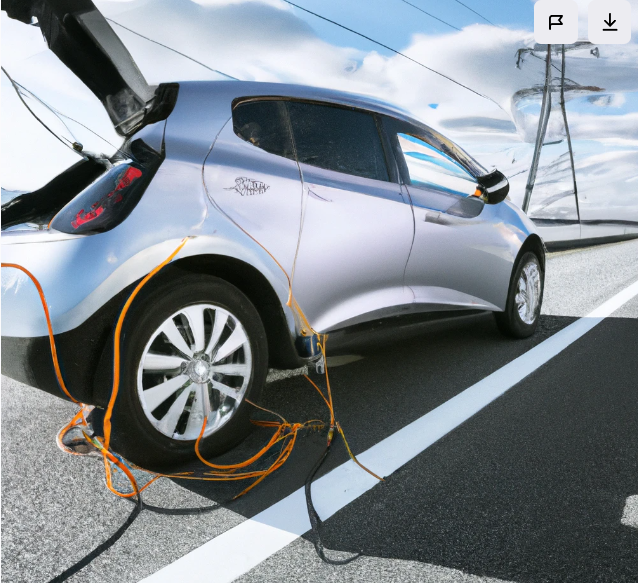
AI generated image. 

By Klimanachrichten here.
(Translated/edited by P. Gosselin)

======================================

The bad news about Volkswagen never ends, but neither do the clever tips from politicians. The strangest things come to light. Lower Saxony’s Economics Minister, of the SPD socialists, Mr. Olaf Lies, (the state has a 12% stake in VW) had no idea about the events and problems at the manufacturer until the press release.

He was not on the supervisory board. The state’s Minister of Economic Affairs once sat on the board, but he was replaced by a Green Minister of Culture. Not for reasons of competence, but rather because she is a member of the Green Party and Lower Saxony Vice Prime Minister. Do they talk to each other? Hard to say.

So Mr. Lies was caught unprepared and also stated in the media that energy prices in Germany were causing Volkswagen problems. It’s hard to imagine what would have happened if the country had allowed the two nuclear power plants there to continue operating, though this is a federal decision. It is also somewhat crazy that energy prices are rising due to the green energies transition and grid restructuring. A self-fulfilling prophecy, except for Mr. Lies, who proposes solving the problem with new subsidies.

So the consumer is failing, and is buying too few electric cars, for whatever reason. The slump in registration figures is not only affecting Volkswagen, but are also falling for combustion cars, which says a lot about the economic situation in Germany. According to the Federal Motor Transport Authority, the number of registrations fell by 28% compared to the same month last year. The number of e-car registrations even fell by almost 70%. Yet Volkswagen has been told quite clearly that there is only one way forward and that is e-mobility.

Surprisingly, the plants that still produce combustion cars are doing very well.

We are increasingly reading that the current Federal Minister of Economics, Robert Habeck (Greens Party), stated back in 2019 that VW would only survive if it produced an e-car model for under 20,000 euros. The biggest proportionate cost factor for an e-car is likely to be the car’s battery. In a small car, it has a greater impact on the price than in a mid-range car. The battery can account for between 30-40% of a vehicle’s price. If even a small car like a Fiat 500 in the e-version is 30% more expensive than the combustion version, then the dilemma becomes clear. Battery prices will only fall with mass production and manufacturers are still a long way from achieving this. So it’s the chicken and egg problem. The manufacturer Volvo, which has Chinese owners, has put aside its plans for 100% electric by 2030, according to T-Online.

=====================================

Donate – choose an amount

via NoTricksZone

https://ift.tt/DXQhe4f

September 8, 2024 at 06:27AM

Neatishead (DCNN?) – Need to Know Basis?

52.71439 1.47151 Met Office Assessed CIMO Class 4 Installed 19/12/2022 Data from May 2023

Neatishead is a very recently installed installation at Remote Radar Head Neatishead (formerly RAF Neatishead).The weather station is fully visible from the adjacent Royal Air Defence Radar Museum, a tourist attraction and military archive. This is an image of the recently constructed large Radar dome – the weather station is now to the right and acknowledged by the Met Office to suffer from the effects of shading by the dome.

Whatever the operational requirements may or may not be for the MOD to have weather reporting in the immediate vicinity of the Radar Station, it seems odd that the very new weather station should be sited in such a meteorologically compromised location from inception. There does not appear to be any site constraints in the area with plenty of free space further away. If there are imperatives (not for public notification) for the proximity of the weather readings to the dome, then surely the site would not need CIMO assessment for climate reporting purposes and data solely used for site specific purposes. There are already several other Met Office stations in the area.

{n.b. there are numerous Met Office weather stations around the country where data is purely for site specific purposes and not deemed to require any form of CIMO assessment. Such sites’ readings are not added to the historic temperature record. A future post will cover such sites.}

In early May this year Neatishead recorded the national daily high temperature. The station did not appear on my recently obtained (under Freedom of Information Request) list of climate reporting stations by CIMO classification and I was unable to ascertain its exact location. With the assistance of Paul Homewood and his excellent Not A Lot Of People Know That blog, Dave Ward located the site and top quality photographer Trevor Shurmer visited the site and kindly supplied images such as this below. Trevor did not have his “collar felt” taking these and there was no obvious significant security or prohibition of photography.

In the meantime, I contacted the Met Office enquiry desk to confirm the CIMO rating. Their long delayed response was somewhat surprising:

“Hello Ray, 

Thank you for your continued patience with this matter.

We’ve heard back from the support team involved, and can confirm the following:

Neatishead was first opened on 19th December 2022.

Whilst we look up what CIMO rating the site is, we will need to know why you are enquiring and what are you doing with the information?

We look forward to hearing back from you. 

Kind regards,

Thomas

Weather Desk”

Astonishingly the Met Office was not prepared to tell me their assessment (a requirement jointly stipulated by the International Standards Organisation and the World Meteorological Organisation for all reporting stations ) unless I divulged why I wanted to know and what I would be “doing” with this information!

Leaving aside that such information is hardly likely to compromise national security, it is held under “Environmental Information” for which even supplying your name is not required under Freedom of Information (FOI) requests. Despite advising the Enquiries desk staff of this, they declined to supply this information, hence yet another FOI. The subsequent reply was a revelation in a most unexpected way.

“The Met Office holds this information. Please see the information below.
The site was inspected on the 13 May 2024. The Screen Temperatures and Wind were both classed
as a CIMO 4S.
In order to provide advice and assistance, the Screen Temperatures have been classed as a CIMO 4S
due to shading.
All Met Office weather stations are inspected by trained expert Met Office Regional Network Officers at
a set interval. Each weather station is assessed against both the World Meteorological Organization
inspection standards and Met Office inspection standards. It is the Met Office inspection standard
which is used as the official benchmark for assessing the suitability of a site to record temperatures to
be archived in the long-term climate record.”

Why such a revelation?………Had the Met Office NOT assessed the site until 13th May 2024 i.e. 18 months from installation, and seemingly only AFTER I originally raised the query? Was this the possible cause of their tardy responses to me? Would it still not be CIMO assessed had I not raised the issue? Why was it not assessed on installation or, more sensibly, prior? Does the Met Office really just pick a spot at random, fit instrumentation and then think “oh dear this isn’t very good”?

Furthermore, yet another confirmation that the Met Office do NOT limit themselves to the internationally agreed standards and use their own unique standard determinations – so much for international comparison and the “Global” temperature record.

Is all of this really “Best Practice” and does it represent “Value for taxpayer’s money”? I, for one, think not.

Any views?

via Tallbloke’s Talkshop

https://ift.tt/z1sdL9S

September 8, 2024 at 05:37AM