Month: September 2024

Greenlight For Offshore Wind Industry’s Wholesale Environmental Destruction

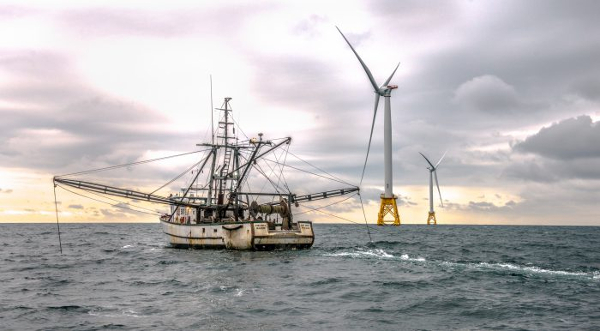
The damage done by offshore wind farms to fishing grounds is met with practiced contempt by wind power outfits and malign indifference by their political enablers.

Taking wind turbines out to sea not only escalates the cost of the occasional power they produce, it destroys coastal landscapes, birds and other marine life.

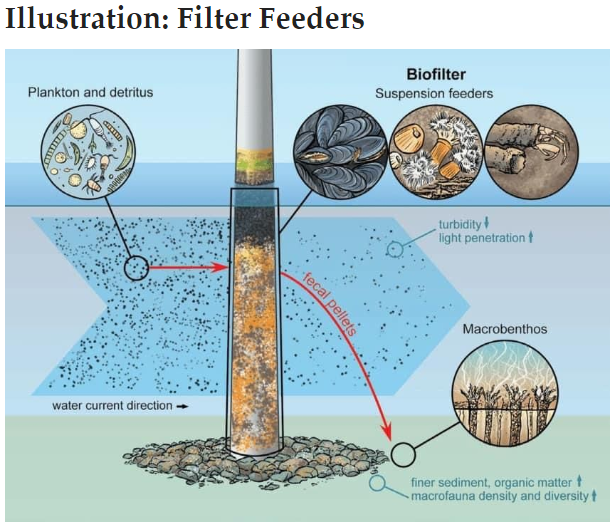
And, as Robert Bradley explains below, spearing thousands of these things into the seafloor attracts invasive filter feeders that upend the natural order, and thereby destroy the ecosystems upon which both humans and other creatures depend.

Ocean Integrity vs Offshore Wind
Master Resource
Robert Bradley
12 September 2024

“In areas where wind farms are being developed, invasive species can harm … industries by reducing fish populations, damaging habitats, and deterring tourists who seek intact and diverse marine environments.” – Kieran Kelly, Ocean Integrity (below)

‘It is hard being green, particularly when “green” means being one-dimensional against carbon dioxide (CO2) at the expense of virtually every other metric.

Consider wind power, the onshore problems of which (failed pastgovernment dependencyintermittencysite depletionlocal warmingnoiseavian mortalityhealth effects) are only magnified offshore (cost premiumwake effectblade failureindustrializationhurricanespile drivingpolitical bribes).

Kieran Kelly, CEO of Ocean Integrity, “a global organization that aims to reduce ocean plastic pollution and create positive social impact,” recently reported on social media about a particular ecological issue: invasive filter feeders.

The growth of invasive filter feeders in areas where wind farms are being placed provides a compelling argument against proceeding with offshore wind farms. [Ed. Note: see picture below]

Invasive filter feeders can disrupt the delicate balance of ecosystems in which they establish themselves. These organisms often outcompete native species for resources, leading to a decline in biodiversity and altering the natural composition of communities. The introduction of invasive filter feeders can result in the displacement or extinction of native species, disrupting the intricate web of interactions that have evolved over time.

The proliferation of invasive filter feeders can have profound effects on food chains within affected ecosystems. By consuming vast amounts of plankton and other small organisms, they can deplete the food sources that native species rely on. This can lead to population declines and cascading effects throughout the food web, affecting the abundance and distribution of other species, including commercially important fish stocks.

Invasive filter feeders often modify their surroundings to suit their needs, which can have detrimental effects on native habitats. They may alter water flow patterns, disturb sediment layers, or create physical structures that disrupt the natural habitats of other species. These modifications can result in the loss of critical habitats, such as seagrass beds or coral reefs, which provide shelter, breeding grounds, and nursery areas for numerous marine organisms.

The negative impacts of invasive filter feeders extend beyond ecological consequences. In areas where wind farms are being developed, there are often economic interests tied to fisheries, tourism, and recreational activities. The proliferation of invasive species can harm these industries by reducing fish populations, damaging habitats, and deterring tourists who seek intact and diverse marine environments. The economic losses resulting from these impacts can be significant and long-lasting.

Once invasive filter feeders become established in an area, their eradication or control becomes challenging, time-consuming, and costly. Prevention should be a primary focus to avoid introducing these species in the first place. The potential risks associated with the growth of invasive filter feeders should be thoroughly evaluated through comprehensive risk assessments and environmental impact studies prior to the construction of offshore wind farms.

It is crucial to assess the potential for the establishment and spread of invasive filter feeders in areas where wind farms are proposed. Adequate safeguards and strict monitoring protocols should be implemented to prevent the introduction and proliferation of these species.

He added in a comment:

The waters around Denmark 🇩🇰 have witnessed a complete collapse of fish stocks, a situation mirrored in Sweden. While some may choose to turn a blind eye, it’s crucial to note that no independent environmental impact studies have been conducted.

Ørsted has announced a $4 million initiative to support environmental research at Connecticut universities, raising concerns that offshore wind companies are effectively silencing academic institutions.

Later today, I’ll be sharing new evidence regarding pollution from these offshore structures. We’re gearing up for a lawsuit against these companies, and our attorneys believe we have a strong case to shut them down. As an environmentalist, my sole focus is the protection of our oceans—let’s make that clear.

Final Comment
The much needed civil war within the mainstream environmental movement (Big Green, Inc.) has been corrupted by green-as-in-money. Big Wind, Big Solar, and Big Batteries control the narrative that no ecological tradeoff is too great in the war against carbon dioxide (CO2), thus fossil fuels, thus modern industrial living.

Expect the Green Divide to increase, however, as the surface area, the living space, is increasingly taken over by politically correct, economically incorrect energies.
Master Resource

via STOP THESE THINGS

https://ift.tt/Scf9KmR

September 27, 2024 at 02:30AM

1-Minute Junking: Global warming to increase diarrhea?

Related links: Media release | Study

via JunkScience.com

https://ift.tt/r5XZ2dT

September 27, 2024 at 01:43AM

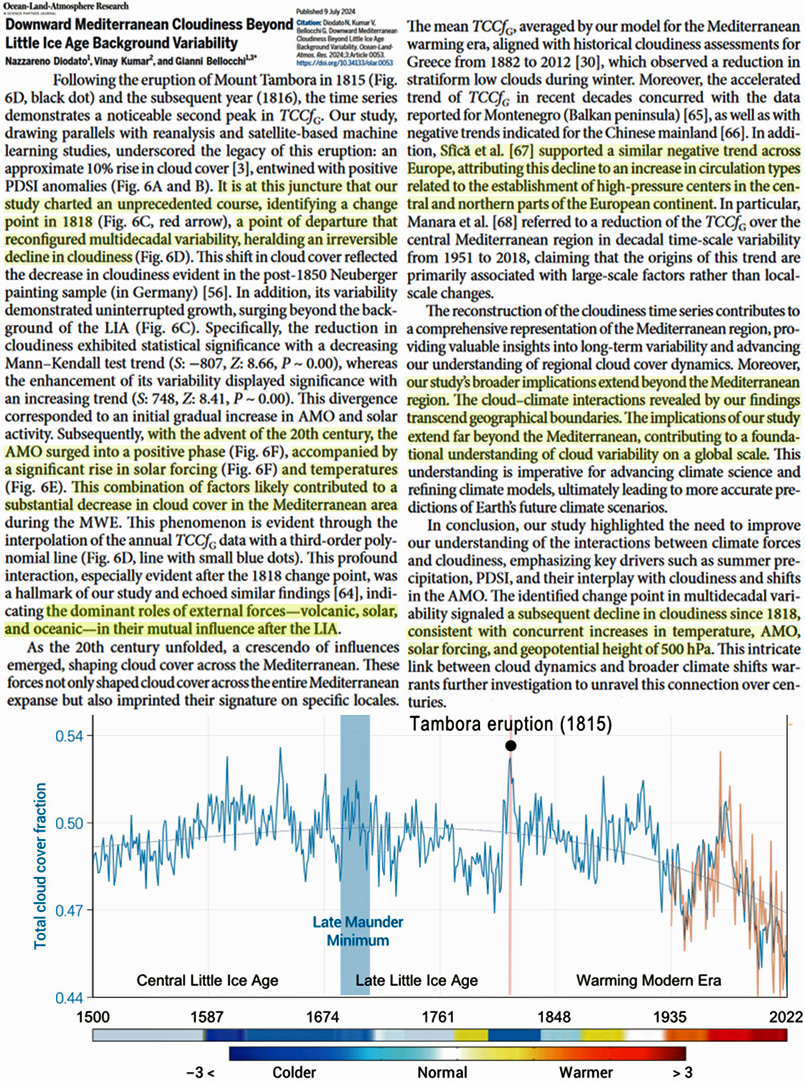
The Recent Decades Of Cloud Cover Decline May Be A Continuation Of A Trend That Began In 1818

Per a new study, the last 200 years of global warming are associated with cloud cover decline, and this decreasing cloud albedo can be linked to “the dominant roles of external forces – volcanic, solar, and oceanic – in their mutual influence after the LIA [Little Ice Age].”

Scientists have repeatedly reported a satellite-observed (CERES) cloud cover albedo decline that has led to an increase in solar radiation absorbed by the Earth’s oceans – a trend that explains the post-2000 temperature increase (Dübal and Vahrenholt, 2021, Loeb et al., 2021, Stephens et al., 2022, Koutsoyiannis et al., 2023, Loeb et al., 2024, Nikolov and Zeller, 2024).

Scientists have now formulated new 1500 to 2022 CE reconstruction of cloud cover over the Mediterranean region. The authors suggest their reconstruction of cloud cover may be representative of more than just this region, as it is a product of large scale processes that may “transcend geographical boundaries.” In other words, what happens in the Mediterranean region may well have global implications.

The reconstruction indicates the modern declining cloud cover trend may not only have been occurring since 2000, but, except for a brief increasing period from about 1945 to 1980 (that coincided with a global cooling trend), has been ongoing for over 200 years. The “turning point” years were 1815-1818, following the eruption of Mount Tambora. From that point on there has been a precipitous decline in cloud cover that departs from multi-decadal variability.

The authors suggest the “dominant” factors linked to the post-1800s include solar forcing, volcanic forcing, and the Atlantic Multi-decadal Oscillation (AMO).

“Our study…indicating the dominant roles of external forces – volcanic, solar, and oceanic – in their mutual influence after the LIA”

“This combination of factors [AMO surging to a positive phase, a significant rise in solar forcing] likely contributed to a substantial decrease in cloud cover in the Mediterranean area.”

Image Source: Diodato et al., 2024

Interestingly, the authors also repeat the model-based assumption that the post-LIA rising temperatures could have been a contributing causal factor in the 1800s-to-present cloud cover decline. In other words, the warming led to cloud decline, and not the other way around. This assumption is odd, at best. It is well known warmer seawater adds more water to the air than cooling seawater. Which is why, for example, water vapor concentrations reach 35,000 ppm in the tropics, but less than 1,000 ppm at the poles.

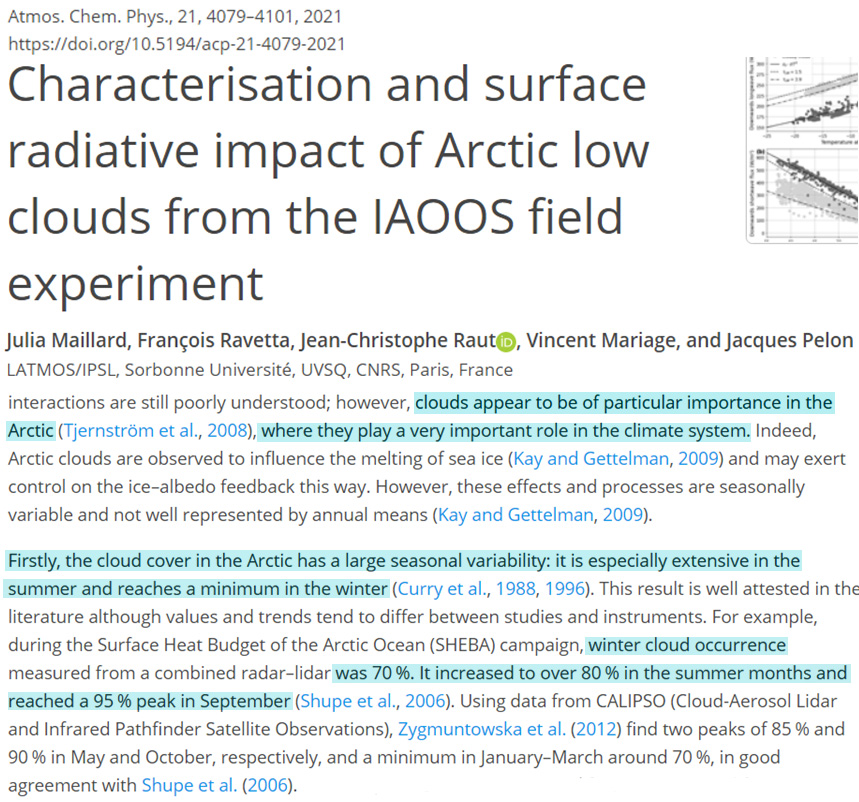
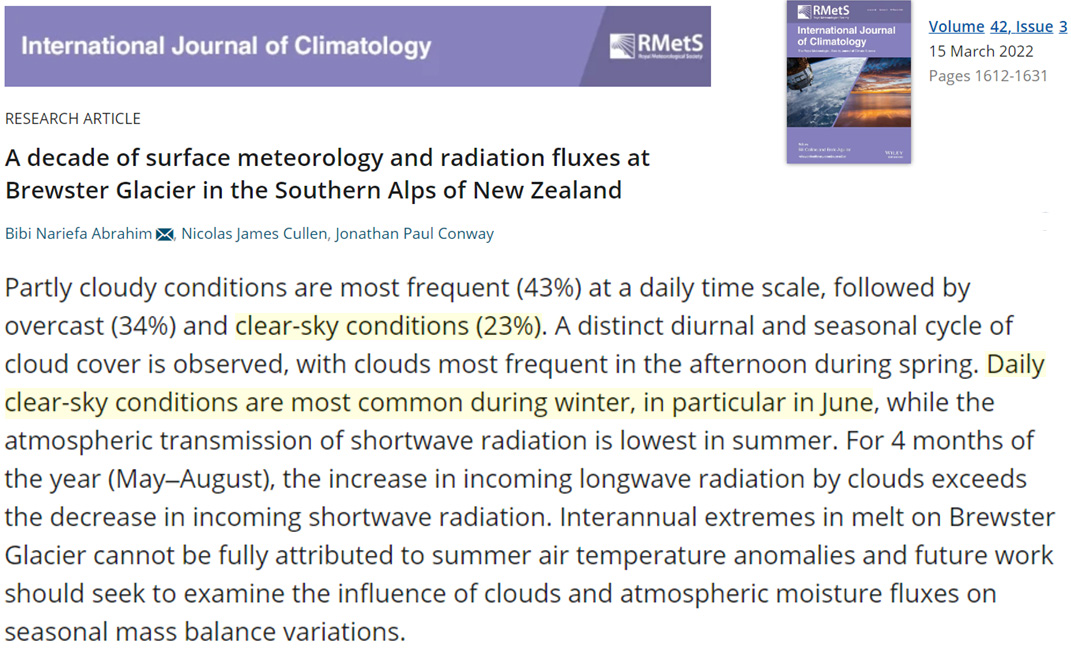
Also, it is well known that warmer summers are cloudier than colder winters (see Malliard et al., 2021 and Abrahim et al., 2022 below, for example). Cloudier summers can be 10 to 15°C warmer than clearer-sky winters across the middle and high latitudes. In contrast, the modern warming trend of only tenths of a degree in recent decades could only produce negligible changes in clouds relative to these much larger seasonal temperature changes. Besides, a decline in cloud cover is the opposite of what occurs with warmer temperatures anyway.

Image Source: Malliard et al., 2021 and Abrahim et al., 2022

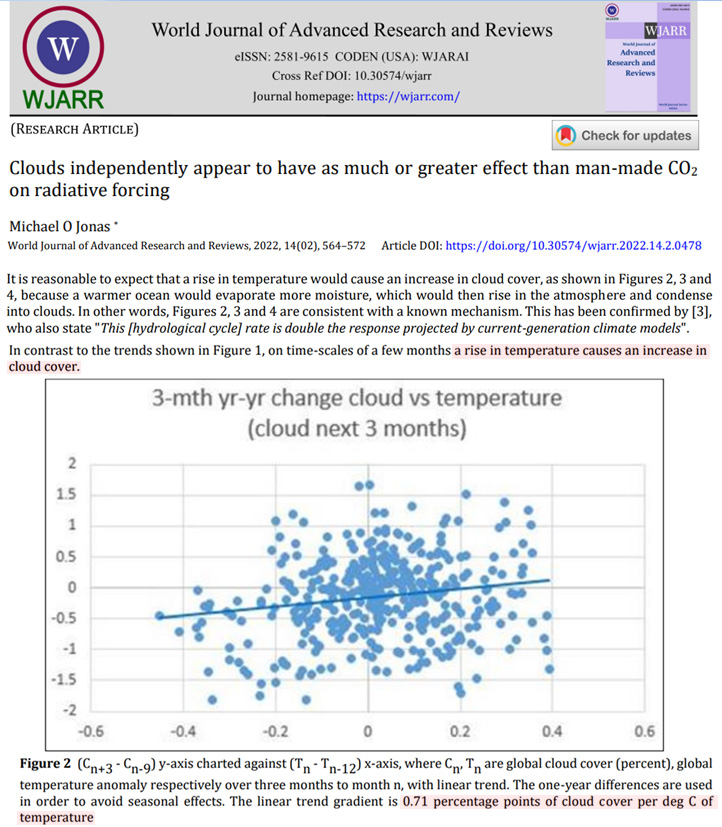
Furthermore, real-world observations (Jonas, 2022) are very clear on the question of whether warming induces a decline in cloud cover.

“A rise in temperature causes an increase in cloud cover.”

“0.71 percentage points of cloud cover per deg C of temperature.”

   Image Source: Jonas, 2022

Anthropogenic global warming apologists want to believe the observed decline cloud cover in recent decades is human caused. Thus, climate model inputs have been programmed to say warming from rising greenhouse gases leads to cloud decline, and cloud decline leads to more warming – a perpetual, runaway positive feedback.

Problematically, actual, real-world observations show warming leads to cloud increases, not decreases. Thus, neither warming nor rising greenhouse gases can explain the observed modern cloud decline.

And since declining cloud cover, a function of “unforced internal variabilty,” allows more solar radiation absorption at the surface, this can explain modern warming.

via NoTricksZone

https://ift.tt/AvWynQd

September 27, 2024 at 01:36AM

Good News: Arctic Ozone Hits Record High

From NASA Earth Observatory:

Ozone concentrations over the Arctic reached a record-high monthly average in March 2024. Due to large-scale weather systems that disturbed the upper atmosphere throughout the 2023-2024 winter, more ozone moved into and persisted in the stratosphere over the Arctic than at any other time in the satellite record.

A team of NASA and University of Leeds scientists reported their findings in a September 2024 paper in Geophysical Research Letters. “Given the absence of high Arctic ozone since the 1970s,” the authors wrote, “the March 2024 record high should be considered a positive harbinger of the future Arctic ozone layer.”

Between December 2023 and March 2024, a series of planetary-scale waves propagated upward through the atmosphere and slowed the stratospheric jet stream that circulates around the Arctic. When that happens, air from the mid-latitudes converges on the pole, sending ozone into the Arctic stratosphere. In addition to the influx of ozone, there was very little of the typical ozone depletion by substances such as chlorine, said Paul Newman, chief scientist for Earth sciences at NASA’s Goddard Space Flight Center and lead author of the study. “It was a very dynamical, active winter in the northern hemisphere,” he said.

More stratospheric ozone is positive for life on Earth. The stratospheric ozone layer is a natural sunscreen, absorbing harmful ultraviolet (UV) radiation. The authors calculated that from April–July 2024, the UV index was 6 to 7 percent lower in the Arctic and 2 to 6 percent lower in the northern hemisphere mid-latitudes. Less UV radiation means less damage to plant DNA and a lower risk of cataracts, skin cancer, and suppressed immune systems in humans and animals.

The activity in March 2024 is in sharp contrast to March 2020, when stratospheric ozone concentrations hit extremely low levels. Without disruption from upper atmospheric wave events, steady circumpolar winds prevented ozone from other latitudes from replenishing the Arctic stratosphere. The stable polar vortex also created colder-than-average conditions, favorable for ozone-depleting reactions to occur.

The maps above show ozone concentrations over the Arctic for March 2020 (left) and March 2024 (right), illustrating the large amount of variation possible there. The monthly averages were calculated by the NASA Ozone Watch team and are based on data acquired by the OMPS (Ozone Mapping Profiler Suite) on the NASA-NOAA Suomi-NPP satellite.

Unlike over Antarctica, where ozone holes form each year, the concentration of ozone over the Arctic is highly variable and subject to the “year-to-year vagaries” of tropospheric and stratospheric weather, Newman said.

1979 – 2024

The strong wave events from late December 2023 through early March 2024 resulted in the increases in ozone concentration seen in the chart above. Ozone levels peaked in March, as they typically do, and then remained well above average. May, June, July, and August also set new records for monthly average ozone concentrations. “This really is an extraordinary northern summer period,” Newman said.

As for what could have caused the unusual stratospheric weather, the authors looked at a variety of factors without finding a clear answer. The effect of climate change, for example, is difficult to quantify. “There might be a climate factor here, but it’s not obvious,” said Newman. With respect to larger atmospheric patterns such as El Niño and the Quasi-Biennial Oscillation: “Possibly, but the contribution is relatively small.”

In addition to stratospheric weather, which is the primary determinant of Arctic ozone levels, the authors think longer-term trends likely bumped ozone concentrations to record highs. Since the Montreal Protocol phased out production of ozone-depleting chlorofluorocarbons (CFCs) and halons in 1987, ozone levels have been slowly recovering. As such, the high March 2024 levels were within the authors’ expectations: the Goddard chemistry–climate model, GEOSCCM, showed a 1-in-8 chance of a record high by 2025, and more records are anticipated in the future. However, because CFCs persist in the atmosphere for decades, average Arctic ozone is not expected to return to 1980 levels until about 2045, they note.

Higher greenhouse gas concentrations in the stratosphere also accelerate ozone recovery. “This record was likely a result of decreased ozone-depleting substances and increased greenhouse gases. Otherwise, it would have been just a high year and not a record,” said Newman. “I call this year a harbinger of the future.”

NASA Earth Observatory images by Michala Garrison, using data courtesy of NASA Ozone Watch. Story by Lindsey Doermann.

via Watts Up With That?

https://ift.tt/aZS3q1i

September 27, 2024 at 12:03AM