Month: September 2024

No, Mainstream Media, Antarctica Isn’t ‘Burning’ from a Heat Wave

A variety of mainstream media outlets claim Antarctica is burning up, registering unusually hot temperatures due to climate change, citing a recent study as the source for their stories. The stories misrepresent the study’s findings and the science. The peer reviewed paper that the headlines reference clearly states that a short-term weather event was the cause, not climate change. Also, contrary to media’s claims, there was no “heat wave,” since the official meteorological criteria for calling this event a heat wave was not met.

The photo above shows the headline of SciTechDaily: Earth’s Last Frontier Burns: Record-Breaking Heat Strikes Antarctica in WinterElsewhere, The Economic Times weighed in with Antarctica’s record heat wave: A threat to global sea levels and ice integritywhile CNN blared ‘Astonishing’ Antarctica heat wave sends temperatures 50 degrees above normal.

First, let’s refute the obvious. As is clear in the photo with the SciTechDaily headline above, nothing was burning in Antarctica despite the claim of a “continent afire.”

SciTechDaily says this:

In March 2022, the most intense heat wave ever recorded on Earth hit Antarctica, just as organisms in the southern region braced themselves for the long, harsh winter ahead. The extreme weather raised temperatures in parts of Antarctica to more than 70°F above average, melting glaciers and snow even in the McMurdo Dry Valleys, one of the planet’s coldest and driest regions.

Putting that paragraph and those headlines in the proper perspective, we turn to the definition of a heat wave from the National Oceanic and Atmospheric Administration (NOAA):

A heat wave is a period of unusually hot weather that typically lasts two or more days. To be considered a heat wave, the temperatures have to be outside the historical averages for a given area.

While there were in fact less cold than normal temperatures in Antarctica during a one-day weather event, the temperature only briefly went above freezing, so there was no measurable melting. The practice of applying a “heat wave” label to such an event is erroneous.

The paper the media referred as the source of their alarming headlines says, “Record high temperatures were documented in the McMurdo Dry Valleys, Antarctica, on 18 March 2022, exceeding average temperatures for that day by nearly 30°C.”

Further, the data they provide in the form of figure 1 shows the temperature in several location in Antarctica:

Figure 1 (a) Map of the McMurdo Dry Valleys, Antarctica and (b) the location of meteorological stations where air temperature was recorded at Lake Bonney, Lake Hoare, Lake Fryxell, the Friis Hills, and Lake Vanda. March 2022 temperature spikes circled in red by A. Watts. Source article: Response of a Terrestrial Polar Ecosystem to the March 2022 Antarctic Weather Anomaly

As you can see in the temperature graphs on the right side of the figure (b) in March 2022, there were some brief spikes in temperature for one day (circled in red), where the freezing temperature of 0°C (32°F) was approached or exceeded. After that, temperatures immediately returned to normal for the area.

So in the context of NOAA’s heat wave definition above, the two-day minimum criteria were not met so referring to the brief temperature spike as a “heat wave” was erroneous or fake news.

The peer reviewed paper said the cause of the event was, “[a]n atmospheric river caused extreme weather in the Antarctic Dry Valleys in March 2022 with temperatures 25°C above average conditions.” Even the title of the peer reviewed paper, “Response of a Terrestrial Polar Ecosystem to the March 2022 Antarctic Weather Anomaly,” and calls it a weather anomaly.

A single day weather event, that briefly caused temperatures to go above normal doesn’t meet the meteorological definition of a heat wave, or a signal of climate change since it is not indicative of a long term 30-year trend of temperatures on the continent.

Despite these scientific facts, the mainstream media outlets reporting the event described it variously as “[a] threat to global sea levels and ice integrity,” an “astonishing heat wave,” and a “burning continent of Antarctica” in the eyes of the media.

The level of exaggeration, to use CNN’s word, is astonishing.

The “news reporting” on this study and the weather anomaly it discussed is all too typical of the effort by media organizations to blame every weather event that falls even slightly outside the norm for no matter how brief a period of time as caused by climate change – even when the underlying research makes no such connection. Weather is not climate. They operate on completely different time scales.

This sort of reporting is unprofessional, a disgusting disservice to the public who the media is supposed to inform, not mislead and indoctrinate.

Anthony Watts

Anthony Watts is a senior fellow for environment and climate at The Heartland Institute. Watts has been in the weather business both in front of, and behind the camera as an on-air television meteorologist since 1978, and currently does daily radio forecasts. He has created weather graphics presentation systems for television, specialized weather instrumentation, as well as co-authored peer-reviewed papers on climate issues. He operates the most viewed website in the world on climate, the award-winning website wattsupwiththat.com.

Originally posted at ClimateREALISM

via Watts Up With That?

https://ift.tt/0HS8uyJ

September 21, 2024 at 04:02PM

Depravity of Net Zero Agenda

From Daily Sceptic The Real ‘Climate Change Deniers’ Are Those Who Deny the Climate Changed Before We Started Burning Fossil Fuels, Says Geologist.  Excerpts in italics with my bolds and added images.

“We need to be resilient”

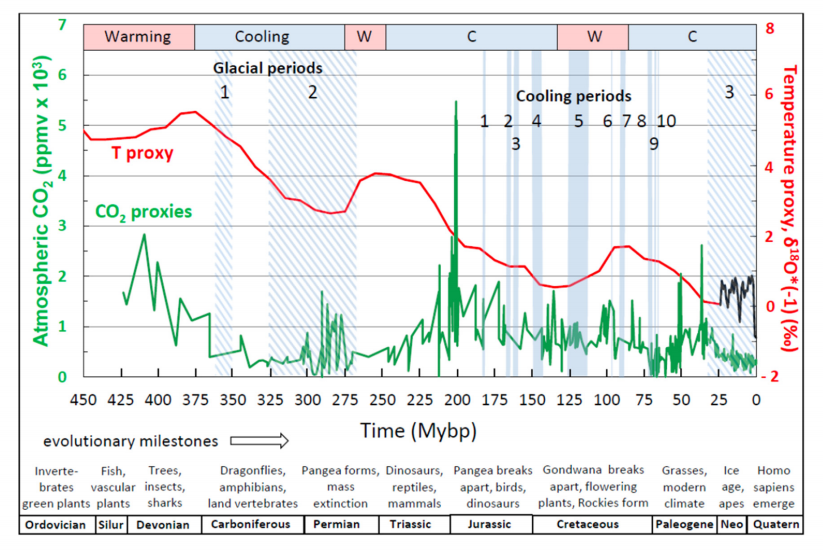
As a geologist, Wielicki undoubtedly has a better-than-average understanding of how our planet has evolved in the first place, and how its climate has been in a constant state of flux. Today’s climate science, however, links climate change primarily to the increasing amount of CO2 in the atmosphere, especially its anthropogenic component. Scientists who doubt or dispute this are labelled climate deniers. Wielicki points out that we know very well from Earth’s relatively recent history that major climate changes, such as the Medieval Warm Period (ca. 950-1250) or the subsequent Little Ice Age (ca. 14th to mid-19th century, precise timing depending on the location), occurred without any significant change in the proportion of CO2 in the atmosphere.

“If there’s anything that I argue, it’s that we need to be resilient. We should stop pretending that if we changed or lowered our emissions the climate would stop changing. That’s the true denial of climate right there,” Wielicki says. “What we need to accept is that regardless of the CO2 in the atmosphere, we are going to have climate change and those shifts could occur over timescales of decades or centuries, and we should be prepared.
And being prepared means we need access to cheap, reliable energy.

But the world is moving in the opposite direction under the leadership of today’s political leaders. One of the main objectives is to fight CO2 emissions and to do so by phasing out fossil fuels, among other measures. However, according to Wielicki, the planners have not quite thought everything through. First of all, wind and solar power are unreliable substitutes because they can only be produced when the conditions are right, i.e., when the wind blows and the sun shines. In addition, they need constant support from the taxpayer, because when they can be produced, i.e., sold as energy to the grid, the price of electricity on the market will be low since there is a lot of it at that particular time. So in order for investors to build up these capacities, they need price guarantees from governments or taxpayer support. And on top of that, you still need to additionally build up controllable capacity to ensure that electricity is always available.

Wielicki also says that we need to understand that fossil fuels are not just liquids that we put in our cars at the petrol station but are essential to many aspects of our lives. “About four billion people on the planet are being fed off of agricultural crops that are being fertilised with synthetic fertilizers that are being created from fossil fuels. So you can’t just look at one side of a picture,” Wielicki explains, adding that the increases in atmospheric CO2 levels have actually also increased yields.

In addition, Wielicki says, it is worth thinking that we need to replace many of today’s fossil-fuel-based materials in everyday use, such as plastics, lubricants, oils, chemicals, etc., with new ones if we really want to phase out fossil fuels. “We have to ask what are the benefits that fossil fuels have given the society? And then let’s weigh that against the possible detrimental effects that these climate models argue will happen, but haven’t happened in the observable data yet,” he says.

The rise of the new green colonialism

Programmed into this whole Western orientation towards CO2 reduction, Wielicki says, is hypocrisy on several levels. For a start, it’s worth recognising that by reducing CO2 emissions in Europe or North America, we have effectively decided that we do not produce the goods we need here, but will produce them elsewhere in the world. “We pat ourselves on the back and say: look, we’ve lowered our CO2 emissions by this much! But all we’ve done is essentially offshored that industry to China and India, They do it dirtier. They have no regard for things like environmental policy. And so the global CO2 is going up faster than ever,” Wielicki notes.

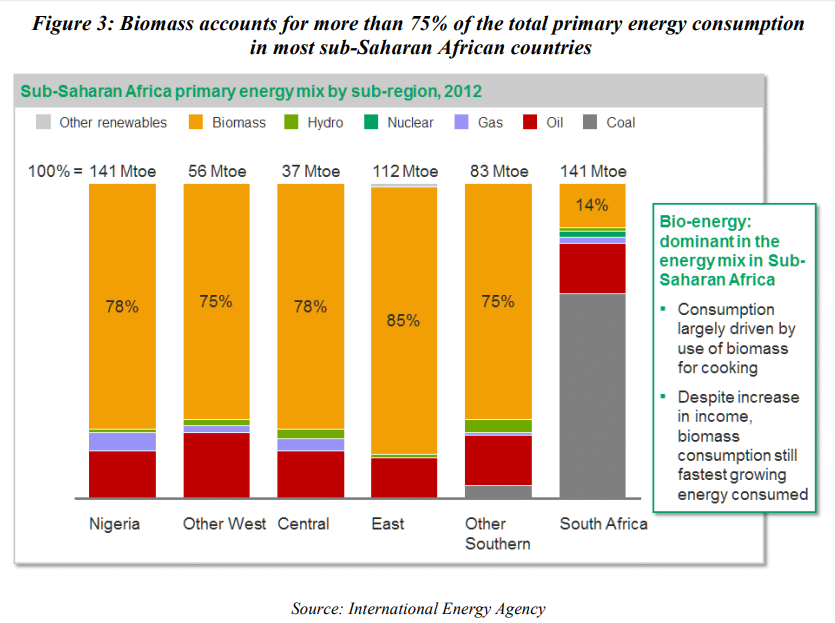
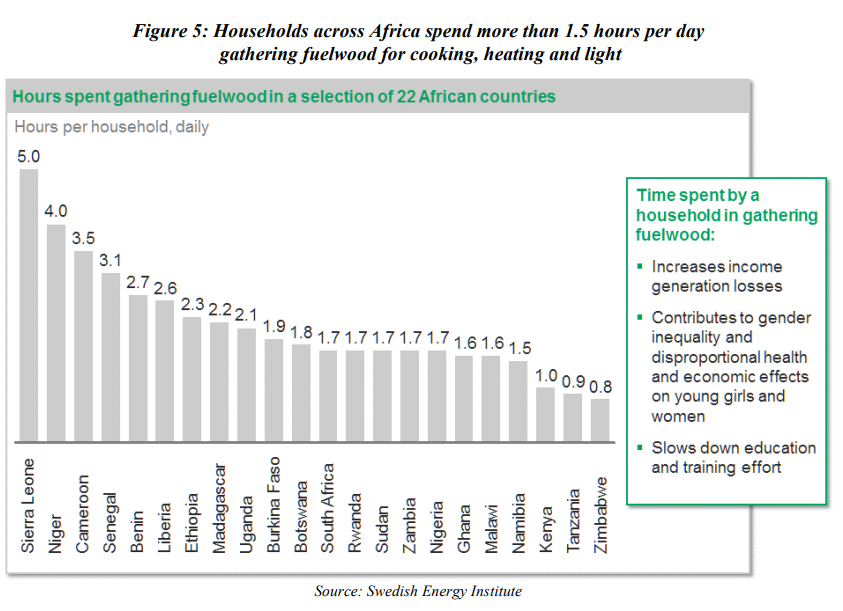
While the big Asian countries are ramping up the use of coal to satisfy their energy appetite, many African countries don’t have a similar option. According to Wielicki, this is directly linked to the UN’s policy of not wanting these countries to increase their use of fossil fuels. This means, for example, that farm work that is done elsewhere by tractor still has to be done by many Africans with their hands. A large proportion of Africans also have little or no access to electricity. Food is cooked indoors on open fires, burning dung and wood.

The resulting smoke leads to respiratory illnesses and many people die as a result. All this could be easily avoided, according to Wielicki, by giving them access to propane bottles and gas cookers. “It might make them breathe easier at night. It might make their health better. But it’s going to increase the atmospheric CO2, and that is something we can’t have. These poor people must suffer and live in poverty because we need to save the planet. It’s so hypocritical,” Wielicki says.

What’s more, according to Wielicki, our hypocrisy lies in the fact that at the same time, we want to mine the minerals we need for our own energy transition, such as cobalt, in that very same Africa. “We’re switching to very mineral and energy intensive technologies like solar panels and electric vehicles. And we’re taking all of these raw materials from Africa,” he says. “I think this is going to be, probably, the legacy of this green revolution. I call it the new green colonialism. It’s unfortunately going to keep hundreds of millions of poor people in developing nations in poverty for decades longer than they ever needed to be,” Wielicki adds.

via Science Matters

https://ift.tt/vO0th2y

September 21, 2024 at 12:12PM

Equinor abandons ‘blue’ hydrogen plans

From NOT A LOT OF PEOPLE KNOW THAT

By Paul Homewood

h/t Philip Bratby

Norwegian energy giant Equinor has scrapped plans to produce so-called blue hydrogen, citing high costs and insufficient demand.

The move will raise concerns over Equinor’s plans in the UK, where it is heavily involved in a number of hydrogen projects.

It had pledged to generate low-carbon hydrogen from natural gas, known as blue hydrogen, in combination with carbon capture and storage (CCS) in Norway. The hydrogen produced would then be exported to hydrogen-ready power plants in Germany.

The project would have included building the world’s first offshore hydrogen pipeline.

The problem for Equinor’s German project was that it could not find enough customers to buy the hydrogen it proposed to produce.

Mr Eidsvold said Equinor also couldn’t continue maturing the projects without firm long-term commitments from European buyers to import hydrogen.

He said: “We are not able to make this kind of investment when we don’t have long-term agreements and the markets in place.”

https://www.telegraph.co.uk/business/2024/09/21/norwegian-oil-giant-equinor-abandons-blue-hydrogen-plans

It’s the old, vicious circle!

There is no natural market for bulk hydrogen because it is far more expensive than natural gas.

Hence Equinor can only sell it if customers in Germany receive massive govt subsidies to do so.

via Watts Up With That?

https://ift.tt/YEqxtG6

September 21, 2024 at 12:01PM

Sunday

And the Southern Hemisphere steals the sun …


0 out of 10 based on 0 rating

via JoNova

https://ift.tt/BScMzUL

September 21, 2024 at 09:09AM