
Utah is pursuing an aggressive legal strategy to resolve the issue of “unappropriated” lands as quickly as possible.
via CFACT
September 17, 2024 at 03:50AM
Utah is pursuing an aggressive legal strategy to resolve the issue of “unappropriated” lands as quickly as possible.
via CFACT
September 17, 2024 at 03:50AM
By Paul Homewood

Looking back on more than 20 years of climate agitation, two themes emerge: a stubborn unwillingness by campaigners to acknowledge any inconvenient science, and ever-shifting favorite stories, first elevated and then dropped by the wayside.
The one constant: a fixation on scaring the public, which has in turn shaped bad climate policies.
At the start of this century, the polar bear was the emblem of climate apocalypse.
Protesters dressed as polar bears, while Al Gore’s hit 2006 film “An Inconvenient Truth” showed us a sad, animated polar bear floating away to its death.
The Washington Post warned that polar bears faced extinction, and the World Wildlife Fund’s chief scientist even claimed some polar bear populations would be unable to reproduce by 2012.
And then in the 2010s, campaigners just stopped talking about polar bears.
Why? Because after years of misrepresentation, it finally became impossible for them to ignore a mountain of evidence showing that the global polar bear population has increased substantially from around 12,000 in the 1960s to around 26,000 in the present day. (The main reason? People are hunting a lot less polar bears).
The same thing has happened with depictions of Australia’s Great Barrier Reef.
For decades, campaigners shouted that the reef was being killed off by rising sea temperatures.
After extensive damage from a hurricane in 2009, official Australian estimates of coral cover reached a low in 2012.
The media was flooded with claims of the “Great Reef Catastrophe” and scientists predicted the reef would be decimated by 2022. The Guardian even published an obituary.
The latest official statistics show a completely different picture. For the past three years, the Great Barrier Reef has had more coral cover than at any point since records began in 1985, with 2024 setting a new record.
The good news gets a fraction of the coverage that the scare stories did.
An often-recurrent climate story has been the alleged drowning of small Pacific islands due to sea level rise.
In 2019, United Nations Secretary General António Guterres flew all the way to Tuvalu for a Time magazine cover-shot.
Wearing a suit, he stood up to his thighs in the water, demonstrating “our sinking planet.” The accompanying article warned the island — and others like it — would be struck “off the map entirely” by rising sea levels.
 UN Secretary General António Guterres on the cover of Time Magazine in June 2019. Time
This summer, the New York Times finally shared what it called “surprising” climate news: almost all atoll islands are increasing in size. In fact, the scientific literature has documented this trend for more than a decade.
While rising sea levels do erode land, additional sand from old coral is washed up on low-lying shores.
Extensive studies have long shown this accretion is stronger than climate-caused erosion, meaning the land area of Tuvalu is increasing.
Climate change is real. It is manmade. It is a challenge that needs sensible policies.
But campaigners do the cause a massive disservice by refusing to acknowledge evidence that challenges their intensely doom-ridden worldview.
All these misguided claims add up, and have shaped the climate panic that has led to politicians passing climate legislation that now costs the world more than $2 trillion annually, for a tiny benefit.
Today, killer heat waves are the new scare story – and the latest example of willful blindness of the bigger picture.
Recently, President Biden claimed “extreme heat is the number one weather-related killer in the United States.”
He is wrong by a factor of 25. While extreme heat annually kills nearly 6,000 people, cold kills 152,000 Americans each year, of which 12,000 die from extreme cold.
Despite rising temperatures, age-standardized extreme heat deaths have actually declined in the US by almost 10% per decade and globally by even more, largely because people who are more prosperous are better able to afford air conditioners.
If 6,000 heatwave deaths are a genuine priority, a sensible response would be to ensure American electricity remains cheap so it’s not just the rich who can afford to keep air conditioning running.
The same policy prescription would hold if President Biden were to pay attention to the 152,000 Americans dying each year from the cold.
Strokes and heart attacks spike when older people can’t afford to heat their homes through winter.
Sadly, rather than keeping energy costs low, a lot of climate policy does the opposite.
Full story here.
via NOT A LOT OF PEOPLE KNOW THAT
September 17, 2024 at 03:46AM
By Paul Homewood
h/t Philip Bratby
This hardly comes as a surprise!

Electric vehicles (EVs) are losing value at an “unsustainable” rate as a slowdown in consumer demand sends used car prices tumbling, leasing companies have warned.
The British Vehicle Rental & Leasing Association (BVRLA) warned that so-called fleet operators, such as car leasing firms and rental companies, are having to swallow large losses when reselling EVs because of “accelerated, exceptional depreciation”.
In most cases, these companies buy new cars and own them for three years before selling them.
Consumers who lease cars during these three-year periods effectively cover the value of losses through monthly payments, which are calculated based on estimates of how much a vehicle is expected to depreciate.
But in the past two years, the typical amount of “residual value” left over at the end of a car’s lease has plunged from 60pc to 35pc, the BVRLA said.
This means a car worth £50,000 when new will now drop to £17,500 in value over three years, instead of £30,000.
This leaves leasing companies facing unexpected losses.
Gerry Keaney, chief executive of the BVRLA, has warned the trend is “not sustainable”.
Speaking at an event in Parliament on Tuesday, he said: “The reality is that EV residual values in the last two years have dropped by 50pc.
“That is the evidence of the accelerated depreciation write-off that we’ve seen. And again, when we look forward two years, the rate of used EVs coming back to the market is about to double.”
Mr Keaney said the large numbers of EVs about to come into the used market was partly owing to the success of adoption through salary sacrifice schemes.
He said that EVs currently account for more than 80pc of cars leased through salary sacrifice schemes.
https://www.telegraph.co.uk/business/2024/09/16/second-hand-electric-car-prices-falling-faster-rate/
The lease companies only have themselves to blame. Any with an ounce of common sense would have told them nobody wants to buy the useless things.
The news is of course disastrous for anybody buying an EV privately. Not only will they have to pay an extra ten grand to buy it, they will also get much less when they come to trade it in.
via NOT A LOT OF PEOPLE KNOW THAT
September 17, 2024 at 03:42AM

Rent-seekers keep telling us that wind and solar power are the cheapest of all. Our crushing and ever-increasing power bills wherever wind and solar signify, suggests otherwise.
Their propagandists employ a bag of tricks in an effort to support the narrative. The game includes ignoring the capital cost of having every single (unreliable) megawatt of wind or solar constantly backed up by another (reliable) megawatt of coal, gas, nuclear or hydro; refusing to acknowledge the cost to power consumers of mandated targets, tax breaks and/or massive direct subsidies that exclusively benefit wind and solar; ignoring the additional transmission costs of bringing intermittent and diffuse sources of energy from remote locations (where they’re produced) to the cities where the power is consumed; and dismissing the cost of wrecking, once viable, rural communities, including reducing the value of properties where the owners have been forced to abandon homes pummelled by pulsing, thumping, low-frequency wind turbine noise.
By any fair accounting, as Norman Rogers points out below, there simply is no comparison between power generation sources which are available around-the-clock, and those which are entirely dependent on sunshine and breezes.
Tangled Comparisons: Renewables Versus Fossil Fuels
Watts Up With That?
Norman Rogers
22 August 2024
We are often told that wind and solar, if not cheaper, are at least cost competitive with fossil fuels. Dead wrong! Wind or solar costs around five times more per megawatt hour compared to, for example, natural gas.
We are told that wind and solar will save us from a climate catastrophe. If there is a looming climate catastrophe, the only thing that will save us is nuclear power. Wind and solar are incredibly expensive methods of reducing CO2 emissions. The more wind and solar you build, the cost of removing CO2 increases disproportionately.
The U.S. has wasted $1.5 trillion on wind and solar and for that money only a little more than 10% of our electricity comes from wind and solar.
Fossil fuels are not dirty. Modern natural gas or coal plants are environmentally pristine. CO2 is not a pollutant, but an aerial plant food that is greening the Earth. CO2 makes plants grow faster with less water.
Wind or solar electricity is not worth what it costs to create it. It is worth what someone is willing to pay for it. That is a generally accepted economic principle.
If the government requires a utility to purchase some amount of electricity at some price, that is not a free market. That is central planning. Central planning has a role, but it rarely works as well as the voluntary exchange of goods and services. Central planning creates unexpected twists and turns and often results in low productivity.
I will first discuss the value of wind and solar electricity in a free market and then discuss the effect of extensive government interventions via subsidies and mandates.
Everywhere when commentators compare the cost of wind or solar electricity with the cost of fossil fuel electricity, they use LCOE, the levelized cost of electricity. It is a logical error to compare LCOE of natural gas with LCOE of wind or solar. The correct comparison is to compare the marginal cost of natural gas with the LCOE of wind or solar. The marginal cost of natural gas electricity is about $20 per megawatt hour in the U.S. The LCOE of wind or solar hovers around $100 per megawatt hour, or about five times more.
LCOE includes amortization of the cost of building the generating plant. The marginal cost is essentially the cost of the fuel to generate the electricity.
Under what circumstances will a utility or grid operator be willing to purchase wind or solar electricity? For the sake of the discussion, we postulate that the utility is going to replace some of its natural gas electricity with wind or solar electricity. The argument would be the same if coal electricity is being replaced and different if hydroelectricity is being replaced. No one would replace nuclear electricity with wind or solar because nuclear fuel is too cheap.
The utility cannot make a complete replacement, scrapping a natural gas generating plant and replacing it with a wind or solar farm. That is impossible because wind and solar are erratic, providing power subject to the weather and the daily solar cycle. Their erratic nature cannot be fixed at a remotely reasonable cost with batteries or pumped storage.
The utility will be open to reducing output from a gas plant and replacing that electricity with wind or solar electricity, when the sun is shining or the wind is blowing, only If the wind or solar electricity is less expensive then the marginal cost of generating the electricity with the gas plant. Notice that I said marginal cost, not LCOE.
Marginal cost for a gas plant is almost entirely the cost of the fuel. If gas is $3 per MMBtu and the gas plant is a combined cycle plant, the marginal cost of generating electricity is about $20 per megawatt hour. In countries that do not enjoy cheap natural gas the marginal cost will be higher.
If the cost of the wind or solar electricity is greater than $20 it will be a money losing proposition to substitute wind or solar electricity for gas electricity. If it is less, then it will be a profitable endeavor. The value of wind or solar is $20 per megawatt hour under these conditions.
LCOE for a natural gas plant includes an allowance for the amortization of the initial investment. It also depends on the utilization or capacity factor of the plant. The capacity factor is not very relevant to the properties of natural gas generation because real utilities over-provision their generator capacity to account for peak demand and the possibility of plants being under repair.
LCOE for a wind or solar farm is almost entirely capital cost spread over the number of megawatt hours generated with due consideration for the time value of money. The marginal cost is near zero because it costs nothing extra to generate an additional megawatt hour and nothing is saved if fewer megawatt hours are generated. If plant output is curtailed because the grid cannot accept all the wind or solar power available, the cost per megawatt hour is proportionally increased. Overwhelming the grid with wind or solar is an increasingly serious problem.
The Departure From a Free Market
The most important government intervention is state renewable portfolio laws. These laws define renewable energy and set quotas for what proportion of the electricity in the state must be from renewable sources.
Without getting too complicated, renewable energy is usually defined as anything that is not fossil fuel, nuclear energy or hydroelectricity involving dams. Most of the energy that passes that test is too expensive or not scalable. Wind and solar are too expensive and handicapped by intermittency, but they are scalable. The result is that renewable energy is almost always wind or solar. A few states allow hydroelectricity with dams to be considered renewable. Hydro has limited scalability due to the best sites being already developed.
Renewable portfolio laws mandate the purchase of an increasing proportion of renewable electricity. For example, California requires that 60% of the electricity be from renewable sources by 2030.
The second most important government intervention are federal subsidies, tax credits and complicated tax provisions called tax equity financing, that subsidize about 50% of the cost of building a wind or solar farm.
Mandating the purchase of renewable electricity changes the nature of the market for renewable electricity. Without the mandates the owner of a wind or solar farm is doomed to beg utilities to purchase electricity for far less than it costs to generate. The farm would soon be bankrupt. But with mandates the utilities are knocking on his door begging for renewable power that they are mandated to purchase, without regard to the price. Renewable portfolio laws change the market from a buyers’ market to a sellers’ market.
There are a handful of companies with the expertise and financial resources to construct billion-dollar, utility-scale, wind or solar farms. Although they nominally compete by bidding for the sale of electricity, they constitute an oligopoly. That is to say that the competition will not be as vigorous as it would be if more players were in the market.
The most common deal structure is that the developer constructs a wind farm and sells the electricity to the utility. Because the market is tipped in favor of the big companies, they are able to require a long-term contract, called a power purchase agreement or PPA, usually 20 for years, guaranteeing a market at a set price for all the electricity that the project can produce. That long-term market and price guarantee has tremendous value.
The PPA is a subsidy because by removing market risk, the farm becomes less like a business and more like a treasury bond. The price per megawatt hour can be less because a lower rate of return is viable. Risk has been removed. With the guaranteed market, the farm becomes marketable to conservative investors like infrastructure funds or pension funds. I estimate that the PPA reduces the rate of return needed from 12% to 8% and thus subsidizes the cost of renewable electricity by a third.
That subsidy is not cost free. The utility is assuming massive debt and risk by signing the PPA. There are plenty of possible reasons why utilities might want to get out of PPA’s in five or ten years. For example, lower cost nuclear electricity.
Between renewable portfolio laws and federal subsidies, the wind or solar farm is about 66% subsidized. For example, if the LCOE of the wind or solar electricity is $100 per megawatt hour, after the subsidies are applied it is $33 per megawatt hour. This is still more than the $20 that the electricity is worth. To close the gap the utility must raise its rates to pay for the extra $13 per megawatt hour. The final subsidy comes from the electricity customers.
Justifications for Massive Subsidies
The first justification is that reducing CO2 emissions will prevent a climate catastrophe. This justification fails for several reasons. Reducing American CO2 emissions will have little effect because the emissions problem is in Asia where emissions not only dwarf ours but are skyrocketing due to development of coal powered generation.
The cost of reducing CO2 emissions by wind or solar is very high, more than $300 per metric ton of CO2 removed. The subsidy is the cost of removing CO2. It becomes increasingly difficult to augment the amount of wind or solar above 50% due to their intermittent nature. Carbon offsets can be purchased for as little as $10 per ton, although not enough would be available to neutralize CO2 emissions from the entire power system. Serious reduction of emissions at reasonable cost requires adopting nuclear power, generally prohibited by renewable portfolio laws.
The second justification is that fossil fuel or nuclear fuel will run out. Within the borders of the U.S. is enough fossil fuel for hundreds of years and nuclear fuel for thousands of years. It is not sensible to turn the economy upside down in anticipation of a theoretical event centuries in the future.
A third justification is that fossil fuel plants cause air pollution, and nuclear plants may release harmful radiation. Modern coal or natural gas plants are environmentally clean. Nuclear plants are proven by hundreds of plants running for decades. The worst accidents were easily contained.
Finally, the increase in CO2 in the atmosphere has greened the Earth and substantially increased agricultural production. CO2 is aerial plant food.
When will the nation wake up and stop the bleeding?
Watts Up With That?
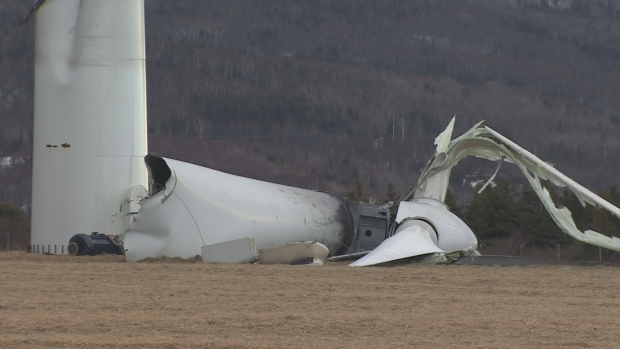
via STOP THESE THINGS
September 17, 2024 at 02:30AM
 Iowa Climate Science Education