52.17236 0.83086 Met Office Assessed CIMO CLASS 3 Installed (for temperature reading) 31/3/2018
Firstly this is Met Office assessed as CIMO Class 3 – the same grade as the Heathrow Airport site. That small white box (image centre) is the Stevenson Screen in front of the oil storage tank, barns, farm storage, next to the freshly dug vegetable plot, just up from where tractors park and only visible in this March 2022 street view image ( it is completely obliterated by tree overgrowth in the July 2023 image) is allegedly accurate to within 1 degree. One has to wonder just how bad a site actually has to be for the Met Office to assess as Class 5.
For those who find the above assessment hard to believe, I copy below an extract from the list I obtained under Freedom of Information request from the Met Office..
Here is the site in aerial view:
This site does not appear in older street view images as it was only installed in 2018. Prior to that only rain gauge readings were taken with no apparent Stevenson Screen on site. Below are the first temperature recordings from the CEDA Archive.
Clearly this site is completely inappropriate for supplying readings towards the national temperature record. It is surely quite unacceptable to have sites totally unguarded by any form of perimeter fencing in such close proximity to extraneous heat sources. For all anyone can ascertain, farm vehicles with engines warming up could have been parked alongside the Screen – who would know? Historic google earth imagery indicates a blue tractor parked nearby. Hay bales quite visibly stored in those barns had to get there by some means, this is after all a working farm site. The surroundings regularly change causing all manner of effects likely to disrupt temperature readings. Surely any reasonable observer can see that.
The Met office has a very large and mostly tax payer funded budget and yet within the last 7 years has still seen fit to install this obviously low grade site but still claim to operate to meticulously high standards.
But now for the cherry on the cake. The Met Office has also designated this site as…..”EXCELLENT”.
From FOI for Met Office’s own classification standard listing
OF 382 MET OFFICE WEATHER STATIONS CURRENTLY ONLY 33 (<9%) ARE GRADED “EXCELLENT” – FELSHAM IS ONE OF THOSE DEEMED “EXCELLENT” SITES.
As a resident of California for more than six decades, I am aware that the availability of continuously generated electricity in California is deteriorating and will get worse!
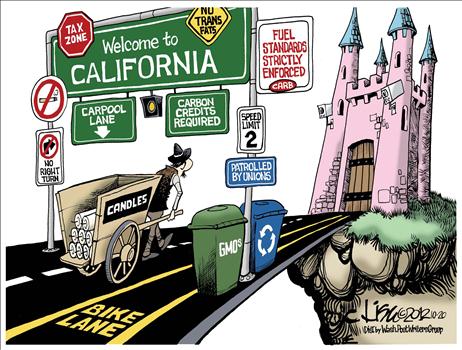
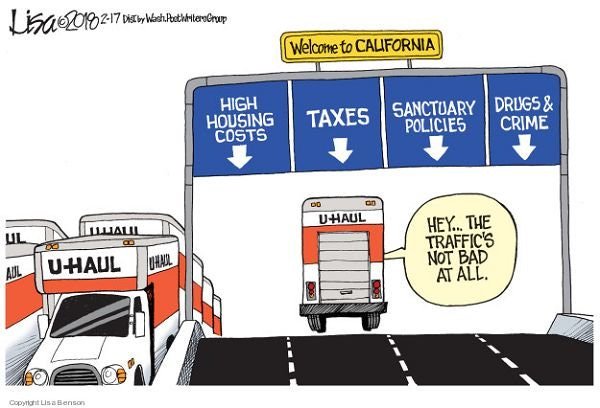
The “Green New Deal” and “Net Zero” policies in California that are supported by Governor Newsom and the Democratic Presidential candidate Kamala Harris have led to the state’s most expensive electricity and fuel prices in America and increasingly high cost of living, housing, and transportation, coupled with an increase in crime, smash-and-grab robberies, homelessness, pollution, and congestion that has caused many tax-paying residents and companies to exodus California to more affordable cities and states.
California’s net move-out number of residents in 2022 alone was more than 343,000 people that left California — the highest exodus of any state in the U.S.
The California Policy Institute counted more than 237 businesses that have left the state since 2005. Among these businesses were eleven Fortune 1000 companies, including AT&T, Hewlett Packard Enterprise, Exxon Mobil, and Chevron.
The U.S. Department of Energy recently made a startling admission: U.S. electricity demand will double by 2050, and meeting that soaring demand will require the equivalent of building 300 Hoover Dams.
The last California Nuclear Power Plant at Diablo Canyon, a 2.2 GW plant generating continuous uninterruptable electricity, is projected to close soon. In nameplate only, it would take 1,000 2.2MW wind turbines to generate 2.2 GW, but then, it’s only intermittent electricity vs. the continuous uninterruptable electricity from Diablo demanded by the California economy!
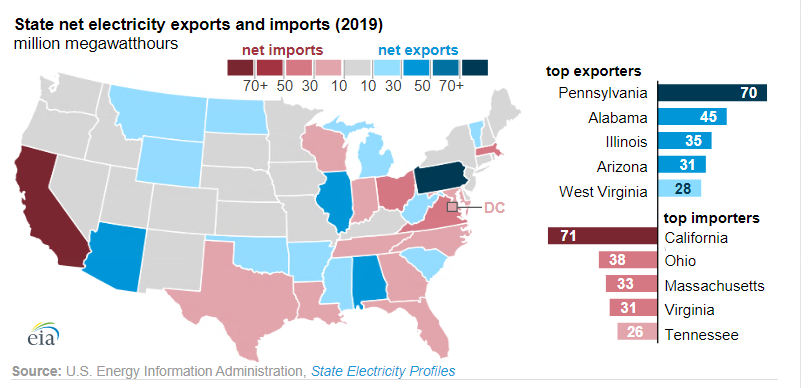
As a result of the “Green New Deal” and “Net Zero” policies and renewables of wind and solar stations built at the expense of taxpayer dollars,California now imports more electric power than any other US state, more than twice the amount in Virginia, the USA’s second-largest importer of electric power. California typically receives between one-fifth and one-third of its electricity supply from outside of the state.
Power prices are rocketing into the stratosphere and, even before winter drives up demand, are being deprived of continuous electricity in a way that was unthinkable barely a decade ago. But such is life when you attempt to run the economy on sunshine and breezes.
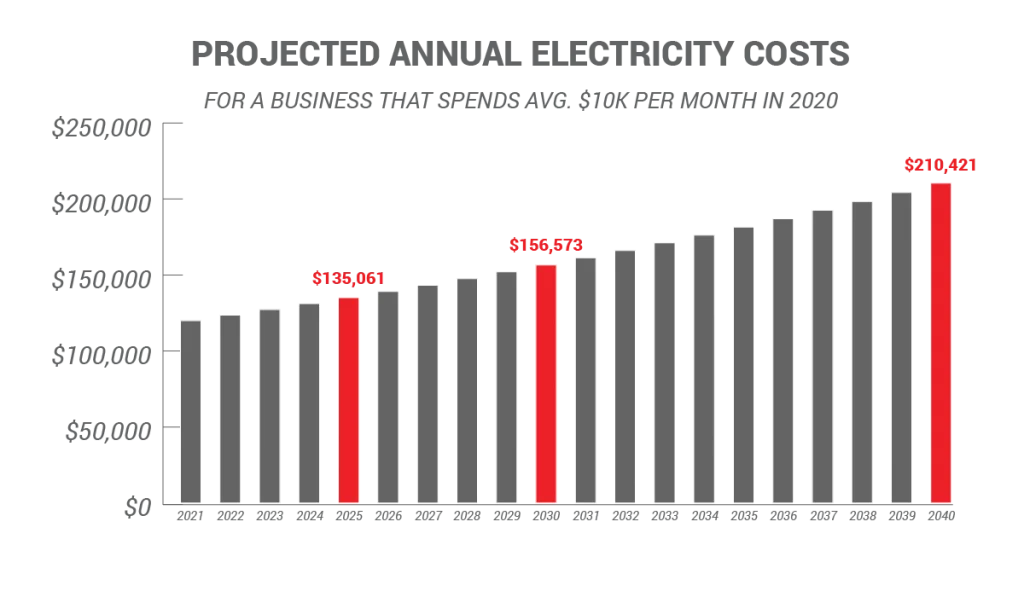
Projected electricity costs for California Businesses
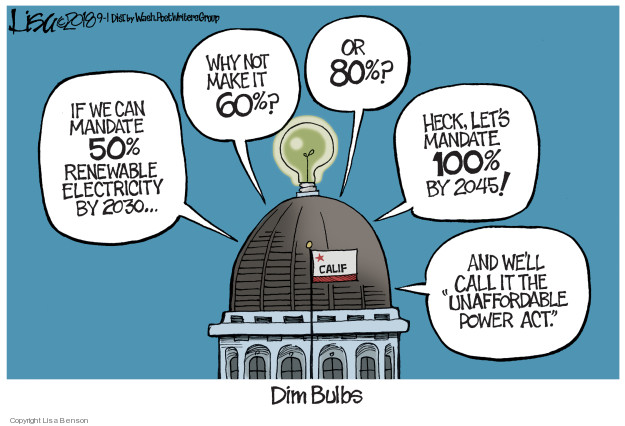
California’s economy depends on affordable, reliable, and ever-cleaner electricity and fuels. Unfortunately, policymakers are driving up California’s electric and gas prices, and California now has the highest electricity and fuel prices in the nation. Those high energy prices are contributing to the pessimistic business sentiment. California’s emission mandates have done an excellent job of increasing the cost of electricity, products, and fuels to its citizens.
It’s becoming increasingly obvious that these supposed “green” alternative methods of generating electricity won’t work — especially as electricity demand is projected to double by 2050 due to AI, charging of EVs and data centers, government-mandated electric heating and cooking, and charging grid-backup batteries. Intermittent electricity from wind and solar cannot power modern nations.
These “green” wind and solar projects primarily exist because they are financed with taxpayer money, i.e., disguised by taxpayers as “Government Subsidies.”
“GREEN” policymakers are obliviousto humanity’s addiction to the products and fuels from fossil fuels, as they are to these two basic facts:
(1) No one uses crude oil in its raw form. “Big Oil” only exists because of humanity’s addiction to the products and fuels made from oil!
(2) “Renewables” like wind and solar only exist to generate intermittent electricity; they CANNOT make products or fuels!
To rid the world of crude oil usage, there is no need to over-regulate or over-tax the oil industry; just STOP using the products and fuels made from crude oil!
Simplistically:
STOP making cars, trucks, aircraft, boats, ships, farming equipment, medical equipment and supplies, communications equipment, military equipment, etc., that demand crude oil for their supply chain of products.
STOPPING the demands of society for the products and fuels made from oil will eliminate the need for crude oil.
The primary growth in electric power usage is coming from new data centers housing AI technologies. It is expected that over the next few decades, 50% of additional electric power will be needed just for AI, but data centers CANNOT run on occasional electricity from wind and solar.
Cal matters raises concerns about state policy to phase out ICE vehicles in favor of EVs.
How will the occasionally generated electricity from wind and solar support the following:
America’s military fleet of vehicles, ships, and aircraft?
America’s commercial and private aircraft?
America’s hospitals?
America’s space exploration?
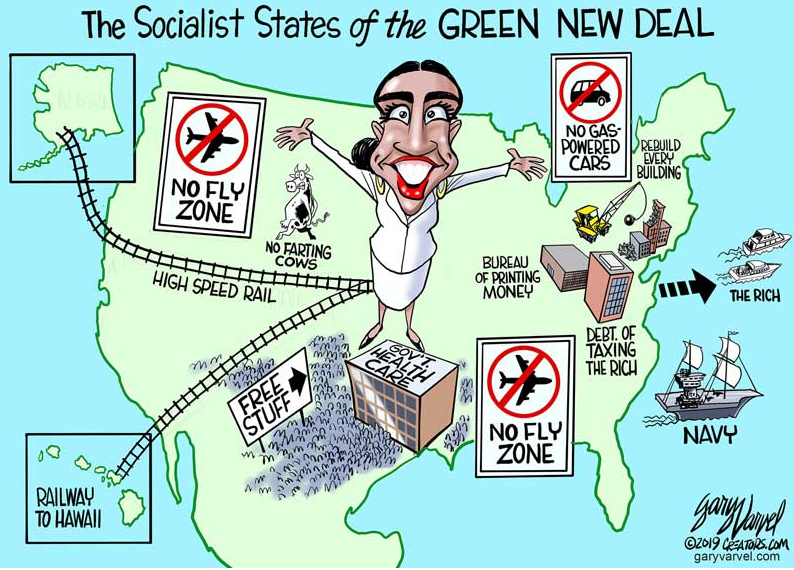
Despite Governor Newsom’s and Democratic presidential candidate Kamala Harris’s support for the “Green New Deal” and “Net Zero” policies in California, it’s time to stimulate conversations about the generation of continuously generated electricity to meet the demands of America’s end users.
Solar panels on the roof of our house in Austin, September 13, 2024.
Hyping solar energy is one of America’s most renewable resources. For instance, in 1978, Ralph Nader declared that “everything will be solar in 30 years.” In 1979, President Jimmy Carter declared the US needed to capture more energy from the sun because of “inevitable shortages of fossil fuels.”
In 2011, in the New York Times, Paul Krugman claimed we are “on the cusp of an energy transformation driven by the rapidly falling cost of solar power.” In 2015, presidential candidate Hillary Clinton pledged that if elected president, she would oversee the installation of 500 million solar panels.
In 2021, the Department of Energy released a study that claimed solar “has the potential to power 40% of the nation’s electricity by 2035.” That’s a mighty big claim. Last year, solar accounted for about 5% of US electricity production. Furthermore, solar only provided about 2.2 exajoules of primary energy to the US economy out of 94.2 EJ used. The DOE also claimed solar could reach 45% of US electricity production by 2050. (That same year, President Joe Biden declared that climate change poses “an existential threat to our lives.”)
The solar hype continued last month in the pages of the New York Times with an article by David Wallace-Wells headlined, “What Will We Do With Our Free Power?” The nut graf of Wallace-Wells’ article appeared near the end when he claimed, “the exploding scale and disappearing cost of solar do mean that the energy game will now be played according to some pretty different ground rules.”
Before going further, a disclosure is in order. I understand the economics of solar. About eight years ago, we had 8.2 kilowatts of solar capacity installed on the roof of our house. Why? We got three different subsidies to do so. We now produce about 12 megawatt-hours of electricity per year and have cut our annual electricity bill in half. Further, that was the second solar system we installed on our home here in Austin. We got fat subsidies for the first system, too.
For the record, I’m opposed to all energy subsidies unless I’m the one getting them. But I digress.
Back to Wallace-Wells. He is correct in reporting that solar capacity is growing. Last year in the US, solar capacity grew nearly four times faster than wind capacity. Solar grew by 24.8 gigawatts, while wind capacity grew by 6.3 GW. Further, due to its higher power density, solar will continue to grow faster, both here in the US and around the world. Wallace-Wells goes on to repeat the same shopworn arguments we’ve been hearing for nearly 50 years: solar is getting cheaper, capacity is growing, sunshine is free, and therefore, it really is different this time. He writes:
Because the sun can be simply counted on to rise every day, you don’t need to pay in any ongoing way for a commodity input, like oil or gas, to keep the system humming — only to set it up initially to manage and endure the novel challenges of drawing reliable energy from the giant fireball 94 million miles away. And over the next decade, even that all-in cost is expected to fall in half again. Negative electricity prices, in which consumers are actually paid to consume electricity, are already a recurring feature in the world’s mature markets.
He continued:
Though it seems like a line from starry-eyed science fiction, the dream of electricity “too cheap to meter” arose first in the giddy early days of nuclear power, the phrase coined by the midcentury atomic advocate Lewis Strauss…And it is easy to get carried away with the gauzy utopian possibilities of energy both functionally infinite and effectively free.
But there ain’t nothing free about solar or any other form of energy, and there never will be. For as long as humans have been on this planet, our most fundamental quest hasn’t changed. We seek more energy so we can convert it into more useful power — computing power, motive power, cooking power, cooling power — so that we can do more productive work. That’s what we humans are about. Yes, we may have dubbed our species homo sapiens, but we are, in reality, homo faber. And that making and doing requires ever-increasing amounts of power.
The latest figures from LevelTen Energy show that solar prices aren’t falling, they are rising.
Wallace-Wells can cheer until my PV panels are destroyed by the next hail storm, but he might consider resting on his pom poms for a moment to report on what’s happening in the marketplace. As seen above, solar prices aren’t falling. They are rising. In July, consulting firm LevelTen Energy reported that prices for solar power purchase agreements rose 3% during the second quarter and that solar prices have nearly doubled since 2020. LevelTen said the price surge reflects “the development challenges that are collectively placing upward pressure on solar PPA prices across North American markets.” It continued, saying the challenges include:
Long interconnection queues and permitting difficulties. But in recent months, additional uncertainties have been introduced through the expansion of tariffs on Chinese PV components as well as a new investigation into allegations of duty circumvention and dumping practices from PV component producers in Southwest Asia. These events illustrate a trade law environment that is growing increasingly challenging for solar developers in the United States.
Wallace-Wells barely mentions China in his article. But trade laws are casting big clouds over the solar sector. Three years ago, the Biden Administration issued sanctions against multiple Chinese companies due to their connections with Uyghur slave labor.
In May, in “Shanghaied,” I published the graphic above. Remarkably, six different agencies of the federal government are saying the Chinese government is carrying out genocide in Xinjiang, the province that produces some 45% of the world’s solar-grade polysilicon. Given that reality, it’s not surprising that solar cheerleaders like Wallace-Wells, Bill McKibben, and others don’t want to talk about their favorite industry’s near-total reliance on Chinese supply chains.
Wallace-Wells also ignores the vast disparity in solar deployment around the world. He claims, “by some ways of tabulating, solar power is already cheaper than all other new sources of electricity for something like 95 percent of the world.” And what are those ways of tabulating? He doesn’t say. That begs the question: if solar is so cheap, why isn’t Africa using more solar? As seen in the graphic above, the unfortunate answer is that solar is still mainly used in wealthy places. That helps explain why California, a state with 39 million people, is generating twice as much electricity from solar as Africa, even though the African continent has roughly 36 times more people than the Golden State.
By now, it should be clear that Wallace-Wells cares more about the narrative about solar than marketplace realities. Speaking of the market, as seen above, the growth in natural gas-fired generation has swamped the increase in solar since 2015.
As seen above, that growth continued last year when gas-fired generation grew by 115 terawatt-hours while solar increased by 21 TWh. Put another way, gas-fired generation grew five times faster than solar last year.
A final point, and it’s one that I’ve made before. California has added more solar than any other state in the country. And as it has added more solar, electricity prices in California have increased at an alarming rate. As I pointed out last month in “Kamala America?” in absolute and percentage terms, California’s electricity prices have surged more than any other state in the country since 2008 when then-governor Arnold Schwarzenegger issued a mandate for renewable energy.
In March, my favorite Energy Bad Boys, Isaac Orr and Mitch Rolling, wrote an excellent piece here on Substack called “How to Destroy the Myth of Cheap Wind and Solar.” And destroy, they did. Orr and Rolling asked the critical question: if wind and solar are so cheap, why do they make electricity expensive? Their answer was straightforward:
We aren’t building a new electric grid from scratch, so we should be comparing the cost of new wind and solar with the cost of existing power plants that these intermittent generators would hope to replace. The truth is that we already have reliable, depreciated assets that produce electricity at low cost, and they could’ve kept doing so for decades. This means that building new wind and solar adds to the cost of providing electricity to the grid. If wind and solar were truly lower cost than other forms of energy, we would expect states like California and Minnesota, which have high penetrations of wind and solar, to see falling electricity costs. Instead, electricity prices in these states have increased much faster than the national average.
The intermittency of wind and solar imposes unique expenses on the electric grid that require an evaluation of the entire electric system in order to derive meaningful cost estimates from these generators. This is difficult to do, which is why most people don’t do it.
The “unique expenses” that Orr and Rolling mention are becoming more apparent by the day. Consider California, which has more installed solar capacity than any other state, about 49.4 GW. But the state’s all-out solar push has created a regressive tax on the poor and middle class. Last month, the Public Advocates Office at the California Public Utility Commission reported that solar subsidies in the state will cost ratepayers who don’t have rooftop solar panels about $8.5 billion this year.
Furthermore, those costs are rising. As seen in the graphic above, pulled from the PAO’s report, the cost shift related to net energy metering, which subsidizes rooftop solar, has more than doubled since 2021. Here’s the key section from the report:
The subsidies, paid for by non-rooftop solar customers, are a contributing factor to high electricity rates. This cost burden — commonly referred to as a cost shift — to non-rooftop solar customers of Pacific Gas and Electric, Southern California Edison, and San Diego Gas & Electric has risen from $3.4 billion annually in 2021 to $8.5 billion annually by the end of 2024, and it will continue to grow in coming years.
To put this in perspective, remember that California has the dubious distinction of having the highest poverty rate in the country. And yet, in its headlong pursuit of solar energy in the name of climate change, it is imposing a regressive energy tax on the people who can least afford it. Ashley Brown, the executive director of the Harvard Electricity Policy Group, rightly calls the proliferation of rooftop solar systems and the returns they provide to lucky people like me, “a wealth transfer from less affluent ratepayers to more affluent ones.” It is, he says, “Robin Hood in reverse.”
Alas, none of these facts about solar energy made it into Wallace-Wells’ article. But they are facts.
What I’m reading
As I explained last month in “Where Are The Pro-Nuclear Democrats?” the Democratic Party can’t be taken seriously when it comes to nuclear energy. Ted Nordhaus of the Breakthrough Institute provided more proof of that in his September 4 piece about Matthew Marzano, who the Democrats have nominated for a spot on the Nuclear Regulatory Commission. Nordhaus called him the “most unqualified candidate” ever put forward for that agency. As I reported during the Democratic National Convention, top Democrats have been mouthing the right words about nuclear energy, but the party didn’t mention it in its platform. Joe Biden has never, to my knowledge, endorsed nuclear, and I will bet $100 here and now that Kamala Harris will not utter the words “nuclear energy” between now and November 5.
I’ve said many times that the US nuclear sector has enormous potential. Dozens of paper reactor designs are hoping to get licensed by the NRC, and numerous startups are filled with bright and ambitious people who want to see their reactors pump juice into the grid. The obstacles, though, are obvious: regulation, capital, and fuel. Until the Democrats get serious about the regulation part and, thus, about reforming the NRC, which includes nominating the best people for the commission, the domestic nuclear industry will continue to struggle.




 Iowa Climate Science Education