
Cinders are the black pieces that are left after something such as wood or coal has burned away. People can also burn.
There was a terrible bushfire in southeastern Australia on 6 February 1851. Quoting from the National Museum of Australia:
In the hills west of Geelong, a man helping fight a fire disappeared. His body was later found ‘burnt to a cinder’. Another man who perished was with a group burning stubble to form a firebreak when they were caught out by a wind change. His companions scattered, but he went the wrong way.
Domesticated animals and wildlife suffered terribly. It was estimated that one million sheep and thousands of cattle were lost.
The Melbourne Argus callously noted that ‘pigs and dogs running loose were burned to death – birds were dropping down off the trees before the fire in all directions – oppossums, kangaroos, and all sorts of beasts can be had to-day ready roasted all over the bush.
Caught out by a wind change and subsequently reduced to cinders. I cannot image anyone ever expecting that to happen to them. The world can be so cruel.
There was a newspaper article in The Los Angeles Times, on page 4 on Thursday August 20, 1885, that described how cinders fell all over the city the day before – on August 19, 1885 – and how later, smoke filled the sky in a solid bank entirely shutting out the mountains.
The year 1895 was also a bad year for wildfires in California, apparently the worst on record. The 1930s were a bad decade, and in Australia my Aunty Enid was living in Melbourne in January 1939 and remembers that it was so hot the tar on the roads melted – and the sky was grey from the bushfires.
The official temperature record, held by the Australian Bureau of Meteorology, now show temperatures some degrees cooler for that period. There is constant remodelling of these same temperatures, with the natural climate cycles stripped away until historical temperatures for everywhere show gradual warming consistent with how Hollywood has agreed the world should be.
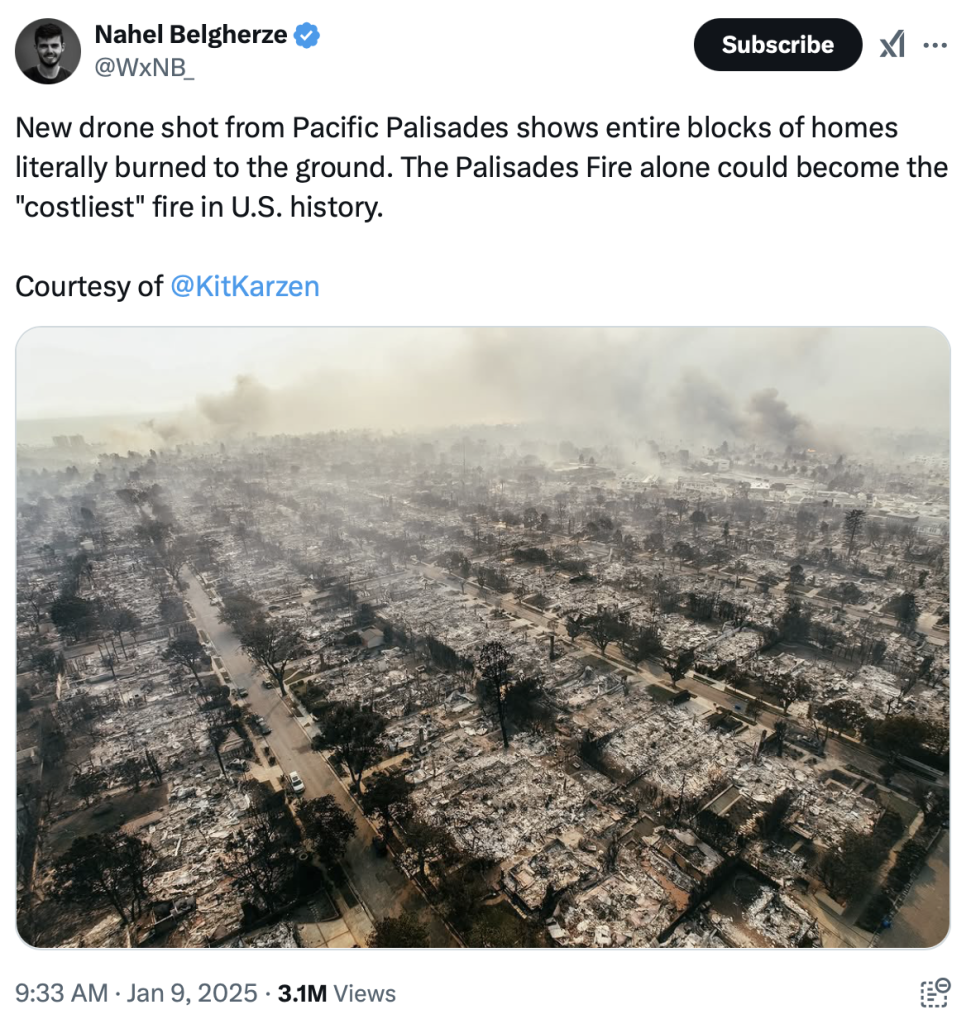
There is a lesson in these fires still burning in southern California.
All that wealth, power and influence did not save Hollywood from this natural disaster. It could have, for sure. It is often, in the end, a question of knowledge, political will and priorities.
Bill Gammage’s book about firestick farming in Australia is entitled ‘The Biggest Estate on Earth’. It explains how Aboriginal Australians used fire to create clever mosaics of different habitat – with extensive grassy patches and pathways, open woodlands and abundant wildlife, it evoked a country estate in England. These are his publicists’ words, with reference to southern, now forest areas including East Gippsland that did not burn so badly in 1939 because the first settlers continued the Aboriginal practice of patchwork burning.
These same overgrown forests burnt to cinders in January 2020.
The forests of East Gippsland were described by the first European settlers to Australia in the early 1800s as ‘park-like’ and ‘clean-bottomed’, which was attributed to burning by Aborigines. Of course, for traditional Australian Aborigines the concept of wilderness is not a cause for fond nostalgia but a land without custodians.
There was once a deep knowledge of wind and country, and a respect for history and elders. For cycles of life.
It is one thing to have an imagination and to dream and, as they do in Hollywood, making a fortune from films about how the world should be. But in the end, it is important to realize that after the rains, will sometimes come the floods, and after that the fires that can destroy you.
For sure they will destroy you, in real life, and also metaphorically, if you dream too big, take one too many chances after conditions have so obviously changed. If you didn’t have a plan for when the sparks would fly, as they surely will one day. It is virtuous. Just know where you are in your life cycle and the life cycle of nature and community.
As families and as nations we are more prone than ever to disaster, because of the excess hubris. It is everywhere nowadays in the West – exported from Hollywood that is now part of a city with so many suburbs in cinders.
In part because of the hubris, including from so many deluded leaders who were intent on changing the world, that they did not understand.
Hubris (/ˈhjuːbrɪs/; from Ancient Greek ὕβρις ‘pride, insolence, outrage’) describes a personality quality of extreme or excessive pride or dangerous overconfidence and complacency, often in combination with (or synonymous with) arrogance.
It is time that as individuals, communities and as nation states we stopped and took some time to reflect on our own limitations and the extraordinary power of nature – and the cycles of life.
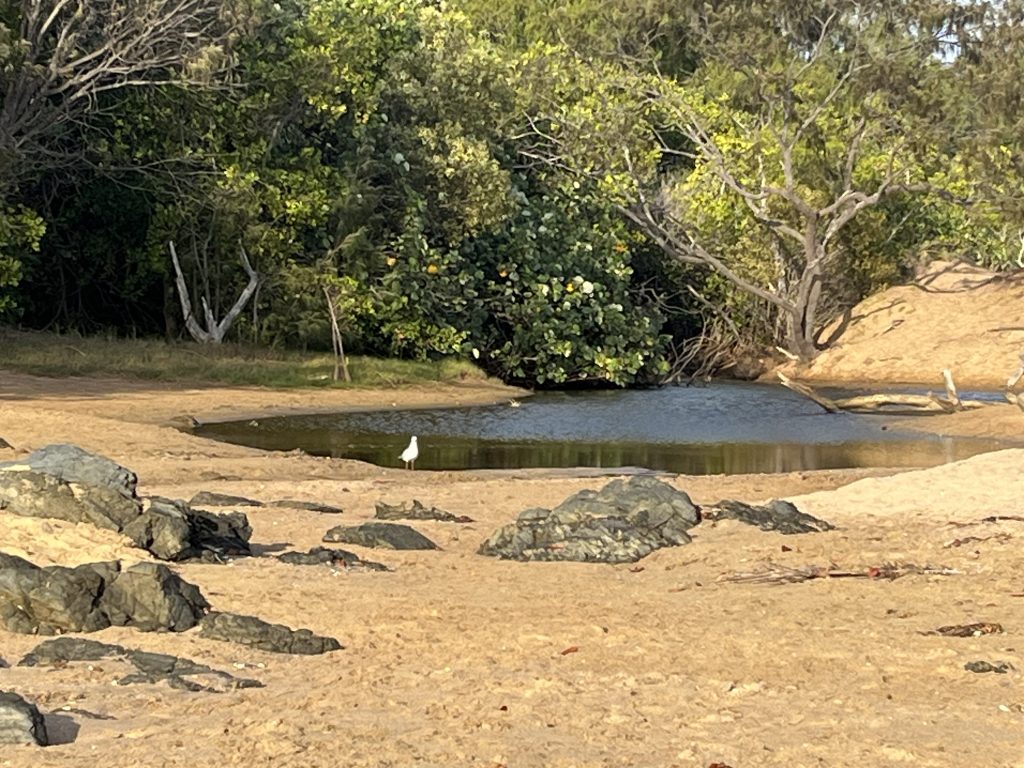
Where I am living, on the Tropic of Capricorn on the edge of South Pacific just across from the Keppel Islands at the Great Barrier Reef, we have had big rains and can expect even bigger sea tides – it is that time of year when the dry rivers begin to flow to sea.
Life is good here, but it won’t always be raining.
There are lessons in these fires still burning in southern California, lessons for all of us.

via Jennifer Marohasy
January 13, 2025 at 06:30PM
 Iowa Climate Science Education