
The volcanic eruption of Mount Pinatubo in June 1991 led to a significant cooling of the tropical ocean surface due to the cloud belt formed by the eruption. This cooling resulted in a temporary reduction in the rate of increase of atmospheric carbon dioxide (CO2) concentrations.
Despite ongoing human CO2 emissions and natural sources of CO2, the cooling effect caused by the volcanic aerosols led to a rapid absorption of CO2 by the ocean. At least that is an important conclusion of a study by my friend and chemist, Bud Bromley.
Bud’s study demonstrates that the oceans have a tremendous capacity to absorb large amounts of CO2 – much more than is emitted by humans.
This absorption, after the eruption of Mount Pinatubo, was followed by a rapid recovery and acceleration of CO2 levels once the cooling effect dissipated.
I’m going to be interviewing Bud Bromley next month, specifically at 6pm Hawai’i time on Thursday, 24th April (2pm Brisbane-time the next day, Friday April 25th). This will be the fourth zoom meeting in my series Towards a New Theory of Climate Change. If you would like to be a part of this Webinar please register at:
https://us02web.zoom.us/webinar/register/WN_QrVa8XEzSPS_GvUWnXkX0Q
You will then be sent a confirmation email with a link that you will need to join the webinar, so please file the confirmation email carefully.
Bud lives in Hawai’i and is a chemist by training. He blogs at https://budbromley.blog/
Bud concluded from this Pinatubo study that human CO2 emissions are not causing the increase in atmospheric CO2. The amount of human CO2 emissions is negligible, less than a rounding error, considering the total carbon budget of the Earth.
To be sure, Bud is of the considered opinion that contrary to what you have probably read, heard or been taught, the addition of human produced CO2 to the atmosphere by burning natural gas, oil and coal does not increase the global CO2 concentration of the atmosphere. Nor will sequestration of CO2 reduce CO2 concentration in the atmosphere.
According to Bud, the CO2 concentration in the atmosphere today is the same as it would be if humans never existed. Ouch.
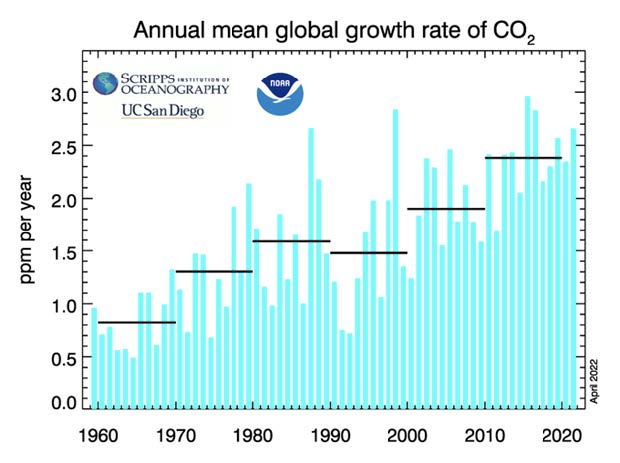
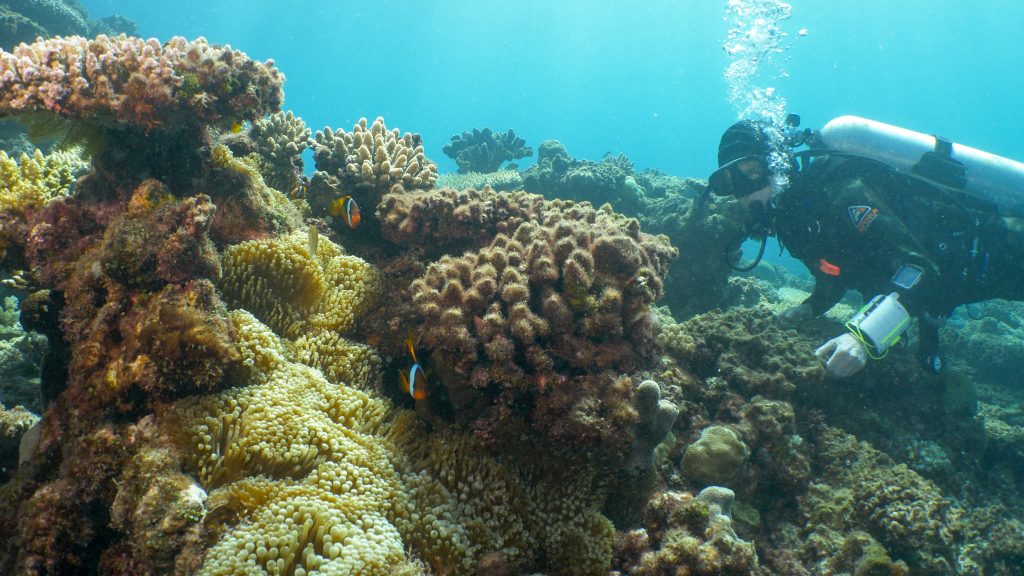
Life goes on in the oceans, and at coral reefs the fish and the corals are more affected by the sea tides that are a consequence of the gravitational pull of the Sun and the Moon. As we develop a new theory of climate change it is important that we have words for describing important processes. Let me suggest that the sea tides be considered external drivers unaffected by occasional events such as volcanic eruptions; such is the nature of external drivers. Then there are internal state variables such as temperature that are affected by volcanic eruptions – and there are feedback mechanisms such that the rate of increase in the atmospheric concentration of carbon dioxide is hardly affected.
via Jennifer Marohasy
March 21, 2025 at 09:40PM
 Iowa Climate Science Education