
0 out of 10 based on 0 rating
via JoNova
July 28, 2025 at 09:29AM
By Paul Homewood
I was reminded last week in a conversation with a GB News Editor about just how little understanding there is in the MSM of just how much Net Zero could end up costing the country.
To some extent this ignorance has been deliberately engineered. The original Climate Change Act in 2008 included no sort of cost/benefit analysis at all; it was passed almost unanimously through Parliament on the basis that when you are saving the planet, costs do not matter. It was the same story when Theresa May amended the 2008 Act to set a Net Zero target.
The idea that the public should know the cost of decisions made by their MPs was regarded as abhorrent by them and still is.
Since then, much of the media has been complicit in refusing to discuss the issue of cost. Nevertheless, there have been attempts to put a figure on it. In 2019, then Chancellor Philip Hammond warned May that reducing greenhouse gas emissions to net zero by 2050 could cost the UK more than £1tn.
On the other hand, the Climate Change Committee has claimed the cost would more like £200 billion over thirty years. However, this excludes the costs we are already paying and was based on unrealistically optimistic assumptions about the future cost of renewable energy.
So, who is right?
It is of course foolhardy to try to predict what will happen in three decades time; we have no idea what the economy or technology will look like then. Anybody who thinks they do know is a fool and anybody who claims they do is a charlatan!
But we should have a much better idea of how things will pan out in the shorter term, say the next ten years or so. In any event, nobody cares about what will happen in decades time, when half of us will probably be dead! What they are concerned about is the here and now and what the immediate future has in store.
So, let’s start with what the transition to Net Zero is already costing the UK.
The Office for Budget Responsibility publishes the cost of Environmental Levies each year as part of its Economic & Fiscal Outlook. These levies cover the cost of direct and indirect subsidies for renewable energy which are added to energy bills, or in the case of the Renewable Heat Incentive paid out of general taxation. These are projected to rise to over £17 billion a year and show no sign of falling after 2029/30.
Although some of the older, more heavily subsidised wind farms will start shutting down in a few years’ time, carbon capture and hydrogen production are horribly expensive and highly inefficient ways to replace what we have now – conventional gas power stations.

https://obr.uk/download/economic-and-fiscal-outlook-march-2025/
Additionally, the costs that NESO (the National Energy System Operator), which is responsible for running the grid, pays out to balance the electricity grid has risen to £2.9 billion a year. This is almost entirely all because of the intermittency of wind and solar power; NESO now needs to pay generators to supply power at short notice, pay wind farms to switch off when there is too much wind and pay for storage and other grid frequency measures.
In all, the transition to renewable energy is costing around £20 billion a year. Far from these costs falling in years to come, they are only going to increase, as NESO admitted in their Clean Power 2030 Report published last November.
NESO estimated that Ed Miliband’s plan to fully decarbonise the grid by 2030 would add £25/MWh to the cost of electricity. When wind and solar power is tripled, as planned, there will be many occasions when there is too much power for the grid to handle. As a consequence, billions will be paid out to wind and solar farms to switch off – so-called constraint payments. But there will also be long periods when there is not enough electricity to meet demand; when that happens billions more will be paid to standby generators and batteries to switch on. All in all, NESO estimates this will add another £9 billion a year, on top of the £20 billion we are already paying.
Astonishingly NESO did not budget any extra costs for the enormous task of expanding the electricity transmission network. Only this month OFGEM announced the first tranche of an £80 billion grid upgrade which will need to be completed by 2030. This upgrade is only necessary to meet decarbonisation targets. On OFGEM’s calculations, this expenditure will add an extra £6 billion to electricity bills.
NESO also made it clear that building new wind and solar farms would not produce electricity any more cheaply than simply continuing to run our existing gas generators, which would need to be paid to provide standby capacity anyway. (They say renewables will be cheaper than gas, but this is sleight of hand, because it assumes a punitive carbon tax on gas generators).
Add that lot up and you get a cost of £35 billion a year, just for decarbonising the electricity sector alone. That figure can only go up, as the bills for carbon capture and hydrogen storage start to take effect.
Moreover, we have not even started to address the problem of upgrading the local electricity distribution network, which brings power from the high voltage transmission grid into our homes. As we all start using more electricity for heating and electric cars, the existing network will quickly get overloaded. This will effectively mean digging up streets up and down the country to replace cabling, replacing fuse boxes in homes and increasing the capacity of sub stations. One independent electrical engineering expert, Mike Travers, researched the problem five years ago, and estimated the cost of all this work at around £200 billion, not even counting the enormous cost of disruption which will inevitably be caused. We are probably looking at a figure closer to £300 billion now.
Earlier this month the OBR published the costs to the public sector of the transition to Net Zero – note this just accounts for the cost to government, not the wider UK economy. The bill comes to £257 billion over 26 years. As is usual with Net Zero, most of the cost is frontloaded. Supposedly these costs will start to rapidly decline in the 2040s. Only a fool would believe that. We are expected to believe in jam tomorrow!
Using the OBR’s high-end scenario, that cost could be 50% higher. In the next fifteen years alone, the cost will be £204 billion, all to be funded by higher taxation, reduced public spending or borrowing.
Most of this expenditure will have little added value, for instance installing heat pumps in public buildings, electrifying buses. It also includes the tens of billions handed to Ed Miliband to waste on Great British Energy, carbon capture and other nonsense.

https://obr.uk/frs/fiscal-risks-and-sustainability-july-2025/#es
But the private sector will also be hit hard as well. Within the next ten years, everybody with a gas boiler will need to replace it with a heat pump when it packs up. About 20 million homes have gas boilers. Including extra insulation, hot water tanks and radiators, we are probably looking at £15,000 a go, compared to £3000 for a boiler. That’s a total cost of £240 billion, or £16 billion a year.
Meanwhile electric cars remain stubbornly more expensive to buy than petrol ones. Even allowing for savings on fuel costs, the extra cost of purchase will amount to at least £16 billion a year when the petrol/diesel ban comes into force in 2030.
And we have not even looked at the cost of complying with decarbonisation targets which will be incurred by industry.
If we add that lot up, we get approximate annual costs in the 2030s of:
· Electricity Supply – £35 billion
· Heat pumps – £16 billion
· Electric Cars – £16 billion
· Public Sector – £14 billion
· Upgrading distribution networks – £20 billion
A total of £101 billion. It is possible that costs may start to subside from this peak at some point in the distant future, but the damage will be done by then.
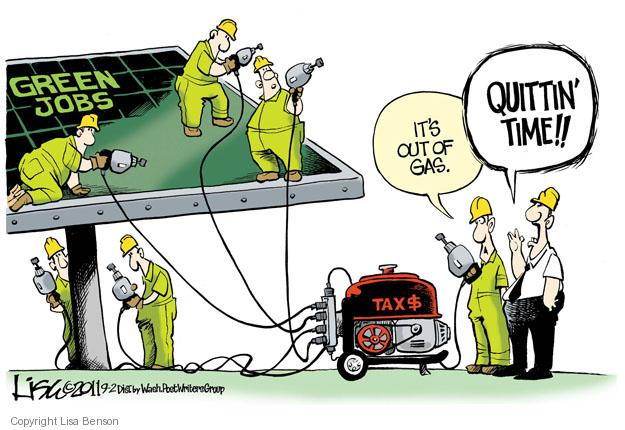
Proponents of Net Zero often try to deflect attention from the issue of cost by claims that millions of green jobs will be created and that the economy will somehow grow because of Net Zero.
However, the hundreds of thousands of green jobs long promised have never materialised; the number of jobs in the renewable sector are no more than tens of thousands, many less of course than the jobs that have been lost to the UK because of high energy prices over the years.
Moreover, their claim defies the laws of economics. Jobs that create no extra value and rely on subsidies and government diktat simply drain money and resources from the productive economy. It’s the old “Green Door” theory – pass a law requiring every home to have their doors painted green, and you create work for decorators; but homeowners then have less money to spend on other goods and services.
Whether it’s electricity generation, transport or heating, the solutions demanded by Net Zero are more expensive and less efficient than existing ones. No economy can grow by promoting and subsidising inefficient alternatives.
Worse still, the threat to British industry and jobs from Net Zero is a very real one. This is one cost that is impossible to measure.
This exercise is, by definition, broadbrush. But it is all founded on officially sourced data and analysis and based on sound principles. Maybe some new technology will come along eventually or maybe the cost of renewable energy will tumble.
But where we stand today, the cost of transitioning to Net Zero will within a few years cripple the UK economy.
via NOT A LOT OF PEOPLE KNOW THAT
July 28, 2025 at 08:50AM

Danielle Franz writes at Real Clear Energy No Country for Climate Hawks. Excerpts in italics with my bolds and added images.
 Once perched atop the climate movement’s moral high ground, the self-anointed “climate hawks” are now watching their influence dwindle, and nowhere is that retreat more visible than in California. Long the epicenter of progressive climate ambition, the Golden State is now backpedaling. Democrats who once championed aggressive environmental mandates are hitting pause, reworking regulations, and distancing themselves from policies that have driven up energy and housing costs. A post-2024 reality check has swept the party: climate may still poll well in theory, but not when it collides with affordability.
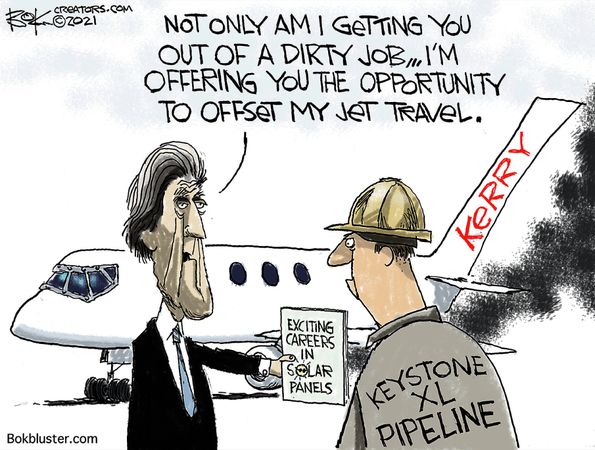
This shift isn’t isolated. It’s emblematic of the climate hawks’ broader failure — a movement that moralized, catastrophized, and sacrificed working-class livelihoods on the altar of performative virtue. And it didn’t stop with workers. Families were expected to absorb the fallout — higher costs, fewer opportunities, and a more uncertain future — all in the name of climate dogma. For years, these activists dominated environmental discourse by demanding ideological purity.
They mistook loud rhetoric for leadership, performance for policy,
and apocalyptic forecasts for political strategy.
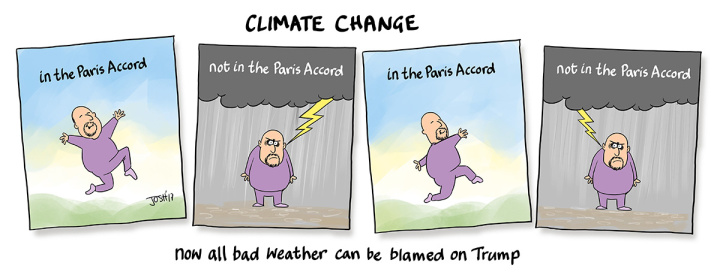
Thankfully, as The Breakthrough Institute’s Alex Trembath has long forecast, the era of the climate hawk is over. And the climate will be better off for it. As former allies begin to walk away, it’s clear their crowning achievement was turning climate into a culture war they were never equipped to win.
At the heart of this shift is a growing movement that doesn’t
treat energy as a sin, but as a tool of national strength.
It’s a philosophy that values building over banning, which means restoring industrial capacity, modernizing infrastructure, and investing in the American worker. It rejects the scarcity mindset that tells people they must give up comfort, reliability, or opportunity in the name of climate – so that the next generation doesn’t grow up fearing collapse, but growing into a culture of confidence, responsibility, and renewal.
Instead, it insists that the way forward is to invest in
the backbone of our economy, empower the working class,
and bring energy production home.
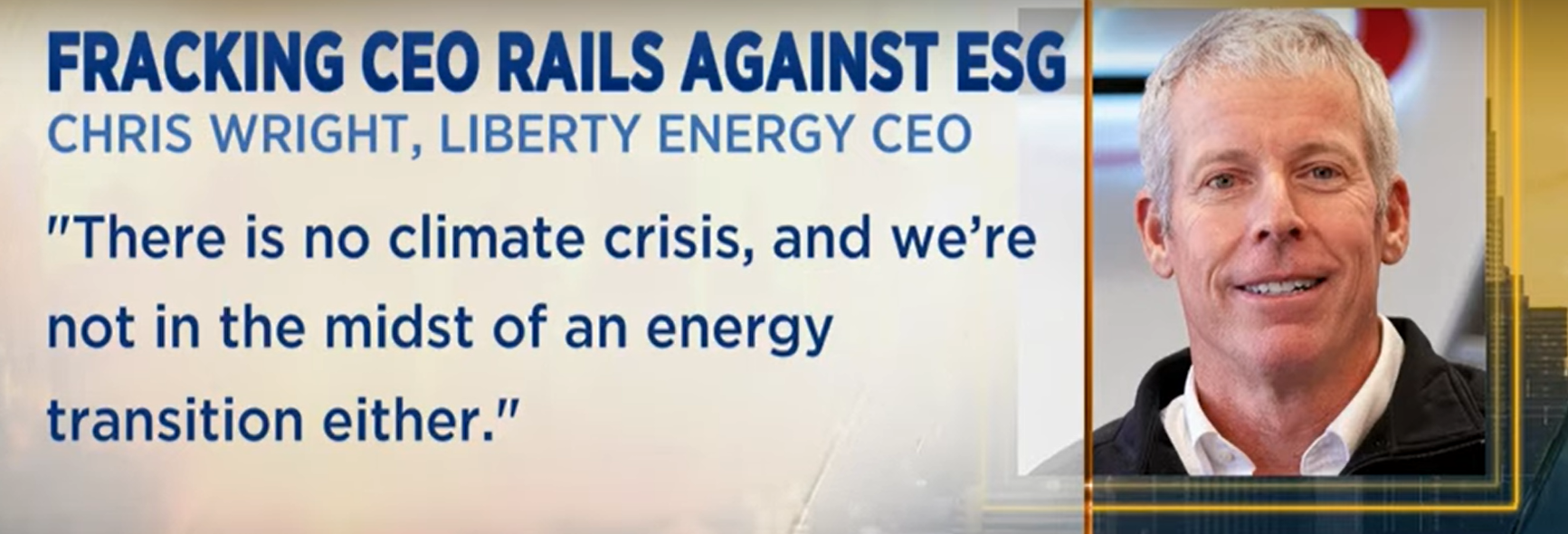
It recognizes the answer to environmental challenges isn’t less; it’s more. More energy. More innovation. More freedom to solve problems creatively. Instead of forcing society to shrink and sacrifice, we ask how we can grow smarter. Recognizing that climate strategy must also serve the interests of the people, national security, and long-term prosperity, it’s a vision rooted in hope for the future, not austerity.
And there’s a policy consensus emerging.
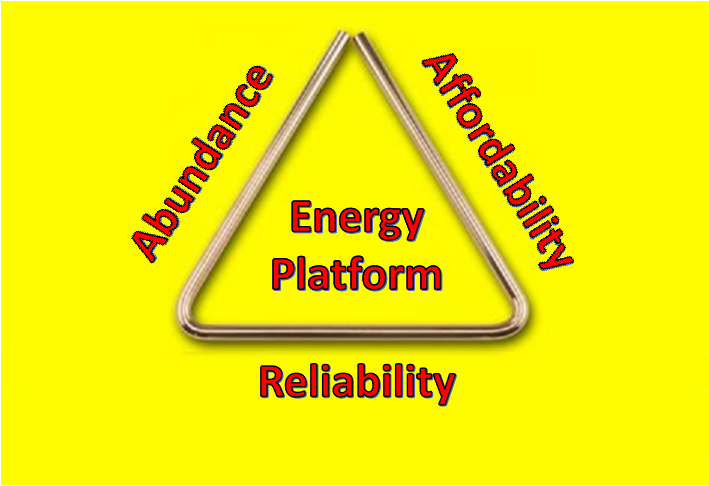
Clean energy systems need to be affordable and reliable.
Rather than relying on long-term subsidies or regulations, domestic policy should be structured to encourage the innovation, commercialization, and deployment of cheaper and cleaner energy resources. This way, American resources and technology can expand energy at home and dominate global markets, while also reducing emissions. Likewise, policy should prioritize climate adaptation. We should empower communities with the tools and flexibility to manage their forests, embrace regenerative agriculture, and resourcefully steward their ecosystems as the climate changes. Our environmental approach should be grounded in the American family and national interest at the center of the conversation.
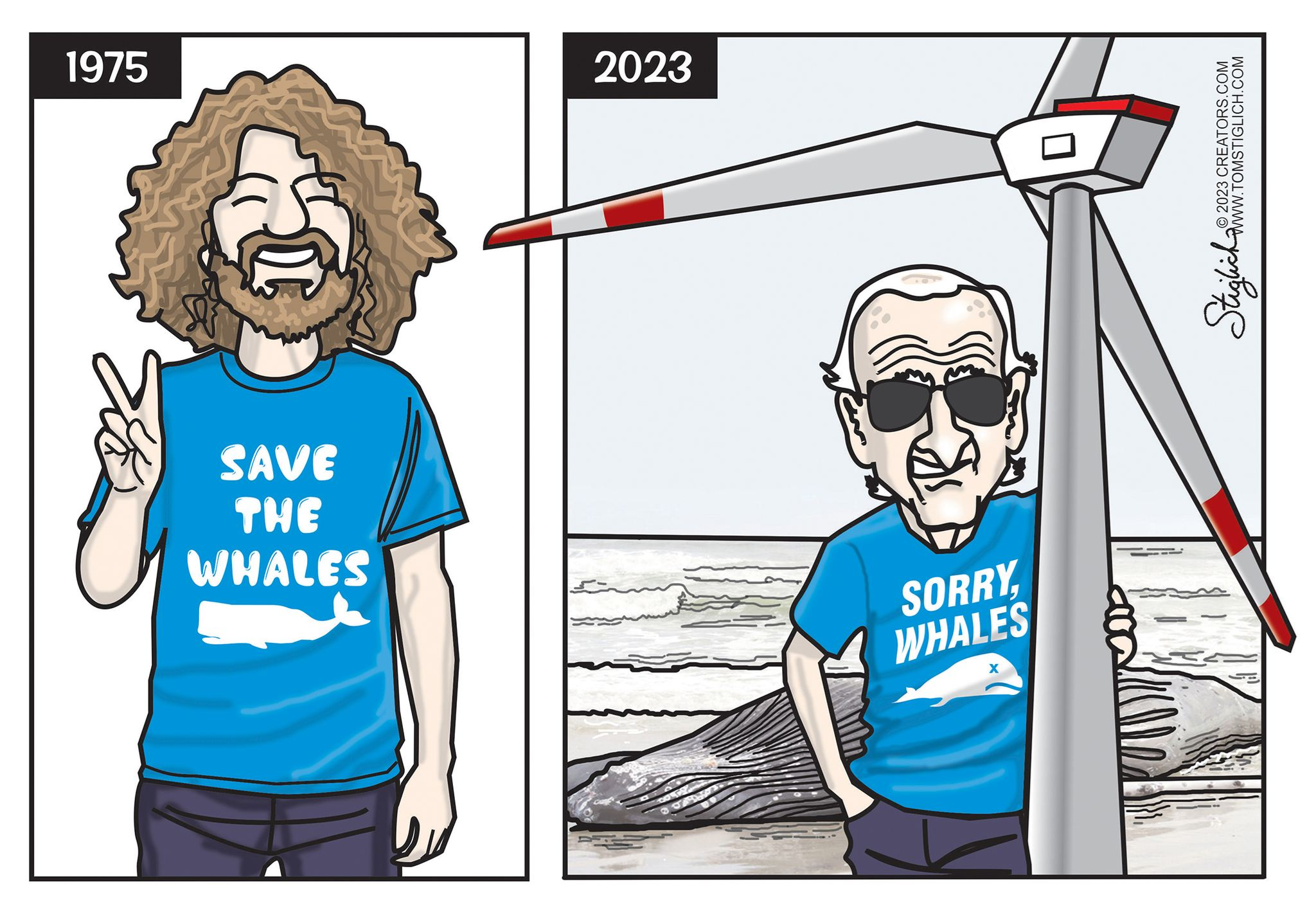 What’s replacing the hawks isn’t apathy. It’s realism. A new generation is emerging – leaders who are less interested in preaching and more interested in producing. They view climate not as a moral crusade, but as a challenge of engineering, economics, and national renewal. They understand that the future won’t be built through degrowth or doomerism, but through innovation, adaptation, and strategic investment in America’s strengths.

This isn’t about utopian dreams or global pledges. It’s about reindustrializing the nation, repowering the grid, and grounding environmental goals to serve the American people. That’s how you build lasting support – and get real results.
The climate hawks are facing extinction. And in their absence,
something stronger is finally taking flight.

via Science Matters
July 28, 2025 at 08:47AM
Guest essay by Steve Goreham
A boom in artificial intelligence (AI) investments now drives the United States electricity market. New data centers and upgrades to existing data centers are creating a vast demand for power. However, major AI firms are opting for natural gas plants to provide electrical power, rather than renewable energy.
Since ChatGPT released their conversational AI chatbot in November of 2022, the world of artificial intelligence has exploded. ChatGPT showed that machines can learn the complexities of human language and interaction. Within five days, the chatbot had attracted over one million users. ChatGPT ushered in the modern AI revolution, producing trillions of dollars of investment in the US and around the world.
Artificial intelligence uses vast amounts of computing power and databases with trillions of parameters to solve problems and make predictions. Generational AI can create text, images, music, and videos. These capabilities require enormous data centers filled with thousands of servers using high-speed graphics processing units (GPUs).
Amazon, Google, Meta, Microsoft, Tesla, and other firms are investing billions to build new data centers and to upgrade existing facilities. According to USA Datacenters, America had fewer than 2,700 data centers at the start of 2024. Now, about 3,900 data centers are operating, an increase of more than 40 percent in 18 months.
Data centers traditionally support the internet and cloud storage. At the start of 2024, data centers consumed about 4% of US electricity. But when servers are upgraded with thousands of high-speed GPUs to deliver generational AI, they use six to ten times as much power. It is estimated that by 2030, US data centers will consume 20% of the nation’s power. And the overwhelming majority of electricity for these AI facilities will come from new natural gas power plants.
Green energy advocates want renewables to power the AI data centers, but wind and solar systems fall far short. AI computers operate 24-hours a day, which can’t be supported by the 30% capacity factor of wind or the 15% capacity factor of solar. Gas plants are designed to deliver their rated output over 90% of the time.
Nuclear plants may be able to power AI in some cases. Retired nuclear facilities in Palisades, Michigan, and Three Mile Island, Pennsylvania, are being restarted to drive AI. But a start-up nuclear plant costs up to 10 times as much as a gas-fired power plant. It can take more than five years to bring a nuclear plant on-line, compared to 1-2 years for a gas plant. Small modular nuclear reactors promise breakthroughs in cost and cycle time, but these remain unproven technologies.
Wind and solar also suffer from transmission costs and delays. These systems are scattered over wide areas, requiring new transmission towers and lines to be built across the countryside to aggregate enough power for a large data center. In contrast, gas plants provide concentrated generating power that can be built near the data center and existing transmission lines.
Elon Musk’s Tesla is a leading provider of solar systems and grid-scale batteries. But Tesla chose 35 on-site gas turbines to supply electricity for its Colossus xAI supercomputer facility in Memphis, Tennessee. Colossus was built and expanded to 200,000 GPUs in less than six months in 2024 and claims to be “the most powerful AI training system yet.”
The Colossus build is an example of BYOP, or “bring your own power.” Rather than using electricity from the grid, leading technology firms are building their own natural gas plants on-site to power data centers.
AI data centers are huge facilities. EdgeConneX plans to build two data centers in New Albany, Ohio, to be completed by the fall of 2027, using existing warehouse space and new construction. The facilities will total 1.2 million square feet, covering an area larger than 20 football fields. These data centers will be powered by on-site gas plants.
More than 100 gas-fired power plants are planned for deployment in Texas, including 108 new plants and 17 expansions. The projects will provide 58 GW of electrical power. Sixty percent of the projects aim for completion by the end of 2028. These new facilities, if completed, will deliver more than three times as much electricity as all of the wind systems currently operating in Texas, the leading US wind state.
Earlier in July, President Trump joined state senator Dave McCormick at the Energy Innovation Summit in Pennsylvania. At the conference, they announced private investments of more than $90 billion in AI data centers and new or expanded power-generating systems. Amazon, Blackstone, CoreWeave, Pennsylvania Data Center Partners, PowerHouse Data Centers, and other firms will build AI infrastructure in Carlisle, Lancaster, Pittsburgh, and other Pennsylvania locations.
Pennsylvania is one of the largest producers of natural gas. Recently, the price of gas in Pennsylvania has been too low for local firms to make a profit. But most new AI installations will be powered by gas plants, to be constructed by PPL Corporation, Frontier Group, and others, providing new high-demand customers for gas producers. Westinghouse Electric also plans to build ten new nuclear reactors in the state, to be on-line by 2030.
Meta claims to be building the largest data center in the Western Hemisphere. The facility will be located in Richland Parish in northeast Louisiana, 250 miles north of New Orleans, and will cover 3.5 square miles or 2,250 acres. When completed in 2030, the installation will use twice as much electricity as the city of New Orleans. Entergy Louisiana is building three large gas-fired power plants at the Meta site at a cost of more than $3 billion.
The artificial intelligence revolution now drives the US electricity market. Most new AI data centers will be powered by newly constructed natural gas facilities. The Net Zero electricity transition is being left in the rear-view mirror.
Steve Goreham is a speaker on energy, the environment, and public policy and author of the bestselling book Green Breakdown: The Coming Renewable Energy Failure.
Originally published in the Tennessee TriStar Daily on July 25, 2025.
Subscribe to get the latest posts sent to your email.
via Watts Up With That?
July 28, 2025 at 08:01AM
 Iowa Climate Science Education