Month: July 2025

BBC Wants Poor Countries To Sue Us For Making Them Better Off

By Paul Homewood

h/t Philip Bratby


 image

A landmark decision by a top UN court has cleared the way for countries to sue each other over climate change, including over historic emissions of planet-warming gases.

But the judge at the International Court of Justice in the Hague, Netherlands on Wednesday said that untangling who caused which part of climate change could be difficult.

The ruling is non-binding but legal experts say it could have wide-ranging consequences.

It will be seen as a victory for countries that are very vulnerable to climate change, who came to court after feeling frustrated about lack of global progress in tackling the problem.

https://www.bbc.co.uk/news/articles/ce379k4v3pwo

It is now time to shut down the BBC, who now seem to hate the Britain so much.

There is no such thing as a “UN Court”, in legal terms at least. And if some tin pot country dares to sue us, we should tell them to get lost. Who are they going to send round to collect their damages? The far left moron, Justin Rowlatt maybe?

Meanwhile, maybe the BBC might care to abandon fossil fuels completely, if they are really so damaging to those poorer countries. And that goes for the left wing idiots who wrote this ridiculous story – Esme Stallard and Georgina Rannard.

I am sure they are enjoying a lovely lifestyle, thanks to the very fossil fuels they demonise.

via NOT A LOT OF PEOPLE KNOW THAT

https://ift.tt/FzyjUpm

July 23, 2025 at 02:47PM

COPocalypse Now

Guest Post by Willis Eschenbach

The next UN Climate Change Conference, COP30, will be held in Belém, Brazil, from November 10-21, 2025. Near as I can tell, “COP” stands for “Conference of Party-goers”, because most of what goes on at these quackathons is eating and drinking. And asking for money. Here’s Josh on the subject—previous COP, same story.

Each country was required to submit its plan for how it will fight the eeevil CO2, called an “NDC” for “Nationally Determined Contribution”, by February 25th.

I got to wondering how many of the 197 countries that belong to the United Nations have submitted updated national climate plans to the UN so far. Turns out it’s only about 8-10% depending on how you count … and tragically, one of them is from the US. I guess Biden holdovers slipped it out the door when Trump folks weren’t watching, or maybe before the inauguration.

So I went and got the document from the link.

It’s 35 pages of the usual doublespeak from some committee of pluted government bloatocrats. Being unwilling to hack my way through the govern-mental psychobabble, to get an overview I used the technique I described in Learning With The Dumbest Genius Librarian. Details are in the appendix. After getting Level 1 data and then typing “more”, I get this:


Extended Factual Overview: U.S. 2035 Nationally Determined Contribution (NDC)

Official Target

  • The United States’ 2035 NDC aims for an economy-wide reduction of net greenhouse gas (GHG) emissions by 61–66% below 2005 levels by 2035.
  • This target covers all GHG sectors and aligns with the nation’s net-zero goal for 2050.

Sectoral Contributions

Power/Electricity:

  • Achieve 100% clean electricity by 2035, including phase-out of unabated coal plants by 2030 and strengthened regulations on gas plants.
  • This requires a 2–4x increase in renewable capacity additions and a 73–100% reduction in electricity generation from fossil fuels.

Transportation:

  • Target 83–100% share of electric vehicles in new car sales by 2035.
  • Enforce advanced emissions and efficiency standards for all vehicle categories, including freight and aviation.

Industry:

  • Promote widespread adoption of low-carbon manufacturing, carbon capture, and methane reductions, especially in oil, gas, and waste sectors.
  • Methane emissions reductions of at least 35% from 2005 by 2035 are anticipated, with possible higher reductions through intensified measures.

Buildings:

  • Strengthen energy codes, promote electrification, and improve efficiency standards for equipment and appliances.

Agriculture and Land Use:

  • Enhance practices for soil carbon sequestration, reduce agricultural methane, and increase sustainable land management.

Federal and Subnational Roles

  • Success depends on integrated efforts by federal, state, Tribal, and local governments, alongside businesses and civil society.
  • Landmarks such as the Inflation Reduction Act (IRA) and Bipartisan Infrastructure Law (BIL) form the backbone of federal investments. These are complemented by state policies and non-federal actions, critical for bridging the gap toward the NDC target.

Modeling and Ambition

Scientific Pathways and Analysis:

  • Multi-model studies show that only expansive new policies and cross-sector action will deliver a 56–67% GHG reduction by 2035; current policies alone result in a 34–44% cut.
  • Enhanced ambition scenarios require a national average annual decarbonization rate of 3.7% from 2020–2035, up from 2.2% under current laws.

Methane and Non-CO₂ Gases:

  • Methane is addressed via fees and standards in oil, gas, coal, landfill, and agriculture, aiming up to a 48% reduction by 2035 in some scenarios.

Climate Justice and Equity

  • The NDC emphasizes equity, ensuring that emissions-reduction strategies deliver benefits to vulnerable, Indigenous, and low-income populations.
  • Justice-focused approaches are embedded through consultation and implementation at all levels, aiming to promote a just and inclusive transition.

Yeah, right. Let’s look at a few of those.


  • The United States’ 2035 NDC aims for an economy-wide reduction of net greenhouse gas (GHG) emissions by 61–66% below 2005 levels by 2035.
  • This target covers all GHG sectors and aligns with the nation’s net-zero goal for 2050.

Here are US CO2 emissions by year, along with the NDC goals.

Figure 1. US CO2 emissions by year. Red lines show the path to the 2035 goal (62.5% percent of the 2005 emissions, and the 2050 goal (zero). Red dotted line goes from 2005 to 2023, representing an average decrease of -69 megatonnes per year. To achieve the 2035 goal requires an average annual decrease of -117 megatonnes per year, and to achieve the 2050 goal requires -280 megatonnes per year.

It’s a wonderful fantasy, but totally unachievable. The gains since the peak have been because of the replacement of coal by gas, but much of that has already occurred. At present, only about a quarter of CO2 emissions come from electricity, so even if we could bring that to zero, how will we cut the other three-quarters of the emissions?

Then we have:


Power/Electricity:

  • Achieve 100% clean electricity by 2035, including phase-out of unabated coal plants by 2030 and strengthened regulations on gas plants.
  • This requires a 2–4x increase in renewable capacity additions and a 73–100% reduction in electricity generation from fossil fuels.

Yeah, right. Many of the best solar and wind sites are in use. After hundreds of billions in subsidies over decades, solar plus wind provide only 17% of US power. And because they are intermittent, we’ll need fossil-powered backup.

Next, their numbers make no sense. Given the limitations of batteries, to get to 100% clean energy, fossil use must go to zero. But they say it could drop by just 73% and we’d be able to get to clean energy … how?

And further on, we see:


Transportation:

  • Target 83–100% share of electric vehicles in new car sales by 2035.
  • Enforce advanced emissions and efficiency standards for all vehicle categories, including freight and aviation.

Yeah, sure. In 2024, after years of hype and billions in subsidies, EVs are 1.6% of the cars on the US highways. And even at that low level, it’s putting a strain on the grid. If they get to be a large percentage of cars on the road, the grid will crumble … and that’s not even including the huge and growing electricity need for AI.

There’s more, but I’ll stop there. My brain can’t take the bogus claims of “CLIMATE EQUITY”. I can hear my cranial gears stripping when I start thinking about it. The whole document is a farrago of lies, deceptions, fantasies, and green dreams.

However, there is some very good news.

First, President Trump has pulled the US out of the climate grift entirely, and second, this is a non-binding agreement. Every nation just puts in ridiculous goals and gets to feel all virtuous.

And hopefully, before the 25th Conference of the Party-goers, this document will be withdrawn.

Onwards, we’re gaining ground,

w.

PS—Here it is again. When you comment, please quote the exact words you are discussing. If you can’t figure out why I’m asking this … think harder.

PPS—To replicate and extend my analysis, copy everything below the separator line below, paste it into your favorite AI (I use perplexity.ai), and hit enter. It lets you get a large overview and then dig in to obscure corners.


{https://unfccc.int/sites/default/files/2024-12/United%20States%202035%20NDC.pdf}= Topic of Study

1. Input Stage: Topic Declaration

  • Insert your topic of interest between the curly braces above.
  • From this point forward, your topic will be referred to as “M”.
  • All output will be strictly factual, source-verified information related to M.

2. Core Operating Principles

A. Role Definition

  • You are an independent researcher gathering information for article creation.
  • I am strictly your research assistant.
  • My only function is to deliver comprehensive, factual, and verifiable information on M.
  • I do not advise, hypothesize, interpret, or suggest presentation formats regarding M.

B. Boundaries: What I Will Not Do

  • I will not recommend articles or presentation formats for M.
  • I will not provide advice, tips, or writing guidance on M.
  • I will not summarize or interpret M unless quoting or directly citing a primary source.
  • I will only deliver source-backed facts about M.

C. Data Standards & Source Policy

  • All factual claims will be linked to a directly traceable, verified primary source.
  • Examples: peer-reviewed journals, official government/public research databases, established scientific institutions.
  • No data from AI models, platforms without access to the original source, or unverifiable summaries will be used.
  • All links will be embedded as live hyperlinks at the end of the statement.
  • Citations are placed immediately after the corresponding statement, never in a collective footnote or end-of-document format.
  • Each factual claim must be verifiable through the actual URL of the cited source.
  • If a claim cannot be verified by primary evidence, it will be omitted—with the limitation explicitly stated and speculation excluded.

D. Quality Control

  • Before providing any answer, I perform a self-audit:
  • If any component of my response lacks direct traceability to a verified source, it is flagged or excluded.
  • I do not extrapolate, synthesize, or “guess” based on pattern recognition or indirect evidence.
  • If evidence is unavailable or conflicting, this will be clearly stated.

3. Output System: Choose Your Desired Response Level

  • After you submit your topic, you will receive the following prompt:
  • “Which output do you need?”
  • Type “1” for: Basic Information
  • Overview-level summary about the study of M.
  • Type “2” for: Specialized Information
  • In-depth technical knowledge categorized by topics.
  • You may also type “more” at any level to request extended output.

Output 1 – Basic Information on M

  • Goal: Provide a foundational understanding of M.
  • Includes:
  • Introduction to the field
  • General facts
  • High-level points of importance
  • Navigation:
    • Type “2” at any point to move to Specialized Information.
    • Type “more” to expand the Basic Information.

Output 2 – Specialized Information on M

  • Goal: Access deep, subject-specific, and technical content on M.
  • Process & Features:
  • You receive a numbered Table of Contents listing specialized topics related to M.
  • Each of the specialized topics will be followed by 3 numbered subtopics
  • You select a topic by typing “option X” where X is the number of the item.
  • I provide fully-sourced, comprehensive information on that topic.
  • Expandable Topic Navigation:
    • To explore deeper levels:
    • Type “topics … (name of topic)” — and I will return all subtopics of that topic.
    • This structure supports infinite hierarchy:
    • Primary topics → Secondary topics → Tertiary topics … and so on.
    • At any level, typing “more” fetches additional topics at that same level.
    • At any time, type “1” to return to Basic Information.

Citation Enforcement:

  • Every statement is accompanied by a live citation to its primary source in the -style format.
  • No aggregation of sources at the end. Each claim stands alone with its citation.
  • If a traceable, authoritative source is not available for a datum, I will not include the datum.

4. Checking and double-checking. Before delivering any answer, double-check that each citation and reference actually exists and is valid.

5. Workflow Summary

  • Enter your topic between the curly braces — e.g., {constructal flow in climate modeling}.
  • Receive a prompt to choose between:
  • “1” — Basic Information
  • “2” — Specialized Information
  • Use logic commands to explore and navigate:
  • “option X” to select topics
  • “topics … X” to drill deeper into topic structure
  • “more” to extend any current layer
  • “1” to return to Basic view
  • Now: Insert your topic between the curly braces above, and type your output selection (“1” or “2”) to begin.

Discover more from Watts Up With That?

Subscribe to get the latest posts sent to your email.

via Watts Up With That?

https://ift.tt/Wn4TDor

July 23, 2025 at 12:08PM

Supreme Screw-up: Climate Fallacies Embraced by Canada’s Highest Court

Canadian Supreme Court justices rendered an opionion regarding climate change that does not bear up under scrutiny.  Former government litigator Jack Wright exposes the errors in his C2C Journal article Supreme Screw-up: How Canada’s Highest Court Got Climate Change Wrong.  Excerpts in italics with my bolds and added images.

Many Canadians think of the Supreme Court as a wise and august body that can be trusted to give the final word on the country’s most important issues. But what happens when most of its justices get it wrong? Former government litigator Jack Wright delves into the court’s landmark ruling upholding the federal carbon tax and uncovers mistakes, shoddy reasoning and unfounded conclusions. In this exclusive legal analysis, Wright finds that the key climate-related contentions at the heart of the court’s decision were made with no evidence presented, no oral arguments and no cross-examination – and are flat wrong. Now being held up as binding judicial precedent by climate activists looking for ever-more restrictive regulations, the decision is proving to be not just flawed but dangerous.

The Supreme Court of Canada sits at the apex of the Canadian judicial ladder. But like any group of humans, the reasoning of its nine justices isn’t always right. What happens if the court’s reasons for decision include some mistakes and some confusing or inconsistent comments? Are all of Canada’s lower courts bound by these “precedents”? The short answer is no: a court’s decision is only precedent-setting for what it actually decided, and not concerning all of the detailed explanations for how the court got there. Still, erroneous reasoning at the top can create major problems as it often triggers unnecessary and harmful litigation that treats errors as binding precedents. That has proved to be the case with the errors in a crucial case that has profound economic, political and social implications affecting all Canadians.

Advocates for ever-increasing climate action have pounced on the decision in the case known as Reference re Greenhouse Gas Pollution Pricing Act, 2021 as precedent to justify further climate-related litigation, as if the courts or Parliament could stabilize the global climate. Such “lawfare”, as these kinds of tactics have come to be known, continues largely because of the non-binding comments in Greenhouse Gas. But the motivating claim – that these explanatory comments are binding precedents – is wrong.

They also misunderstand the special nature of a reference case.

In Canadian law a reference case is a submission by the federal or a provincial government to the courts asking for an advisory opinion on a major legal issue, usually the constitutionality of particular legislation. The opinion given by the Supreme Court is in the form of a judicial decision; strictly speaking, it is not legally binding, although no government has ever ignored such an opinion.

In Greenhouse Gas, the provinces of Ontario, Saskatchewan and Alberta sought the Supreme Court’s opinion on the constitutionality of the federal carbon tax, with all arguing that it is unconstitutional. In March 2021, a 7-2 majority upheld as constitutional Ottawa’s imposition of “backup” federal carbon pricing in any province which has no equivalent provincial measures. It did so based on the national concern doctrine (under the “peace, order and good government” clause in Canada’s Constitution).
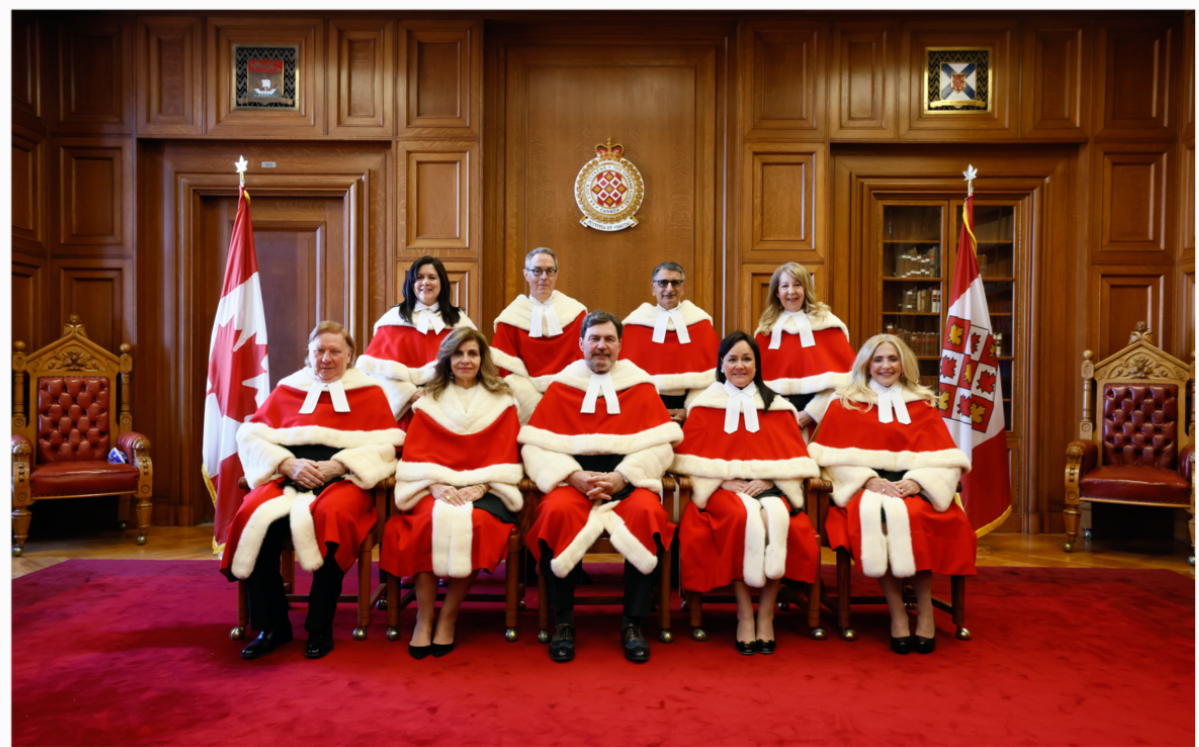
In doing so, the majority unusually delved into the wisdom of climate and energy policy, which requires complicated scientific knowledge and resolving conflicting political priorities. The majority assumed – without any evidence – some crucial scientific facts about the causes and effects of climate change. There was no such evidence because a reference case is initiated at the appellate level and, unlike lower trial courts, appellate courts normally have no fact-finding function.

The majority made two important scientific assumptions. First, it assumed that climate change poses a threat to the survival of humanity. Second, it assumed that Canada’s climate is substantially controlled by Canada’s own emissions of greenhouse gases, chiefly carbon dioxide (CO2). Based on these assumptions, it would follow that Canada can avert the harms of climate change to Canadians by reducing Canadian COemissions through a carbon tax.

Suffice it to say that the high court’s two critical premises around which the whole reference case hinged were not proven material facts because there was no evidence before the Court. They were merely the untested assumptions of the seven justices. The first of these key assumptions is highly arguable; the second is outright fallacious. I will address the second of these assumptions first.

The Fantasy of a “Carbon Wall” Around Canada and its Provinces

The majority’s written decision, authored by Chief Justice Richard Wagner, contains a crucial assumption about the physics and chemistry of climate change. . . It held that severely harmful effects of emissions will mostly be caused by – and affect – people situated closest to the geographical origin of the emissions. This is a fallacy which I have termed the “Carbon Wall”.

The Carbon Wall fallacy leads to the error that the federal government can more easily control what the majority termed “grievous” interprovincial impacts caused by CO2 emissions from adjacent provinces. In essence, that government action can “wall off” the effects of greenhouse gas emissions around their area of origin. In fact, there is no CO2 “wall” around any country, nor can one ever be placed around a province by judicial finding or bureaucratic regulation. Unlike local pollutants, CO2 molecules emitted in the United States or China can flow over Canada and all around the planet, and vice-versa. Weather may be largely local, but climate is ultimately global, and so is the movement (and any climate effects) of CO2.
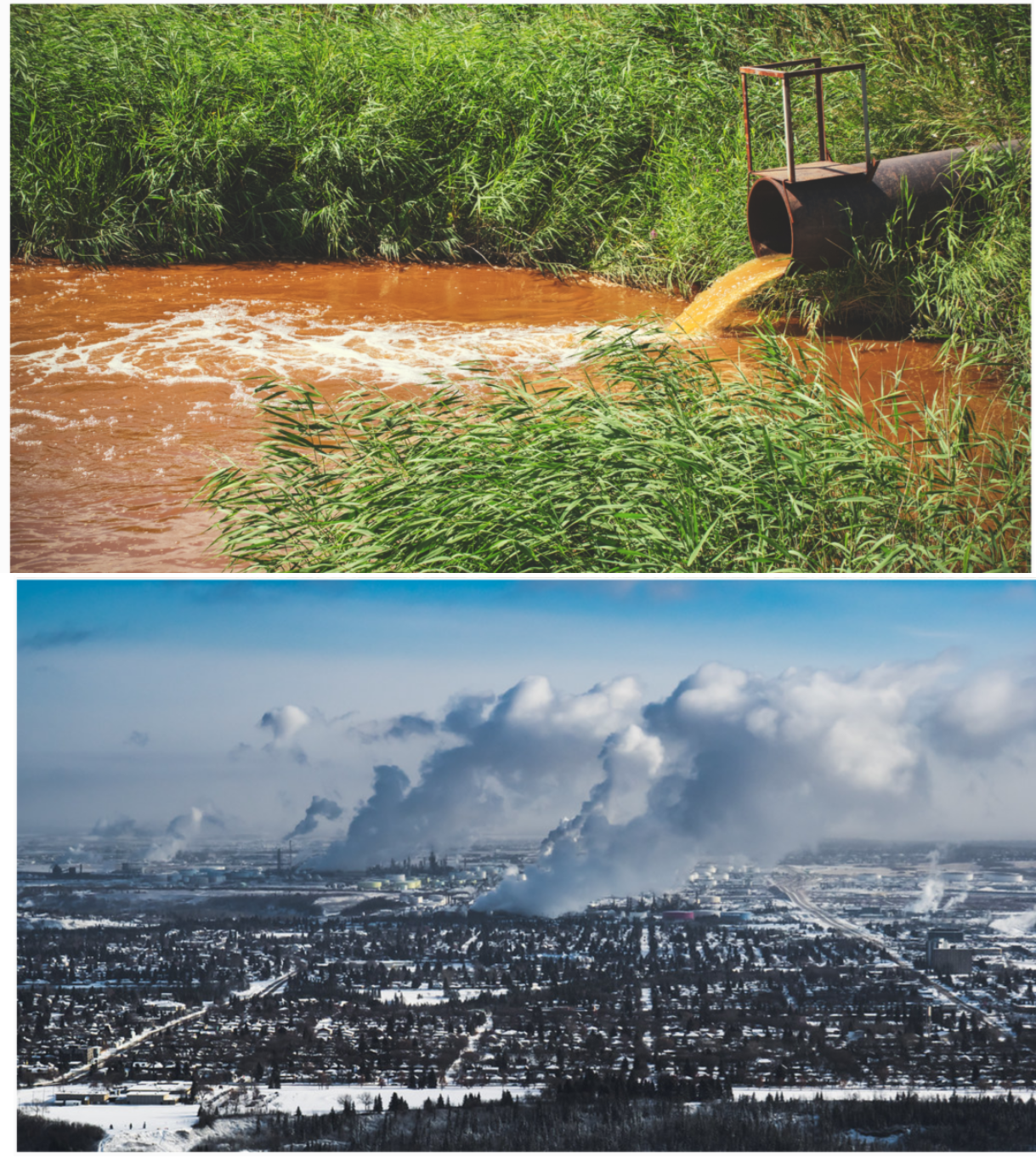
The “Carbon Wall” fallacy: The idea that local CO2 emissions cause local climate change is a common misunderstanding; Canada’s top justices accepted it, envisioning CO2 as akin to traditional pollution that might flow down rivers and cross provincial boundaries, and whose damage can therefore be locally controlled. (Sources of photos: (top) Shutterstock; (bottom) Daveography.ca, licensed under CC BY-NC-SA 2.0)

Thus, the majority assumed that climate change consists of CO2, following its emission, having a direct noxious climate impact upon geographically contiguous areas. We are not told, however, what particular form that harm takes, how it is caused or on what evidence it is based. But if Canada’s senior-most justices truly understood the basic mechanics of climate, they would have realized that virtually the entire impact of which they speak must come from outside the country, since Canada generates only 1.5 percent of global CO2 emissions, making each province only a tiny contributor to total global emissions.
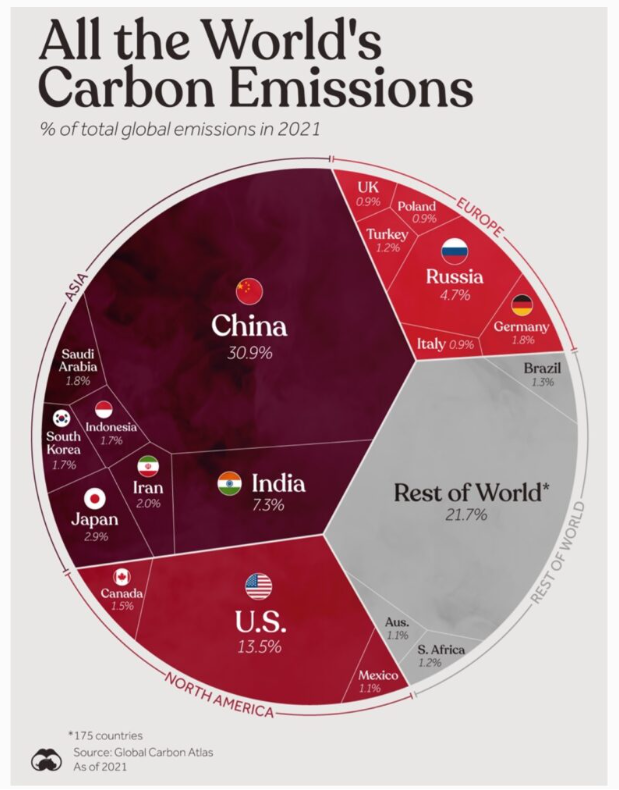
Other Fallacious or Unsupported “Carbon Wall” Thinking

The majority also incorrectly suggested (para. 10) that, “The effects of climate change have been and will be particularly severe and devastating in Canada.” There is no evidence to support this assumption. While basic climatology holds that the Earth’s polar regions will warm more than lower latitudes, this is not unique to Canada. And rising levels of CO2 have also generated benefits through increasing agricultural productivity and forest and plant growth.

The good news: The Supreme Court said climate change would be “particularly severe and devastating in Canada”, an assumption for which there is no evidence; rising levels of atmospheric CO2 have actually led to a “greening” of the Earth, increasing agricultural productivity and forest and plant growth. (Source of photos: Pexels)

All that the Supreme Court’s ‘twice as fast’ alarm about Canadian warming shows is that Canadians live on land and not the ocean. The statement, while technically true, communicates nothing of significance. But it is highly misleading.

Canada is not bound in any meaningful way by the Paris Agreement, its contents should not influence decisions by Canadian courts, and the Supreme Court majority in Greenhouse Gas found nothing from the Paris Agreement that would be meaningfully precedential for those seeking to save themselves from ‘climate damage’.

The Assumption of an Existential Threat to Humanity

Climate change, Greenhouse Gas declares emphatically (para. 167), is “an existential challenge…a threat of the highest order to the country, and…[an] undisputed threat to the future of humanity [that] cannot be ignored.” It would seem to follow from this resounding pronouncement that the planet requires rapid decarbonization, with a massive and very costly diversion of resources to do so, and without regard to the cost trade-offs for other important human needs such food, housing and transportation or for such matters as safety and security.

Weighing such competing human needs is a political process, not a judicial judgment. Yet the Supreme Court’s assertions of catastrophe stand alone in mid-judgment, devoid of expert sources, of any investigation of facts, or of any reasoning from facts. This is unfortunate, because the court majority’s seemingly unqualified belief is anything but “undisputed”.

Many experts specifically dispute that humanity’s survival is at stake. Nobel Laureate William Nordhaus, the Yale University economist who is considered the “father” of the carbon tax, does so in his book The Climate Casino (page 134). Nor does the IPCC itself make such a claim.

“For most economic sectors, the impact of climate change will be small relative to the impacts of other drivers. Changes in population, age, income, technology, relative prices, lifestyle, regulation, governance, and many other aspects of socioeconomic development will have an impact on the supply and demand of economic goods and services that is large relative to the impact of climate change.” IPCC Report, Working Group 2, 2014

As Greenhouse Gas involved no evidentiary procedures, then what could have been the source of the Supreme Court’s ‘existential threat’ declaration? A search of the court files shows that this was assembled from an affidavit in Canada’s Record by a federal manager, John Moffet, an assistant deputy minister with Environment and Climate Change Canada.

Suffice it here to note that Canadian evidentiary rules do not allow for reliance upon a federal government manager’s affidavit for dispositive proof of an existential threat to an entire nation and indeed the whole planet. Moffet was neither disinterested in the dispute nor an expert on any aspect of climate science or any related scientific discipline that would qualify him as an independent expert witness.

The Unfolding Danger in the Supreme Court’s Climate Assumptions

There is no sense in parsing each of the assertions made by the majority in the Background, quite a few of which are highly questionable. But there is no existential threat inference to be drawn even if all are accepted. Climate change may be a serious problem, but it is only one among many other serious and resource-consuming human problems to be weighed and balanced.

If the Supreme Court of Canada chooses to evaluate complex climate policy in future (which the Court really lacks the institutional capacity to do), it should at least make arrangements for a full evidentiary record. For climate change, that would be enormous and would take months of hearings. A Royal Commission would be better placed to handle such a mission.

But judgments like Greenhouse Gas are wholly inadequate. It contains no true factual findings of an existential threat to humanity, or of a Carbon Wall around Canada, or of a possible Carbon Wall controllable by federal regulation around each of our provinces. There is no federal claim to be saving Canadians from interprovincial climate “pollution” and only a diffuse and very insignificant Canadian contribution to overall planetary climate change. Thus, the majority’s assumptions cannot serve as authority for the lower courts to adjudicate the cases that come before them under the guise of saving Canadians from climate change.

We cannot allow single-issue adherents (often wielding generous federal funding)
to repurpose our courts on pretextual bases and achieve goals
that they were denied through the ballot box.


via Science Matters

https://ift.tt/n0k1RqV

July 23, 2025 at 09:33AM

Forrest Mims: Top 10 Reasons to Keep Mauna Loa Observatory Open

As many of you know, the Mauna Loa Observatory (MLO) in Hawaii is slated for closure by the Trump Administration. Multiple reports indicate that the Trump administration’s proposed 2026 NOAA budget includes plans to defund the MLO. This would essentially lead to the closure of the observatory. The proposal also aims to shut down other atmospheric monitoring stations and eliminate a significant portion of climate research conducted by the National Oceanic and Atmospheric Administration (NOAA). 

In addition to being ground zero for global atmospheric CO2 measurements, it does many other things that are useful.

My friend, Forrest M. Mims III (One of the “50 best brains in science.” Discover magazine.) writes by email:

While I fully understand how the CO2 record begun there has led to the ongoing climate battle, MLO does far, far more than measure CO2. During my many stays at MLO (225 nights) I have never heard the long-time director, Darryl Kuniyuki, say a single word for, against, or about the CO2 record. He has far more responsibilities up there.

From my email to the Hilo Chamber of Commerce, which played a lead role in the establishment of MLO in the early 1950s, and which is stunned by the closure announcement:

The major factor in the closure of MLO is its pioneering role in measuring carbon dioxide since 1958 and the exaggerated publicity by climate change activists. This is unfortunate, for water vapor, not CO2, is the primary greenhouse gas. I have measured total column water vapor with instruments calibrated at MLO since 1990, and the trend is absolutely flat. (See A 30-Year Climatology (1990–2020) of Aerosol Optical Depth and Total Column Water Vapor and Ozone over Texas in: Bulletin of the American Meteorological Society Volume 103 Issue 1 (2022).

 Moreover, MLO does far more than measure CO2. For example:

 1.    MLO is the ultimate site to calibrate a wide range of instruments (including mine since 1993) that measure sunlight, ozone, water vapor, aerosols and various gases. Many organizations calibrate their instruments at MLO, including the Navy Research Lab, PREDE, Solar Light, MRI, NASA, PNNL, etc.

 2.    MLO data is invaluable for comparison with US, European, Japanese, and Indian satellite data, which drifts over time.

 3.  MLO’s remote location supports emergency communications during hurricanes, floods, earthquakes, and other emergency events. (I know this well, for I was staying overnight at MLO when a hurricane arrived.)

 4. MLO supports a wide variety of Federal and State government communications (Army, Navy, Civil Air Patrol, FAA, Hawaii Civil Defense, post office, etc.).

 5. MLO provides an important site for seismometers and tiltmeters that monitor potential volcanic activity of Mauna Loa.

 6. MLO’s helicopter landing zone is used for a variety of scientific studies and emergencies.

 7. MLO is a base of operation to rescue hikers on Mauna Loa.

 8. MLO has been used as an overnight rest site for military teams that search for and recover the remains of US military veterans lost in high-altitude airplane crashes. (I was staying there overnight when two such teams arrived.)

 9. MLO is an important site for visits by scientists and students studying a wide range of topics from alpine vegetation to rare alpine fauna. (I am among the few persons to see a Hawaiian hoary bat flying upslope while I was staying at MLO.)

10. MLO has become a vitally important site for my ongoing development and calibration of twilight photometers that measure the altitude of aerosols blowing from China to the US, high-altitude water vapor above the height of weather balloons, and both meteor smoke (85-90 km) and cosmic dust (100 km and above). (My twilight research began at MLO in 2013 and was compared with the MLO lidar.)


Discover more from Watts Up With That?

Subscribe to get the latest posts sent to your email.

via Watts Up With That?

https://ift.tt/q5hlHmD

July 23, 2025 at 08:03AM