Andrew Montford has highlighted yet another subsidy for offshore wind, which went under the radar last week. (Andrew’s reference to £27m/MW should read per GW, by the way):
When I saw Starmer’s announcement in the news, I assumed it was just another one-off £200m taxpayer bung for wind farm supplier chains.
As Andrew comments, however, it is actually another £200m a year to be handed out to offshore wind farms, who can prove they have a sustainable supply chain. This is defined as going beyond the CIB minimum standards:
As Andrew points out, the whole thing appears to be very vague. In essence though, a wind farm can “invest” £50m per GW in a port or factory, and in return get back £27m every year for 15 years.
Furthermore there is no requirement that said wind farm will actually use these facilities.
Although the budget is £200m a year for the next CfD auction, it is highly likely to be repeated every year. In five years time, we could be paying out £1 billion a year.
There were reports a while ago that the wind industry were asking for back door top ups to subsidies, which they needed to be viable. It sounds like they have got what they were asking for!
At current prices, the latest CfD strike prices for offshore wind stand at around £82/MWh. This new bonus will add about £8/MWh to this.
51.46461 0.31110 No Known Met Office CIMO Assessment Installed 15/9/1995 Closed 30/8/2018
The Gravesend:Broadness weather station was the subject of much debate during its short lifetime. Tim Channon reviewed the site here and there were a number of other discussions on the Talkshop and elsewhere relative to the site. Many others have queried the accuracy of this site whilst some have defended it though I suspect most have never been there nor actually seen it. For my part I would like to add my own observations on the basis that I have been inside the compound more than once when it was actually operational.
Gravesend (also known in Met Office circles as Broadness) is neither in Gravesend nor even in Gravesham local authority area. It comes under Swanscombe and should be more correctly described as Dartford. However, as Dartford is well known due to the Thames Crossing and suggests proximity to London, it was probably misnamed to “disguise” its real location.
Gravesend was a regular star performer in the daily extremes stakes as a national hot-spot and even claimed the national record all time high in 2003 before being beaten by a farcical reading at the Faversham manual reporting station. Faversham will be reviewed separately in future but it is worth noting now that the record readings there were not accepted by the Royal Meteorological Society chairman. The late Philip Eden personally inspected the site after the event and refused to rule out that “actions by persons unknown” had affected the reading.
Emeritus Professor of Psychology at the University of Dundee, Trevor Harley, is also a keen amateur meteorologist and has produced a list of hottest days of each year. This shows the regular appearances of Gravesend during its short lifetime. Note the 2014 record is quoted as Swanscombe Marsh which was actually the Gravesend site under another alias.
To this day the Met Office still acknowledges that Gravesend holds the all-time national October high of 29.9°C on 1/10/2011.
This is what the site looks like now which is pretty much the same as it did BEFORE the Met Office had anything to do with the area. Note the complete absence of a Stevenson Screen in this and the headline image.
I have no wish to belittle theories regarding the nature of the sand/soil, the tide, the surrounding berm, Littlebrook D power station discharge, the UK’s tallest pylons (190 metres high and not shown in the image above) carrying the 400kV transmission line over the Thames, the metallic nature of the compound structure or any other such idea. My view is from my own very immediate experience.
The site was originally built for the Thames navigation radar and is locally known just as “Broadness Radar”. The Met Office (for whatever reasons – though I suggest possibly questionable ones) opted to site a screen in the high security compound many years subsequent to the radar station’s construction. This is what it subsequently looked like.
I initially visited the site in 2004 on behalf of a marine coatings company for whom I was consulting in relation to long term protective coatings maintenance elements of this and other marine/coastal sites. I was completely unaware of the weather station and had little interest in such things at the time. There were additional security issues then as some of the “travelling community” were camped around the area with almost feral dogs running free – this is a rather inhospitable site at the best of times. A colleague and I were escorted to the site by a security officer in a large pickup truck.
Inside the compound on a hot early summer’s day the first and most noticeable thing I encountered by the entrance gate in front of the screen was the waft of warm air from the equipment room’s air conditioning. It was similar to walking past a restaurant’s exterior cooling fan outlet that nearly always seems to smell of stale cooking oil though in this case it had the slightly “fishy” smell of overloaded electrical circuits.
We measured the temperature of the extensive steel work (a requirement for calculation of dew point and curing time for “two- pack” coatings) and noted the potentially adverse effects of premature ” film blocking” for multiple coating in the vicinity of the air con outlets warm air draughts. After surveying the site and about to leave, my colleague commented “what a dumb place to put a weather station” – I had not even noticed it but on stopping to consider it we both agreed it was bound to pick up on the air con output. I did not give it a second thought at the time.
A few weeks later the two of us revisited the site in a more “relaxed” mood as the “travellers” had moved on and there were no intimidating dogs snarling at us though the newly coated perimeter fencing. Checking the site works we again noted the strength of hot air blowing from the large air con units located on the east and south elevations of the equipment housing. With more “comfortable” time available we took a look at the screen and both agreed it was bound to be affected at times, particularly warmer days, when the air con was working harder and the breeze was blowing over it. It was none of our immediate concern any more though we did note possible premature coatings breakdown due to embrittlement in the immediate few metres around the air con outlets.
It was not until some years later that I discovered this was the same site that so regularly claimed the UK’s highest temperatures and the realisation that the readings were almost certainly (in my observed opinion) elevated due to the air con units.
As I mentioned above most who commented on this site somehow overlooked the obvious and opted for some quite esoteric explanations. Of particular interest was an official Met Office response by their press officer Nicola Maxey –
“When open the station satisfied the usual criteria for weather stations in terms of its exposure, and was regularly inspected by the Land Surface Observations team.
“The concrete and railings would only make a very small difference to the temperature readings, probably greatest on sunny days with light winds but even then only a couple of tenths of a degree.”
Presumably Nicola had not read the script of the WMO website which focused on:
“Every part per million and every fraction of a degree temperature increase has a real impact on our lives and our planet. Prof. Celeste Saulo, WMO Secretary-General”
A “couple of tenths of a degree” is a fifth in fraction terms. It pails into insignificance compared to the warm air exhaust from the cooling units.
The Kentonline article is particularly revealing in many ways. The quoted local “expert”, Lester Gosbee states
“It’s {Editors note: presumably the weather station} overexposed to concrete and it has metal railings around it to stop it from being vandalised”
This is quite an absurd remark, the security was for the sole and original purpose of protecting nationally important and very expensive radar navigation equipment and nothing at all to do with the Stevenson screen. {Lester Gosbee will be included in the review of by far the worst weather station site in Kent (Frittenden) which he is responsible for – a relatively new Class 5 site and regular star performer in the national Met Office “Daily Extremes” listings.}
The Met Office given reasons for the site’s closure seem equally improbable. “It closed on August 30 last year after the weather service said there had been “significant changes to the site”, at Broadness, near Swanscombe, citing the development of the London Resort theme park as one of the reasons.”
The closure on these grounds seems remarkably ahead of time, the proposed theme park never happened and likely never will. It was also incredibly unlikely that the radar station site (complete with broadcast antenna and the large pylons carrying 400kV transmissions lines) were going anywhere in a short timescale. The site is still there and unchanged 6 years after the weather station closure.
My personal view is that the Met Office realised this site was producing artificially high temperatures that were way off scale and could no longer be passed off as reliable. The station was quietly closed down to avoid further potential embarrassment and “reasons” were supplied after the event.
This may be considered “water under the bridge” but my personal view is that any reasonable meteorologist responsible for installing this Screen or subsequently maintaining/inspecting it would unquestionably have been aware of the problems I have highlighted. That it was ever installed in the first place and then survived for so long indicates, to me, dubious motives.
The sponsors of Initiative-2066, the Washington ballot measure that aims to expand access to natural gas in the state, have declared victory as votes have continued to trickle in from last week’s election. Early results showed the ballot measure holding a slim lead, which has slowly grown in the days since the election. As of Monday, Nov. 11, there are 51.64% of votes counted in favor of the measure, compared to 48.36% against it, according to the Secretary of State’s office. With approximately 274,171 votes left to be counted, I-2066 leads by a 112,203 vote margin. In order for the measure to fail, over 70% of the remaining votes would need to go against the initiative, leaving it all-but-guaranteed of a victory.
Results won’t be official until they’re certified by Washington’s 39 counties on Nov. 26 in and are sent to the Secretary of State, who has to certify them by Dec. 5.
Environmentalists have waged a campaign against natural gas, but users of this efficient, low-emission fuel are fighting back. A wide range of industry groups are backing Washington state’s Initiative 2066 to protect the right to choose natural gas.
By 2030, Washington is supposed to reduce carbon emissions to 45% below 1990 levels—one of its many overlapping climate goals. The state’s most recent energy plan declares that the cheapest route to meeting Olympia’s climate targets is to switch many uses of oil and gas to electric sources. Last year the Building Code Council amended the state energy code to make it prohibitively costly to install gas appliances in new buildings. In March the Legislaturepassed a law allowing the state’s largest natural-gas and electricity utility, Puget Sound Energy, to pass the costs of going green onto consumers and mandating the utility files a plan “to achieve all cost-effective electrification of end uses currently served by natural gas.”
To the Washington Hospitality Association and the Building
Industry Association of Washington, Initiative 2066’s cosponsors,
this sounded like an economic wrecking ball.
Anthony Anton, CEO of the hospitality association, says 84% of the restaurateurs he represents rely on natural gas. Remodeling to go electric is a “massive cost at a time where operators just can’t afford it,” he says. Some say the quality of their product would suffer, as some cooking methods, such as stir-frying, are difficult to perform on lower-heat electrical stoves. Most of the association’s members are very small businesses with substantial debt from Covid lockdowns.
The building association worries the new energy code will raise the state’s already high housing costs, locking out potential buyers. The code requires that new buildings meet a certain environmental “score.” Without the points from an electric heat pump, a builder will have to make up the difference with other green measures that run between $15,000 and $20,000 in a single-family home. “Every time they raise the price $1,000, it prices out another 500 Washington families,” says Greg Lane, the association’s executive vice president.
Dozens of varied industry groups support Initiative 2066. Each has its own reasons. The Washington Denturist Association worries about the expense of switching from propane- or gas-based equipment and a lack of reliable power. Most members are small businesses and it’s a good path for immigrant dentists whose credentials don’t carry over to the U.S.
The Washington State Tree Fruit Association (of which my paternal grandfather’s company, Apple King, is a member) is concerned about rising costs of refrigeration to keep produce fresh. A sudden power outage could be catastrophic for the state’s apple industry. Trade regulations for its top two export markets require that fruit be constantly refrigerated at a specific temperature for as long as 90 days.
The state’s cheapest energy plan would almost double electricity demand in Washington by 2050, putting an unprecedented strain on the grid. The only real option is to increase wind and solar generation, since the state’s plentiful hydroelectric capacity can’t do more without potentially threatening salmon. Wind and solar tend to falter in Washington in the winter, when energy demand peaks.
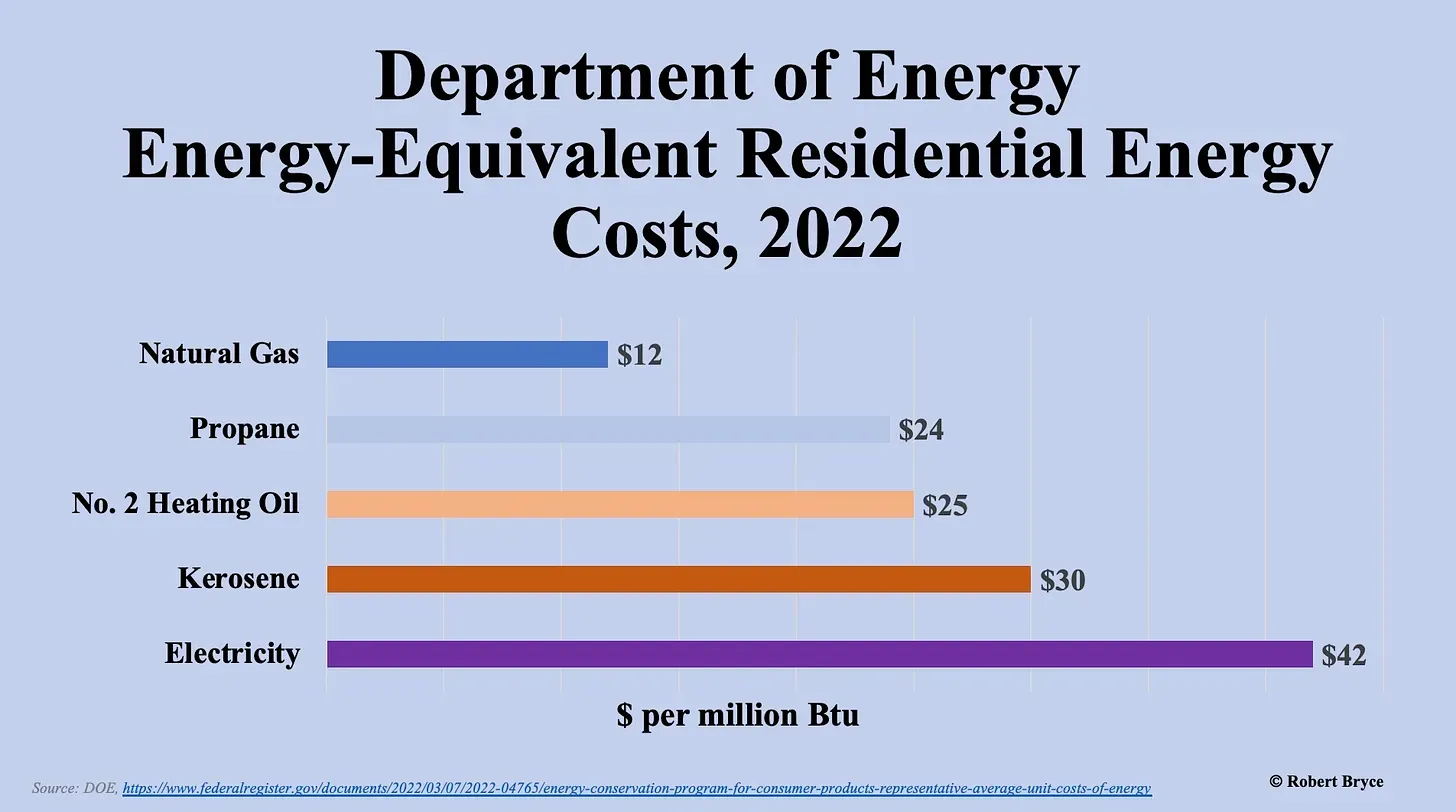
Consumers would also suffer in Washington’s green utopia. Everything from a haircut to a ballgame would become more expensive as the price of electricity rises. Climate advocates argue that Washingtonians will recoup their costs over time thanks to efficiency gains. But a 2021 report from Home Innovation Labs estimates that recovering the cost of a heat-pump installation could take 47 to 49 years. It’s worse for existing gas customers. The Building Industry Association of Washington estimates that switching from natural gas to electricity in a single-family home would cost as much as $70,000. Heat pumps also tend to fail in the sort of frigid weather that hits rural Washington in winter.
Proponents of electrification insist that technology will improve over time. But if they’re really confident that green energy will be the best option for consumers and businesses, then Initiative 2066 is no threat. Washington voters should ask why climate advocates still see it as one.
The many-trillion-dollar fantasy finance negotiations are growing ever more complex and uncertain, which makes sense since agreement is likely impossible.
It began simply enough with the co-chairs of the negotiating group tabling a 9 page draft text for the New Collective Quantified Goal (NCQG) on climate finance. The numerous negotiators then added their proposed changes or additional text and the draft ballooned to 34 pages.
Where it gets hairy is that most of this growth is not additional text. It is optional language for the existing text. Many of these options are not trivial edits; they are hugely different texts.
The biggest options of all are of course for the amount of the “quantified goal” which is how much government money the developing countries get each year. The starting number ranges from $100 billion to $2 trillion with $1.1 trillion and $1.3 trillion in between. This is a paralyzing difference for sure.
There are also edit-like differences which apparently mean a lot to diplomats. For example does the NCQC “support” or “address” national plans?
In between there are numerous issues of lesser substance like whether fossil fuel subsidies should be phased out by 2025, 2035 or “as soon as possible.”
Each set of options is shown using brackets which is colorful in its way. Typically a sentence starts then there will be a series of at least two optional pieces of text each in brackets followed by the end of the sentence. There may be a lot of bracketed options to the point it gets hard to read.
Of course sometimes the beginning and/or the end of the sentence is bracketed too or there may be several sets of bracketed options in a single sentence.
This is nothing like a draft text so news reports about such a text are highly misleading. In the 34 pages there are hundreds of bracketed options all of which have to be resolved if there is going to be an actual approved text on NCQC. One could say there are as many draft texts as there are options.
So at this point there is no draft text just a huge amount of serious disagreement. Much of it will likely be resolved by throwing out all the options and just deleting the entire sentence. Diplomats can always find agreement by saying nothing of substance.
Some of the issues are actually amusing. My favorite is a provision saying that funding a new coal fired power plant does not count as climate finance. Turns out this was being claimed under the goal of adaptation to climate change because electricity helps people deal with extreme weather.
Not surprisingly the developed countries are posting options that reduce their liability. The measly $100 billion option for NCQC is obvious but others are less so.
One that might work is to have an “investment” goal that does not specify a government contribution. Any form of renewables or resilience infrastructure development would count no matter who funded it. Private investment is specifically included.
Given the reportedly ridiculous amounts of money being spent on solar and wind facilities around the world this option might even make the trillion dollar a year mark. That the local citizenry will ultimately pay for it all including profits is apparently irrelevant. But then most of the present $100 billion a year is in the form of loans not grants. These loans are at least supposed to be paid back.
Next week the high level ministers from the member countries fly in to try to untangle this endless mess of brackets. Some of the sentences will be resolved while a lot will simply disappear. Keep in mind that every country has a veto so nothing radical can happen.
Given the bizarre nature of this game it is no surprise that the final document is often hammered out at 2am by people who have not slept for 48 hours and likely no longer care what it says.
But the sleepless end game is still a ways off. Stay tuned to CFACT as the middle game unfolds. There will be surprises.


 The building association worries the new energy code will raise the state’s already high housing costs, locking out potential buyers. The code requires that new buildings meet a certain environmental “score.” Without the points from an electric heat pump, a builder will have to make up the difference with other green measures that run between $15,000 and $20,000 in a single-family home. “Every time they raise the price $1,000, it prices out another 500 Washington families,” says Greg Lane, the association’s executive vice president.