Author: Iowa Climate Science Education

Poll Finds New Jersey Residents Prioritize Energy Security Over Radical Climate Policies

By Gabriella Hoffman

As New Jersey families endure summer heatwaves, there’s growing support for practical energy policies that keep the lights on and air conditioning running. 

According to new polling from Independent Women’s Voice, 85% of likely voters in the 2025 New Jersey statewide elections worry about rising energy costs expected to result from existing state climate policies–including 83% of women. 

Garden State residents were expected to see a 20% spike in their utility bills commencing on June 1st, even as some ratepayers were already paying $500 a month. This is a consequence of the Murphy administration embracing a plan to force consumers into using 100% renewable energy. But the Board of Public Utilities bailed them out and delayed implementation of the rate hike until after September 30th. So New Jersey voters are spared enormous energy cost spikes for now, but not for long.

Governor Phil Murphy (D-NJ)’s Energy Master Plan, an executive order signed in 2023 mandating the state reach 100% clean energy by 2035 through solar, wind, electric vehicles, and batteries, is squarely to blame for higher utility bills. Murphy’s green transition plan is estimated to cost $1.4 trillion in lost income, or $140,000 per average New Jerseyan over  the next 25 years, while yielding no tangible environmental benefit. This isn’t sustainable for struggling families who already can’t pay their energy bills on time.

Overall, 80% of swing voters are concerned about energy reliability – including 81% of women. Upon learning the 20% electricity rate hike is attributed to Murphy’s agenda, 53% of women reported they are less supportive of New Jersey’s climate policies.

Since 2017, when Governor Murphy entered office, five coal plants and the Oyster Creek nuclear power plant, which produced 20% of the state’s electricity capacity, have permanently closed down. Unsurprisingly, the Energy Master Plan has invited more energy insecurity into the Garden State – which is now a net-energy importer state. Unsurprisingly, New Jersey will never reach its clean energy goals, as it’s mostly powered by natural gas (49%) and nuclear (42%) for electricity generation. Renewables, like solar energy, barely account for 8% of New Jersey’s energy mix. States like New Jersey can’t run on part-time energy. 

PJM Interconnection, a grid operator servicing New Jersey and 12 other states, said that prematurely retiring power plants and replacing them with renewables like solar and wind could undermine grid stability this summer. The North American Electric Reliability Corporation (NERC) equally warned in its 2025 Summer Reliability Assessment that solar and battery additions “introduce more complexity and energy limitations into the resource mix.”

Due to rising electricity demand from artificial intelligence (AI) data centers, air conditioning, manufacturing, and transportation costs, energy is a top issue for New Jersey voters going into the fall. 64% of swing voters and 59% of women saying energy was among their top three issues, respectively.

After learning about the implications of Murphy’s 2035 net-zero target, swing voters decreased their support for the governor’s climate policies by 9% and women decreased their support by 11%, respectively.

New Jersey voters are equally worried that Governor Murphy’s climate policies are more extreme than California’s. Our polling found 72% of swing voters and 71% of women are concerned with the extreme direction their state is heading in.

New Jersey’s energy crisis is self-inflicted. After implementing this costly Energy Master Plan and closing down 6 reliable power stations, Governor Phil Murphy (D-NJ) now wants his constituents to conserve energy by setting their ACs to 76-78 degrees Fahrenheit, delaying appliance usage until 8pm, and making a plan for power outages. 

The late President Jimmy Carter famously called on Americans to set their homes “to 65 degrees in the daytime and lower at night” to reduce heating costs, which helped make him a one-term president. This strategy of sacrificing for less reliable energy, to be climate-friendly, isn’t a winning strategy for today’s New Jersey Democrats, either. 

New Jerseyans, like their fellow Americans, want abundant, reliable, and secure energy. There are two legislative remedies Trenton lawmakers can consider to achieve this: exploring the feasibility of small modular reactors (SMRs) and reforming the Energy Master Plan to deemphasize unreliable solar and wind energy. Since New Jersey already has two nuclear power plants, SMRs – smaller reactors that are portable and easier to construct – will supplement existing projects, produce more reliable energy, and help the state reduce its reliance on imported electricity. 

It’s imperative whoever succeeds Governor Murphy after November puts their constituents ahead of costly climate policies that reduce quality of life and do little to conserve the environment.

Gabriella Hoffman is director of Independent Women’s Center for Energy and Conservation. Follow her on X at @Gabby_Hoffman

This article was originally published by RealClearEnergy and made available via RealClearWire.


Discover more from Watts Up With That?

Subscribe to get the latest posts sent to your email.

via Watts Up With That?

https://ift.tt/nfxTL5Z

July 24, 2025 at 08:05PM

How the Trump AI Action Plan will Wreck Green Energy

Essay by Eric Worrall

“… ensures an uninterrupted and affordable supply of power …” – just not possible with renewables.

White House Unveils America’s AI Action Plan

The White House

July 23, 2025

The White House today released “Winning the AI Race: America’s AI Action Plan”, in accordance with President Trump’s January executive order on Removing Barriers to American Leadership in AI. Winning the AI race will usher in a new golden age of human flourishing, economic competitiveness, and national security for the American people.

The Plan identifies over 90 Federal policy actions across three pillars – Accelerating Innovation, Building American AI Infrastructure, and Leading in International Diplomacy and Security – that the Trump Administration will take in the coming weeks and months.

Key policies in the AI Action Plan include:

  • Exporting American AI: The Commerce and State Departments will partner with industry to deliver secure, full-stack AI export packages – including hardware, models, software, applications, and standards – to America’s friends and allies around the world.
  • Promoting Rapid Buildout of Data Centers: Expediting and modernizing permits for data centers and semiconductor fabs, as well as creating new national initiatives to increase high-demand occupations like electricians and HVAC technicians.
  • Enabling Innovation and Adoption: Removing onerous Federal regulations that hinder AI development and deployment, and seek private sector input on rules to remove.
  • Upholding Free Speech in Frontier Models: Updating Federal procurement guidelines to ensure that the government only contracts with frontier large language model developers who ensure that their systems are objective and free from top-down ideological bias.

“America’s AI Action Plan charts a decisive course to cement U.S. dominance in artificial intelligence. President Trump has prioritized AI as a cornerstone of American innovation, powering a new age of American leadership in science, technology, and global influence. This plan galvanizes Federal efforts to turbocharge our innovation capacity, build cutting-edge infrastructure, and lead globally, ensuring that American workers and families thrive in the AI era. We are moving with urgency to make this vision a reality,” said White House Office of Science and Technology Policy Director Michael Kratsios.

“Artificial intelligence is a revolutionary technology with the potential to transform the global economy and alter the balance of power in the world. To remain the leading economic and military power, the United States must win the AI race. Recognizing this, President Trump directed us to produce this Action Plan. To win the AI race, the U.S. must lead in innovation, infrastructure, and global partnerships. At the same time, we must center American workers and avoid Orwellian uses of AI. This Action Plan provides a roadmap for doing that,” said AI and Crypto Czar David Sacks.

“Winning the AI Race is non-negotiable. America must continue to be the dominant force in artificial intelligence to promote prosperity and protect our economic and national security. President Trump recognized this at the beginning of his administration and took decisive action by commissioning this AI Action Plan. These clear-cut policy goals set expectations for the Federal Government to ensure America sets the technological gold standard worldwide, and that the world continues to run on American technology,” said Secretary of State and Acting National Security Advisor Marco Rubio.

Learn more at AI.Gov.

Source: https://www.whitehouse.gov/articles/2025/07/white-house-unveils-americas-ai-action-plan/

Looking at the referenced AI Action Plan, the following caught my eye.

Develop a Grid to Match the Pace of AI Innovation

The U.S. electric grid is one of the largest and most complex machines on Earth. It, too, will need to be upgraded to support data centers and other energy-intensive industries of the future. The power grid is the lifeblood of the modern economy and a cornerstone of national security, but it is facing a confluence of challenges that demand strategic foresight and decisive action. Escalating demand driven by electrification and the technological advancements of AI are increasing pressures on the grid. The United States must develop a comprehensive strategy to enhance and expand the power grid designed not just to weather these challenges, but to ensure the gridøs continued strength and capacity for future growth. Recommended Policy Actions

ø Stabilize the grid of today as much as possible. This initial phase acknowledges the need to safeguard existing assets and ensures an uninterrupted and affordable supply of power. The United States must prevent the premature decommissioning of critical power generation resources and explore innovative ways to harness existing capacity, such as leveraging extant backup power sources to bolster grid reliability during peak demand. A key element of this stabilization is to ensure every corner of the electric grid is in compliance with nationwide standards for resource adequacy and sufficient power generation capacity is consistently available across the country.

ø Optimize existing grid resources as much as possible. This involves implementing strategies to enhance the efficiency and performance of the transmission system. The United States must explore solutions like advanced grid management technologies and upgrades to power lines that can increase the amount of electricity transmitted along existing routes. Furthermore, the United States should investigate new and novel ways for large power consumers to manage their power consumption during critical grid periods to enhance reliability and unlock additional power on the system.

ø Prioritize the interconnection of reliable, dispatchable power sources as quickly as possible and embrace new energy generation sources at the technological frontier (e.g., enhanced geothermal, nuclear fission, and nuclear fusion). Reform power markets to align financial incentives with the goal of grid stability, ensuring that investment in power generation reflects the systemøs needs.

ø Create a strategic blueprint for navigating the complex energy landscape of the 21st century. By stabilizing the grid of today, optimizing existing grid resources, and growing the grid for the future, the United States can rise to the challenge of winning the AI race while also delivering a reliable and affordable power grid for all Americans.

Read more: https://www.whitehouse.gov/wp-content/uploads/2025/07/Americas-AI-Action-Plan.pdf

If I’ve understood this correctly, every future federal approval for energy supply will be assessed on whether it advances the USA towards the goal of a reliable, dispatchable grid fit for ensuring US AI dominance.

Obviously renewable suppliers can try to play in this game by ensuring they co-install several days worth of battery backup, to lay claim to being dispatchable, but unless battery prices drop substantially it is difficult to imagine such efforts being affordable.


Discover more from Watts Up With That?

Subscribe to get the latest posts sent to your email.

via Watts Up With That?

https://ift.tt/G9tS4jK

July 24, 2025 at 04:04PM

Climate Activism In Judicial Drag

Guest Post by Willis Eschenbach

If you’d asked me last week to imagine the world’s “highest court” declaring climate science settled by judicial fiat, and then threatening the globe with reparations if governments don’t color inside the climate lines, I’d have poured myself a stiff gin-and-tonic and double-checked the URL.

But alas, welcome to 2025, where the International Court of Justice (ICJ) has just handed down an “advisory opinion” so ambitious, sanctimonious, and scientifically shallow that it reads less like a court ruling and more like the script for a very, very earnest United Nations bake sale. Their own summary of their latest lunacy is here.

Let’s set the table. The ICJ was asked by true-green climate activists to weigh in on whether countries that—brace yourself—aren’t “protecting the climate”, whatever that might mean, are guilty of internationally wrongful conduct.

Not just frowned upon. Not just eligible for a stern talking-to.

Nope: guilty. Legally at fault. Reparations, anyone?

Below is a view of the self-important, arrogant, pompous bench-warmers who think they rule both the world and your pocketbook and are the final arbiters of scientific truth.

And if you thought for a second that their ruling was confined to immediate, actual demonstrable harm, allow me to introduce you to the court’s new climate doctrine: “The environment is the foundation for all human rights.”

Human rights are based on the environment? I mean, who knew? Clearly, the authors of the US Declaration of Independence were blissfully ignorant of that claim when they said:

We hold these truths to be self-evident, that all men are created equal, that they are endowed by their Creator with certain unalienable Rights, that among these are Life, Liberty and the pursuit of Happiness.

But nooo … apparently, the right to a “clean, healthy, and sustainable environment” is not just a good aspiration, but a precondition and foundation for everything from shelter to the Declaration of Independence.

In these several dozen pages of turgid judicial prose, the court repeatedly assures us that the science is both “unequivocal” and “consensual.” Take a broom and sweep aside the actual, messy debates among climatologists, physicists, statisticians, and economists. Why bother with IPCC’s footnotes and caveats, uncertainty ranges, or the fact that roughly half the scientific world’s population is busy fighting over causal attributions, model reliability, emission pathways, and feedbacks? The ICJ can clear all that up with a wave of the bench.

Never mind that many credentialed scientists—yes, those with tenure, lab coats, and neural networks—keep pointing out flaws in everything from the accuracy of climate models to the lack of robust evidence connecting certain weather events directly to CO₂ emissions.

Those tedious debates? Airbrushed away, replaced by a judicially anointed TRUTH, enforceable anywhere a lawyer can file papers and find a sympathetic press release.

The court then leaps from this supposedly airtight science to the conclusion that all countries are not just morally but legally required to throttle fossil fuels, pay reparations for “climate harm,” whatever that might be at any instant, and—here’s the kicker—restructure their entire economies and energy grids to satisfy the ambitions of the most anxious delegates in the UN General Assembly.

Oh, and it’s not just about emissions within your own border, but across the ether of international commerce, all the way down to how a can of soup is shipped from Kansas to Kazakhstan.

If this strikes you as a rather energetic reading of judicial authority, you’re not alone. The ICJ’s ruling doesn’t just interpret treaties—it rewrites them, pastes new concepts of liability on top, and then wags its finger at every government in creation, basically saying: “Comply, or risk being labeled an international outlaw … and subsequently shaken down for damages.”

(The good news is that this is an “advisory” opinion, not a judicial ruling, and fortunately, any actual power to enforce this is still missing from the court’s toolbelt. But you can expect a flotilla of lawsuits, climate tribunals, and legal NGOs licking their chops.)

Non-judicial conclusions abound in this ruling. The bench, now apparently staffed with philosophers and prophets, instructs the world’s engineers and energy analysts that mitigation cannot wait, adaptation is mandatory, and—lest you were planning on retiring quietly—the only acceptable future is one with emission reductions “of the highest ambition.” You expected law? Foolish you.

You get a political manifesto disguised in judicial robes.

Be clear, though. The danger here isn’t just about climate. It’s about precedent.

If international courts now claim the right to set social, economic, and technological policy for the entire planet by declaratory fiat, who needs parliaments, governments, scientific panels, or—heaven forbid—public debate?

If some green-hued imaginary version of “the environment” is an existential human right, why should courts not do the same for “algorithmic fairness,” “biodiversity equity,” “DEI”, “climate justice” or whatever cause rolls in next with a chorus of law students and a well-produced video appeal?

And don’t kid yourself—this opinion will ricochet through national courts, insurance companies, and boardrooms, emboldening activists to weaponize every multinational agreement in the book against anyone who doesn’t toe the line. The threat of endless litigation, the economic blackmail inherent in “reparations,” and the specter of legal insecurity will choke innovation, investment, and real-world progress faster than you can say “Paris Agreement.”

This ruling is a perfect example of why about two-thirds of the global population lives in countries that have flat-out REFUSED to be ruled by these activist lunatics in black robes … including, thankfully, the US. The US withdrew from the ICJ’s compulsory jurisdiction in 1986, meaning it is not automatically bound by ICJ judgments. Me, I think we should withdraw from the ICJ entirely and let them play with themselves.

In sum, the ruling isn’t just an overstep. It’s a pole vault over the judicial fence, landing squarely in the realm of politics, philosophy, and scientific orthodoxy enforced by dubious legal muscle. We’re now one step closer to a world where the outcome of complex, unsettled questions gets dictated by robe and gavel, not science, reason, public debate, or reality … and that is a very dangerous precedent.

Good luck to us all. My solution?

US out of the UN entirely, including out of the ICJ and every other slimy tentacle of the UN. It is a snake-pit of vipers, totalitarians, anti-Semites, self-important “jurists”, and crazy green activists.

UN out of the US entirely. Move the headquarters to Ouagadougou or someplace where the locals need help, forbid the UN employees from using air conditioning so they can “protect the climate”, and see how many UN fat-cats and parasites living the good life in New York City suddenly quit to “spend more time with their families” …

My best to all, keep fighting the good fight,

w.

PS—Yeah, you’ve heard it before. When you comment, quote the exact words you’re discussing, so we can tell what you’re talking about.


Discover more from Watts Up With That?

Subscribe to get the latest posts sent to your email.

via Watts Up With That?

https://ift.tt/GiDERxl

July 24, 2025 at 12:06PM

Tide Running Out on Climatism

Gary Abernathy explains how momentum is shifting away from climatists in his Empowering America article The climate change cult is encountering more resistance these days.  Excerpts in italics with my bolds and added images.

The devastating Texas flooding over the July 4 weekend was a natural disaster of immense proportions. The lives lost brought unthinkable heartache for families. Especially difficult to fathom is that so many victims were young children.

Adding to the grief was the irresponsible blame game that almost immediately arose in the wake of the tragedy. Many on the left couldn’t wait to point fingers at Republicans, from President Donald Trump to Texas Gov. Greg Abbott.

Of course, the climate cult again demonized fossil fuels, global warming and other predictable villains from the days of yore (or Gore). The group Climate Central could only contain itself until July 8 before rushing out to hold a press briefing to reiterate its dogma that “climate change drives more extreme weather,” and that the Texas storms were “made more likely and powerful in a warmer climate.”

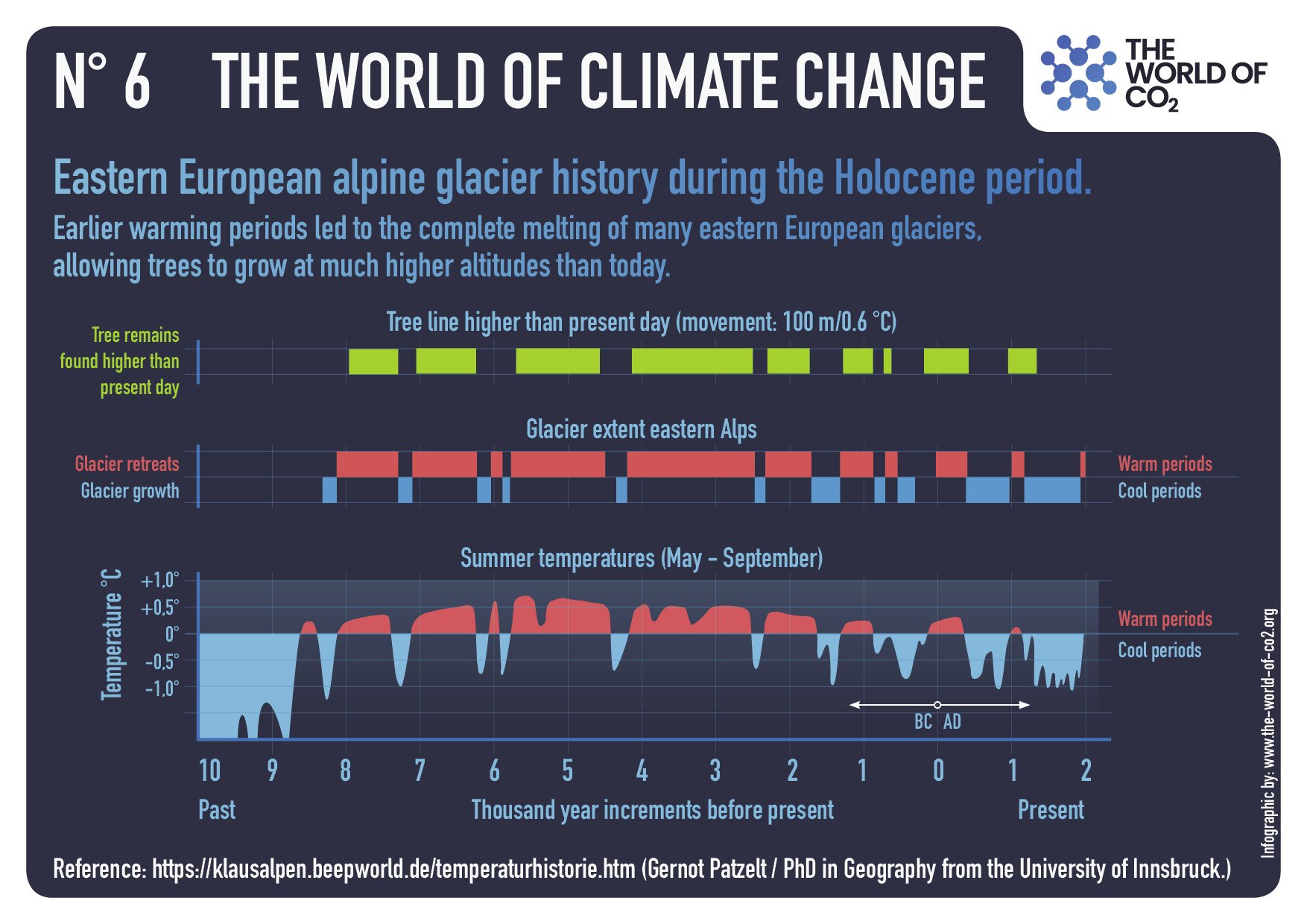
Leftwing climate groups often accuse anyone who disagrees as being a “climate denier.” But few actually deny that the climate indeed changes, often dramatically. The archeological record makes clear that the earth has warmed, cooled, experienced flooding and undergone a number of other climate-related upheavals through the centuries, long before human activity could be faulted. But groups like Climate Central identify the manmade practice of burning fossil fuels as the modern culprit.

Any brave soul who dares to challenge the extent to which carbon emissions and greenhouse gases impact climate change is shouted down by the cult and buried under an avalanche of “scholarly” papers produced by “the overwhelming majority of the scientific community.”

The good news is that the same day that Climate Central was regurgitating its tried-and-true rhetoric, the New York Times reported (in what it likely considered an expose), “The Energy Department has hired at least three scientists who are well-known for their rejection of the overwhelming scientific consensus on climate change, according to records reviewed by The New York Times.”

What seemed frightening to the Times and the indoctrinated left comes as welcome relief for millions of other Americans who believe that the war on affordable and reliable energy sources is based more on politics than science.

The extent to which fewer Americans are being successfully propagandized is made clear by recent polling. On July 11, CNN data analyst Harry Enten told viewers that as early as 1989, 35 percent of Americans were “greatly worried” about climate change, a number that jumped to 46 percent by 2020. But, as Enten admitted with some astonishment, only 40 percent of Americans currently feel “greatly worried” about climate change. The reason for growing public skepticism on climate change is probably because most Americans have wised up to how data can be easily manipulated for political ends.

We know from experience it’s not hard to convince “experts” to sign on to a “consensus” opinion to add gravitas to the cause de jour. Back in 2020, more than 50 former intelligence officials famously signed onto a letter claiming that emails found on Hunter Biden’s laptop had “all the classic earmarks of a Russian information operation.” That was not true, and it was later discovered that former CIA Acting Director Michael Morell had drafted the letter to help Joe Biden’s campaign. Everyone else just signed on, their devotion to a particular election outcome apparently outweighing the lack of evidence backing their claim.

Similarly, individual treatises on climate science aren’t authored by hundreds of scientists. Each one is written by, at most, a handful of researchers who then circulate their work and ask others to sign on – giving activists the fodder they need to claim that “the overwhelming majority” of the scientific community is in agreement. In fact, scientific papers being published as authoritative when, in fact, they are not is a growing problem.

“Last year the annual number of papers retracted by research journals topped 10,000 for the first time. Most analysts believe the figure is only the tip of an iceberg of scientific fraud,” according to a 2024 report in The Guardian.

Fortunately, there has always been a segment of the scientific community willing to stand up to the mob and interpret climate data independently. The three scientists hired by the Energy Department and targeted by the Times for expressing skepticism on manmade climate change – physicist Steven E. Koonin, atmospheric scientist John Christy, and meteorologist Roy Spencer – are among the brave.

In decades past, a key tenet of science was to question everything, on the theory that raising doubts and concerns was the best path to the truth. As Dr. Koonin wrote in a Wall Street Journal essay, “Any serious discussion of the changing climate must begin by acknowledging not only the scientific certainties but also the uncertainties, especially in projecting the future.”

Instead of natural disasters serving as excuses to launch attacks and place blame using the same tired, lockstep rhetoric, here’s hoping for a new age of climate enlightenment, led by scientists, journalists and others with the curiosity – and courage – to question everything.

That’s light at the end of the tunnel, hopefully not an oncoming train.

via Science Matters

https://ift.tt/Jupe6gi

July 24, 2025 at 11:19AM