Author: Iowa Climate Science Education

Another Day, Another Model of Future Climate Doom

From the Institute for Basic Science and the “we’re all gonna die” department comes Episode #2971 of model madness via press release:

Earth’s future climate at 9 km worldwide resolution

Global Warming does not affect our planet evenly. Some areas such as the Arctic region or high mountain peaks warm faster than the global average, whereas others, including large parts of the tropical oceans, show reduced temperature trends compared to the mean. The heterogeneity of future rainfall patterns is even more pronounced. To adapt to future climate change, policymakers and stakeholders need detailed regional climate information, often on scales much smaller than the typical resolution (~100-200 km) of climate models used in the reports of the Intergovernmental Panel on Climate Change (IPCC).

A team of scientists from the IBS Center for Climate Physics (ICCP), Pusan National University in South Korea and the Alfred Wegener Institute, Helmholtz Centre for Polar and Marine Research (AWI), Bremerhaven, Germany has achieved an important breakthrough in climate modeling, providing unprecedented insights into Earth’s future climate and its variability. Their research was published in the open access journal Earth System Dynamics.

Utilizing the AWI-CM3 earth system model, a novel iterative global modeling protocol, and two of South Korea’s fastest supercomputers (Aleph at the Institute for Basic Science and Guru at the Korea Meteorological Administration), the researchers have simulated climate change at scales of 9 km in the atmosphere and 4-25 km in the ocean. These extensive computer model simulations offer a more accurate representation of future climate conditions, enabling better planning for climate adaptation.

The AWI-CM3 high-resolution model accurately represents global climate, including small-scale phenomena, such as rainfall in mountainous regions, coastal and island climate processes, hurricanes and ocean turbulence (Fig. 1). By resolving more regional details and their interactions with the large-scale atmosphere and ocean circulations, the model demonstrates a superior performance compared to most lower-resolution climate models.

A snapshot of simulated climate conditions. Blue/red shading: sea surface temperature deviations from zonal mean; gray/white shading: low clouds; green/pink shading: 10m wind speed; blue/yellow shading in upper panels: hurricane precipitation. The figure illustrates the ubiquity of mesoscale climate phenomena, such as Tropical Instability Waves in the equatorial Atlantic and Pacific, hurricanes (making landfall in Hawaiʻi in this snapshot), ocean cold wakes generated by hurricanes, stratocumulus cloud decks and patchy day-time convection over the Amazon forest. Credit: Institute for Basic Science

A main product of the simulations is a set of detailed global maps of expected climate change (e.g., temperature, rainfall, winds, ocean currents, etc.) for an anticipated 1oC future global warming.

“It is important to keep in mind that Global Warming is spatially quite heterogenous. For a 1oC global temperature increase, the Siberian and Canadian Arctic will warm by about 2oC, whereas the Arctic Ocean will experience warming of up to 5oC. In high mountain regions, such as the Himalayas, the Andes and the Hindu Kush, the model simulates a 45-60% acceleration relative to the global mean”, says MOON Ja-Yeon from the ICCP, and lead author of the study. To ensure broad access to these high-resolution climate projections, the team has launched an interactive data platform, where users can explore future climate change on regional and global scales (Fig. 2). Normalized climate change data for a 1°C Global Warming level can be downloaded and opened directly in the Google Earth application. These data can provide information on expected future changes in climate variables, such as windspeed and clouds, which are relevant for the future deployment of wind or solar farms, respectively.

Download data of climate change (e.g., temperature, wind speed, precipitation, etc.) per 1oC global warming from 9 km AWI-CM3 Global Warming simulations. Go to: https://ift.tt/PUIxshW. Credit: Institute for Basic Science

“Our study also highlights the regional impacts of major modes of climate variability, such as the Madden Julian Oscillation, the North Atlantic Oscillation, and the El Niño-Southern Oscillation, as well as their response to greenhouse warming” says Prof. Thomas JUNG from the AWI and co-corresponding author of the study. According to the AWI-CM3 simulations, the amplitude of both, the Madden Julian Oscillation and of the alternating El Niño and La Niña events will increase in the future, which will lead to intensified rainfall impacts in affected regions. ​The simulations further indicate an increase in the frequency and intensity of extreme rainfall events (>50 mm/day) in areas such as eastern Asia, the Himalayas, the Andes, Amazonia, mountain-tops in Africa and the east coast of North America with significant implications for flooding, erosion, and landslides.

“Most global climate models used in the assessment reports of the IPCC are too coarse to resolve small islands, such as those in the western tropical Pacific. These islands are already threatened by global sea level rise. Our new climate model simulations now provide new regional insights into what these regions can expect in terms of changes in ocean currents, temperatures, rainfall patterns and weather extremes. We hope that our dataset will be used extensively by planners, policy- and decision-makers and the public.”, says Prof. Axel TIMMERMANN, Director of the ICCP and co-corresponding author of the study.

The study’s findings offer critical information for assessing climate risks and implementing adaptation measures on regional scales.

Journal: Earth System Dynamics


Discover more from Watts Up With That?

Subscribe to get the latest posts sent to your email.

via Watts Up With That?

https://ift.tt/56Ptmwz

July 23, 2025 at 04:03AM

Met Office Still Opening Junk Sites

By Paul Homewood


More from Chris Morrison:


image

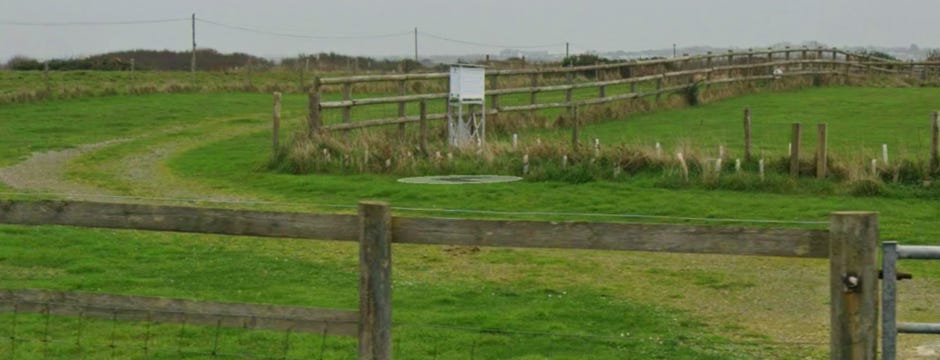
Evidence continues to mount that the UK Met Office is chasing ‘hottest evah’ temperature extremes by deliberately siting new measuring stations in locations likely to be affected by heat spikes and unnaturally warmed ambient air. In the last 10 years to the middle of 2024, 81.5% of new sites were junk Class 4 and 5 operations with potential internationally-recognised errors up to 2°C and 5°C respectively. Incredibly, eight of the 13 newly-opened sites over the last five years were of junk status.

Now comes news of a new site recently opened in Wales at Whitesands that in the words of citizen super sleuth Ray Sanders, “appears to be a deliberate attempt to produce artificially elevated readings both now and ever increasingly in the future”.

Read the full story here.

What may have started simply because of incompetence now has the unmistakeable whiff of corruption. Why else would the Met Office still be deliberately and knowingly opening up junk weather stations? Eight out of the thirteen sites opened in the last five years, for instance.

If the Met Office wants to keep the few remaining shreds of credibility it still holds, it must immediately remove from its network all junk and near junk sites, which are totally unsuitable for climatological purposes. That must include Class 3 sites as well.

via NOT A LOT OF PEOPLE KNOW THAT

https://ift.tt/SJn3eFP

July 23, 2025 at 03:56AM

Where Are The Updated NDCs?

By Paul Homewood


 image

https://www.climatewatchdata.org/ndc-tracker

The Paris Agreement requires countries to submit new Nationally Determined Contributions (NDCs) every five years, reflecting progressively higher ambition and taking into account each country’s capacity.

With COP30 just months away, all of the 197 countries that belong to the United Nations were supposed to have submitted updated national climate plans to the UN by February this year. These plans outline how each country will cut its greenhouse gas emissions by 2035 in line with the Paris Agreement.

But as the ClimateWatch map shows above, only 27 countries, accounting for only 21% of global emissions have bothered to do so.

Worse still for those bothered about such things, one of the 27 is the US, who submitted its plan before Trump took office and promptly withdrew from Paris! I think we can safely assume their NDC is now in the bin.

Inevitably the UK heads the list of lemmings. And as Climate Action Tracker explain, many of the new NDCs represent lower ambitions, not higher. They comment about Brazil, for instance:

Brazil submitted a target to reduce emissions between 59–67% below 2005 levels by 2035. Assessing the ambition of this target has been difficult due to the lack of transparency on how much the land sector sink will contribute to the target, given the country’s need for urgent reductions in the energy sector.

This results in an extraordinarily wide range of estimated emissions from all other sectors (excl. LULUCF) that are consistent with the NDC target. The lack of transparency is a clear issue for climate integrity – the public and the scientific community need to be able to understand what a government is proposing to do and in the present situation, Brazil’s NDC provides no clarity on this. We conclude that Brazil’s 2035 NDC target is not 1.5°C compatible.

Canada too are fudging their targets:

Canada’s 2035 NDC sets a target to reduce greenhouse gas emissions by 45–50% below 2005 levels by 2035. However, this target is based on a ‘gross-net’ approach, where reductions from the land use, land-use change and forestry (LULUCF) sector are counted towards achievement, even though LULUCF is excluded from the baseline. This approach reduces the pressure to achieve real reductions in fossil fuel emissions and introduces uncertainty into the stringency of the target.

Indeed, according to them, the UK is the only bright spot!

Even the EU, it seems, is haggling over whether to allow the purchase of international carbon credits to offset emissions.

It goes without saying that there are no updated NDCs from China, India or any of the other major emitting developing Asian nations.

via NOT A LOT OF PEOPLE KNOW THAT

https://ift.tt/z3iwNkp

July 23, 2025 at 03:47AM

ROBBING THE POOR TO GIVE TO THE RICH – THE STORY OF WIND POWER IN THE UK

All has been revealed  in a court case between a rich land-owner and an electricity company.

 At the heart of the dispute is an argument over so-called ‘constraint payments’. This term describes cash that is paid to wind farms to compensate them for either switching off their turbines, or reducing capacity, when the grid has become too full to take on more electricity.

The system is designed to cope with power surges during times of high wind speeds. Initially, it was rarely used. 

In 2010, the first year of its existence, ‘constraint’ fees cost consumers £174,000. But as more wind farms have been built in remote areas bottlenecks in the grid have become more commonplace.

As a result, upwards of £300million a year is now being spent under the ‘constraint’ scheme, which has now cost bill-payers the grand total of £1.8billion, according to the REF.

What’s more, critics believe wind farm operators can sometimes make more, under the rules, by switching off their turbines than from making electricity. 

The truth about Britain’s taxpayer cash-soaked wind farm industry laid bare in scandalous detail in court papers | Daily Mail Online

via climate science

https://ift.tt/nA7cWHS

July 23, 2025 at 01:33AM