How do we know that in the back lagoon at Myrmidon Reef there are some massive bolder corals – immovable, representing layer upon layer of calcium carbonate laid down year after year, back more than 300 years.
And so healthy; in various shades of green and blue and, also golden.
Their health and size are captured in the photographs from the inaugural Great Barrier Reef Megafauna Expedition.
We made it all the way to Myrmidon Reef on Friday 6th September and the three competition photographers – Dave Baxter, Jenn Mayes, and Laura Boderke got measuring, with their yardsticks.
Dave Baxter photographing his scuba buddy Kate Armstrong beside a Porites coral colony, Myrmidon Reef, September 6, 2024Laura Boderke photographed Sebastian Falk above a Porites colony, Myrmidon Reef, September 6, 2024.
Each of the photographers entered more than one photograph in the first category: Largest Coral Colony.
I measured the height and width of the largest coral colonies from their submissions using ImageJ software and the reference within each photograph – their yardsticks.
Jenn Mayes and Laura Boderke both submitted coral colonies of the same equally large width: 3.6 metres!
ScreenshotSeb Falk above Laura’s submission, showing the ImageJ stats in centimetres.
Jenn Mayes coral colony, however, was significantly taller at 3.0 metres, while Laura Boderke’s coral was squatter at 1.8 metres.
The winning photograph in the category ‘Largest Coral Colony’ by Jenn Mayes with Nadine Huth above a giant Porites coral colony, Myrmidon Reef, September 6, 2024.
So, the winning photograph – the largest coral colony – is awarded to Jenn Mayes. This coral was photographed on the first dive at Myrmidon at a depth of 8 metres. The coral measures 3.6 metres wide and 3.0 metres tall.
Holding the 1 metres scale above the coral colony is her scuba buddy Nadine Huth.
Congratulations!
Jenn Mayes lives on Great Keppel Island. She is a Dive Master, Skipper and Photographer.Nadine Huth was scuba buddy and measure for Jenn Mayes. Nadine lives in Townsville and is the Operations Manager at Adrenalin Snorkel and Dive.
Acknowledgements
Charter of the MV Sea Esta for the inaugural Megafauna Expedition was made possible by Sydney-based philanthropist Simon Fenwick.
Despite a challenging weather forecast Paul Crocombe skippering the MV Sea Esta got us all the way to Myrmidon Reef – with first mate, Robert also from Adrenalin Dive.
The photographs of the photographers and their buddies in action measuring – Jenn Mayes and Nadine Huth, Dave Baxter and Kate Armstrong, Laura Boderke and Sebastian Falk – in action measuring were taken by Stuart Ireland.
The measure used by Nadine and Jenn, the one metre long-ruler, was made by Dr John Abbot and also features in the photograph at the very top of this post, the feature image.
Our megafauna logo is the creation of Ewa Buczkowska.
The ABC’s global warming hype isn’t lurid enough, so the national broadcaster’s bosses have turned up the dial to 11. Step forward the ABC’s new “National Climate Team”. Creating this battalion of bedwetters was the brain snap of retiring managing director David Anderson. Based on the precedent of Alan Joyce‘s departure from Qantas, it’s my view that he should be docked at least $1 million of his $1.16 million parting salary.
The National Climate Team’s parameters remain under wraps, but random details trickle out. For example, the Team includes weather specialist Tyne Logan. On ABCTV’s 7pm flagship news of August 31 she did a piece about Sydney University medicos broiling volunteers in a heat chamber, cheered on by climate scientists, to estimate what level of global warming would kill them. “It’s been set to 54 degrees Celsius, with 26 per cent humidity — a combination believed to be lethal after six hours,” Ms Logan remarks in the script, which mercifully omits the broadcast’s spooky music. Baking those poor test participants reminded me of the roast chook gondola at Woollies in Moonee Ponds. Owing to pesky ethics guidance, the boffins bring their humans out before rather than after they’re killed. I’ll elaborate on Ms Logan’s account later.
The ABC’s one-eyed climate coverage has prompted controversies and inquiries dating back 15 years. The real excitements were from 2004-17, involving Prime Minister Howard’s pick of stockbroker Maurice Newman to chair the ABC from 2007-12. Newman’s successor was ex-judge Jim Spigelman (2012-17), who also took some interest in the charter’s impartiality requirement. Current chair Kim Williams has also addressed the matter of bias but has yet to show any hint he is prepared to do something about it. Here’s a timeline of the ABC’s green-eyed misreporting and its refusal to change its ways.
2007: The ABC’s top science staffer, Robyn Williams, suggests we are in for a 100-metre sea level rise this century.[1] Insights like this have earned him seven universities’ honorary doctorates and an Australian Academy of Science fellowship.
March 10, 2010: Chair Maurice Newman fronts staffers in a Sydney briefing and blasts their climate “group think” and “collective censorious approach”. They suppress contrary views and abuse the sceptic community as “deniers”, he says, in j’accuse mode. The 250 staffers “rise to their feet to express shock and anger,” according to Renfrey Clarke at the “Green Left” blog. The green lefties call on “journalists and the public to be rid of him”.
December 2012: Newman, speaking as an ex-chair, pesters ABC Complaints over the Science Show’s Robyn Williams likening sceptics to pedophiles and crack smokers. The Complaints people re-assure him the ABC per se does not equate sceptics to child molesters. The spokesperson says: “Unlike the BBC, the ABC acknowledges there are climate scientists who question the core thinking about climate science. The ABC gives them and their views air time.” Lordy! The addled ABC attacks Britain’s even more addled Beeb.
Mid-2013: Chair Jim Spigelman, an ex-NSW Chief Justice, arranges an “ABC science reference panel” to investigate how well the ABC is covering climate and medical science. He remarks, in advance of any findings being released that the ABC’s science crew are “head, shoulders, thorax and abdomen”[2] above commercial rivals. He’s not a climate sceptic, he adds, but ABC journalists in line with the impartiality charter should “ hold scientists and technologists to account for their claims and conduct”. “Balance” apparently involves following the weight of evidence:
We must go beyond PR handouts, or what has been called ‘churnalism’ … What I believe needs most work is to develop our capacity to appropriately challenge scientists, not least those whose work is distributed by press release from organizations with a vested interest in favourable publicity. That includes, these days, universities
2013-14: Quadrant Online gets the scoop that the science panel leader is ABC director and bumbling climate warrior Professor Fiona Stanley AC (so much for independent investigation) along with Media Watch’s former sultan of smug Jonathan Holmes and others. Professor Stanley is lead signatory on a greenies’ “Monster Climate Petition” which begins,
“My great great grandchildren ask me in dreams, what did you do while the planet was plundered? What did you do when the earth was unravelling?”
Pre-inquiry, Stanley opined, wearing her ABC director’s hat,
“From the age of five when I was an Argonaut, the ABC has been a force for good in my life and work. It has educated, informed, entertained and excited me for over 60 years. It is a fantastic resource for this nation.Unfortunately, many of us have taken the ABC for granted. My hope is that readers will realise how valuable our public broadcaster is and fight to save it from further cuts and harassment.
“If you only read The Australian, or listen to the views of some politicians, you would think that the ABC is struggling to provide fair coverage of events, is biased in its politics and its science, and is wasting taxpayers’ dollars.
Have you noticed that journalists critical of the ABC have started to call it the ‘taxpayer-funded’ ABC?”
Yes, Fiona, I have noticed.
Stanley tells Radio National that if we don’t hastily reduce global warming then kiddies will sicken. “I’m not a climate change expert but I do trust the incredible scientific evidence,” she says. She’s right about the evidence matching the dictionary definition of “incredible”.
August 2014: Science princeling Robyn Williams brings catastrophist and science historian Naomi Oreskes on to his show to predict that by 2023 our puppies and kittens would be killed by global warming. Year 2023 passes uneventfully for pets, although Natasha, my adored Cav King Charles, passes away from heart problems sadly endemic to the breed.
2017-19: Pauline Hanson’s One Nation senators try in vain to add “fair and balanced” to the ABC’s statutory impartiality requirement.
2018-19: The alarmist Australian Conservation Foundation commissions Jonathan ‘Everywhere’ Holmes to report confidentially on whether ABCTV’s 7.30and AM radio slots contain enough climate propaganda. In particular, how successfully does the ABC tie every weather calamity to global warming?[3]Holmes reports, “7.30’s coverage was inadequate, bearing in mind the program’s role as the ABC’s flagship daily television current affairs program and the crucial importance of the issue for all Australians.” ABC’s AM, Holmes reports, “did better, but its coverage was barely adequate”.
ABC management’s response — outrage at being accused of climate slacking. “The ABC has also been acknowledged for its exhaustive coverage of last summer’s bushfires and the aftermath, including the debate over the contribution of climate change,” it responded. “Debate” about bushfires? When invited to engage in the to and fro of contesting ideas the ABC finds it easier and preferable to lie about them.
November 2019: Melbourne-based Barbara Heggen, an ABC senior producer/presenter, seeks to embed activism in all ABC climate output. With what she imagines to be a “brains trust” of 77 peers, she wants an “ABC-Staff climate crisis advisory group” to “report back to ABC management our ideas and strategies for responding to the climate crisis both internally and externally”.[4]She urges a “solutions journalism approach”, i.e. explicit anti-fossil-fuels propaganda. An obstacle is ABC policy that “editorial decisions are not improperly influenced by political, sectional, commercial or personal interests”.[5]Sadly for Ms Heggen’s brains trust, ABC then-chair Ita Buttrose rules outabrogation of the impartiality charter. Ita says that without any input from herself, management rejected the staff plan. Of hundreds of comments under TheAustralian’s 2019 scoop, based on leaked ABC emails, about 95 per cent are vitriolic Here is a sample:
# What climate “crisis” are these fools going on about? There is no “crisis” except in the fertile imaginations of wishful leftists and the gullible ill informed.
# No more air travel for ABC staff, or guests. Off goes the air-conditioning at Ultimo.
# Once again the ABC collective is going to talk/consult with itself to ram it down the throat of all non-believers or waverers while sucking on the public teat.
# They want to shovel even more climate religion … It will leave scarce room for any other news or current affairs.
# Maybe organise a meeting for those at the ABC who follow the charter. Catering shouldn’t be a problem.
June 2023: Managing Director David Anderson unveils his belt-tightening five-year plan to 2028, along with the inexplicable sacking of Canberra political editor Andrew Probyn. Concurrently surrendering to Ms Heggen’s ginger group, Anderson says, “ABC will also establish a dedicated Climate, Environment and Energy reporting team.” (Apropos of Anderson’s belt-tightening, all ABC Enterprise Agreement staffers will queue for their 3 per cent pay raise next month, following 4 per cent last year and an earlier 4 percent in 2022. Nice honey pot courtesy of taxpayers.)
September 2024: The National Climate Team is up and running.
So who else besides weather lady Tyne Logan is on the Team? Late last year the ABC was recruiting a Climate Lead for its Team (Band 7-8 psay scale, $117-138,000. The person is supposed to break climate stories across all platforms, “having an impact on the national agenda”, code for helping Climate Minister Chris Bowen destroy the country with wind turbines, solar farms and the inevitable blackouts. “We would love to see your work,” invites the ABC position vacant notice.
I hastened to apply, attaching this sample piece as testament to my climate credentials and neuroses, but the vacancy had expired. My chance of success was slim anyway, given my “ability to source and maintain contacts” involves sceptics like 2022 Physics Nobelist John Clausen and renowned atmospherics scientist Judith Curry, rather than local eminences such as bug-huntingDistinguished Professor Leslie Hughes, Tim “Ghost Cities” Flannery and the weepy Dr Joelle Gergis –the top trio from the $8 million a year Climate Council.
I can’t discover whether a recent recruit to the ABC by the name of David Marr is on the Climsate Team. He must have aspirations, given his Late Night Liveinterview on August 22 with an equally under-informed Cameron Diver, vice-president of green lobby Island Conservation. It went like this (at 3 minutes):
David Marr:Has anyone done a count of how many islands are in immediate danger simply from the melting ice caps[6] and rising of the ocean?
Cameron Diver:Not that I am aware of, it might have been done, we can say in areas like Pacific, Caribbean and Indian ocean many of the islands indeed are in danger of various negative effects linked to climate change – more extreme weather, coral bleaching…
If Marr gets to be a probationary cadet on the Climate Team, they’ll introduce him to the internet. By googling, he could discover that islands are actually growing, contrary to the wails at last month’s Pacific Islands Forum. Even Russ Skelton at RMIT-ABC Fact Check certifies that Tuvalu is not drowning but waving in celebration of its increased land area. Furthermore
# Of 104 coral reef islands on 16 Micronesian atolls, there’s been a net gain in area in the past 80 years
# The New York Times on June 27 (paywalled) reports “A Surprising Climate Find – As the planet warms, atoll nations like the Maldives seemed doomed to shrink. Scientists have begun to tell a surprising new story.”
It might be “surprising” to the “climate scientists” but sceptics have been citing islands’ growth for decades. The NYT quotes one study of 30 atolls with 709 islands across the Pacific and Indian Oceans. Some 89 per cent of islands were either stable or increasing and only 11 percent contracted. And here’s the clincher: Sea Level Alarmism Unravels As Earth’s Coastlines Are Observed Expanding Since 1984. Hey, haven’t those deadly CO2 emissions increased since 1984?
The Team’s output since inception has been lacklustre. As one climate-friendly ABC follower with the handle, “Canberrabybike” queried in May
Why have you deliberately made it hard to find your climate team’s stories on your site? Will your newsrooms have to be flooded before you actually prioritise the work of your climate team, [rather than] bury their work under Bluey and other entertainment dross? We’re running out of time, and you are running out of credibility.
A confirmed ABC Climate Team member is Jo Lauder, whom the ABC extols for her tainted prize last year from the Covering Climate Now (CCN) global troupe of climate-media manipulators. CCN’s members, including news syndicating giants Reuters, Bloomberg and AFP, literally sign a pledge to hype climate catastrophism and kill off whatever contrary science news might arouse doubts among readers.
Personal news: I’ve joined the ABC’s new Climate team! Graphics are key to getting over some big challenges in climate reporting: big numbers, repetitiveness, misinfo, doom & gloom, etc. How does Australia adapt to a changing, warming world? Let’s take a look. I’m so excited 🙂
Editor of the Climate and Regional Team is 20-year ABC veteran Edwina Farley(“she/her”), with her BA (Journalism) from RMIT. Team reporters like Canberra’s Jess Davis are doing their best to smother ABC audiences in doomster mush. Here are some samples:
August 29:“Heatwave brings Australia’s winter weather to an abrupt end as climate change up-ends the seasons…Despite [Melbourne University climate scientist] Dr King describing this winter heatwave as “remarkable” he said it’s not surprising given how much the burning of fossil fuels has caused the planet to warm.” [But one finds Dr King elsewhere mentioning that the heat-causes include oceanic El Niño, high sun activity and reduced air pollution, none blameable on fossil fuels. BOM data on 5-day heatwaves since the 19th century show no increase in severity in any capital, and a significant lowering in Perth, and Hobart, along with Darwin and Alice Springs].
May 8: “Global temperature heat streak continues with April officially the hottest on record.” [The “record” goes back all of 170 years[7], as if the Medieval Warming, the Roman Warming, the Minoan Warming and the Eemian warming – 8degC hotter than now – are not worth a mention].
Don’t imagine the ABC’s climate boosterism comes only from the Climate Team. Try March’s inspirational Australian Story:
“The Australian teen taking on the government over climate – Anjali Sharma is not your average climate activist – instead of chaining herself to machinery or unfolding banners on landmarks, the 19-year-old is taking her fight for a cleaner future direct to the lawmakers in federal parliament… and now lobbying politicians for legislative change to ultimately end fossil fuel production in Australia.”
It’s taxpayer funded ABC climate-heroine worship.
I promised up-front to get back to that 7pm News account of human being cooked at Sydney University. The Climate Team’s weather reporter, Tyne Logan, insists heat is “one of our deadliest natural hazards” and Sydney University’s boffins are testing “what conditions are survivable for humans as the planet warms.” From the transcript:
Dr Jem Cheng: “And so we are the first to actually put people in these environments, to actually see physiologically what is happening to their core temperature or to their heart rate … Yeah it is cooking in there for sure, you can see they are starting to feel it. They don’t look all too happy.”
Logan:This summer in just one city more than 1300 died during the Hajj.
Sarah Perkins-Kirkpatrick, ANU Climate Scientist:The warmer it gets globally, we see much higher increase in these non-survivable days.
Thirty-year-old Logan herself tested the climate oven and, thankfully, emerged alive from the chamber’s sweat lakes in her fetching, albeit damp, white T-shirt and black shorts:
“It was incredibly hot [drinks from water bottle], and honestly it is quite frightening to think what it would be like to experience that outside of a controlled setting.
Prof Ollie Jay, Sydney University Heat and Heart Research Centre: We don’t want to be sleepwalking into a scenario where we think that these future conditions are going to be survivable when in fact they are not going to be…
It’s what Ms Logan doesn’t include that matters. Australia’s worst heatwave (48.6degC across two days) was in Bourke in January 1896, somewhat before we cranked up coal-fired power and, as of now, laid on 21 million cars and trucks.
The big climate killer is not heat but cold, which carries off between 9 and 17 times more people – especially the aged — via respiratory and heart problems. Lancet analyzed more than 74 million deaths in 13 countries between 1985 and 2012. Of those, 5.4 million deaths were related to cold, and only 311,000 to heat. Even in Australia, cold was 14 times deadlier than heat. Ditto in hot countries such as India.
Put simply, while deaths from hot weather increase, the decrease in deaths from cold weather is even faster. So, on balance, warming saves lives.
I imagine David Anderson’s new ABC Verify outfit will be fact-checking and calling out all the National Climate Team’s claims and breaches of statutory impartiality. Another safeguard is ABC’s membership of the global Trusted News Initiative, which can catch misstatements on the fly and instantly warn the world’s media to shut them down in order to minimise harm and damage to audiences. Thank goodness for such safeguards.
Tony Thomas’s latest book from Connor Court is Anthem of the Unwoke – Yep! The other lot’s gone bonkers. $34.95 from Connor Court here
[1] Some direct links from early 2000s have expired.
[2] Unfortunately some Quadrant links are now paywalled.
[3] From Holmes’ report: “Remarkably, a major three-part series on the drought by Chris Gillett, aired in July 2018, did not mention climate change or raise any question about whether it is responsible for longer or more severe droughts in Australia.” [In the real world, prominent climate scientist Andy Pitman of UNSW has affirmed that global warming doesn’t worsen droughts].
[4] IPCC science reports don’t refer to any climate “crisis”, whatever might be said in summaries for which national politicians take responsibility.
[5] Editorial guidelines also say the ABC should “present a diversity of perspectives so that, over time, no significant strand of thought or belief within the community is knowingly excluded or disproportionately represented”.
The Isle of Man parliament is recorded and their speeches on climate change policy are dissected by Paul Burgess in this hour long video. Interestingly one MP is actually brave enough to disagree with the consensus and makes a lot of sensible points. He stands out like an atheist at a religious convention.
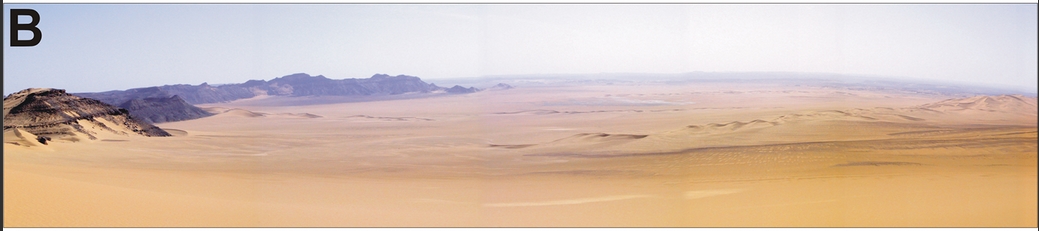
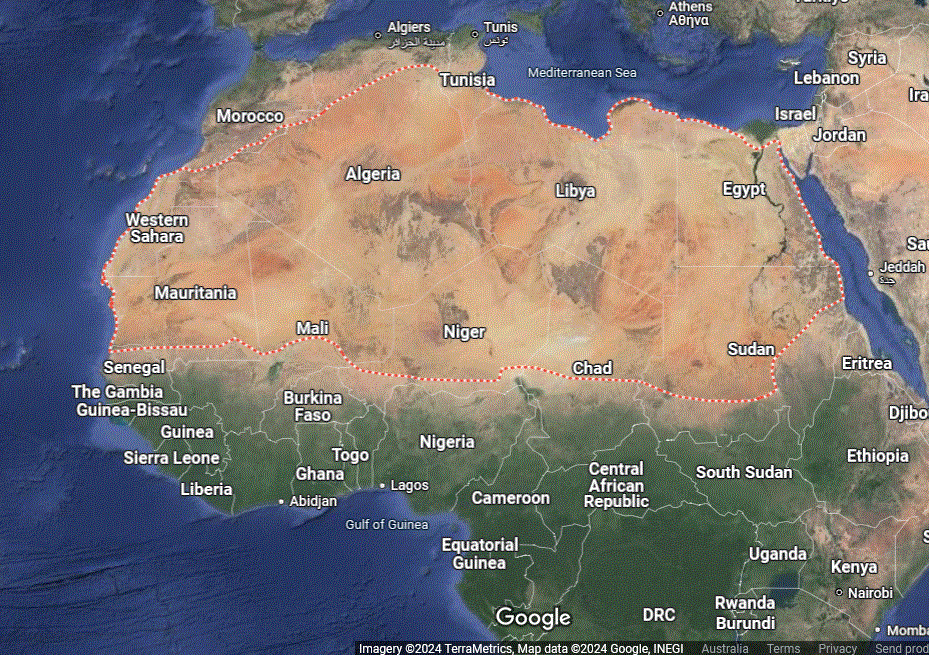
Rather washing away the idea that a hotter world is a horrible world, back in the early Holocene, 10,000 years ago, rivers flowed in the middle of the Sahara desert, and they were filled with fish. The photo above is what remains of Takarkori Lake today. If only climate change could bring back the fish?
While we were distracted in 2020, researchers published a paper about an trove of bones and body parts they had dug out of a cave in Southwest Libya, which is roughly the middle of the Sahara today. Surprisingly they found 17,551 bones, and even more surprisingly, 80% of them were from fish.
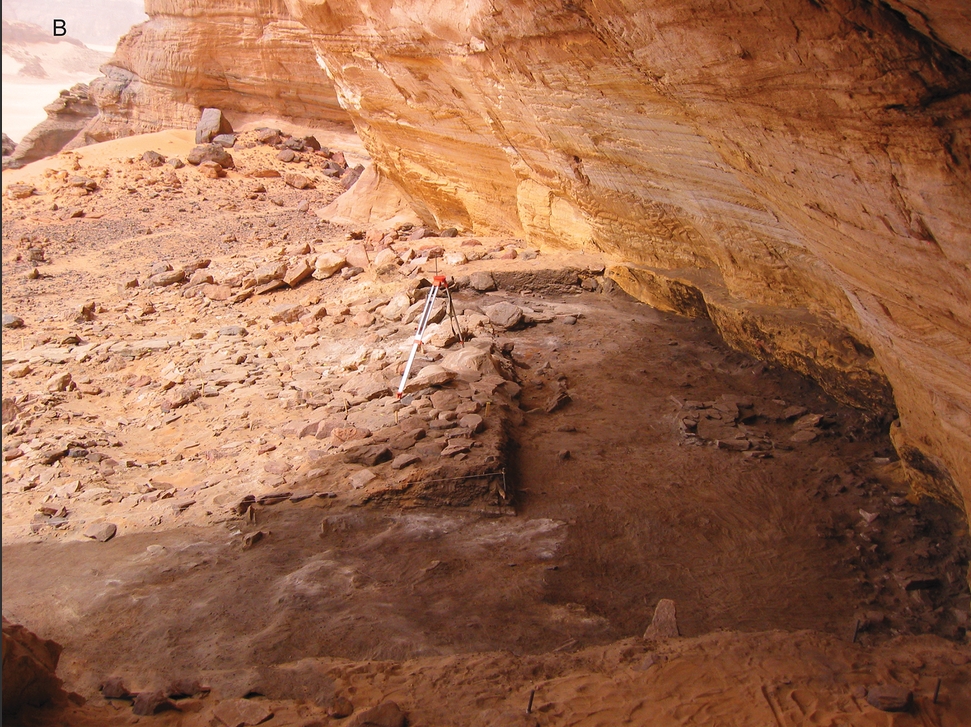
The people who dined there were catching tilapia and clariid catfish, and sometimes the odd mud turtle, mollusc and a crocodile or two. The lake (pictured above) is about 6 kilometers from the cave (below), and all the bones appear to be human refuse. It’s kind of the ultimate FOGO dump.
Somehow, this restaurant that stayed open for 6,000 years left behind layer after layer of undisturbed dining history. Gradually, over thousands of years the diners ate less fish, and more beef, goat and mutton.
Amazingly, 17,000 bits of bone and bits were found in an area of just 150 meters square. Somehow, against the odds, the researchers were able to identify every single fish bone. It seems astonishing, except the odds were that each bone was either a Tilapia or a Clariid catfish. The residents may have been a bit tired of eating the same two fish.
While the rivers and wetlands may have had a lot of fish, there wasn’t much variety.
The authors, Wim van Neer et al, speculate that the fish probably spread to these lakes via massive flooding events that washed them over the land. (Imagine how big those floods would have to be?) They wonder if the odd bird might have dropped some fish eggs, but don’t think it is as likely. Apparently sometimes even storms can pick up fish and fling them far away. If humans ever did control the climate and fix it in it’s current state, they would stop life returning to the desert and call it a “win” for the environment. Crazy eh?
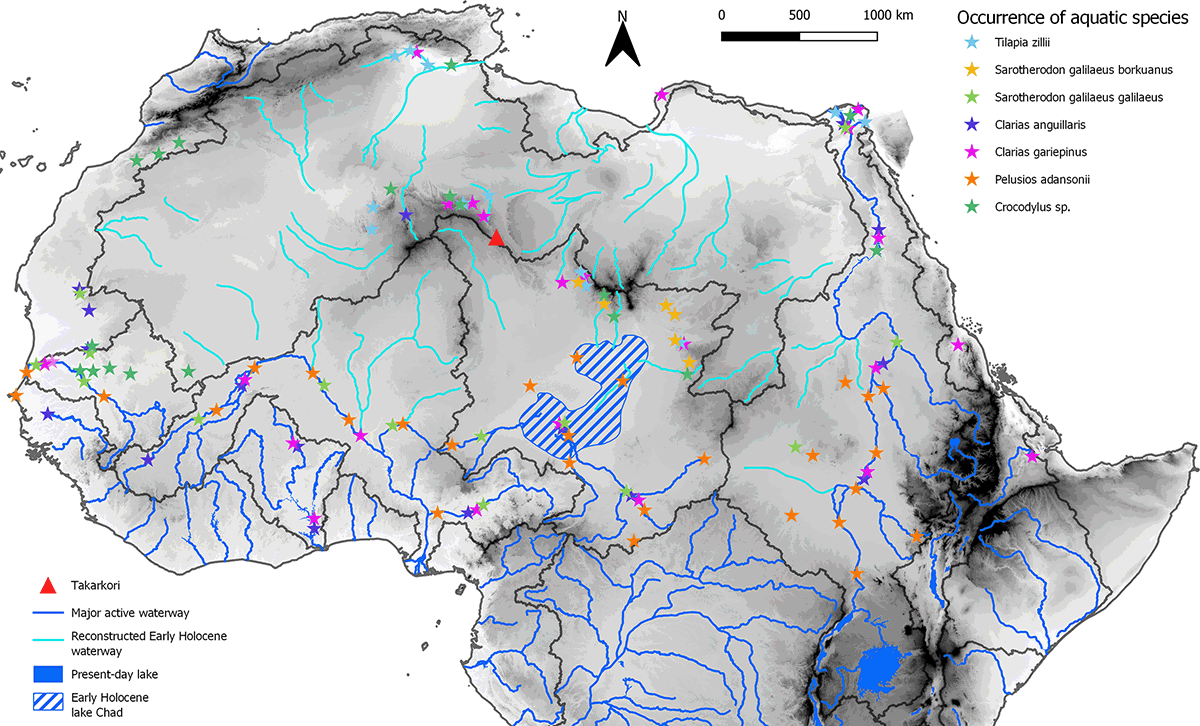
During this hot Holocene era, there were many other rivers across the Sahara that don’t flow there today. The lakes near Takarkori dried up during the sudden shocking cold snap 8,200 years ago, but came back after a few centuries. (Just more climate change!) Sometime around 5,500 years ago they dried up for good (or bad, if you were a nomadic herder).
One river nearby managed to keep flowing until Roman times, about 2,000 years ago.
Map of Saharan rivers and water systems of the Holocene. Fig 14. Extant occurrence of selected aquatic species (fish, crocodile, and turtle) in North Africa waterways. Crocodylus distribution has to be considered continuous in the present waterways south of the Sahara desert and along the Nile River south of Aswan.
The remnants at the cave cover an era 6,000 years long
It is somewhat sobering to be reminded of just how many generations have come and gone, and how different their lives must have been. What would they think if they saw the barren desert now?
The first humans to live in the cave arrived about 10,000 years ago. Permanent settlements appeared around 8,300 years ago with dairy cattle arriving 800 years later. By 6,000 years ago the site was used for brief visits by herders of goats and sheep during the winter.
From the paper:
The first inhabitants at Takarkori rock shelter were early Holocene hunter-gatherer-fishers locally called “Late Acacus” (LA1-3: ca. 10,200–8000 cal BP). Archaeological and archaeobotanical evidence indicates prolonged, albeit seasonal, residential occupation and a delayed-return system of resource exploitation [13, 33, 34, 35].
Stone structures of different size and functions (huts, windbreaks, platforms, etc.) and large fireplaces, together with large grinding stones and abundant pottery also point to semi-sedentary lifestyle, as indicated by other coeval sites in the region, such as Ti-n-Torha East, Uan Afuda and Uan Tabu [7, 36, 37]. The earliest evidence of Pastoral Neolithic herders (EP1-2) dates to ca. 8300 cal BP, mostly represented by the burial of women and children [38].
A full pastoral economy based on cattle exploitation including dairying is attested from approximately 7100 years cal BP [39], when the shelter is occupied seasonally (MP1-2), likely from the end of the rainy season and during the dry winter [13, 40]).
Nomadic herders (LP1, ca. 5900–4650 years cal BP), mostly focussing on small livestock (sheep/goat) rather than cattle, briefly camped at Takarkori during the winter, using much part of the area for penning the animals, with a thick, hardened layer of ovicaprine dung closing the sequence
The current Sahara desert:
ScienceDaily, February 2020
Catfish and tilapia make up many of the animal remains uncovered in the Saharan environment of the Takarkori rock shelter in southwestern Libya, according to a study published February 19, 2020 in the open-access journal PLOS ONE by Wim Van Neer from the the Natural History Museum in Belgium, Belgium and Savino di Lernia, Sapienza University of Rome, Italy, and colleagues.
Today, the Saharan Tadrart Acacus mountains are windy, hot, and hyperarid; however, the fossil record shows that for much of the early and middle Holocene (10,200 to 4650 years BP), this region was humid and rich in water as well as life, with evidence of multiple human settlements and diverse fauna.
Rock shelters within the Tadrart Acacus preserve not only significant floral and faunal remains, but also significant cultural artifacts and rock art due to early Holocene occupation of these shelters. In this study, the authors worked with the Libyan Department of Antiquities in excavating parts of the Takarkori rock shelter to identify and date animal remains found at this site and investigate shifts in the abundance and type of these animal remains over time.
Fish remains made up almost 80 percent of the entire find overall, which numbered 17,551 faunal remains total (19 percent of these were mammal remains, with bird, reptile, mollusc, and amphibian remains the last 1.3 percent). All of the fish and most of the other remains were determined to be human food refuse, due to cut marks and traces of burning — the two fish genera at Takarkori were identified as catfish and tilapia.
Based on the relative dates for these remains, the amount of fish decreased over time (from 90 percent of all remains 10,200-8000 years BP versus only 40 percent of all remains 5900-4650 years BP) as the number of mammal remains increased, suggesting the inhabitants of Takarkori gradually focused more on hunting/livestock. The authors also found the proportion of tilapia specifically decreased more significantly over time, which may have been because catfish have accessory breathing organs allowing them to breathe air and survive in shallow, high-temperature waters — further evidence that this now-desert environment became less favorable to fish as the aridity increased.
The authors add: “This study reveals the ancient hydrographic network of the Sahara and its interconnection with the Nile, providing crucial information on the dramatic climate changes that led to the formation of the largest hot desert in the world. Takarkori rock shelter has once again proved to be a real treasure for African archaeology and beyond: a fundamental place to reconstruct the complex dynamics between ancient human groups and their environment in a changing climate.
REFERENCE
“Wim Van Neer, Francesca Alhaique, Wim Wouters, Katrien Dierickx, Monica Gala, Quentin Goffette, Guido S. Mariani, Andrea Zerboni, Savino di Lernia. Aquatic fauna from the Takarkori rock shelter reveals the Holocene central Saharan climate and palaeohydrography. PLOS ONE, 2020; 15 (2): e0228588 DOI: 10.1371/journal.pone.0228588