Author: Iowa Climate Science Education

Rising Runways, Sinking Narratives: Maldives Debunk Climate Fears

By Vijay Jayaraj

For decades, we’ve been told that island nations are on the brink of disappearing beneath the waves, their inhabitants destined to be victims of climate change’s catastrophic effects. Yet, developmental activity in some of these countries tell a different story.

In recent years, the Maldives have embarked on an ambitious program of developing more than a dozen new airports, a move that seems to fly in the face of dire predictions about the country’s future.

This contrast between an apocalyptic narrative and a seemingly optimistic reality raises important questions about the accuracy of doomsayers’ predictions and the actual nature of island geomorphology – the rise and fall of terrestrial features.

Maldives’ Infrastructure Boom Belie False Fears

An archipelago of 1,192 coral islands grouped into 26 atolls, the Maldives have been investing heavily in its aviation infrastructure. A 1.3 million passenger terminal is a part of the recent upgrades at Hanimadhoo International Airport, just one of the 18 airports in the country.

Another major revamp is happening at the Velana International Airport. The new expansion will meet the growing demands of tourism and trade. It is expected to accommodate 25 million passengers per year, which is almost six times the volume in 2022.

The new cargo terminal at Velana is projected to handle 100,000 metric tons by 2025 and 300,000 metric tons by 2050. The airport will also have a new runway, a seaplane terminal and storage capacity for 100 million liters of fuel.

This year, Maldives President Dr. Mohamed Muizzu announced a decree to construct additional airports across nine different islands. The decree also signaled the development of a second airport in Laamu Atoll and new airports at GA Villingili and GDh Thinadhoo.

In all, forecasts show the operation of a dozen new airports within the next 10 years, in addition to the existing 18 airports. These investments represent a significant commitment to long-term infrastructure development.

They also require substantial modifications to the islands, including land reclamation and coastal engineering works. Such projects would be difficult to justify if Maldivian leadership truly believed the nation was on the verge of inundation.

Expansion and Sinking: Island Science

The United Nation’s Intergovernmental Panel on Climate Change (IPCC) has consistently identified small island states as being at high risk from sea-level rise. The IPCC’s reports are regarded as the bible for national policymakers across the globe.

However, the reality on the ground – and in the water – is more complex than these dire predictions suggest. Islands, particularly coral atolls like those that make up the Maldives, are dynamic systems that respond to environmental changes in complex ways.

They’re not static landmasses but are constantly changing shape and size in response to waves, currents and the deposition of sediments. This dynamic nature means that islands can, under certain circumstances, grow.

A scientific study published in 2020 examined shoreline changes due to land reclamation and coastal development in 607 islands across 23 atolls in the Maldives. They found that between 2004-2006 and 2014-2016, 59% of islands remained stable, 24% expanded, and less than 17% contracted.

Similarly, there are cases of natural increases in landmass. A landmark study published in the journal Nature Communications in 2018 examined changes in 101 islands of the Pacific atoll nation of Tuvalu over a period of 40 years. Despite sea-level rise, the total land area of the islands had increased by nearly 3%. On an individual basis, 74% of the islands had grown, while only 14% had shrunk.

The rate of increase in sea level of 1.5 millimeters per year during 1958-2014 is nowhere near being dangerous. This is nothing compared to the annual 47-millimeter rise that occurred 8,200 years ago as Earth warmed following the last glaciation that covered many parts of the Northern Hemisphere with ice thousands of feet thick.

During the Medieval Warm Period 1,000 years ago, worldwide sea level was higher than it is currently and life thrived, nonetheless.

The Maldives’ remarkable investments in infrastructure and the scientific evidence of island geomorphology suggest that the only thing sinking is the fearmongering stories of nations disappearing because of climate change.

This commentary was first published at RVIVR on September 6, 2024.

Vijay Jayaraj is a Research and Science Associate at the CO2 Coalition, Arlington, Virginia. He holds an M.S. in environmental sciences from the University of East Anglia and a postgraduate degree in energy management from Robert Gordon University and, both in the U.K., and a bachelor’s in engineering from Anna University, India.

via Watts Up With That?

https://ift.tt/E8IMdn3

September 11, 2024 at 12:02AM

Return to Myrmidon, Part 1. Inaugural Megafauna Expedition, September 2024

How is it that Australia’s Great Barrier Reef is still one of the Seven Natural Wonders of the World and visible from outer space.

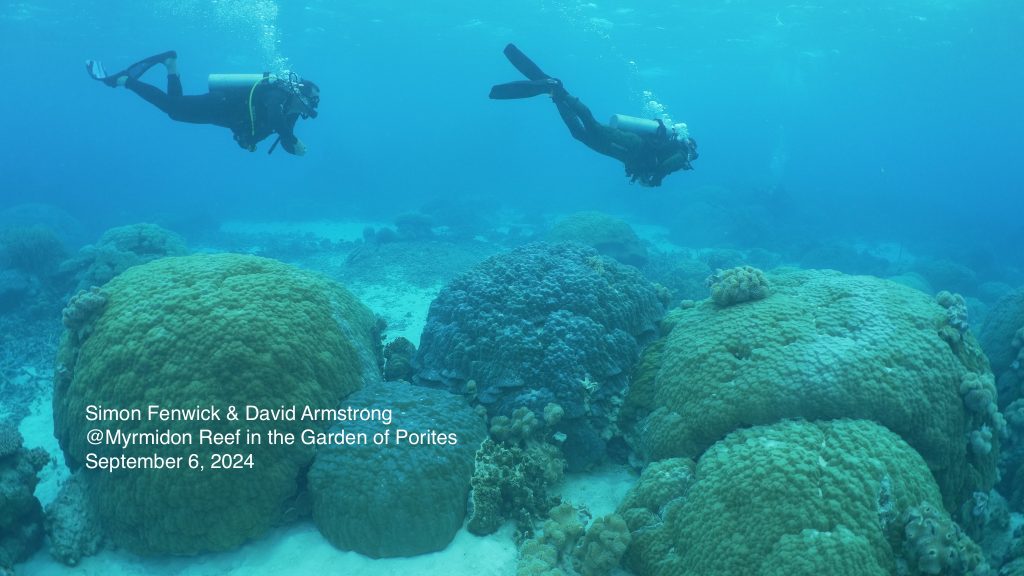
How is it that we can revisit the corals at Myrmidon Reef – an ancient, detached platform existing beyond the barrier reef proper, exposed to the full force of the Pacific Ocean – it persists, essentially unchanged season after season.

Aerial looking towards the Garden of Porites and the MV Sea Esta

Despite claims of repeated mass coral bleaching and the reality of severe tropical cyclones, this reef, Myrmidon reef is little changed.

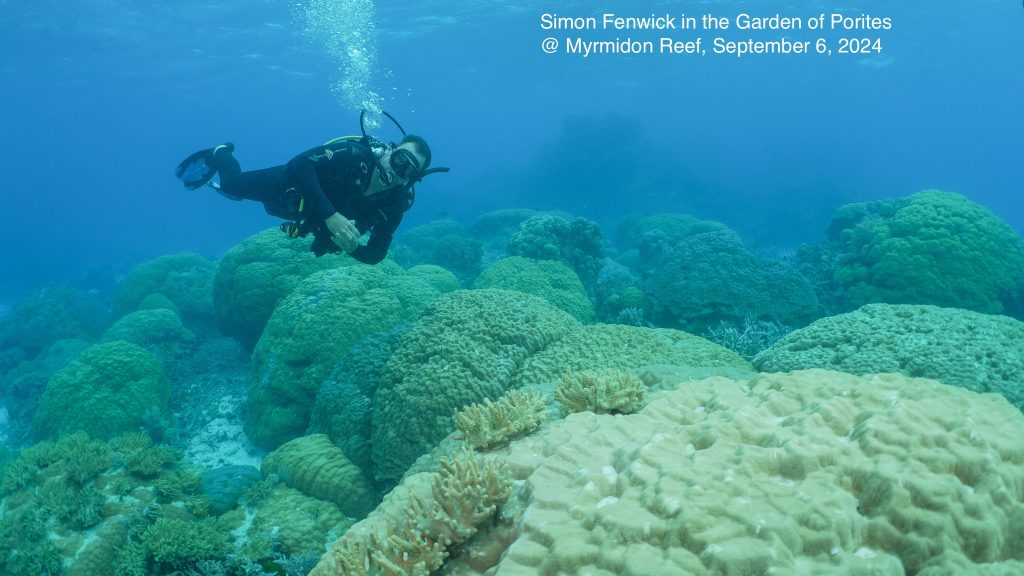
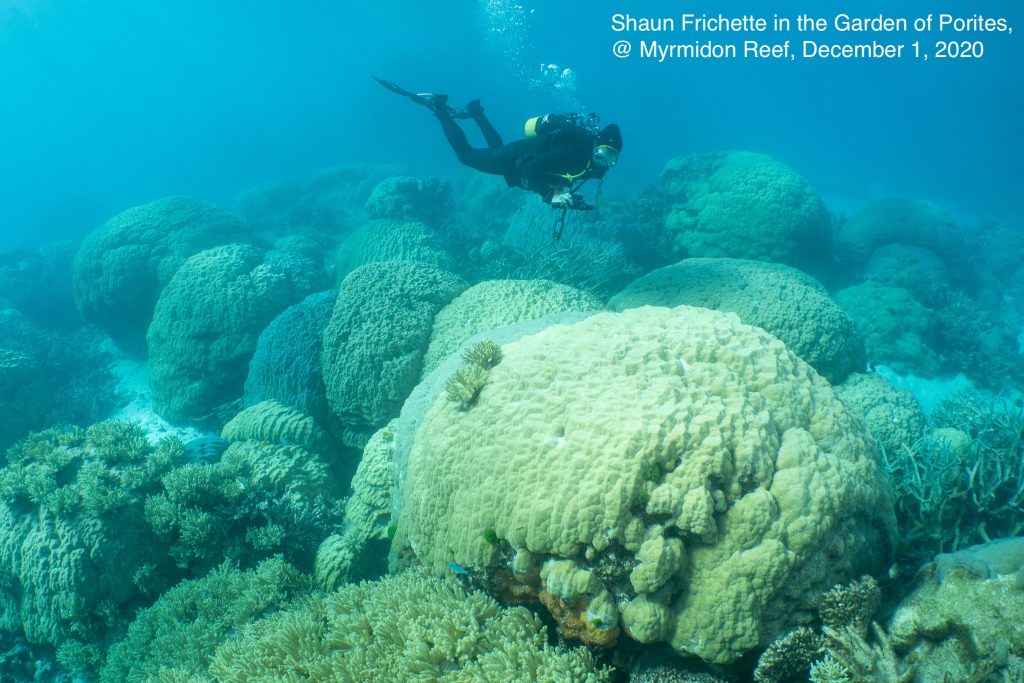
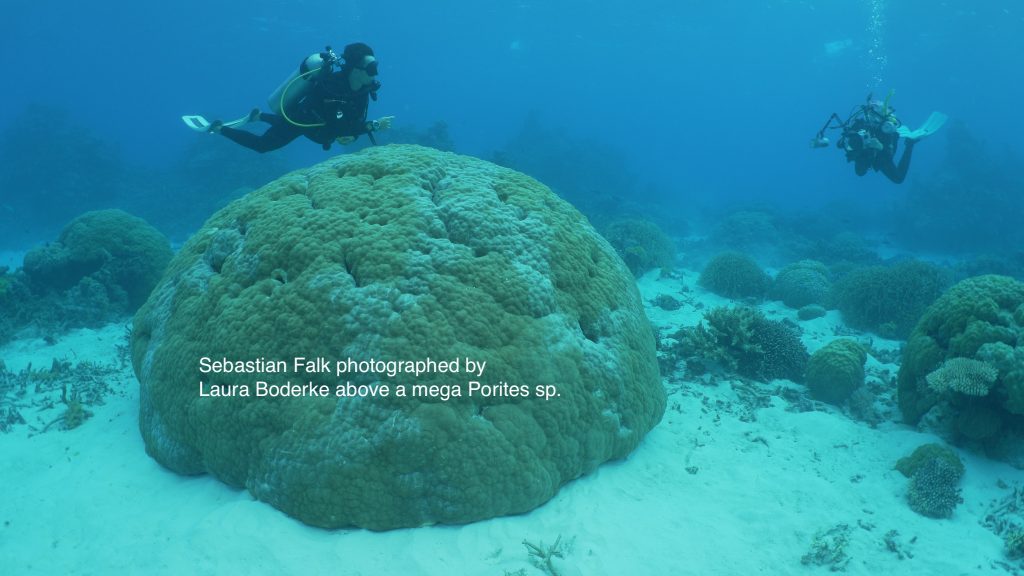
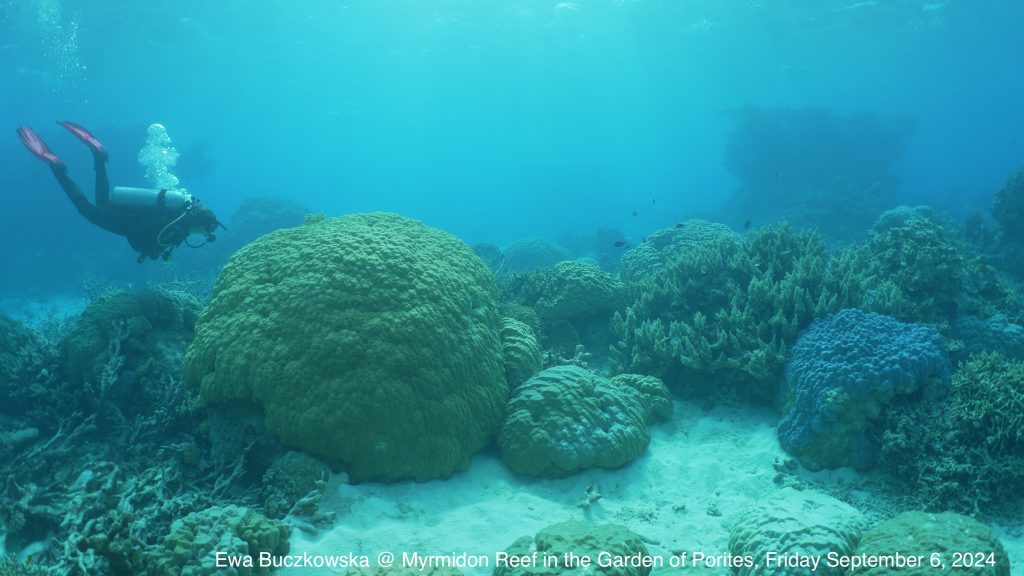
Its waters are still warm and clear – crystal clear.  In the ‘Garden of Porites’, in the back lagoon, there are still monster corals more than 3 metres in diameter.  These colonies persist as blocks, each of one colour: in olive green, or brilliant blue, while others are a golden yellow.

Can we acknowledge the size and strength of these corals.  What can we learn from them?  What makes this coral reef, and so many others at the Great Barrier Reef so resilient.

*****

After my first visit to Myrmidon Reef, on December 1, 2020 with Shaun Frichette and Stuart Ireland I penned something about that experience, and the shark, ’tis here.   That was four years ago.

All the photographs in this post were taken by Stuart Ireland.

via Jennifer Marohasy

https://ift.tt/sDmn76z

September 10, 2024 at 10:23PM

The Texas Oil Lawsuit which could Bankrupt Greenpeace USA

First published JoNova – My question, how do I donate to the lawsuit?

A Dallas energy company’s lawsuit could bankrupt Greenpeace’s U.S. operations

The pipeline company’s chairman, Kelcy Warren, is one of the richest men in North Texas.

By José Sánchez Córdova
Features Fellow

2:03 PM on Sep 9, 2024 GMT-5 — Updated at 4:17 PM on Sep 9, 2024 GMT-5

A Dallas energy company’s lawsuit against Greenpeace threatens to bankrupt the environmental group’s U.S. arm, a longtime opponent to fossil fuel interests.

Dallas pipeline company Energy Transfer is suing several Greenpeace International entities for $300 million in damages with claims relating to protests surrounding the construction of the nearly 1,200-mile-long Dakota Access Pipeline in 2016.

Greenpeace USA said in a June post on their website that a loss in the case “could threaten to put Greenpeace on the sidelines of the fight for climate justice.” The Wall Street Journal reported Sunday that the lawsuit puts the environmental group’s U.S. affiliate at risk of bankruptcy, but likely doesn’t affect Greenpeace’s international operations, based in Amsterdam.

…

Read more: https://www.dallasnews.com/business/energy/2024/09/09/a-dallas-energy-companys-lawsuit-could-bankrupt-greenpeaces-us-operations/

Let’s hope Texan justice is swift. Lets hope hearings into the alleged violations of the law are expedited and treated as a priority by the courts, that any court redress of any wrongs stands as a lesson to those who believe the law and respect for the rights of others does not apply to them.

via Watts Up With That?

https://ift.tt/iNdOBfJ

September 10, 2024 at 08:01PM

The biggest industrial accident in history that no one wants to talk about: the Covid lab leak

By Jo Nova

The silence is deafening

Matt Ridley wrote a whole book about the Covid lab leak, and now marvels that what was once an unthinkable conspiracy is now quietly accepted by two thirds of the population, but still exists under a cone of silence. The Wuhan Lab Leak was “worse than a thousand Bhopals” he points out, but the Royal Society said it wasn’t a suitable topic for discussion. It’s as if the deaths of millions, the economic chaos and the threat of bioweapons is a bore.

The World Health Organization never mentions it. The Academy of Medical Sciences said it was too controversial. Ridley was invited to debate the issue but no one would take the other side. He was invited to write a paper for a prestigious journal with a professor at Oxford. After they wrote a paper with hundreds of references, the editors rejected it out of hand, telling him that there was no evidence of people doing gain-of-function experiments in Wuhan, even though the Institute of Virology has published papers for six years detailing how they did exactly that.

Ridley was invited to debate at another forum, and after much searching, and payments of more than $10,000, finally one virologist was willing to argue it was not a lab leak. Mysteriously most virologists seem to hope the biggest issue of their specialty career will just go away, quietly.

By Matt Ridley, Spiked

…two-thirds of Americans believe the virus originated in a lab in China – yet most senior scientists seem to be sublimely unbothered by the fact that the public holds this view. They show little or no interest in getting out there and persuading people to change their minds. Instead, they just hope the whole topic fades into history.

China has a database of 22,000 virus samples on it, and they won’t share it, but Western virologists and politicians don’t seem to want to see it.

Have we sold our souls, our universities, our health, for cheap fridges and trade deals?

If the lab leak had occurred in any other country, we might be more interested. As Matt Ridley explains:

A former president of the Royal Society told me he hopes we never find out what happened, lest it annoy the Chinese. Would he have said the same about Bhopal, I wondered, or a plane crash?

Why is this topic taboo? Scientists in the West have become addicted to collaboration with China. They get students and money from China. Ten British universities rely on Chinese students for more than a quarter of their income. Scientific journals get rich on Chinese publication fees. Richard Horton, editor of the Lancet and recipient of a Friendship Award from the Chinese government, went on Chinese television early in the pandemic to say: ‘I think we have a great deal to thank China for, about the way that it handled the outbreak.’

As bad as that corruption of science is, the real problem is much bigger. Ridley doesn’t mention it, but Australians know all too well why no one wants to ask for an inquiry. The second biggest economy in the world plays nasty — it’s not just about Chinese students at university, or journal sales:

…when Scott Morrison, Australian Prime Minister, dared ask for an investigation in April 2020, within a week China threatened boycotts, and followed up with severe anti-dumping duties on Australian barley. After which the CCP discovered “inconsistencies in labelling” on Australian beef imports, and added bans or tariffs on Australian wine, wheat, wool, sugar, copper, lobsters, timber and grapes. Then they told their importers not to bring in Australian coal, cotton or LNG either. The only industry they didn’t attack was iron ore, probably because they couldn’t get it anywhere else. In toto, the punishment destroyed about $20 billion dollars in trade, and everyone, even CNN, knew this was political retribution and a message to the world.

Matt Ridley does an excellent job unpacking the evidence:

With Professor Anton van der Merwe of Oxford University, I detailed how it is no coincidence that this virus turned up in exactly the right city at exactly the right time as they were planning exactly the right experiments that would put exactly the right insertion into exactly the right place in exactly the right gene of exactly the right kind of virus. And to do so at exactly the wrong biosafety level.

The outbreak began not just in one of the very few cities doing research on this kind of virus, but also in the city with the biggest SARS-like virus research programme on the planet.

These kinds of viruses are found a thousand miles away from Wuhan. That’s the distance of London to Rome. We know of only one animal species that regularly travelled that route, carrying lots of viruses. That animal was the scientists themselves. In the 15 years before the pandemic, they collected over 16,000 bat viruses from all over southern China and south-east Asia and brought them a long way north to Wuhan. The nine closest relatives of SARS-CoV-2 at the time of the outbreak were in the freezer of the WIV.

Coincidences do happen, but when foot and mouth broke out in the UK in 2007, just down the road from the world’s reference lab for foot-and-mouth virus, people did not think it was just a coincidence. They investigated and sure enough it was a lab leak.

The experiments they did in Wuhan were crazily risky.

Lab leaks “happen all the time”:

There have been lab accidents that caused outbreaks of influenza, anthrax and many other pathogens. In 1977, there was a global influenza pandemic caused by the trial of an experimental vaccine that had been inadequately attenuated.

In 2003-4, SARS-1 leaked from a lab at least four times, once in Singapore, once in Taiwan and at least twice in Beijing, and killed the mother of a researcher. In three of those cases, we still don’t know how the accident happened.

Bizarrely, no one can even explain why anyone would want to do these experiments. There are a million permutations of possible pandemic causing virions and we’re trying to make them one at a time, in advance, to get ahead of the game? As Ridley says” That went well, didn’t it?”.

In January, Chinese scientists published a preprint paper describing a new coronavirus that had a 100% death rate in humanized mice.

So the question of bioweapons, of reckless experiments that put us all at risk, is surely one of the most important issues of the era, unlike the exaggerated hyperbole of one more degree of global warming — yet there are no discussion panels on the nightly current affairs circus shows. The Ministers of Science, Health, Defence do nothing.

And the UN is as useless as it ever was.

Read it all at Spiked. Matt has waged his own war for four years to get this story out there.

Matt Ridley is a science writer and co-author of Viral: The Search for the Origin of Covid-19, with Alina Chan.


0 out of 10 based on 0 rating

via JoNova

https://ift.tt/nPBjdVb

September 10, 2024 at 04:55PM