Author: Iowa Climate Science Education

This is not ‘leading the world’. It’s economic suicide

By Paul Homewood


h/t Philip Bratby


 image

This morning the Government announced the results of the latest round of bids for renewable generation capacity.  What does a ‘round of bids’ mean?

The way the system currently works is unlike normal capital investment. In almost every other large capital project, investors take the risk of the price and demand for their project.  This is true when, say, a manufacturer builds a new plant, and (obviously) when a developer builds a new estate of homes – the builder has to sell the homes to householders to get their return!

Investors commit their money because they believe that they will get a good return on their investment, but they can’t be sure.  So investors have to accept the risk that investing involves, and in return they sometimes, but not always, get higher returns than are available in secure investments like Government bonds.

For wind and solar powerplants in UK jurisdictions, a different regime applies.  Investors are offered a guarantee from the Government of both the price, and the amount, of electricity that they will be able to sell.

How do these guarantees work?

Firstly, the amount. The amounts of electricity that wind and solar farms produce are obviously highly dependent on the wind blowing and the sun shining. This, by the way, is a major headache for the grid managers, because this is unpredictable and electricity is always needed and cannot be stored at grid scale. So what the Government has done is insist that Grid managers must take all the electricity that renewable sources produce, whether or not there are cheaper alternatives and regardless of whether that much electricity is actually needed at the grid at the time it is generated. (If the grid literally cannot accept the renewable energy generated, the renewable powerplants turn down or shut off – but still have to be paid as if they were running as hard as possible.)

In effect, the Government has said “we will take all the electricity that you can deliver”.  The loser from this is gas power stations, who are pushed aside by renewable suppliers until calm, dark or cloudy conditions return. Then they are required to replace all the missing electricity. This has the effect of making gas generation much more expensive than it should be, as there has to be a tremendous amount of gas capacity sitting unused for much of the time. Suddenly turning gas plants on and off all the time also increases maintenance costs.

Secondly, the Government guarantees the price of electricity that renewables produce. They don’t do this for gas generators, who have to live with the ‘market price’ of electricity, which is highly variable.  In this latest round (called ‘AR6’), the Government secured new renewables investment at prices which for offshore wind are around 30 per cent higher than the average market prices in 2024.  For floating offshore wind plant, not built on the sea bed, the price the Government has guaranteed is a staggering 200 per cent higher than the market price.  Prices significantly higher than market prices were also awarded to solar and onshore wind projects.

All these extra margins get added to electricity bills. And there’s more.

Significantly, hidden in this auction was already agreed capacity which was allowed by Government to back out of prices agreed in earlier auction rounds and be awarded the much higher prices seen today.

The renewable investors have choices, and they have clearly told the Government that they won’t invest unless the returns are sufficiently high. For the investor, ironically, the risk is not that the market prices are too low (they aren’t at risk from market prices), but that the Government changes its mind about the attractiveness of renewables, and at some point in the future begins to question the enormous subsidies that renewables require.

We have consistently been told that renewables are cheaper than gas generation.  That was briefly true in the Ukraine crisis when Russia closed its gas supply to the West, but is far from true now.  Now, with the power of market flexibility, gas prices have fallen, while UK electricity prices continue to rise.  They will keep on rising if we insist on continuing to subsidise investment in renewables, making the UK increasingly uncompetitive, and hurting consumers.

This is not ‘leading the world’, it’s economic suicide.


Neil Record is Chairman of the Institute of Economic Affairs. He holds an MSc in Economics. He has worked in the Economic Intelligence Department of the Bank of England, and as an economist in industry

https://www.telegraph.co.uk/news/2024/09/03/renewable-energy-auction-ar6-economic-solar-uk-cfd-wind/

via NOT A LOT OF PEOPLE KNOW THAT

https://ift.tt/ler0yxZ

September 4, 2024 at 03:22AM

Yellow Rain Forecast

By Paul Homewood


I always check the BBC Weather Forecast in the morning, and hardly a day goes by without a weather warning, like this today:


image

image

The actual forecast mentions a few heavy showers and big puddles (!). Hardly worthy of a warning I would have thought.


image


Needless to say, the Yellow Warning originates from the Met Office, who are determined to scare the public about extreme weather.

via NOT A LOT OF PEOPLE KNOW THAT

https://ift.tt/HTxaeGR

September 4, 2024 at 03:10AM

Kamala Harris’s California cost-hiking, business-killing policies

Kamala Harris continues to support California’s tax-and-spend, overreaching, and economy-crushing policies and their threats to America’s energy, agricultural, economic, employment, living standards, and national security future.

via CFACT

https://ift.tt/sNX8IRg

September 4, 2024 at 02:57AM

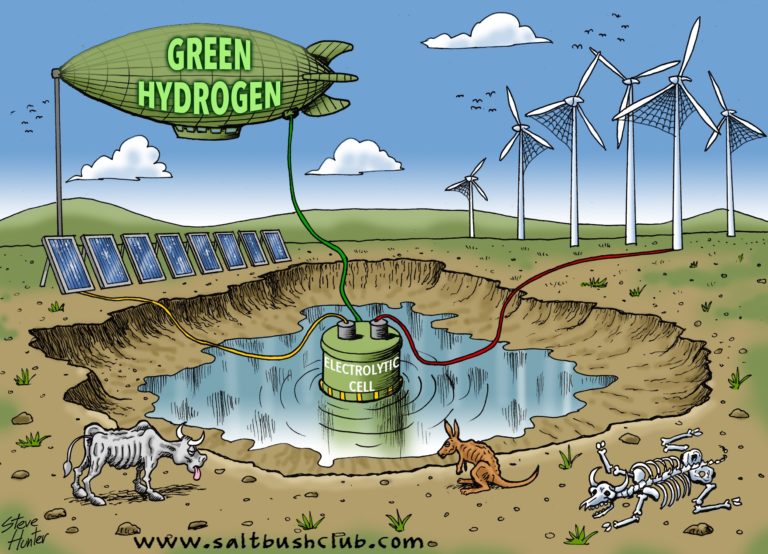
Green Hydrogen Meltdown: Carpetbaggers Crabwalk Away From ‘Clean Fuel’ Projects

Seems like only yesterday when ‘green’ hydrogen gas was the next big thing. And then, all of a sudden, it wasn’t.

The story, or should we say fairytale, went something like this.

Once upon a time there were millions of solar panels and wind turbines generating electricity in such a sporadic and chaotic fashion, that the ‘excess’ power (ie stuff generated when nobody need it) could be converted into hydrogen gas.

The gas could then be used as ‘clean fuel’ to drive gas turbines and generate electricity on calm nights when those panels and turbines were producing nothing, at all.

Sounds simple, right?

As with any scam tagged as green, clean, sustainable or renewable, rent-seekers were all in.

Excited by hype and hubris from billionaire opportunists, politicos joined the green hydrogen cult with offers of $billions in taxpayer-backed subsidies, and mainstream media hacks breathlessly reported on a new dawn for so-called ‘green energy’.

It all sounded truly fantastic, until those pesky laws of physics and economics intervened and spoiled the party.

As Francis Menton outlines below, the grand green hydrogen plan is in full-scale meltdown and the carpetbaggers are crab walking away from projects that never made any sense.

The Energy Transition Ain’t Happening: “Clean Fuels”
Manhattan Contrarian
Francis Menton
19 August 2024

Come here for the latest news on how the so-called “energy transition” is grinding to a halt. No amount of government handouts can make this ridiculously uneconomic fantasy work. My last post on the subject, on July 20, reported on the collapse of a large “green hydrogen” project in Australia, with the stated loss of an investment of about $2 billion (Australian) (equivalent to about $1.3 billion U.S.).

It seems that that one was just the tip of the iceberg. Today’s Wall Street Journal has a substantial roundup of the financial status of a half-dozen or so so-called “clean fuel” projects. The headlines from the print and online versions tell you what you need to know. In the print edition (page B3) it’s “Clean-Fuel Startups Begin to Fizzle Out.” Online, it’s “Clean Fuel Startups Were Supposed to Be the Next Big Thing. Now They Are Collapsing.” As the headlines indicate, pretty much all of these “clean fuels” ventures are failing. Who could have guessed?

The Journal’s label of “clean fuels” is used to cover two different categories, one being biofuels, and the other being so-called “green hydrogen” (the stuff produced by electrolysis of water using electricity produced by wind or sun). The biofuels category appears to include such genius ideas as making fuel for airplanes or ships out of used cooking grease. Whatever you might think of that idea, these are still carbon-based fuels, and it’s not clear to me at all why they are supposedly “cleaner” than other carbon-based fuels like petroleum or natural gas.

Hydrogen, on the other hand, offers the promise of providing energy for planes, trains, ships and automobiles free of the dreaded “carbon emissions.” Just hook up some solar panels or wind turbines to big electrolyzers and watch the stuff bubble out of the water virtually for free! The badly misnamed “Inflation Reduction Act” made billions upon billions of dollars of subsidies available for these kinds of projects. Surely the successes should be rolling forth one after the other by this time.

It turns out that no matter how many subsidies the government doles out, nobody can make this “green” hydrogen stuff as cheaply as natural gas can be produced by drilling into rock.

One of the big green hydrogen startups is called Plug Power. The Journal quotes its CEO, Andy Marsh:

“The excitement of the early days has not lived up to the hype,” said Andy Marsh, chief executive of Plug Power, a startup that recently opened one of the country’s first plants making green hydrogen, a potential replacement for fossil fuels in industries such as steel making and chemical production. Shares of Plug Power have tumbled more than 90% since the passage of the U.S. climate law two years ago.

Well, at least they’re not bankrupt — yet. You do have to wonder how Mr. Marsh could qualify to be a CEO of such a company and raise hundreds of millions of investor dollars without ever crunching the numbers to realize that green hydrogen could never be economical. Could it be that his business plan all along was to pay himself a big salary out of the investors’ funds and then walk away when the inevitable bankruptcy came?

Here are a couple of paragraphs from the Journal summarizing the overall state of the industry:

Many clean-fuel projects have become money pits, in part because of the great amounts of power they need. High interest rates, supply-chain disruptions and expensive power-grid upgrades have driven up electricity prices. . . . “The only way to fix it is by lowering the cost of green electricity,” said Andrew Forrest, one of the most vocal advocates of hydrogen.

Wait a minute. Andrew Forrest — where have we heard that name? Oh, he is the Australian tycoon who goes by the name “Twiggy.” He’s the head of the company Fortescue, and was the subject of my July 20 post as a result of the collapse of his big Australian green hydrogen project. The Journal goes on to some detail about “Twiggy’s” ongoing green hydrogen plans:

Forrest, the billionaire founder of Australian iron-ore giant Fortescue, said his company’s 2030 hydrogen production target now looks unrealistic. Fortescue is planning to produce its own clean power to make hydrogen in Australia and is considering doing the same in Arizona.

But somehow the Journal fails to mention the failure of Forrest’s big Australian project. Could it be that they interviewed him a month ago, before that happened?

So the odds are that nobody will ever be able to make these “clean fuels” economically. The consequence:

Without clean fuels, emissions at many companies are expected to keep climbing, threatening U.S. and global climate targets. Industries including aviation and shipping are counting on the new fuels because wind and solar power and batteries can’t meet their huge energy needs.

When are we allowed to declare that this whole charade is over?

UPDATE, August 20: Commenter Pablo Honey suggests that it might be interesting to look at the financials for one of these “clean fuels” companies. Here is the 2Q 24 earnings release for Plug Power, just out on August 8. Some key figures: revenue — $143.4 million; “earnings” — net loss of $262.3 million.

Margins: “The Georgia plant’s increased production capacity and strategic price increases across the hydrogen product portfolio have significantly improved hydrogen margins.” So they are increasing prices from levels that were already a multiple of the price of natural gas for equivalent energy content. Good for them if they can get someone to pay, but that inherently means that their market is limited to buyers who either need hydrogen for its non-energy properties (i.e., fertilizer) or ones who are willing to forego profit out of religious devotion to “decarbonization.”

Government handouts:

“Plug Power became one of the first companies to leverage the PTC [Production Tax Credit] for its liquid hydrogen plant in Georgia, optimizing financial performance and enhancing shareholder value. . . . Plug Power is progressing with the DOE loan, which aims to support the expansion of its green hydrogen initiatives and infrastructure for up to six sites.”

Great — it’s another Solyndra in the works.
Manhattan Contrarian

via STOP THESE THINGS

https://ift.tt/asPAIQ8

September 4, 2024 at 02:31AM