Author: Iowa Climate Science Education

Top North Sea oil field in jeopardy after Miliband crackdown

By Paul Homewood


 image

One of the North Sea’s biggest oil field developments is in jeopardy after developers put the project on hold following a crackdown by Ed Miliband.

NEO Energy on Monday announced a slowdown of investment in various UK schemes, including the large Buchan Horst redevelopment, 93 miles off the coast of Aberdeen.

Buchan is the third-biggest upcoming North Sea project and is conservatively expected to yield about 70m barrels of oil, with peak production likely to hit about 35,000 barrels per day. It was expected to begin production in 2027.

But NEO claimed a tax raid and new consultation launched by the Labour Government had plunged the scheme into uncertainty.

Rachel Reeves, the Chancellor, is working with Energy Secretary Mr Miliband to increase the windfall tax on oil and gas businesses.

Mr Miliband’s department is also reviewing the environmental assessment process for North Sea oil and gas developments in a consultation due to run until the spring.

This was announced last month in response to a landmark Supreme Court ruling which said the “scope 3” emissions – those that would indirectly result from a development, such as cars running on petrol – must be taken into account.

The ruling has already led the Department of Energy Security and Net Zero to announce it will not defend previous decisions to grant licences for the major Rosebank and Jackdaw developments in court – although these have not yet been revoked – with other North Sea operators also facing limbo while the Government decides what the ruling means for future schemes.

Sir Keir Starmer, the Prime Minister, and Mr Miliband previously vowed not to grant any new oil and gas licences if they won power in July’s election.

The review has prompted the Offshore Petroleum Regulator for Environment and Decommissioning, which handles development applications, to impose a temporary moratorium on applications that are already in motion as well, NEO Energy said.

The company said that combined with the harsher tax environment, this had implications for investment.

It added: “Against this uncertain backdrop, NEO and its owner HitecVision have taken the decision to materially slow down investment activities across all development assets in its portfolio.

“In relation to the Buchan Horst project, NEO awaits clarity regarding the UK regulatory and fiscal framework so that the full impact can be assessed.

“This will inevitably delay first oil timing in relation to the project which was previously forecast to be late 2027.”

https://www.telegraph.co.uk/business/2024/09/02/top-north-sea-oil-field-at-risk-after-miliband-crackdown/

via NOT A LOT OF PEOPLE KNOW THAT

https://ift.tt/9rGYfiS

September 3, 2024 at 03:20AM

Petrol cars ‘rationed to meet eco targets’

By Paul Homewood

h/t Doug Brodie

I predicted this would happen:


image

Car makers are rationing sales of petrol and hybrid vehicles in Britain to avoid hefty net zero fines, according to one of the country’s biggest dealership chains.

Robert Forrester, chief executive of Vertu Motors, said manufacturers were delaying deliveries of cars until next year amid fears they will otherwise breach quotas set for them by the Government.

This means someone ordering a car today at some dealerships will not receive it until February, he said.

At the same time, Mr Forrester warned manufacturers and dealers were grappling with a glut of more expensive electric vehicles (EVs) that are “not easily finding homes”.

He said: “In some franchises there’s a restriction on supply of petrol cars and hybrid cars, which is actually where the demand is.

“It’s almost as if we can’t supply the cars that people want, but we’ve got plenty of the cars that maybe they don’t want.

“They [manufacturers] are trying to avoid the fines. So they’re constraining the ability for us to supply petrol cars in order to try and keep to the government targets.”

The chief executive blamed the zero emission vehicle (ZEV) mandate, which requires at least 22pc of cars sold by manufacturers to be electric from this year.

This target will gradually rise each year before reaching 80pc in 2030, with manufacturers made to pay £15,000 for every petrol car that exceeds their quota – unless they have so-called carbon credits to spend.

But the scheme has prompted stark warnings from bosses at major brands, such as Vauxhall owner Stellantis and Ford, which have said they cannot sacrifice profits by selling EVs at large discounts indefinitely.

Instead, they have previously warned they may be forced to restrict petrol car supplies to artificially boost their ZEV mandate performance.

The warning from Vertu is the first confirmation that carmakers have now begun doing so.

Mr Forrester added that although some people might cheer falling electric car prices, supporters of the ZEV mandate in its current form were “economic buffoons, because car manufacturers are being forced to discount EVs to such an extent that they’re making losses… and that is not a good thing for business”.

He said: “What the Government’s actually doing is constraining the new car market, which has a big impact on VAT receipts for them, and creates a business environment in the UK where manufacturers may question whether they want to make cars here.

“As Carlos Tavares [chief executive of Stellantis] has said, why should they sell cars at a loss because of UK government policy?

“The new car market is no longer a market, unfortunately. It’s a state-imposed supply chain.”

His comments came as Vertu said it expected lower first half profits as demand for new cars and more expensive electric vehicles remained under pressure. The group, which has 192 showrooms and after-sales sites across the UK, said new car sales by volume fell 5.8pc in the five months to July 31.

By contrast, Vertu says there is strong demand for used cars with September expected to be a particularly busy month.

Mr Forrester’s warning comes after the Society for Motor Manufacturers and Traders (SMMT), which represents car makers, slashed its forecast for electric car sales this year amid the ongoing slowdown in demand.

The group now predicts electric vehicles (EVs) will account for 18.5pc of the new car market in 2024, down from an earlier prediction of 19.8pc.

EV registrations surged higher in July but sales to private consumers continued to slump.

Mike Hawes, chief executive of the SMMT, said the weakening demand for EVs among private consumers – despite heavy discounting by car makers – remained the industry’s “overriding concern”.

https://www.telegraph.co.uk/business/2024/09/02/manufacturers-ration-petrol-cars-hybrid-electric/


The Labour Government claimed it would grow the economy, but this crazy policy is having the opposite effect. Car sales are reduced, manufacturers’ and dealers’ profit margins squeezed, while cheap Chinese EVs flood the market.

It is time the useless Mike Hawes actually stood up and challenged the whole EV policy, which is doing so much harm to his members.

via NOT A LOT OF PEOPLE KNOW THAT

https://ift.tt/20yUGhj

September 3, 2024 at 03:07AM

The Green New Deal could make electricity 28 times more expensive

The Green New Deal is impossibly expensive.

via CFACT

https://ift.tt/upx4Alr

September 3, 2024 at 02:36AM

Terminal Decline: China’s Double-Headed Wind Turbine Signals Industry’s Last Gasp

The wind industry started out as absurd, and only became more so over time. The turbines became bigger, the blades longer and capacities went from piddling 1.5 MW machines to 18MW monsters – albeit so large they can barely stand up against stiff breezes, let alone a full-blown hurricane.

As the blades grew, their habit of disintegrating and/or unshackling increased to the point where – these days – the blades simply shred themselves when the machines are brand-new.

Little wonder that rural and coastal communities have taken a set against these things, as The Spectator outlines below.

Wind energy enters its mid-life crisis
Spectator Australia
Editorial
12 August 2024

When I first heard that China was installing a two-headed wind turbine, I thought the Babylon Bee was having a laugh.

The Mingyang twin-rotor floating wind turbine platform isn’t a prank, it’s another grotesque evolution of the ‘Net Zero’ at any cost philosophy which has started creating sea monsters.

Video of OceanX being put together in Guangzhou reveals an awkward-looking creation that is supposedly able to harness typhoons when installed in deep water. We’ll see.

More likely, it’ll be a speed bump in the ocean – a metal iceberg – a bit of jetsam bobbing about while the world goes to war over wobbly lines in the South China Sea.

Articles praising the installation insist that it’s built to withstand 287 km/h winds, leaving ‘plenty’ of safety over the strongest record typhoon in the area of 260 km/h – but they add a bit of wriggle room by insisting that ‘weather systems are flying off-kilter as climate change continues to advance’.

Remember, if it ends up in bits, you gotta blame ‘climate change’.

If you’re like me and thought this green fable sounded familiar, you may remember the Donghae TwinWind Project planned for the coast of Norway in 2021. The same technology is on track for the Celtic Sea (with support from the UK government) due for completion in 2030.

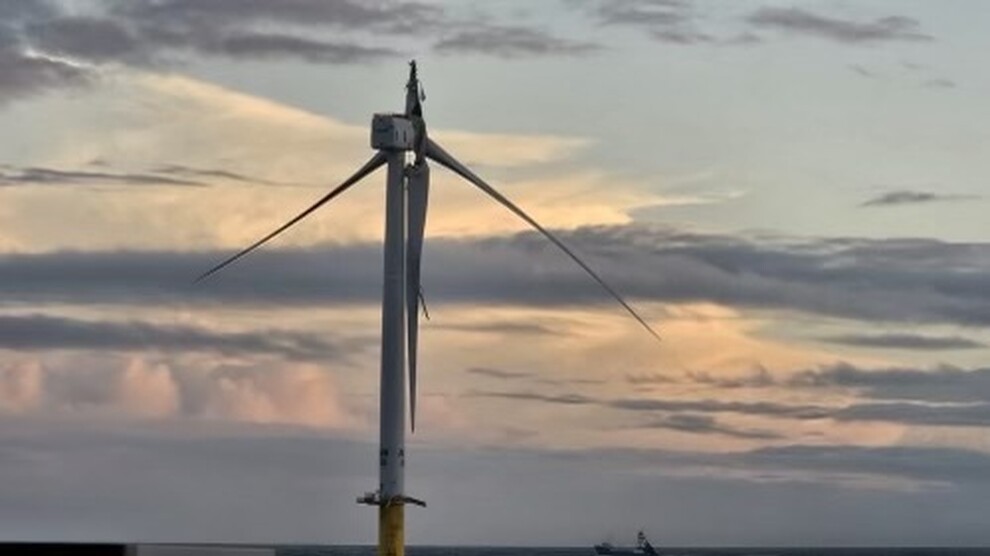
There have been other designs for twin-headed rotors. A Chinese-made land-based turbine experienced a dramatic failure in which it caught fire after two months.
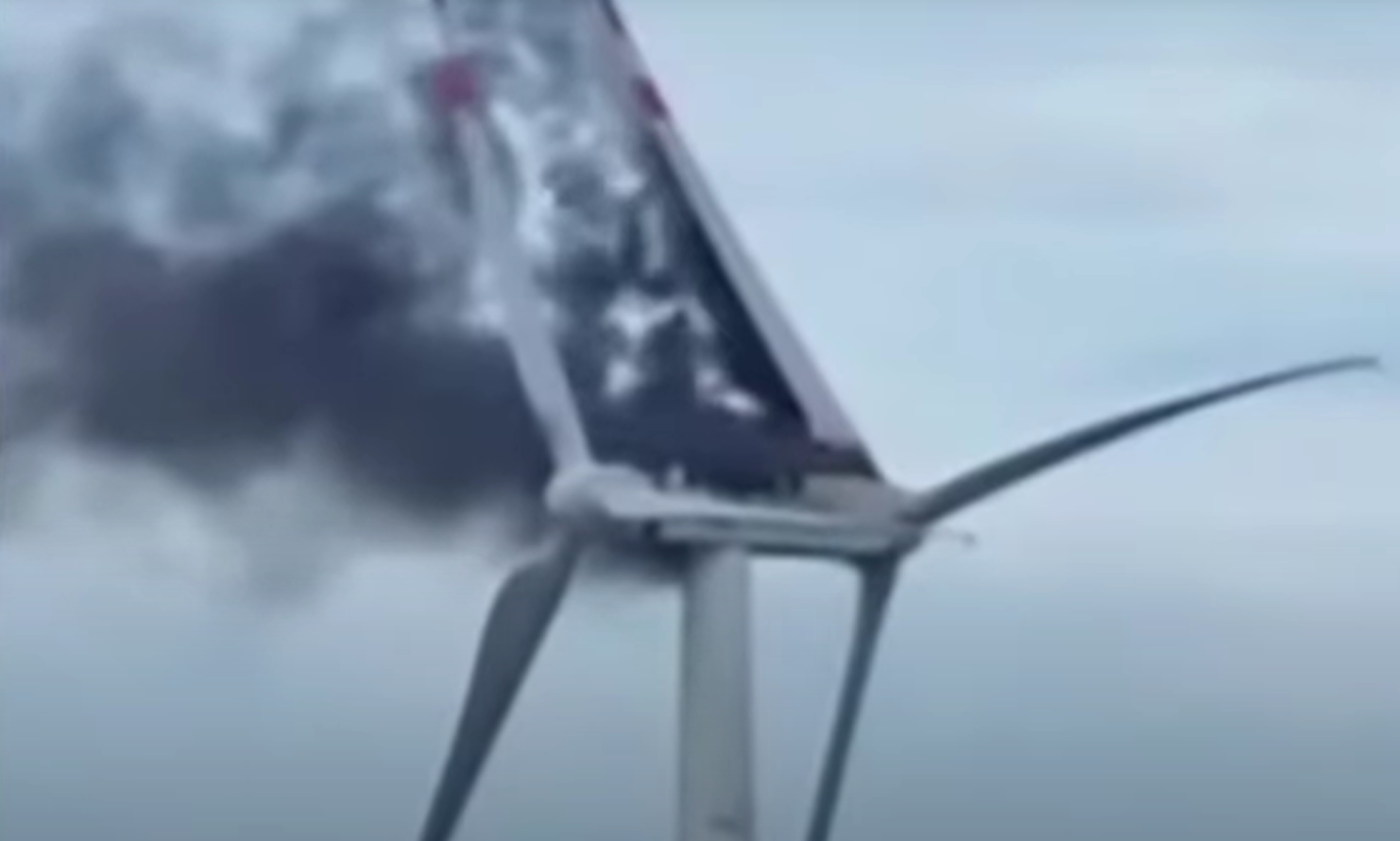
My point is not that technology is always perfect, only that I’m glad these new air-mounted machetes will be a long way out to sea and not hovering over unsuspecting cows in a paddock.

Besides, two-headed turbines are nothing compared to the ‘wall of wind turbines’ – or as I like to call it – ‘Resident Seavil’.

A Norwegian company has decided to mount 117 turbines on some scaffolding. It’s the stuff of nightmares if you identify as a seagull.

Wind Catching Systems’ wall of turbines dubbed ‘Windcatcher’ has won certification from the world’s leading technical authority on wind power – DNV. At 300 metres high and 350 metres wide, you can only imagine the engineering that will need to go into securing it to the ocean floor.

To me, it feels as if we’re entering the mid-life crisis version of wind energy where everything has to be bigger and have more sharp spinning bits. The crazier, the better. This behaviour is more common than you think. The dinosaurs entered a size-based arms race, and so do our bros at the gym when they skip leg day and end up walking around like they have implanted their girlfriend’s silicon breasts under their biceps.

Back in the real world, Australia’s previously approved wind farms are being cancelled as landholders and communities nix their support.

A 55-turbine wind farm application near Armidale tabled by Ark Energy has been withdrawn when nine landholders contracted to ‘host’ turbines changed their minds and ripped up their contracts.

The Clean Energy Council seemed surprised, saying: ‘I haven’t heard of too many instances where landholders have changed their minds.’

They might need to get used to the word ‘no’. Despite these projects paying property owners a fortune per turbine (presumed to be around $35,000 per turbine per year), the reality of these turbines is harder to live with.

Not only that, neighbouring farms get nothing despite shouldering a major imposition from wind farms – not least of all, how they look. This creates community tension.

Rural communities are being inundated with projects. Many are terrified their sleepy, pristine areas will be ripped up and industrialised by Big Green. It’s a feeding frenzy out there. The government opened the doors, removed basic landholder protections, and said have at… Suddenly mountain ranges are being interrupted by dozens of skyscraper-sized turbines.

Farmland is blanketed in solar panels. Battery farms sprawl out across the landscape. And worst of all, ugly and intrusive transmission lines are being draped across properties – not only destroying the natural beauty of these areas – but also creating a fire hazard. You remember all those little wildlife walkways draped over the freeway to help nature navigate highways? What a cruel joke these environmental projects are in light of Net Zero.

Big Wind is not fitting the Utopia of ‘green energy’ that people were promised.

With households struggling to feed their families, images of Australia’s world-leading farmland being covered in solar panels has raised questions about whether the government’s obsession with Net Zero and use of public money to prop up these projects is the right thing to do.

Shouldn’t we be helping the agricultural sector return to profitability after decades of abuse and neglect? That way they wouldn’t be tempted by Big Green barons to calve up Australia’s most important agricultural resource.

These renewable energy projects might be flashy and eye-catching, but getting the fabric of civilisation right is the most important thing.

The fat has come off the Australian economy.

There is no more room to waste public money or squander our natural resources on ‘feel good’ technology.

Cheap power, plentiful food, and a self-sufficient nation must top the list if we’re going to make it through the next century without becoming a vassal state of Pacific communists who have used the shiny lure of ‘Net Zero’ to hook our single-minded, short-sighted political class.
The Spectator
via STOP THESE THINGS

https://ift.tt/KAgN8vF

September 3, 2024 at 02:31AM