Author: Iowa Climate Science Education

No Upside: Adding More & More Wind Turbines Means Less & Less Power Generated

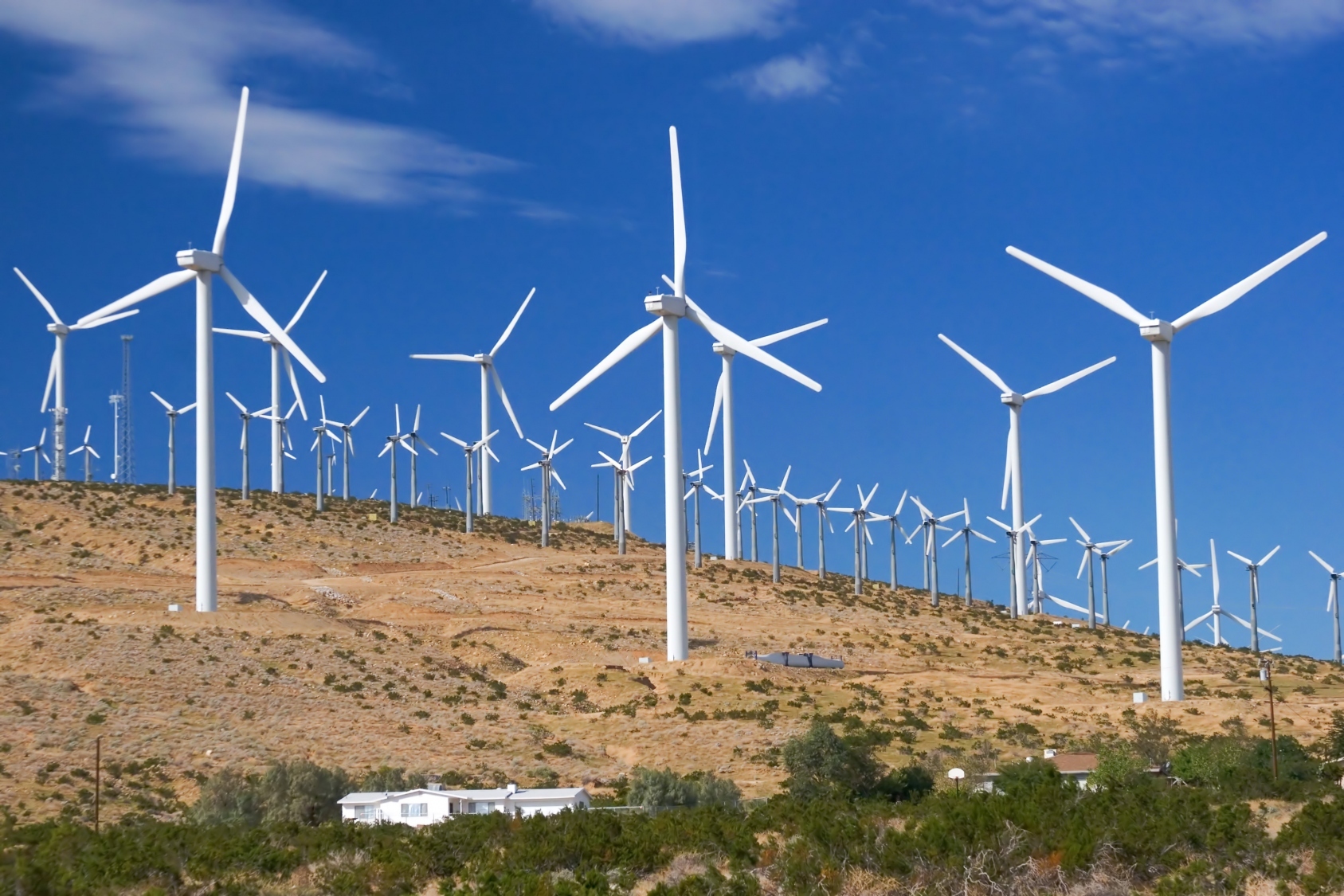
It’s no mystery that wind power generation depends on the wind. Less apparent is the fact that adding more turbines in a given location means less power gets generated, overall.

The law of diminishing returns applies with a real vengeance when turbulence from upwind turbines ruins the ability of their downwind brethren to generate power, even when the wind is blowing. The phenomenon is referred to in the trade as the “wake affect”.

Now that the US is covered in thousands of these things, including offshore from its Atlantic coast, there is an increasing body of data that shows that the more turbines that get added to the grid, the more useless wind power generation becomes – as the team from Jo Nova lays out below.

Wind turbines could steal as much as 38% of the power off turbines downwind and even from ones 50 kilometers away
Jo Nova Blog
Jo Nova
May 2024

The more wind turbines we have the more useless they are.

There goes those plans to cover the continental shelf with talismen to the Wind Gods.

New research shows wind turbines off the East Coast of the US could end up stealing as much as a third of the energy from other wind turbines downstream. And in some conditions, the turbulent wake they leave might stretch out 55 kilometers behind them. This effect is worst on turbines in the same “farm” but could even affect other wind farms a long way off.

The wake effect will be strongest in summer. We’ll just have to ask everyone to turn off their air conditioners then?

Scientific civilizations do this sort of research before they commit $10 trillion dollars, set up a trading scheme, and blow up the coal plants. Imagine if building a coal plant near another plant made it 30% less efficient on hot days…

Hat tip to the NetZeroWatch email list:

Wind turbine ‘wake effect’ could reduce arrays’ power output by 30%
Kirk Moore, WorkBoat

The researchers’ paper published March 14 in the journal Wind Energy Science suggests that offshore wind turbines off the U.S. East Coast could rob neighboring turbine arrays of wind speed and thus power generation depending on daily conditions, by more than 30%.

“Using computer simulations and observational data of the atmosphere, the team calculated that the wake effect reduces total power generation by 34% to 38% at a proposed wind farm off the East Coast,” according to the University of Colorado. ”Most of the reduction comes from wakes formed between turbines within a single farm.”

“But under certain weather conditions, wakes could reach turbines as far as 55 kilometers (34 miles) downwind and affect other wind farms. For example, during hot summer days, the airflow over the cool sea surface tends to be relatively stable, causing wakes to persist for longer periods and propagate over longer distances.”

Hub-height wind roses for the NYSERDA Hudson North (E05) and Hudson South (E06) floating lidars during the 1 September 2019 to 1 September 2020 period. The location of E06 is shown as the red diamond and E05 as the red triangle. The bottom row shows wind roses segregated by atmospheric stratification.

Ominously, the worst power deficits in these graphs are not the black spots but the red and white ones…

The percentage of power loss at ONE from internal wakes at (a) TKE_0 and (b) TKE_100.

First build 10,000 wind farms, then figure out how it works:

From the press release:

To better understand how the wind blows in the proposed wind farm area, Lundquist’s team visited islands off the New England coast and installed a host of instruments last December as part of the Department of Energy’s Wind Forecast Improvement Project 3. The project is a collaboration of researchers from CU Boulder, Woods Hole Oceanographic Institution and several other national laboratories.

The instruments, including weather monitors and radar sensors, will collect data for the next year or more. Previously, offshore wind power prediction models usually relied on intermittent data from ships and satellite observations. The hope is that with continuous data directly from the ocean, scientists can improve prediction models and better integrate more offshore wind energy into the grid.

As long as we try to collect wind energy, the nightmare of thousands of high voltage interconnector lines will never go away.

REFERENCE
Rosencrans et al (2024) Seasonal variability of wake impacts on US mid-Atlantic offshore wind plant power production Articles, Volume 9, issue 3 WES, 9, 555–583, 2024 https://doi.org/10.5194/wes-9-555-2024
Jo Nova Blog

via STOP THESE THINGS

https://ift.tt/8MoiCNk

July 31, 2024 at 02:30AM

Rolls-Royce One Step Closer To SMRs

From NOT A LOT OF PEOPLE KNOW THAT

By Paul Homewood

h/t Philip Bratby

Rolls-Royce has cleared a key hurdle in the race to build Britain’s first mini-nuclear power plant, as competition across Europe ramps up.

On Tuesday, the FTSE 100 engineering giant became the first developer to advance a small modular reactor (SMR) design to the final stage of examination by UK regulators.

Helena Perry, director of safety and regulatory affairs at Rolls-Royce SMR, said the latest approval was “the most important milestone to date in advancing deployment of Rolls-Royce SMRs in the UK”.

She added: “We have built fantastic momentum and the team will move directly into step three of this rigorous independent assessment of our technology – ideally positioning us to deliver low-carbon nuclear power and support the UK’s transition to net zero.”

The Derby-based company wants to build a new generation of lower-cost power plants, made from modular parts that would be produced in factories and then assembled on site.

SMRs would each generate 470 megawatts of electricity and cost between £2bn and £3bn initially. Rolls-Royce aims to bring that number down gradually through economies of scale.

The Office for Nuclear Regulation (ONR) said Rolls has now been cleared to move into the third and final stage of the UK’s generic design assessment.

That process is expected to conclude by the end of 2026, after which Rolls will be able to apply for site-specific approval to build its first SMR.

A summary assessment published by the ONR on Tuesday said that the regulator has “not identified any fundamental safety, security or safeguards shortfalls that could prevent permissioning the construction of a power station based on the generic Rolls-Royce SMR design”.

https://ift.tt/KSYWiHP

.

Philip Bratby wrote this earlier this year about the painfully slow progress to SMRs:

Progress in the UK on SMRs has inevitably been slow.  In 2014 the UK government published a report on SMR concepts, feasibility and potential in the UK.  In 2015 the government announced that it would invest at least £250 million over five years in nuclear R&D including SMRs.  In 2016 the UK government called for expressions of interest in a competition to identify the best value SMR for the UK.  In 2017 the government announced that the SMR competition had been closed and a new two-phase advanced modular reactor competition was launched, designed to incorporate a wider range of reactor types.  In 2018 it was announced that eight organisations were awarded contracts to produce feasibility studies.  In 2020, the government awarded £10 million to two SMR developers.  In 2021 the government announced that it was setting up the Future Nuclear Enabling Fund (FNEF) with £120 million available “to help mature nuclear projects ahead of the government selection process”.

In 2021 the government also announced that it would contribute £210 million to development of the Rolls-Royce SMR.  The Rolls-Royce SMR is a PWR reactor, designed for hydrogen and synthetic fuel manufacturing as well as for electricity generation.  The Rolls-Royce SMR consortium, involving many of the major UK engineering firms, aims to build 16 reactors, each of 470 MWe.  In 2022 Rolls-Royce announced that it had identified four priority locations to build SMR-based power stations in the UK, all on previous nuclear power station sites currently owned by the UK Nuclear Decommissioning Authority (NDA).

In July 2023 the government launched Great British Nuclear (GBN) to administer a competition to create SMRs, and then to co-fund any viable projects.  It is intended to deliver the government’s long-term nuclear programme and support the government’s ambition to deliver up to 24GW of nuclear power in the UK by 2050.  GBN has launched the next phase of the SMR technology selection process and with six potential SMR vendors having registered their interest.  The process is intended to identify those SMR projects which the government will co-fund.  The date of the decision keeps getting put back.  GBN has now delayed its decision on where the first SMRs will be sited until after the next general election.  So after 10 years, it might just be possible that the UK will be in a position to start work on building the first SMR!

.

Of course, successful development of SMRs would soon make wind and solar power redundant. Why duplicate capacity?

One might almost think that the Green Blob has been deliberately putting the brakes on the development of nuclear power.

via Watts Up With That?

https://ift.tt/S7vVzrp

July 31, 2024 at 02:10AM

AND NOW FOR SOMETHING COMPLETELY DIFFERENT

Amidst all the sensationalist headlines about record high temperatures, it is worth noting that in some parts of the world there have been record low temperatures. Funny how the main media seem to ignore these cold records. I am not saying that there has not been some slight warming of the surface of the planet in recent decades, but simply that it has been hugely exaggerated and that reporting is not in any way balanced. It is what many would call propaganda or indoctrination. We deserve better.

 Chinese Academy Of Sciences: “Antarctic Cold Spells Shattered Records” In July-August, 2023 (notrickszone.com)

via climate science

https://ift.tt/LNZk3u6

July 31, 2024 at 01:37AM

Exposed: NYTimes lies about the ‘hottest day’ in the UK

Related links: New York Times article | Daily Mail report

via JunkScience.com

https://ift.tt/dZ8wIp0

July 31, 2024 at 01:30AM