The above is a rare sight indeed as this region’s daily hotspot records are regularly dominated by the atrocious sites at Hull: East Park , Bridlington and the doubled readings by the solar farm at Leconfield. RAF Topcliffe (odd how the Met Office always misses off the RAF description to so many of its locations) sits in the Vale of York and is more known for winter chills than summer thrills. It is also a classic example of how ground cover changes can have dramatic effects.
54.20478 .1.39015 Met Office CIMO Assessed Class 4 Temperature records from 1/1/1947
When Tim Channon reviewed this site in 2012 his measurements indicated Class 2. In fairness if they were the only parameters than Topcliffe would just sneak in as a good site. However, Tim went on to downgrade his estimation to Class 4 (the Met Office concurred) on the extreme level of ground cover change. This is where historic imagery proves so useful, the relentless grass mowing regardless of prevailing weather conditions frequently turns the area into a wholly unnatural almost scorched earth.
The above altered angle view indicates not only scorched grass but also apart from the taxiway the inevitable helicopter landing “H”. Adding in the extensive hangars and buildings to the west transforms the overall site from a rural one to a typically unrepresentative and unnatural aviation site. This, however, fails to show up in comparisons when all the other nearby sites are so similar.
RAF Topcliffe being compared with RAF Dishforth, RAF Leeming and RAF Linton On Ouse really is not a case of “great minds think alike” and much more akin to “fools seldom differ”. Whilst the Met Office may like to think airfields are suitable – “For example, official weather stations are often located at airports as they have plenty of open space making them a good place for observations to take place. However, the observation equipment is set an internationally-agreed distance from the runway to ensure no external factors can influence readings in any way”
Surely it is rather inappropriate to only compare one airfield to another. The last comparison of Hartburn Grange is very remote and also defunct as of 30 years ago. It appears that this entire section of the country is dominated by active or former RAF bases with few otherwise “natural” sites. The CEDA archives have an interactive map of sites which for North Yorkshire centred on Thirsk/Topcliffe which looks like this.
Almost perversely this county has the Class 1 Cawood site but the Met Office does not even seem to want to recognise its long term existence preferring low grade aviation locations. Even more concerning is that 21st Century North Yorkshire has seen the closure of 10 full weather stations at Ravensworth, Ashkam Bryan, Church Fenton, Wyecliff Hall, Dishforth, Harrogate, Kirby Misperton, Linton on Ouse, Middlesmoor and Malham Tarn. In the same 25 year period only Class 4 Pateley Bridge:Ravens Nest and Class 5 Bank Newton No 2 have been installed. The overall site quality is degrading not improving.
This notable reduction in more northern and easterly cooler located stations is in stark contrast to the increase in warmer southern and westerly locations notably west London {contrasted with Derbyshire} and Devon an consequently a distortion to national averages.
In summary the Met Office certainly does not seem to be actively seeking to improve its network. Poor sites such as Topcliffe appear to be far more common that should be to represent the natural climate of their area and little regard is given to the few good locations available. Things really do need to change for the better but under the current regime this seems extremely unlikely.
When it comes to the recent DOE Climate Review, legacy media coverage is lop-sided and limited to declarations of disgust and dismissal from climate insiders. Andrew Bolt in Australia is an exception, interested as he is in why climatists find the study so annoying. So his interview with one of the authors explores the controversy and why the media is averting their attention.
For those preferring to read, below is a transcript from the closed captions in italics wtih my bolds and added images. AB refers to Bolt and SK to Koonin
AB: I’m amazed how little attention the media has given to a new report on global warming I mentioned last week. I’m not that surprised to be honest. I mean, I’ve seen how the media ignores proof that the warming scare is grossly exaggerated, but I think you deserve to know more about this report.
In the United States, Chris Wright is the brilliant gas tycoon who now leads the US Department of Energy. He hired five very prominent climate experts to report back to the government on what the climate was really doing and whether we could trust predictions by the most popular climate models that we’re facing dangerous warming of at least 3 degrees this century and we’re already copying all sorts of climate disasters.
Well, the authors’ conclusion was that the climate models are actually unreliable. They’re all over the shop. They predict probably one degree more warming than is likely and we aren’t getting many of the predicted climate disasters. Plus, global warming also has benefits that are often ignored, especially a big increase in trees and crops that we’ve been seeing, a greening of the planet.
And in this report, the authors sum it all up like this. models, the climate models and experience suggests that carbon dioxide induced warming may be less damaging economically than commonly believed and excessively aggressive mitigation policies, you might include our own net zero schemes, could prove more detrimental than beneficial. [See DOE Climate Team: Twelve Keys in Assessing Climate Change]
So, you can understand why the authors have since been absolutely trashed for daring to doubt the climate scare and upsetting the climate industry. They’ve been called all sorts of names painted as fools, frauds, Donald Trump Toadies, even Stalinists, would you believe? But don’t be fooled by the abuse because the five authors are in fact very prominent experts. Professor emeritus Judith Curry has published 192 peer-reviewed papers on the climate. Dr. Roy Spencer, NASA senior scientist runs probably the most accurate measure of world temperature. Professor Ross McKitrick is an expert reviewer of the last three reports of the IPCC (intergovernmental panel on climate change). And distinguished professor John Christie, is a former lead author of an IPCC report. I mean, these are very serious people.
Plus Steven Koonin. He’s a physicist and former under secretary of science for President Barack Obama, a Democrat. And I am joined by Steven, Steve thank you so much for your time. Why did you and the other four experts behind this report actually agree to do it when you must have known the climate industry and the media would really go after you?
SK: Indeed. But you know, all five of us scientists have long felt that the science was misrepresented to the public and the decision makers, and we wanted to do our best to set the record straight.
AB: Well, on many points your report agrees with what I’ll call the consensus, the alarmist position, perhaps the position of the United Nations Intergovernmental Panel on Climate Change. You say, “Yes, global warming is real. Yes, it’s a problem. Yes, it’s caused in part by humans.” Now, tell us where you disagree with this consensus.
SK: Well, you know, people have said 95% of our report agrees with or is taken right out of the IPCC. It’s just that there are aspects of what the consensus says that do not find their way to the public. For example:
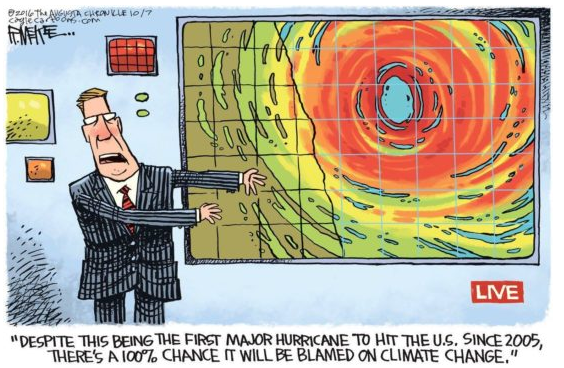
There are no detectable trends in the great majority of extreme weather types.
The models that we use to project climates into the future are demonstrably deficient. They’re in many ways all over the place in terms of their projections. And,
The projected impacts of future climate change, even using those deficient models, are minimal.
These are very important central points that are there in the report
but do not make their way into the public discussion.
AB: You actually point out that the models tend to run hot, as in predict more warming than we’ve had. They’re unreliable. A number of basing false assumptions of how much emissions we’re going to get. You actually predict almost one degree less warming over the century than the IPCC model consensus. How important is that?
SK: Well, to be clear, we don’t predict. We simply cite and assess the work of others. But certainly, if the warming is a degree less than what the IPCC consensus says, that’s a big deal.
AB: And what about the climate disasters? I mean, every time like we’ve got it right now, you know, we’ve got some algae blooming off the South Australian coast. Global warming. We get heavy rain, global warming. We get a drought, global warming. How much influence has man-made warming really had from the work that you’ve done in this report? How much has it really influenced the natural disasters we tend to see?
SK: Yeah, you know, people have a very short memory for weather disasters. There’s a lovely example that turned up at the beginning of July, having to do with the floods in Texas that we that were a terrible tragedy. But if you look back in the records, you can find the same kind of event happening in the same place in 1900. And of course, human influences on the climate were much smaller in 1900. And so you have a very hard time to logically attributing the recent disaster to carbon dioxide.
The same is true for many other severe weather phenomena.
They happened in the past. They’re just relatively rare. And so
we get surprised when we see them happen in the present day.
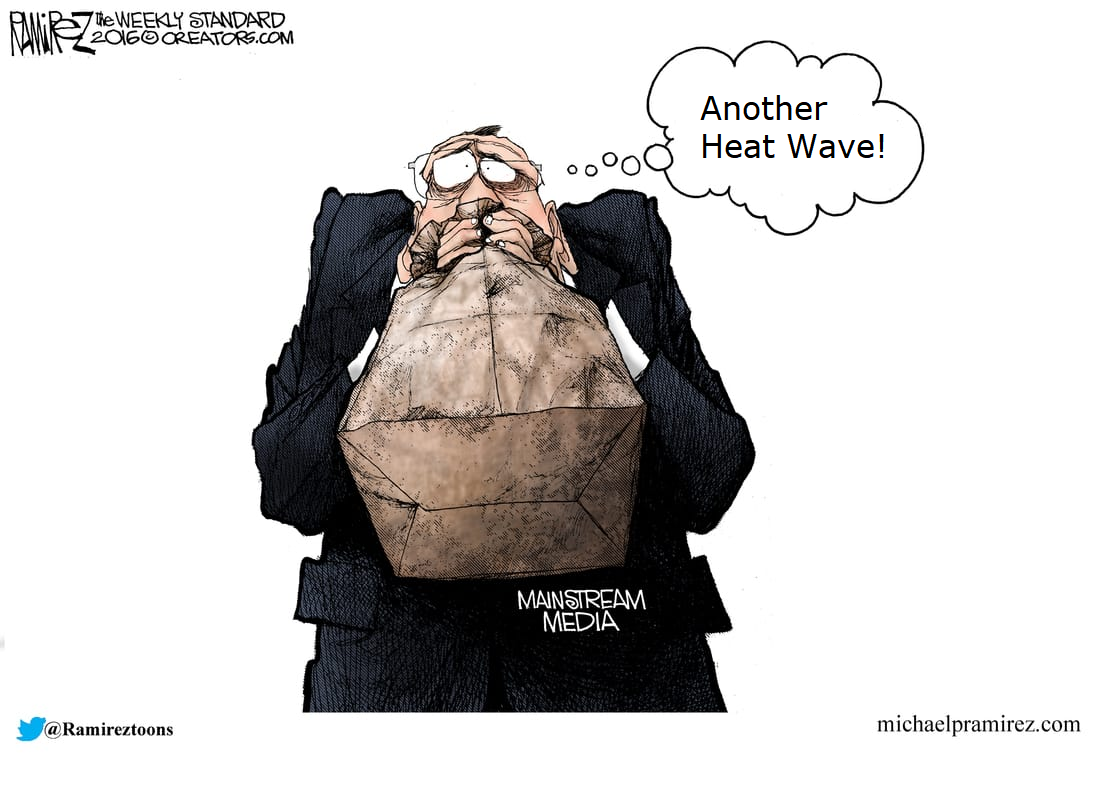
AB: Yeah. I noticed for instance in your report you say the number of heat waves in America actually peaked nearly 100 years ago.
SK: The number of heat waves that were striking America at the time, and what we see now is much less, you know. The damning thing about the heat waves is that we really don’t understand why the 30s were so much warmer than it has been in many subsequent decades. And that speaks to our rather poor understanding of the ways in which the climate varies.
AB: I think the real thing about your report that’s annoying so many people in the climate industry is this. You say the warming will be less than what most people are claiming. You say the disasters from the warming we’ve seen are basically exaggerated. They’re not that many that you can point to. And the the attempts we make to stop all this are very expensive. And well, do they really work? Isn’ it the takeaway here, that it might not actually be worth trying to stop what isn’t the the climate disaster that many claim.
SK: Absolutely. You know, in deciding what to do, we have to balance the hazards, the certainties and uncertainties in the changing climate against other considerations. Like the world needs more and more energy, and in deciding what to do you have to look at the costs. Are they going to be effective? What about equity between generations, between countries, and so on. It’s not simply that, oh my god, we’ve broken the climate and we’ve got to fix it. And I do think some people get annoyed when we start to expose those nuances of the situation.
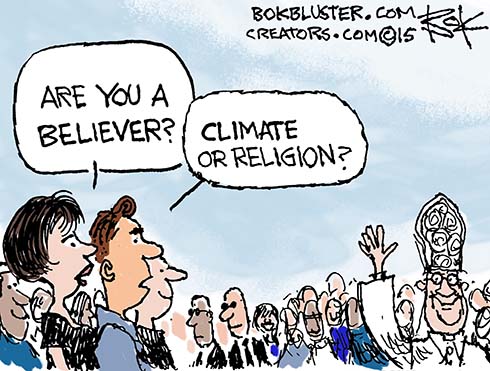
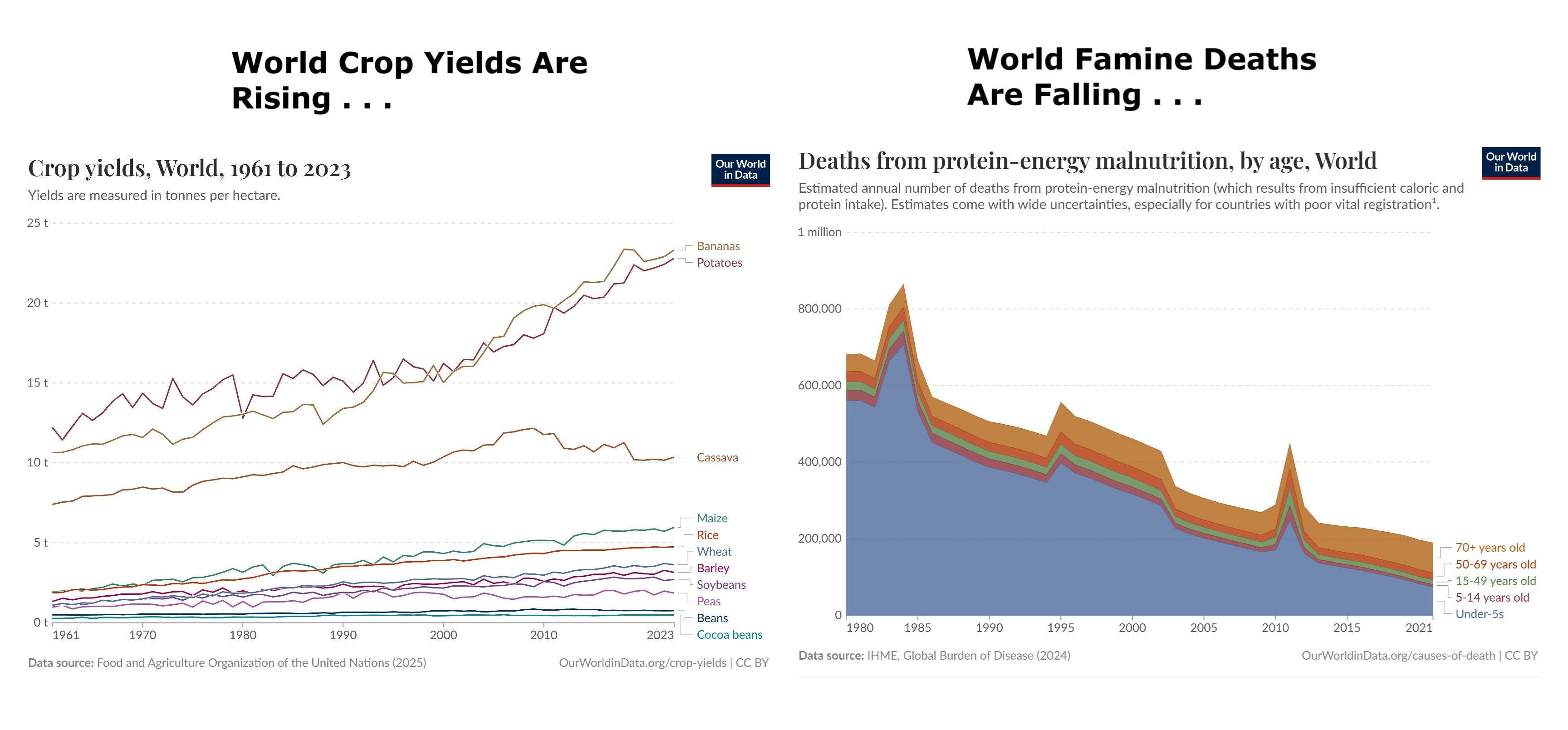
AB: Oh yes. So you’ve really offended in the church of climate. And of course you also stress what’s undeniably true. The greening of the planet is actually a benefit of extra carbon dioxide in the atmosphere. More trees, more plants, more food.
SK:Agricultural yields have in fact doubled over the last 60 years or so. And a good fraction of that, NASA says 75% is attributable to higher carbon dioxide levels. You know, if you look inside a hot house, we put the carbon dioxide levels typically up to about 1,200 parts per million, which is just about three times what you find in the atmosphere even now.
AB: Now, you’ve come under massive attack, of course, Steve Koonin. I mean, environmental groups are even suing to censor the report. You’ve got media outlets of the left demonizing you, running so-called fact checks. I’ve had a look at a few, and they’re not persuasive. Some climate scientists are abusing you, claiming, you know, the group of you are just handpicked skeptics, even though you used to be with the Obama administration. Have there been any criticisms of your report that you think, “Yep, that’s fairenough. we’ve goofed here or we haven’t taken this into consideration. Any criticism you think you can you should take on the chin?
SK: Well, we’ve seen one already that we basically made a a typographical error in one of the footnotes. We have acknowledged that to the person who pointed it out and of course we will fix it. But you know, we’re refraining right now from looking in detail at the criticisms till they come in over the next couple weeks through the public portal. Then as we have promised, we will deal with every serious criticism seriously and like good scientists we will modify the report as might be warranted from those criticisms.
AB: Steve Koonin, you’ve been fighting the alarmism for some time now. I think this is your your weightiest blow against the scaremongering. So congratulations and thank you so much for your time.
The CEO of Bluescope Steel is a fan of renewables, but for Mark Vassella to make steel, what he wants is cheap gas, not wind and solar power — and he’s getting desperate. These are strong words from a CEO of one our Big-50. “Manufacturing is at a ‘tipping point‘” he says. “Energy costs are now 3 to 4 times higher than the US”. Furthermore, “Without immediate intervention there will be no Future Made in Australia.” — He twists the knife, talking about the PM’s pet project (the one where we somehow make solar and wind power here cheaper than the slaves do in China. )
He’s especially scathing of the idea that one of the biggest exporters of LNG in the world, now has to import it back.
“ In what world does exporting LNG in massive quantities only to re-import it to supply a shorter domestic market make any sense? It’s like importing sand into the Sahara.”
Vassella knows US and Australian energy prices all too well. Bluescope also own the North Star steel mill in Ohio and is looking to expand further in the US.
It was back in 2021 that I started to ask which country or U.S. state would be the first to hit the “Green Energy Wall.” It has long been obvious to anyone who looks at the situation that the fantasy of a fully de-carbonized energy system, with everything run on electricity generated by intermittent wind and sun, could never happen.
But what would be the limiting condition that would put a stop to the madness? Would it be confronting the absurd costs of grid-scale battery storage? Or perhaps a string of blackouts caused by insufficient backup of the wind and solar generation?
Here in New York, we are starting to see some push back from politicians on the fantasy green energy transition, but the source may be the last thing you would have predicted. The immediate issue is the cost of upgrading local delivery infrastructure to transmit sufficient electricity for the imagined future of electrified buildings and vehicles.
Supposedly, under a statute known as the Climate Leadership and Community Protection Act of 2019, we are faced with a 2030 deadline to get some 70% of our electricity from “renewables.” Currently the percent of our electricity that we get from these “renewables” is around 44%, and almost half of that comes from the gigantic waterfall known as Niagara Falls. Without another Niagara Falls on the horizon, theoretically we should be building vast fields of wind turbines and solar panels to meet the statutory mandates; but that effort has stalled out, and the costs of wind and solar generation, and of backup to make the grid run all the time, have barely started to show up in consumer bills. Nor have various big new long-distance transmission projects yet come into consumer bills.
But meanwhile, the big utilities have come forward with large demands for rate increases. So why the need for big rate increases if not from new generators or long-distance transmission? The answer is that the rate increases mainly relate to the portion of the consumer bills referred to as the “delivery” charge, as opposed to the charge for generation. The utilities seek funds to add delivery infrastructure like substations, transformers, and cables to deliver vastly increased amounts of electricity for things like vehicle charging stations (for both cars and trucks) and for the electrification of building heat.
In upstate New York, a utility called National Grid has been petitioning the regulator for a large electricity rate increase, mostly to support these kinds of upgrades to the delivery infrastructure. The service territory of National Grid in upstate New York covers the region between about Syracuse and Albany, and from there North to the Canadian border. After prolonged negotiations, the regulator (Public Service Commission) and National Grid entered into a “settlement” a few days ago on August 14. Here is the PSC release describing the settlement. Basically, the PSC congratulates itself on beating back a much larger rate increase originally sought by National Grid. (The headline is “PSC Dramatically Reduces National Grid’s Rate Request.”).But if you read on you find that they still agreed to a very large increase. The release makes clear that most of the increase relates to the delivery infrastructure:
National Grid had sought a base delivery increase of $509.6 million (25.5 percent delivery or 10.4 percent total revenue) and $156.5 million (29.7 percent delivery or 15.7 percent total revenue) for electric and gas, respectively for one year. Instead, the Commission adopted a joint proposal establishing levelized increases, on a percentage basis, to the company’s electric revenues of $167.3 million in the first year, $297.4 million in the second year, and $243.4 million in the third year.
Basically, they spread NG’s requested increase out over three years; but it still comes to almost a 30% jump on the delivery side by the time it all kicks in.
While I appreciate that the New York Public Service Commission worked to significantly lower the outrageously high initial rate proposals, it’s still not enough. I have been crystal clear that utilities must make ratepayer affordability the priority.
Well, Governor Hochul, good luck trying to blame the utility, but you are the one with all the electric vehicle mandates and incentives and subsidies, thus calling on the utility to provide all this new infrastructure. In all likelihood few will ever buy the electric vehicles, and nobody will ever generate the extra electricity from wind and sun, and thus this infrastructure will mostly be wasted. But can the utility just refuse to make itself ready to meet your ridiculous mandate?
And meanwhile down here in New York City, our utility Con Edison is requesting almost as large a rate increase, again focused on the delivery portion of the bill, and on local infrastructure upgrades necessary to support increased electricity demand. In the City, the increased demand is anticipated to come both from electric vehicles (per the state mandates) and from building electrification (based on a City building electrification mandate known as Local Law 97). It is likely that the result of the Con Edison rate proceeding will be a settlement agreement comparable to what occurred in the National Grid case a few days ago.
I am an intervenor in this Con Edison rate case, and in recent days I have actually been personally participating — in a minor way — in the settlement negotiations. My co-intervenors and I are objecting to any rate increases based on adding infrastructure to support building and vehicle electrification unless and until the additional electricity generation capacity has been built to support these mandates. (There is no chance that this additional capacity, supposedly wind and solar generators, will actually be built.)
New York’s state Public Service Commission just OK’d big National Grid rate increases that’ll hike many upstate utility bills by $600 a year — fueling outrage Democrats will soon feel. Downstate, Con Edison is seeking an 11.4% hike to electric bills and 13.3% gas hike — largely thanks to green-energy mandates that Gov. Kathy Hochul embraced along with the rest of the party. The “climate agenda” is delivering pain we’ve long warned of, in New York and New Jersey.
If we ever get to the point of building dozens of gigawatts of wind and solar generation capacity, and enough backup and storage to make them work to support a grid, that would cause electricity rates to multiply by a factor of five or ten or more. We are a long way from that. But here we are just trying to add enough substations and transformers to support 30-50% vehicle electrification, and a comparable amount of building electrification, and it is causing politicians to start to scream. How much more before of this will it take before we quit?
Discover more from Watts Up With That?
Subscribe to get the latest posts sent to your email.




 There are no detectable trends in the great majority of extreme weather types.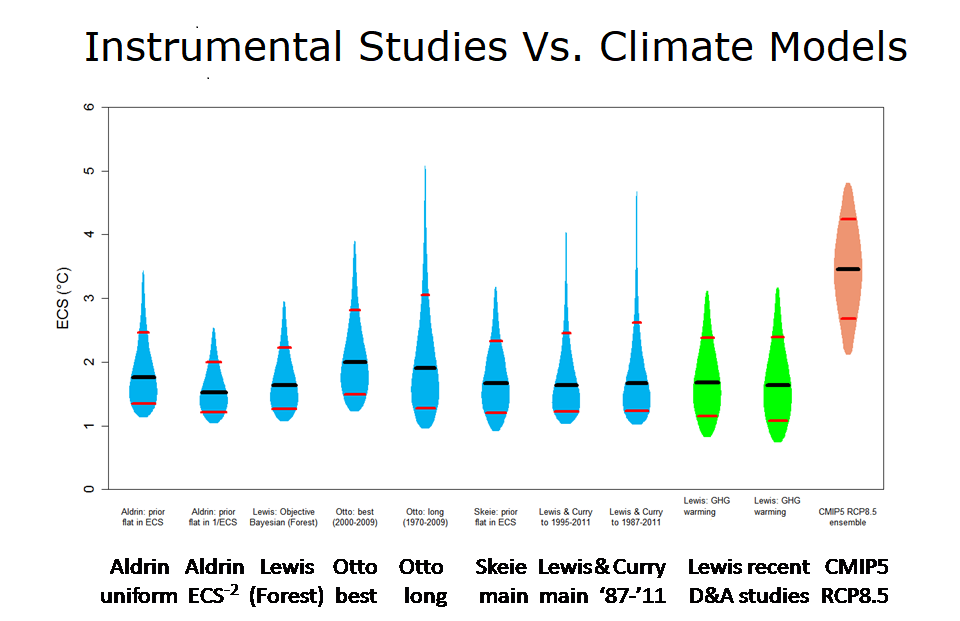



 Iowa Climate Science Education