
Zainab Usman describes the opportunity to reconstruct the effort addressing world poverty and social deprivation in his Foreign Affairs article The End of the Global Aid Industry. Below is a synopsis of his vision in italics with my bolds and added images. Following that is a previous post discussing how benevolence can go astray.
USAID’s Demise Is an Opportunity to Prioritize Industrialization Over Charity
Every decade or so, the global aid industry finds that it must transform to survive. During these periods of change, donor countries restructure their aid agencies, shrink or expand their assistance budgets, and lobby for the creation or dissolution of a UN initiative or two. Typically, once the aid industry conforms to the whims of donor countries, the crisis is averted and business continues as usual. Since U.S. President Donald Trump began his second term, the aid industry has found itself at another inflection point. The Trump administration has gutted USAID, the world’s largest development agency, ending 86 percent of its programs, shuttering its headquarters, and terminating nearly all its 10,000 employees. At the same time, the Trump administration has slashed funding for various multilateral initiatives on climate, global health, and education.

Today’s crisis, however, is different from those that came before: this could truly be the end of foreign aid as we know it. For decades, global development—that is, the attempt to improve and save lives of the poor—has been driven mostly by foreign assistance provided by wealthy governments. Some scholars and analysts deride this process as the “aid-industrial complex.” But even advocates of foreign aid have come to see it as an industry, including in their efforts to reform it, which approach its defects as matters of business inefficiency. And now that governments in many rich countries have sharply lurched to the right and taken more skeptical stances on aid, this industry is collapsing. As a result, many charity workers, researchers, and academics will be out of jobs. More important, millions of poor people around the world will suffer.
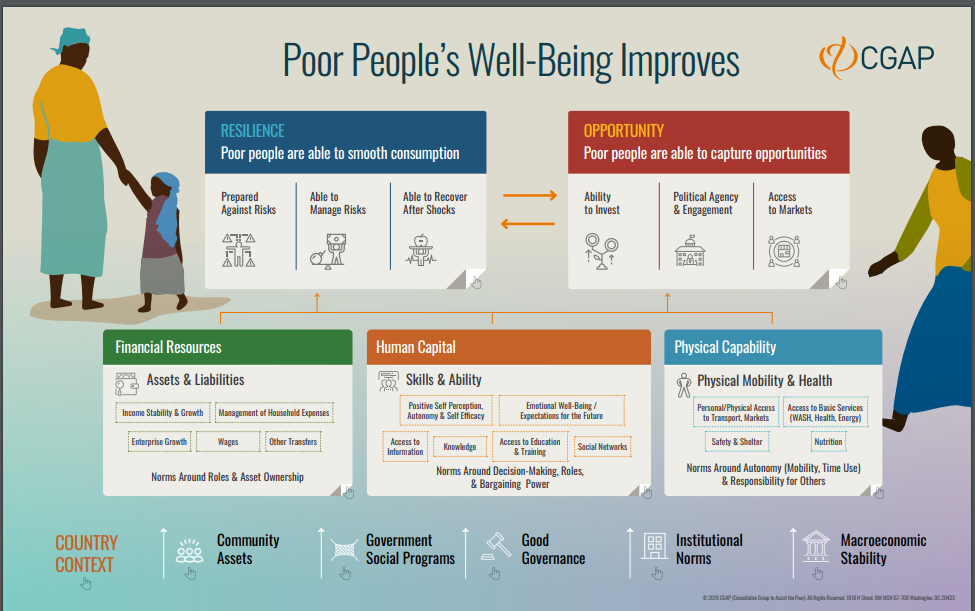
Proponents of global development now face a choice. They can wait for attitudes in donor countries to shift back toward support for foreign aid at some point in the distant future. Or they can reimagine the entire concept of global development, detaching it from aid and rooting it instead in industrial transformation: helping countries shift from subsistence farming, informal employment, and primary commodity production toward manufacturing and services. In truth, the aid industry was already adrift. Its interventions had become spread too thin and often failed to address the key obstacles that poorer countries faced as they tried to upskill their workers, build energy and transport infrastructure, and access new markets. Raising people out of poverty in Africa, South Asia, and parts of Latin America will not only improve their lives but also allow rich countries to maintain their prosperity by creating new markets, and by now, industrial transformation has a strong track record for improving economies. If proponents of global development do not adjust its methods with the times, it will lose its relevance to rich and poor countries alike.
AID AND ABET?
The foreign-aid industry’s primary commodity is official development assistance (ODA), or money from donors that flows to governments, individuals, or groups in poorer places, either directly—such as through budget support to struggling governments—or through projects run by organizations such as Save the Children, Oxfam, or FHI 360. Governments in rich countries are the primary purveyors of ODA. According to the Organization for Economic Cooperation and Development (OECD), in 2023, governments spent $230 billion on development assistance, compared with $11 billion spent by private foundations. Like any industry, foreign aid has middlemen. But in this business, the middlemen are particularly conspicuous. Third-party entities known as “implementing partners” include international nongovernmental organizations, large private contractors, and consulting firms. If the U.S. government wanted, for example, to distribute fertilizers to small-scale farmers in Bangladesh, they might contract Chemonics, a U.S.-based development contractor, to do it. Indeed, in 2023, Chemonics received the most USAID funds of any of the organization’s contractors: over $1 billion.
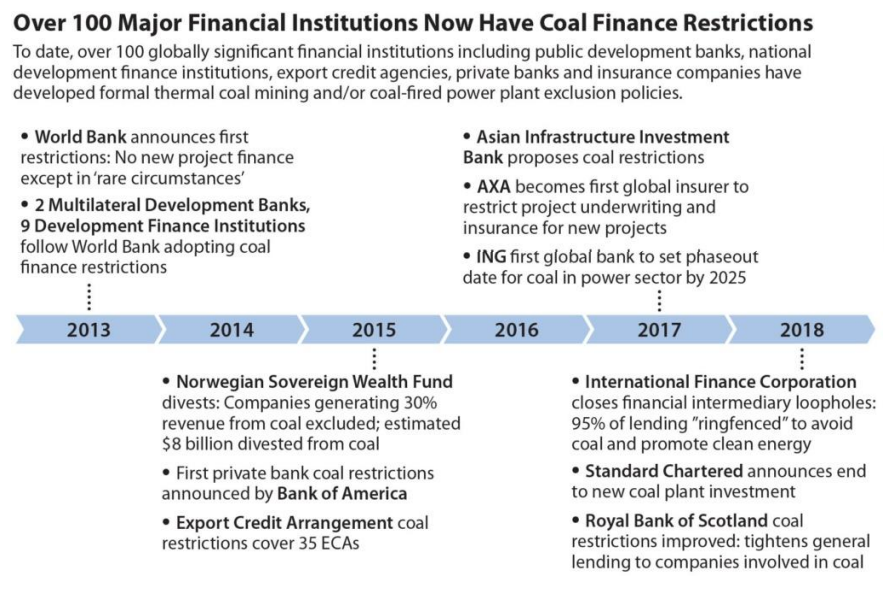
To take advantage of network effects and economies of scale, implementing partners cluster around the main sites of production of foreign aid, the capitals of the major donor countries: Berlin, Geneva, London, Paris, Rome, and Washington. As a result, very little aid is distributed by organizations or people in poor countries. In 2020, less than nine percent of U.S. aid was administered by recipient governments or firms based in recipient countries, according to Charles Kenny and Scott Morris, researchers at the Center for Global Development. The visibility of middlemen based in rich countries has long provided fodder to detractors who claim that the aid industry operates inefficiently or even unjustly. There is some truth to this critique. According to an analysis by Devex, a news organization, 47 of USAID’s top 50 contractors are located in the United States.
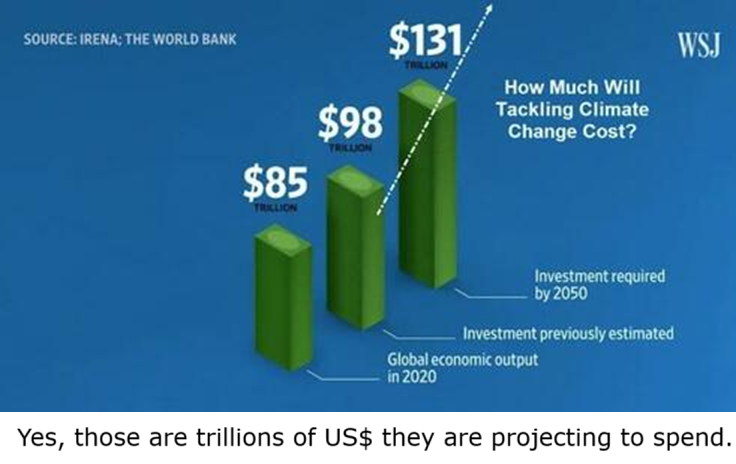
In the United States, successive Democratic and Republican administrations maintained a broad commitment to foreign aid, although arguments also simmered, even within the industry itself, about the proper goal of aid. Since 2000, when 189 countries agreed to the UN’s Millennium Development Goals, the industry’s main objective has been to reduce poverty; after the Paris Agreement was signed in 2015, many governments embraced the idea that, in addition, aid should also be directed toward fighting climate change.
SUPPLY CRISIS
But behind these recent debates lurked a massive shift in the politics and public norms that had allowed the industry to survive. If one sees aid as a form of philanthropy, then rich countries appear as donors and poor ones as beneficiaries. But if one sees aid as an industry, then rich countries appear as sellers and poor ones as buyers. With their development assistance, rich countries are providing a set of projects and institutional norms to achieve a set of expected outcomes: improvements in material conditions in developing countries that will eventually boost their own economies and security—or, failing that, at least a sense on the part of rich countries that they have tried to make a difference.
The role of poor countries is to consume these development projects
in the hope of achieving desired outcomes—or, failing that,
at least a sense that they might be possible someday.

Now this market is experiencing an unprecedented supply crisis. Around the world, people and politicians in the rich countries that had long bought into the basic idea that providing aid is valuable have become skeptical. The aid industry has, for decades, undergone boom and bust cycles resulting from shifts in the domestic politics of donor countries. What is different this time is a deepening disaffection about the prevailing economic model and the aid paradigm associated with it. Since the global financial crisis of 2008, many donor countries have experienced economic stagnation, slow productivity growth, declining competitiveness, and widening inequality. Citizens of rich countries who no longer feel economically secure are questioning why scarce public funds should be devoted to causes abroad when there are needs at home.
This doubt goes beyond the Trump administration. The United States is not the only donor that is cutting foreign aid: in 2024, eight of the top ten donors within the OECD’s Development Assistance Committee reduced their foreign aid budgets and announced their intention to align international development programs more squarely with their national interests—such as by ensuring that development projects use goods and services produced in the donor country. In 2024, Germany, the world’s second-largest bilateral aid donor, announced a $5.3 billion reduction to its foreign-assistance budget. In February, the United Kingdom announced a 40 percent reduction to its aid budget so that it could focus on defense spending. In March 2025, the Netherlands said it would cut 37 percent of its bilateral aid over five years and scale down its financial contributions to some UN agencies.
Many right-leaning voters in rich countries now see foreign aid as wasteful and excessively focused on promoting causes they perceive as linked to the left, such as climate action, gender equality, or democracy promotion. Voters are more dubious of technocrats, policy wonks, and academics committed to foreign aid. Consequently, even left-leaning politicians, such as the Labour government in the United Kingdom, are slashing aid in response to popular sentiment. According to a February 2025 YouGov poll, 65 percent of Britons are in favor of increasing defense spending at the expense of foreign aid.
BLEEDING OUT
The speed and scale of the policy changes make the crisis facing the aid industry existential. Donor governments are fast destroying the industry’s marketplace of actors in irreversible ways. In January, Trump issued an executive order to freeze all U.S. foreign aid, ostensibly so that the secretary of state could review it to make sure that it is aligned with U.S. interests. Within weeks of the order, the world’s largest bilateral development agency, USAID, functionally ceased to exist, and its destruction unleashed a domino effect.
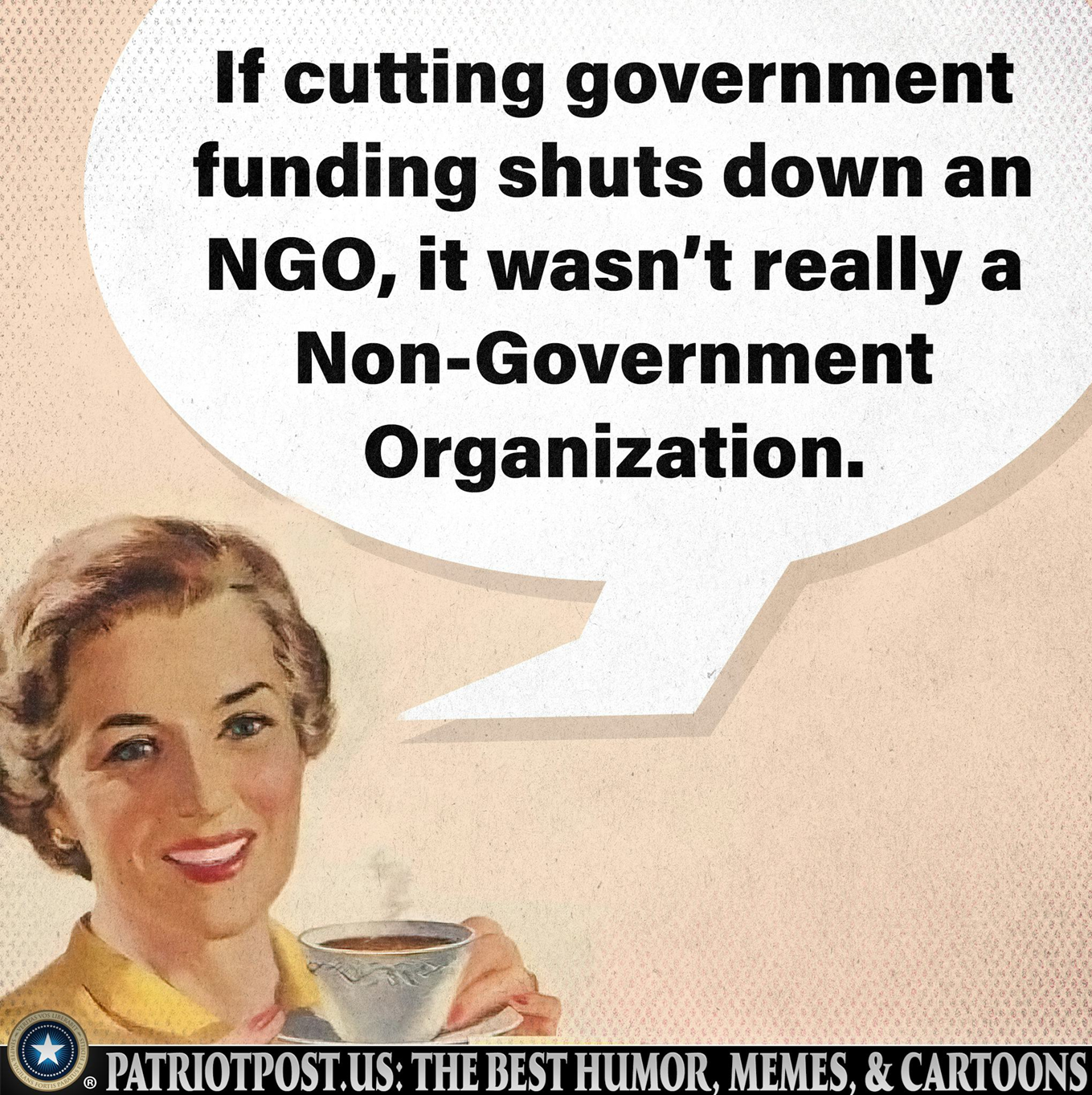
Dozens of small and midsize nongovernmental organizations are folding. Large organizations that implemented projects for USAID, such as FHI 360, Chemonics, and DAI Global, have terminated some country programs, announced the closure of field offices, and laid off hundreds of staffers worldwide. Multilateral organizations are also suffering from U.S. aid cuts. UN agencies such as the International Organization for Migration, the Joint United Nations Program on HIV and AIDS, the UN High Commissioner for Refugees, and the World Health Organization rely on the United States for 20 to 40 percent of their funding and have been forced to downsize.
GET RICH QUICK
Foreign aid has rapidly become a sunset industry. But that does not mean that rich countries should give up fighting poverty entirely. It is in the interest of wealthy states to reduce the pressure of migration by trying to improve the economies and stability of countries in Africa, Latin America, and South Asia. Therefore, policy experts, intellectuals, activists, philanthropists, and humanitarians must save global development by decoupling it from the aid industry and anchoring it in a strategy of industrial transformation. A country becomes industrialized when it adopts technology that allows it to mechanize and digitize, leading to increases in productivity and the skills of its labor force. Eventually, an industrialized country’s workers shift from subsistence agriculture toward higher-productivity sectors such as electronics, pharmaceuticals, green technologies, and digital services. And closely associated with higher incomes and employment in these modern industries are social changes such as more women working in formal jobs, more girls in schools, and fewer child marriages.
Industrialization has transformed many once poor societies into prosperous ones. Over the course of several hundred years, countries including China, Germany, Japan, Poland, Singapore, South Korea, the United Kingdom, and the United States got rich by industrializing. Today, Thailand and Vietnam are undergoing industrialization thanks to foreign direct investment in manufacturing industries, good connectivity infrastructure, skilled labor, and expanded access to export markets.
Part of the problem with the aid industry is that its benefits have been spread too thinly across a multitude of domains and not focused enough on productivity-enhancing sectors. To this end, advocates of global development should focus on enabling poorer countries to access cheap development financing for targeted investments in sectors that connect people, such as electricity, telecommunications, and mass transit. Development financing must include efforts to stem illicit financial flows. African countries, for example, lose a combined total of about $90 billion every year to elite corruption, illicit capital flight, and tax evasion by multinational corporations. That is more money than the $60 billion of aid that donor governments used to send to the continent annually. Such waste could be reduced if rich countries tightened their regulations on tax havens and offshore financial centers and if the 138 signatories of the global tax treaty—an agreement reached in 2023 that sets a minimum rate of tax for large corporations—accelerated its implementation.
Poorer countries also need a stable trading environment to thrive. They need access to export markets in wealthy countries for goods and services they produce. And decades of evidence shows that neither poor nor wealthy countries ultimately prosper from protectionism or autarky. Firms in rich countries, especially those in rapidly changing fields such as artificial intelligence, batteries, drones, and renewable energy hardware, need to be able to sell to growing markets in Africa, Latin America, and South Asia.
Professionals who work in global development will need new codes to guide their efforts to support industrial transformation. These may entail creating new rules to regulate the scramble for critical resources that wealthy countries need to manufacture electronics, such as cobalt from the Democratic Republic of the Congo or copper from Zambia. Ethicists and social scientists around the world must help craft rules for the limits of artificial intelligence, drone warfare, and other ways that new technologies directly interface with human societies.
If proponents of global development embrace industrial transformation as their lodestar, they can help lift people out of destitution while avoiding political blowback. If poor countries industrialize, the entire world will benefit. Global development has the best chance of surviving—and delivering results—if it is seen as more than just charity.
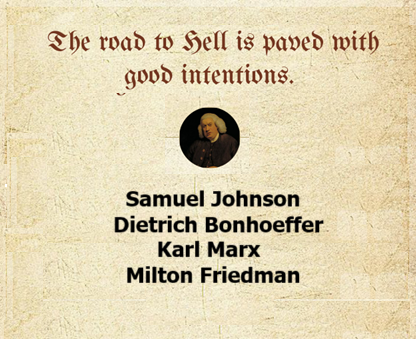
Benevolence is a curious mental or characterological attribute. It is, as the philosopher David Stove observed, less a virtue than an emotion. To be benevolent means—what? To be disposed to relieve the misery and increase the happiness of others. Whether your benevolent attitude or action actually has that effect is beside the point. Yes, “benevolence, by the very meaning of the word,” Stove writes, “is a desire for the happiness, rather than the misery, of its object.” But here’s the rub:
the fact simply is that its actual effect is often the opposite of the intended one. The adult who had been hopelessly ‘spoilt’ in childhood is the commonest kind of example; that is, someone who is unhappy in adult life because his parents were too successful, when he was a child, in protecting him from every source of unhappiness.
It’s not that benevolence is a bad thing per se. It’s just that, like charity, it works best the more local are its aims. Enlarged, it becomes like that “telescopic philanthropy” Dickens attributes to Mrs. Jellyby in Bleak House. Her philanthropy is more ardent the more abstract and distant its objects. When it comes to her own family, she is hopeless.
The sad truth is that theoretical benevolence is compatible
with any amount of practical indifference or even cruelty.
You feel kindly towards others. That is what matters: your feelings. The effects of your benevolent feelings in the real world are secondary, or rather totally irrelevant. Rousseau was a philosopher of benevolence. So was Karl Marx. Yet everywhere that Marx’s ideas have been put into practice, the result has been universal immiseration. But his intention was the benevolent one of forging a more equitable society by abolishing private property and, to adopt a famous phrase from Barack Obama, by spreading the wealth around.
An absolute commitment to benevolence, like the road that is paved with good intentions, typically leads to an unprofitable destination.
Just so with the modern welfare state. It doesn’t matter that the welfare state actually creates more of the poverty and dependence it was instituted to abolish. The intentions behind it are benevolent. Which is one of the reasons it is so seductive. It flatters the vanity of those who espouse it even as it nourishes the egalitarian ambitions that have always been at the center of Enlightened thought. This is why Stove describes benevolence as “the heroin of the Enlightened.” It is intoxicating, addictive, expensive, and ultimately ruinous.
The intoxicating effects of benevolence help to explain the growing appeal of politically correct attitudes about everything from “the environment” to the fate of the Third World. Why does the consistent failure of statist policies not disabuse their advocates of the statist agenda? One reason is that statist policies have the sanction of benevolence. They are “against poverty,” “against war,” “against oppression,” “for the environment.” And why shouldn’t they be? Where else are the pleasures of smug self-righteousness to be had at so little cost?
The intoxicating effects of benevolence—what Rousseau called the “indescribably sweet” feeling of virtue—also help to explain why unanchored benevolence is inherently expansionist. The party of benevolence is always the party of big government.
The imperatives of benevolence are intrinsically opposed to
the pragmatism that underlies the allegiance to limited government.
The modern welfare state is one result of the triumph of abstract benevolence. Its chief effects are to institutionalize dependence on the state while also assuring the steady growth of the bureaucracy charged with managing government largess. Both help to explain why the welfare state has proved so difficult to dismantle.
Is there an alternative? Stove quotes Thomas Malthus’ observation, from his famous Essay on the Principle of Population, that “we are indebted for all the noblest exertions of human genius, for everything that distinguishes the civilised from the savage state,” to “the laws of property and marriage, and to the apparently narrow principle of self-interest which prompts each individual to exert himself in bettering his condition.” The apparently narrow principle of self-interest, mind.
Contrast that robust, realistic observation with Robert Owen’s blather about replacing the “individual selfish system” with a “united social” system that, he promised, would bring forth a “new man.”
Stove observes that Malthus’ arguments for the genuinely beneficent effects of “the apparently narrow principle of self-interest” “cannot be too often repeated.” Indeed. Even so, a look around at the childish pretended enthusiasm for socialism makes me think that, for all his emphasis, David Stove understated the case. Jim Carrey and Alexandria Ocasio-Cortez (and a college student near you) would profit by having a closer acquaintance with the clear-eyed thinking of Thomas Malthus.
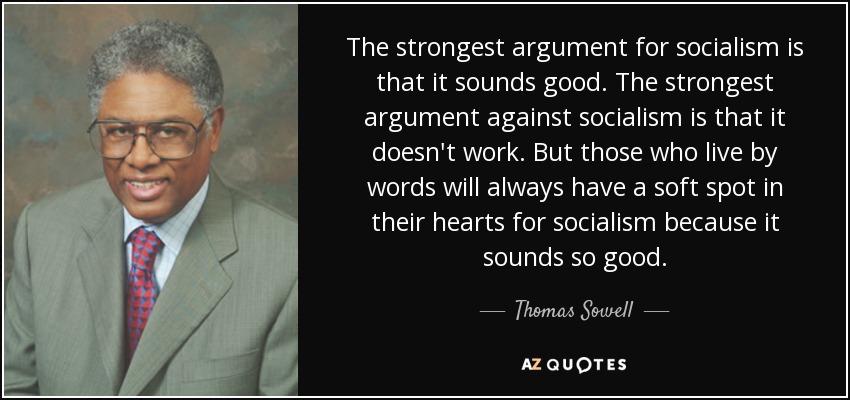
via Science Matters
https://ift.tt/S6fz32W
August 15, 2025 at 02:14PM

 Iowa Climate Science Education