‘A Huge Win’: Woke ‘Cartel’ Of Financial Giants Dealt Death Blow 11 Days Before Trump Takes Office

From THE DAILY CALLER

Daily Caller News Foundation

Owen Klinsky
Contributor

Asset management behemoth BlackRock wrote a letter to institutional investors Thursday announcing its exit from an emissions-focused investor group, according to the Financial Times (FT).

The firm, which manages over $10 trillion and has been a leader in environmental, social and governance (ESG) investing, has left the Net Zero Asset Managers (NZAM) coalition — a United Nations–sponsored collection of financial services companies that have pledged to achieve net-zero portfolios by 2050 or sooner, the FT reported. The move comes less than two weeks before President-elect Donald Trump, who plans to embrace fossil fuels in his second term, takes office, and follows the exits of a slew of other corporations, including Goldman Sachs Group, Wells Fargo & Co., Citigroup, Bank of America, Morgan Stanley and JPMorgan Chase & Co. (RELATED: UN Reportedly Moves To Unlock Tens Of Millions In Climate Funding For Country Run By Terrorists)

In the letter to investors, vice-chair Philipp Hildebrand wrote that the asset manager’s membership in NZAM had “caused confusion regarding BlackRock’s practices and subjected us to legal inquiries from various public officials,” according to the FT.

The firm began its ESG initiative in 2020, with CEO Larry Fink stating that “climate risk is investment risk” and that climate change would spark a “fundamental reallocation of capital.” However, the world’s largest asset manager exit has been backpedaling on its ESG efforts as of late, only supporting about 4% of the 493 environmental and social investment proposals shareholders put forward between the end of June 2023 and the end of June 2024, down from a rate of 47% in 2021.

BlackRock has also walked back some of its diversity, equity and inclusion (DEI) efforts, editing their DEI language to be less racially oriented.

Fellow investment firm Vanguard left NZAM in 2022, while financial services firm State Street remains in the environmental coalition.

“The news of BlackRock’s departure from NZAM should be music to the ears of every American consumer,” Will Hild, executive director of conservative nonprofit Consumers’ Research, told the Daily Caller News Foundation. “NZAM is an illegitimate cartel of asset managers pushing harmful and costly net zero policies across the entire economy. The activities of NZAM and its members raise prices on Americans everywhere from the gas pump to the grocery store.”

When reached for comment, BlackRock referred the DCNF to a report confirming their departure from NZAM.

All content created by the Daily Caller News Foundation, an independent and nonpartisan newswire service, is available without charge to any legitimate news publisher that can provide a large audience. All republished articles must include our logo, our reporter’s byline and their DCNF affiliation. For any questions about our guidelines or partnering with us, please contact licensing@dailycallernewsfoundation.org.


Discover more from Watts Up With That?

Subscribe to get the latest posts sent to your email.

via Watts Up With That?

https://ift.tt/O5FPAQC

January 11, 2025 at 04:10PM

Alaska Energy Shenanigans: Eklutna Dam and the RPS (Part II: Political Highjack)

By Kassie Andrews

Ed. Note: With yesterday’s background, Part II examines the politicization of one of Alaska’s major hydroelectric projects to reveal ulterior motives from “stakeholders” and elected officials.

“Once an RPS becomes law, the boards will be able to point to the new law in effect requiring them to adopt unreliable and expensive sources and be held harmless once things start to spiral out of control, up to and including rolling brownouts and blackouts.”

“Pumped energy storage is only necessary as a mitigating backup to the planned 100% unreliable not-so renewables. The Renewable Portfolio Standard will mandate a government-subsidized solar, wind and transmission build-out by grifters and profiteers. Wind and solar power producers should be made to pay for all infrastructure that makes them as reliable as a gas turbine.”

For environmental groups and their political carriers, the question is how to expand wind and solar power in the state, the very resources that are dilute, intermittent, fragile, expensive, and taxpayer-dependent. Here is where the proposals, deceit, and back-door blackmail come in.

Pumped/Energy Storage

Per US Department of Energy: Pumped storage hydropower (PSH) is a type of hydroelectric energy storage. It is a configuration of two water reservoirs at different elevations that can generate power as water moves down from one to the other (discharge), passing through a turbine. The system also requires power as it pumps water back into the upper reservoir (recharge). PSH acts similarly to a giant battery because it can store power and then release it when needed.

On February 3, 2020, a report by the Alaska Institute for Climate and Energy (ALICE), titled “Pumped Energy Storage for Alaska – A path to lower energy costs for Alaska’s new energy future,” was published.  The idea is to build on to the existing Eklutna Hydropower infrastructure, pumping water uphill for a conversion to stored energy.  With water flowing back down hill, it works as a regulator of sorts for unreliable sources of power.  It is a closed-loop concept involving five reservoirs and new phased-in wind sites for $4.7B.  This project requires massive excavation, adding more dams and tunnels – all to address the problem of wind and solar intermittency. 

The executive summary paints the picture that Railbelt energy is expensive because it is generated from expensive fuel.  Since fuel for the Railbelt is coming from Cook Inlet as a single source, the authors suggest ratepayers are left “vulnerable to swings in price or supply,” and the prices may “increase further due to taxes and regulations aimed at emissions reductions.”

For what appears to be the justification for their proposal, they reference Alaska’s non-binding goal of generating 50 percent of electricity from renewable sources by 2025 and state, “currently, the Railbelt generates only 15 percent of its power from renewable sources.”  To meet the stated non-binding renewable goal, the report compares the idea of the pumped storage hydro and wind combination to Susitna-Watana Hydro. 

According to the authors, the pumped storage and wind combination solution wins.  As this land is located in the Chugach State Park, the report offers the “careful design and construction of an aerial tram system instead of roads” to build and maintain the reservoirs, while also providing “low-impact access to the high country above Eklutna Lake.”  The time and costs to permit such a project are so staggering they could not be included. 

False Claims

In a April 2020 letter to the coordinator of the Eklutna Fish and Wildlife Plan, ALICE provided written comment early on in the process to the Initial Information Package (IIP), showcasing their idea of pumped storage, wherein they state they have been working on the Eklutna Pumped Energy Storage concept for several years and that in January 2020, “Governor Dunleavy became interested in the idea and requested more information.” 

Egregious claims in the ALICE report include that wind is the cheapest solution.  It states that proposed and existing wind sites would provide a capacity factor of 48-60%.  The report states fallaciously that Fire Island wind is at a capacity factor of 48%.  Chugach Electric actually notes the annual capacity factor for CIRI Fire Island wind is 32%.  As stated previously, Fire Island has demonstrated to be much lower than 32% when Alaskans have needed it most. 

To justify cost, the authors use Lazard’s Levelized Cost of Energy (LCOE) to state that new wind projects are less expensive than new gas plants.  The problem is LCOE doesn’t account for the cost of necessary redundancies for non-firm renewable generation, such as the pumped storage itself for $1.5B, which is required for wind.  

The authors of the report believe that 100% of the Railbelt energy can be provided by the PES wind combo for a price tag of $4.7B.  The project would require massive and wasteful public financing, and the idea has piqued the interest of other investors, which was brought to light when Governor Dunleavy wrote Berkshire Hathaway in May of 2020 expressing his interest in “Transitioning Alaska.”  Additionally, the report mentions that Independent Power Producers (IPPs) “(including Alaska Native corporations) are well placed to build and profit from the wind farms.”

In a November 2020 comment on the October 2020 draft study plan, NVE provides a glimpse into their vision for Eklutna, stating “The Eklutna pumped hydro storage battery would solve the problem of excessive costs to power companies from releasing large flows into the river, while allowing for full restoration of river flows, lake access, and stabilization of lake levels for salmon habitat.”  And “Government should supplement responsible restoration of the Eklutna River ecosystem, along with private enterprise that could profit from pumped hydro development.”

The October 2023 draft Fish and Wildlife plan referenced other entities conducting studies in the Eklutna basin, two of them include references to pumped hydro:

  • State-wide Pumped Hydro Study conducted by AEA
  • Pumped hydro system flow analysis and animation conducted by ALICE in coordination with NVE.

Narrative Shift

Resolutions from the Anchorage Assembly calling for the restoration of the full river date back to 2017.  The 2024 Legislative Program, presented by the Anchorage Assembly and Mayor Dave Bronson, listed supporting full restoration of the Eklutna River as a statutory and policy request.  This legislative program was approved by the Anchorage Assembly on December 5, 2023. 

That same day, the Anchorage assembly read AO 2023-131 into the record – the creation of a new section of the electric service code establishing that it was official policy of the Municipality of Anchorage, in part to “restore the continuous water flow of the Eklutna River and the fish populations of the River and Eklutna Lake, to the greatest extent possible, subject to all provisions of the 1991 Fish & Wildlife Agreement.” 

In February of 2024, the Anchorage Assembly approved Resolution 2024-40.  As a body, through resolution, they submitted public comment on the Draft Fish and Wildlife Program, reiterating their support of restoring the Eklutna River since 2017.  In the resolution, the Assembly touts their “creation of a specific law” regarding restoration of the river in 2023; they raise doubts about whether the proposed $57M solution by the Project Owners will work.  The Assembly goes on to admonish the Project Owners for their refusal to consider the removal of the dam as an alternative.  The resolution closes by stating they oppose the Draft Fish and Wildlife Program and request a two-year extension of the 1991 Agreement.

In the months leading up to the October 2024 final decision date of the Fish and Wildlife Program, expansion of the scope of fish and wildlife mitigation became apparent.

Although the Municipality was no longer a voting member of the project, they were desperate to demonstrate technical expertise to the RCA to get their voting rights back for greater input on the Fish and Wildlife Program.  On July 3, 2024, per press release Mark Corsentino, P.E. was confirmed by the Anchorage Assembly to be Anchorage’s Hydropower Utility Director. According to the assembly, this was a “critical step in reclaiming the Municipality’s voting seat on the Eklutna Hydroelectric Project owners group.” 

Much of this appointment has to do with attempting leverage over the 1991 Fish and Wildlife Agreement, there was a shift to another topic with Chris Constant stating “Not only does this give the Municipality more oversight and input on the Eklutna Hydropower project, it also provides exciting opportunities for the Municipality to pursue new forms of renewable energy in response to the Cook Inlet gas shortage.”

The Latest

On August 23, 2024, new Anchorage Municipality Hydropower Utility Director, Mark Corsentino gave a presentation on a modified pumped energy storage concept with wind & solar.  The proposal scaled back the proposal originally offered in 2020 by ALICE, with Anchorage Hydropower stating that the original concept “didn’t appear to offer additional water or provide downstream river flows.” 

Devoid of cost estimates, the Muni proposal offered an opened loop concept with 1 reservoir, new wind and solar that claimed to provide “Full instream river flows, fish passage and lake connectivity.”  It included an idea to construct an entire river for fish to get up and around the dam to the lake.

On September 3, 2024, in preparation for a meeting with Governor Dunleavy on September 9, the Anchorage Assembly passed a resolution approving a legal brief addressed to Governor Dunleavy’s office.  At this point, the assembly is fully selling the idea of pumped storage where they admonish the project owners for excluding it as an alternative by stating:

The Minority Owners mistakenly overlooked the pumped storage hydropower alternative without realizing that using existing infrastructure would sharply limit costs.

And

Pumped storage hydro is widely used in the U.S. and eligible for federal funding. It could re-water all 12 miles of the Eklutna River, reconnect the River to the Lake, create the conditions for the return of sockeye salmon to the Lake, and provide improved fishing and recreation for all Alaskans in a crown jewel of the Chugach State Park—all while also increasing useful power production by providing what would essentially be an enormous battery to save variable wind-and-solar power for later usage any time of the day or year, regardless of whether the wind is blowing or the sun is shining at any given moment.

On September 5, 2024, a joint resolution by the Assembly and NVE “In support of exploration of alternative solutions to attain our shared policy goals for full restoration of the Eklutna River” was signed.  This joint resolution “urge Governor Dunleavy to establish a Final fish and Wildlife Program that requires the owners to use two years of the three year pre-implementation period to explore alternative infrastructure options, including pumped storage hydropower”

On September 9, an output of the meeting with the governor’s staff provided revealing answers in response to the idea of pumped storage from project owners MEA and Chugach.  Regarding the $4.7B ALICE concept, the owners reiterate that this venture is out of the scope of the 1991 Agreement, which was to “mitigate the effects of the existing project, not build a new project, which would likely be FERC regulated.” 

In response to the modified pumped-energy-storage concept proffered by the Anchorage Municipality, the Project Owners state that the plan appeared to be infeasible.  The Project Owners list a myriad of incorrect and costly assumptions Anchorage Hydropower made in their proposal, including the idea to build a massive new river (40-50’ deep by a few hundred feet wide) effectively proving the idea to be DOA in their quest for it to become a viable option in the final fish and wildlife plan.

Massive amounts of energy and water would be required to simultaneously provide water to two rivers, fill the lake, serve as the battery to regulate unstable sources of energy and supply water to 90 percent of Anchorage residents who rely on it.  In the end, the Final Approved Program, approved by Governor Dunleavy on October 2, 2024, included the request by the Municipality of Anchorage and NVE to study “Pumped Storage Hydro.”  The low-end 35-year cost presented in the final plan to restore 11 out of 12 miles of the river came in at $58.2M, with the high end at a potential of $72.2M for a maximum owner commitment of $10M for a fixed wheel gate to replace the overfill spillway if determined to be required in the future.  The Chugach rate impact is estimated to be anywhere from 0.78-1.15 percent. 

What is Going On?

It is now known that “restoring the river” did not include plans to remove the dam.  As the experts tell us, this was never about the fish.  What, then, is the real goal of the activists?

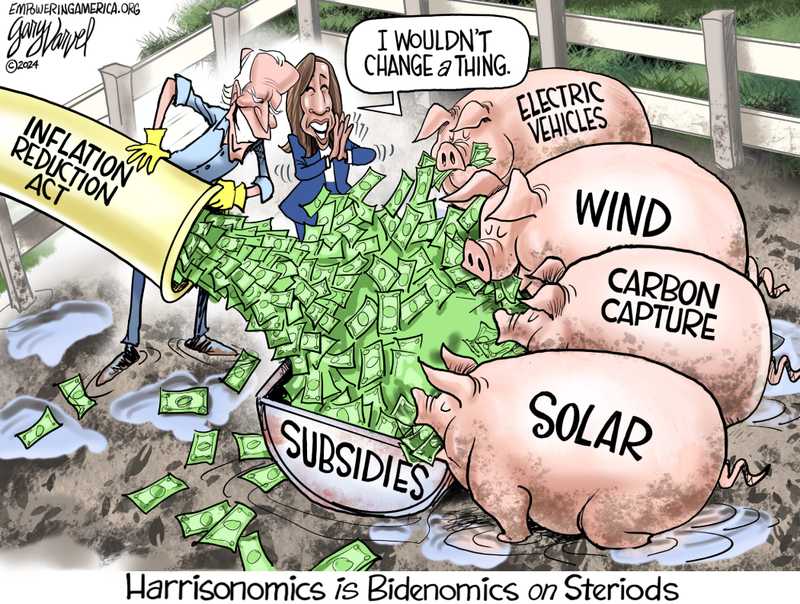
The Alaska State Legislature has been turned over to the Democrats.  With the Red Wave sweep across the nation at a federal level, the Alaska Democrats, seeking to line the pockets of cronies and ENGOs through the Inflation Reduction Act, will be looking for any and all opportunities to codify mandates to snuff out their free-market competitors, particularly in the energy realm. 

To this end, a Renewable Portfolio Standard (RPS) is imminent.  Given these conditions, if introduced for a third time, it has a high likelihood of passing.  RPS mandates that utilities adopt increasing percentages of renewable sources. 

There are multiple nefarious reasons why an RPS is sought.  Utilities have adopted decarbonization goals.  Chugach Electric’s 2022 Strategic Plan includes “a goal of reducing Chugach’s carbon intensity, from a 2012 baseline year, by at least 35% by 2030, and by at least 50% by 2040, provided there is not a negative material impact to electric rates or reliability.”  The RPS is important because co-ops cannot achieve the decarbonization goals without adding liability and cost. 

Once an RPS becomes law, the boards will be able to point to the new law in effect requiring them to adopt unreliable and expensive sources, and it also allows them to be held harmless once things start to spiral out of control, up to and including rolling brownouts and blackouts.  There is no doubt that it will come at great cost (mandates always do) with no known effect to the underlying goal – and that is to stop the planet from warming. 

Chugach took ratepayers down the first step to energy serfdom when they signaled support for the RPS in January of 2024 when they approved the resolution with the stipulation that the legislation “provide waivers for non-compliance due to reasons beyond the reasonable control of the utility.”  The last proposed RPS in 2023 called for 25% renewable by 2027, 55% by 2035 and 80% by 2040.  The Railbelt is at 15% renewable.

There is a greater interest in pumped energy storage in Alaska at the federal level, in an U.S. Department of Energy report dated July of 2023, “The Prospects for Pumped Storage Hydropower in Alaska.” The experts listed on the Advisory Group for the project include Ceal Smith of ALICE, and Brian Murkowski, Senator Lisa Murkowski’s brother.  The key summary finding is the state’s “potential for more than 1,800 closed loop PSH systems in Alaska, with a total energy storage capacity of about 4TWh.” 

The Railbelt System Analysis provides a scenario where RPS has been adopted “The RPS scenario shows a rapid increase in PV and wind investments.”  The study shows age-based retirements of primarily natural gas provided assets in the Anchorage area in 2028 with battery, PSH, solar and wind outpacing natural gas by 2037. 

Pumped energy storage can be considered as an insurance policy to sell reliability and “green” to the public.  Stand-alone wind and solar have already shown their true colors in Alaska.  Pumped energy storage is only necessary as a mitigating backup to the planned 100% unreliable not-so renewables.  The RPS will force by mandate the government-subsidized solar, wind and transmission build-out provided by grifters and profiteers, the pumped energy storage is supposed to make up for the unreliable power we get in return.  Wind and solar power producers should be made to pay for all infrastructure that makes them as reliable as a gas turbine, with their consumers footing the bill many times over.  What would the tariffs be for independent power producers if had to pay for their own grid upgrades and pumped storage unit?  The only way renewables are going to exist in this state is if they are mandated by way of the Renewable Portfolio Standard.

RCA against RPS

In early 2024, Chugach Electric took public testimony before the vote on the resolution supporting an RPS.  Of note was the board’s complete disregard for the fact that two of the testifiers referenced.  There was a unanimous decision by the Regulatory Commission of Alaska (RCA) on December 13, 2023, to oppose RPS legislation. Pointing to Germany’s demise, RCA Commissioner Robert Pickett stated:

We’ve heard about the German miracle for, I would say, at this Commission, for six or seven years at least, that it’s a shining example, points in time where the penetration of renewables has been 70 percent, 80 percent, but if you look at what’s happened in the last couple of years, it is clear it is not an economic miracle. In fact, it has devastated German industry and the German government itself is forced to pour in massive amounts of subsidy and Germany has some of the – if not the highest rates per kilowatt in Europe, it’s right at the very top and it’s getting worse, and reliability issues are associated with that.

Commissioner Pickett went on:

And so, I guess what has sort of shaped my thinking, when I look at the bill, and there’s some very aggressive, by admission of the bill sponsors for SB 101 and HB 121, that today, they’re estimating about 15 percent of the supply is renewable. And they’re proposing by 2027 to get that up to 25 percent and here we are almost 2024 and so, how does that work?  It takes 50 years to get to 15 percent and you’re going to increase that by, you know, 65, 67 percent in the next three years? It doesn’t make any sense and that’s even if the external environment was more stable. I mean, our financial system is sort of on the cusp right now with 35 trillion dollars worth of debt and a massive wall of federal debt coming back to the market in the next two years and the interest rates, compared to what they were a year ago, are astronomically higher and all the project sponsors are going to be confronted with that.

It is with much fecklessness and hubris that the six CEA board members ignored the RCA’s ruling.

Stopping the RPS

We will know with a high degree of certainty what direction Alaska will be going in if the RPS is passed.  With calls for the Trump Administration to work towards a full repeal of the Inflation Reduction Act, the subsidies that prop up the green ventures may dry up.  This will cause an epic collapse to all the mini-Enron’s of the world who selfishly put their chips all in on the wrong bet for consumers. 

This is a huge risk to the green lobby and if successful, will result in exponential costs to ratepayers whose fate now relies on lawmakers to make economical and environmentally sound decisions. 

It is not too late to start the preemptive messaging to your representatives that an RPS is too risky for Alaskans.  As the saying goes “follow the money.”  As outlined herein, it’s not about the fish, it’s not about the environment, and there is no limit to the lengths that special interests will go for the sake of a payout.  Alaska is on multiple parallels to wastage; we need to ditch the “all of the above” mentality and move forward with only sensible solutions.

—————

This concludes a two-part series. Part I was yesterday.


Discover more from Watts Up With That?

Subscribe to get the latest posts sent to your email.

via Watts Up With That?

https://ift.tt/bF0g5XJ

January 11, 2025 at 04:10PM

What a Difference a Day Makes

In a comment under Geoff Chambers’ article, Global Warmongering, I drew attention to a BBC Verify article which sought to rubbish President-Elect Trump’s criticisms of the situation relating to the terrible Los Angeles fires. It was headed “Fact-checking criticism of California Democrats over fires” and was clearly rushed out to defend California Democrats and to point out that (as the BBC sees it) that everything Mr Trump says is rubbish.

The BBC Verify fact-checking article is already, a little over 24 hours after it first saw the light of day, on its eighth iteration, according to News Sniffer (thank you Stew Green and Jit for drawing this to our attention). This story represents in a nutshell why we can’t trust the BBC, especially where stories about climate change and Donald Trump are concerned (it’s a perfect storm for the BBC when those two issues are combined in a single story).

Anyone reading my comments generally here at Cliscep and specifically under Geoff’s article, will readily appreciate that I am a long way from being Donald Trump’s greatest fan. However, my dislike of him, his behaviour, and many of his policies doesn’t blind me to the BBC’s blatantly obvious Trump Derangement Syndrome. In this case it has left the BBC Verify team (“BBC Verify is dedicated to examining the facts and claims behind a story to try to determine whether or not it is true”) with a lot of egg on its face, but the BBC hasn’t recognised this at all. Although the article has been repeatedly amended, nowhere in any of the versions is there an admission that this is so. I suppose admitting that BBC Verify’s articles have to be repeatedly amended in order to correct earlier errors wouldn’t exactly instil confidence in the Verify brand. Although there are various changes affecting different aspects of the story, for the sake of simplicity I concentrate on the fire hydrants issue.

Version One

Is there is ‘no water for fire hydrants’?

Trump has also said that there was “no water for fire hydrants”.

There have been reports that certain fire hydrants have run dry.

This is down to high demand placing a heavy strain on the system, according to local officials and experts.

In Pasadena, Fire Chief Chad Augustin said the area experienced a short period of time where pressure was low on a small amount of hydrants. All issues had been resolved, he added.

“There are very localised incidents of this unfolding where the fire hydrants have had insufficient water pressure for firefighters to use them, but that’s not because LA is running out of water,” says Mr Swain.

“There are thousands of firefighters and hundred of fire engines drawing upon water, and ultimately only so much can flow through pipes at a time.”

That’s all fairly clear. Trump is making a mountain out of a molehill. There have been some brief issues with pressure and demand, but nothing to suggest that LA is running out of water, and all issues have been resolved. Silly dishonest Mr Trump.

Version Two

This version makes no changes with regard to the question of fire hydrants. It makes some minor amendments that – in fairness – don’t need to be specially mentioned at the end of the article, and if these amendments were the only ones made, I wouldn’t make an issue out of it. Amusingly, it’s worth noting in passing that one of the amendments was to describe Daniel Swain of the California Institute for Water Resources as a climate scientist rather than as a Climate Scientist (is upper case reserved for big beasts only, I wonder?).

Version Three

Still nothing to get excited about. The only change is to point out that Governor Newsom is a Democrat (can’t have readers being confused between the good guys and the bad guys).

Version Four

Some minor changes were made elsewhere in the article, but now the fire hydrants story is changing. Some paragraphs have been added:

Some hydrants in higher-elevation parts of Pacific Palisades also reportedly went dry. Former Department of Water and Power general manager Martin Adams told the LA Times that the Santa Ynez Reservoir might have prevented this if open, but only for a time because of the enormous demand.

Oops! Still, no harm done, and the story can still be minimised:

“You still would have ended up with serious drops in pressure,” he said. “Would it have saved the day? I don’t think so.”

Phew, we’re saved – an expert has been found to say this would have made no difference.

Version Five

It’s starting to look a little tricky now that Governor Newsom (remember him – he’s a good guy, a Democrat) has started to ask difficult questions:

On Friday, Newsom called for an independent investigation into the loss of water pressure to hydrants and the unavailability of water from the reservoir.

Obviously for the BBC it was best to include the paragraph so as to avoid accusations of omitting key facts, but not to add any additional comment or amend its earlier conclusions. Good grief, that would be to admit that they rushed a story out in error, and that would never do.

Version Six

Oh dear, the story has by now gone pear-shaped. OH well, sauve qui peut, and all that. Let’s get on the front foot and look good by making it clear that the BBC has found all this out itself by being really good at its job and having its journalists talk to firefighters:

Is there no water for fire hydrants’?

On Friday, Governor Newsom confirmed reports that have been swirling this week that a water shortage hit the fire hydrants, hampering the emergency response.

Firefighters in Los Angeles have told the BBC firsthand that they experienced shortages.

Newsom called for an independent investigation into the loss of water pressure to hydrants and the unavailability of water from the reservoir.

In a letter addressed to the heads of the LA Department of Water and Power and LA County Public Works, Newsom said that reports of inadequate water supplies are “deeply troubling” .

“Losing supplies from fire hydrants likely impaired the effort to protect some homes and evacuation corridors,” he wrote.

“We need answers to how that happened,” he continued, adding that he expects the agencies to “fully and transparently” share information and records for the state’s probe.

Adam Van Gerpen, a captain with the Los Angeles fire department, confirmed to the BBC that his crew, which has been tackling the Pacific Palisades blaze, and other crews battling other wildfires, ran out of water, forcing them to “improvise”.

It’s all rather embarrassing, as is the fact that this confirms what Trump claimed, which BBC Verify initially said wasn’t true. What’s to be done? Easy! Drop the paragraph which has Trump making his claims. Remember this paragraph?

Trump has also said that there was “no water for fire hydrants”.

It was still there in version five. By version six it has disappeared.

Version Seven

Nothing of significance to report here – after all the real damage was done between versions six and seven. The only amendment was to explain who Daniel Swain is – initially there were three references to him and now there’s only one. The omission of the explanation of his identity would have left readers confused, as it had disappeared when they chopped the first two references.

Version Eight

Oh dear, it seems there’s no hiding from it after all. The reference to Trump has been re-inserted:

On Friday, Newsom confirmed Trump’s claim that there had been no water for some fire hydrants, which hampered the emergency response.

Newsom called for an independent investigation into the loss of water pressure to hydrants and “the reported unavailability of water supplies from the Santa Ynez Reservoir”.

In a letter addressed to the heads of the LA Department of Water and Power and LA County Public Works, Newsom said that reports of inadequate water supplies were “deeply troubling”.

It’s all a far cry from version one.

Conclusion

It’s beyond time time BBC Verify is ditched. It’s long been obvious to me that it isn’t the sword of truth but a rapid deployment weapon the BBC uses to discredit stories and people it disapproves of. It’s been badly caught out on this one, but lacks the good grace to admit it and to make it clear to readers that the article has been substantially changed. If I were inclined to give th BBC the benefit of the doubt (I’m not) I would accept that it’s a fast-moving story and that what initially appears to be the case can turn out not to be. However, there are two reasons why I don’t accept that to be the case here. First the manifest focus on Trump and the blatant attempt to discredit his utterances. Second the failure to acknowledge that the article has had to be substantially amended. It’s just all too typical of the BBC. And I’m fed up of it.

via Climate Scepticism

https://ift.tt/ZN35oUD

January 11, 2025 at 03:11PM

World Institutions Pushing Pseudoscience

Since 1660, Nullius in verba was the Royal Society’s motto.                                      “Don’t take anyone’s word for it.”

Yesterday’s post showed how American science societies have taken to parroting climatist suppositions rather than applying critical intelligence to claims of a “climate crisis.” That unquestioning attitude betrays the science method expressed in the Royal Society’s motto.  Today presents Tilak Doshi describing how the same pattern appears in international institutions supposed to be objective reporters of natural conditions. His Daily Signal article is The Climate Agenda’s March Through the Institutions: Can It Be Stopped? Excerpts in italics with my bolds and added images.

A spate of stories in the media recently provides a remarkable illustration of how the globalist policy agenda of the climate-industrial complex has captured key international institutions and perverted their original organizational aims. From initially serving broad, laudable objectives for the welfare of their constituents, these institutions have been subverted over the years to serve the insistent pseudoscientific claims of climate alarmists.

The corruption of global institutions has, in turn, led to significant opposition that is becoming apparent. There is the prospect of an incoming Trump administration that is avowedly skeptical of the claims of an alleged climate crisis and is intent on exiting the U.N.’s Paris Agreement and its “net zero by 2050” policy target for a second time. This presents a welcome challenge to these corrupt institutions.

Will President Donald Trump and some of the populist parties in Europe
be capable of countering the entrenched globalist climate agenda?

The World Bank

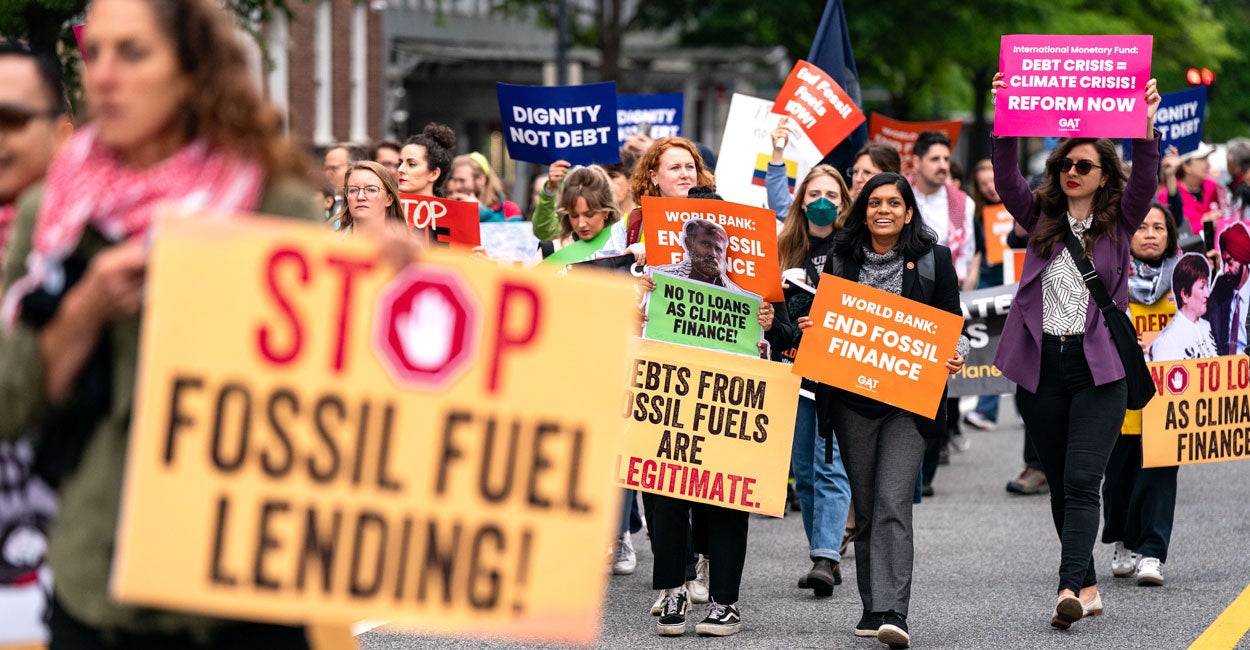
On Oct. 17, Oxfam published a report that shockingly found that up to $41 billion in World Bank climate finance—nearly 40% of all climate funds disbursed by the World Bank over the past seven years—is “unaccounted for between the time projects were approved and when they closed.” In other words, no one knows how the money was used. There is no paper trail revealing where the money went or what the accomplished results were.

Green cronyism, ranging from the Solyndra debacle—the waste of almost half a billion dollars of taxpayers’ money on a failed solar farm project under President Barack Obama’s watch—to President Joe Biden’s duplicitously-named Inflation Reduction Act, which will unleash an estimated $1 trillion deluge of subsidies on favored “green” industries, is nothing new. But it is instructive to trace the World Bank’s decline from its honorable founding objectives to its current status as yet another institution advocating green causes.

Dr. Jim Yong Kim, reflecting the progressive virtues of Obama, who appointed him as president of the World Bank in 2012, imposed a ban on the financing of coal-fired power stations in 2013. This was followed by a ban on investments in all new upstream oil and gas resource development projects.

The distinguished economist Deepak Lal, a former research administrator of the World Bank, remarked that Kim incredulously “over-ruled the cost-benefit estimates of coal-based power over solar and wind-based power generation produced by his own economic staff, justifying this by reference to a wish to cut global emissions of greenhouse gases.”

The World Bank’s objections to the use of fossil fuels despite their importance to economic growth and poverty alleviation—which constitute its foundational institutional objectives—can be traced to the intellectual evolution of its management under James Wolfensohn during his decade as president (1995-2005).


Wolfensohn traced the arc from the old regime to the new. The old was represented by the “Washington consensus” of free markets, liberal trading regimes, sound money, and entrepreneurship associated with the classical liberalism of Adam Smith.

The new intellectual environment of the World Bank’s management—personified by Joseph Stiglitz, chief economist of the World Bank (1997-2000)—was defined by the theoretical failures of the free market, especially in accounting for the alleged negative climate impacts of fossil fuel use.

Stiglitz, a climate alarmist, wrote in a 2015 court brief for a failed climate lawsuit brought on behalf of a group of children against the U.S. federal government that “fossil fuel-based economies imposed ‘incalculable’ costs on society and shifting to clean energy will pay off.” [See Climatists Make Their Case by Omitting Facts]

Rupert Darwall, a former adviser to the United Kingdom’s chancellor of the exchequer and author of “Green Tyranny,” encapsulates the betrayal of the World Bank to its founding objectives as follows:

The World Bank’s mission has been subverted by green ideologues who assert that a low-carbon world benefits the world’s poor but fail to acknowledge that making energy much more costly increases poverty. The World Bank tags itself as ‘working for a world free of poverty’ … In making its choice between development and sustainability, the World Bank has decided it is going to try and ‘save the planet’ on the backs of the poor.

By abdicating its founding principles for alleviating global poverty, the World Bank has taken a lead role among multilateral financial institutions in denying vast financial resources to poorer countries. It has hypocritically vetoed the right of developing countries to adopt the path of economic growth and environmental improvement that the now-rich countries had taken up successfully since the Industrial Revolution two centuries ago. The World Bank’s obsessive support for intermittent, low-yield renewable energy such as solar and wind power comes at the cost of its central charter to help the poor, an outcome that can only be described as egregiously unjust.

The UN Intergovernmental Panel on Climate Change

The U.N. IPCC issued a news release on Dec. 6 prior to the start of a “scoping” meeting in Kuala Lumpur of over 230 experts from 70 countries to draft outlines of working group contributions to the U.N. IPCC’s seventh Assessment Report (to be completed in 2029).

In the press release, the IPCC claimed that human combustion of fossil fuels “has resulted in more frequent and more intense extreme weather events that have caused increasingly dangerous impacts on nature and people in every region of the world.” This is contrary to the IPCC’s position hitherto, which is that almost all types of extreme weather events cannot be attributed with confidence to human activity.
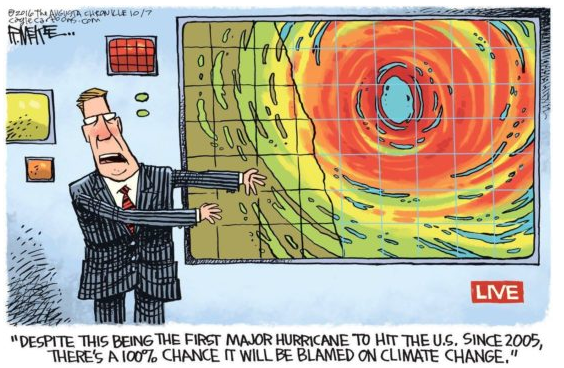
The position of the IPCC regarding the lack of any link between climate change and extreme weather events is contrary to the almost daily headlines in the mainstream media attributing specific adverse weather events to “climate change.”

The work of eminent climate policy analysts Steve Koonin and Roger Pielke Jr. has done much to expose the pseudoscientific nature of what has been called “attribution studies.” These typically involve researchers who apply their climate models and historical observations to conclude that any particular weather event (say a hurricane or a drought) was made “more likely” or “more severe” by some magnitude in percentage units due to “human influence” (referring to the combustion of fossil fuels).

Based on the dubious claims of “attribution science,” New York Gov. Kathy Hochul signed a climate law last week that will require companies operating in New York state responsible for large amounts of planet-warming pollution to contribute to climate damage repair efforts. Under the new state law, companies responsible for the bulk of emissions from 2000 to 2018 will be on the hook for some $3 billion a year over the next 25 years.

Koonin cites the World Meteorological Organization that states that “any single event, such as tropical cyclone cannot be attributed to human-induced climate change, given the state of scientific understanding.” The IPCC’s “Special Report on Extreme Events” states that “Many weather and climate extremes are the result of natural climate variability … Even if there were no anthropogenic changes in climate, a wide variety of natural weather and climate extremes would still occur.”

Nonetheless, international organizations such as the World Bank and the IPCC have been increasingly politicized to serve climate hysteria. In this context, Chris Morrison of The Daily Sceptic finds that “[f]ears are growing that the IPCC could water down or even ditch its current finding that almost all types of extreme weather events have little or no sign of past human involvement, or any going forward to 2100.”

International Energy Agency

On Dec. 23, U.S. Sen. John Barrasso, R-Wyo., ranking member of the Senate Committee on Energy and Natural Resources, released a report documenting how the International Energy Agency “has moved away from its energy security mission to become an “energy transition” cheerleader.”

The report finds that “French President [Emmanuel] Macron’s observation that IEA has become the ‘armed wing for implementing the Paris Agreement’ is regrettably true. With the many serious energy security challenges facing the world, however, IEA should not be a partisan cheerleader. What the world needs from IEA—and what it is not receiving now—is sober and unbiased analyses and projections that educate and inform policymakers and investors. IEA needs to remember why it was established and return to its energy security mission.”

The divergence of the IEA away from its original mission to advise policymakers in its member countries with sound analysis of trends in global energy supply and demand to becoming a “cheerleader” for radical net-zero emission policy targets has not gone unnoticed over recent years. I have written on the ideological approach adopted by the IEA in its advocacy for green causes here, here, and here.

When ideological advocacy becomes the measure of achievement for the IEA, the loss of credibility and soundness of its policy advice is only to be expected. The IEA’s messianic fervour for green technologies such as solar and wind power, “green” hydrogen, batteries, and electric vehicles prevents it from asking basic questions.

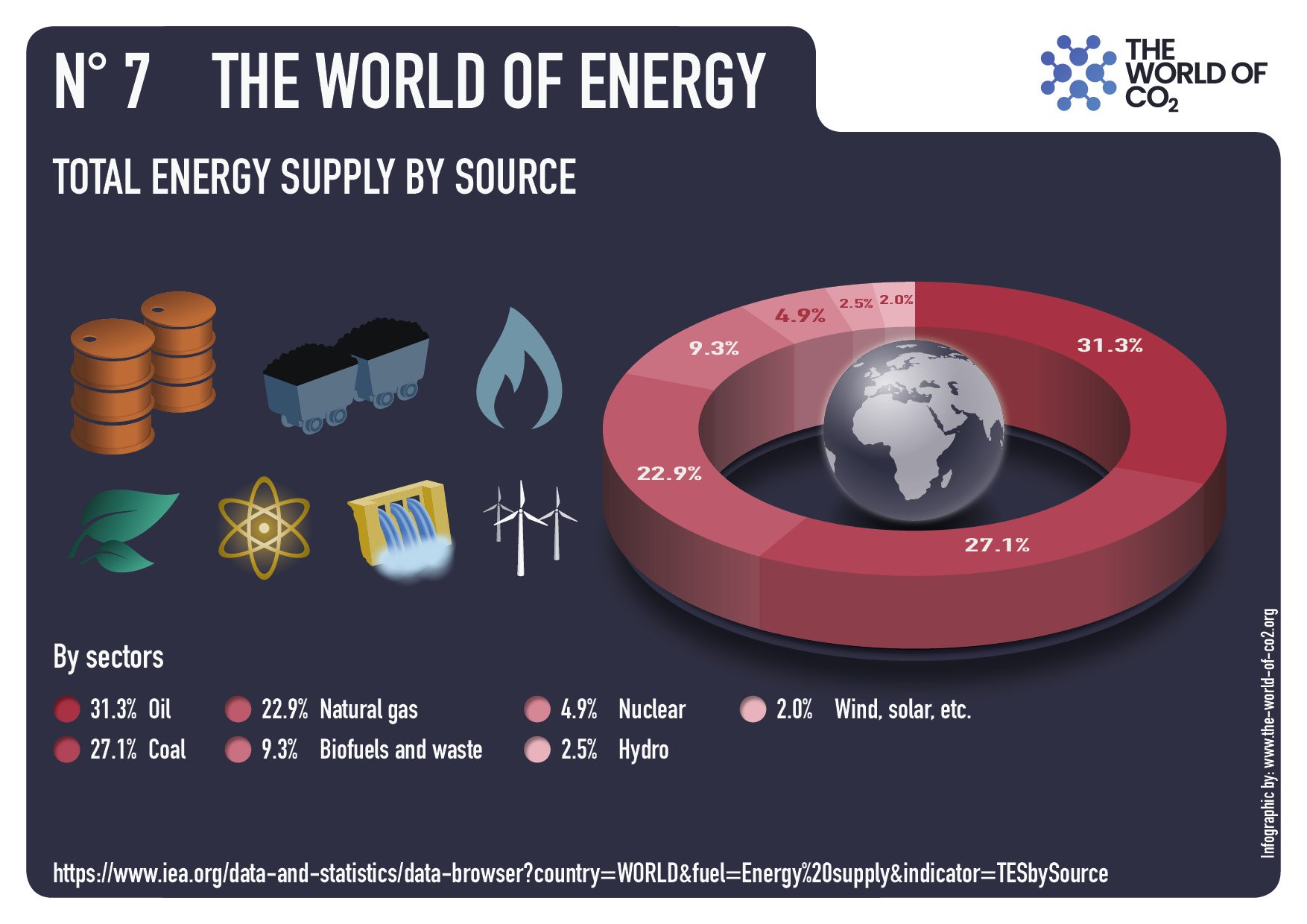
If it is true that drastically cutting back on fossil fuels is consistent with higher economic growth and increased productive employment, why does the IEA recommend policymakers force countries along “net-zero” pathways? Surely, if replacing fossil fuels with wind and solar energy and electric vehicles promotes growth and employment, then wouldn’t countries such as China and India naturally race toward this best of all possible worlds without expensive green subsidies and punitive anti-fossil fuel policies?

The Trumpian Revolution Looms

Nonprofit organizations reflect the needs of their funding members, and organizations such as the World Bank, IPCC, and IEA are no different. As their funding is primarily from the U.S. and the EU, it is not surprising that they manifest the “climate emergency” predilections of the Biden administration and the largely left-socialist West European governments that see climate change as an existential threat and a national security priority. In taking up the mantle of green advocacy on behalf of their paymasters, these organizations have lost all credibility as independent and objective advisors for their member countries.

The climate-industrial complex fears the prospect of the Trump administration’s pullout of the Paris Agreement for the second time. Politico, a reliable mouthpiece for the climate establishment, expressed these fears soon after Trump’s election victory: “The world is bracing for President-elect Donald Trump to withdraw the U.S. from the Paris climate agreement for the second time—only this time, he could move faster and with less restraint.” In Europe, the emergence of populist parties has been partly propelled by the widespread rejection by EU citizens of the onerous fiscal burdens imposed by green policies.

The seismic change in policy direction that a second term “drill, baby, drill” Trump administration promises for the global climate juggernaut—represented by the three leading international agencies covered here—can only be seen as hopeful as we look forward to positive developments in energy policy in 2025.


via Science Matters

https://ift.tt/y2aWUhA

January 11, 2025 at 02:26PM