The Grid Speaks

News Brief by Kip Hansen — 9 December 2024 – 500 words

Sometimes we feel that we, and our allies in the energy/climate battle, are the only ones that face the reality that a national or regional electrical grid can be overloaded with wind and solar resources to the point that the reliability of the grid itself is threatened.

Almost always, those acting on the other side of the controversy, those who are adamant that fossil fuels absolutely must be abandoned at any cost,   speak to the media and say that our views, our facts, are false, and that anyone presenting evidence contrary to their anti-fossil fuels views must be engaging in  intentional disinformation.

So, when we, the climate deniers, shills for fossil fuel companies all, point out the obvious truths about the problems caused by adding too many intermittent renewable energy sources to electrical grids without adequate reliable dispatchable backup, we are brushed off, denigrated, ignored, mocked, and vilified in the press.

I have written about it here on WUWT.  Roger Caiazza wrote recently on this situation in New York state.

There are energy professionals, grid building and maintaining professionals, that have tried to get this message across to legislatures and the public as well. But they too are ignored, for the most part.

But when real-world reality strikes it produces news coverage like this in  Australia’s SkyNews two weeks ago: 

“Labor’s renewables promise under fire for ‘putting burden’ of energy transition on Australians as blackout fears rise in NSW”

Oscar Godsell — November 27, 2024

“Residents in Australia’s largest state have been issued a bizarre dictate to choose between using the dishwasher or suffering blackouts as the government is accused of placing the burden of the renewable energy transition on Australians.”

….

“The Minns government asking consumers to rearrange their schedules and swelter through hot temperatures to support the grid is an inevitable result of the government’s attempt to build a renewables-dominated grid.

“Our energy grid has traditionally relied on dispatchable coal and gas generators that can reliably provide enough supply during times of peak demand – like during a heatwave.

“But now our grid is increasingly relying on wind and solar generation which cannot be switched on when we need it.”

….

“We’ve been notified by AEMO that there are insufficient reserves in terms of generation available over the coming day,” Mr Minns told reporters.

“The reason for that is that solar production in the energy market starts to come off from 3pm at exactly the same time as people return home from work.”

As solar energy production decreases in the late afternoon, demand spikes as people turn on air conditioners and other appliances to cope with the heat.

The situation has sparked debate over the future of Australia’s energy policy as Nationals Leader David Littleproud told SkyNews.com.au Labor’s “all renewables approach” wouldn’t meet “practical reality”.

“It cannot work, it will cost more and we are now seeing it is also dangerous. A first world country like Australia should and must have energy during a heatwave,” he said.”

You can read the whole story at the link at SkyNews.  Those Aussie journalists are not cowed by the Climate Cranks….they tell it like it is.

# # # # #

Author’s Comment:

Now even the MSM, at least in Australia,  is beginning to realize that the “all in for all renewables” push may lead to loss of the reliability of electrical grids wherever it is implemented.  They were warned, but did not listen.  Now their citizens are paying the price.

The worst case scenario is a total grid failure requiring a “black start”.  

It will get worse as they continue to starve our electrical grids of dispatchable electrical power.

Thanks for reading.

# # # # #

via Watts Up With That?

https://ift.tt/Ij13BQR

December 10, 2024 at 04:00PM

How To Fix US Energy After Biden Broke It

The Energy Bad Boys provide a road map at their blog 7 Quick Energy Takeaways from the 2024 Election.  Excerpts in italics with my bolds and added images.

How a Donald Trump second term could reshape energy policy

Donald Trump’s comeback victory in the presidential election, which included carrying all seven swing states and winning the popular vote, along with Republican majorities in the Senate and potentially the House of Representatives, means big changes are coming to our nation’s energy policies.

Here are 7 quick takeaways for what might change in the next administration.

1. Regulatory Rollback

The incoming Trump administration will take concrete steps to repeal or scale back the regulatory overreach emblematic of the Biden-Harris administration’s energy and environmental policy.

Some of the regulations that could see a repeal or rework under the Trump administration include the tailpipe emission standards (which were effectively an electric vehicle mandate), the Mercury and Air Toxics Standards (MATS), and of course, the rules on carbon dioxide emissions on power plants. 

The D.C. Circuit Court is set to hear arguments on the Clean Power Plan 2.0—which we determined would leave millions of Americans in the dark—in the coming months.
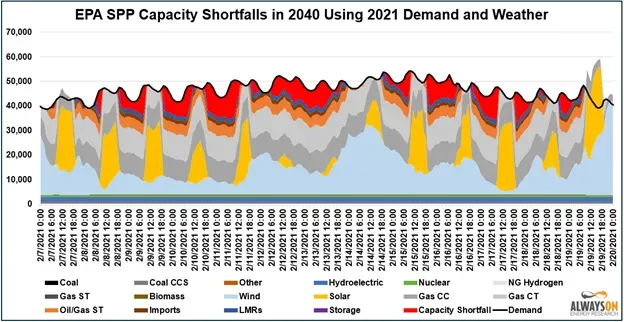
Capacity shortfall events – or blackouts – in Southwest Power Pool (SPP) when we modeled EPA’s proposal for carbon mandates, stemming from the agency’s use of 80% or higher capacity values for solar energy.

The U.S. Supreme Court declined to stay the rules at this time, so the outcome of the case will likely impact the Trump administration’s strategy in addressing these rules. They may opt to do a scaled-down version of the rules, similar to when they replaced the Clean Power Plan 1.0 with the Affordable Clean Energy rule. Time will tell.

What we know now is this: the Biden Administration’s goal
of imposing carbon dioxide limits on existing
natural gas plants is dead in the water.

2. A Re-emphasis on Federalism

The repeal or reworking of several of the electricity-sector mandates imposed by the Biden-Harris administration will mean states have more say in their energy affairs.

This is both a blessing and a curse, as blue states pursue aggressive renewable buildouts, and utilities in red states attempt to boost their corporate profits by “green plating” their grids. Utilities do this by enacting internal carbon-free goals that are similar to policies in blue states, hoping it goes unchecked by regulators and lawmakers.
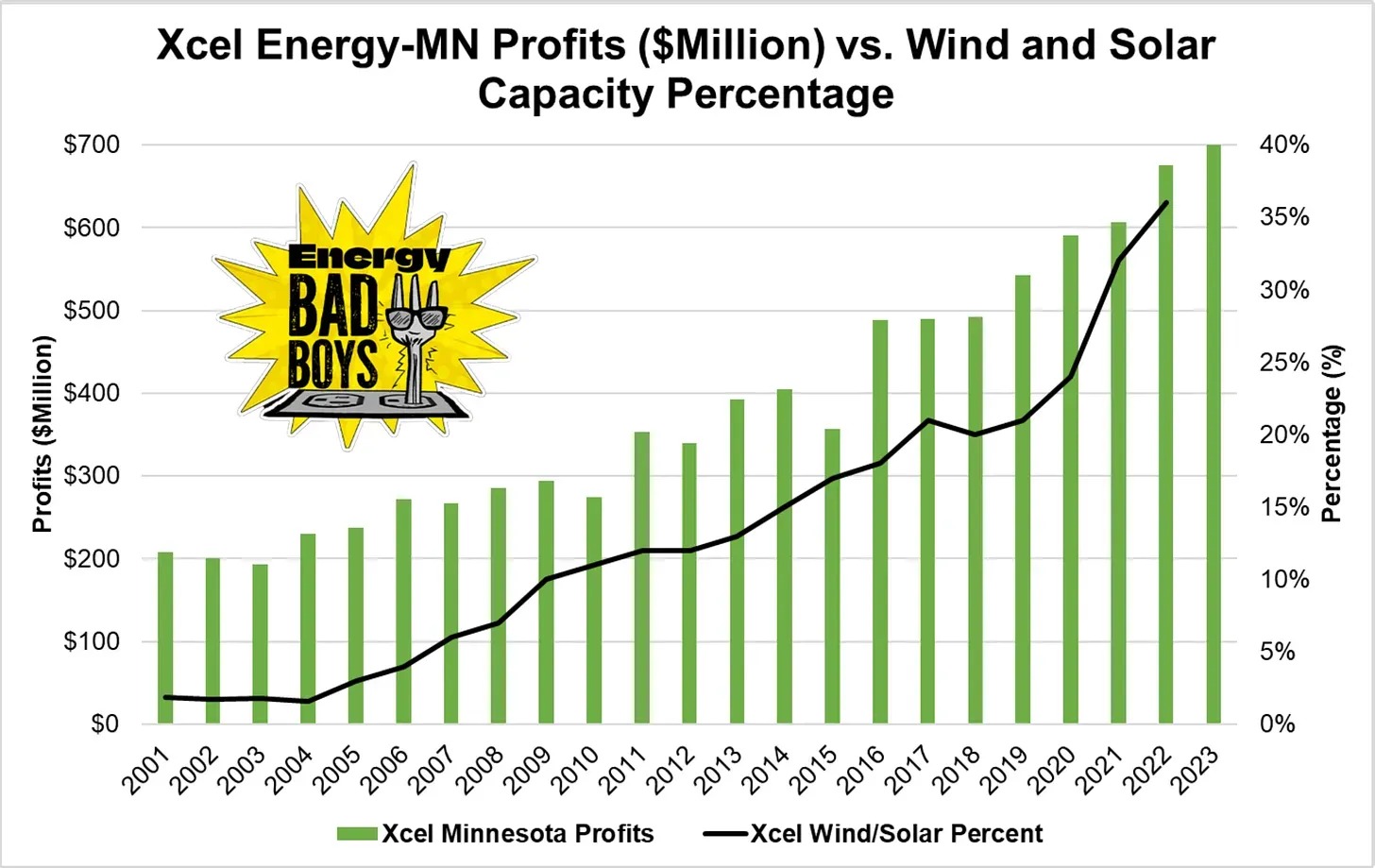
Xcel Energy’s profits in Minnesota have been skyrocketing since the state’s first renewable energy mandate, signed into law in 2007.

Policymakers in moderate and conservative states need to understand that the utilities pursuing wind and solar in their resource portfolios are not working in the interest of their constituents, and appropriate market signals are desperately needed through reforms that value reliability and affordability.

This is why we are seeing a groundswell of interest in our “Only Pay for What You Get Act,” where utility companies would only be allowed to charge their customers for the reliable portion of a power plant that will bolster grid reliability while keeping costs as low as possible.
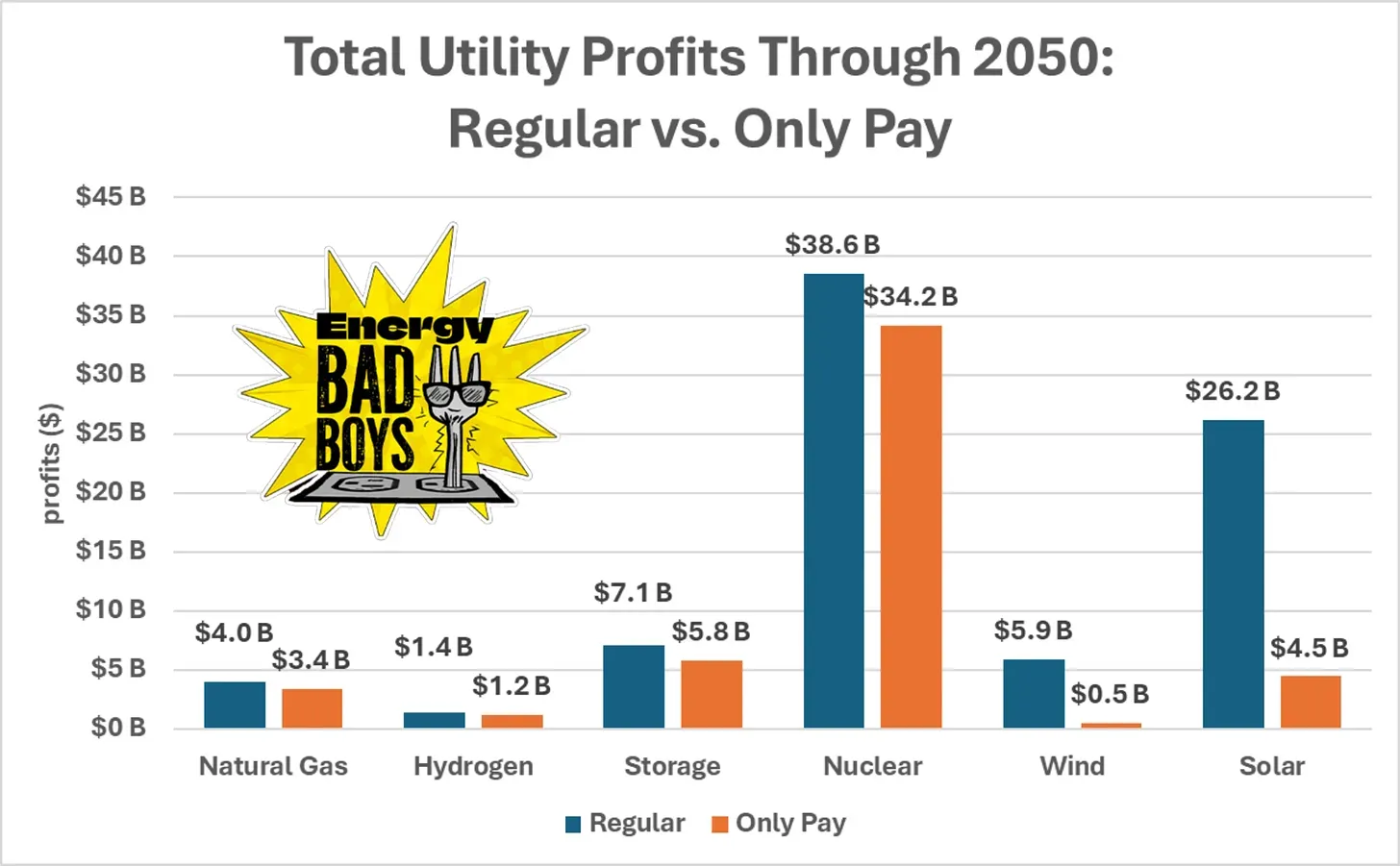
This shows the difference between profits earned by utility companies under normal regulation and what profits would be under Only Pay legislation.

Please feel free to reach out to us if you are interested in learning more about how Always On Energy Research can help policymakers in your state understand the stakes of getting their energy policy correct, and offer forward-looking solutions to the challenges we’ll all face in the coming years.

3. Repeal the IRA?

As we noted in our piece, Grassley v. The Grid, subsidies paid to wind and solar operations are no longer harmless feel-good incentives for alternative energy. Today, these subsidies are actively undermining the reliability of our nation’s electric grid.

IRA subsidies paid to wind and solar developers are used as an excuse by utility companies to justify closing down reliable coal, natural gas, and nuclear plants while pretending that their plans to replace them with wind, solar, and battery storage facilities are better for consumers.
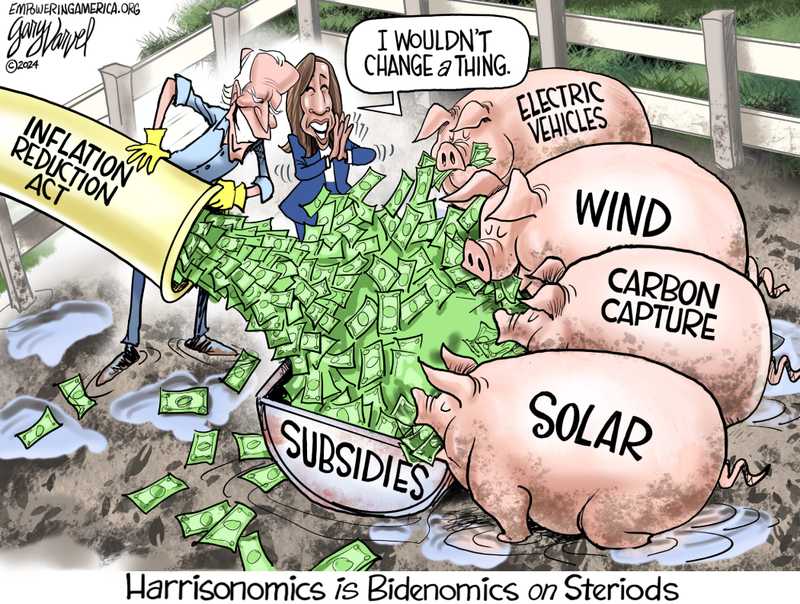
As Travis Fisher has noted at his Substack, he estimates that the IRA will cost more than $1 trillion over the next 10 years and between $2 trillion and $4 trillion by 2050. These massive subsidies are so lucrative that companies are pursuing projects that only make sense if the subsidies exist, irrespective of whether they make any sense for customers. This is a recipe for enormous malinvestment of taxpayer dollars.

Repealing the investment tax credits and production tax credits for wind and solar facilities will be an indispensable part of reversing this trend and restoring rational market signals to the electricity sector.
4. Keystone Pipeline

During his appearance on the Joe Rogan Podcast, President Trump said he liked Robert F. Kennedy Jr.’s ideas on a lot of things, but we were relieved the President said he would need to keep him away from environmental policy decisions because he was hostile to “the black gold.”

Always On Energy Research’s oil and gas analyst, Trevor Lewis, notes that beginning day one, the Trump administration can take several steps to ensure America’s economy will have enough oil and gas to fuel decades of growth.

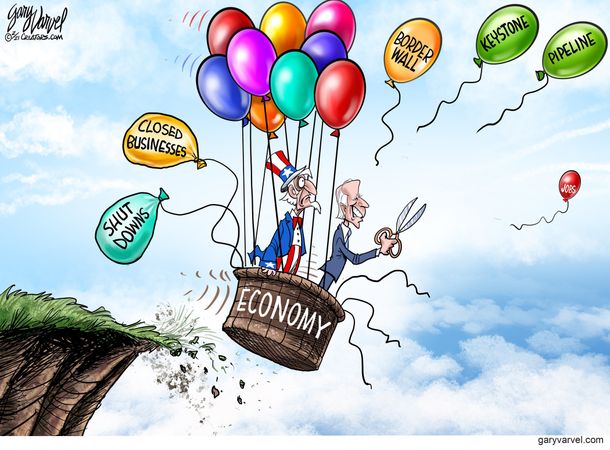
Restarting construction on the Keystone XL pipeline should be at the top of the list of priorities, which would bring job opportunities and economic activity to countless small towns from North Dakota to Kansas while simultaneously bolstering America’s energy security.

While America has vastly improved its energy independence from the rest of the world, our nation is still importing several million barrels of heavy sour crude from OPEC and other foreign nations. Restarting Keystone will allow American refineries to friend-source crude from Alberta and would, as an added benefit, reduce SO2 emissions from tanker ships, which negatively impact air quality and contribute to ocean acidification.

5. Drill Baby Drill

For domestic production, Trump’s Bureau of Land Management (BLM) will reverse the Biden Administration’s disastrous drilling policies.

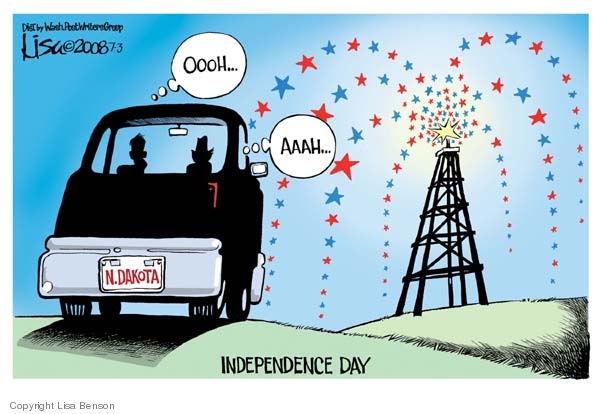
In the first two years of the Biden Administration, total leases offered declined by 70 percent. By 2023, Biden’s BLM leased 95 percent fewer acres than Trump in 2019. Trump’s BLM can reverse this trend and award prime oil-rich lands to eager drillers in Wyoming, Montana, and Colorado. Offering these leases will replenish acreage inventories and reverse the 20-year decline in active acres, and the royalties paid on federal lands will be distributed through BLM’s oil and gas revenue splitting program with state governments and local communities.
Trump will also likely reverse the Biden Administration’s pause on permitting new liquefied natural gas (LNG) export facilities and appoint commissioners to the Federal Energy Regulatory Commission (FERC) that will approve the construction of new natural gas pipelines.
6.  Solar and Wind on Federal Lands

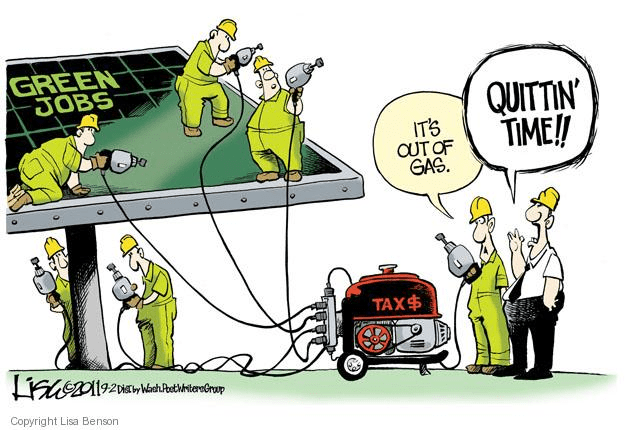
In 2023, the Biden Administration’s Department of Interior (DOI) gave renewable energy developers a sweetheart deal slashing the annual lease rate for wind and solar on federal lands by 80 percent. Months later, Biden’s BLM announced the Western Solar plan which will bridle 31 million acres of Federal lands – most of which in Western States thousands of miles from Washington D.C. – with 25 gigawatts of solar power.

Unless reversed by the Trump Administration’s BLM, the Western Solar Plan will erect inefficient solar panels over pristine western landscapes while damaging fragile ecosystems in the process. Worse still, communities would not be compensated for the damages done by these solar developers because, unlike oil and gas leases, BLM does not share the revenues paid by wind and solar lease rents or bonus payments on the Federal lands with local communities.

The revenues communities receive from royalties strengthen local budgets, create jobs, and support the care and maintenance of the local environment, which wind and solar currently don’t contribute to. Trump’s BLM will have an opportunity to end Biden’s free ride for wind and solar developers. President Trump can advocate for western lands and their inhabitants by leveling the playing field by ensuring renewable energy developers pay rates equivalent to those paid by oil and gas producers.
7. Halting Offshore Wind

The Biden Administration has pledged to install 30 gigawatts of offshore wind capacity by 2030. To meet this target, the Bureau of Ocean Energy Management (BOEM) offered 10 offshore wind leases and scheduled auctions for 12 more leases through 2028.

Offshore wind energy is one of the most expensive energy sources on the grid—even before accounting for the hidden costs of maintaining reliability with intermittent electricity generation.

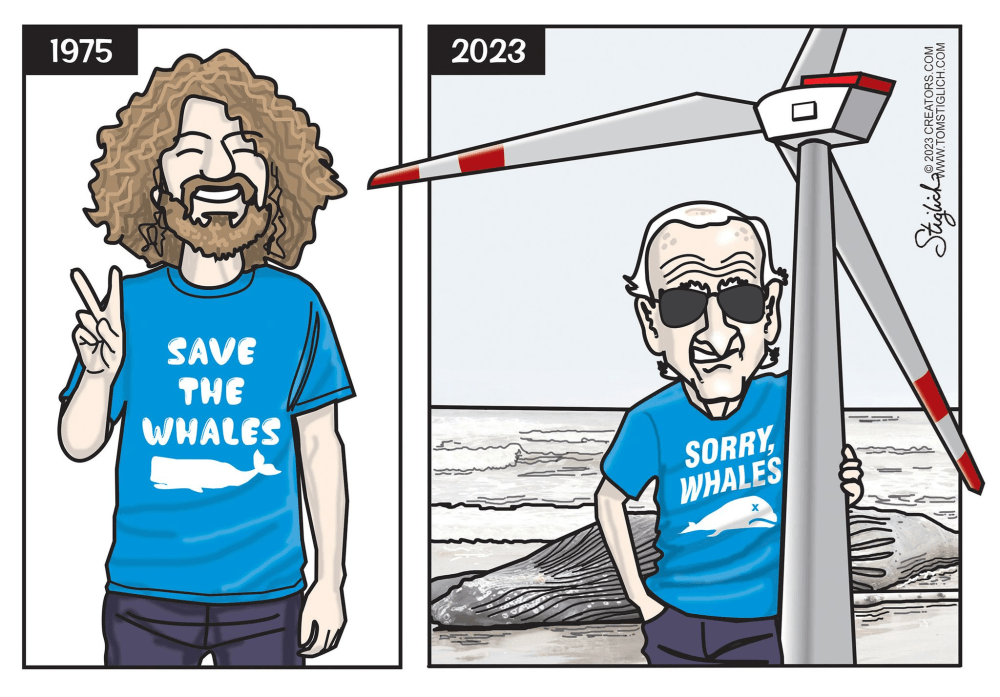
Additionally, offshore wind has been the center of ongoing environmental controversies, from killing whales to the breakdown of blades in the middle of the ocean, only to washup onshore

To prevent another Vineyard wind disaster, in addition to saving consumers from expensive and unreliable energy, Trump should direct the BOEM to terminate the 12 scheduled leases. As for the 10 auctioned leases, Trump could (and should) rescind these leases from offshore developers, in a similar move to Biden rescinding Alaskan oil and gas leases.
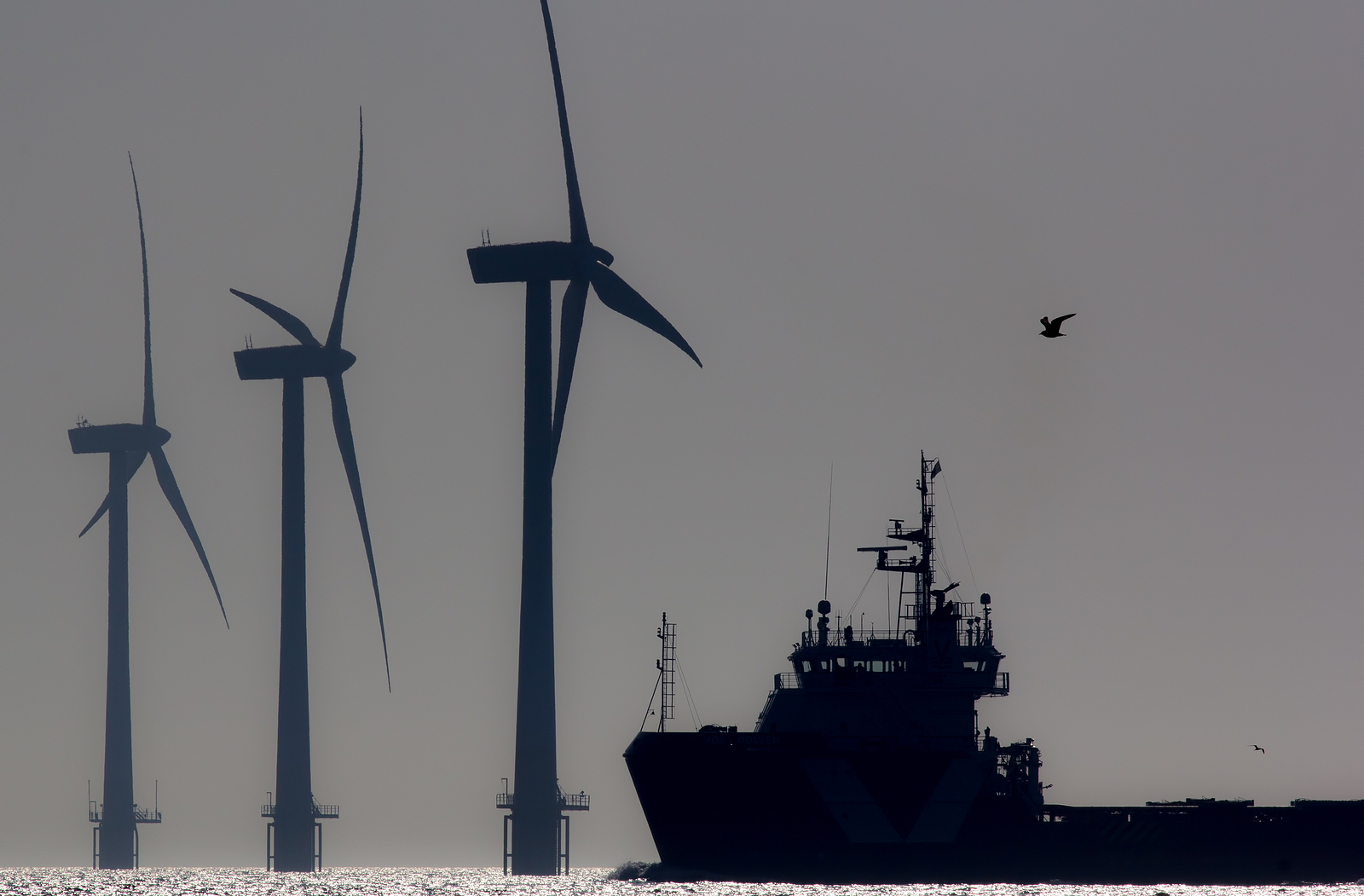
French Fishermen Join U.S. Fishermen in Fighting Offshore Wind – IER

Conclusion

Biden Bad, Trump Good.

After 4 years of one of the worst presidencies for reliable and affordable energy, the Trump administration has the opportunity to unleash energy dominance by ensuring a level playing field for all energy resources, ending the subsidies and handouts to renewable and battery developers, repealing egregious regulations aimed at prematurely retiring coal and natural gas plants, and promoting an energy dominant policy which will help end Bidenomic’s policy of energy inflation.


via Science Matters

https://ift.tt/eH1zIYW

December 10, 2024 at 03:53PM

Denmark offers largest offshore wind area for auction, but no one bids anything

By Jo Nova

““The green transition in Denmark has stalled right now”

Denmark was the posterchild for the wind industry.  It has the largest share of wind power in its national grid, and is home to the industry giants, Vestas and Orstead —  two of the world’s largest wind-manufacturers .  Denmark is planning a large expansion in wind energy (or it was). But when the government offered up three areas of the North Sea that were described as “among the best in the world”, the deadline came and went last Thursday and not a single bid was received.

This is a huge shift from the situation in 2021 when there were so many bids for one wind plant, it ended up being settled by a lottery.

By Sanne Wass and Will Mathis Bloomberg

High costs and power price risks made auction undesirable

The Danish Energy Agency didn’t receive a single offer by Thursday’s deadline in the tender to develop three offshore wind farms, it said in a statement. It will now initiate a dialog with the market to find out why.

Between the European Union and the UK, countries aim to have some 150 gigawatts of capacity by the end of the decade, more than quadruple today’s level. The failure of the Danish tender puts that goal further out of reach and similar struggles to attract new investment in neighboring Sweden show it’s not an isolated case.

“The green transition in Denmark has stalled right now,” Kristian Jensen, chief executive officer of industry group Green Power Denmark, said in a statement. “Too few wind turbines are being built both at sea and on land, and if that situation does not change, we will continue to depend on electricity from brown energy sources.”

One industry magazine is doing damage control, and blames the “Danish auction design”. The key problem with their design apparently is that it doesn’t have billions of dollars of subsidies. The people of Denmark are not even paying for the grid connection…

So the free market is telling us that building wind towers in the ocean is a stupid way to make electricity.

Wind Europe

Denmark’s latest 3 GW offshore wind auction round ended without any bids. That’s a huge disappointment for Denmark and for Europe’s wider energy security and electrification efforts.

Why did the Danish auction fail to attract bidders?

The main reason for the Danish auction attracting less industry interest than similar offshore wind auctions in Poland, the Netherlands and the UK lies in the Danish auction design.

The Danish auction system does not foresee any form of state support or revenue stabilisation model – such as the Contracts for Difference (CfD) used in many other European countries. Instead offshore wind developers are asked to pay for the right to build a wind farm. Denmark’s uncapped negative bidding creates an unhealthy race to the bottom and unnecessarily increases the upfront costs for offshore wind developers. On top of that Denmark does not pay for the grid connection to the offshore wind farms, instead developers have to take on these extra costs.

The European Union want to pave the oceans with wind turbines. At the end of last year they had 20GW of offshore wind, but they want that to grow to 60GW in just the next five years, and reach 300 GW by 2050.

If that’s going to happen, it will take monster subsidies to conquer the sea of apathy.


0 out of 10 based on 0 rating

via JoNova

https://ift.tt/sjgf34U

December 10, 2024 at 02:35PM

A Comment at the Eastern Daily Press

The week before last, the Eastern Daily Press was kind enough to print my reply to a piece by local Green MP Rupert Read. I think it was in the print edition only, so I’m pasting it in below.

Note that this is written for a general audience, not the old hands of Cliscep. It was rather mistitled: my own work, I admit – rather assuming that one of the editors would use their own, I put no thought into it. Rather than “The Importance of Putting Climate Change into Context” I ought to have said, “The Importance of Putting Adverse Weather into Context.” That’s because the argument is really about whether climate change is causing the adverse weather.

Here you can find Rupert Read’s original, “Rupert Read looks at the new climate challenge,” which you should probably read before mine. I will paste in a small section below, which was what prompted me to ask the editor for 600 words to reply:

Remember: Two devastating hurricanes hit Florida in the space of two weeks killing at least 232, costing at least $42 billion in damages, and leaving millions without power.

The horrific and still ongoing floods in Spain have already killed over 200 people with many still missing.

A story that you may have missed is that the UK has seen the second worst harvest on record.

We all saw and felt the severe flooding earlier this autumn, even though East Anglia actually got off lighter than many parts of Britain.

It has never been more evident that we are now all on the climate frontlines. Transformative Adaptation is about how we deal with this fact.

Among the list of disasters attributed to climate change, although Rupert Read calls it “climate breakdown,” was the second worst harvest on record. You do not have to know much about farming to know that this is not true. How could an MP think it?

I place this here with an encouragement to Clisceppers: if something particularly egregious appears in your local paper, ask the editor for a right to reply. The chances are, you know more about the topic than the person you would be replying to. My advice is to zero out the snark – the below, as you will see, was written with my very polite hat on. They may play rhetorical games, but we should not, having the facts on our side, join in.

The wise man referred to is well known in sceptical circles, but not to the general public. He is famed for having deduced the identity of the alleged forger of the Heartland memo.

Message begins:

Something I try to do when writing about climate change is to put things into their proper context. A favourite tactic of the alarmist is to claim natural disasters as proof of how terrible everything is, without admitting (or perhaps even knowing) that such events have gone on since time immemorial.

Thus Rupert Read in these pages (22nd November) noted that two hurricanes this year cost 232 lives in the United States, with the obvious implication that this was a symptom of climate change. Those in search of context might like to know that hurricanes occurred before humanity made any significant contribution to carbon dioxide concentrations in the atmosphere. An important example is the Great Hurricane of 1780, which killed over 22,000 and, in sinking several ships of the British Navy, may have altered the course of the U.S. War of Independence. The Great Hurricane was one of 4 major hurricanes that year, each killing more than 1,000.

Rupert’s claim that this year’s harvest was the “second worst on record” is plain wrong. Records of UK wheat yields go back formally to 1885, and informally far before that. Wheat yield at the end of the 19th century was 2 to 2.5 tonnes per hectare; this year, it will probably be 7 tonnes per hectare. This is low for the past 20 years (average about 8 tonnes per hectare), true, but not at all low in historical terms. If you want to go back still further, you will find that wheat yields in Medieval times were under 1 tonne per hectare. This year’s poor harvest is only the “second worst on record” if we forget almost all the past.

Farming was transformed over the course of the twentieth century, with seed filtration methods, mechanisation, artificial fertiliser and artificial pesticides leading to levels of productivity that a Medieval peasant would probably think of as witchcraft. One thing that cannot be controlled is weather, and that will remain the case if we somehow manage to return to the pre-industrial carbon dioxide level that some desire.

In Rupert’s view, “climate breakdown is here.” The language used by alarmists these days is revealing. Those of us of a certain age will remember when the threat was “global warming.” Because this was received by most with indifference, it became “climate change.” Then, when we ignored the peril of “climate change,” it became variously “climate emergency,” “climate heating,” or “climate breakdown.” The climate is not breaking down. I do not think the phrase has meaning.

Rupert advocates adaptation to prepare for the coming trouble. I tend to agree. A wise man once said, and I may be paraphrasing slightly, “Of course we don’t plan for tomorrow. We don’t plan for today.” By which he meant our civilisation is not resilient to today’s weather, let alone the worse weather prophesied to occur in response to climate change. Building in resilience (for example, in flood defences) will benefit the places where money is spent. This compares favourably to unilaterally cutting carbon dioxide emissions, where any benefits are spread across the globe – the savings of the frugal shared out among the profligate.

However, Rupert’s version of resilience to “climate breakdown” is not a wall against rising water, or an underground bunker against roasting temperature; it’s a community orchard. And while a community orchard is a fine idea, it is surely not for someone who believes that “climate breakdown” is here now, and getting worse.

To plant a tree shows no fear of next week, or next year, but faith in the future. It is the definition of optimism. And three cheers for that.

via Climate Scepticism

https://ift.tt/Qu9rDNm

December 10, 2024 at 01:13PM