“Misinformation” Means “Shut Up”

Daniel B. Klein reveals the power play currently destroying our civil discourse in his Brownstone article Misinformation is a Word We Use to Shut You Up. Excerpt in italics with my bolds and added images.

Writing at Discourse, published by the Mercatus Center, Martin Gurri describes “disinformation” as follows:

The word means, ‘Shut up, peasant.’ It’s a bullet aimed at killing the conversation. It’s loaded with hostility to reason, evidence, debate and all the stuff that makes our democracy great. (Gurri 2023)

That is from Gurri’s excellent piece, “Disinformation Is the Word I Use When I Want You to Shut Up.” The piece prompted the present essay, the title of which is a variation on his.

With such titles, Gurri and I are being polemical, of course. Not all usages of “disinformation” and “misinformation” come from people intent on shutting someone up. But a lot are. The “anti-misinformation” and “anti-disinformation” projects now afoot or in effect are about shutting up opponents.

In 2019 the Poynter Institute for Media Studies published “A Guide to Anti-misinformation Actions around the World.” There you survey examples of anti-misinformation and anti-disinformation projects and policies, which have no doubt soared further since 2019.

The policing of ‘information’ is the stuff of Naziism, Stalinism, Maoism, and similar anti-liberal regimes. In my title “Misinformation Is a Word We Use to Shut You Up,” anti-liberals are the “We.” To repress criticism of their dicta and diktats, they stamp criticism as “misinformation” or “disinformation.” Those stamps are Orwellian tools that anti-liberals wield in the hope of stamping out Wrongthink—for example, on:

  • climate,
  • election integrity,
  • origins of the Covid virus,
  • therapeutics such as Ivermectin and Hydroxychloroquine,
  • effectiveness of masking,
  • effectiveness of the Covid injections,
  • safety of the Covid injections, and
  • effectiveness of lock-downs.

“Anti-misinformation” could be deployed in keeping with whatever the next THE CURRENT THING might be, with associated slogans against, say, China, Putin, Nord Stream, racists, white supremacists, MAGA Republicans, “deniers,” et cetera. And then, of course, there’s all that “misinformation” disseminated by “conspiracy theorists”.
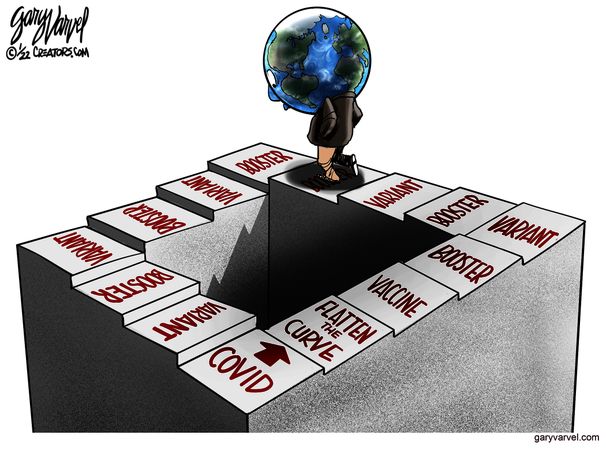
In speaking of “policing,” I mean government throwing its weight and its coercion around against “misinformation” or “disinformation.” And, besides government coercion, there are allies. These allies often enjoy monopolistic positions, stemming either from government handouts, privileges, and sweetheart deals, as with broadcasters, universities, and pharmaceutical companies, or from having cornered certain network externalities, as with certain huge media platforms. Allies of various sorts sometimes do the bidding of the despots because they themselves are threatened and intimidated. The ecosystem leads to their debasement.
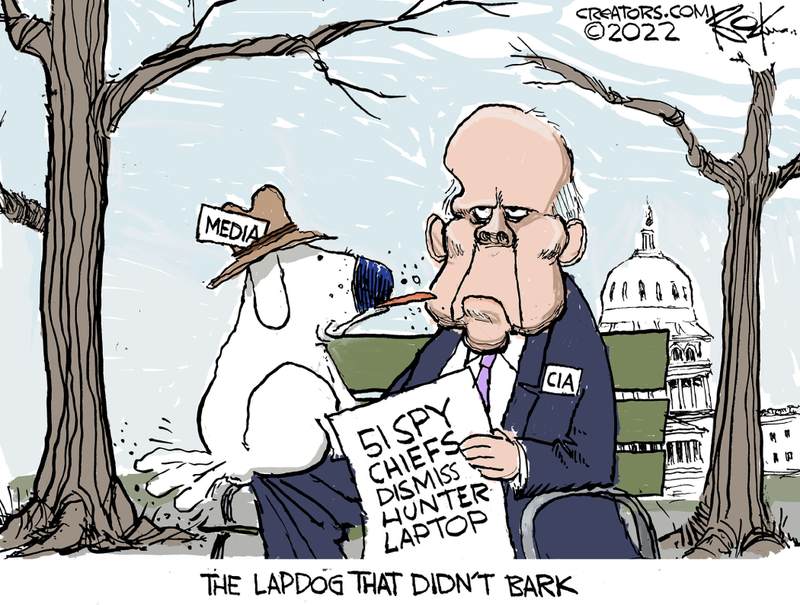
To support governmental policing of “information”
is to confess one’s anti-liberalism and illiberality.

Even worse, it is to flaunt them. The motive is to make and signal commitment to anti-liberalism, in a manner parallel to how religious cults set up rituals and practices for making and signaling commitments (Iannaccone 1992). Vice signals vice, the ticket in some spheres to promotion and advancement.

Also, vicious action spurs more of the same to defend against exposé and accountability for past wrongs. In protecting their rackets, the wrongdoers verge upon a downward spiral.

When despots label opposition “misinformation” or “disinformation” they abuse language. They invoke presuppositions built into the word information, presuppositions that are false. When despots label opposition “mis-” or “disinformation, they are, at best, objecting in the interpretation and judgment dimensions of knowledge, or, at worst, they are speaking in a way that has abandoned civil engagement altogether, instead using words as instruments of wickedness.
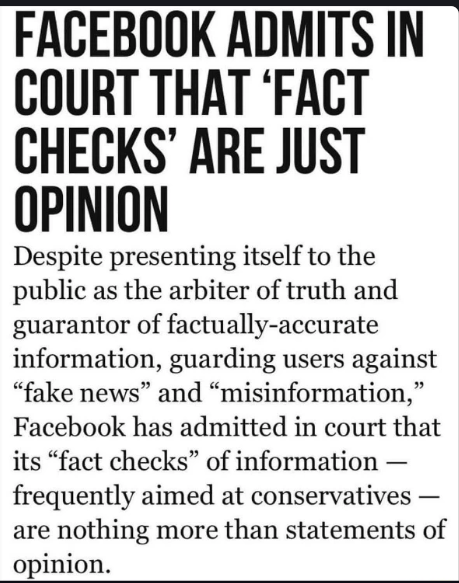
Defence offered by Facebook in Stossel defamation lawsuit.

Usually, what people argue fervently over is not information, but interpretations and judgments as to which interpretations to act on. What is being labeled and attacked as “misinformation” is not a matter of true or false information, but of true or false knowledge. The projects and policies now afoot styled “anti-misinformation” and “anti-disinformation” are dishonest, as it should be obvious to all that those projects and policies would, if advanced honestly, be called “anti-falsehood” or “anti-falseness” or “anti-foolishness” or “anti-untruth” campaigns. But to prosecute an “anti-falsehood” campaign would make obvious the true nature of what is afoot: The persecution and silencing of Wrongthink. In misrepresenting matters of interpretation and judgment as one of “misinformation,” they misrepresent the nature of their projects and dodge the responsibility to account for how they judge among vying interpretations.

In ordinary private-sector affairs, outside of politics and outside of
heavily governmentalized affairs, lying at the level of information
is naturally checked and counteracted.

Again, the “information” implies reference to working interpretations. Getting things rights should not be difficult or tricky—issues there are all within the working interpretation. Sure, mistakes are made; but such mistakes are readily and easily corrected.

Liars about information lose the trust of their voluntary associates, whether those voluntary associates are friends, customers, trading partners, or employees. If liars lie about simple features of their products or their services, they could be subject to law suits from their trading partners, to public criticism, and to rival exposé by competitors. In ordinary private-sector affairs, everyone has reputational incentives not to lie systematically, and especially not to lie about information, and most of us have strong moral incentives within ourselves against lying. We dread the disapproval of “the man within the breast”—an expression Adam Smith used for the conscience.

So, you might ask: If private actors without government privileges and immunities scarcely spread false information dishonestly and programmatically, is disinformation really a thing? Before addressing that question directly, let’s turn to the Godzilla of programmatic lying.

Propaganda: Government’s programmatic lies

It is government, especially, that lies programmatically. The lying can be at the level of information, but it usually makes more sense to say that its lying is at the level of interpretation: The government promotes interpretations—for example, The Covid virus came from nature—, interpretations that it, the government, itself does not particularly believe. It lies about the virus having come from nature, as it lies about many other big interpretations. It propagates big lies.
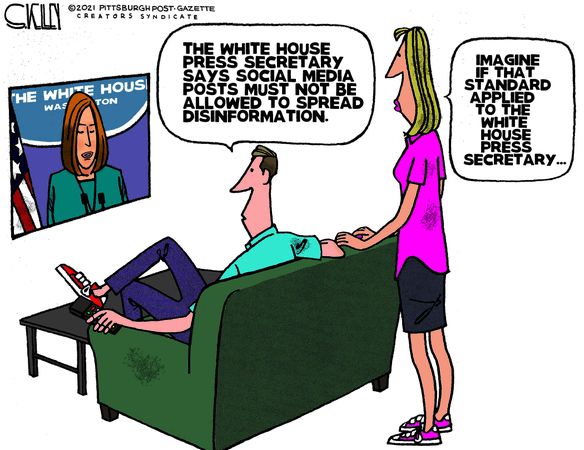
And it lies with confidence. Government is the only player in society that initiates coercion in an institutionalized way. Its coercion is overt. What’s more, it does so on a colossal scale. That is the most essential feature of government. Every government is a Godzilla, and we must learn to live with our Godzilla and mitigate the destruction it wreaks.
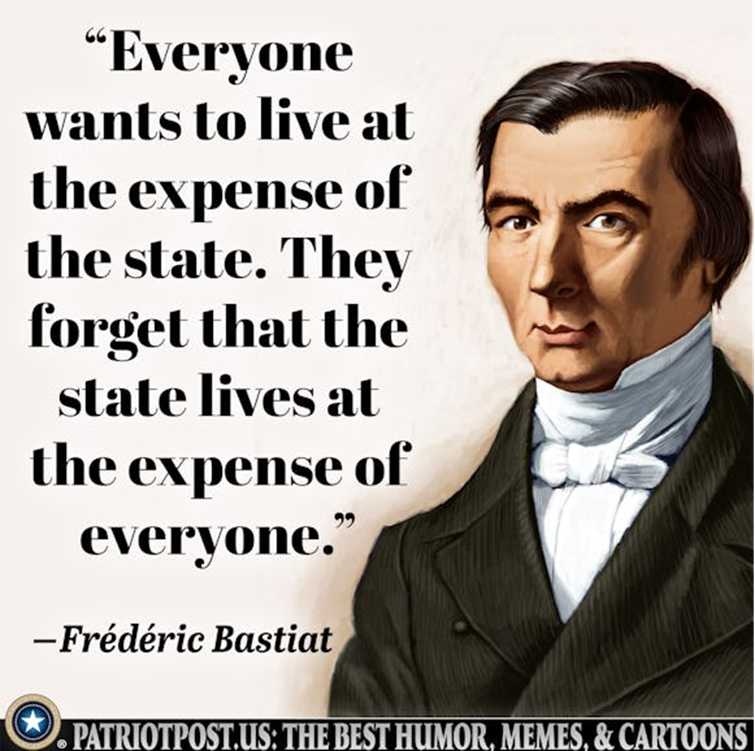
The traditional term for government’s programmatic lying is propaganda—a word that once did not necessarily imply falseness (instead meaning simply ideas propagated), but is now generally used in that necessarily-pejorative sense. The falsehoods of propaganda are typically lies, in that the propagandizers usually do not particularly believe the claims they propagate.

Government can lie programmatically because it does not depend on voluntary participation for its support. It subsists on coercion, including restrictions on competitors and opponents, and takings from taxpayers. Organizations in heavily governmentalized settings can also lie programmatically. Crony private-organizations sustain large programmatic lying only when they enjoy privileges, immunities, and protections from the government.
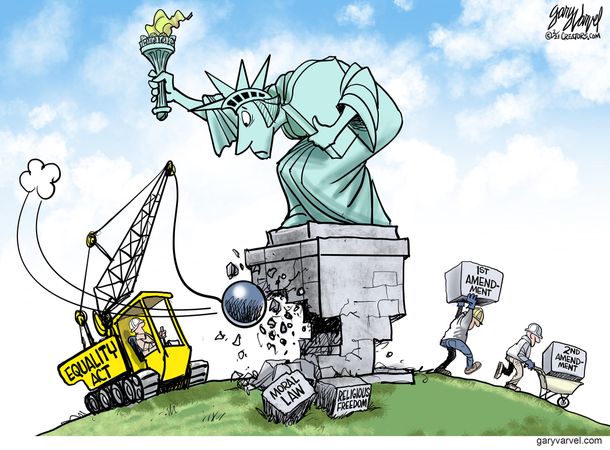
Base humans tend to weaponize things

But aren’t governments accountable to checks and balance, divisions of power, and the rule of law? Haven’t we learned to tame Godzilla, to chain down Leviathan?

It is true that the government of a rule-of-law republic, checked by an honest media, might be quite limited in its programmatic lying. But that’s not how it is today, where dissent is being tarred as “mis-” and “disinformation,” and where the legacy media is morally base in the extreme. Today, regimes are increasingly despotic, and despotic regimes are much less checked and limited.

The rule of law means, first and foremost, the government
living up to the rules posted on its own website.
Governments today don’t do that.

Law is applied politically, that is, with extreme partiality, upon a double-standard. Laws are selectively enforced and punishments are selectively meted out. Despots avail themselves of show trials, kangaroo bodies, and galleries filled with stooges. The “anti-misinformation” agenda is misrule.

Despotism despoils checks and balances. Despotism centralizes power formerly divided. It destroys the independency and autonomy that, theoretically, branches and units, divided and balanced, had once enjoyed. Despotism usurps powers once distributed and balanced. Despotism is unbalanced power.
Under a despotic regime, the coercive institutions unique to government become weaponized by the despots and their allies. They turn them against their opponents. But weaponization is itself always somewhat constrained by cultural norms. The existence of government implies the existence of a governed society, and the existence of society implies the existence of some basic norms, for example against theft, murder, and lying. David Hume famously pointed out that the governed always vastly outnumber the governors, and hence government depends on “opinion”—if only the opinion to acquiesce to those governors.

The contested claims go far beyond information

The despots tend to invoke certain organizations as the definitive, authoritative sources of “information.” They say, in effect: “The CDC, the WHO, the FDA says the mRNA injections are safe and effective, so anything that suggests otherwise is misinformation.” The farce here is pretending that everyone’s working interpretation consists of the dicta of some such particular organization. Never has an organization or agency had such a Mount-Olympus status for determining, throughout society, working interpretations of complex matters, and particularly not an organization with the foul characters and track-records of the CDC, WHO, FDA, and similar highly governmentalized organizations. The similitude to the Soviet Union under Stalin is obvious.

Despotic contempt for our circle of “we”

Again, what is labeled and attacked as “misinformation” or “disinformation” is not a matter of true or false information, but of true or false knowledge. Recognizing that knowledge, not merely information, is at issue is a matter of common decency.

The dignity of sincere discourse involves an openness, in principle a universal openness, to other human “we’s” and their pursuits upward in wisdom and virtue. As we can see, the chief facets of knowledge—information, interpretation, and judgment—operate both behind and ahead of our current position in the spiral. Trying to shut us up is to show a despotic contempt for our way of weaving through the phases of knowledge. It is contemptuous towards the development of the many loops within which our sense-making has made a home and now operates.

By weighing interpretations and making judgments, we establish certain beliefs as fact, to predicate our further conversation. Those beliefs reflect a “we” with those beliefs. Meanwhile, in the wider world, different “we’s” are forming and are addressing the public at large, representing different sets of belief, different ways of making sense of the world. We might call a “we” a distinct sense-making community.

The sincere human of any one of these communities is eager to learn from other communities. The sincere human has certain commitments which make it belong to the sense-making community it belongs to, but it is not wedded to that community. In fact, the entire population of that community—that is, the set of people who currently share that way of sense-making—may remake their community’s way of sense-making. Those who learn from other communities may become leaders of intellectual change within their own community.

Thus, sincere humans favor the freedom of speech and the norms of frank and open discourse for all communities. Besides favoring that freedom, they welcome engagement across communities, for all the reasons given earlier.
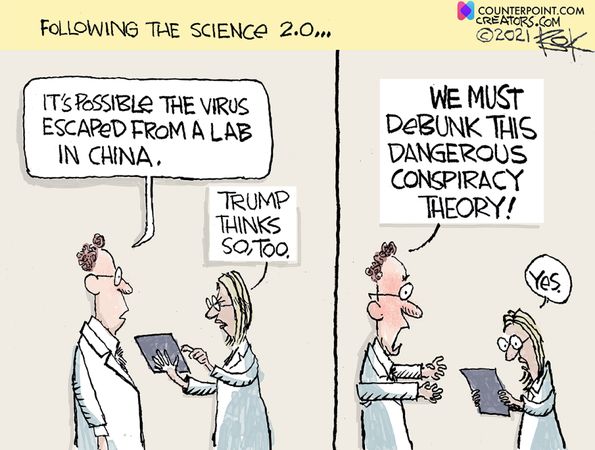
The “anti-misinformation” despots show contempt for communities at odds with their dicta and diktats. Not only are the members of the “anti-misinformation” community unwilling to engage in civil debate, but they promulgate “anti-misinformation” propaganda so as to intimidate their adversaries, to crush dissent.

I have explained that the “misinformation” characterization of the disagreement is false. The anti-liberals are presupposing that it is a matter within the information dimension of knowledge, when clearly the disagreement involves contentions in the interpretation and judgment dimensions. Under pretense of combatting misinformation, they are really just stomping on adversaries. As I said at the outset, it is akin to Naziism, Stalinism, and Maoism, regimes that likewise showed despotic contempt for sense-making communities at odds with their own. “Anti-misinformation” projects are a sham, just as “anti-racism” projects are a sham.
Concluding remarks

The “anti-misinformation” projects are obvious miscarriages of civility, decency, and the rule of law. We must rediscover the norms of openness, tolerance, and free speech that dignify humankind. Science depends on confidence, and confidence depends on those liberal norms. Those norms are the parents of good science, healthy sense-making, and civil tranquility. There are two roads here, namely:

  1.  Freedom —> openness —> confidence —> truth-tracking —> dignity;

2.  Despotism —> concealment —> diffidence —> bad science —> serfdom and servility.

Let’s get back to the right road.
via Science Matters

https://ift.tt/nLDq64Q

November 21, 2024 at 02:43PM

New York DEFR Concerns Update

Roger Caiazza

I am convinced that implementation of the New York Climate Leadership & Community Protection Act (Climate Act) net-zero mandates will do more harm than good if the electric system transition relies on wind, solar, and energy storage.  My primary reliability concern is the challenge of providing electric energy during periods of extended low wind and solar resource availability.  Experts, including those that are responsible for electric system reliability, agree that a new category of generating resources called Dispatchable Emissions-Free Resources (DEFR) is necessary during those periods.  This article summarizes a very readable description of the DEFR problem by Tim Knauss who describes the work done by Cornell’s Anderson Lab headed by Dr. Lindsay Anderson.

Takeaway Message – If you don’t have time to read the whole thing

This is an issue that must be addressed for any jurisdiction that hopes to transition to a wind and solar reliant grid.  This post summarizes a readable description of DEFR in an article by Tim Knauss.  He described the work of Cornell engineering professor Dr. Lindsay Anderson regarding the necessary DEFR component of the proposed transition of the electric system to zero emissions.  The article explains how Anderson’s team calculates the gap between future wind, solar, and energy storage generating resources needed and projected electric load during periods of low renewable resource availability.  I believe that the work of the Anderson Lab provides support to my contention that renewable development should be paused.  A renewable-based electric system needs DEFR, the most likely DEFR solution is nuclear, but if you use zero emissions nuclear then you don’t need renewables.  That makes renewables a dead-end approach.

Overview

The Climate Act established a New York “Net Zero” target (85% reduction in GHG emissions and 15% offset of emissions) by 2050.  It includes two targets that address the electric sector: 70% of the electricity must come from renewable energy by 2030 and all electricity must be generated by “zero-emissions” resources by 2040. New York Department of Public Service (DPS) Proceeding 15-E-0302 addresses DEFR but there is no schedule for resolving the future plans for DEFR in New York.

Last July I summarized six analyses describing the need for DEFR: the Integration Analysis, New York Department of Public Service (DPS) Proceeding 15-E-0302 Technical Conference, NYISO Resource Outlook, Richard Ellenbogen, Cornell Biology and Environmental Engineering Lindsay Lab, and Nuclear New York.  I have updated my DEFR page to this report.

Syracuse Post Standard “Mind-Boggling Gap”

On November 19 the article There’s a mind-boggling gap in NY’s plan for a clean electric grid. ‘We are so far behind’ by Tim Knauss was published on the Syracuse dot com website. It is not clear to me whether the official link is accessible by non-subscribers so I have posted a version here and reproduce some of it with some annotations below.

Knauss poses the critical question: “What technology will grid operators turn to when solar and wind fall short?”.  He notes:

Maybe it will be advanced nuclear reactors. Or hydrogen-burning power plants. Nobody knows for sure. Operators will need some emission-free power source they can turn on and off at will.

At Cornell University, Professor Lindsay Anderson and fellow researchers have been studying this problem. Given the specific layout of New York’s electric grid, they asked, how much of this new power source would be needed in addition to all the solar and wind?

A staggering amount, it turns out.

Just 15 years from now, the electric grid will need about 40 gigawatts of new generating capacity that can be activated regardless of wind speeds, cloud cover or other weather conditions, according to Anderson’s research.

How much is that? It’s roughly equal to the total capacity of all of New York’s current power plants – nuclear, natural gas, hydro, wind, all of it.

You read that right. To back up the massive quantities of solar and wind power that will provide most of our future electricity, the state power grid will need some new, mystery resource equal in size to the entire generating fleet of today.

The need for new, mystery DEFR, the potential quantity required, and the technological challenges for the resource are issues well known by those who understand the electric system.  However, there is a loud and passionate segment of society who disagree that anything new is needed and reject the scale of the projected resource need.  Anderson and Knauss understand that this is a touchy subject.  Knauss writes:

Anderson knows that’s not easy to hear.

“That’s the thing, right?’’ she said. “Where people are going to start to worry is (to) say, ‘Okay, wait, so you’re telling us that we’re going to spend all this money building out all this wind and solar and batteries — AND we have to put in 40 gigawatts of this?”

But there will have to be a backup.

Knauss describes the analysis work done to generate the “mind-boggling” projections.

Anderson chairs Cornell’s department of biological and environmental engineering. She has a PhD in applied math and a master’s degree in engineering.  For the past decade, she has worked with a shifting assortment of doctoral candidates and other graduate students in her eponymous Anderson Lab, housed in a large room full of cubicles and computers. They examine issues related to the growing importance of renewable energy.

The Anderson Lab is looking at the physics of how all that will work. To do so, they built an elaborately detailed computer model – a “digital twin’’ — of New York’s electric grid.

That level of detail sets their work apart. Many of the studies that look at phasing in renewable energy pretend that the electric grid is a single pool of electrons that flow from point to point without constraint. It‘s known as the “copper plate’’ assumption.

In reality, the New York electric grid is a complex, lopsided network that has been stitched together piece by piece over a century. There are limits on how much electric current can move from one area to another.

The six analyses that are described on my DEFR page all handle the electric system in similar fashions and all unequivocally conclude DEFR is needed.  The reference to studies that use the “copper plate” assumption refers to the analysis that was used by the politicians who authored the Climate Act.  It is the basis of the Climate Act presumption that implementation was simply a matter of political will because no new technology would be required.  New York’s electric grid experts disagree.  This contradiction needs to be resolved.

The Knauss article goes on to describe DEFR:

It stands for “dispatchable emission-free resource.” It’s a place-holder phrase referring to a carbon-free generating plant that can be turned on and off as needed. It’s pronounced DEE-fur.

Today, dispatchable power is provided mostly by natural gas power plants. Energy planners hope to replace them with something that does not produce greenhouse gases. Nobody knows what that will be.

“They’ve come up with a name for something that they don’t know what it is, but their modeling shows that they need something. It kind of seems like dark matter in the universe,’’ said environmentalist Tim Judson, executive director of the Nuclear Information and Referral Service.

When the state’s Climate Action Council issued their December 2022 report on how the state will eliminate greenhouse gases from the grid by 2040, they estimated a need for 18 to 23 gigawatts of DEFRs. Anderson’s study concluded that the estimate should be roughly doubled, to 37 to 40 GW.  In its most recent forecast, the NYSIO estimated a need for at least 20 GW of DEFRs, and as much as 40 GW, by the year 2040.

Knauss explains that Anderson is concerned about the need for DEFR and the quantity required as well as the ramifications of this new resource:

The need stems from two main vulnerabilities, Anderson said.

First, there will be lulls when the wind dies down for days on end and the skies cloud over, resulting in power shortages that exceed the current ability of batteries to compensate. Second, there will be periods when the state has plenty of renewable energy but not enough transmission capacity to get it where it’s needed.

There would even be times when Upstate produced too much renewable energy, which must be disconnected to keep from overloading the grid, even as blackouts rolled across Downstate due to bottled up transmission lines.

Most of those problems are likely to occur in the coldest part of winter and the hottest part of summer, when demand for electricity will surge to peak levels. And the region most vulnerable to blackouts would be Downstate, where communities with massive electricity needs sit at the end of transmission lines from Upstate that are often overloaded.

These issues raise a concern of mine.  I maintain that there are unacknowledged challenges associated with weather variability risks associated with planning for the DEFR resources needed.  The first challenge is calculating the resources needed which requires analysis of meteorological data to estimate resource availability and expected loads.  I believe no one has done a comprehensive enough analysis because they haven’t used the longest period of data available, and they have not included adjacent regional transmission operator areas.  The second challenge is more concerning to me.  The evaluation of the meteorological data develops a probabilistic estimate of the resources needed that are analogous to the one in a hundred-year flooding parameter.  The problem is that we often see a flood exceeding the one in hundred probabilities.  It is inevitable that the weather conditions that caused the worst-case resource drought planning scenario will also be exceeded.  When that happens there will not be enough electric energy available, blackouts are likely, and the consequences of blackouts on a society that decarbonized by using electricity will be catastrophic. 

There is another issue relative to the aspirational Climate Act mandate to go to “zero emissions” by 2040.  We need DEFR but the technology is not available.  Knauss describes potential DEFR technologies:

Some experts propose converting power plants to burn hydrogen rather than natural gas. Or hydrogen could be used in fuel cells, which rely on chemical reactions rather than combustion to make electricity.

Others promote the idea of sequestering the carbon emissions from gas plants underground. Or burning “renewable” methane recovered from landfills and other sources.

Recently, New York officials have expressed interest in small advanced nuclear plants, which are under development by various companies. State energy planners are developing a “roadmap’’ that should be released early next year detailing how new nuclear technology might be encouraged.

None of the possible technologies is ready for commercial application. Which will emerge?

“That’s the million-dollar question,’’ said Lanahan Kevin Lanahan, a spokesman for NYISO, the grid operator.

The article goes on to note a difference of opinion regarding DEFR deployment.  On one side is the electric industry who are obligated to provide reliable electricity.

New York is long overdue to identify DEFR technologies and to support their development, said Gavin Donohue, executive director of the Independent Power Producers of New York, a trade group representing power plant owners.  IPPNY formally asked the Public Service Commission three years ago to decide what it will accept as “zero-emission’’ generating plants. The PSC is still mulling that over in a regulatory proceeding.  “The timely development of fully dispatchable zero emitting resources is crucial to maintain reliability as the economy electrifies and reliance on intermittent renewable and duration limited resources increases,’’ the group wrote.

On the other side are the special interests who have no accountability.

But some environmentalists argue against a rush to develop DEFRs, saying it could distract from building wind and solar resources and could lead state officials to hastily subsidize unproven technology such as hydrogen combustion.

Following a technical presentation to the state Public Service Commission last year by Anderson and a NYISO planning director, representatives from Sierra Club and Earthjustice submitted rebuttal comments claiming that NYISO’s forecast of the need for DEFRs was “alarmist.” (The forecast presented by NYISO that day was about 25% lower than the Anderson Lab’s estimate.)

The critics said the state should focus on proven techniques such as importing power from out of state, improving transmission, and encouraging demand response programs under which customers cut their power consumption during peak periods.  “Rushing to deploy expensive and untested DEFRs risks committing New York to flawed technologies, as it is unclear at the present time which technologies will emerge as commercially scalable and cost effective,’’ they wrote.

I responded to some of the referenced rebuttal comments because I think their analyses are naïve.  In the first place, their analytical methodologies are not as sophisticated as the Anderson Lab.  Secondly, they don’t acknowledge the correlation of wind energy across New York so their estimates of the magnitude of the problem are flawed.  Knauss mentions the critics “solutions”.

It’s a complicated issue, in part because there are strategies other than adding power plants to help reduce demand for electricity during peak periods.  Improvements in meter technology, for example, will enable residential customers to respond during power shortages by reducing their demand, as some commercial and industrial customers do already. Likewise, grid operators could one day draw power from electric vehicle batteries during peak periods.

This line of reasoning is naïve because it ignores the fact that DEFR is needed when the electric system energy requirements are highest.  The conditions that cause light winds and low wind power output also cause extreme temperatures which lead to peak electrical loads.  Those are the conditions when residential customers are not going to want to reduce power consumption.  They will want to keep their homes warm! 

The article goes on to discuss practical alternatives to the “mind-boggling” gap and the aspirational Climate Act schedule.  Dr.  Anderson suggested looking at slightly less stringent emission limits at least as a bridge until a DEFR solution is found.

Knauss also points out that the Anderson Lab work makes the optimistic assumption that all the wind and solar projected by the Hochul Administration actually gets built on schedule.

In reality, siting battles and other issues have stalled many large wind and solar projects for years. And as inflation drives up the capital costs of renewable energy, Gov. Kathy Hochul is under mounting pressure from business and consumer groups to keep the cost of the energy transition under control.

Because of those barriers, there is a vast gap between New York’s renewable energy capacity today and what would be needed to retire all the fossil fuel plants. Developers would have to build about 10 times the wind and solar power that exists now.

“It’s a huge problem, and we are so far behind,’’ Anderson said.

Conclusion

I think that the Knauss article does a great job explaining the intricacies of the DEFR issue and the work of the Anderson Lab.  I believe they appropriately describe the challenges of DEFR.  However, the article does not address the policy implications of DEFR.

The Hochul Administration has finally started its update of the NY Energy Plan.  The draft scope of the plan considers an electric system that relies on wind and solar generation consistent with the Climate Act Scoping Plan.  No jurisdiction anywhere has successfully developed such a system.  The State agencies responsible for a reliable electric system agree with Professor Anderson that a wind, solar, and energy storage system requires DEFR.  I believe that it is prudent to fund a demonstration project to prove that such an electric system will work.  At the very least, the energy plan must provide a comprehensive renewable feasibility analysis to determine whether such a system will maintain affordability and reliability standards.

The most likely DEFR backup technology is nuclear generation because it is the only candidate resource that is technologically ready.  Nuclear power has a proven record for resilient electric production, development would not require changes to support the transmission system and buildout the system, it is not limited by weather extremes, it has lower environmental impacts, and when life cycle and backup costs are considered is likely cheaper.   Its use as backbone energy would eliminate the need for wind, solar, energy storage, and new DEFR deployment to meet Climate Act zero-emissions mandates. 

Sierra Club and Earthjustice argue that DEFR is a distraction to their preference for wind and solar development.  I believe that the work of the Anderson Lab provides support to my contention that renewable development should be paused because that development cannot work until DEFR is proven feasible.  If the DEFR solution is nuclear then renewables are a dead-end approach.


Roger Caiazza blogs on New York energy and environmental issues at Pragmatic Environmentalist of New York.  This represents his opinion and not the opinion of any of his previous employers or any other organization with which he has been associated.

via Watts Up With That?

https://ift.tt/KVp4m0j

November 21, 2024 at 12:05PM

COP 29: Watch Morano on Sky News TV: “UN climate slush fund”

‘This whole UN conference was about money, money, money.’

via CFACT

https://ift.tt/WFAJblq

November 21, 2024 at 11:31AM

Bournemouth:Kings Park DCNN 5604 – Was this the best the Met Office could do? Bournemouth didn’t think so!

50.73426 -1.82379 Met Office assessed CIMO Class 5 Installed 1/1/1980

Bounemouth is one of the many holiday resorts on the south coast of England. Historically such resorts vied with each other for tourism publicity with “sunshine leagues” and high temperature readings. Many dubious temperature claims were often made from sub standard sites and suspected foul play resulted in sunshine recorders being reported as stolen presumably by rival resorts.

The first official weather station in Bournemouth was installed as far back as 1882 and there have been multiple different sites over the years. One by one they were closed down mostly due to development of the area leading to a brief period in 1980 when there were none at all. Clearly something had to be done to restore civic pride leading to the Kings Park site being chosen. Was anything really better than nothing at all? The headline image is somewhat unflattering, the Street View close up is even worse.

Obviously this site had to fall into the lowest possible CIMO assessment of Class 5. Even the most optimistic site inspector could not consider the surrounding poly tunnels, greenhouses, varying vegetation, pathways and lack of security in any way acceptable. There is of course the nearby airport weather station at Hurn ( subject to separate review shortly) but that one is even less representative of the local environment than Kings Park.

Ultimately the accuracy of weather forecasting started to cause concern amongst the local businesses. Bournemouth is actually quite a wet location with heavy though usually short downpours quite frequent. The local solution was to give up on the Met Office and “plough their own furrow.”

“A British coastal resort has launched its own weather forecast, claiming a “disastrous” Met Office prediction put off thousands of potential visitors last year.

Bournemouth set up its own local service – the first of its kind in the country – to counter “unpredictable and confusing forecasts”.

The council said the move followed last year’s Whitsun bank holiday prediction when, it claims, a forecast of showers led 25,000 potential visitors to stay at home, even though Bournemouth’s seven miles of beaches were bathed in sunshine. It estimates the forecast resulted in more than £1m in lost revenue, angering the town’s hoteliers and tourism officials.

The new online service – www.bournemouthweather.co.uk – offers three-day forecasts allowing visitors “to plan their itineraries and wardrobes with confidence”.

All I can add is that if the good burghers of Bournemouth consider the Met Office produces such poor weather forecasts to cause “disastrous” effects, they should also understand how disastrous the effect of such poor sites has on the historic temperature record.

via Tallbloke’s Talkshop

https://ift.tt/6rNZAaW

November 21, 2024 at 10:29AM