
Gabriella discusses the selection of Lee Zeldin for EPA, Doug Burgum for Interior, and Chris Wright for Energy on the podcast this week.
via CFACT
November 19, 2024 at 02:38PM
Gabriella discusses the selection of Lee Zeldin for EPA, Doug Burgum for Interior, and Chris Wright for Energy on the podcast this week.
via CFACT
November 19, 2024 at 02:38PM
Kamala Harris’ campaign of “joy” seems to involve trying to start World War 3 before she leaves the White House . Kamala Harris is showing that joy can be a campaign strategy
via Real Climate Science
November 19, 2024 at 01:50PM
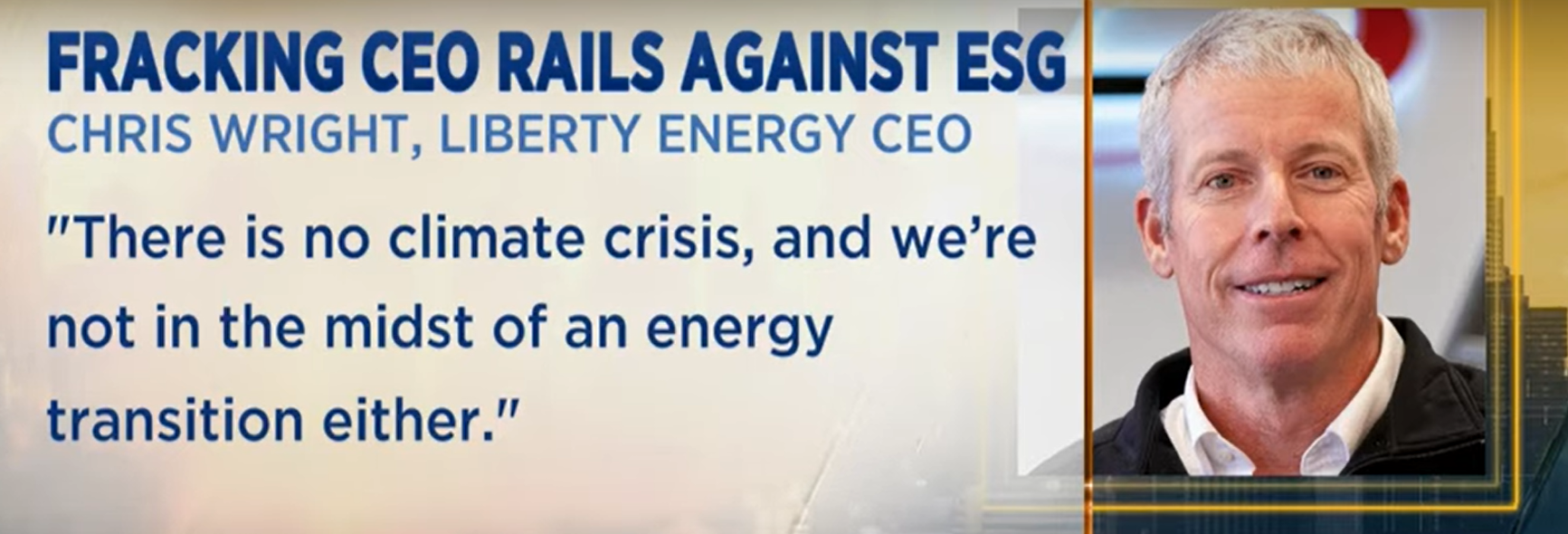
Last year Chris Wright dished out climate and energy realism in an interview on CNBC Squawk Box hosted by Andrew Ross Sorkin. Now he is to be appointed Secretary of Energy in the coming Trump administration. Here are his candid and unvarnished views from inside the energy industry.
For those who prefer reading below is a transcript lightly edited from the closed captions in italics with my bolds and added images. AS refers to Sorkin’s questions and CW to response from Wright.
AS: President Biden conceded last week that the U.S is going to be needing oil and gas for as he says at least the next decade as the country transitions to Renewables. But our next guest says that we are not in the midst of an energy transition and claims the so-called climate crisis is overblown. Last month he railed against what he called an alarmist move away from fossil fuels in a video on LinkedIn. The Microsoft owned company removed the post citing misinformation, only put it back up days later.
So let’s talk right now to Chris Wright–Chairman and CEO of Liberty Energy, North America’s second largest fracking company Chris good morning to you.
Reaction to the State of the Union
AS: Let’s start with your reaction after watching the State of the Union. President Biden makes the statement twice actually. The first time he says we’re going to need fossil fuels for a while. Later he follows up with: We’re going to need it for something like a decade or so. There was laughter in the chamber, certainly from the GOP, but it very well might have been both sides of the aisle at that point.
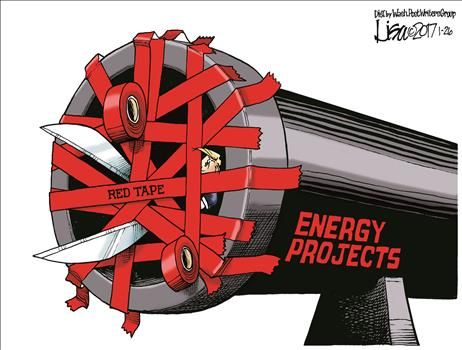
CW: Yeah, likely it was. Of course it’s great to see an acknowledgment the world run on oil and gas and we need that. But to throw out a decade, it’s just an absurd time frame. We’re not going to meaningfully change the demand for oil and gas one way or the other in the next decade. And I think politicizing energy and opposing infrastructure is standing in the way of Today’s Energy System before we’ve built a new Energy System. There’s just no upside in that.
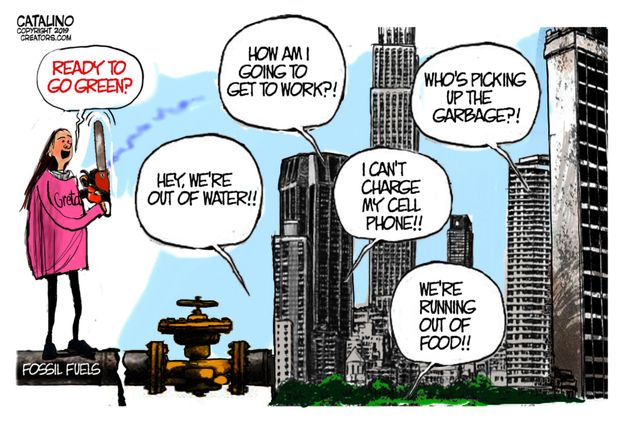
Realistic timeline for energy
AS: When you think about the timeline, what do you think is a realistic timeline to the degree you think there is one.
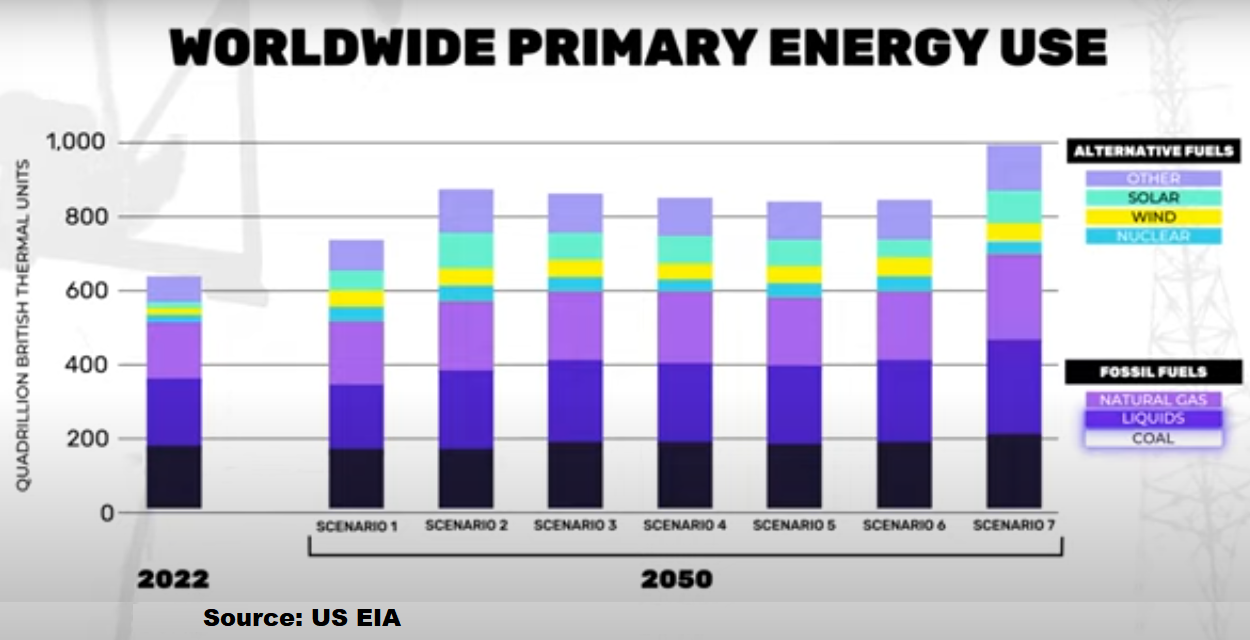
CW: It’s multiple, as we’ll talk about that. The Energy Information Administration is our government agency that projects forward demands for varied energy sources, They have in 2050 roughly flat demand for oil and gas as what we have today; maybe it rises a little bit the next decade or two, maybe it comes down a little bit in the next decade or two after that. Maybe that’s true, but I think you’ll see no meaningful change of our hydrocarbon system in the next three decades. I’m all for investing in new energy sources: nuclear has a great future if we could regulatorily issue a permit. We haven’t issued a new permit for a nuclear plant in 50 years.
There’s great new things we can bring; but standing in the way
of what runs the world today just isn’t productive.
Nuclear energy

AS: I’m a big fan but it’s quite unpopular talking about nuclear energy. Usually when I say something on the air it causes some kind of strange firestorm. Do you think there’s any realistic chance we have nuclear energy in the United States in the next decade?
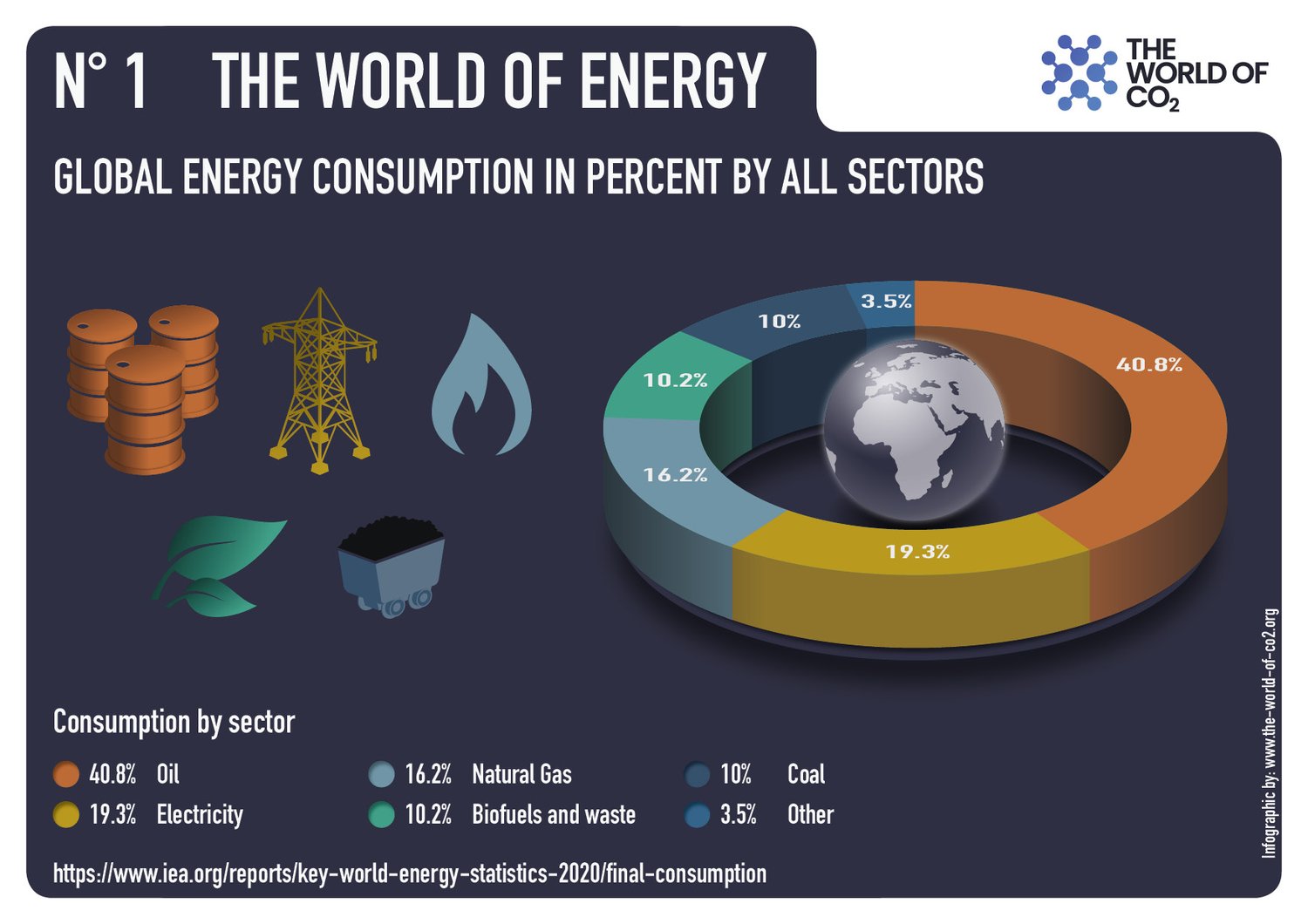
CW: I think probably not in the next decade. Nuclear will have a Renaissance right now, but it more likely starts overseas where there’s a less onerous and less fear-driven regulatory system. I think we’ll see small modular reactors come. What’s great about nuclear is they bring not just electricity which is the only place wind and solar can play. Electricity is less than a quarter of global energy. Process heat that you need for manufacturing is just critical, and nuclear could bring process heat as well as electricity. Today it’s just fossil fuels that bring processed Heat.
SEC disclosure
AS: Chris, I wanted to ask you two big big other questions. One regards the SEC pushing for more disclosure for companies around ESG and and in particular their plans around climate and energy. It
may get softened a bit, in part because of the comments that have come back to them. What is your sense of what the SEC was proposing and where you think they’re going to land?
CW: Well what they proposed is totally nuts. And I wrote a long comment letter on it. A lot of public company CEOs won’t do that, But it’s just making an enormously complicated expensive reporting thing so people can sue us because they think we didn’t quite properly estimate our scope three emissions. Those are emissions from the products we produce when someone else burns them on the other side of the world or on the other side of the country. No one can really account for that.

Why are they doing that? They’re doing it so this Administration can signal they’re against fuels. Again that’s just unproductive.
LinkedIn censorship

AS: Your LinkedIn post went down tell me what happened. People talk about censorship all the time, who should be the Arbiter of Truth and all of that.
CW: Yeah it was crazy. I made a sort of an amateur video just talking about energy climate transition with just some basic data so you can get background on it. And it was taken down as misinformation. I hit the appeal the decision button, and they came back and said it violated their spams and scams policy. I posted it again it’s taken down again from misinformation. Then upon appeal they said sorry, on further review it didn’t violate their policy. That’s probably not LinkedIn but people complaining because I’m not talking the climate alarmist narrative. For LinkedIn to go along and take that down is just a symbol of where we are today, unfortunately.
Oil and Gas Industry Productivity
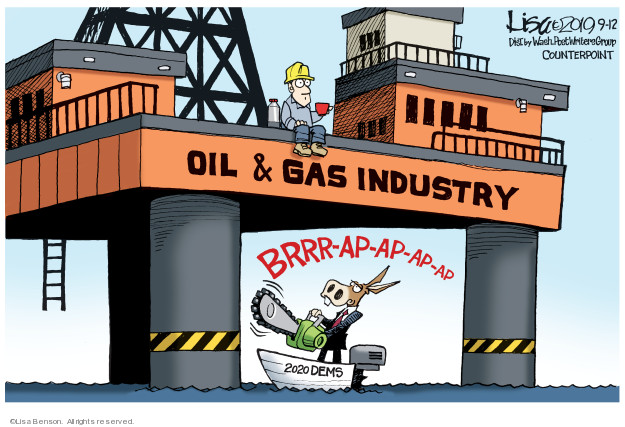
AS: When we finally hit Peak production again, we haven’t yet since 2019. So there’s a lot of finger pointing on why that is. I mean fracking had its own problems when there was a slow period. When we try to reopen from a pandemic we can’t get the workers that we need for the you know for the whole oil and gas industry. But add in ESG and add in President Biden’s pitch: Read my lips, I will end the fossil fuel industry.” How much do you think ESG and that type of of rhetoric scared away producers? Is ESG a positive or negative for society?
AS: I think from an investor movement it’s a negative. Of course we should care about the environment and the societies we operate in. And of course company and government should be aligned with the owners of businesses, that’s a very real point. The other point is of course that’s what businesses do in a free Society. If you’re not a great member of society, if people don’t believe they’re part of something bigger than just getting a paycheck, you’re going to have trouble getting workers.
So the idea is right but it’s really become sort of a top-down thing: if you’re admitting greenhouse gas emissions you’re bad, if you’re reducing them or shrinking your business there you’re good. And then of course a top-down check box list to decide if we’re socially virtuous or not. These are bad ideas. Investors should care about ESG but it shouldn’t be like a third party imposing a scorecard to tell me who’s virtuous and who’s not.
On the on the margin it has indeed reduced Capital to our industry which absolutely raises the cost of capital on the margin. We produce less oil and gas because of it and the main impact of that is higher oil and gas prices.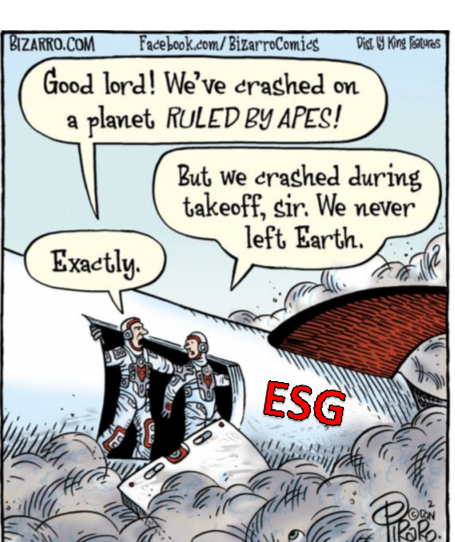
via Science Matters
November 19, 2024 at 01:27PM
By Jo Nova
Until today, only renewables had the Holy Sacred Power against Climate Change. But last night the UK and US signed a new agreement at COP29 to share “billions of pounds worth of nuclear research” in order to “decarbonize” the world.
They did this backflip in such a tearing rush, they didn’t even have time to phone the Prime Ministers they were offering this bonanza too. They accidentally listed all the countries they expected to sign up, only to find the Australian government is going to an election waving the anti-nuclear flag, while the opposition demons carry the pro-nuclear pennant. Oopsie indeed. The press release was reissued, but the Labor government in Australia are now trying to explain why nuclear power is great in submarines, but too expensive and slow for sites that don’t move and aren’t underwater. It’s entertaining.
Apparently, Australia has too much sunshine, and thus we’re stuck with solar power. We also have the largest uranium reserves in the world, but shh. This is like energy lessons on Sesame Street.

UK, US press release about sharing nuclear energy technology COP29
Don’t miss how big this is. Only a year ago France scandalized the world when they dropped their renewables target and fought the EU to get nuclear power accepted as a “low emissions” generator. They had to threaten to scupper the EU’s new Renewable Energy Directive unless the EU included a role for nuclear power.
Renewables groupies hate nuclear power, because it’s everything they want to be but aren’t. Nukes are low emissions, reliable, proven, easy to add to a grid, and don’t need a caravan of batteries, flywheels, hydro-dams or a 1,000 miles of high voltage lines. Obviously, if nuclear power can save the world from the Carbon Yeti, no one needs to build floating bird killers.
The implication is that renewables are being quietly thrown under a bus. The Blob is backing away slowly from 30 years of “free energy” propaganda. They have blinked, and switched to nuclear, the same obvious solution they could have picked from the start in Rio in 1992. Be prepared as they gaslight the world, hoping they will forget the trillions of dollars poured into the renewable energy port-a-loo.
The Blob is clearly tripping at full speed here — reacting to the shift in power with Trump’s win.
Ed Miliband may be trying to try to save COP29 from terminal irrelevancy. But the Blob probably knows that the grifter game is up for renewables — now that investors are abandoning them, industries are headed to China, and electricity prices have taken off like one of Elon’s rockets. That and Google, Microsoft, Amazon and Oracle ignored their wind and solar pony showcases and rushed to get nuclear power to feed their pet AIs.
For all we know, the new nuclear plan might have been written the day they released it. How much effort would it have taken for Ed Miliband to mention it to Australia’s Energy Minister (Chris-“Blackout”-Bowen). He didn’t even need to phone him. They’re both at Baku.
The UK Government and the US will be giving away nuclear technology, to speed up deployment of civil nuclear power to “decarbonize industry”. The new agreement would start on March 1 2025, and is (was) expected to be signed by Canada, France, Japan, Republic of Korea, Republic of South Africa, China, Euratom [Europe], Switzerland and Australia. Thus it perfectly wedged the Australian government — which agreed to AUKUS, a nuclear sub sharing program, but is also 100% committed to a Glorious Renewable Future. The US and UK obviously assumed their AUKUS partner would leap at the chance. Instead the updated press release dropped the list of nations.
The UK press release signed by Ed Miliband and US Deputary Secretary of Energy David Turk.
The UK Energy Secretary Ed Miliband and US Deputy Secretary of Energy David Turk have today (Monday 18 November) signed a new agreement while in Baku for climate talks that will help pool together billions of pounds worth of nuclear research and development – including the world’s leading academic institutions and nuclear innovators.
New technologies such as advanced modular reactors can help decarbonise heavy industry such as aviation fuel, hydrogen or advanced steel production, by providing low-carbon heat and power. They are also smaller and can be made in factories, making them quicker and cheaper to build.
This will support the commitment made last year at COP28 to triple nuclear energy capacity globally by 2050, with 31 countries signed up including the US and UK.
The UK is reversing a legacy of no nuclear being delivered and moving forward with its advanced nuclear reactor programme and Great British Nuclear’s small modular reactor competition, as well as continuing development of the Sizewell C project. New nuclear will help to secure thousands of good, skilled jobs and support energy independence beyond 2030.
The Australian Energy Minister, clearly caught unprepared, said “No” and, “we have too much sun”.
A spokesperson for Energy Minister Chris Bowen, who is at the COP meeting, said: “Australia is not signing this agreement as we do not have a nuclear energy industry.
“We recognise that some countries may choose to use nuclear energy, depending on national circumstances.
“Our international partners understand that Australia’s abundance of renewable energy resources makes nuclear power, including nuclear power through small modular reactors, an unviable option for inclusion in our energy mix for decarbonisation efforts.”
Australia would remain as observers to the agreement to continue to support its scientists in other nuclear research fields, the spokesperson said.
Opposition leader Peter Dutton said “Australia is starting to become an international embarrassment under Chris Bowen and Mr Albanese”.
In parliament, acting Prime Minister Richard Marles said for Australia to pursue a path of nuclear energy would add $1200 to the bills of each household in this country.
For baffled foreigners, the next election in Australia has to be run by May 2025, and looks like it will hinge on nuclear power, which is currently banned in Australia, because we are operating on ancient Green Sanskrit laws of 1998. Our slow moving Labor diehards were already glued to the renewables-train but the opposition is making nuclear energy a key part of their platform. Polling suggests Australians are not anti-nuclear, but they are against electricity-bill-bonfires. So voters seem to find the idea of change appealing.
In the new world order of Trump — The Australian Labor Party may be the last man standing on unreliable renewables.
0 out of 10 based on 0 rating
via JoNova
November 19, 2024 at 01:14PM

