
0 out of 10 based on 0 rating
via JoNova
October 18, 2024 at 10:00AM
 Update on ominous overreach by Biden/Harris regime comes from Just the News While the SCOTUS denies request to block EPA power plant rule, challengers vow to continue fight. As explained below, EPA intends to require expensive and impractical CO2 Capture and Storage on all power plants using carbon fuels, thereby forcing shutdowns. Excerpts in italics with my bolds and added images,
Analysts say that if the rule is implemented, more than 5 million
people could experience blackouts, some lasting for 41 hours.
The Supreme Court ruled against a bid to block the EPA’s power plant rule while legal challenges make their way through the courts, but West Virginia, which is leading the coalition of states challenging the rule, vows the fight isn’t over.
In a brief order, Justices Brett Kavanaugh and Neil Gorsuch said that the applicants “have shown a strong likelihood of success on the merits as to at least some of the challenges to the” EPA’s rule.
However, the justices explained, the stay wasn’t needed because compliance requirements wouldn’t begin until June 2025, which means the applicants wouldn’t “suffer irreparable harm” before the Court of Appeals for the D.C. Circuit decides the merits of the case. Injunctive relief, such as sought here, requires clear and convincing proof that the harm be immediate and irreparable.
The lower court is expediting the case, the justices noted, meaning it would be resolved in the court’s current term. Afterward, the case would still have time to return to the Supreme Court, if it’s warranted.
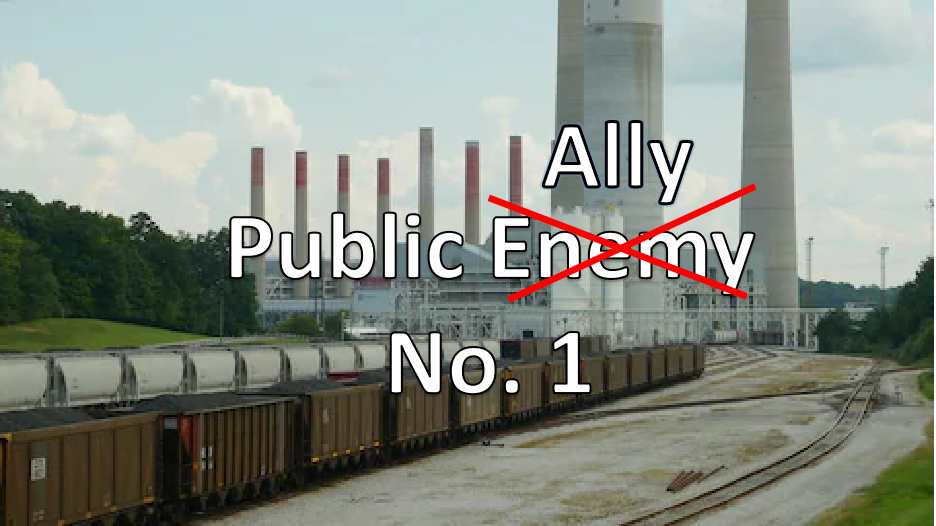
The EPA rule, which was finalized in April, requires that coal-fired power plants be fitted with carbon capture technology controlling 90% of their carbon dioxide emissions by 2039, and new gas-fired power plants will need to do the same starting in 2035, depending on the amount of runtime they have.
Energy analysts Isaac Orr and Mitch Rolling revealed that the EPA failed to do a proper analysis of the impacts of the rule, and if implemented, over 5 million people will experience blackouts, some lasting for 41 hours. While the EPA has defended the rule and argues that carbon capture is “well proven,” its own modeling showed it expected only one coal plant and no gas plants to be fitted with the technology as far out as 2055.
Two dozen states led by West Virginia filed a lawsuit against the EPA in May, arguing that the agency exceeded its authority with the rule. Utilities and industry groups also filed legal challenges to the rule. In July, the U.S. Court of Appeals for the D.C. Circuit denied the parties’ requests to block the rules while the courts considered the challenges, and the court ruled the applicants wouldn’t succeed on the merits of their case.

In court filings, the EPA noted that the lower court ruled the applicants are unlikely to succeed in arguing the agency exceeded its authority, and it stood by the rule and its carbon capture requirements, arguing that the technology has been “adequately demonstrated.”
West Virginia Attorney General Patrick Morrisey said in a
statement on the high court’s ruling that the fight isn’t over.
“This is not the end of this case: we will continue to fight through the merits phase and prove this rule strips the states of important discretion while forcing plants to use technologies that don’t work in the real world,” Morrisey said.
In 2022, the Supreme Court had sided with West Virginia and other states in a challenge to the Obama-era “Clean Power Plan.” Morrisey said that the high court had made clear limits to what the EPA can do, and the Biden administration’s “green new deal agenda” is ignoring those limits.
“This rule is yet another attempt of unelected bureaucrats to push something the law doesn’t allow,” Morrisey said.
Indiana, Alabama, Alaska, Arkansas, Florida, Georgia, Idaho, Iowa, Kentucky, Louisiana, Mississippi, Missouri, Montana, Nebraska, New Hampshire, North Dakota, Oklahoma, South Carolina, South Dakota, Tennessee, Texas, Utah, Virginia, and Wyoming joined the application to the Supreme Court.
via Science Matters
October 18, 2024 at 09:13AM
Guest Essay by Kip Hansen — 17 October 2024 — 1700 words/7 minutes
The marvelous mysterious Monarch Butterfly is at it again: baffling lepidopterists — a branch of entomology concerning the scientific study of moths and the two superfamilies of butterflies — with questions they can’t answer.
The observational evidence is this:
It is clear that [Monarch] winter colonies in Mexico are declining, yet some recent studies suggest that summer breeding populations are relatively stable and similar to historical abundances.
Here they are speaking of the Eastern United States Monarch population — the Monarch population that migrates from as far north as Canada every fall south to the mountains of central Mexico. If your are not already familiar with the mysterious nature of this phenomenon, read my primer on the Monarch Migration or any of my earlier Monarch essays here.
There exists a modern scientific controversy about the monarchs and their migration – such a big hullabaloo that I have named it The Monarch Wars. The basis of the Monarch Wars is:
1) Some governmental agencies, scientists and activist groups want to declare the Monarch Butterfly, or one of its two Northern Hemisphere populations, as an Endangered Species. In 2022, the U.S. Fish and Wildlife Service “determined that listing the monarch under the Endangered Species Act is warranted but precluded at this time by higher priority listing actions.” The IUCN unilaterally declared the Monarch Endangered and in 2022 added it to the IUCN Red List as Endangered. However, IUCN then delisted monarchs in 2023, declaring them only “Vulnerable”.
2) Other scientists, groups and interests oppose the listing of this nearly ubiquitous species as endangered – showing evidence that it is not suffering population declines or fragmented populations.
3) There is a third view that proposes that the Monarch Migration itself, as a phenomenon, should be declared Endangered.
The evidence is unfortunately clear — for all sides in the controversy.
How is this possible?
The latest study is:
Dramatic Recent Declines in the Size of Monarch Butterfly (Danaus plexippus) Roosts During Fall Migration [ full pre-print .pdf ]
by Andrew K. Davis, Jordan R. Croy and William E. Snyder out of the University of Georgia in Athens, GA, USA.
Their Abstract starts with this line:
“The conservation status of monarch butterflies in North America is a topic of intense scrutiny and debate.”
For several years I have been calling this The Monarch Wars.
Let’s look at the evidence once more:
“It is clear that winter colonies in Mexico are declining”
Clearly winter colonies in Mexico are declining – in the first 20 years of the record, there were some boom years and some low years, less than 5 hectares, but the entire two decades show much larger roosting populations. The most recent decade has had very low roosting numbers.
And Summer Populations?
The above image, from Crossley et al. (2022) published in Global Change Biology clearly shows that the summer population of Danaus plexippus, the Monarch Butterfly, seen as the vertical orange line, has not shown radical declines over the last two decades, but, if anything, shows a slight increase of about 0.7% per year. Not a big increase, but certainly not a sharp, dangerous or worrying decline.
[Note: The Mexico overwintering population graph covers three more years than the summer Population study. Those three years were boom years for the overwintering population.]
The most recent study, Davis et al. (2024) is about the sizes of Monarch roosts that they form during their migration south, when they stop for the night. Davis et al. say:
“Observations of far fewer overwintering monarch butterflies, alongside apparent rebounds during the summer breeding season, have led to heated debate whether monarchs are truly endangered. We used ~2600 citizen scientist observations of monarch “roosts” – mass aggregations of fall-migrating monarchs – to assess whether they are struggling to reach Mexico.”
And this is an important and interesting question. Are there plenty of monarchs in the summer which then fail to reach the overwintering grounds in Mexico, and if so, for what reasons?
Their plain language summary:
“Positive effects of a warming and greening flyway were overwhelmed by unexplained declines in roost size of up to 80%, increasing all along the path of their arduous southern migration.”
They find that “a warming and greening flyway” — and feel free to label this CO2-enhanced atmosphere and maybe climate change — had positive effects on the annual migration. Yet there remained “unexplained declines in [in during-migration] roost size of up to 80%”, declines which increased along the southern route.
To this author’s dismay, they conclude:
“This suggests that to save monarchs, we should focus on avoiding well-meaning efforts such as planting non-native milkweeds that foster parasites, sicken monarchs, and disrupt migration.”
I do not think that that conclusion is warranted or supported based on the evidence of the study. It is a valid hypothesis – a possible explanation – but certainly not strongly supported. Like all hypotheses, it is a guess, based on some data.
They are correct when they say “This suggests that climate change might generally be benefiting monarch migration by creating milder flight conditions and enhancing nectar availability along the flyway (but see 24).”
Ah, yes, there is a but. You can read the but here. It is a complex calculation of “energy expenditure” that might be found true of migrating monarch butterflies under warmer temperatures, not of real butterflies actually migrating, of course.
The reasoning of Davis et al. goes like this:
“That is, while roost sizes were declining throughout the flyway, these declines grew increasingly severe further along the migration route. This latitudinal gradient in roost size declines would be consistent with increasing mortality during migration and/or monarchs increasingly abandoning migration as they move south. This apparent disruption of migration might be the missing puzzle piece that explains relatively stable summer populations in the Midwest and declining overwintering populations in Mexico.”
Alas, Davis et al., despite being a very well done investigation, offers no definitive or actionable findings. “Then what is driving the clear, dramatic declines in roost size seen in these data? We can only speculate,…”.
And speculate they do. While none of the speculations are new, they include:
1) Prevalence of the monarch parasite Ophryocystis elektroscirrha (“OE”) which has increased over the last decade, some say “ten-fold”.
2) The widespread planting of non-native milkweeds such as Asclepias curassavica and Calotropis gigantea by homeowners and even land managers. Some feel that this leads to more parasitisation. There have been some studies that suggested that monarch caterpillars feeding on these species might suffer stunting or weakening. Or that the longer growing season for these species might lure the monarchs to remain north later into the Fall.
3) The raising and releasing thousands of captive-reared monarchs each year. Some studies have implied that captive bred monarchs are weaker or have reduced navigational ability. There are worries that interbreeding of captive and wild monarchs will harm the species as a whole.
4) Finally, year-round resident populations of monarchs appear to be increasingly common and growing along the western and southern edges of the species range. Vague worries about interbreeding of non-migrating monarchs and migrating monarchs and thus genetic dilution are included. This is the “monarchs increasingly abandoning migration as they move south” hypothesis. Another possibility is that more-and-more monarchs migrate to the South, find it perfectly suitable, and settle down there for the winters.
All, as in every single one, of the monarch butterflies found in northern regions, where winters are freezing and below, are the offspring of monarchs that have migrated north from overwintering somewhere warmer in the south. Thus, stable or even growing summer populations in the north seems inconsistent with very small numbers of monarchs overwintering in Mexico. Yet it is the case.
West Coast Monarchs
A similar, but more profound, situation was found with the West Coast monarch population in the winters of 2020-2021 and into the next year, 2021-2022:
You see, that recovery is simply biologically impossible. Thus a mangled version of the Sherlock Holmes quote can be applied: “When you have eliminated the impossible, whatever remains, however improbable, must be the truth”. For that recovery, which is a physical fact, we must eliminate the impossible and doing that requires that the monarchs were overwintering somewhere – just not where they were expected and thus uncounted.
This is one of the speculative explanations for the mystery of the Eastern Population as well – the monarchs may be overwintering in Mexico after all, just not where at the usual or known locations where they are expected, thus failing to be counted.
Bottom Lines:
1) We simply don’t know how or why this situation is occurring: far fewer Monarchs overwintering in Mexico yet stable or even growing population in the summer in the north.
2) There are four or five good speculative answers, but none of them stand out or have stronger evidence. It is more probable that the situation is a combination of one or more of the suggested explanations; or the dreaded something else.
3) One thing is fairly certain now: the slight warming seen in continental North America over the last 20 years, of maybe 1.5 degrees F, commonly called climate change, is not the cause but rather more likely a mitigating factor benefiting the monarchs.
# # # # #
Author’s Comment:
In my part of the United States, I saw very few monarchs this last summer.
I am fascinated by the evidence about monarchs and the growing realization that so much of it driven by a “Save the Monarchs” bias. As in almost all fields of science, the desires of researchers lead directly to their findings. Those looking for disasters will find them, as has been the case with the monarchs. But those researchers are stymied by other evidence – stable summer populations.
In science, the evidence should lead to a proper framing of the situation, which, if it is deemed undesirable, then the evidence should suggest solutions that will correct or mitigate the discovered causes of the undesired situation.
Jumping the gun with solutions to problems for which the causes are only suspected lead us on a merry chase and often make the original problem even worse.
For monarchs, I still favor planting native milkweeds in your gardens (private and public), discouraging mowing of highways verges and the edges and space between corn fields, and, of course, admission that we still don’t understand what is going on with the monarchs which should lead to more and better research.
Thanks for reading.
# # # # #
via Watts Up With That?
October 18, 2024 at 08:06AM

50.94126 -2.86126 Met Office Assessed CIMO Class 5 & Satisfactory Installed 1/1/1984 Temperature records from 2008.
Although most Met Office official weather stations are situated in a compound with variable levels of security fencing, many are not usually because they are in restricted access areas or private property. Seavington:Hurcottt Farm is one such non-fenced site of undefined area adjacent to a domestic property. Originally just a rain gauge site it has been recording temperature only since 2008. This addition of screens to former rain only sites is a common recent 21st century phenomenon.
From this satellite image the screen is evidently in a poor location with variable agriculture alongside, prone to heavy shading and close to other buildings but really all that is trivial compared to this…..

That white box perched just above the far end of the fence, in front of the bushes is an official Met Office Stevenson Screen. Perhaps a better view from an older image offers an even more interesting perspective.

Going into close up shows the Rain Gauge and solid wall under the fence with concrete steps up to the gate presumably through which the observer accesses the screen to take readings. Exactly from where was the screen height above ground level measured? Consider this claim from the Met Office….
“The Met Office also uses a rigorous quality-control process to ensure that the measurements taken by their weather stations are robust, reliable, and feasible. They also adhere to international World Meteorological Organization standards.”

I have no issue with the likely amateur meteorologists taking the readings. I have major concerns with the Met Office inspectorate who seem to consider this ridiculous site somehow acceptable. Simply categorising this station as the lowest possible CIMO Class 5 (with potential inaccuracy due to siting of 5°C) is surely not an adequate excuse to use any site regardless of how badly sited it is. The Met Office claim that by their own standards this site is “Satisfactory” which rather indicates how absurdly lenient their standards must be. A keen amateur meteorologist recently advised me that private weather stations are expected to meet vastly superior standards than the Met Office applies to its own Screens.
I would be most interested in the views of any meteorologists (past or present) on this form of siting “standards”. For my part I cannot “sit on the fence”….this site is Junk and one for the gallery of horrors.
via Tallbloke’s Talkshop
October 18, 2024 at 05:38AM

