
Extraordinary news from Australia that bankers are threatening to close down a perfectly viable coal power station while the government stands by and does nothing. Read it here;
via climate science
October 10, 2024 at 01:56AM
Extraordinary news from Australia that bankers are threatening to close down a perfectly viable coal power station while the government stands by and does nothing. Read it here;
via climate science
October 10, 2024 at 01:56AM
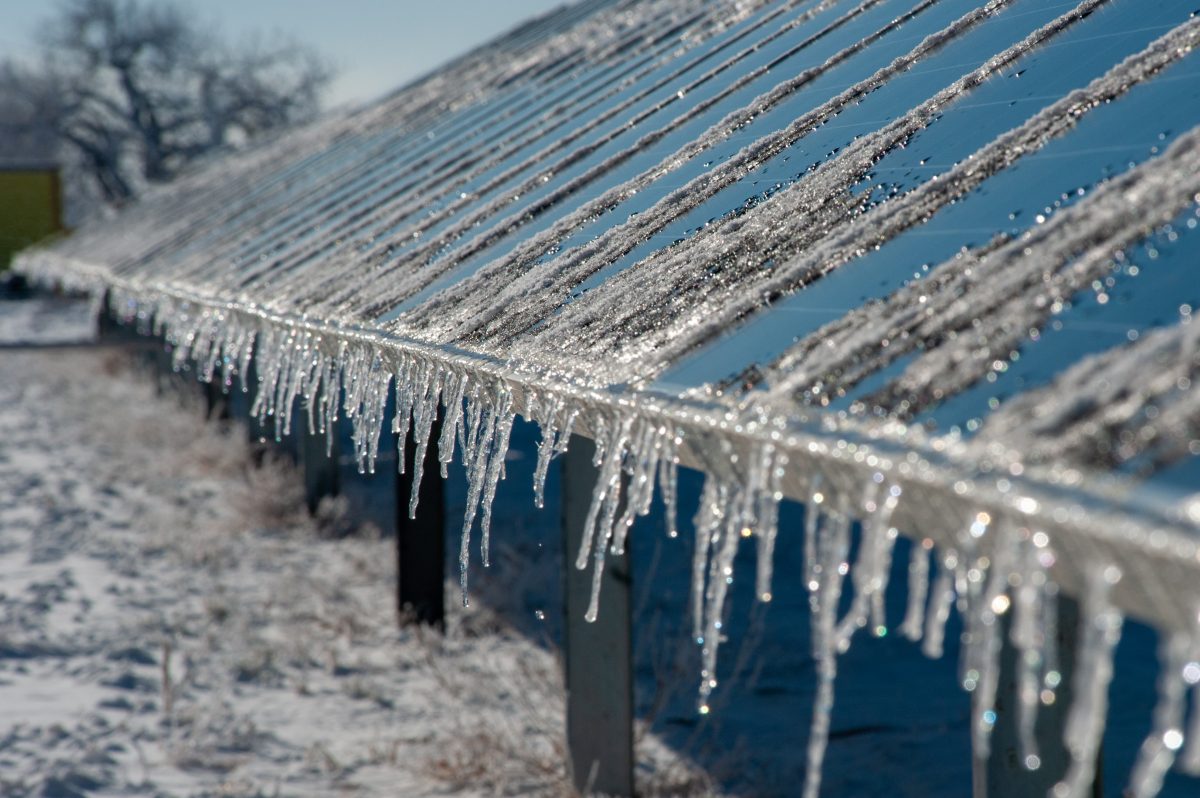
In a – they didn’t really think solar is free moment – power users in Maine are being belted with crushing power bills and told by the powers that be to expect much more of the same.
Where numerous businesses are being driven to the wall, thousands of householders are being hit especially hard, with punitive rates designed to prop up the state’s grand solar scam.
And the article below, Billy Kobin reports on one inevitable consequence of the inevitable renewable energy transition.
Why Maine businesses are facing crippling solar fees
Bangor Daily
Billy Kobin
21 August 2024
Solar subsidies have been a controversial topic in Maine for years, and crippling cost increases that recently took effect for certain businesses are just the latest example.
They are an outgrowth of policies that have evolved since the Democratic-led Legislature and Gov. Janet Mills passed a landmark 2019 law that caused a solar boom, subsidizing projects by charging ratepayers who don’t subscribe to them. This policy has raised electric rates overall, although solar proponents say that ignores the economic effects of their projects.
Until last year, businesses were charged according to the amount of electricity they used. But last year, the Maine Public Utilities Commission made a subtle but important shift by issuing an order that charges commercial customers on a fixed basis according to their rate classes.
These changes were effectively revenue neutral across the entire customer base, Andrew Landry, the deputy public advocate, explained in a June email. It led to wild swings in the distribution of the charges, hitting businesses that use less power than others in their classes.
This is the main reason for a $6,000 charge that may force a sanitary paper products factory in Milo to close after more than doubling its bill. Other businesses across the state have reported similar increases that could affect their operations, and lawmakers are already talking about adjusting the program yet again.
Versant has six rate classes for commercial customers based on electricity use. Of nearly 600 “medium power rate” customers who generally use at least 25 kW, 90 percent saw their bills increase with the change, according to data provided by the utility, with 8 percent — or 45 customers — seeing their bills at least double.
The increases have affected a sliver of Maine companies, ranging from the Milo factory to a Katahdin-area forest products firm that reported a 475 percent hike. The remaining 10 percent of Bangor Hydro District and Maine Public District customers in that “medium” range saw bills decrease, per Versant.
For the 76 “large” customers that use more power, 55 customers — or 72 percent — saw higher bills, with 11 seeing their bills at least double, while 21 customers — or more than a quarter — saw decreases, according to Versant data.
Public Advocate William Harwood, the ratepayer advocate who has warned that solar subsidies would cost ratepayers $220 million annually by 2025, said that stems from usage differences. Customers using less electricity than average within their class will be hit “really hard,” while heavy users will have a bill that “isn’t going to look as bad on the bottom line.”
CMP and Versant must now make up $130 million in net energy billing-related solar subsidies by July 2025. Harwood explained it as similar to a sales tax. Versant and CMP buy a kilowatt hour of solar energy from the projects at 20 cents a piece, while they sell the electricity for about 5 cents a kilowatt hour. The subsidy covers the 15-cent difference.
The bigger bills for a segment of Maine businesses figure to come up in the halls of the State House next year after plenty of debates honed in on solar subsidies in past sessions.
After plenty of lobbying and back-and-forth debates, the Democratic-controlled Legislature approved last year a bill from Sen. Mark Lawrence, D-Eliot, to let solar firms choose whether to accept subsidies while having Maine seek federal funding to boost solar development.
That bill won out over a proposal from Rep. Steven Foster, R-Dexter, that had a few Democratic supporters and initially would have ended net energy billing before changing to allow the utilities commission to offer adjustments to subsidies in hope of reining in the program.
Foster, who serves on the Legislature’s energy committee, said Monday he hopes the eyebrow-raising bills for certain Maine businesses will result in more debates on who pays for the solar subsidies.
“We’ve got to do something about this,” Foster said. “I’m hoping there’s more interest from the other side of the aisle.”
Rep. Gerry Runte, D-York, who also is on the energy panel, said the solar subsidies and local power projects offer benefits to communities, but he acknowledged they do not necessarily show up on bills. He agreed the way the costs are allocated could feature in future debates but expressed opposition to continually trying to scrap solar subsidies.
“We can’t be changing the rules with every Legislature,” Runte said.
Bangor Daily

via STOP THESE THINGS
October 10, 2024 at 01:30AM
“To tackle the climate crisis, lower energy costs, and secure energy independence….” (General Preamble)
Candidate Kamala Harris refuses to say that climate change is an “existential crisis” (much less yelled as the alarmists want). Harris says she will not ban hydraulic fractionation with natural gas, reversing her previous pronunciations. She also stated that electric cars (EVs) will not be mandated for drivers, backing away from a Biden Administration goal. Finally, Harris speaks little about the Green New Deal in general.
She is trying to get elected in the face of energy exceptionalism, which is the opposite of the Green New Deal. But vagueness surrounds her new tune, and she can always say that her position, specifically, is in the ’24 Democratic Party Platform.
The energy/climate narrative in the 91-page document does not include energy in Chapter Three: Lowering Cost. But Chapter 4, “Tackling the Climate Crisis, Lowering Energy Costs & Security Energy Independence” (p. 30) starts with climate alarmism and continues with the villains Donald Trump and Big Oil:
Every year, the devastation caused by climate change grows more urgent. Across the country, Americans experience the dire impacts of climate change: Floods and storms wipe more homes off the map. Wildfire smoke spreads thousands of miles, forcing millions to shelter indoors. We’ve had the worst droughts in a thousand years, and the fastest sea-level rise in over a century. Last year was Earth’s hottest on record. Natural disasters and extreme weather have cost America over one trillion dollars in damages in just the last seven years.
… It’s a consequence of delay and destruction by people like Donald Trump and his friends in Big Oil, who still deny what we all see happening right before our eyes…. Now, Trump is set to do Big Oil’s and polluters’ bidding again.
It is all-good-things from the federally directed “energy transition,” which bribes consumers to buy the energies and energy-using appliances/vehicles that they do not naturally purchase. The term forced energy transformation applies, at the expense of consumers and taxpayers.
Now to the platform’s claims about lower energy costs, jobs, American Climate Corps, electric vehicles, and climate policy.
“Lower energy costs” revolves around “cheaper, cleaner energy and with tax credits to make home energy use more efficient and affordable.” Except that free market choices by consumers themselves–with their own money on the line–is not what the government wants. And special tax favors for some are paid by all. Classic misdirection….
Jobs? The claim that the “landmark” Inflation Reduction Act “has so far directly created over 300,000 jobs in communities nationwide” is the broken window fallacy as election propaganda. What would have the (taxpayer) resources done if not hijacked by the federal government? What cheaper, more reliable electric generation capacity would there be without DOE grants, the Production Tax Credit, and the Investment Tax Credit? What would the price of a new car be without the subsidies to electric vehicles. What would the price of new appliances such as stoves, refrigerators, washing machines be without the book of mandatory efficiency standards from DOE.
American Climate Corps. “Democrats launched the American Climate Corps, a new work force training and service initiative that will put more than 20,000 young Americans to work on clean energy, conservation, and climate resilience projects nationwide,” with a goal to triple its size by the start of 2030.” Ouch! And civil libertarians please stand up. The idea of a New Deal works program propagandizing youth is scary, Orwellian to the max.
Electric Vehicles. This one has turned into a campaign liability, so the Platform entire paragraph is worth reciting.
With tax credits, Democrats helped quadruple sales of electric vehicles, with the goal that 50 percent of all new passenger cars sold in the U.S. by 2030 be electric. We’re protecting American children from asthma-related diesel pollution by giving school districts rebates to buy thousands of electric school buses so kids don’t have to breathe polluted air. We’ll keep working to electrify the nation’s fleet of school buses, transit buses, and federal vehicles, including the U.S. Postal Service fleet. We’ll double funding to repair and expand active transportation and public transit, reducing pollution and traffic, and connecting people to jobs and opportunity. And we’ll work to electrify our ports and waterways, prioritizing progress towards a goal of zero-emissions freight.
So what are the cost and operational disadvantages of this forced transition. If electric vehicles, school buses, and port machinery were not already in service, why not? And where is the money coming from in the federal budget? Is a surplus being worked down? Or is the deficit/debt ballooning?
Climate Activism. No surprise here. “President Biden has restored America’s global climate leadership, once again making our nation the world’s pivotal force against climate change. The United States rejoined the Paris Climate Agreement on day one of his presidency, and President Biden set an ambitious goal to reach net-zero emissions by 2050, inline with climate science.” Continuing:
The Administration has rallied the world to commit for the first time to transitioning away from fossil fuels. It set a bold new goal for nations to triple renewable energy worldwide and to double energy efficiency by 2030; and it helped to launch a new global clean-energy supply chain partnership to make that happen…. As Democrats, we believe the United States has an indispensable role to play in solving the climate crisis, and we have an obligation to help other nations carry out this work.
The failure of climate mitigation policies, now in its fourth decade, speaks for itself. Oil, natural gas, and coal are each in a global growth mode despite governments madly spending money and increasing mandates at the expense of consumers and taxpayers. Social injustice at the expense of the average person–whatever happened to Democrats as the Party of the small and vulnerable?
Finally, the bogeyman of Big Oil returns in the heart of the document. “Throughout, we’ll keep standing up to Big Oil, as our clean energy boom breaks the industry’s monopoly hold on energy markets.”
Going forward, we’ll also eliminate tens of billions of dollars in other unfair oil and gas subsidies. When windfall profiteering causes prices to spike at the pump, we’ll release our own supplies to keep costs down for American families. And, when we hear of potential collusion or price-gouging, we’ll hold oil and gas executives accountable.
Maybe with electoral defeat, the Democratic Party can remake itself on energy and climate policy.
The post Democratic Platform 2024: Energy and Climate appeared first on Master Resource.
via Master Resource
October 10, 2024 at 01:03AM
Related links: The Endocrine Disrupter Scare | ATSDR Atrazine Profile
via JunkScience.com
October 10, 2024 at 12:08AM

