Gergis Accuses Aussie Government of Emissions “Trickery”

Essay by Eric Worrall

Joëlle Gergis, who had an erroneous hockey stick climate paper spectacularly withdrawn in 2012, has accused Aussie politicians of using “trickery” to conceal climate policy failures.

Joëlle Gergis
Exposing net zero’s climate delusions

Denial is a funny thing. We have to find slippery ways of trying to live with high levels of cognitive dissonance: the discomfort we feel when faced with the reality that our thoughts and actions are contradictory. We must somehow rationalise the ways in which we fool ourselves. In the words of Seinfeld’s George Costanza: “It’s not a lie if you believe it.”

…

The truth is Australia is still not on track to meet its legislated target of a 43 per cent reduction in emissions from 2005 levels by 2030. Australian governments have a long history of relying heavily on the land sector to demonstrate progress towards reducing emissions while continuing to export enormous quantities of coal and gas to the rest of the world. The safeguard mechanism, Australia’s signature climate policy, allows the largest industrial polluters to buy carbon credits to balance out their impact on the environment, allowing them to achieve “net zero” emissions. Scientific and legal experts have criticised Australia’s carbon offset scheme as being very low integrity: people are receiving carbon credits for not clearing forests that were never going to be cleared, for growing trees that already exist and for growing forests in places that will never sustain them in the long term. Instead of requiring heavy polluters to actually reduce the huge volume of carbon they are dumping into the atmosphere for free, they can pay to offset their emissions by planting a few trees. Therein lies the fatal flaw in the net zero logic: no matter how the continued exploitation of fossil fuels is justified, real zero is the only way we can genuinely pull back from planetary disaster.

This trickery of using the land sector to mask the negligible reductions in total emissions has allowed the government to claim that Australia’s emissions have fallen 28.2 per cent per cent since 2005. Excluding land use from the latest data shows that total emissions, across industrial processes, transport, electricity and other sectors, have declined by just 1.8 per cent.

…

Read more: https://www.thesaturdaypaper.com.au/comment/topic/2024/09/28/exposing-net-zeros-climate-delusions#mtr

For once Gergis and I agree on something, at least about the land use trickery. There appear to be a number of questionable practices when it comes to using alleged enhancements to land’s ability to absorb CO2 to balance the books on emissions reduction claims, some of which have been exposed by WUWT.

Australia is especially prone to bushfires, so any attempt to accumulate carbon biomass in arid woodlands goes up in smoke whenever a fire sweeps the region. The apparent policy of allowing the accumulation of dry, flammable plant litter in poorly managed Aussie woodlands, instead of conducting regular low intensity burnoffs, makes the fires more ferocious when they do occur.

As for the rest of Gergis’ climate belief system, I believe a little healthy skepticism is in order. Just look at how she reacted when flaws were discovered in her scientific work.

Gergis’ 2012 paper (which eventually got withdrawn) got shredded pretty badly by Steve McIntyre. Instead of accepting she made a mistake by mis-describing and mishandling the data used in her analysis, she tried to argue it didn’t matter, and smeared people who objected to her methodological error as amateurs – “… Just to clarify, there was an error in the words describing the proxy selection method and not flaws in the entire analysis as suggested by amateur climate skeptic bloggers. …”.

It didn’t stop in 2012, Gergis returned with another paper in 2016, which was again eviscerated by Steve McIntyre, in McIntyre’s article Joelle Gergis, Data Torturer. McIntyre even suggests Gergis used a form of “Hide the decline”.

Everyone makes mistakes, sometimes big mistakes. The right thing to do in my opinion would have been to show a little grace and immediately accept she had stuffed up – this would have settled the matter quickly and cleanly. But to arrogantly dismiss people who pointed out the mistake as “amateurs”, to try to claim the “mistakes” were just an issue with wording, then to apparently make similar mistakes in a later paper, lets just say I’m not going to be losing any sleep over her climate warnings.

via Watts Up With That?

https://ift.tt/0zkmH6g

September 29, 2024 at 12:05PM

Wind Power Pollution and Hypocrisy in New England

Emmett Hare reports in City Journal Wind Power Debacle in New England.  Excerpts in italics with my bolds and added images.
A fractured turbine’s blade in Nantucket is causing
ongoing problems and frustrating local residents.

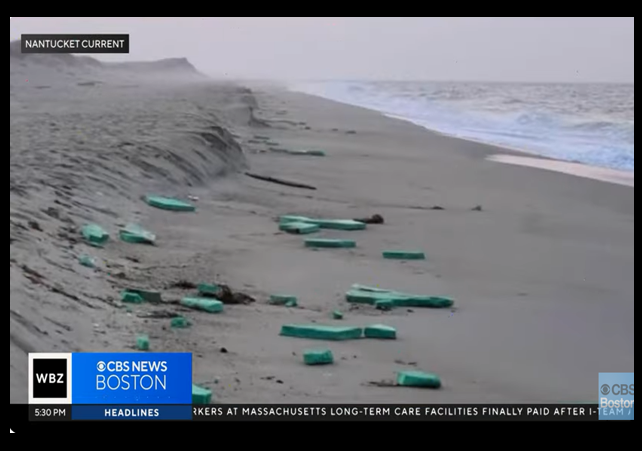
In mid-July, a blade from an offshore wind turbine operating 15 miles southwest of Nantucket fractured. A large amount of fiberglass, foam, and plastic debris fell into the ocean and began washing up on the island’s shores. The incident led to the closure of several beaches and a suspension of operations and construction for the massive Vineyard Wind project, a joint venture of Avangrid and foreign-owned Copenhagen Infrastructure Partners that has installed and operated ten of 62 planned turbines in the country’s largest wind farm.

At local meetings, Nantucket residents expressed concerns about officials’ handling of the turbine breakage and the environmental hazards of enormous fiberglass blades tumbling into the sea. In the past, they have also cited the project’s impact on marine wildlife and its visual impact on the town’s scenic beaches. A CNN report describing this “unusual and rare” event noted that the Coast Guard had retrieved a 300-foot piece of the shattered blade from local waters. The outlet reported that a spokesperson for GE Vernova, the wind-blade manufacturer, “couldn’t provide officials with the precise number of times something similar has happened at other wind farms around the world.”

Environmental groups, realizing the potential political implications of the fractured blade, downplayed the episode. The National Wildlife Federation (NWF), which avidly supports offshore wind farms, insisted that the damage was minor. “Compared to other energy disasters in the ocean like oil spills, this incident is fairly contained and easily cleaned up to prioritize the safety of marine life,” said Amber Hewett, senior director of offshore wind energy for the NWF. The Sierra Club emphasized that “the failure of a single turbine blade does not adversely impact the emergence of offshore wind as a critical solution for reducing dependence on fossil fuels and addressing the climate crisis.”

Whether the incident is “contained” remains in question. Debris from the broken turbine has been reported beyond Nantucket—in Martha’s Vineyard, Cape Cod, Rhode Island, and off the coast of Montauk, Long Island. The debris is breaking up into smaller pieces resembling shattered glass, with yet-unknown effects on Nantucket’s marine habitat. Vineyard Wind cautioned that “[m]embers of the public should avoid handling debris” and promised to “bag, track, and transport all debris to proper storage as soon as possible.” It remains to be seen whether simple avoidance will suffice, especially given the possibility of debris entering the human food chain through area fish.

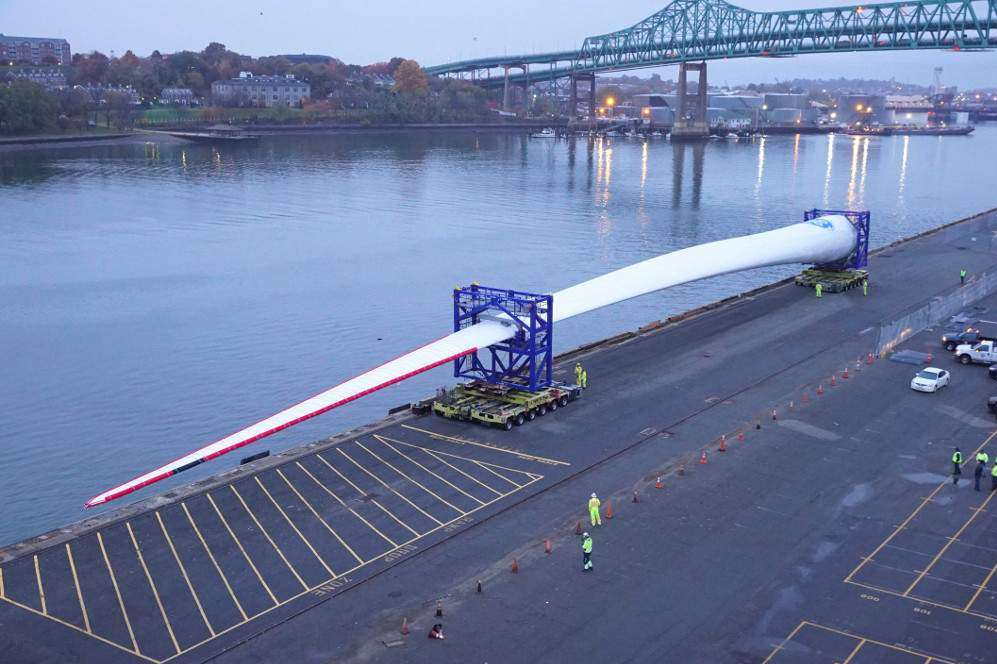
The Massachusetts Clean Energy Center (MassCEC) Wind Technology Testing Center in Boston has taken delivery of a 107-meter wind turbine blade designed for GE Renewable Energy’s Haliade-X offshore wind turbine.

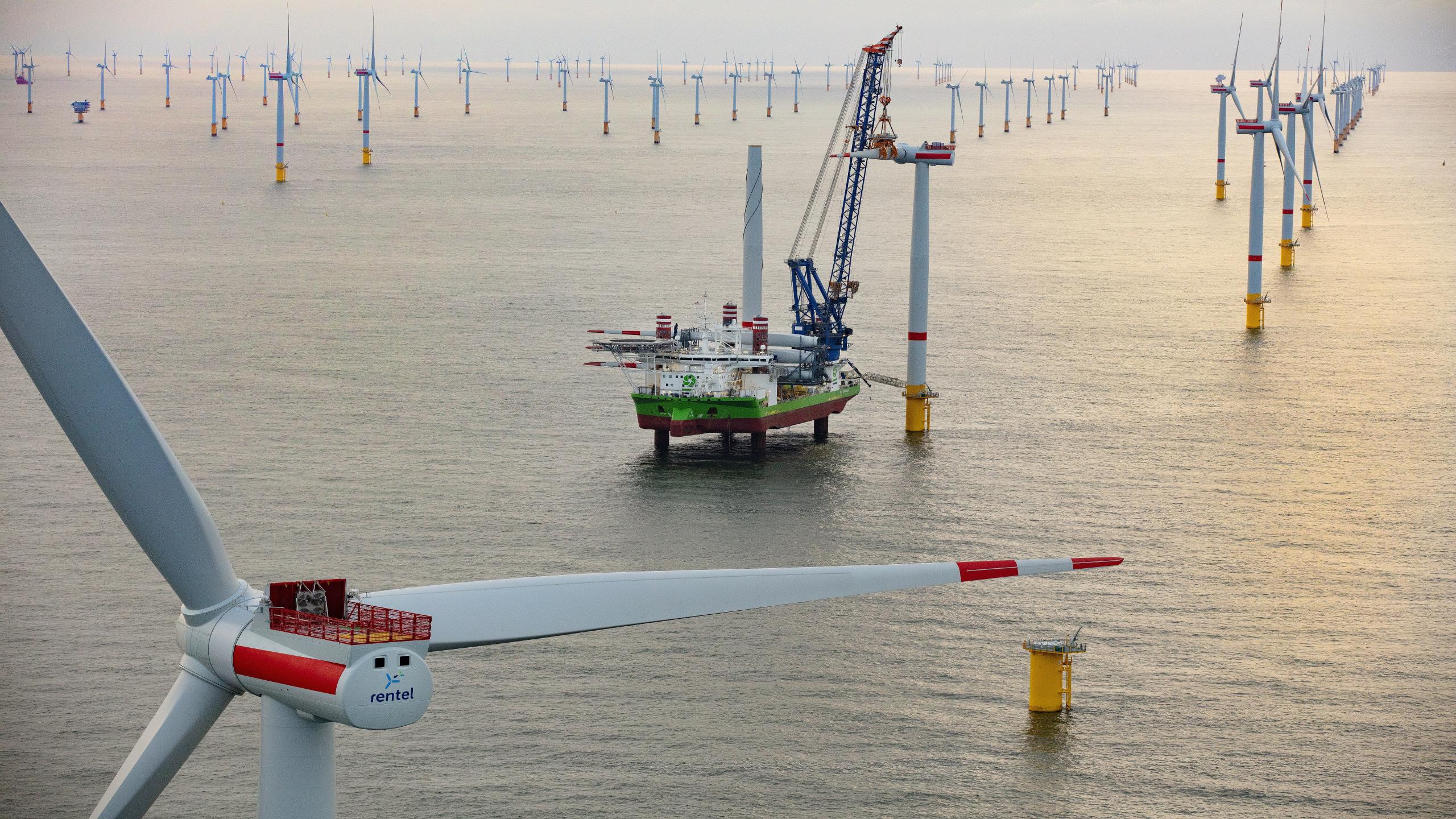
While this event may be “unusual and rare” in an absolute sense, many wind farms have seen broken turbines, fires, and sea-floor damage. And Nantucket’s situation is particularly dire, given that Vineyard Wind’s turbines are by far the largest ever constructed in the United States: the blade that fragmented on July 13 was over 350 feet long and weighed 57 tons.

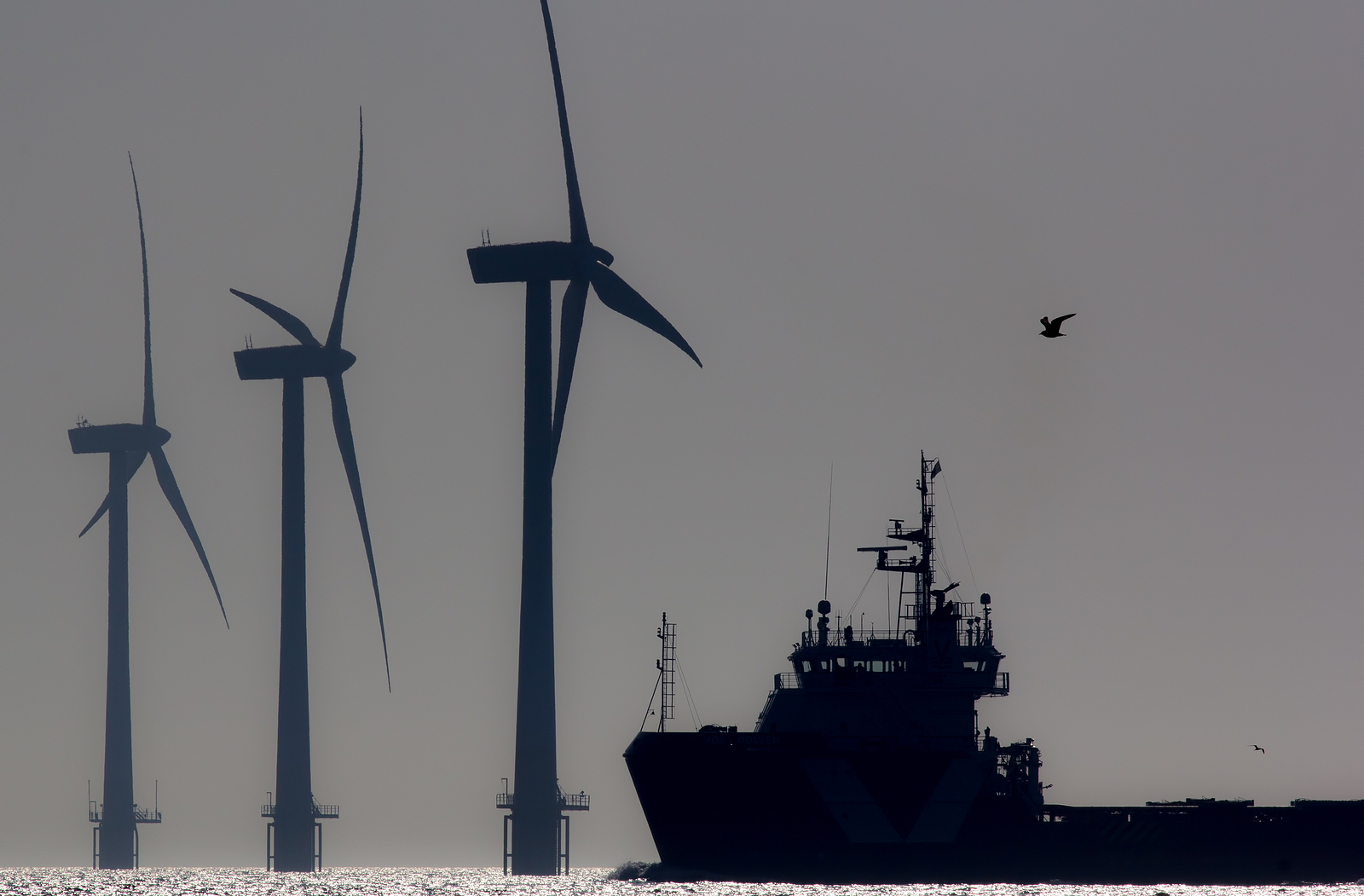
Even when functioning as intended, wind farms can negatively affect the surrounding environment. Wildlife advocates have claimed that sonic and subsonic vibrations from the construction and operation of turbines disrupt the navigational senses of marine mammals like whales and dolphins and can cause beachings. Turbines are also responsible for the deaths of countless birds. Clammers and fishermen are wary of working in areas close to wind farms, out of concern for equipment snags on buried power lines and risks to their vessels of navigating between the turbines in bad weather.

French Fishermen Join U.S. Fishermen in Fighting Offshore Wind – IER

The Nantucket residents questioning the safety of wind turbines generally support alternative energy. Indeed, in an FAQ post on the town government’s webpage, officials made the point that allowing wind projects to avoid scrutiny might allow traditional fossil fuel producers to evade similar oversight: “If [the Bureau of Ocean Energy Management] guts the provisions of these longstanding federal laws protecting culturally and environmentally significant places to facilitate expedient green energy projects, fossil fuel developers will exploit the bad precedent to undercut regulation of harmful projects for decades to come.”

Nonetheless, the Nantucket residents have seen themselves branded as tools of the fossil-fuel industry by well-financed lobbyists and promoters of richly subsidized wind power. They have also been subject to physical attacks. At a city council meeting in Newport, Rhode Island, a field director for Climate Jobs Rhode Island, David Booth, was charged with simple assault and disorderly conduct after accosting a speaker and seizing a bag of turbine fragments that she had brought for her testimony. Booth allegedly appeared prominently in a photo on the campaign website of Rhode Island senator Sheldon Whitehouse, which was subsequently removed without comment.

Debris in the water from Vineyard turbine blade

The wind-power industry has seen some of its planned projects cancelled in recent years due to swelling production costs and local opposition to the environmental and aesthetic impact of the colossal windmills. A report published by Brown University’s Climate and Development Lab in early 2024 suggested that much of the opposition to offshore wind was rooted in “misinformation,” “[c]onspiracy theories,” and cherry-picked information supplied by “right-wing think tanks.” It might prove beyond the powers of an academic paper to convince the residents of New England and coastal states that the fiberglass and foam washing up on their beaches is nothing more than a conservative talking point.

See Also:

The Short Lives of Wind Turbines

via Science Matters

https://ift.tt/sGzl9d6

September 29, 2024 at 10:48AM

Monday

0 out of 10 based on 0 rating

via JoNova

https://ift.tt/720DCWY

September 29, 2024 at 09:50AM

The Great Hurricane Of 1896

From NOT A LOT OF PEOPLE KNOW THAT

By Paul Homewood

Helene has been declared as the most powerful hurricane to hit Florida’s Big Bend region.

But what about the unnamed 1896 hurricane, which demolished Cedar Keys?

This image shows the devastation caused by the Great Hurricane of 1896 that struck the Gulf and Atlantic coasts of Florida. With its 2,200-kilometer coastline, Florida is the U.S. state most vulnerable to these storms. More than 450 recorded tropical storms and hurricanes have reached its shores since European exploration began. The hurricane of September 1896 destroyed most of the residential area of the town of Cedar Key on the upper west coast of the Florida peninsula, killing dozens of residents and destroying most of Cedar Key’s industries. Before making landfall, the storm and its tidal surge overwhelmed more than 100 sponging boats, killing untold numbers of crewmen. The hurricane then crossed the peninsula, leaving a wide swath of destruction until it reached the Atlantic coast at Fernandina, before heading north to Virginia. This image shows survivors, both white and black, in Fernandina, standing atop mounds of rubble, still seemingly shocked by the destruction

https://www.loc.gov/item/2021669942

By any standards the 1896 Cedar Keys hurricane was a monster. This is Wikipedia’s summary:

The 1896 Cedar Keys hurricane was a powerful and destructive tropical cyclone that devastated much of the East Coast of the United States, starting with Florida‘s Cedar Keys, near the end of September 1896. The storm’s rapid movement allowed it to maintain much of its intensity after landfall and cause significant damage over a broad area; as a result, it became one of the costliest United States hurricanes at the time. The fourth tropical cyclone of the 1896 Atlantic hurricane season, it formed by September 22, likely from a tropical wave, before crossing the Caribbean Sea just south of the Greater Antilles. It entered the Gulf of Mexico as the equivalent of a major hurricane on the Saffir–Simpson scale, and struck the Cedar Keys—an offshore island chain that includes the island and city of Cedar Key—early on the morning of September 29 with winds of 125 mph . The area was inundated by a devastating 10.5 ft  storm surge that undermined buildings, washed out the connecting railroad to the mainland, and submerged the smaller, outlying islands, where 31 people were killed. Strong winds also destroyed many of the red cedar trees that played an important role in the economy of the region. No hurricane would hit this region of Florida with a similar strength until 2023.

The cyclone continued inland over the Suwannee River valley, causing widespread destruction in dozens of communities across interior northern Florida; in the hardest-hit settlements, intense winds left few trees or buildings standing. The hurricane razed 5,000 sq mi (13,000 km2) of dense pine forests in northern Florida, crippling the turpentine industry. Crops and livestock were destroyed, and thousands of individuals were left homeless. The storm killed at least 70 people in mainland Florida, while inflicting approximately $3 million (equivalent to $110 million in 2023) in property damage across the state. Speeding north, the hurricane ravaged southeastern Georgia and the Sea Islands. In Savannah, a 45-minute onslaught of fierce winds unroofed thousands of structures. Parks, cemeteries, and streets in the city were littered with fallen trees, and the Savannah River saw dozens of wrecked boats. At least 37 people in Georgia died. Strong winds and high tides battered southeastern South Carolina, ruining rice crops and peeling off roofs. The storm then tracked through mostly rural sectors of North Carolina and did significant wind damage in the Raleigh–Durham area.

Although the hurricane was weakening and transitioning into an extratropical cyclone late on September 29, its rapid forward movement contributed to high wind velocities across parts of the Mid-Atlantic states, with gusts approaching 100 mph (160 km/h). Additionally, torrential rains fell west of the storm’s track. In Virginia, cities and agricultural districts alike suffered extensive damage. Flash flooding in the Shenandoah Valley culminated in the failure of an earthen dam upstream from Staunton, unleashing a torrent of water that swept houses from their foundations and ravaged the town’s commercial district. In Washington, D.C., thousands of trees were uprooted or snapped, communications were severed, and localized streaks of violent gusts damaged many public and private buildings. The White House grounds were left in disarray. High tides in the Chesapeake Bay triggered flooding in coastal cities. In Pennsylvania, flooding rains and powerful wind gusts produced widespread destruction. Railroads in western parts of the state were plagued by washouts and landslides, while in southeastern areas, hundreds of barns were destroyed. The storm demolished a 5,390 ft (1,640 m) bridge over the Susquehanna River, while the Gettysburg Battlefield lost hundreds of trees, a few of which struck and damaged historical monuments. Strong winds extended as far east as Long Island. Heavy rainfall reached west into Ohio, and the hurricane’s extratropical remnants wrought havoc on shipping in the Great Lakes. The storm caused at least 202 deaths and wrought more than $9.6 million (equivalent to $352 million in 2023) in damage.

https://en.wikipedia.org/wiki/1896_Cedar_Keys_hurricane

Just as with Helene, Cedar Keys rapidly intensified over the Gulf, and then proceeded to cause massive devastation inland, through Georgia, the Carolinas, and up to New York. There were 115 deaths and 12000 left homeless in Florida alone. Cedar Keys was hit by a 10.5 ft storm surge, bigger than anything recorded during Helene. Nearby Yankeetown had an even bigger surge of over 12ft.

Unsurprisingly most of the Cedar Keys’ residential area and industry was destroyed. Helene by contrast left nothing like this sort of damage, something that cannot simply be explained away by more robust buildings.

Georgia also bore the brunt of the storm, with damage to plantations and rice crops, widespread destruction of homes and the complete clearing of dense pine forests east of Folkston. The storm was still wreaking havoc when it reached Virginia, and produced what still stands as the most severe windstorm in Richmond’s history.

Catastrophic flooding followed the storm on its pathway north, even as far as Ohio.

In total there were reckoned to be 202 fatalities.

Yet despite all of this, the 1896 hurricane was only rated as Cat 3, with winds of 125 mph. Remember that Helene supposedly had winds of 140 mph.

So how did the authorities arrive at their estimate of 125mph? Remember that in those days anemometers were useless for measuring hurricane speeds winds, even if you actually had one at the exact centre of the storm. Below is the Hurricane Research Division’s record of how they arrived at their conclusions. I have highlighted the part relevant to landfall:

https://web.archive.org/web/20110604063810/http://www.aoml.noaa.gov/hrd/hurdat/metadata_master.html

Hardly scientific!

The analysis by Partagas, which is referred to and which the latest analysis is based on can be read here, and is no better, mainly referring to newspaper reports.

Nowhere in any of their or the HRD analysis is there any mention of actual recordings of wind speed or central pressure. Hardly surprising, given that all happened in 1896.

Yet we are expected believe that Helene, with considerably less damage, both in Florida and inland, was a much stronger storm.

Sorry, I just don’t believe it.

via Watts Up With That?

https://ift.tt/YLRAZc8

September 29, 2024 at 08:03AM