AI could take your computer from search to research

From CFACT

The news is full of predictions of explosive growth in electricity use because of AI. I wondered what all this AI was going to be used for, but then it hit me. AI could take our personal computers from search to research. I realize this is futuristic, so please read it that way.

The basic idea is very simple. Right now, when you want to know about something, you start by doing a search. You get a bunch of snippets and links to likely documents. So you go to the best-looking ones and read. If your question is fairly broad you might read quite a bit by way of piecing together an answer. Your computer does the search then you do the research.

Suppose AI does the research and reports back to you with your answer? This seems perfectly possible; in fact, it is what these new AI engines seem to do best.

When you think about it, we do a lot of research.

Shopping likely tops the list. So a query might be to find me the cheapest something within a specified distance. A specific car within 300 miles, say, or a special pizza within 5 miles. We do that a lot. Or the best price in all the online outlets, which would take me endless time.

Then there is looking over time. Most stores have sales off and on. For example, Amazon prices for a given item can change a lot over time, including being briefly what looks like erroneously low.

Your AI shopper could effortlessly spend what would be all your time spotting sales. You could even have low ball buy orders just like automated stock buying software does today, but with much more complex instructions from you.

Then, too there is reading product or service reviews and comments. Online reviews are a wonderful addition to shopping, but they are time-consuming to read and digest. AI could do this, but maybe not today’s systems. The problem is that people disagree. Some like it, some do not, and everybody has reasons.

Which brings us to a key issue, namely how does AI handle disagreement? Much of our daily research involves assessing conflicting opinions, but I have yet to see a discourse AI product that can do this well, or even at all.

Much of what we want to know about is controversial. Products, services, politics and policy, sports, diets and health, child rearing and education, news, science, law and regulation, etc. Today’s AI systems seem to take positions based on their training rather than analyzing the issues for us. This is a serious weakness.

Maybe issue analysis will be the next big thing in AI. It may take new programming or, training, or both because issues have a distinct structure. See my “The structure of complex issues” here: https://www.cfact.org/2020/11/17/the-structure-of-complex-issues/. It could also track issues as they evolve over time.

Getting back to the basic point, the WorldWideWeb just turned 30 years old. It has made search and research a key part of daily life. The computer does the search, and we do the research on those search results. There are two kinds of research — fact-finding and issue analysis.

If AI can do some of that research, it could be a major change in our lives. However, that change will be electricity intensive. Some projections of AI power usage are hard to believe as they range up to a whopping 20% of American electricity consumption.

I have not looked at these AI growth models, so have no idea how realistic they are. It is likely they are way too fast. A technology is more than stuff; it is people using stuff, which takes a long time to develop. If AI can do some of our research, it will definitely grow big.

If AI can do our basic research, that would be extremely useful. It would free us up to do other things, like thinking and more advanced research, or even relaxing a bit. Stay tuned.

via Watts Up With That?

https://ift.tt/JlUiQ0P

September 27, 2024 at 04:06AM

Labour’s Climate Sleaze

By Paul Homewood


 image

LONDON/NEW YORK (Reuters) -Britain on Thursday named Oxford University professor Rachel Kyte as its new climate envoy and announced a new investment facility, the latest steps in the new government’s efforts to bolster Britain’s role in international climate politics.

The appointment of Kyte, a climate policy professor, as the UK’s special representative for climate comes six weeks before COP29, the latest annual U.N. climate summit.

Countries from around the world will meet in Azerbaijan to try to thrash out new deals to halt rising global temperatures, mitigate the damage they have caused and raise funding for those who have been worst affected.

https://uk.news.yahoo.com/uk-names-rachel-kyte-climate-162858001.html

So who is Rachel Kyte?

image

LABOUR’S appointee to a plum government job is linked with a Cayman Islands-based hedge fund which donated £4 million to the party, The National can reveal.

Rachel Kyte has been appointed to the revived UK Government climate envoy role – which when it last existed commanded a salary of at least £130,000.

She is the co-chair of the Quadrature Climate Foundation’s advisory board, which was founded by the same people behind the hedge fund Quadrature Capital.

Quadrature, which holds hundreds of millions of pounds of shares in fossil fuels, private health firms, and arms manufacturers, donated £4m to Labour ahead of the General Election, the investigative news site openDemocracy revealed earlier this month.

The site said its latest filings with the US Securities and Exchange Commission from August showed it had hundreds of millions of dollars invested in oil firms including Cenovus, which earlier this year was fined for an Atlantic oil spill. 

It also held a $6m in arms manufacturer Lockheed Martin, investments in US private healthcare firms and massive asset management firms such as Blackstone and KKR.  

The donation only came to light months after the election because it had been made in a brief window where the election donation reporting rules had not come into force after Rishi Sunak announced the date of the ballot.

It is said to be the sixth-largest donation in British political history. ….

But her links with Quadrature Capital have raised questions for the Government over the firm’s financial ties to Labour.

https://www.inkl.com/news/labour-s-new-climate-envoy-linked-with-4m-party-megadonor-hedge-fund

via NOT A LOT OF PEOPLE KNOW THAT

https://ift.tt/EIDUtzr

September 27, 2024 at 03:34AM

Harris-Walz waltz down ‘Green New Deal’ brick road

There don’t appear to be any real-world examples of how the current Administration’s climate and energy policies are leading to a Green nirvana anywhere in the world.

via CFACT

https://ift.tt/rLSEVzt

September 27, 2024 at 03:08AM

Greenlight For Offshore Wind Industry’s Wholesale Environmental Destruction

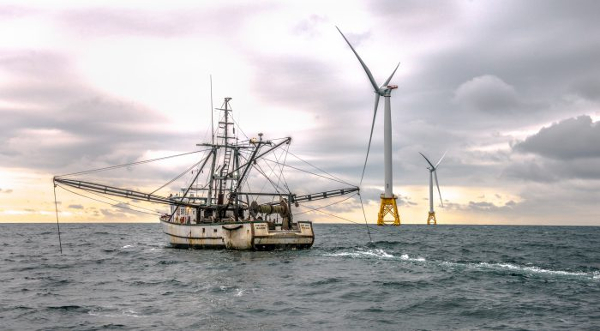
The damage done by offshore wind farms to fishing grounds is met with practiced contempt by wind power outfits and malign indifference by their political enablers.

Taking wind turbines out to sea not only escalates the cost of the occasional power they produce, it destroys coastal landscapes, birds and other marine life.

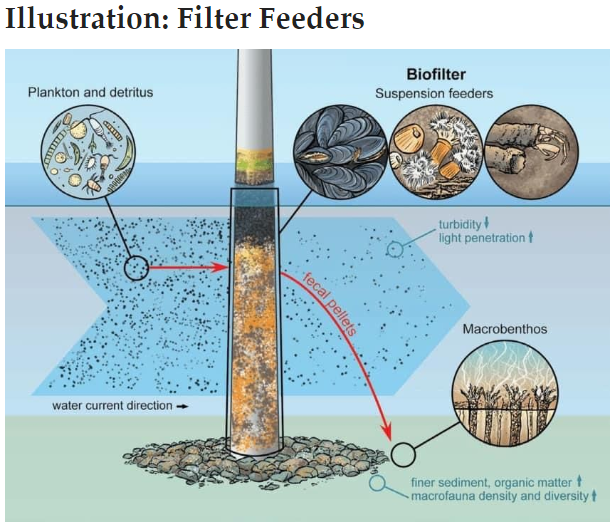
And, as Robert Bradley explains below, spearing thousands of these things into the seafloor attracts invasive filter feeders that upend the natural order, and thereby destroy the ecosystems upon which both humans and other creatures depend.

Ocean Integrity vs Offshore Wind
Master Resource
Robert Bradley
12 September 2024

“In areas where wind farms are being developed, invasive species can harm … industries by reducing fish populations, damaging habitats, and deterring tourists who seek intact and diverse marine environments.” – Kieran Kelly, Ocean Integrity (below)

‘It is hard being green, particularly when “green” means being one-dimensional against carbon dioxide (CO2) at the expense of virtually every other metric.

Consider wind power, the onshore problems of which (failed past, government dependency, intermittency, site depletion, local warming, noise, avian mortality, health effects) are only magnified offshore (cost premium, wake effect, blade failure, industrialization, hurricanes, pile driving, political bribes).

Kieran Kelly, CEO of Ocean Integrity, “a global organization that aims to reduce ocean plastic pollution and create positive social impact,” recently reported on social media about a particular ecological issue: invasive filter feeders.

The growth of invasive filter feeders in areas where wind farms are being placed provides a compelling argument against proceeding with offshore wind farms. [Ed. Note: see picture below]

Invasive filter feeders can disrupt the delicate balance of ecosystems in which they establish themselves. These organisms often outcompete native species for resources, leading to a decline in biodiversity and altering the natural composition of communities. The introduction of invasive filter feeders can result in the displacement or extinction of native species, disrupting the intricate web of interactions that have evolved over time.

The proliferation of invasive filter feeders can have profound effects on food chains within affected ecosystems. By consuming vast amounts of plankton and other small organisms, they can deplete the food sources that native species rely on. This can lead to population declines and cascading effects throughout the food web, affecting the abundance and distribution of other species, including commercially important fish stocks.

Invasive filter feeders often modify their surroundings to suit their needs, which can have detrimental effects on native habitats. They may alter water flow patterns, disturb sediment layers, or create physical structures that disrupt the natural habitats of other species. These modifications can result in the loss of critical habitats, such as seagrass beds or coral reefs, which provide shelter, breeding grounds, and nursery areas for numerous marine organisms.

The negative impacts of invasive filter feeders extend beyond ecological consequences. In areas where wind farms are being developed, there are often economic interests tied to fisheries, tourism, and recreational activities. The proliferation of invasive species can harm these industries by reducing fish populations, damaging habitats, and deterring tourists who seek intact and diverse marine environments. The economic losses resulting from these impacts can be significant and long-lasting.

Once invasive filter feeders become established in an area, their eradication or control becomes challenging, time-consuming, and costly. Prevention should be a primary focus to avoid introducing these species in the first place. The potential risks associated with the growth of invasive filter feeders should be thoroughly evaluated through comprehensive risk assessments and environmental impact studies prior to the construction of offshore wind farms.

It is crucial to assess the potential for the establishment and spread of invasive filter feeders in areas where wind farms are proposed. Adequate safeguards and strict monitoring protocols should be implemented to prevent the introduction and proliferation of these species.

He added in a comment:

The waters around Denmark 🇩🇰 have witnessed a complete collapse of fish stocks, a situation mirrored in Sweden. While some may choose to turn a blind eye, it’s crucial to note that no independent environmental impact studies have been conducted.

Ørsted has announced a $4 million initiative to support environmental research at Connecticut universities, raising concerns that offshore wind companies are effectively silencing academic institutions.

Later today, I’ll be sharing new evidence regarding pollution from these offshore structures. We’re gearing up for a lawsuit against these companies, and our attorneys believe we have a strong case to shut them down. As an environmentalist, my sole focus is the protection of our oceans—let’s make that clear.

Final Comment
The much needed civil war within the mainstream environmental movement (Big Green, Inc.) has been corrupted by green-as-in-money. Big Wind, Big Solar, and Big Batteries control the narrative that no ecological tradeoff is too great in the war against carbon dioxide (CO2), thus fossil fuels, thus modern industrial living.

Expect the Green Divide to increase, however, as the surface area, the living space, is increasingly taken over by politically correct, economically incorrect energies.


Master Resource

via STOP THESE THINGS

https://ift.tt/Scf9KmR

September 27, 2024 at 02:30AM