"It’s only words" was the lyric of a famous Bee-gees song, and words are all we have to describe things. As Jo Nova says in the linked article clever people control the language and so they try to shape our understanding and we must not be fooled by this. We need to read into what exactly is meant and make sure that we expose the use of euphemisms and call a spade a spade.
Polar Ice Is Not Following the Climate Crisis Narrative
Noise Impact on Health Causes Irish Court to Shut Down Wind Turbines
Extreme High Temperatures in the United Kingdom Recorded at Junk Sites Crisis Narrative
Polar Ice Is Not Following the Climate Crisis Narrative
In late April and early May, mainstream media outlets ran dozens of stories discussing the findings of a recent study that showed Antarctica’s ice mass was growing. The outlets called the ice and snow gain “astonishing,” “surprising,” and “shock[ing]” and said it “startled the scientific community.” Perhaps they were surprised because they rely on climate models to inform them what is or should be happening in Antarctica, or perhaps they found the gains unexpected simply because it didn’t play into the climate crisis narrative.
They may have been astonished or surprised, but I wasn’t. Having examined the data and history, I knew Antarctica has not been following the climate crisis script since the alarm was first raised with James Hansen’s theatrically staged 1988 congressional testimony in which he claimed the Earth was dangerously warming due to human activity.
Climate theory and the models say the warming of the Earth should be greatest at the poles. But while the Arctic has warmed more than the average for the globe as whole, the South Pole has experienced little or no warming. In fact, a 2020 study published in the journal Nature found Antarctica had not experienced any measurable warming for the past 70 years.
“The Antarctic continent has not warmed in the last seven decades, despite a monotonic increase in the atmospheric concentration of greenhouse gases,” the researchers wrote, also noting “Antarctic sea ice area has modestly expanded” over the past several decades.
Examining the recent study in more detail, rather than the media reports about it, what it found is that after a glacial decline from 2011 through 2020, four large glacier basins in East Antarctica—the east and central part of the continent making up the vast bulk of it—have had substantial ice growth. Glacial melt which had been contributing to sea level rise reversed itself over a period of three years, adding mass and cutting Antarctica’s contribution to sea level rise.
“Antarctica gains ice for first time in decades, reversing trend of mass loss,” wrote Fox News in reporting on the study. “A surprising shift is underway at the bottom of the world. After decades of contributing to rising sea levels, Antarctica’s massive ice sheet has started growing again—at least for now.”
As important as the study may be for understanding the very recent ice balance and trends in Antarctica, I don’t think its analysis of past ice trends or levels is entirely accurate. Research from NASA in 2015 found “an increase in Antarctic snow accumulation that began 10,000 years ago is currently adding enough ice to the continent to outweigh the increased losses from its thinning glaciers.” If NASA’s 2015 findings are correct, it means the ice accretion of the past few years isn’t merely the first time in decades that Antarctica has produced a net ice gain but rather is at most the first time in a decade.
To be fair, because the earlier study debunked commonly asserted alarmist claims that Antarctica was suffering a massive ice loss that would lead to massive global sea level rise if unabated, NASA tried to bury its own report or at least raise questions about its validity. On NASA’s webpage, after a brief paragraph describing the NASA researchers’ results based on satellite measurements, one now finds this:
NOTE: The findings reported here conflict with over a decade of other measurements, including previous NASA studies. However, challenges to existing findings are an integral part of the scientific process and can help clarify and advance understanding. Additional scrutiny and follow-up research will be required before this study can be reconciled with the preponderance of evidence supporting the widely accepted model of a shrinking Antarctic ice sheet. (Italics in the original)
Regardless of whether NASA was right in 2015 or the new study is more accurate, Antarctica is not behaving as harbingers of climate doom said it should, having used their unvalidated computer models’ projections. As skeptics like myself constantly remind the public, the climate is more complex than climate models and those who rely on them believe them to be. To paraphrase Shakespeare, “There are more things in Heaven and Earth than are imagined in the climate cabal’s philosophy.”
None of the above says there is no melting of ice in Antarctica. West Antarctica and the Antarctic peninsula have lost ice at increasing rates over the past couple of decades, resulting in headline-making glacier calving accompanied by breathless stories about inevitable sea level rise unless fossil fuel use is halted. The problem is, based on temperature and ocean current data, the ice loss on the peninsula is more likely attributable to a shift in large-scale ocean currents affecting ocean temperatures, and the best evidence suggests much of the ice loss in the West Antarctic is due to subsurface geothermal activity melting ice there from below and causing ice to flow faster. That means climate change isn’t an identifiable factor in the melting in either location.
In addition, Central and East Antarctica are by far the largest portions of the continent, so the evidence suggests any ice loss in the western portion of the continent is likely being more than offset by gains on the mainland and in the Eastern glacial basins. As a result, Antarctica may be a net sea level sink, rather than contributing to rising seas.
Noise Impact on Health Causes Irish Court to Shut Down Wind Turbines
Add Wexford, Ireland to the growing list of jurisdictions holding industrial wind owners and operators responsible for the health impacts their facilities impose on people.
The high court in Dublin, Ireland ordered an industrial wind facility in rural Wexford, Ireland to cease operating half of its wind turbines in the region, recognizing the harm done to rural residents by the noise and flickering lights from the turbines’ operations.
In addition to ordering the Wexwind facility to shut down three of its six turbines, the judge ordered the company to compensate local residents for noise nuisance. Justice Oisin Quinn ordered Wexwind to pay the plaintiffs $343,000 in compensation for the nuisance and more than $69,000 in “aggravated damages. The judge left open until later what to do about court costs and the plaintiffs’ solicitor’s fees.
Going forward, mitigating noise and shadow flicker (strobe light effect) nuisance will be “critical to the future success of wind as a major source of renewable energy,” an expert witness told the court.
Author and energy analyst Robert Bryce notes this is not the first case in which courts have ruled against industrial wind facilities for the health impacts their operations have imposed on adjacent landowners, which the operators have tried to downplay or cover up. Bryce writes,
[T]he undeniable truth is that noise pollution is pollution, and prolonged exposure to noise pollution harms human health.
Of course, Big Wind has known about the noise pollution issue for years but has refused to admit it harms people. … Over the past few years, NextEra Energy, the world’s biggest producer of solar and wind energy, and other alt-energy companies have quietly settled a number of lawsuits filed against them by landowners who have cited turbine noise in their legal complaints.
Numerous studies have found that turbine noise is a problem. In 2009, a study by the Minnesota Department of Health detailed the problems associated with noise from wind turbines. The key passage says, “The most common complaint in various studies of wind turbine effects on people is annoyance or an impact on quality of life. Sleeplessness and headache are the most common health complaints.”
In 2010, Dr. Michael Nissenbaum, a radiologist in Fort Kent, Maine, did a landmark study .. finding: 82% of the residents living within about 1,100 meters of the wind turbines complained of sleep disturbance. …
[A] 2012 literature review found that when turbines are located too close to homes, “The prolonged exposure to the audible and inaudible range of acoustic characteristics of wind turbine noise adversely affects people’s health.”
As Bryce details, courts in France have also ordered wind facilities to pay damages for noise health harms and to shut down and remove turbines, restoring the land to its natural state.
In addition, more than 700 cities, towns, and counties across the United States have banned industrial wind development within their jurisdictions, citing health concerns, lowering of property values, and environmental damage.
Extreme High Temperatures in the United Kingdom Recorded at Junk Sites
In mid-May the United Kingdom weather service, the Met Office, reported extremely high temperatures at various locations across the country—when much of the nation was experiencing a nice, warm spring.
Investigative journalists at The Daily Skeptic (DS) examined the data and found nine out of 10 local temperature stations reporting “extreme” daily temperature highs for the nine days from May 10 through May 18 were what the DS referred to as “junk” sites, meaning they were in the worst two classes, Class 4 and Class 5, of temperature stations for accuracy in recording temperatures. Class 4 and 5 sites have “internationally-recognised ‘uncertainties’ of 2°C and 5°C respectively.” That means temperatures recorded at these sites could be as much as two (Class 4) to five (class 5) degrees lower or higher than the reported temperatures.
Chris Morrison, author of the DS story, notes certain junk locations regularly and repeatedly report unusual highs and “the recording of highs in these corrupted sites didn’t mean the air temperature was representative of the wider surrounding area. It just meant that the sites were poorly located next to unnatural heat sources and were producing a false natural air record, recently re-badged by the Met Office as a so-called ‘extreme’ high.”
“Every day the Met Office posts a daily high temperature for 16 locations around the UK,” writes Morrison. “In the nine consecutive days under review, I initially found that 83.8% of the highs were recorded in Class 4 and 5 sites rated by the World Meteorological Organization to have the large ‘uncertainties’ up to 5°C.
“No less than 36.6% of records came from Class 5 sites that have no qualifying criteria for accuracy and can be located anywhere,” writes Morrison.
Of course, as detailed by Heartland’s own Anthony Watts in a series of reports, the U.K. is not alone in reporting data from poorly sited temperature stations that violate basic principles of data quality by using urban heat island biased temperature measurements. Watts’ most recent study, published in 2022, found roughly 96 percent of the temperature stations in the United States used to measure climate change fail to meet the National Oceanic and Atmospheric Administration’s standards for acceptable and uncorrupted placement.
Additionally, in the June 5 Climate Change Weekly I discussed research published in the Journal of Applied Meteorology and Climatology in April that found increasing population density around and near surface station locations was highly correlated with quickly rising temperatures, with those temperatures biasing the reported average temperature for the United States as a whole.
In temperature measurements and reporting as with computing, the same rule applies: garbage in, garbage out.
H. Sterling Burnett, Ph.D., is the Director of the Arthur B. Robinson Center on Climate and Environmental Policy and the managing editor of Environment & Climate News.
Discover more from Watts Up With That?
Subscribe to get the latest posts sent to your email.
Rupert Darwall examines when and why the world has gone wrong this century, pinpointing a fundamental error needing correction. Excerpts of the transcript are in italics lightly edited with my bolds and added images. [MM refers to the interviewer, Maggie Miller, and RD refers to Ruper Darwall.]
MM: I’m joined now by Rupert Darwall, author of The Age of Error, Net Zero and The Destruction of the West. Thank you for joining me here today. Although you’re not a speaker here at this event I feel like your book speaks to what we are talking about. So it’s important to take some time to discuss this. For those who might be unfamiliar, would you talk about your book and what are the key takeaways?
RD: Yes, going back in time a bit, I had this sensation where I didn’t understand the way things were going in the world. Perhaps other people might have a a similar kind of feeling. And then the penny dropped. We live in an age of error. And once you understood that, everything started to fall in place. As a result of that, I decided to write a book on the age of error, which is essentially what the book’s about.
MM: When you think about the age of error, when do you think it began, can you set a date to that precisely?
RD: Yes I think I can. Because in 2006 there was the meeting of the G8 which was in St Petersburg hosted by Vladimir Putin. And the leaders of the west along with Vladimir Putin signed up to a document called the St. Petersburg Principles of Energy Security. In that document the leaders of the west said that that they needed to invest trillions of dollars across all the value chain, the whole oil and gas value chain.
We can see there in the summer of 2006, the leaders of the west understood energy realism. This was a realistic response to what was happening in the first decade of the 21st century. Oil prices had been rising quite strongly. Since the 1980s there had been a two decade run of falling energy prices that started to reverse. And higher energy prices were of course causing real concern to the economy and also to energy security.
So in 2006 we can say that was energy realism. People such as the leaders of the west had their heads screwed on straight. By 2009, after the global financial crisis of 2008 and the election of Barack Obama also in 2008, we then had the L’Aquila G8 meeting. And there the leaders of the west signed up to a green recovery and the realism that you’d seen three years earlier had completely gone. So yes one can date this really quite precisely.
MM: Sounds very interesting. What would you say is the biggest error that the west has made?
RD: I think the biggest error is personified by John Kerry. People like John Kerry believe that history is over, that is the history of the rise and fall and competition of great powers is over. And now the world together faces the prospect of climate catastrophe, a planetary catastrophe. So that the world must come together, bury their rivalries. We all come together at the Paris climate conference and we agree to decarbonize.
That to my mind is the biggest error of the age because history has not ended. Geopolitics still continues. We saw that in 2014 when Vladimir Putin seized Crimea, and most of all we saw that in February 2022 when he invaded Ukraine. And the error is that by believing in the catastrophe vision of the world, you will lose the geopolitics. Because there is no way that you can decarbonize your economy and still compete in a geopolitical world. You will basically lose, the west will lose to China.
MM: So what are the consequences for America and Europe?
RD: I would distinguish between America and Europe because after the financial crisis one thing that America had one thing going for it, which was a really really big thing, that was hydraulic fracturing and horizontal drilling– the shale revolution. And that turbocharged economic growth in the years following the financial crisis. It was driven a lot by falling energy prices and by the shale revolution.
Europe on the other hand has really strongly embraced net zero. It really believes that decarbonization is the path to economic growth and that is a complete fantasy. You can’t do both. You cannot have economic growth and at the same time starve yourself of of energy.
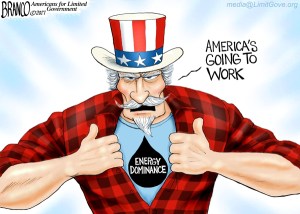
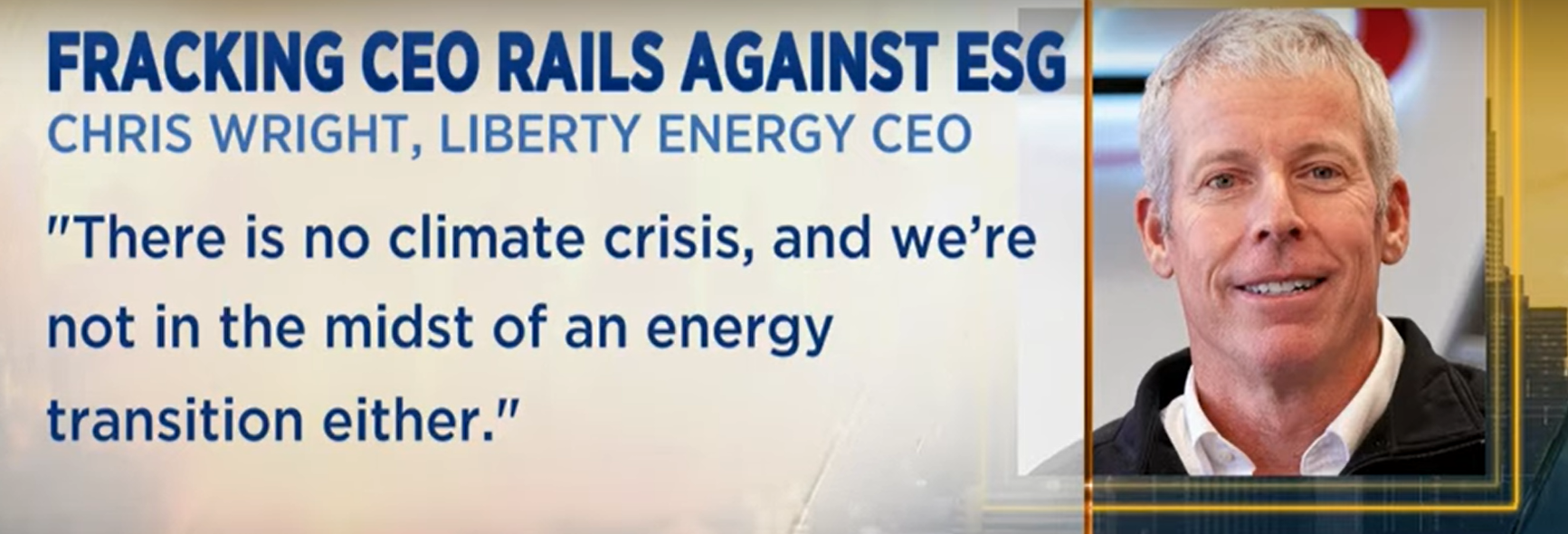
So I think America is in a different position because of the energy revolution, and moreover there’s always been a debate in America about climate change. So there’s always been a strong trend to towards energy realism, which obviously one sees now very strongly in in the Trump administration. Figures like Chris Wright personify energy realism and and the energy opportunity.
Europe has real real deep, deep problems, since it has drunk from the well of net zero very deeply. And it’s going to take a lot to get it off. I mean by a lot, it’s going to take very high prices, very weak economy. It simply can cannot generate the resources it needs to defend itself from a more aggressive Russia.
MM: What are you looking forward to now, what have you set your sight on?
RD: In terms of the book, I’ve written 17 chapters and the book will be 20 chapters. I’m looking forward to putting finish on chapter 20 and submitting the manuscript. Getting the book out is important because I think it speaks very strongly to the current situation we’re in.
Gov. Gavin Newsom’s doppelganger came and went very quickly.
If you missed it, that was the version of Newsom posturing as a moderate bravely willing to antagonize the extreme left of his own Democratic Party. This process began sometime in March when the Newsom imposter said during a podcast that it was “deeply unfair” for biological males to participate in female athletics. He also launched initiatives to clear up homeless encampments and clear up the streets in parts of California. Newsom even went so far as to propose a freeze on healthcare enrollments for illegal aliens.
Yes, the California governor is clearly gearing up for a 2028 presidential run that necessitates feigned policy pivots. But the problem now is that the real Gavin Newsom has suddenly reemerged. Some will say he pulled back his stand-in during the Los Angeles riots these past few days when he felt the reflexive need to apologize for lawlessness. In fact, the doppelganger was cut loose when U.S. Senate Republicans reasserted self-government in Washington D.C.
That moment came on May 22 when elected officials told unelected bureaucrats to go pound sand while overturning three vehicle emissions waivers the Biden administration granted to California. Senate Republicans made use of the Congressional Review Act (CRA) to revoke the waivers including one that would have enabled Newsom’s California to set a nationwide electric vehicle (EV) mandate. The CRA enables elected lawmakers to review and potentially overturn federal agency rules. On May 1, the House passed resolutions of disapproval under the CRA aimed at overturning the California waivers.
Sen. John Thune of South Dakota, the Republican majority leader, quickly made it clear that he would finish what his House colleagues started. The Senate vote against the EV mandate was 51–44, with Democratic Sen. Elissa Slotkin of Michigan joining Republicans. The votes overturning the other two waivers were along party lines.
A little background:
In response to a request from three Senate Democrats, the Government Accountability Office (GAO) had issued a memo claiming the waivers did not meet definition of what qualifies as a rule that could activate the CRA. Senate Parliamentarian Elizabeth MacDonough chimed in with her own commentary backing up GAO’s opinion. Thune to his ever-lasting credit decided it was high time to reassert congressional authority over unelected bureaucrats out to do Newsom’s bidding.
Restoring Self-Government
Tom Pyle, president of the Institute for Energy Research, a free-market advocacy group, has described the CRA as a “great piece of legislation” that can be used to “rein in a runaway bureaucracy and restore constitutional checks and balances.” Newsom feels differently. Nothing brings out a genuine anti-constitutional left winger like a little self-government in action. Newsom went into meltdown mode after he was smacked down by the peoples’ elected representatives. In a press release, Newsom called the Senate’s actions illegal. He has also vowed to sue the Trump administration over—well, what exactly?
That’s the question Kenny Stein, IER’s vice president of policy, has been asking himself. But if Newsom persists in challenging how the CRA was used, Stein envisions a scenario where the California governor could open “a can of worms for himself” that boomerangs on the special favors California has been receiving.
“I have no idea what Newsom’s claim is going to be,” Stein said in an interview. “You can’t just sue because you don’t agree with a policy that’s not how the courts work, and that’s not the way our system works.”
But if Newsom persists, Stein sees a potential opening for the courts to scrutinize the constitutionality of the California waivers. Under the Clean Air Act (CAA), the EPA has the authority to create emissions standards for new motor vehicles. The agency also has latitude to grant California a special waiver to impose even more stringent standards for the purpose of addressing pollution problems that are localized and unique to that state. But since other states can adopt California’s stricter emissions standards, the waiver could have resulted in nationwide mandates compliments of Newsom. As it stands, 11 states have already been following California’s lead with vehicle regulations. If Senate Republicans had not been willing to make use of the CRA, Newsom would have been in position to ban the purchase of gas-powered vehicles across the country—beginning in 2035—in line with California standards. For the moment, the aspiring presidential contender in Sacramento has been held at bay. The Trump officially signed off on the resolutions revoking the EV mandates on June 12. But Stein is expecting another showdown at some point.
“The California waiver issue is clearly not going away because California keeps indicating they want to push the envelope and dictate motor vehicle standards to other states,” Stein said. “At some point, I think the U.S. Supreme Court is going to need to weigh in.”
In 2024, IER submitted an amicus brief in a case out of Ohio before the U.S. Supreme Court challenging the legality of a special waiver California received under the Obama administration.
In the brief, IER argues that the federal government must treat all states equally under the Constitution, a principle grounded in federalism and historical jurisprudence. Thus far, the high court has declined to take up IER’s constitutional questions and is instead focused on who might have standing in the case.
“What’s interesting here is that Newsom is doing the inverse of what we did with our amicus brief,” Stein observed. “We are saying all states need to be treated equally but Newsom is asking for preferential treatment with the waiver. He may be opening a can of worms for himself, because there’s a case to be made that the California waiver is itself unconstitutional.”
As a counterbalance to the California mischief, IER organized the Save Our Cars Coalition back in 2023, which now includes more than 40 national and state-based organizations committed to safeguarding American consumers’ freedom to choose the car or truck that perfectly suits their needs. The signature Trump just attached to the congressional resolutions nixing the Newsom mandates marks an important triumph for the IER coalition.
The Senate’s principled use of the CRA also has the added benefit of flushing out the real Newsom. If he wants those mandates, he’ll have to make it to the White House.
Kevin Mooney is a senior investigative researcher for Restoration News
This article was originally published by RealClearEnergy and made available via RealClearWire.
Discover more from Watts Up With That?
Subscribe to get the latest posts sent to your email.


 That to my mind is the biggest error of the age because history has not ended. Geopolitics still continues. We saw that in 2014 when Vladimir Putin seized Crimea, and most of all we saw that in February 2022 when he invaded Ukraine. And the error is that by believing in the catastrophe vision of the world, you will lose the geopolitics. Because there is no way that you can decarbonize your economy and still compete in a geopolitical world. You will basically lose, the west will lose to China.



 Iowa Climate Science Education