Energy & Environmental Review: May 27, 2025

This post excerpts energy and climate material from the Media Balance Newsletter, a free fortnightly published by physicist John Droz Jr., founder of the Alliance for Wise Energy Decisions.

Greed Energy Economics:
*** Epstein: Why the proposed “phaseout” of IRA subsidies is unacceptable
*** Victory for energy freedom: the House (finally) limits IRA subsidies
*** New report: The true affordability of net zero
The truth about power bill increases

Unreliables (General):
*** The Achilles Heel of Wind and Solar
Economic prosperity demands continuous and uninterruptible electricity
Wasting Away in Wind-and-Solarville

Wind Energy — Offshore:
*** Allies Sue Federal Agencies Over Unlawful Authorization of Empire Wind Project
Letitia James has ‘no leg to stand on’ in lawsuit against Trump offshore wind order, experts say
Rest in Peace, Nils Stolpe, Fisheries Guru
After nearly four decades, Jerry Schill bows out of N.C. Fisheries Association
Trump administration lifts stop-work order on $5 billion NY offshore wind project
America’s Fishermen Used as a Poker Chip Again
‘EDF reviewing clean energy projects after setbacks’

Solar Energy:
*** Chinese Kill Switches found in US Solar Facilities
A US candidate for the world’s worst Solar project: Ivanpah

Nuclear Energy:
*** President Trump Signs Executive Order on Nuclear Power
*** Bryce: Nuclear Conversion
*** Belgium abandons nuclear exit plans
Denmark goes back to nukes
Letter to DOE Secretary Chris Wright about President Trump’s Big Beautiful Bill

Fossil Fuel Energy:
DOE finds US LNG exports in nation’s best interest, reversing prior DOE conclusion

Electric Vehicles (EVs):
*** Toyota is developing a car that runs on water

Miscellaneous Energy News:
*** NERC: 2025 Summer Reliability Assessment
China Inc. Has the West in a Strategic Metals Stranglehold

Manmade Global Warming — Some Deceptions:
*** Trump Administration Targets Excessive State Climate Laws
*** Study: Are Climate Model Forecasts Useful for Policy Making?
EPA Should Consider the Harm of Regulating Greenhouse Gases
Almost All ‘Extreme’ UK Temperature Highs Recorded at Junk Sites with Massive Possible Errors
Observation vs. Supposition

Manmade Global Warming — The Science:
** New York Times on Climate Change: Two Candidates for Quote of the Day
Math Teacher, Sole Climate Scientist Unlock Mystery of Recent Global Warming Spike

Manmade Global Warming — Misc:ellaneous
*** Big US cities are sinking. This map shows where the problem is the worst.
*** Contract Requirements: Full Disclosure
New Book: Climate Truths is now available for pre-order!
The amount of money wasted on net-zero green policies worldwide is staggering!

The post Energy & Environmental Review: May 27, 2025 appeared first on Master Resource.

via Master Resource

https://ift.tt/M4ZC6Sb

May 27, 2025 at 01:05AM

Paul Homewood’s BBC Complaint Upheld

From NOT A LOT OF PEOPLE KNOW THAT

By Paul Homewood

https://www.bbc.co.uk/news/articles/czvvqdg8zxno

The BBC’s Executive Complaint Unit has now upheld my complaint about the above report, which presented computer models as factual.

Here is their formal response to me:

Thank you for contacting the Executive Complaints Unit and asking it to consider your concerns about the above article on the BBC News website. I know you are familiar with the BBC’s complaints process and so I hope I can offer a swift response, particularly in light of the time which has elapsed since you first raised your concerns.

The original headline of the article stated there was a link between climate change and the heatwaves in America and Mexico and presented this as a matter of fact rather than indicating it was the finding of an attribution study conducted by a group of climate scientists. The headline therefore failed to meet the requirements for due accuracy which are set out in the BBC’s Editorial Guidelines. The subsequent edit to the headline and the addition of a note explaining the change were, however, sufficient for this Unit to consider the matter to have been appropriately resolved.

I note you have asked for “a formal correction be listed on your complaints site” and so I hope you’ll be reassured to know the Executive Complaints Unit publishes the outcome of its investigations every fortnight and a summary of our finding in this case will be published in the complaints section of the BBC website, bbc.co.uk, later today. This ensures the error you identified will be corrected as a matter of public record, over and above the correction now at the foot of the article itself.

In response to the second point you raised in your correspondence to this Unit, I can also assure you our finding has been discussed with relevant managers and editors in BBC News. This has included the way in which the findings of attribution studies are reported to try to ensure members of the audience are not misled in the future.

The edit to the headline, made after my initial complaint, consisted of putting quotation marks around “35 times more likely”, which was hardly a correction!

But my main reason for taking this up to the ECU  was that “corrections” made months after publication will be seen by nobody.

.

They have now confirmed that their next fortnightly complaint report will include this finding:

Climate change made US and Mexico heatwave 35 times more likely, bbc.co.uk.

Complaint

A reader complained the above headline was published without qualification, suggesting it was an undisputed fact that Climate Change had made heatwaves in US and Mexico 35 times more likely. The ECU considered the complaint against the standards for accuracy set out in the BBC Editorial Guidelines.

Outcome

The ECU considered the evidence, which came from climate scientists, was put into proper context in the body of the article, with readers informed about its nature and the uncertainty which accompanies the use of computer modelling in this area – but the original headline presented the precise link between climate change and the heatwaves in America and Mexico as a matter of fact, and failed to meet the requirements for due accuracy in that respect. However, the subsequent edit, with the addition of quotation marks round “35 times more likely” and a note explaining the change, were sufficient for the Unit to consider the matter to have been appropriately resolved.

Resolved

My second reason for involving the ECU was to get them to lay down future guidelines for using attribution models, which they have now published here.

It probably will not make much difference to the Justin Rowlatts of the BBC, but at least we now have a precedent laid down if further complaints are made in future. The ECU have made it clear that computer models cannot be treated as factual.


Discover more from Watts Up With That?

Subscribe to get the latest posts sent to your email.

via Watts Up With That?

https://ift.tt/zwyrSCK

May 27, 2025 at 12:05AM

Direct Air Capture’s Epic Flop: Green Hype Crashes Against Physics and Costs

From MasterResource

By Robert Bradley Jr.

“The economics are even more dismal…. Without the 45Q credit, few if any [Direct Air Capture projects] would be viable. As a reminder, the … Republican House bill working its way through Congress cuts IRA incentives for a raft of technologies, but leaves 45Q for carbon capture alone.” (- Michael Barnard, below)

An article in CleanTechnica by Michael Barnard, “Climeworks DAC & Fiscal Collapse & The Brutal Reality Of Pulling Carbon From The Sky“, documents the failure of another anti-CO2 program. The article begins:

In 2024, Climeworks’ direct air capture (DAC) Mammoth plant in Iceland captured just 105 tonnes of carbon dioxide. That’s not per day, not per week, that’s total, across the year. For context, that’s less than the annual tailpipe emissions from a dozen long-haul trucks, or roughly one-thousandth of what the company said the plant was built to remove. In mid 2025, the company began laying off a minimum of 10% of its ~500 staff. For a firm that raised over $800 million in equity and subsidies, hailed as a pioneer of direct air capture, the numbers are sobering. But they are not surprising. They are merely the inevitable result of colliding hopeful techno-optimism with the brutal constraints of physics, economics, and scale.

Barnard then revisits the hyperbole that surrounds so many government-enabled projects.

DAC has always promised a seductive narrative: the ability to suck carbon out of the sky, store it underground, and buy ourselves a climate mulligan. It promised to clean up after fossil fuels without requiring too many lifestyle changes. It was a technology that said yes — to oil companies, to airlines, to governments slow-walking their emissions policies….

Private sector greenwashing was instrumental.

Big names like Microsoft, Stripe, and Shopify lined up to buy carbon removal credits at $600 a ton or more. Government agencies began pouring in cash. The US 45Q tax credit was sweetened to $180 per ton. Europe and Japan set aside funds. And dozens of startups bloomed. But beneath the marketing sheen, the physics was never on DAC’s side.

Thermodynamic Slog

“Removing CO₂ from ambient air is a thermodynamic slog,” continues Barnard. “The concentration is a measly 0.04% — less than one molecule in 2,500.” Enter the complications and cost:

Capturing it means moving vast volumes of air across chemically active surfaces, then applying heat, vacuum, or electric fields to regenerate the sorbents. The most mature systems, like Climeworks’ solid sorbent modules or Carbon Engineering’s hydroxide-calcination loop, require on the order of 2,000 to 3,000 kilowatt-hours of energy per ton of CO₂. Even newer concepts that promise electrochemical capture still hover around 700 to 1,000 kWh per ton. And that’s just to capture it. Compressing, transporting, and injecting it underground adds another layer of complexity and cost.

Barnard has done the calculations.

Back in 2019, I analyzed Carbon Engineering’s system in detail and concluded that it wasn’t ready for prime time. The energy requirements were steep, the system architecture was complex, and the economic case relied heavily on theoretical scale and generous subsidies.

Fast forward to today, and those conclusions still hold. Carbon Engineering’s Squamish pilot captured a few hundred tons over several years. Its first commercial plant, Stratos in Texas, is still under construction. Occidental Petroleum acquired the company in 2023 not because it had a viable climate solution, but because it had a narrative that could buy time for oil and gas. Stratos, too, will run on natural gas. The captured CO₂ will be injected underground and earn 45Q credits, while Occidental continues to sell hydrocarbons. This isn’t carbon removal. It’s corporate theater wrapped in a green ribbon.

Barnard documents the energy-intensive, carbon-intensive processes involved with the leading technologies (Climeworks; Carbon Engineering).

Why the Futility?

Why is there support for a boondoggle-in-progress that few really like? It is magical thinking, a “justification tool”.

Direct air capture, like the broader class of carbon capture and storage (CCS) projects, has been used less as a mitigation tool and more as a justification tool. Capture projects at the smokestack were supposed to save coal. They didn’t. DAC was supposed to save aviation. It isn’t.

Now it’s being positioned as the backstop for net-zero oil and gas production, a way to square the carbon ledger while the meter keeps running. The problem is that the math never adds up. To remove even one gigaton of CO₂ annually — the lower end of what IPCC pathways suggest we might need by mid-century — we would need thousands of DAC plants the size of the one Climeworks can’t get to work. That would require hundreds of terawatt-hours of energy annually, roughly equivalent to doubling the electricity use of a mid-sized industrial nation.

The Futile Crusade

“Meanwhile, global CO₂ emissions are still hovering around 40 billion tons per year,” Barnard allows.

DAC, across all companies, all technologies, and all years combined, has removed less than 20,000 tons to date. That’s 0.00005% of annual global emissions. It is, for all intents and purposes, noise. And it’s not getting better fast enough to matter. Mammoth’s 105 tons aren’t just a small number — they’re a warning. The technology isn’t scaling. It isn’t stabilizing. And it isn’t getting cheaper at the pace its proponents claim. The laws of thermodynamics are not falling into line. They’re enforcing a cost floor.

The economics are even more dismal. Climeworks’ removal credits have sold for between $600 and $1,000 per ton. Carbon Engineering’s contracts are rumored to be in the $400 range. Heirloom, another promising startup using carbonate looping, hasn’t released cost data, but is operating at similarly high levels. All are subsidized. Without the 45Q credit, few if any would be viable. As a reminder, the fossil fuel and tax cuts for billionaires Republican House bill working its way through Congress cuts IRA incentives for a raft of technologies, but leaves 45Q for carbon capture alone.

Eco-Mirage

Climate activists do not like direct air capture or carbon capture and sequestration more generally. Barnard gives the reasons why.

And yet, policy continues to encourage this fantasy. Climate plans, particularly from oil and gas states, are now riddled with assumptions about large-scale engineered removals beginning in the 2030s. It’s climate budgeting with monopoly money. It postpones the hard choices. It allows emissions to continue today in exchange for a speculative cleanup later.

Even when DAC does remove carbon, permanence is no guarantee. Some companies are experimenting with CO₂ utilization — turning it into synthetic fuels or chemicals. That’s fine if your goal is to recycle carbon. But it’s not removal. It’s delay. Others are pairing DAC with enhanced oil recovery, which is neither climate-aligned nor economically transparent. Only a handful of firms, like Charm Industrial with its bio-oil injection strategy, are actually delivering meaningful volumes of removed and stored carbon. And even Charm is still in the thousands of tons per year — not remotely near what’s needed at scale.

Conclusion

So where does this leave this modern day equivalent of synthetic fuels? “At best,” Barnard concludes, DAC is “a very niche technology with specific use cases:

legacy cleanup in overshoot scenarios after 2050, support for incredibly-expensive-to-decarbonize sectors …. But as a pillar of global decarbonization strategy, it is a fantasy. It’s climate alchemy: an expensive, energy-intensive attempt to undo what never needed to be done in the first place. Every ton of carbon avoided today is worth exponentially more than one captured tomorrow. And yet policy, funding, and media narratives continue to bet on the latter.

He continues as a climate activist who does not realize that false solutions and waste are the flip side of the anti-CO2 coin.

We’ve been here before. Carbon capture was supposed to save coal. It didn’t. DAC is supposed to save oil. It won’t. What will save us is electrification, efficiency, and prevention…. Every watt of clean electricity deployed today reduces the need for exotic techno-fixes tomorrow. Every avoided ton of CO₂ is one we don’t have to chase through the sky with a billion-dollar machine and a bag of subsidies.

To his credit, he is ready to pull the plug on a politically correct, economically/environmentally incorrect technology.

Climeworks’ 105-ton year should be a turning point. Not just for one company, but for an entire class of false solutions. If DAC ever works at scale, it will be as a backup — not as a plan. Until then, we need to stop pretending we can suck our way out of this problem. We need to stop lighting carbon on fire. Because that’s the only removal that truly works.

Better yet, with CO2 mitigation policies and technologies failing, it is time to reverse course on the whole climate crusade, redirecting resources toward adaptation to extreme weather (from any cause). Thirty-five years of misdirection and waste is enough.


Discover more from Watts Up With That?

Subscribe to get the latest posts sent to your email.

via Watts Up With That?

https://ift.tt/pYmIFxf

May 26, 2025 at 08:04PM

Bang! Price bomb sinks Transmission lines: Plan B says let’s pretend cars, home solar and batteries will save “Transition”

renewable Technohell

By Jo Nova

The Transmission line cost bomb just went off and it changes everything

This is big. So big the AEMO just announced transmission line costs are up as much as 55%, and they are going to re-visit projects they previously said needed to proceed (which is the nice way of saying they will have to axe some or many of them). What no one is spelling out, is that if the transmission lines can’t be built, they also can’t build the vast solar and wind “farms” that the Labor government was depending on. Suddenly a lot of renewable projects are orphans.

Australia is supposed to build 10,000 kilometers of high voltage transmission lines by 2050. But last week, the AEMO admitted in their Draft 2025 Electricity Network Options Report  that these interconnectors would cost between 25 to 55% more than expected, which makes them essentially unaffordable.

Plan B is where they pretend cars, home solar and batteries can save the “Transition”

The old plan of massive wind and solar factories spread across the continent is quietly mutating into a DIY version where the government hopes homeowners will rescue the Net Zero transition by buying the batteries the government and the wind and solar factories can’t afford. What did I say a year ago: “They want you in an EV so they can use your battery to rescue the unreliable grid they built”.

The code word for this is CER or Consumer Energy Resources.

The big question is whether the government can trick enough people into handing over the cash to buy an EV, or a home battery that even with a $4,000 subsidy will barely break even in a best case scenario. What happens when the punters realize the battery they bought to reduce their own costs is being drained by our electricity management at peak hour to keep the grid from crashing?

What happens when the poor realize they are paying more for electricity so rich people can have solar panels and batteries and (slightly) cheaper electricity? Hell to pay.

Now they talk about “social licence”?

The AEMO and renewables fans are also admit the farmers didn’t like them, so the routes had to be redrawn on longer, more difficult paths, and the payments for the pain and inconvenience turned out to be much larger than the inner city latte set expected. Thus and verily, the timelines have also blown out.

The farmer’s pain is referred to as a  “social licence” consideration. The farmers, though, don’t mince words:

Farmers protest at Transmission lines

Western Victorian Farmer

Would the AEMO care so much about social license if they could have forced the lines through? What they are really afraid of is burning off the whole  damn country when families everywhere realize they had to pay for $20 thousand million dollars of high voltage lines so renewables factories could make a profit from the subsidies the families also had to pay for too. Professional leaches at 440,000 volts.

There is karma here. Renewables need high voltage lines, but high voltage line installers need cheap reliable energy. Once upon a time, when we had lots of cheap coal power, we might have been able to afford to make the transmission towers that industrial renewables need. But now that the same people who want renewables have banned gas exploration, and destroyed cheap electricity, they can’t possibly afford to build more transmission lines.

Suddenly the AEMO realizes that transmission line costs will hurt consumers. Now they tell us? 

They should have seen this coming years ago:

By Perry Williams, The Australian

A massive surge in costs to build $20bn worth of electricity transmission would trigger a hit in household power bills, the ­Australian Energy Market Operator says, amid skill shortages and a battle to win over communities and farmers to the green ­energy switch.

The cost of overhead transmission line projects has ballooned by up to 55 per cent, with substations rising as much as 35 per cent compared with equivalent estimates provided for AEMO’s 2024 electricity plan.

This is big. So big the AEMO is going to reconsider projects it previously said needed to proceed.

“AEMO recognises that ­increases in costs for electricity transmission network development would impact bills for electricity consumers,” the operator said. “The 2026 ISP will revisit transmission network projects previously identified as needing to proceed … seeking to ensure that overall costs for consumers are optimised.”
 

Hence the “Plan B” is to get the consumer to foot the bill:

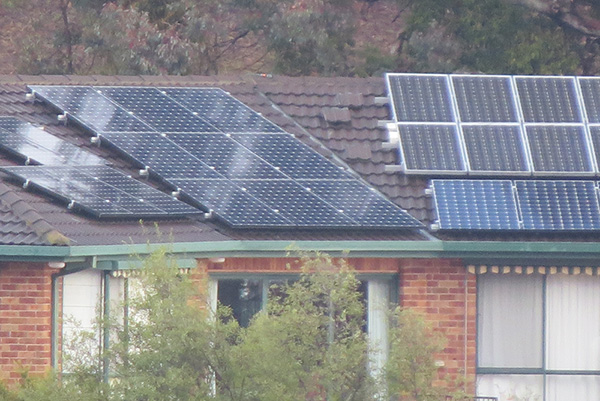
One area where AEMO may be able to cut back on costs is by leaning more heavily on household sources such as rooftop solar, electric vehicle to grid supplies and batteries which received a recent subsidy boost. Taxpayers will contribute $4000 for an average household battery installation under a $2.3bn election commitment by the Prime Minister, with Labor promising the policy will push electricity prices down for “everyone”.

As Graham Lloyd points out, the power utilities are all warning that shifting the burden to householders is not going to work:

By Graham Lloyd, The Australian

In April, Transgrid said assumptions that Virtual Power Plants will experience the same level of availability and flexibility to respond to market conditions as an equivalently sized utility-scale battery energy storage system are not reasonable.

Households were unlikely to accept that their assets may be accessed frequently and run very hard because household solar and batteries are primarily investments intended to provide utility and value to consumers rather than the market, Transgrid said.

In March, Queensland power utilities Ergon Energy and Energex gave a similar warning.

“We are cautious of the approach to model customer behaviour based on economically rational models, as we consider most CER investments do not conform to these modelling outcomes,” the utilities said.

“For example, based on our anecdotal experience, AEMO’s assumptions regarding the level of battery energy storage systems uptake supported by Virtual Power Plants may be overstated.”

We know this is the new desperate rescue plan for the doomed transition because even the industry lobby site, Reneweconomy, is working so hard to sell it as “handing power to the people”

Giles Parkinson puts on a brave face, pretending that this is “sailing with the wind” and has been “brewing for a while” (as if it’s not a surprise) but this is a big backflip by the AEMO and it’s not remotely good for all those wind and solar projects.

Even he admits this is a fundamental rethink.

Giles Parkinson, Reneweconomy

One thing that seems certain, however, is that the manner of getting there, and closer to 100 per cent renewables over the following decade, is about to get a fundamental rethink, and it could end up delivering the most significant change to the country’s renewable energy blueprint yet.

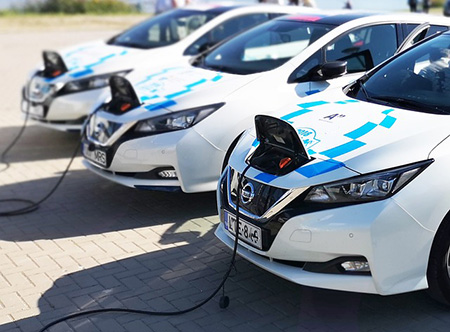
The document flags a new focus on using existing local networks for more wind, solar and storage, and on leveraging consumer energy resources – the rooftop solar, household batteries and EVs that will be bought and installed by consumers themselves.

That’s a funny way to phrase it Giles? Killing the business…
EV Charging

It’s a significant move. In the absence of a carbon price, rooftop solar has been the most effective tool in killing the business case for Australia’s aging fleet of dirty fossil fuel generators. But it has created issues of its own, and will remain a wild card for the grid if it can’t be tamed by an army of small batteries.

And who pays for that army of small batteries Giles?

Wait, now you tell us that the best way to reduce costs is with “consumer energy resources”, and it’s supposed to be cheaper for everyone. Why didn’t you say so before…

And the growth of consumer energy resources is possibly the best way to ensure that prices do, as promised, actually fall in the transition from coal to green energy – both for those who own and install them, and those who don’t.

He blames the big bad capitalists — but never acknowledges that it was the stupid socialists who rewrote the market:

The evidence so far is that it hasn’t, mostly because the new assets – wind, solar and especially storage – are largely controlled by the same companies that own and control the coal and gas assets.

Indeed, the socialists make it possible for predatory capitalism to monopolize the market and then they act surprised when it does?

Even Giles Parkinson say it’s an appalling mess:

However the plan is framed, social licence remains absolutely critical. Despite the best efforts of some really good renewable energy developers, it’s been poorly handled.

The worst of it has come in the management of the transmission routes, but a combination of entitled development companies, bloody-minded opposition and some appalling planning regimes have created an appalling mess – highlighted by the latest backflip by the new Queensland state LNP government.

Blame the management indeed. Anything but admit it was always a stupid idea. The renewables fantasy was never going to work. It was a horrible plan to cover the country-side in expensive, intrusive, live infrastructure that ruined views, raised the risk of fires, and got in the way of farming and firefighting. And it was all done in the futile hope of changing the weather.

But rejoice, in part, at least, the protests by farmers and communities are working. The industry is so rattled, they even asked Reneweconomy not to publicize their projects lest the people notice what they want to do:

Little wonder some developers are wary of scrutiny. One even asked Renew Economy last week to stop reporting on projects put in front of the federal government’s EPBC process because of the risks of unwanted scrutiny.

Clearly, we need to watch the EPBC list. Can readers help identify where these are officially listed? If they don’t want us to see, then I’d like to know…

Image by Nerijus jakimavičius from Pixabay

0 out of 10 based on 0 rating

via JoNova

https://ift.tt/hD5juO3

May 26, 2025 at 04:59PM