If only we’d built those offshore wind turbines, eaten more cricket-burgers, we could have stopped the floods, right?

Witchdoctor, Shamen. AI. Paleo

By Jo Nova

Major flooding has struck New South Wales with 50,000 people evacuated and three deaths. Even as one person is still missing, The Sydney Morning Herald and the Climate Council are already milking the disaster as a Witchdoctor Psy-Op for the Blob. Our thoughts are with everyone in the major flood areas.

Shameless: The Sydney Morning Herald already exploiting floods in NSW as a climate scare

Sydney Morning Herald logo

Caitlyn Fitzsimmons, The Sydney Morning Herald

Note the spooky tea-leaf reading in the second paragraph — pay attention to the psychological operation.

This dichotomy of drought and flooding rains is not new to Australia, but for it to occur simultaneously on opposite sides of the Great Dividing Range is a phenomenon that scientists say is likely to increase with climate change.

Firstly they say the obvious, lulling the reader into thinking they are sensible — then there’s the “but” — followed by a bizarrely trite, and largely unknowable tea-leaf pattern. It’s that “simultaneous rain on opposite sides of the mountains”, which turns out not to even be an actual observation of a cherry-picked 10-year-trend, but the vaporous emptiness of a “phenomenon” that someone predicts might happen. In other words, they have nothing at all, but they say it anyway in hushed significant tones, like tribal sorcerers have for thousands of years.

They all wheel out the line that climate change increases humidity —  the same line they promptly forget the minute there is a drought or a fire:

Climate change is increasing the amount of moisture the atmosphere can hold by about 7 percentage points of humidity for every degree of warming.” 

If humidity doesn’t prevent a single drought how do we know it causes any floods? They never mention that.

Then, buried under 21 paragraphs of fortune-telling-sages winding up the audience, they find one semi-honest scientist who says it’s impossible to say it was climate change:

Dr Chiara Holgate in the ARC Centre of Excellence for Weather of the 21st Century at the Australian National University, said Australia had a highly variable climate, and without an attribution analysis, it was impossible to say that climate change was the cause of any particular drought or floods.

A very honest scientist would also mention that rampant flooding has happened many times before, like in the 1820s, in 1857, 1866, 1893, 1949 and 1955 and CO2 had nothing to do with any of them. And a half decent cub scout reporter would ask these obvious questions. Where are they? We should do up rescue

Indeed, she could have just googled, I’ve written this all up before (copied here below). In 1857 floods were so bad one boat was washed out to sea and the people on board spent ten days trying to get back, surviving on biscuits. The beaches were piled high with furniture, goats, pigs, melons and “five years of wood”. Then the Manning River flooded again in 1866, this time rising so fast overnight people went to sleep not realizing they were in danger and the losses were terrible because they had no time to prepare.

From my post on the 2021 floods:

The more money we put into government funded science the more it looks like witchcraft

Does CO2 cause floods? It takes 3 minutes in the historic Trove archives to test this theory. In a surprise to climate models everywhere, getting CO2 back to 310ppm (even if it were possible) would return Australia to 1950, so we already know how this works out.

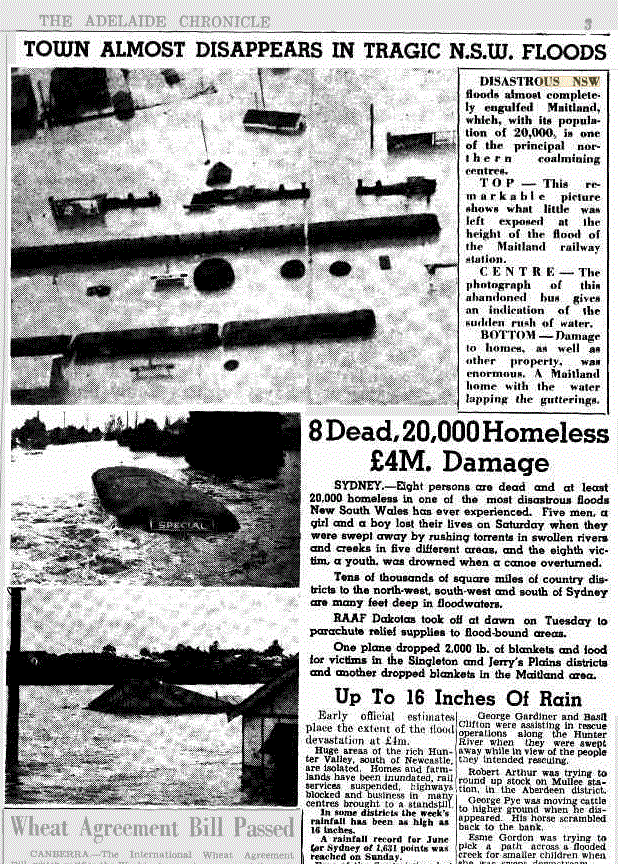
There were a spate of floods in Eastern Australia in the 1950’s and 1960s when La Nina’s were more common and the world was cooling. For example, in 1949, 8 people were killed and 20,000 were left homeless in New South Wales by flooding. The Adelaide Chronicle June 23, 1949

Floods, Maitland, NSW 1949

In Maitland in 1955, 25 people died, 2,000 homes were inundated and 58 homes washed away. This was only three years after the previous floods when The Hume Highway at Camden was under 30 feet of water.

There were floods in New South Wales in 1857 even before coal fired power was invented

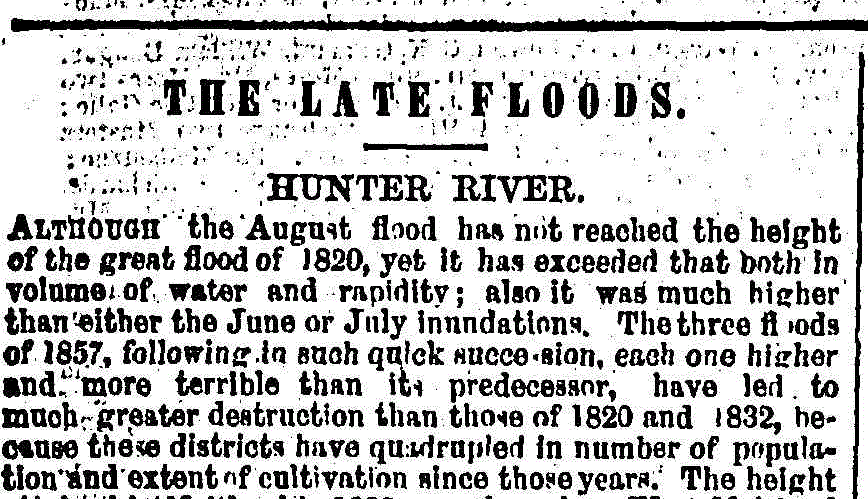
A quarter century before the first coal power plant was built anywhere in the world, devastating floods washed over New South Wales.  There were three separate floods in 1857, “each worse than the one before”. The floods and storms were described as afflicting an area from far north of Taree down to Goulburn.

Sydney Morning Herald, 1857

Hunter River Floods, 1857

Hunter River Floods, 1857

“Five years of firewood” washed up:

What amount of property was destroyed by the flood it is impossible to ascertain. The piles of wood, which of themselves would supply the inhabitants of both East and West Maitland with firewood for the next five years, have buried in, without doubt, some hundreds of pounds’ worth of property. Many families are left entirely destitute of food and raiment. It is impossible to give an accurate description of this desolate scene.

On the Hawkesbury “Windsor was almost an island, there was no escape by dry land.” In Mudgee, the “consequences were most disastrous “.  .. the rain fell in torrents… ” “Other floods occurred at Penrith, Camden, Gouldburn and Cassilis.”

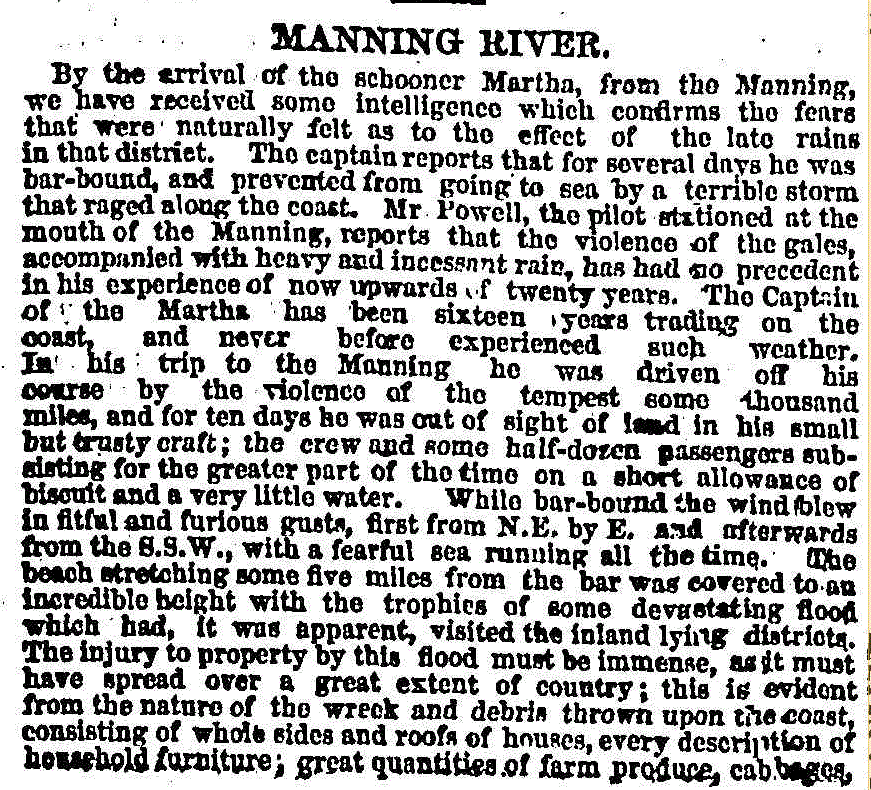
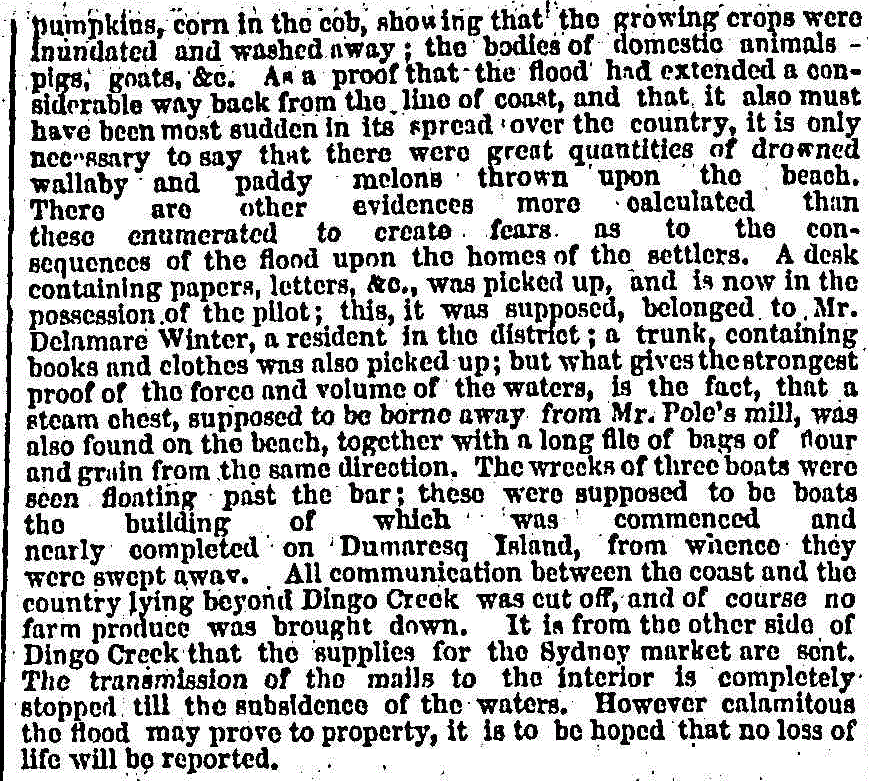
Read the story of boats trapped for days, including one “small trusty craft” that was “driven off course by the violence of the tempest some thousand miles” and out of sight of land for ten days, while the people survived on biscuits. The beaches were covered to “an incredible height with the trophies of some devastating flood…” the debris included the sides and roofs of houses, furniture, cabbages, pumpkins, goats and pigs. Mail was stopped, and at least three boats were seen wrecked.

Floods, NSW, 1857, Manning River, Trove, NSW.

Part a Floods, NSW, September 10th, 1857, Manning River, Trove, NSW.   Sydney Morning Herald| Click to enlarge.

Floods New South Wales, 1857, Maitland, Taree, Sydney.

Part b. Floods, NSW, September 10th, 1857, Manning River, Trove, NSW.   Sydney Morning Herald| Click to enlarge.

In 2025, as with 2021, among other things, cows are even being rescued from the surf on beaches, which probably makes them a lot luckier than the ones that got washed downriver in 1857.

Thoughts and best wishes for everyone caught in this awful natural disaster. We hope a generation of farmers hasn’t been wiped out.

Related:

Witchdoctor image by Julius H. from Pixabay


0 out of 10 based on 0 rating

via JoNova

https://ift.tt/9MYjDGL

May 22, 2025 at 04:26PM

Puerto Rico’s Power Pivot: Trump Admin Ditches Solar Subsidies for Reliable Fossil Fuel Fix

According to a recent report from Reuters, the U.S. Department of Energy (DOE) under the Trump administration has announced a redirection of $365 million in federal funds originally allocated for rooftop solar development in Puerto Rico. The funding, awarded during the Biden administration in late 2024, was intended for solar and battery storage projects not scheduled to begin construction until 2026. That money will now be used for immediate power infrastructure needs centered on fossil fuel-based generation.

Puerto Rico’s electrical grid has long struggled under the weight of systemic issues, including bankruptcy of the Puerto Rico Electric Power Authority in 2017, hurricane damage, and aging infrastructure. These vulnerabilities have manifested in frequent blackouts, including one last month that left 134,000 customers without power.

In response to ongoing electricity shortfalls, Energy Secretary Chris Wright issued an emergency order directing the state-owned utility to utilize oil-fired plants to stabilize energy supply. These facilities, while reliant on fossil fuels, are able to provide consistent baseload power—something solar installations cannot offer without extensive and costly storage systems.

The DOE stated that the funding will now support measures that can be rapidly deployed, including:

  • Dispatching baseload generation units (primarily oil-fired),
  • Vegetation control to protect power lines,
  • Upgrading aging grid infrastructure.

The rationale presented by the department emphasized practical impact and scale. In its statement, the DOE noted the redirection:

“will expand access to reliable power for millions of people rather than thousands” and yield “a higher return on investment for taxpayers”

while strengthening the island’s grid resilience.

This action reverses a core initiative from the prior administration, which had allocated the funds for projects that would not deliver any tangible energy benefits for at least two years. These projects, focused on solar panel deployment, were not intended to address Puerto Rico’s pressing energy needs, but rather to support broader policy goals disconnected from current grid conditions.

The change in course indicates a pivot away from speculative energy planning toward established and operational power sources that can address deficiencies immediately. In a territory facing persistent outages and infrastructure decay, the prioritization of reliable baseload power over delayed solar initiatives suggests a reassessment of policy priorities in favor of operational necessity.

This case illustrates the tension between federal policy directives and ground-level energy realities. Puerto Rico’s infrastructure issues require immediate and scalable solutions, not long-term experiments. The DOE’s redirection of funds underscores a recognition that stable power generation remains a foundational requirement—especially in regions prone to natural disasters and systemic outages.

While energy policy continues to be a politically charged issue, the circumstances in Puerto Rico demonstrate that reliability and speed of deployment remain critical considerations—factors that speculative energy projects often fail to address.

Source: Reuters, “US redirects Puerto Rico solar power funds to oil plants,” by Timothy Gardner, May 2025.


Discover more from Watts Up With That?

Subscribe to get the latest posts sent to your email.

via Watts Up With That?

https://ift.tt/QxTZGCH

May 22, 2025 at 04:04PM

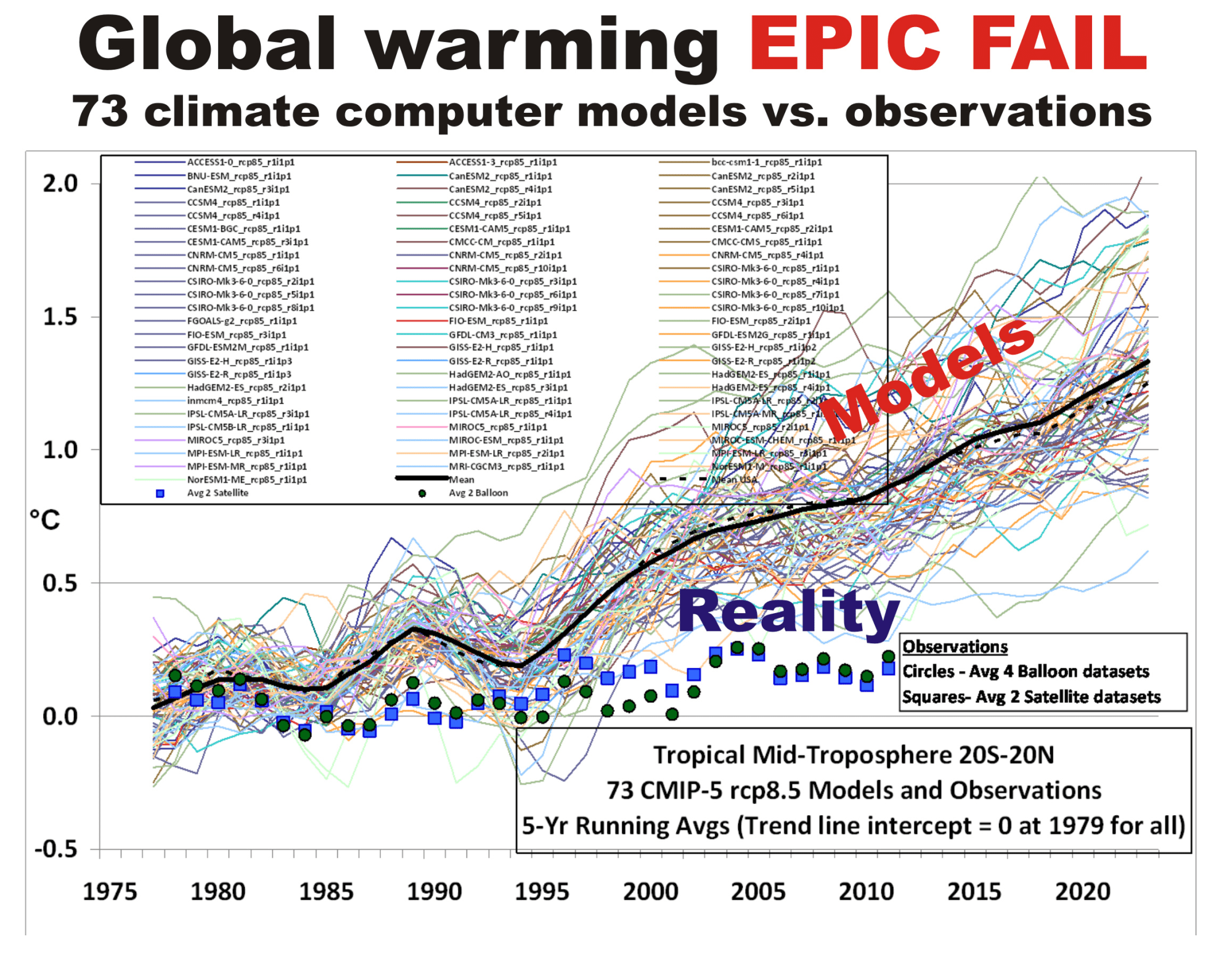
IPCC Climate Models Proven to Lack Predictive Ability

The recently published paper is Are Climate Model Forecasts Useful for Policy Making? by Kesten C. Green and Willie Soon. Excerpts in italics with my bolds and added images.

Effect of Variable Choice on Reliability and Predictive Validity

Abstract

For a model to be useful for policy decisions, statistical fit is insufficient. Evidence that the model provides out-of-estimation-sample forecasts that are more accurate and reliable than those from plausible alternative models, including a simple benchmark, is necessary.
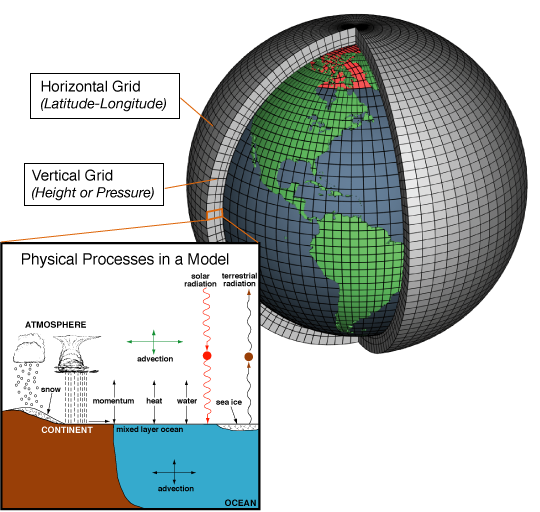
The UN’s IPCC advises governments with forecasts of global average temperature drawn from models based on hypotheses of causality. Specifically, manmade warming principally from carbon dioxide emissions  (Anthro) tempered by the effects of volcanic eruptions (Volcanic) and by variations in the  Sun’s energy (Solar). Out-of-sample forecasts from that model, with and without the IPCC’s favoured measure of Solar, were compared with forecasts from models that excluded human influence and included Volcanic and one of two independent measures of Solar. The models were used to forecast Northern Hemisphere land temperatures and—to avoid urban heat island effects—rural only temperatures. Benchmark forecasts were obtained by extrapolating estimation sample median temperatures.

The independent solar models reduced forecast errors relative to those of the benchmark model for all eight combinations of four estimation periods and the two temperature variables tested. The models that included the IPCC’s Anthro variable reduced errors for only three of the eight combinations and produced extreme forecast errors from most model estimation periods. The correlation between estimation sample statistical fit and forecast accuracy was -0.26. Further tests might identify better models: Only one extrapolation model and only two of many possible independent solar models were tested, and combinations of forecasts from different methods were not examined.
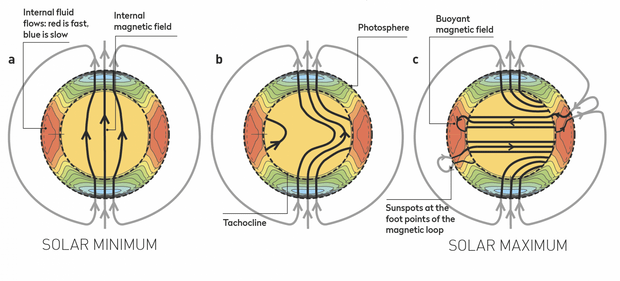
The anthropogenic models’ unreliability would appear to void policy relevance. In practice, even
the models validated in this study may fail to improve accuracy relative to naïve forecasts due to
uncertainty over the future causal variable values. Our findings emphasize that out-of-sample
forecast errors, not statistical fit, should be used to choose between models (hypotheses).

Background

In their attempts to achieve the IPCC objective of identifying a human cause for temperature changes—specifically “global warming”—the IPCC researchers have framed the problem as one of “attributing” changes in the Earth’s temperature to the respective contributions of putative anthropogenic (“Anthro”) principally carbon dioxide emissions altering the composition of the atmosphere—and natural influences—principally aerosols from volcanic eruptions altering the composition of the atmosphere (“Volcanic”), and total solar irradiance, or TSI, variations (“Solar”).

Given the task they were set, the IPCC researchers have devoted
much of their efforts into developing estimates of the Anthro variable.

The IPCC’s most recent, AR6, report (IPCC, 2021) only considered one estimate of Solar for the purpose of attribution (Matthes et al., 2017) and made no allowance for the effect of urban heat islands on the temperature measures they used (Connolly et al., 2021, 2023; Soon et al., 2023). Moreover, a study of the statistical attribution or “fingerprinting” approach used by IPCC researchers (e.g., Allen and Tett, 1999; Hasselmann, et al., 1995; Hegerl et al., 1997; Santer et al.,1995) concluded that the approach was invalid (McKitrick, 2022). The IPCC authors’ analyses failed to meet the assumptions of the method they used, and they failed to correctly implement the method.

In sum, the objective given to the IPCC researchers and the approach that they have taken suggests that plausible alternative hypotheses on the causes of terrestrial temperature changes may not have been adequately tested, as is required by the scientific method (Armstrong and Green, 2022). That concern is consistent with Armstrong and Green’s (2022) observation that government sponsorship of research can create incentives that may influence researchers’ choices of hypotheses to test and how they test them.

1.1 Alternative hypotheses on Solar

To address the first of the foregoing limitations in the IPCC attribution studies—failure to fairly
test alternative TSI estimates—Connolly et al. (2021, 2023) comprehensively reviewed alternative estimates of TSI covering the 169 years from 1850 to 2018. In addition to the Matthes, et al.
(2017) TSI estimates series used by the IPCC (2021)—henceforth “IPCC Solar”—Connolly et al.
(2023) identified 27 alternative Solar time series.

The alternative estimates of Solar correlate quite well with the TSI used in the AR6 report—Pearson’s r values range between 0.39 and 0.97 with a median of 0.82—but the degree of TSI variation in Watts per square metre (Wm-2) differs considerably between the estimates. The ranges of the individual alternative TSI estimate series vary between 0.49 and 4.64 Wm-2, with a median range of 1.77 Wm-2, while IPCC Solar has a range of only 0.19 Wm-2.

In this study, we consider two plausible TSI reconstructions from Connolly et al. (2023). Those from Hoyt and Schatten (1993) and from Bard et al. (2000), which Connolly et al. (2023) updated to the year 20182. The former TSI record (“H1993 Solar”) was based on the so-called multiproxy—i.e., equatorial solar rotation rate, sunspot structure, the decay rate of individual sunspots, the number of sunspots without umbrae, and the length and decay rate of the 11-yr sunspot activity cycle—reconstruction of the solar irradiance history.

1.2 Alternative hypotheses on temperature estimation

The IPCC’s attribution studies do not account for the direct effects of human activities on local temperatures (heat islands)—the second weakness addressed in this study. For example, heating and cooling of building interiors, electricity generation, manufacturing, freight and transport, asphalt and concrete, and where vegetation and open water have been removed or added. Where temperature readings are taken close to such human sources of heat or absence of natural cooling, they cannot properly reflect the individual effects of human emissions of carbon dioxide, etc., that the IPCC are concerned about (their Anthro variable), the Volcanic variable, and TSI.

To address this second limitation in the IPCC attribution studies, Connolly et al. (2021, 2023) developed four alternative estimates of surface temperatures that were intended to avoid heat island effects. They were based on rural only weather station readings, sea surface temperature readings, tree-ring width measurements, and glacier length measurements. For comparison with the approach used by the IPCC, they also developed an all-land temperature estimates series for the Northern Hemisphere.

1.5 Hypotheses tested

The foregoing discussion suggests the following hypotheses, which are tested in this study.

    • H1. Forecasts from causal models will [will not] be usefully more accurate than forecasts from a naïve no-change model.
    • H2. Models using variable measures developed independently of the IPCC dangerous manmade global warming hypothesis will [will not] have greater predictive validity.
    • H3. The statistical fit of the models (adjusted-R2) will not [will] be substantively positively related to their predictive validity.
    • H4. Models using variable measures developed independently of the IPCC dangerous manmade global warming hypothesis will [will not] be more reliable.

Findings
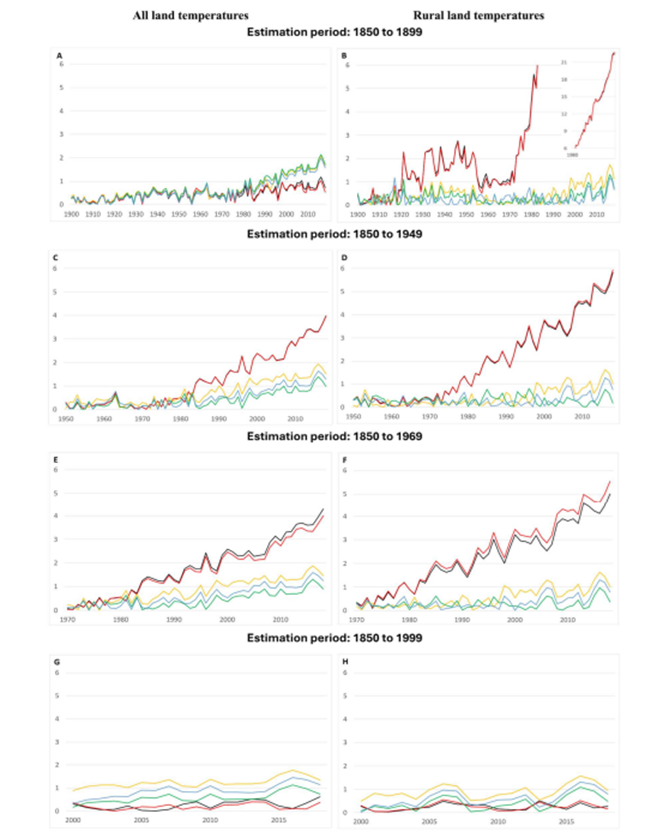
Figure 1: Absolute Errors of NH All Land and Rural Land Temperature Forecasts to 2018 (℃) — Forecasts from four alternative models plus naïve estimates over four periods. Legend (Causal variables in models):    Black Anthro, Volcanic; Red Anthro, Volcanic, IPCC Solar;  Green B2000 Solar, Volcanic;  Blue H1993 Solar, Volcanic; Yellow Estimation sample median temperature.

3.1 Predictive validity of causal models versus naïve model [H1]

Forecast errors were larger than the benchmark errors (UMBRAE) for the IPCC Anthro models AVL and AVSL estimated with data from 1850 to 1949 and from 1850 to 1969, and for the AVR and AVSR models estimated with data from 1850 to 1899, 1850 to 1949, and 1850 to 1969. The anthropogenic warming models showed predictive validity relative the naïve model (UMBRAE less than 1.0) for only three of the eight combinations of forecast variable and estimation sample period.

3.2 Predictive validity of independent versus IPCC models [H2]

The MdAEs (median absolute error) of the forecasts from the models with IPCC’s anthropogenic and volcanic series as causal variables (AVL and AVR) and from the models that also included IPCC’s solar series (AVSL and AVSR) were greater than 1°C (roughly 2°F) for five of the eight combinations tested. The MdAEs of the forecasts from the models with B2000 solar and the volcanic series as causal variables (SBVL and SBVR) were less than 0.55°C (1°F) for all eight of the estimation periods used and temperature series being forecast combinations and for seven of the eight in the case of the models with H1993 as the solar variable (SHVL and SHVR).

3.3 Relationship between predictive validity and statistical fit of models [H3]

The correlations (sign-reversed Pearson’s r) between the accuracy of out-of-sample forecasts, as measured by UMBRAE (an error measure, hence the sign reversal), and the statistical fit of the models to the estimation data (adjusted-R2) for the causal models tested were large and negative for six (6) of the eight (8) combinations of estimation period (1850 to 1899, 1949, 1969, and 1999) used—and hence maximum forecast horizon of 119, 69, 49, and 19 years, respectively—and temperature series (NH Land and NH Rural) forecast.

3.4 Reliability of independent versus IPCC models [H4]

Charts of the results of Test 2 are presented in Figure 2 and are discussed below.
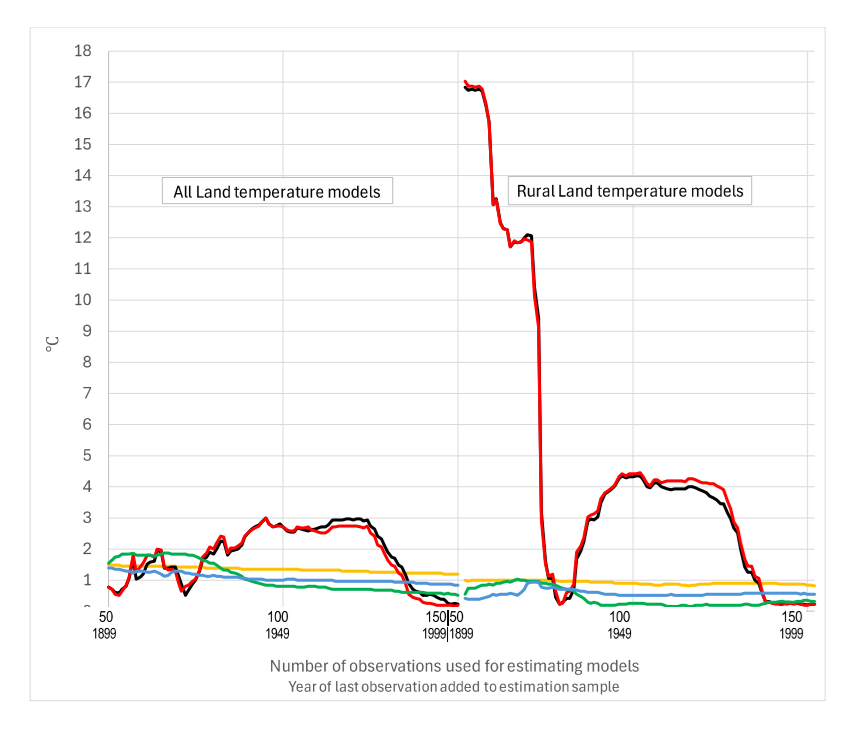
Figure 2. Median absolute errors of NH temperature forecasts 2000 to 2018 in ℃. Legend (Causal variables in models): Black Anthro, Volcanic; Red Anthro, Volcanic, IPCC Solar;  Green B2000 Solar, Volcanic;  Blue H1993 Solar, Volcanic;  Yellow Estimation sample median temperature.

The independent solar models—SBVL and SHVL, and SBVR and SHVR—perform largely as one
would expect of causal models when forecasting using known values of the causal variables.

In the case of the AVR and AVSR models—forecasting the rural land temperatures, on the right of Figure 2—the MdAEs decreased rapidly from roughly 17 times the corresponding naïve forecast errors to beat the naïve MdAE when the 76th observation (1925) was added to the estimation samples. After that observation was added, the MdAEs for the AVR and AVSR model forecasts increased rapidly with each extra observation then stayed high before rapidly declining again after the 116th observation (1965) was added to the estimation samples.

When a model of causal relationships is estimated from empirical data on valid causal variables
reliably measured, one would expect forecast errors to get smaller as more observations are used in the estimation of the model’s parameters. That is what the charts in Figure 2 show in the case of the naïve benchmark model forecasts and, broadly, what can be seen in the case of the independent models SBVL, SHVL, SBVR, and SHVR, but is not seen in the case of the models using the IPCC variables: AVL, AVSL, AVR, and AVSR.

The errors of the Anthro models’ forecast errors explode well beyond 1 °C and the benchmark model errors for forecast years beyond the mid-1970s, with puzzling exceptions. Namely, forecasts from Anthro models estimated from the largest sample size in the chart—1850 to 1999—and from models estimated from the smallest sample—1850 to 1899—forecasting All Land temperatures. In those cases, involving three of the eight charts, the Anthro model errors are less than the median historical temperature benchmark model errors, and mostly less than the errors of the independent models in later years.

The explosion in Anthro model errors from the 1970s is more extreme for models estimated to forecast Rural Land temperatures. Moreover, for the models estimated using only 1850 to 1899 data, errors are larger than those of the benchmark and independent models from 1920 and, prior to 1970, without any obvious pattern.

5. Conclusions

The IPCC’s models of anthropogenic climate change lack predictive validity. The IPCC models’ forecast errors were greater for most estimation samples —often many times greater—than those from a benchmark model that simply predicts that future years’ temperatures will be the same as the historical median. The size of the forecast errors and unreliability of the models’ forecasts in response to additional observations in the estimation sample implies that the anthropogenic models fail to realistically capture and represent the causes of Earth’s surface temperature changes. In practice, the IPCC models’ relative forecast errors would be still greater due to the uncertainty in forecasting the models’ causal variables, particularly Volcanic and IPCC Solar.

The independent solar models of climate change—which did not include a variable representing the IPCC postulated anthropogenic influence—do have predictive validity. The models reduced errors of forecasts for the years 2000 to 2018 relative to the benchmark errors for all, and all but one of 101 estimation samples tested for each of the two models. One of the models (B2000 Solar) reduced errors by more than 75 percent for forecasts from models estimated from 35 of the samples—a particularly impressive improvement given that the benchmark errors were no greater than 1 °C for all but one of the estimation samples.

The independent solar models provide realistic representations of the causal relationships with surface temperatures. The question of whether the independent solar variables can be forecast with sufficient accuracy to improve on the benchmark model forecasts in practice, however, remains relevant. All in all, and contra to the IPCC reports, there is insufficient evidential basis for the use of carbon dioxide, et cetera, emissions—taken together, the IPCC’s Anthro—as climate policy variables.

Finally, this study provides further evidence that measures of statistical fit provide misinformation about predictive validity. Predictive validity can only be properly estimated when the proposed model or hypothesis is used for forecasting new-to-the-model data, and the forecasts are then compared for accuracy against forecasts from a plausible benchmark model. This important conclusion needs bearing in mind when evaluating policy models.

See Also:
Lacking Data, Climate Models Rely on Guesses

Figure 1. Anthropgenic and natural contributions. (a) Locked scaling factors,
weak Pre Industrial Climate Anomalies (PCA). (b) Free scaling, strong PCA

Climate Models Hide the Paleo Incline

via Science Matters

https://ift.tt/ANu9sBx

May 22, 2025 at 04:03PM

Virginia: The Front Line between AI and Climate Action

Essay by Eric Worrall

Virginia, the data center capital of the world, could become the next Silicon Valley if they play their cards right. But local green activists are determined the rein in the Data Center “Behemoth”.

Governor Glenn Youngkin just vetoed a climate bill which would have driven up the cost of energy.

Virginia governor vetoes more energy storage despite data centers roaring for more power

Virginia has the largest data center market in the world but imports more energy than any other state. A bill to increase energy storage buildout was unanimously passed by the Senate, but then vetoed by the governor.

MAY 19, 2025 RACHEL METEA

Virginia Gov. Glenn Youngkin used his last veto powers to eliminate most of the General Assembly’s efforts to meet the state’s energy demands and regulate the state’s energy-intensive data center market, the largest data center market in the world. According to Virginia’s Joint Legislative Audit and Review Commission (JLARC), Northern Virginia constitutes 13% of all reported data center operational capacity globally and 25% of capacity in the Americas.

The legislation would have tripled the amount of energy storage capacity the state requires its two public utilities to procure under the Virginia Clean Economy Act (VCEA). The bill required Appalachian Power to petition for at least 780 MW of short-duration capacity by 2040 and 520 MW of long-duration energy storage capacity by 2045 and for public utility Dominion Energy to petition for at least 5,220 MW of short-duration energy storage capacity and 3,480 MW of long-duration energy storage capacity by 2045.

The Virginia Clean Economy Act (VCEA) is failing Virginians,” the governor said in a statement. “Adding in requirements for the petitioning of additional storage technologies will not change the fact that the law is misguided and does not work. Long-duration energy storage is an expensive technology and if utilities believed it to be the best technology to meet demand, they would be actively seeking permission to build them.”

Dominion, however, has been actively seeking permission to build more energy storage. Dominion’s proposed construction of long-duration energy storage facilities was approved by Virginia’s utility regulator in 2024. In April, Dominion was approved to purchase electricity from third-party storage suppliers. Dominion said its plan for a combination of solar and the storage projects would “result in fuel savings of approximately $6.6 billion over the period of 2022 through 2035. Fuel savings for the full lives of all resources in this Development Plan, which extend through 2073, are approximately $118.5 billion.”

Read more: https://pv-magazine-usa.com/2025/05/19/virginia-governor-vetoes-more-energy-storage-despite-data-centers-roaring-for-more-power/

Despite Governor Youngkin’s support for keeping energy costs down, there is significant opposition to further expansion of data centers in Virginia.

Report highlights community pushback stalling $64 billion in data center development nationwide

In Virginia, the globe’s largest concentration of data centers, and nationally, local opposition has coalesced into a powerful, bipartisan force.

BY: CHARLES PAULLIN – MAY 21, 2025 5:21 AM

Then, a couple of years ago, when people began to learn much more about the warehouse-like server farms proliferating at double the earlier rate, the fight strengthened with a meeting in Warrenton.

“That was where we all just started saying, ‘OK, in order to fight this behemoth, we have to have some organizational process,’” Schlossberg said. “We have to be able to communicate. We have to be able to support each other. We have to have a clearinghouse for all the information.”

At the state level, dozens of bills were introduced in the Virginia General Assembly this year to enact development safeguards, but only a symbolic one about utility costs was signed into law by Republican Gov. Glenn Youngkin.

But many elected officials are approving data centers.

They’ll go in somewhere,” Wheeler said, adding her county had resources for responsible planning. “I would rather have that tax revenue in Virginia.

Youngkin vetoed a bill that would have had localities require a description of substation needs and a study on the noise the facilities close to homes and schools generate, which can come from their air conditioning units, and onsite power generators. House Democrats killed a requirement for state regulators to review data center power contractsto ensure that electricity generation and transmission lines could support the need.

Read more: https://virginiamercury.com/2025/05/21/report-highlights-community-pushback-stalling-64-billion-in-data-center-development-nationwide/

I’m sympathetic to community concerns, because there are genuine issues mixed in with the green dogma. Data centers can have a substantial negative community impact, at least in the short term. They can drive up electricity and water bills (large amounts of water are required for cooling), and starve other industries of access to land and resources, industries which cannot match the spending power of data center operators.

But the part which really seems to upset greens is that the gargantuan energy demands of data centers are crushing their dreams of a renewable energy powered future.

For data center sustainability in Virginia, state regulation is a must

Spreading out from Northern Virginia, data centers are being proposed in communities across the Chesapeake Bay region. They promise big bursts of local revenue, but they also consume huge amounts of energy and can sometimes negatively impact neighborhoods and natural areas. When data centers come knocking, what should local environmentalists do?  

Given the inevitability of new development, perhaps the best that local advocates can do is push for greater data center sustainability. But regulation and transparency of this industry is sorely lacking in Virginia. This, along with data centers’ tremendous energy needs, raises the question: What does sustainability in this industry even mean?

I know that leaders in my city care deeply about the environment. But officials ignored recommendations from the General Assembly’s data center report because, it would seem, the potential new tax revenue was just too big to pass up. This experience indicates that, before we can talk about data center sustainability, communities in Virginia need state lawmakers to set limits that restrict these industrial facilities to land that is appropriately zoned for such use.

The reality is that this industry is highly dependent on fossil fuels. There is only so much area in Virginia that we can cover with solar panels, and there are only so many wind turbines that we can build. Energy consumption in Virginia is set to double in the next 15 years, mostly because of the proliferation of data centers. Consequently, this industry is a major obstacle to achieving our climate goals, despite the renewable energy claims of individual companies.

Eric Bonds, PhD, is a sociology professor at the University of Mary Washington in Fredericksburg, VA. The views expressed here are his own and not reflective of positions taken by UMW.

Views expressed by opinion columnists are not necessarily those of the Bay Journal.

Read more: https://www.bayjournal.com/opinion/forum/for-data-center-sustainability-in-virginia-state-regulation-is-a-must/article_053c830f-d4d4-44a1-a1bd-2c2b1659962c.html

Will Virginia pass up their opportunity to become the next Silicon Valley?

Solar power for data centers isn’t going to happen, the energy demands are too great, as is the requirement for reliable, dispatchable energy. If you owned a football field scale computer installation where equipment costs exceed $10,000 per square foot, the last thing you want is for all that capital investment to sit idle because the sun went down. Nor would you be keen on large, highly flammable lithium batteries being sited on the campus, next to all those expensive computers.

Virginia has a rich endowment of fossil fuel and nuclear power plants, which is probably what initially drew the data centers, but the data center industry has outstripped local capacity. Virginia now imports around 37% of its electricity.

More nuclear power would solve the energy crisis without increasing emissions, though more nuclear might put pressure on water access. Governor Youngkin pushed for nuclear earlier in his term of office, but demand still appears to be outstripping supply.

There is an obvious way to defuse community tension, aside from building more infrastructure to alleviate pressure on electricity and water supplies.

In 2023 Amazon AWS donated $300,000 to Northern Virginian Community College to help fund high tech training.

My suggestion is build upon and expand such programmes. Instead of importing IT talent to run Virginia’s data centers, hire local.

If Big Tech companies hoping to expand in Virginia were to offer lots of education scholarships, so Virginia’s best and brightest could fully participate in Virginia’s data center AI revolution, it is pretty hard to organise a protest against the company which is paying for your kid’s education, and providing a path for your kids to enjoy a well paid and secure financial future.


Discover more from Watts Up With That?

Subscribe to get the latest posts sent to your email.

via Watts Up With That?

https://ift.tt/JMoVxHa

May 22, 2025 at 12:03PM