Liability for Climate Change: An Inequitable Economic Disaster

By Jason Scott Johnston

Recently, the Trump Administration filed lawsuits seeking to halt efforts by some states to impose liability on fossil fuel companies for their past greenhouse gas emissions. It will likely take some years for these lawsuits to be resolved. What is already clear are the serious and senseless economic consequences that will follow if states are allowed to punish fossil fuel companies for their lawful past production. 

States are meting out such punishment in two ways. The first is through common law tort suits. Some of these suits allege that past greenhouse gas emissions from oil and gas production constitute a public nuisance. In others, states allege that fossil fuel companies lied to consumers about the potentially harmful consequences of such emissions. The second way that states are trying to punish fossil fuel companies is through what are called “Climate Superfund” laws. Such laws, already enacted by New York and Vermont and on the road to passage in states such as Maryland and California, hold fossil fuel companies jointly liable for the supposed costs of past greenhouse gas emissions. New York’s law simply sets out an arbitrary $75 billion that fossil fuel companies must pay, with each company paying a share equal to its share of industry GHG emissions over the 2000-2018 period. Under Vermont’s law, producers are liable, again according to their share of emissions, for a virtually limitless set of expenditures – including everything from new roads and bridges to “preventive health care” — that Vermont incurs to address the harms of climate change caused by fossil fuel producer emissions over the period 1995-2004.

Were a large number of states to enact laws similar to those enacted in New York and Vermont, fossil fuel companies could be facing trillions of dollars in liability for past production. These laws impose a new form of liability, one previously virtually unknown in the law, liability for cumulative past emissions. As I show in a recently published peer-reviewed analysis, such cumulative liability – de facto fines for past emissions – will severely cut present and future fossil fuel production. The supply shrinkage comes about through two channels. The first pathway is that cumulative liability will cause some currently producing fields to be shut down. Cumulative liability will cause producers to shut some (generally older) wells because the longer an oil or gas field is in production, the bigger its cumulative production and therefore liability but the lower the present value of oil and gas that remains in the ground. Eventually, liability for cumulative past production (and emissions) must be bigger than the present value of remaining, unproduced oil and gas, meaning that a field becomes a  negative net value asset and should be closed. This is true even if the price per barrel is higher than the per barrel damages. By my rough calculations, imposing cumulative liability at even a relatively low per barrel damage level could cause a substantial fraction of Permian Basin fields to become such negative value assets. 

The prospect of future cumulative liability will also reduce oil and gas supply by causing firms to delay drilling new wells. The reason is that  the cost of delaying drilling – delaying the realization of net revenues – is lower when a potentially large portion of such revenues are diverted to paying Climate Superfund or common law damages. 

Crucially,  field closure and drilling delay are supply shocks that only impact supply from firms that are actually subject to state tort litigation or “Climate Superfund” laws. These are primarily U.S. producers. But by most estimates, over 70% of global oil and gas reserves are owned and controlled by OPEC+ countries such as Saudi Arabia and Russia. State owned or controlled enterprises who produce fossil fuels in such countries will likely be completely judgment proof with respect to state tort and Climate Superfund liability. Such liability will be borne entirely by U.S. (and possibly) European producers. Even worse,  the tort theories advanced and the Climate Superfund laws passed by the states impose joint liability – meaning defendants who are susceptible to legal judgment are together jointly responsible for all fines or damages. Because liability is joint, U.S. producers will be potentially liable for harms caused by total past greenhouse emissions, even emissions from production by OPEC+ members. Indeed, climate tort liability and climate superfund laws give OPEC+ producers a new competitive advantage from increasing production – by increasing production, they not only reduce global price, but increase the potential liability of U.S. producers. 

U.S. fossil fuel production, especially from the Permian Basin, has provided an important check on the ability of OPEC+ to increase oil and gas prices. A reduction in such U.S supply caused by state climate tort litigation and state Climate Superfund laws may thus lead both to higher U.S. prices and an increased dependence of the U.S. on OPEC+ supply with very little impact on global fossil fuel production and hence global greenhouse gas emissions from such production. Against such minimal or nonexistent benefits,  such laws will likely increase U.S fossil fuel prices to consumers, reduce production and employment in the U.S fossil fuel industry, and increase  U.S. dependence on foreign fossil fuel production. They will thus stand as only the latest in the series of foolish U.S. policies whose vast costs and minimal benefits are politically justified by the cry for a “war” on climate change. 

Jason Scott Johnston is Blaine T. Phillips Dsitinguished Professor of Environmental Law, Nicholas E. Chimicles Research Professor of Business Law and Regulation, University of Virginia Law School.

This article was originally published by RealClearEnergy and made available via RealClearWire.


Discover more from Watts Up With That?

Subscribe to get the latest posts sent to your email.

via Watts Up With That?

https://ift.tt/ECR6X8c

May 16, 2025 at 12:02AM

Dr. Roy Spencer: Our Urban Heat Island Paper Has Been Published

From Dr. Spencer’s Global Warming Blog

Dr. Roy Spencer

It took the better part of two years to satisfy the reviewers, but finally our paper Urban Heat Island Effects in U.S. Summer Surface Temperature Data, 1895–2023 has been published in the AMS Journal of Applied Meteorology and Climatology.

To quickly summarize, we used the average temperature differences between nearby GHCN stations and related those to population density (PD) differences between stations. Why population density? Well, PD datasets are global, and one of the PD datasets goes back to the early 1800s, so we can compute how the UHI effect has changed over time. The effect of PD on UHI temperature is strongly nonlinear, so we had to account for that, too. (The strongest rate of warming occurs when population just starts to increase beyond wilderness conditions, and it mostly stabilizes at very high population densities; This has been known since Oke’s original 1973 study).

We then created a dataset of UHI warming versus time at the gridpoint level by calibrating population density increases in terms of temperature increase.

The bottom line was that 65% of the U.S. linear warming trend between 1895 and 2023 was due to increasing population density at the suburban and urban stations; 8% of the warming was due to urbanization at rural stations. Most of that UHI effect warming occurred before 1970.

But this does not necessarily translate into NOAA’s official temperature record being corrupted at these levels. Read on…

What Does This Mean for Urbanization Effects in the Official U.S. Temperature Record?

That’s a good question, and I don’t have a good answer.

One of the reviewers, who seemed to know a lot about the homogenization technique used by NOAA, said the homogenized data could not be used for our study because the UHI-trends are mostly removed from those data. (Homogenization looks at year-to-year [time domain] temperature changes at neighboring stations, not the spatial temperature differences [space domain] like we do). So, we were forced to use the raw (not homogenized) U.S. summertime GHCN daily average ([Tmax+Tmin]/2) data for the study. One of the surprising things that reviewer claimed was that homogenization warms the past at currently urbanized stations to make their less-urbanized early history just as warm as today.

So, I emphasize: In our study, it was the raw (unadjusted) data which had a substantial UHI warming influence. This isn’t surprising.

But that reviewer of the paper said most of the spurious UHI warming effect has been removed by the homogenization process, which constitutes the official temperature record as reported by NOAA. I am not convinced of this, and at least one recent paper claims that homogenization does not actually correct the urban trends to look like rural trends, but instead it does “urban blending” of the data. As a result, which trends are “preferred” by that statistical procedure are based upon a sort of “statistical voting” process (my terminology here, which might not be accurate).

So, it remains to be seen just how much spurious UHI effect there is in the official, homogenized land-based temperature trends. The jury is still out on that.

Of course, if sufficient rural stations can be found to do land-based temperature monitoring, I still like Anthony Watts’ approach of simply not using suburban and urban sites for long-term trends. Nevertheless, most people live in urbanized areas, so it’s still important to quantify just how much of those “record hot” temperatures we hear about in cities are simply due to urbanization effects. I think our approach gets us a step closer to answering that question.

Is Population Density the Best Way to Do This?

We used PD data because there are now global datasets, and at least one of them extends centuries into the past. But, since we use population density in our study, we cannot account for additional UHI effects due to increased prosperity even when population has stabilized.

For example, even if population density no longer increases over time in some urban areas, there have likely been increases in air conditioning use, with more stores and more parking lots, as wealth has increased since, say, the 1970s. We have started using a Landsat-based dataset of “impervious surfaces” to try to get at part of this issue, but those data only go back to the mid-1970s. But it will be a start.


Discover more from Watts Up With That?

Subscribe to get the latest posts sent to your email.

via Watts Up With That?

https://ift.tt/25IYJNM

May 15, 2025 at 08:01PM

Thank Democrats for California Gasoline Prices

Guest “Pick on California Day” by David Middleton

Anyone else fed up with Breck Boy whining about price gouging?

Oil and gas trade group decries Gov. Newsom’s ‘personal insults’ in wake of bill designed to lower pump prices

Newsom signed a bill Monday that would require oil refineries to maintain a minimum inventory level of fuel in an effort to avoid scarce supply

Published October 14, 2024

 By Louis Casiano FOX Business

California Gov. Gavin Newsom prioritized politics over policy while hurling repeated insults at opponents of a bill he signed into law Monday in an effort to combat rising gas prices, the leader of an energy trade group said.

Shortly after lawmakers passed a law to rein in gas prices, which gives regulators the authority to require that refineries keep a certain amount of fuel on hand in an effort to keep prices low when refineries go offline for maintenance, Newsom blasted oil companies and the Western States Petroleum Association (WSPA), a trade association, for allegedly spreading “mistruths” and engaging in “manipulation.”

“Particularly WSPA and their talking points and big oil that knowingly continues to lie to the people,” Newsom said while flanked by lawmakers in Sacramento, highlighting the struggles many Californians feel at the pump.

[…]

Fox Business

“The struggles many Californians feel at the pump” are 100% due to California Democrat energy and environmental malfeasance. Due to California’s special blend requirements, most of the gasoline consumed in California has to be refined in California…. Yet California’s political hostility is driving oil refiners to leave the state…

Why are all the oil refineries leaving California, and is it time to do something about it


by Monty Torres Thu, April 17th 2025

Another oil refinery will soon be closing in California.

That’s in addition to a refinery already scheduled to close before the end of this year, 2025.just a few months from now.

Wednesday’s announcement now setting off alarm bells in Sacramento, throughout the state… and beyond.

“Our fuel supply is in jeopardy,” cautioned valley Congressman Vince Fong. “This is not a distant concern. This is not an academic conversation. This is happening right now!”

[…]

“It’s clear that the political environment in California has been hostile to refiners, and the state badly needs to revise its mentality or face a declining number of refineries and higher prices.”

It was a sentiment that was echoed by valley congressman Vince Fong.

“This is something that is not created by the market,” Fong asserted. “This is something that is directly caused by Gavin Newsom’s poor energy policies.”

[…]

Fox 26 News

It’s as if the California state government was trying to do everything possible to drive up gasoline prices.

 In-Brief Analysis May 5, 2025

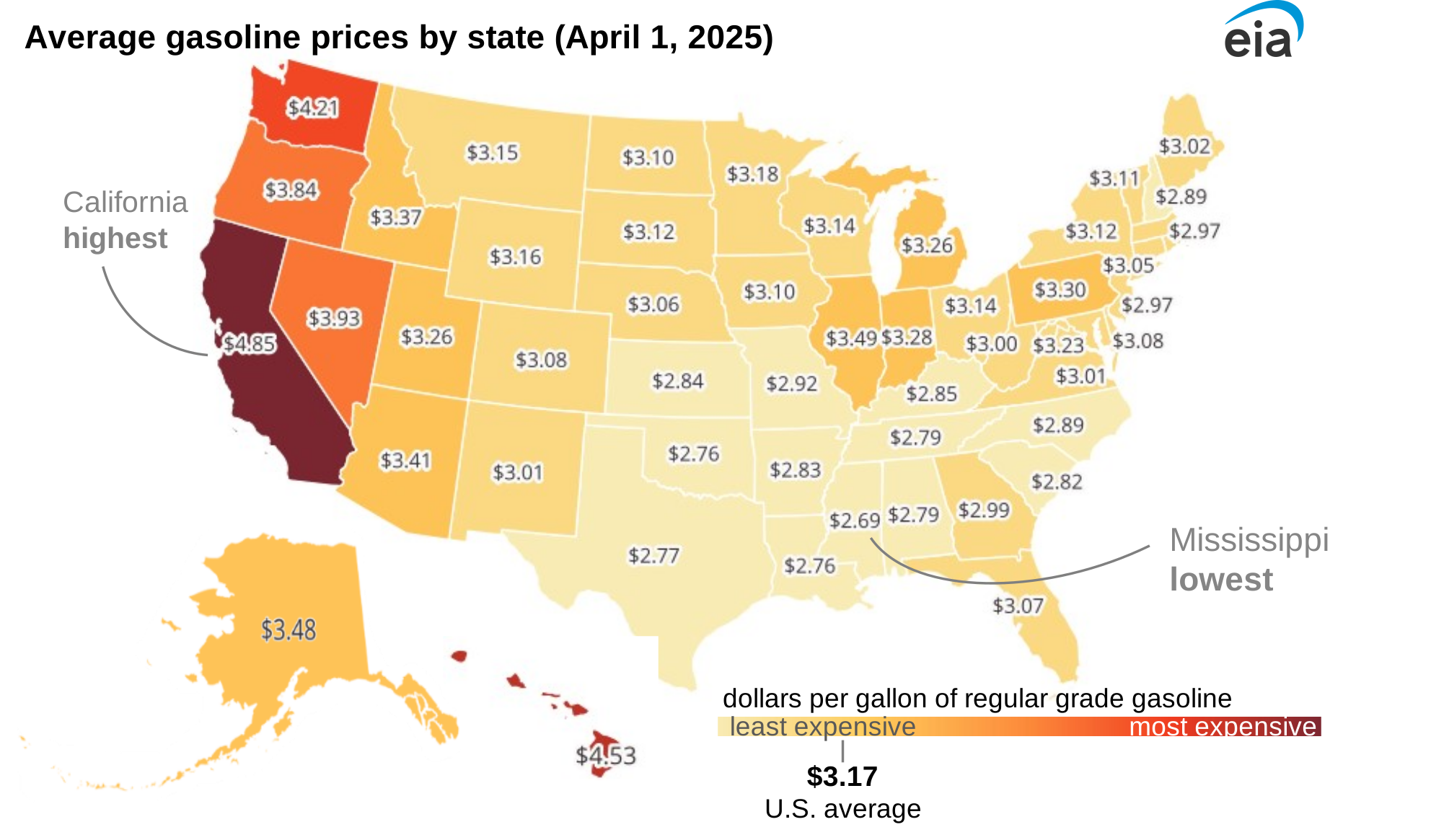
average gasoline prices by state

Data source: AAA


Retail prices for regular grade gasoline in California are consistently higher than in any other state in the continental United States, often exceeding the national average by more than a dollar per gallon. Several factors contribute to this high price, including state taxes and fees, environmental requirements, special fuel requirements, and isolated petroleum markets.

Taxes and fees
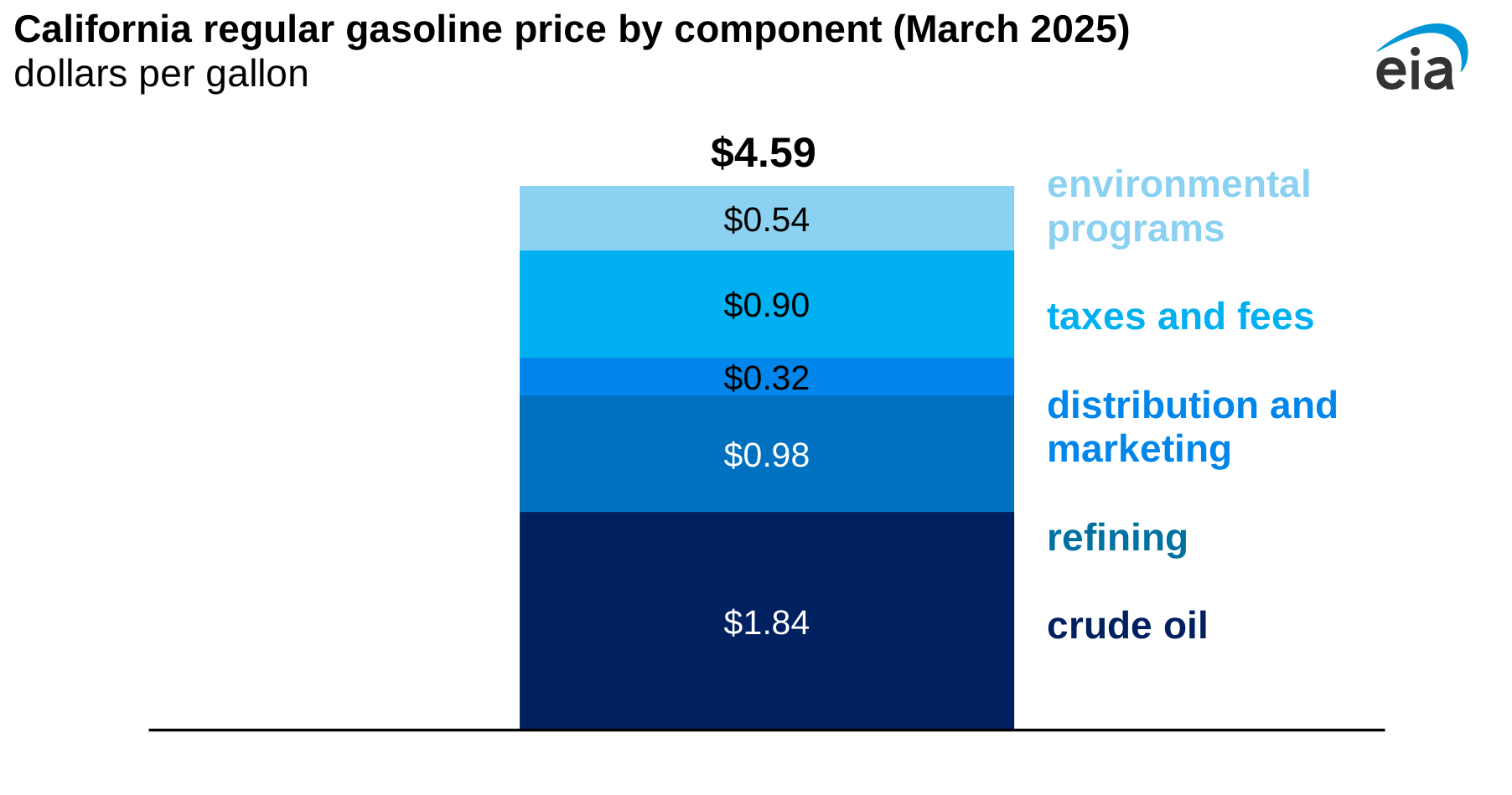
The components of retail gasoline prices are taxes and fees, distribution and marketing, refining costs, and crude oil prices. Drivers in California pay the highest taxes at the pump, equivalent to $0.90 per gallon (gal) between local, state, and federal taxes as of March 2025.

Federal taxes—which are the same for each state—account for $0.18 of the $0.90/gal in taxes. The other $0.72/gal is made up of state excise tax ($0.60/gal), state sales tax ($0.10/gal), and an underground storage tank fee ($0.02/gal). California’s state gasoline excise tax is the highest in the United States; the average across all states is $0.28/gal.

California regular gasoline price by component

Data source: California Energy Commission


Environmental requirements
In addition to state taxes, the California Energy Commission estimates that environmental compliance costs added as much as $0.54/gal as of March 2025. The state’s Cap-and-Trade Program and Low Carbon Fuel Standard reflect costs associated with fuel supplier emissions and carbon intensity, and these costs are ultimately reflected in the price consumers pay at the pump.

Special fuel requirements
California also mandates a special blend of gasoline designed to reduce pollution and improve air quality. This fuel burns cleaner but is more expensive to produce because it requires more processing steps and expensive blending components.

Refiners outside the state only make this blend to supply California’s market, meaning that California primarily relies on in-state refineries for its gasoline supply.

Isolated petroleum markets
Supply side issues also contribute to higher California gasoline prices relative to the rest of the country.

Most of the gasoline consumed in California is refined within the state due to lack of petroleum infrastructure connections. California is geographically isolated from other U.S. refining centers because no pipelines supply California from across the Rocky Mountains and only a limited number of pipelines deliver to the West Coast from the Gulf Coast. Of the refineries outside of California with physical access to the state’s gasoline markets, only a few can meet California’s stringent fuel blending requirements.

California also imports gasoline from other countries, such as India and South Korea, to meet its fuel supply needs. Other countries produce California-specification gasoline, but high shipping costs usually limit imports to periods of refinery outages or the summer driving season.

In addition, West Coast refineries have historically maintained lower inventory levels compared with the U.S. average, and California refineries have been closing, with more closures on the horizon. All of these supply chain issues mean that California gasoline prices are more volatile and subject to large spikes, especially if any of the limited number of refineries go offline for maintenance or have an unexpected outage.

Principal contributors: Anne Miranda, Tara Bennett-Chirico

Tags: mapCaliforniastatespricesgasolineliquid fuels

US EIA

The only area in which California prices are lower than the national average is in distribution & marketing. I have to assume that this is due to the fact that California has no Buc-ees stores.

But… Newsom will fix this problem by getting rid of gasoline powered automobiles…

California Just Banned Gas-Powered Cars. Here’s Everything You Need to Know

What about hybrids? Can I still buy a used gas-powered car? An FAQ to navigating the EV future.

By Dan Gearino

September 1, 2022

While many of us were on vacation last week, the transition to electric vehicles took a monumental leap.

On Aug. 25, California regulators adopted rules that would ban the sale of new gasoline-powered cars and light trucks by 2035.

[…]

Inside Climate News

Newsom’s answer seems to be to use less gasoline by using more electricity…

California already has the second highest electricity price in the nation…

And that price is already expected to rise faster than the national average…

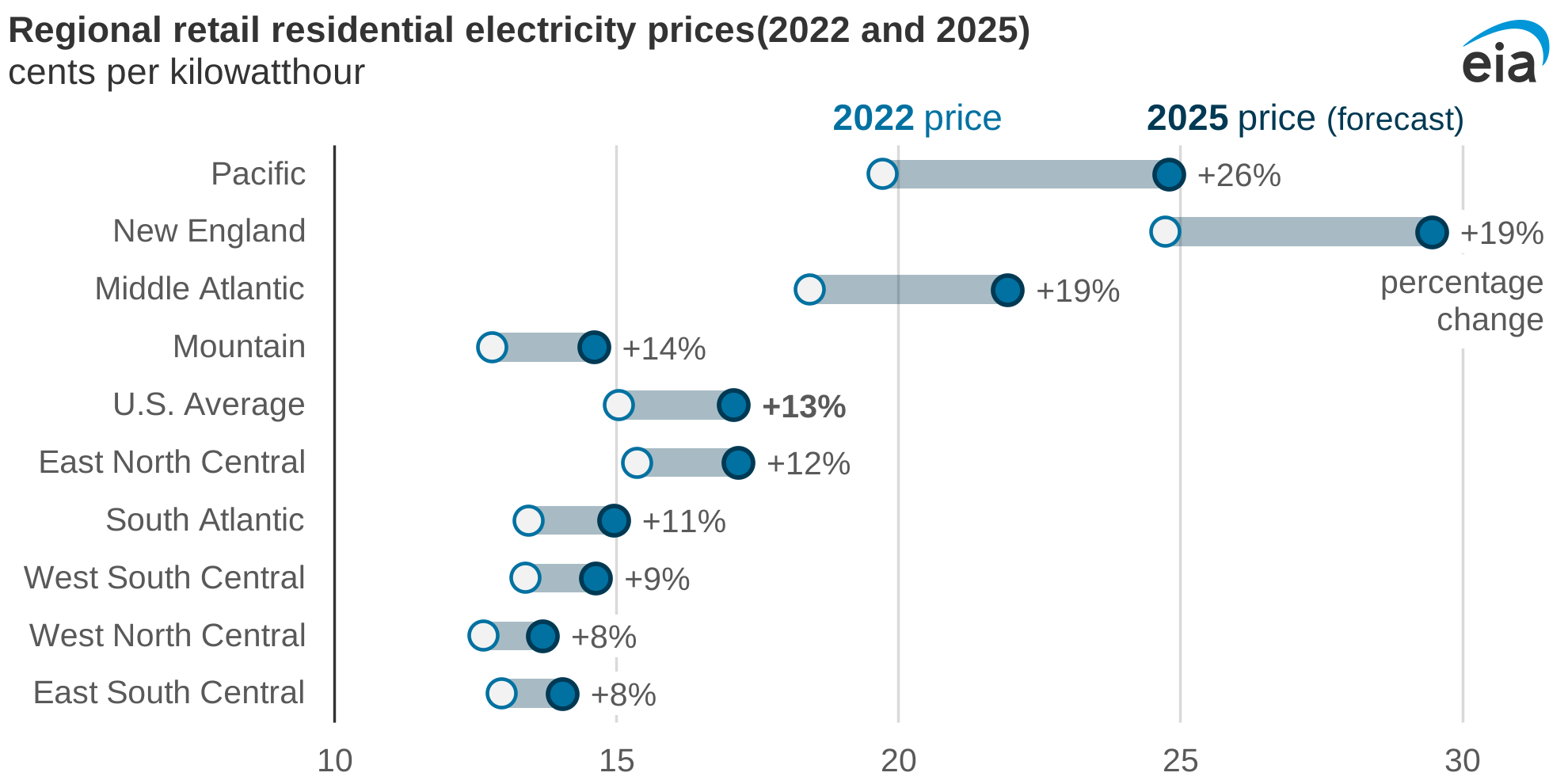
Regions with already high electricity prices may see larger increases

Although we expect the nominal U.S. average electricity price to increase by 13% from 2022 to 2025, our forecasts for retail electricity price increases differ across the country. Residential electricity prices in the Pacific, Middle Atlantic, and New England census divisions—regions where consumers already pay much more per kilowatthour for electricity—could increase more than the national average. By comparison, residential electricity prices in areas with relatively low electricity prices may not increase as much.

US EIA

California is in the Pacific census division. US EIA

Unsurprisingly, the CEO of PG&E says that increased electricity demand will actually lower prices…

PG&E CEO: Optimistic About California’s Clean Energy Future

April 30, 2025

Closing out this year’s keynote addresses, Patti Poppe, CEO of Pacific Gas and Electric (PG&E) delivered a message of optimism about California’s clean energy transition, highlighting real progress in infrastructure, safety, and innovation. Framed by the urgency of climate change and the growing threat of wildfires, the speaker laid out a clear case for why decarbonizing the state’s energy and transportation systems is both possible and economically viable.

[…]

A central focus was the “duck curve,” which shows excess solar generation during the day and steep evening demand peaks. Fleet electrification — especially for vehicles with predictable usage patterns like school buses — presents a perfect solution.

[…]

According to Poppe, contrary to popular belief, increased electrification could actually lower energy costs, with grid usage at only about 55% of its capacity. With the increasing energy demand from electric vehicles and data centers, Poppe pointed out that fixed costs can be spread across more usage, lowering the cost per unit of electricity for everyone.

“It’s like splitting a pizza,” she explained. “Five people pay $10 each. Ten people? Just $5.”

[…]

ACT News

Does a pizza really cost $50 in California? However, this does capture socialist logic in a nutshell. Instead of making a bigger pizza, just cut it up into smaller slices. The obvious solution to the “duck curve” is for government to create more electricity demand during the periods of excess solar generation…

Featured Image Source

Gavin Newsom Named U-Haul Salesperson Of The Year

U.S.·Sep 15, 2021 · BabylonBee.com

SACRAMENTO, CA – U-Haul has named Governor Gavin Newsom its Salesperson of the Year for the third year in a row after a record-setting sales quarter. 

“We are astounded by the growth we’ve seen in California,” said U-Haul’s Western Regional Director Fennick Buggstein. “Thanks to Gavin Newsom, literally every middle-class family has moved out of the state! It’s been impossible to keep up with demand! Also, most of our workers left the state too, which kind of stinks.” 

[…]

The Babylon Bee


Discover more from Watts Up With That?

Subscribe to get the latest posts sent to your email.

via Watts Up With That?

https://ift.tt/JDUdLhj

May 15, 2025 at 04:06PM

Beware Renewable Energy Trap

Terry L. Headley exposes the entanglements unheeded by carbon free activists in his Real Clear Energy article The Renewable Energy Trap: A Warning to Nations Pursuing Blind Sustainability  Excerpts in italics with my bolds and added images.

As the world increasingly shifts toward renewable energy, there is a growing risk that nations could fall into the “renewable energy trap.” This trap is the result of embracing an energy transition without fully understanding its economic, environmental, and geopolitical consequences. While renewable energy sources like wind, solar, and hydropower have been hailed as the future of global energy, nations rushing toward these technologies without a strategic plan may face grave economic and security challenges. The truth is that blind adherence to renewable energy, in its current form at least, is not the panacea many believe it to be. In fact, it could prove to be a short, green path to economic ruin for both developed and developing nations alike.

The up front gold is clear and considerable, while the end of the road is in the shadows and uncertain.

The False Promises of Renewables: Hidden Costs and Risks

The promise of renewable energy often comes with an aura of infallibility—clean, green, and limitless. However, this narrative overlooks the hidden costs of transitioning to renewable energy systems, many of which are disguised through misleading claims and incomplete accounting. For example, Germany’s “Energiewende” (Energy Transition) provides a cautionary tale of how well-intentioned policies can lead to unintended consequences.
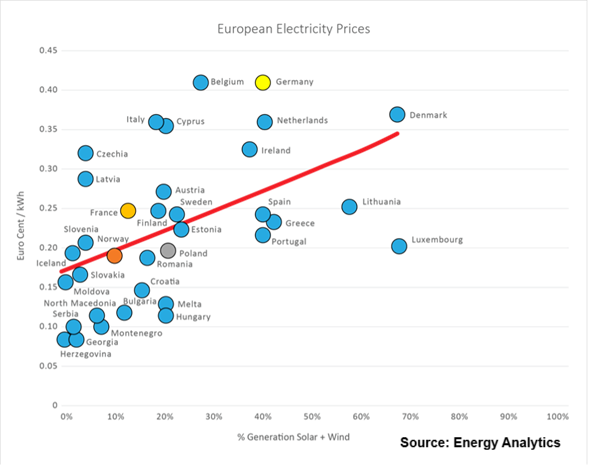
Germany, once hailed as a leader in the renewable energy revolution, has spent over a decade investing heavily in wind and solar energy. Despite spending billions of euros, Germany has seen little reduction in its greenhouse gas emissions, and the financial burden on consumers has been significant. In 2020, Germany had the highest electricity prices in Europe, largely due to the subsidies and support provided to renewable energy companies. The country’s energy bills for consumers have surged, in part because of the costs associated with maintaining backup fossil fuel plants to ensure grid stability when wind and solar energy are insufficient.

Furthermore, Germany’s renewable energy push has led to a paradoxical reliance on coal. As has been said so many times before, when the wind isn’t blowing and the sun isn’t shining, Germany has been forced to turn back to coal-fired power plants to meet demand. Ironically, this has undermined the very environmental goals the country sought to achieve. Despite Germany’s heavy investment in renewables, it has seen a rise in coal usage due to the intermittent nature of its renewable energy sources, highlighting one of the most significant flaws of a renewable-dominant grid: reliance on fossil fuels to fill in the gaps.

Why? Because Germany must maintain at least as much baseload coal generation in reserve as it has in renewable energy generation to make sure it has electricity available at all times. The reality is that Germans are paying for the same electricity two or three times.

Rising Energy Costs and the Threat of Energy Poverty

The financial burden of renewable energy policies extends beyond Germany, affecting millions of households across the globe. One of the most significant, yet often overlooked, consequences of the renewable energy transition is the rising cost of electricity. The shift toward renewables has caused electricity prices to increase to the point where energy poverty is becoming a real issue in many countries.

Energy poverty refers to the inability of households to afford sufficient energy for heating, cooling, and powering their homes. The International Energy Agency (IEA) defines energy poverty as the lack of access to affordable and reliable energy. As the costs of renewable energy policies continue to rise, more and more households find themselves at risk of falling into energy poverty.

In the United Kingdom, for example, the government’s push for renewable energy has resulted in substantial increases in electricity prices. A report by the UK’s National Grid showed that between 2008 and 2020, the average annual energy bill for a UK household rose by 30%, with a significant portion of the increase attributed to the country’s renewable energy investments. The UK government has heavily subsidized wind and solar energy projects, but those subsidies are paid for by consumers through higher electricity bills. The result has been a situation where millions of British households struggle to keep up with the rising costs of energy.

In California, energy poverty is also on the rise as the state aggressively pursues renewable energy goals. While California has invested heavily in solar power, it has failed to address the intermittent nature of renewable energy. During periods of peak demand, when solar and wind energy are insufficient, the state is forced to turn to natural gas and imported electricity, which drives up costs. California has one of the highest electricity prices in the United States, and many low-income families are feeling the impact.

According to the California Public Utilities Commission, more than 1.3 million households in the state were at risk of energy poverty in 2020. Despite the state’s focus on clean energy, many residents are unable to afford their electricity bills, forcing them to choose between paying for energy or other necessities like food and medicine.

In South Australia, another example of the renewable energy trap is evident. South Australia has aggressively pursued renewable energy policies, becoming one of the leading adopters of wind and solar power in the world. However, this shift has led to significant spikes in electricity prices. The state has faced price volatility and blackouts due to the intermittent nature of renewable energy. In 2017, South Australia experienced a widespread blackout after a storm damaged the transmission network, and the state has since struggled to maintain grid stability. The increased reliance on renewables has led to soaring electricity prices, and many households are now unable to afford basic energy needs. According to the Australian Energy Regulator, electricity prices in South Australia have risen by 50% in the past decade, and many low-income families are feeling the squeeze.
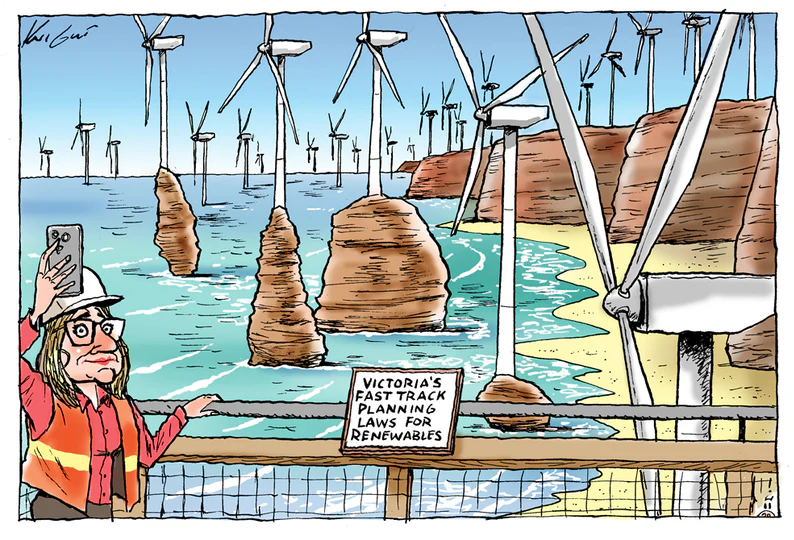
The Geopolitical Trap: Energy Dependency, Raw Materials and National Security

The renewable energy transition also raises important geopolitical concerns, particularly in the area of raw materials. Renewable energy technologies are heavily reliant on rare earth metals, lithium, cobalt, and nickel for the production of batteries, solar panels, and wind turbines. These materials are predominantly sourced from countries with less stable political environments or are monopolized by a few nations, such as China.
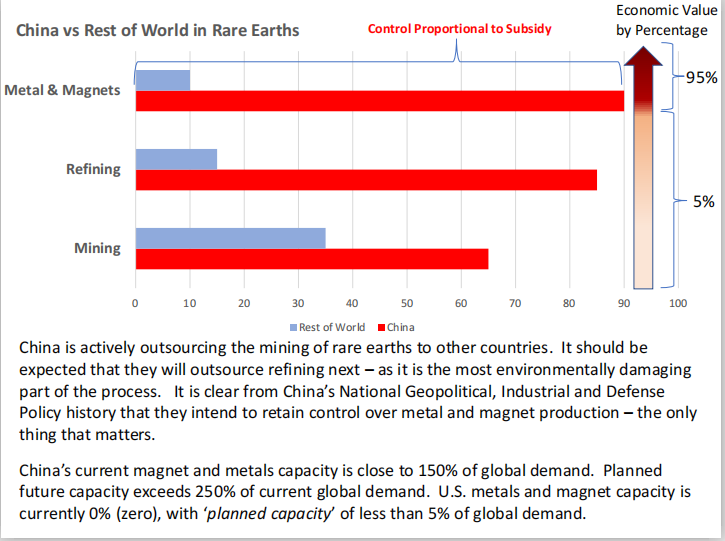
This creates a new form of energy dependency. For instance, the global supply chain for lithium and cobalt is largely controlled by China, raising questions about national security and the potential for price manipulation or trade disruptions. Countries that rush toward renewables without developing diversified supply chains may find themselves dependent on a handful of foreign nations for critical materials—echoing the geopolitical vulnerability that oil-dependent countries have faced for decades. This new energy dependence could undermine the goal of energy independence that many nations seek.

Moreover, the mining process for these materials is far from clean or environmentally friendly. In countries like the Democratic Republic of Congo, where much of the world’s cobalt is sourced, mining operations are linked to severe environmental degradation and human rights abuses. The environmental damage associated with mining for lithium, cobalt, and rare earth metals often goes unreported in the “green” narrative surrounding renewable energy. In many cases, the extraction of these materials results in significant water contamination, deforestation, and harmful air emissions.

The Hidden Costs: Economic Burdens and Social Inequality

Another significant issue with the renewable energy push is the way its real costs are hidden from the public. Governments often advertise the economic benefits of renewables without accounting for the financial burden on consumers. The transition to renewable energy technologies often requires substantial government subsidies, which are typically funded by taxpayers or passed onto consumers through higher utility rates. In the case of the European Union, the cost of renewable energy subsidies is often obscured by misleading accounting practices that fail to capture the true cost of maintaining grid stability.

Take California, a state that has aggressively pursued renewable energy initiatives. While solar and wind have gained in popularity, California’s reliance on intermittent renewables has led to skyrocketing energy prices and blackouts. The state has been forced to rely on natural gas plants as backup power sources, creating a contradictory energy system that still depends on fossil fuels. Additionally, the high costs of implementing renewable energy infrastructure have disproportionately affected low-income families, who are unable to afford higher utility bills.

The Crucial Role of Coal-Fired Baseload Electricity

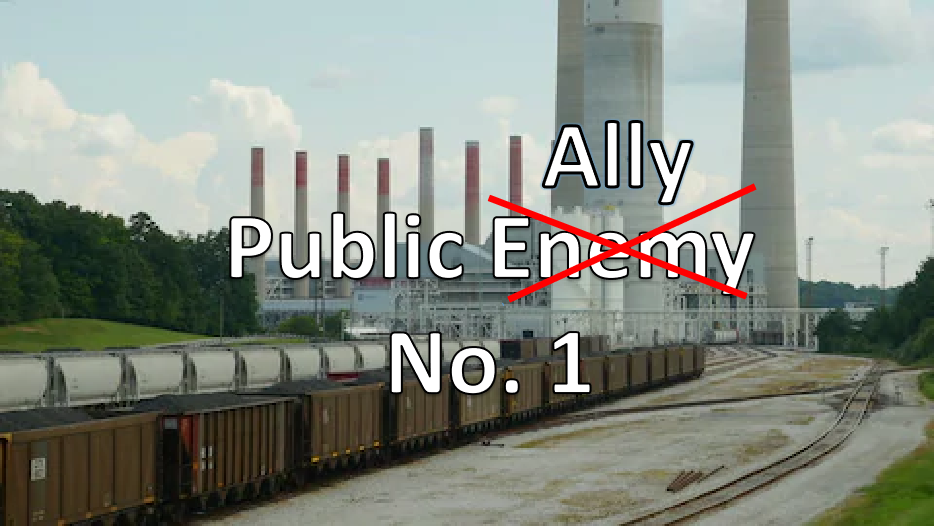
As nations scramble to meet ambitious renewable energy goals, the role of coal-fired baseload electricity cannot be overlooked. Contrary to the widespread narrative that coal is a relic of the past, coal remains the most dependable, affordable, and scalable option for providing stable electricity in an increasingly energy-demanding world.

Baseload electricity refers to the minimum level of demand on an electrical grid over a span of time. Coal-fired power plants are uniquely capable of providing this baseload power reliably. Unlike wind and solar, which are intermittent and weather-dependent, coal-fired plants can produce electricity 24/7, irrespective of external conditions. This ensures a stable and predictable energy supply, crucial for both industrial needs and residential consumption.

Coal is also among the most affordable sources of electricity. The levelized cost of energy (LCOE)—the cost to produce electricity per megawatt-hour—is lower for coal-fired plants than for many renewable alternatives, especially when factoring in the full infrastructure and grid integration costs associated with wind and solar energy. In the U.S., for example, coal remains more cost-effective than natural gas and many renewables, particularly in regions like the Midwest, where the energy grid is more reliant on coal-fired plants.
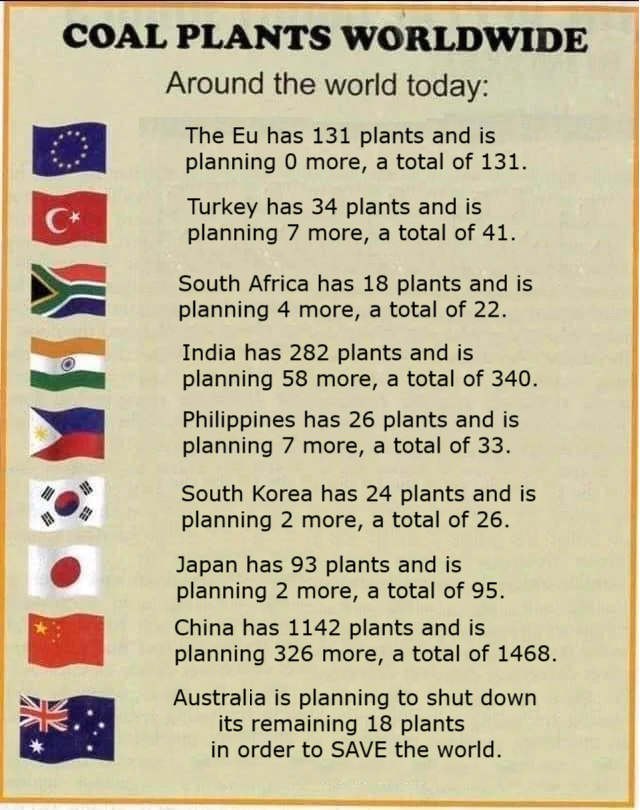
Moreover, coal is abundant and domestically available in many countries, reducing dependence on foreign energy sources. This enhances energy security, particularly for nations that are trying to avoid the geopolitical risks associated with imported energy, including oil, natural gas, and the rare earth metals required for renewable technologies.

Conclusion: A Balanced Approach, Grounded in Reality is Essential

While renewable energy holds promise for a sustainable future, the world must proceed with caution. Nations cannot afford to fall into the renewable energy trap by embracing these technologies without considering the full spectrum of their impacts. Germany’s experience with its Energiewende shows that pushing too hard for renewables can create new environmental problems, economic burdens, and political risks. A balanced energy strategy that incorporates energy security, economic sustainability, and environmental responsibility is crucial.

Coal-fired baseload electricity remains an essential and reliable component of a balanced energy portfolio. It provides affordable, stable, and secure electricity, ensuring that nations do not risk energy poverty or grid instability as they transition to greener sources. The renewable energy revolution must be a step forward, not a leap into the unknown. By acknowledging the true costs of renewable energy and the irreplaceable role of coal, we can forge a more reliable and sustainable energy future for all.
 

via Science Matters

https://ift.tt/vUlrnR3

May 15, 2025 at 02:59PM