The Independent Misleads About Rising Cocoa Prices, Government, Not Climate, is Responsible

From ClimateREALISM

By Heartland Institute

By Linnea Lueken and H. Sterling Burnett

A recent article at The Independent, “How the climate crisis will push up prices for your Easter chocolate,” claims that cocoa bean production is threatened by climate change, and this is why prices are increasing. This is false. The Independent cites a study using a novel, recently developed AI model forecasting cocoa production in various countries, rather than investigating the full picture, and real world data, including neighboring nations’ cocoa production. To the extent cocoa prices are rising, it is not due to climate change induced shortages but rather government policies.

The Independent claims that extreme heat is increasing the risk to crops, and has been for “the past two decades in Côte d’Ivoire, Ghana, Ecuador, and Indonesia, according to modelling shared exclusively with The Independent from ClimateAi, a California-based machine learning company that models harvest outcomes. And that impact is only set to get worse as global temperatures increase.”

This AI modelling “has only been around for the last few months, and has been specifically designed to create accurate outlooks for more data-scarce environments like Ghana and Côte d’Ivoire[.]” The company claims it incorporates historic weather data, current satellite data, soil information and topography, as well as “local agricultural knowledge[.]”

They use the model outputs to declare that yields and production of cocoa are declining because of climate change, or at the very least are “at risk” of declining. It is too bad that the models were shared exclusively with The Independent, and the company’s work is proprietary, because it makes it impossible to know whether or not they are leaning on the same flawed climate models that consistently mislead on agricultural production – as Climate Realism has pointed out many times for crops around the world.

Tellingly, since the models are new and propriety, their results lack transparency, and there is no suggestion that the models have been peer reviewed or verified by testing by outside researchers. The company behind the proprietary AI modelling is basically asking the world to trust its findings, take it on blind faith – that’s not how science works.

Real world data, as opposed to unverified model outputs, by contrast show that, in general, cocoa yields and production have increased during the recent period of slight warming. Interestingly, data show that while yields from cocoa plantations in Côte d’Ivoire are declining, production has increased considerably during the recent period of modest warming, according to UN Food and Agriculture Organization (UN FAO) data. (See figure below)

The Independent only acknowledges the declining yields, but neglects to mention that total production from the country hit an all-time record high in 2023. Production has increased 469 percent since 1980.

This indicates that the amount of cocoa from individual farms may be declining, likely older farms but more are coming online.

If climate change were the reason behind Côte d’Ivoire’s woes, it would be expected production on farms in nearby countries would suffer similarly, since weather is widespread. Yet Ghana’s yields levels have not experienced the declines Côte d’Ivoire has. (See figure below)

Another country evaluated as threatened by the AI study is Ecuador. UN FAO data show that they have had consistent production and yield records; since just 2015, Ecuador’s cocoa production and yields have broken previous records six times. (See figure below)

So what is it that is making Ghana and Côte d’Ivoire cocoa production suffer, leading to such high cocoa prices? The answer can be found towards the end of The Independent’s article where it mentions the fact that Ghana’s government has a stranglehold on cocoa pricing, noting that last year, “the Ghana Cocoa Board (COCOBOD), which controls salaries for the country’s cocoa farmers, announced that it would raise the amount it pays cocoa farmers by 45 per cent[.]”

Blogger Jo Nova has a writeup on this that is devastating to the alarmist narrative. She points out that the price fixing in Ghana, which is the second largest cocoa producer in the world, is a major driver for the issues that led to spikes in prices the last year:

African governments have fixed the price of cocoa for decades, forcing poor farmers to work for a pittance, and keeping the big profits for themselves. Not surprisingly, even though there is a wild price spike, farmers in Ghana are leaving the industry, smuggling crops out (because they get a better price). They didn’t plant new trees, they ran out of money for fertilizer, and didn’t try new varieties. Their children don’t want to farm cocoa, and the yields are falling on old sickly plantations.

So, surprise, socialist government controls wrecked the industry and they are now scrambling to put the pieces back together. Things are so desperate, the government of Ghana raised the price of cocoa by 58% last April and then raised the price of cocoa by another 45% last September, to try to reduce the smuggling. (The government was losing too much money). At one point last year it was estimated that a third of the national crop was lost to smugglers. A few months after this, the farmers were hoarding their beans in expectation the government would have to give them another price rise. Just chaos for everyone.

The Independent fails to discuss smuggling at all.

A similar result is found in Indonesia. After the Indonesian government embraced various U.N. climate and sustainable development goals, and began reaping the international aid that accompanied adoption, it began encouraging its farmers to adopt “sustainable” practices, including reducing the use of chemical fertilizers and pesticides, and focus on the “quality” of the cocoa produced over the quantity. The result: after a sustained growth in production from the 1980s through the early 2000s, yields began to decline, with production falling shortly thereafter.

After initially falling, Cocoa production has now basically flatlined in Indonesia since the country signed the Indonesia Compact in 2013 with a focus on improving cocoa quality, natural resource use, and lowering greenhouse gas emissions. After 2018, the program ended and the money ran out. The damage was done, cocoa production and yields have never recovered to pre-Compact levels. (see the figure, below)

Crop production will always have good and bad years in different parts of the world, especially in places with government meddling and mishandling of resources and price fixing which makes it harder for farmers to invest in new cocoa plants when others are growing old, the soils and trees worn out, making them less able to withstand bad weather seasons. Blaming climate change in an effort to rally support for green policies is misleading by the omission of other relevant factors, and is counterproductive to improving cocoa yields and production.

Heartland Institute

The Heartland Institute is one of the world’s leading free-market think tanks. It is a national nonprofit research and education organization based in Arlington Heights, Illinois. Its mission is to discover, develop, and promote free-market solutions to social and economic problems.


Discover more from Watts Up With That?

Subscribe to get the latest posts sent to your email.

via Watts Up With That?

https://ift.tt/zaL0ZQN

April 29, 2025 at 04:12AM

CFACT “Stewardship in Action” loans launch Ugandan farmers into action

"I sincerely thank CFACT for supporting this proposal in a professional way. With your partnership, I am confident that this initiative will continue to grow and serve as a model for sustainable development in our region."  

via CFACT

https://ift.tt/Uv03nZY

April 29, 2025 at 03:47AM

Spanish Blackouts

By Paul Homewood

I’m sure you’ve all read about that power cuts in Spain and Portugal yesterday. They are a reminder of just how reliant our societies have become on electricity.

Such power cuts are now much more serious affairs than merely “the lights going off”, which I remember well from my younger days in the 1960s!

It’s far too soon to know what went wrong, but the chart below shows actually happened. At 12.30 pm, the grid was running normally at around 32 GW, with 19 GW of that coming from solar.

Gas power was virtually non existent at just 2 GW.

Thirty minutes later the Spanish Peninsula grid had almost totally collapsed to 12 GW.

.


image

https://transparency.entsoe.eu/generation/r2/actualGenerationPerProductionType/show?name=&defaultValue=false&viewType=GRAPH&areaType=BZN&atch=false&datepicker-day-offset-select-dv-date-from_input=D&dateTime.dateTime=28.04.2025+00:00|CET|DAYTIMERANGE&dateTime.endDateTime=28.04.2025+00:00|CET|DAYTIMERANGE&area.values=CTY|10YES-REE——0!BZN|10YES-REE——0&productionType.values=B01&productionType.values=B25&productionType.values=B02&productionType.values=B03&productionType.values=B04&productionType.values=B05&productionType.values=B06&productionType.values=B07&productionType.values=B08&productionType.values=B09&productionType.values=B10&productionType.values=B11&productionType.values=B12&productionType.values=B13&productionType.values=B14&productionType.values=B20&productionType.values=B15&productionType.values=B16&productionType.values=B17&productionType.values=B18&productionType.values=B19&dateTime.timezone=CET_CEST&dateTime.timezone_input=CET+(UTC+1)+/+CEST+(UTC+2)

Is it just a coincidence that the collapse occurred just at the time that solar power had maxed out for the day?

Many energy experts have rightly commented that, regardless of the actual cause of the problem, the almost total lack of spinning reserve, provided by thermal generators, made it much more difficult for grid operators to react in time to correct the situation. As Kathryn Porter commented yesterday:

“In a low-inertia environment the frequency can change much faster. If you have had a significant grid fault in one area, or a cyber attack, or whatever it may be, the grid operators therefore have less time to react.

“That can lead to cascading failures if you cannot get it under control quickly.”

It is also worth noting that it was largely natural gas which enabled the grid to be put back into shape during the rest of the day.

The best analysis I have seen so far is from the New Zealand Energy website, which writes:

At 12:35pm on Monday there was a massive country wide grid failure leading to a blackout in Spain that also affected parts of Portugal and France.

The impacts were staggering. Everything stopped, and I mean everything. To the extent that farmers were having to deliver water to people stranded in the countryside when their trains unexpectedly ground to a halt. Its worth taking a look at the country wide chaos that ensued to appreciate how dependent modern societies are on the electrical network, there is mountains of it in the news.

But what was the cause of the issue?

From what I can establish so far, this looks to be the result of a large frequency drop of 0.15Hz which would have created synchronisation issues across the entire network leading to wild oscillations as grid protection equipment switched out asynchronous loads and other parts of the network attempted to pick up the slack.

Worth reading the full analysis here.

One final thought – the EU regularly pats itself on the back, claiming that its integrated electricity network is able to address the regional imbalances of shortages and surpluses.

That system was of no use at all to Spain this week.

via NOT A LOT OF PEOPLE KNOW THAT

https://ift.tt/UcvVrmG

April 29, 2025 at 03:36AM

Time to Defund Climate Models?

“The Trump administration is cutting funding for climate research across all federal departments…. Maybe it’s time for NASA to stick to space exploration, NOAA to stick to weather forecasting, and for the climate models to be shut down.”

Climate models have been the basis for concern about climate change for more than 35 years. The US government, the United Nations, and organizations across the world have used model projections to warn about global warming and to demand a shift to renewable energy. But Trump administration budget cuts at NASA, NOAA, and other federal agencies threaten to shut down the models, the heart of climate change alarmism.

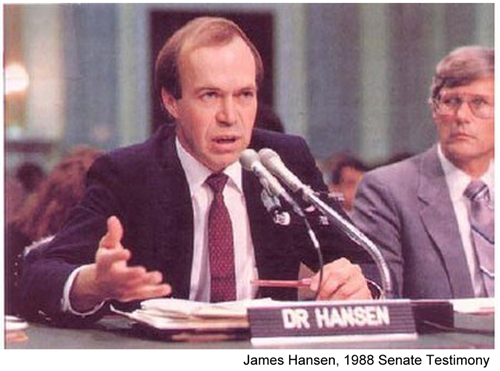
In June of 1988, Senator Tim Wirth, then chair of the Committee on Energy and Natural Resources, held the first-ever hearing on the science of climate change. Dr. James Hansen, head of a computer-modeling team at NASA, testified that he was “ … 99 percent confident that the world really was getting warmer and that there was a high degree of probability that it was due to human-made greenhouse gases.”

Since Dr. Syukuro Manabe of the Geophysical Fluid Dynamics Laboratory in Washington D.C. developed one of the first climate models in the 1960s, modelers have been warning that humans are causing dangerous climate change. Global surface temperatures have risen only a little more than one degree Celsius over the last 140 years, but models project a faster additional rise of 0.5ꟷ3.5oC by the year 2100.

Climate models have been used by scientists, researchers, and governmental policy makers to estimate possible future climate impacts. Global organizations, such as The Intergovernmental Panel on Climate Change (IPCC) of the United Nations and the World Bank use model projections to urge climate action. Non-governmental organizations such as Greenpeace use model projections to raise funds. But the Trump administration appears to be about to shut down the US climate models.

There are more than 40 climate models operating across the world, with 13 of the leading models located in the US. The US models are operated by National Aeronautics and Space Administration (NASA) in New York City, the National Oceanic and Atmospheric Administration (NOAA) in Princeton, New Jersey, and the Department of Energy (DOE) in Boulder, Colorado. Each of these organizations has been ordered to reduce staff as part of Trump administration budget cuts.

The White House may soon tell NASA to focus work on space programs, not climate change. In February, the administration denied NASA officials permission to travel to an international climate meeting in China. At the same time, NASA management cut off funding for a support contract for the 7th Assessment Report of the IPCC. NASA has been a primary contributor to previous IPCC Assessment Reports. Preliminary government spending plans for fiscal year 2026 would cut NASA’s science budget by almost half, to $3.9 billion.

The administration also wants to end climate change programs at NOAA. Plans call for a 27% cut to NOAA’s budget, down to $4.5 billion. Final budget totals for NASA and NOAA will need to be approved by Congress, with members concerned about the climate sure to put up a fight.

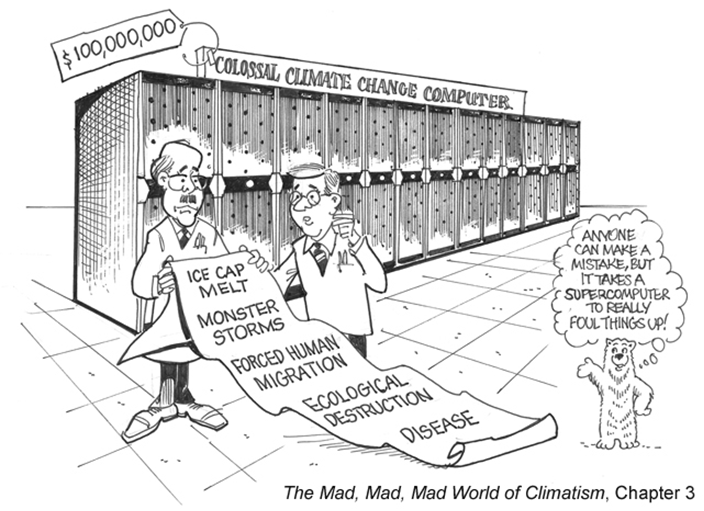
Climate models run on supercomputers and are expensive. Supercomputers cost about $50 million up front and $20 million per year to support each climate-modeling team. The NASA, NOAA, and DOE modeling teams may not be able to survive large projected cuts.

Beyond climate models, budgets of other climate projects will also be cut. The Sea Level Research Group at the University of Colorado has been studying sea level rise for about two decades. This group gets much of its funding from NASA and other federal agencies. The Mauna Loa Laboratory in Hawaii has been measuring the rise in atmospheric CO2 concentration since the 1950s, but it may be closed due to NOAA funding cuts. Three NASA satellites used to collect climate data also need to be replaced, but there are no plans to do so.

The Trump administration is cutting funding for climate research across all federal departments, with major impacts on US and world efforts to force action on climate change. Maybe it’s time for NASA to stick to space exploration, NOAA to stick to weather forecasting, and for the climate models to be shut down.

——————————-

Steve Goreham is a speaker on energy, the environment, and public policy and author of Green Breakdown: The Coming Renewable Energy Failure. His previous posts at MasterResource are here.

The post Time to Defund Climate Models? appeared first on Master Resource.

via Master Resource

https://ift.tt/xRHmj1I

April 29, 2025 at 01:11AM